




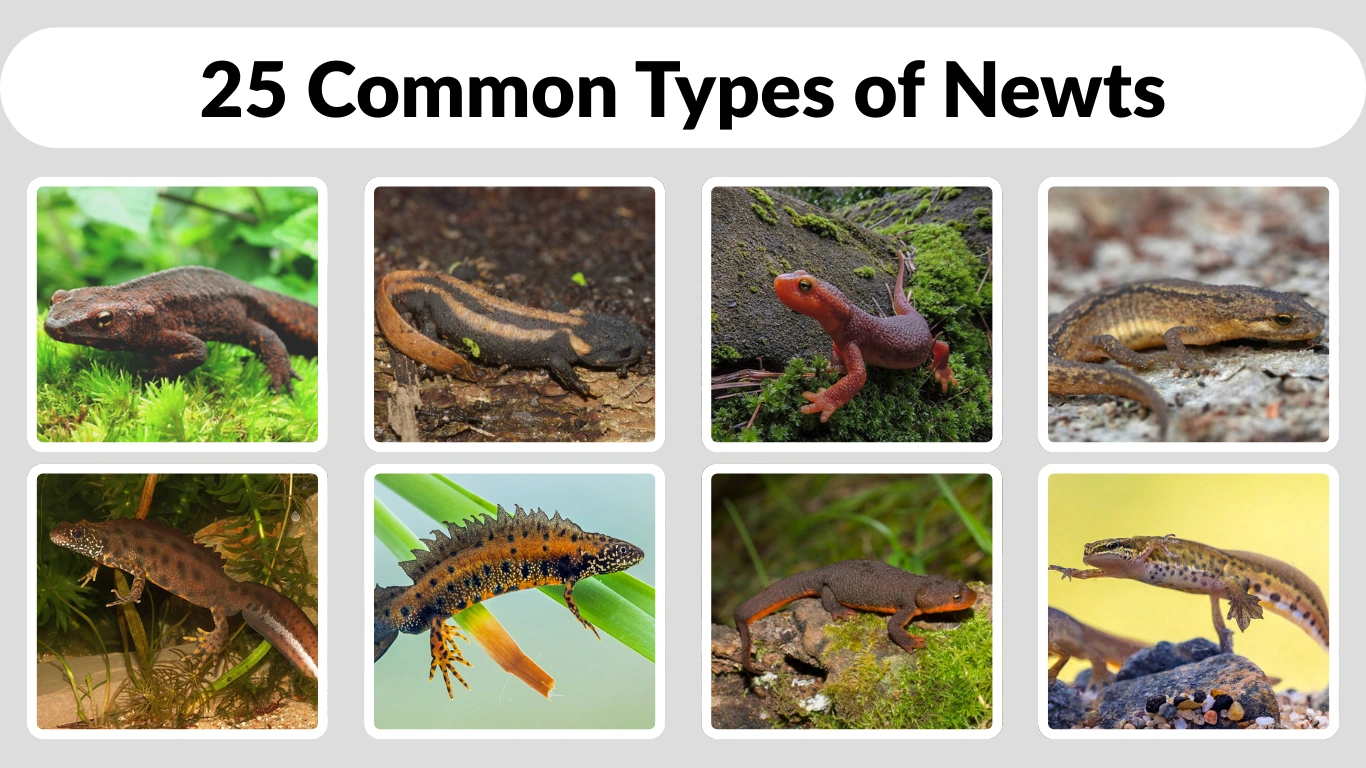
Newts are fascinating amphibians known for their unique life cycles, striking colors, and close connection to freshwater habitats. Found across North America, Europe, and Asia, these small creatures play an important role in maintaining healthy ecosystems. This guide explores 25 common types of newts, highlighting their identifying features, habitats, behaviors, and life cycles to help readers better understand and appreciate these remarkable amphibians.
1. Eastern Newt
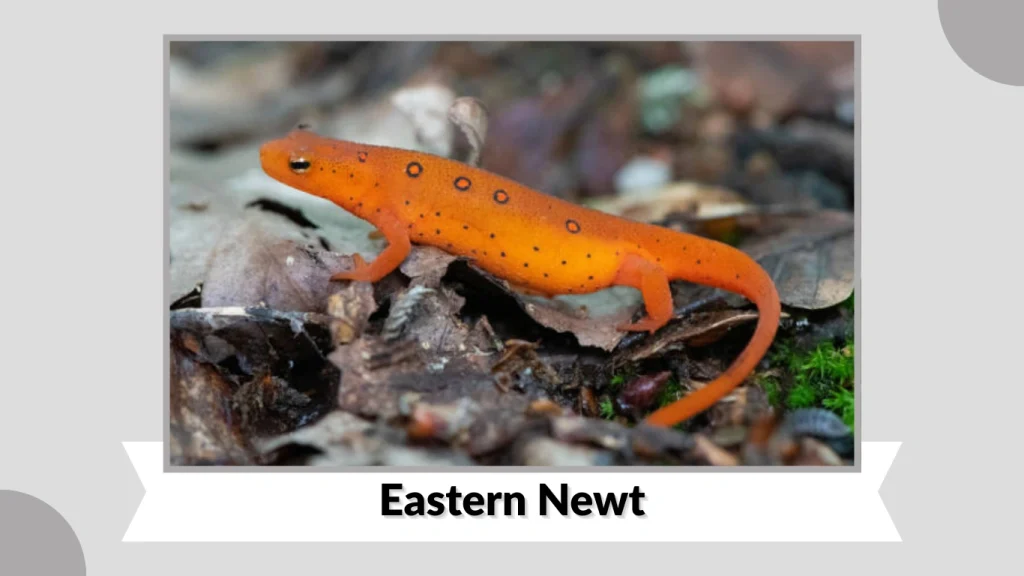
The Eastern Newt is a small salamander native to eastern North America and is one of the most familiar newts in the region. It is especially notable for its complex life cycle, which includes both terrestrial and aquatic stages. This adaptability allows it to thrive in a wide range of environments, from forests to freshwater wetlands.
Identification
- Small-bodied salamander measuring about 2–5 inches (5–13 cm)
- Adult coloration ranges from olive-green to brown
- Distinct red spots outlined in black along the back
- Yellow to orange underside
- Rough or slightly bumpy skin texture
Habitat and Behaviors
Eastern Newts are commonly found in ponds, lakes, marshes, and slow-moving streams. During their juvenile “red eft” stage, they live on land in moist forests and woodlands. They are most active during cool, damp conditions and often shelter under logs, rocks, or leaf litter. As a defense, they produce toxic skin secretions that deter predators.
Diet and Lifecycle
They primarily feed on small invertebrates such as insects, worms, snails, and aquatic larvae. The Eastern Newt has a unique three-stage life cycle: aquatic larvae, terrestrial juveniles known as red efts, and aquatic breeding adults. This extended and flexible life cycle can last several years and supports their wide distribution.
2. Rough-skinned Newt
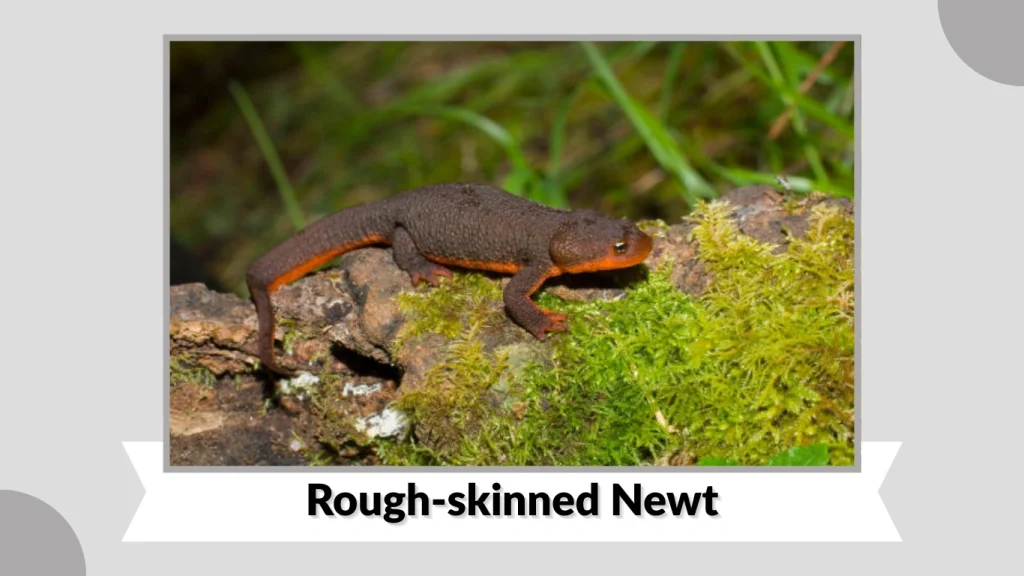
The Rough-skinned Newt is a medium-sized amphibian native to the Pacific Northwest of North America. It is widely known for its potent chemical defense and its ability to thrive in both aquatic and terrestrial environments. This species is a classic example of evolutionary adaptation to predators.
Identification
- Adults typically measure 6–8 inches (15–20 cm) in length
- Dark brown to black upper body
- Bright orange or yellow underside
- Skin is coarse, rough, and granular
- Flattened tail adapted for swimming
Habitat and Behaviors
Rough-skinned Newts inhabit forests, grasslands, ponds, lakes, and slow-moving streams. Outside the breeding season, they may live on land, hiding under logs, rocks, or leaf litter. During breeding periods, they return to freshwater habitats. When threatened, they exhibit a defensive posture by arching their back to display their bright underside, warning predators of their toxicity.
Diet and Lifecycle
Their diet consists of insects, worms, snails, small crustaceans, and aquatic invertebrates. The life cycle begins with eggs laid in water, which hatch into aquatic larvae. After metamorphosis, juveniles may spend time on land before returning to water as adults. Rough-skinned Newts can live for over a decade, with some individuals reaching impressive ages for amphibians.
3. California Newt

The California Newt is a robust amphibian endemic to California and is closely associated with coastal forests and foothill regions. It is well known for its strong homing ability, often returning to the same breeding pools year after year, even after traveling long distances over land.
Identification
- Adults typically grow 5–8 inches (13–20 cm) long
- Upper body ranges from reddish-brown to dark brown
- Bright orange to yellow underside
- Rough, grainy skin texture
- Broad head with dark eyes
Habitat and Behaviors
California Newts inhabit oak woodlands, redwood forests, grasslands, and chaparral near permanent or seasonal freshwater sources. Outside the breeding season, they live on land, sheltering under rocks, logs, and leaf litter. During winter rains, adults migrate to ponds, streams, or pools to breed. They are primarily active during cool, moist conditions and are known to secrete toxins through their skin as a defense against predators.
Diet and Lifecycle
Their diet includes insects, worms, snails, slugs, and small aquatic invertebrates. Eggs are laid singly on submerged vegetation or rocks. Larvae develop in water before metamorphosing into juveniles, which may remain aquatic or move onto land. California Newts are relatively long-lived and may survive for 15 years or more in the wild.
4. Alpine Newt

The Alpine Newt is a small, brightly colored species found across much of central and southern Europe. It is especially admired for its striking breeding colors and its ability to live at high elevations, including alpine meadows and mountain forests.
Identification
- Adults usually measure 3–5 inches (7–12 cm)
- Smooth skin texture
- Back coloration ranges from blue-gray to brown
- Bright orange or red belly, often unmarked
- Males develop a low crest during the breeding season
Habitat and Behaviors
Alpine Newts inhabit ponds, lakes, slow-moving streams, and temporary pools, often in mountainous regions. Outside the breeding season, they live on land in forests, grasslands, and alpine pastures, hiding under stones, logs, or leaf litter. They are most active during cool, damp conditions and hibernate during winter in frost-free shelters. During breeding season, males perform elaborate courtship displays to attract females.
Diet and Lifecycle
Their diet consists of insects, worms, small crustaceans, mollusks, and aquatic larvae. Breeding occurs in spring, when females lay eggs individually on aquatic plants. The larvae develop in water and undergo metamorphosis within a few months. In colder or high-altitude environments, larvae may overwinter before transforming. Alpine Newts can live for several years and are well adapted to both aquatic and terrestrial life stages.
5. Great Crested Newt

The Great Crested Newt is the largest newt species in Europe and is widely recognized for its dramatic appearance during the breeding season. It is a protected species in many countries due to habitat loss and population decline, making it an important focus of conservation efforts.
Identification
- Adults typically reach 6–7 inches (15–18 cm) in length
- Dark brown to black upper body
- Bright yellow or orange belly with irregular black blotches
- Rough, warty skin texture
- Males develop a tall, jagged crest along the back and tail during breeding season
Habitat and Behaviors
Great Crested Newts breed in ponds, lakes, and slow-moving freshwater bodies with abundant vegetation. Outside the breeding season, they live on land in woodlands, grasslands, hedgerows, and farmland, often sheltering under logs, stones, or in burrows. They are mostly nocturnal and spend much of the day hidden. During courtship, males perform elaborate displays using body movements and tail fanning to attract females.
Diet and Lifecycle
Their diet includes insects, worms, snails, slugs, tadpoles, and aquatic invertebrates. Females lay eggs individually, carefully wrapping each egg in aquatic plant leaves for protection. Larvae hatch and develop in water before metamorphosing into juveniles, which then move onto land. Great Crested Newts can live for over 10 years, and sometimes much longer in favorable conditions.
6. Smooth Newt

The Smooth Newt is one of the most widespread and common newt species in Europe. It is a small, adaptable amphibian that thrives in a variety of freshwater and terrestrial habitats. Despite its modest size, it is well known for the male’s striking appearance during the breeding season.
Identification
- Adults usually measure 3–4 inches (7–10 cm)
- Smooth, soft skin texture
- Brown, olive, or gray upper body
- Yellow or orange belly with dark round spots
- Males develop a smooth, wavy crest along the back and tail during breeding season
Habitat and Behaviors
Smooth Newts breed in ponds, lakes, ditches, and slow-moving streams, including temporary water bodies. Outside the breeding season, they live on land in grasslands, gardens, forests, and farmland, sheltering under stones, logs, or leaf litter. They are mostly nocturnal and become active during cool, damp weather. Males perform gentle courtship displays in water, using tail movements and body postures to attract females.
Diet and Lifecycle
Their diet consists of insects, worms, small crustaceans, mollusks, and aquatic larvae. Breeding occurs in spring, when females lay eggs one by one, folding them into aquatic plant leaves. Larvae hatch and develop in water before metamorphosing into terrestrial juveniles. Smooth Newts typically live for several years and may return to the same breeding sites annually.
7. Palmate Newt

The Palmate Newt is a small European species commonly found in western and central parts of the continent. It is named for the webbing that appears on the hind feet of males during the breeding season, a distinctive feature that helps with identification.
Identification
- Adults typically measure 3–4 inches (7–9 cm)
- Smooth skin with a slender body shape
- Brown, olive, or gray upper body
- Yellowish belly, usually without spots
- Males develop webbed hind feet and a thin tail filament during breeding season
Habitat and Behaviors
Palmate Newts inhabit ponds, lakes, marshes, and slow-moving streams, often in forested or heathland areas. Outside the breeding season, they live on land, hiding under logs, stones, moss, or leaf litter. They are mostly nocturnal and active during cool, moist conditions. During breeding, males perform subtle courtship displays, including tail waving and positioning, to attract females in the water.
Diet and Lifecycle
Their diet includes insects, worms, small crustaceans, and aquatic invertebrates. Breeding takes place in spring, with females laying eggs individually on aquatic plants. Larvae develop in water and metamorphose into juveniles after several weeks. In some regions, larvae may overwinter before completing metamorphosis. Palmate Newts generally have a lifespan of several years.
8. Japanese Fire-bellied Newt

The Japanese Fire-bellied Newt is a small, semi-aquatic species native to Japan. It is popular in education and research due to its hardiness and striking coloration. The species is named for its bright underside, which serves as a warning to predators.
Identification
- Adults typically measure 3–5 inches (8–13 cm)
- Dark brown to black upper body
- Bright red or orange belly with irregular black markings
- Smooth to slightly granular skin
- Flattened tail adapted for swimming
Habitat and Behaviors
Japanese Fire-bellied Newts inhabit ponds, rice paddies, marshes, and slow-moving streams, often near forested areas. They spend much of their time in water but may move onto land, especially during cooler months. They are generally nocturnal and become active in the evening or during rainy conditions. When threatened, they may arch their body to display their brightly colored belly as a warning signal.
Diet and Lifecycle
Their diet consists of insects, worms, snails, small crustaceans, and aquatic larvae. Breeding occurs in spring, when females lay eggs singly on aquatic plants. Larvae hatch and develop in water before undergoing metamorphosis into juveniles. Some individuals remain aquatic throughout most of their lives. Japanese Fire-bellied Newts can live for over 15 years under favorable conditions.
9. Chinese Fire-bellied Newt
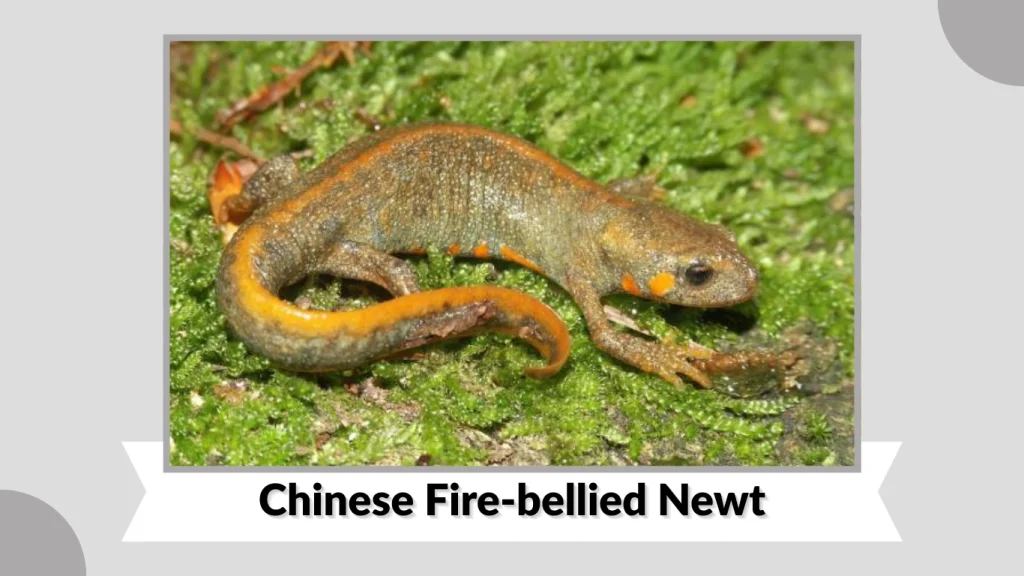
The Chinese Fire-bellied Newt is a small, brightly colored amphibian native to central and eastern China. It is well known for its vivid warning coloration and semi-aquatic lifestyle, spending much of its life in freshwater habitats.
Identification
- Adults usually measure 3–4 inches (7–10 cm)
- Dark brown to black upper body
- Bright orange or red belly with bold black markings
- Slightly rough or granular skin
- Flattened tail suited for swimming
Habitat and Behaviors
Chinese Fire-bellied Newts inhabit ponds, marshes, rice paddies, slow-moving streams, and reservoirs. They are largely aquatic but may venture onto land, especially during cooler seasons. These newts are generally nocturnal and become more active at night or during rainy weather. When threatened, they display their brightly colored underside as a warning and secrete toxins through their skin to deter predators.
Diet and Lifecycle
Their diet consists of insects, worms, snails, small crustaceans, and aquatic invertebrates. Breeding typically occurs in spring, with females laying eggs individually on submerged plants. The larvae develop in water and later metamorphose into juveniles. Many individuals remain aquatic as adults. With proper conditions, Chinese Fire-bellied Newts can live for more than a decade.
10. Iberian Ribbed Newt

The Iberian Ribbed Newt is one of the largest newt species in the world and is native to the Iberian Peninsula and parts of North Africa. It is best known for its unusual defensive mechanism involving its ribs, which makes it a fascinating and distinctive amphibian.
Identification
- Adults commonly reach 8–12 inches (20–30 cm) in length
- Olive-brown to gray upper body with darker spots
- Pale yellowish underside
- Rough, wrinkled skin with visible rib outlines
- Broad, flattened head and strong limbs
Habitat and Behaviors
Iberian Ribbed Newts inhabit ponds, reservoirs, slow-moving streams, and irrigation canals, often in dry or semi-arid regions. They are highly aquatic and may remain in water year-round if conditions allow. When threatened, they can push the tips of their ribs through the skin, releasing toxins as a powerful defense. They are mostly nocturnal and tend to stay hidden during the day among vegetation or under debris.
Diet and Lifecycle
Their diet includes insects, worms, snails, crustaceans, tadpoles, and small fish. Breeding usually occurs in spring, with females laying eggs attached to aquatic plants. Larvae develop in water and may take several months to metamorphose. In some environments, individuals remain aquatic throughout life. Iberian Ribbed Newts are long-lived and can survive for over 20 years under favorable conditions.
11. Italian Crested Newt

The Italian Crested Newt is a medium-sized European species native mainly to Italy and neighboring regions. Closely related to other crested newts, it is distinguished by subtle differences in coloration, patterning, and habitat preference. It plays an important role in freshwater ecosystems.
Identification
- Adults typically measure 5–7 inches (13–18 cm)
- Dark brown to black upper body
- Yellow to orange belly with irregular black spots
- Rough, warty skin texture
- Males develop a high, jagged crest along the back and tail during breeding season
Habitat and Behaviors
Italian Crested Newts breed in ponds, lakes, and slow-moving streams with abundant aquatic vegetation. Outside the breeding season, they live on land in woodlands, meadows, farmland, and hedgerows, sheltering under logs, stones, or in burrows. They are mostly nocturnal and emerge during damp conditions. During the breeding season, males perform elaborate courtship displays, including tail fanning and body posturing.
Diet and Lifecycle
Their diet consists of insects, worms, snails, slugs, tadpoles, and aquatic invertebrates. Breeding occurs in spring when females lay eggs individually, wrapping them in aquatic plant leaves. Larvae hatch and develop in water before undergoing metamorphosis. Juveniles then move onto land. Italian Crested Newts can live for more than 10 years in suitable habitats.
12. Danube Crested Newt

The Danube Crested Newt is a large and striking amphibian native to central and southeastern Europe, particularly within the Danube River basin. It is closely related to other crested newts and is recognized for its bold coloration and strong association with traditional rural landscapes.
Identification
- Adults usually grow 6–7 inches (15–18 cm) long
- Dark brown to black upper body
- Bright yellow or orange belly with large black blotches
- Rough, warty skin
- Males develop a tall, jagged crest during the breeding season
Habitat and Behaviors
Danube Crested Newts breed in ponds, lakes, marshes, and slow-moving channels, often in agricultural or pastoral landscapes. Outside the breeding season, they live on land in grasslands, forests, hedgerows, and farmland, hiding under stones, logs, or in burrows. They are mostly nocturnal and are most active during cool, wet conditions. During courtship, males perform elaborate aquatic displays to attract females.
Diet and Lifecycle
Their diet includes insects, worms, snails, slugs, tadpoles, and aquatic invertebrates. Breeding takes place in spring, with females laying eggs individually on aquatic plants. Larvae develop in water and metamorphose after several months. Juveniles then move onto land. Danube Crested Newts can live for more than a decade and depend heavily on clean, well-vegetated freshwater habitats.
13. Southern Crested Newt
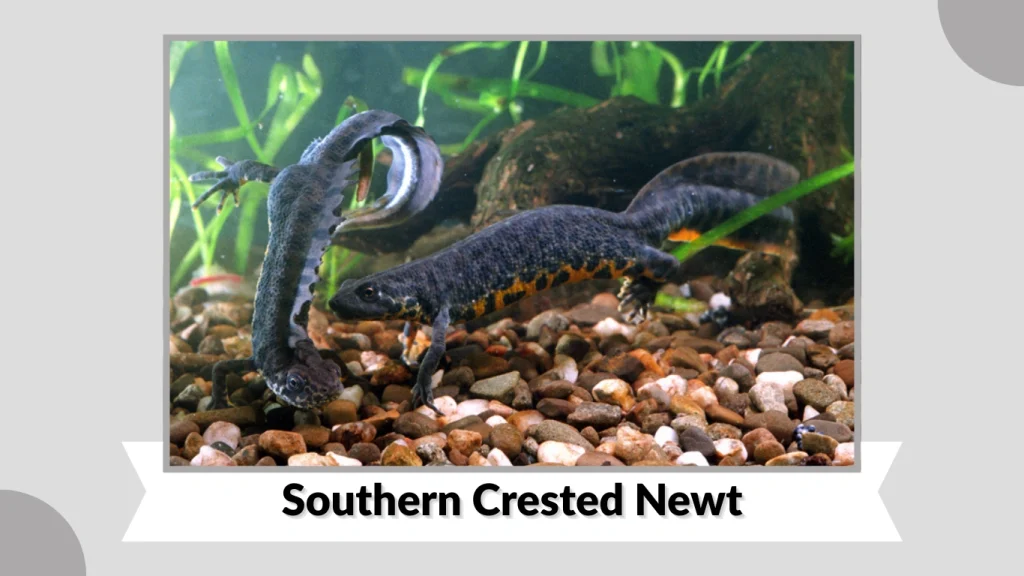
The Southern Crested Newt is a large European newt native to parts of southeastern Europe and western Asia. It is closely related to other crested newts and is known for its bold coloration and preference for warm, lowland habitats.
Identification
- Adults typically measure 6–7 inches (15–18 cm)
- Dark brown to black upper body
- Yellow to orange belly with irregular black blotches
- Rough, warty skin texture
- Males develop a high, jagged crest along the back and tail during breeding season
Habitat and Behaviors
Southern Crested Newts breed in ponds, lakes, marshes, and slow-moving streams, often in open lowland areas. Outside the breeding season, they live on land in grasslands, woodlands, and agricultural landscapes, sheltering under stones, logs, or in burrows. They are mainly nocturnal and are most active during cool, damp weather. During breeding season, males perform elaborate courtship displays involving tail movements and body posturing.
Diet and Lifecycle
Their diet consists of insects, worms, snails, slugs, tadpoles, and aquatic invertebrates. Breeding occurs in spring when females lay eggs individually on aquatic plants, carefully folding each leaf around the egg. Larvae develop in water and metamorphose within a few months. Juveniles then move onto land. Southern Crested Newts can live for over 10 years in suitable environments.
14. Northern Crested Newt

The Northern Crested Newt is a large and well-known amphibian native to northern and eastern Europe. It is one of the most studied newt species due to its wide distribution and its importance as an indicator of healthy freshwater ecosystems.
Identification
- Adults usually grow 6–7 inches (15–18 cm) long
- Dark brown to black upper body
- Bright yellow or orange belly with bold black blotches
- Rough, warty skin
- Males develop a tall, deeply notched crest during the breeding season
Habitat and Behaviors
Northern Crested Newts breed in ponds, lakes, and slow-moving freshwater bodies with dense aquatic vegetation. Outside the breeding season, they live on land in woodlands, grasslands, and farmland, hiding under logs, stones, or in burrows. They are mostly nocturnal and favor cool, moist conditions. During the breeding season, males perform elaborate aquatic courtship displays, using tail fanning and body movements to attract females.
Diet and Lifecycle
Their diet includes insects, worms, snails, slugs, tadpoles, and aquatic invertebrates. Breeding takes place in spring, with females laying eggs individually on aquatic plants, folding the leaves for protection. Larvae hatch and develop in water before metamorphosing into juveniles, which then move onto land. Northern Crested Newts can live for more than a decade under favorable conditions.
15. Corsican Brook Newt

The Corsican Brook Newt is a small, secretive species endemic to the island of Corsica. It is closely tied to cool, clean mountain streams and is considered an important indicator of high-quality freshwater habitats in the region.
Identification
- Adults typically measure 3–5 inches (8–12 cm)
- Slender body with smooth skin
- Brown to olive upper body, often mottled
- Yellow to orange belly with small dark markings
- Tail slightly flattened, adapted for swimming
Habitat and Behaviors
Corsican Brook Newts are strongly associated with clear, fast-flowing mountain streams, springs, and shaded brooks, usually at higher elevations. They spend much of their time in or near water and may hide under stones, submerged roots, or leaf litter. Activity peaks during cool, moist conditions, and they are often nocturnal. Compared to other newts, they are less likely to migrate far from water and are sensitive to habitat disturbance and pollution.
Diet and Lifecycle
Their diet consists mainly of aquatic invertebrates such as insect larvae, small crustaceans, worms, and snails. Breeding typically occurs in spring, with eggs laid in water and attached to submerged surfaces. Larvae develop in streams and may take several months to metamorphose. Juveniles usually remain close to aquatic habitats. Corsican Brook Newts have a relatively slow life cycle and can live for several years in stable, undisturbed environments.
16. Sardinian Brook Newt
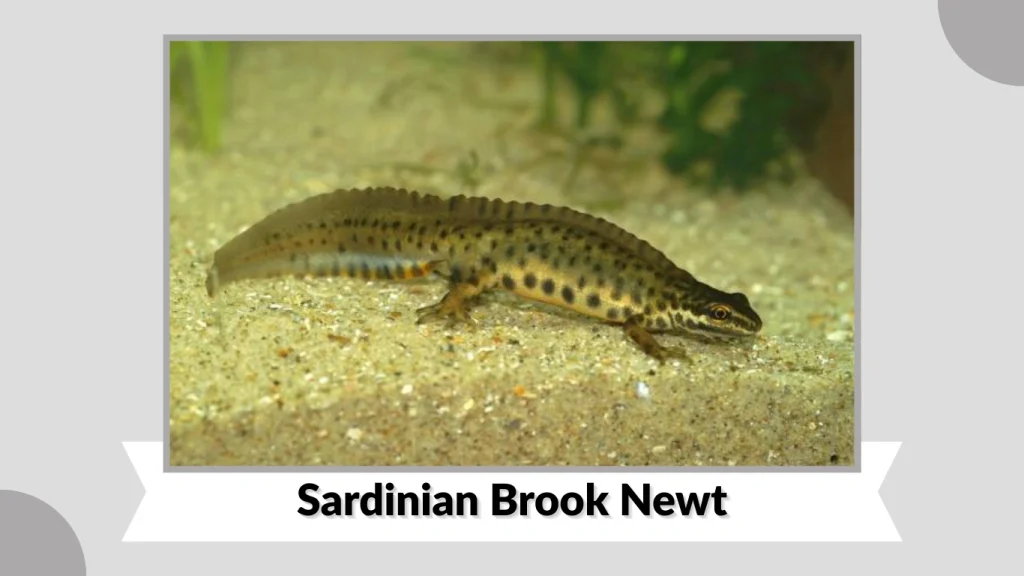
The Sardinian Brook Newt is a rare and localized species endemic to the island of Sardinia. It is closely associated with pristine freshwater habitats and is considered vulnerable due to its limited range and sensitivity to environmental changes.
Identification
- Adults usually measure 4–5 inches (10–12 cm)
- Slender body with smooth to slightly granular skin
- Brown to olive upper body with darker mottling
- Yellowish to orange belly with small dark spots
- Moderately flattened tail suited for swimming
Habitat and Behaviors
Sardinian Brook Newts inhabit cool, clear streams, springs, and shaded brooks, often in mountainous or forested areas. They are largely aquatic and remain close to water throughout the year. These newts are mostly nocturnal and tend to hide under stones, submerged vegetation, or leaf litter during the day. Due to their reliance on clean water, they are highly sensitive to pollution, habitat degradation, and water extraction.
Diet and Lifecycle
Their diet consists primarily of aquatic invertebrates, including insect larvae, small crustaceans, worms, and snails. Breeding occurs in spring, with females laying eggs in water attached to submerged surfaces. Larvae develop in streams and undergo metamorphosis after several months. Juveniles typically stay near aquatic habitats. Sardinian Brook Newts have a slow reproductive rate and can live for many years in stable environments.
17. Montseny Brook Newt

The Montseny Brook Newt is a critically endangered species with an extremely limited distribution in the Montseny mountain range of northeastern Spain. It is one of the rarest amphibians in Europe and is closely tied to cold, well-oxygenated mountain streams.
Identification
- Adults typically measure 4–5 inches (10–12 cm)
- Slender body with smooth skin
- Brown to dark olive upper body, sometimes mottled
- Yellow to orange underside with subtle markings
- Tail laterally compressed for efficient swimming
Habitat and Behaviors
Montseny Brook Newts are restricted to clear, fast-flowing streams and springs in shaded forested areas. They are highly aquatic and remain in or very close to water throughout their lives. Activity is mostly nocturnal, and they shelter under stones, submerged roots, or leaf litter during the day. Due to their narrow habitat requirements, they are extremely sensitive to water pollution, climate change, and habitat disturbance.
Diet and Lifecycle
Their diet consists mainly of aquatic invertebrates such as insect larvae, small crustaceans, worms, and snails. Breeding occurs in spring, with eggs laid in water and attached to submerged substrates. Larvae develop in streams and may take several months to metamorphose. Juveniles remain aquatic or close to water. Montseny Brook Newts have a slow life cycle and depend heavily on stable, high-quality freshwater environments.
18. Pyrenean Brook Newt
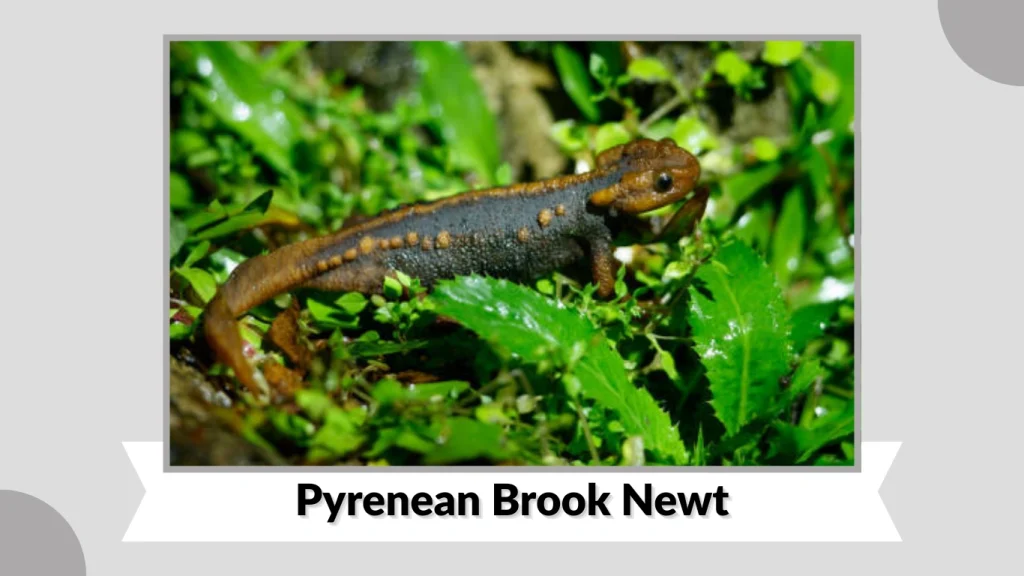
The Pyrenean Brook Newt is a specialized amphibian native to the Pyrenees mountain range between Spain and France. It is highly adapted to cold, fast-flowing mountain streams and is known for its streamlined body and strong swimming ability.
Identification
- Adults usually measure 4–6 inches (10–15 cm)
- Flattened head and slender body
- Brown to gray upper body, often mottled
- Yellowish underside with small dark spots
- Strong, laterally compressed tail for swimming
Habitat and Behaviors
Pyrenean Brook Newts inhabit cold, clear streams, springs, and mountain rivers, often at high elevations. They are almost entirely aquatic and remain active even in cold water. During the day, they hide under stones or within streambeds, emerging mainly at night to feed. Unlike many other newts, they rarely leave the water and are well adapted to fast currents. Their survival depends heavily on clean, well-oxygenated water.
Diet and Lifecycle
Their diet consists primarily of aquatic invertebrates such as insect larvae, crustaceans, worms, and small mollusks. Breeding occurs in water, where females attach eggs to submerged surfaces. Larvae develop in streams and may take several months to metamorphose. In colder environments, larvae can overwinter before transforming. Pyrenean Brook Newts have a slow growth rate and can live for many years in stable mountain habitats.
19. Himalayan Newt

The Himalayan Newt is a little-known amphibian native to parts of the eastern Himalayas. It inhabits high-altitude regions and is adapted to cool, moist environments. Due to its remote range and limited study, much of its natural history remains poorly documented.
Identification
- Adults typically measure 4–6 inches (10–15 cm)
- Stout body with moderately rough skin
- Dark brown to black upper body
- Lighter underside, often grayish or brown
- Short limbs and a laterally compressed tail
Habitat and Behaviors
Himalayan Newts are found in montane forests, alpine meadows, and high-altitude wetlands, often near streams, ponds, or marshy areas. They are believed to be semi-aquatic, spending time both in water and on land depending on season and conditions. Activity is thought to peak during cool, wet periods, especially during the monsoon season. They likely shelter under rocks, logs, and dense vegetation to avoid temperature extremes and dehydration.
Diet and Lifecycle
Their diet is presumed to consist of insects, worms, snails, and other small invertebrates found in aquatic and terrestrial habitats. Breeding is thought to occur in freshwater bodies, where eggs are laid and larvae develop in water before metamorphosis. Growth is likely slow due to cold temperatures at high elevations. Like many mountain amphibians, Himalayan Newts are vulnerable to habitat disturbance and environmental change.
20. Tylototriton (Crocodile Newt)
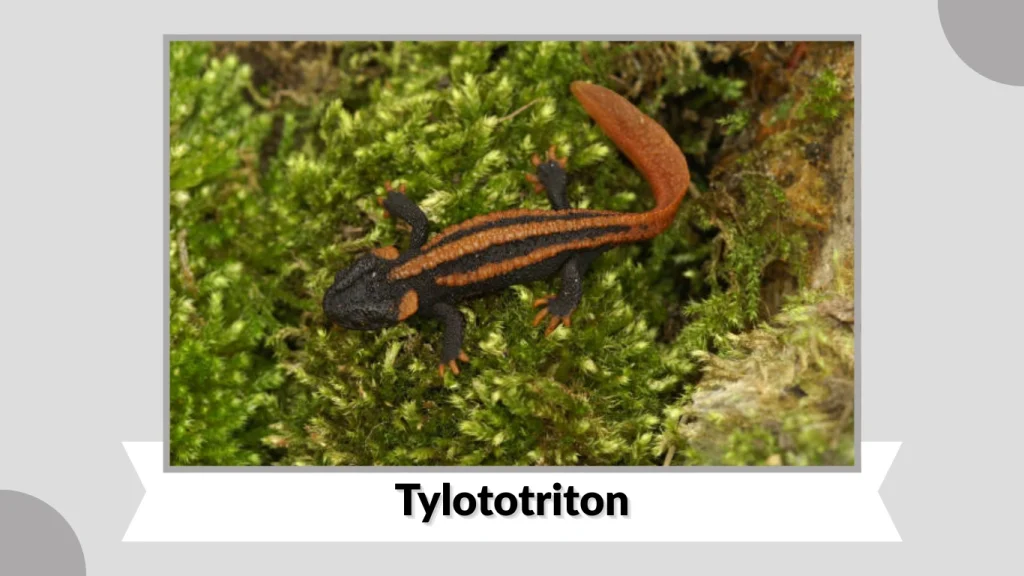
Crocodile Newts are a group of striking, heavily armored-looking newts native to Southeast Asia. They are named for their ridged bodies and robust appearance, which resemble a crocodile’s texture. These newts are generally secretive and favor cool, shaded habitats.
Identification
- Adults typically measure 5–8 inches (13–20 cm)
- Dark brown to black body with rough, ridged skin
- Prominent glandular ridges along the head, body, and tail
- Orange or yellow markings on the head, limbs, or ribs
- Stocky build with a strong tail
Habitat and Behaviors
Crocodile Newts inhabit forested hills, montane regions, and shaded wetlands, often near slow-moving streams, ponds, or seasonal pools. They are mostly terrestrial outside the breeding season and tend to hide under logs, rocks, or leaf litter. Activity is usually nocturnal, especially during rainy periods. When threatened, they may arch their bodies and exude toxic secretions from their skin as a defense.
Diet and Lifecycle
Their diet includes insects, worms, snails, small crustaceans, and other invertebrates. Breeding typically occurs during the rainy season, when adults move to shallow water bodies to reproduce. Eggs are laid in water, and larvae develop aquatically before metamorphosis. Crocodile Newts grow slowly and are relatively long-lived. Many species in this group are threatened due to habitat loss and overcollection.
21. Emperor Newt

The Emperor Newt is a striking and rare amphibian native to southern China. It is admired for its bold coloration and heavily textured body. Due to habitat loss and limited distribution, it is considered vulnerable and is of significant conservation concern.
Identification
- Adults usually measure 5–7 inches (13–18 cm)
- Dark brown to black body with a rough, warty texture
- Bright orange or yellow markings along the ribs, head, and tail
- Prominent raised ridges running along the sides of the body
- Strong limbs and a laterally compressed tail
Habitat and Behaviors
Emperor Newts inhabit forested hills, montane wetlands, and shaded areas near ponds, slow streams, and rice paddies. They are mostly terrestrial outside the breeding season and spend much of their time hidden under logs, rocks, or leaf litter. Activity is primarily nocturnal, increasing during rainy periods. When threatened, they may arch their bodies to display bright warning colors and secrete toxins through their skin to deter predators.
Diet and Lifecycle
Their diet consists mainly of insects, worms, snails, and other small invertebrates. Breeding occurs during the rainy season when adults move into shallow water to reproduce. Eggs are laid in water, and larvae develop aquatically before undergoing metamorphosis. Emperor Newts grow slowly and can live for many years in stable environments. Habitat destruction and illegal collection pose serious threats to their survival.
22. Knobby Newt

The Knobby Newt is a distinctive amphibian native to parts of Southeast Asia. It gets its name from the prominent, raised glandular knobs along its body, giving it a rugged appearance. This species is secretive and closely tied to forested habitats.
Identification
- Adults typically measure 4–6 inches (10–15 cm)
- Dark brown to black body coloration
- Rough skin with pronounced knob-like glands along the sides
- Orange or yellow markings on ribs and limbs
- Stocky body with a laterally compressed tail
Habitat and Behaviors
Knobby Newts inhabit humid forests, forest edges, and montane regions near ponds, streams, or seasonal pools. They are largely terrestrial outside the breeding season and spend much of their time hidden under logs, rocks, or leaf litter. Activity is mostly nocturnal and increases during rainy periods. When threatened, they may display their bright markings and secrete toxins from their skin as a defense.
Diet and Lifecycle
Their diet consists mainly of insects, worms, snails, and other small invertebrates. Breeding usually takes place during the rainy season, when adults move to shallow freshwater bodies. Eggs are laid in water, and larvae develop aquatically before metamorphosis. Knobby Newts grow slowly and are relatively long-lived, but habitat loss poses a significant threat to their populations.
23. Red-spotted Newt

The Red-spotted Newt is a well-known amphibian native to eastern North America. It is the adult aquatic form of the Eastern Newt and is easily recognized by its spotted pattern and adaptable lifestyle across different habitats.
Identification
- Adults typically measure 2.5–5 inches (6–13 cm)
- Olive-green to brown upper body
- Distinct red spots bordered with black along the back
- Yellow to pale orange underside
- Rough, slightly bumpy skin
Habitat and Behaviors
Red-spotted Newts inhabit ponds, lakes, marshes, and slow-moving streams with abundant vegetation. Unlike the terrestrial red eft stage, adults are fully aquatic and spend most of their time in water. They are active both day and night, especially during cooler temperatures. When threatened, they rely on toxic skin secretions to deter predators. They often overwinter at the bottom of ponds, remaining active beneath the ice.
Diet and Lifecycle
Their diet includes insects, worms, snails, small crustaceans, and aquatic larvae. As adults, they feed primarily in water. Breeding occurs in spring, when females lay eggs on submerged plants. The eggs hatch into aquatic larvae, continuing the species’ three-stage life cycle. Red-spotted Newts can live for over 10 years, making them one of the longer-lived salamanders in their range.
24. Paddle-tail Newt

The Paddle-tail Newt is a large, aquatic newt native to parts of China and Southeast Asia. It is named for its broad, flattened tail, which is well adapted for swimming. This species is among the most aquatic of all newts and rarely ventures far from water.
Identification
- Adults typically measure 6–8 inches (15–20 cm)
- Dark brown to black upper body
- Smooth to slightly rough skin texture
- Broad, paddle-shaped tail with a fin-like edge
- Sturdy body with strong limbs
Habitat and Behaviors
Paddle-tail Newts inhabit rivers, streams, ponds, reservoirs, and slow-moving freshwater systems, often in hilly or mountainous regions. They are highly aquatic and spend most, if not all, of their lives in water. Activity is mostly nocturnal, with individuals hiding under rocks, submerged logs, or vegetation during the day. They are strong swimmers and rely on water depth and cover for protection rather than frequent movement onto land.
Diet and Lifecycle
Their diet consists of aquatic invertebrates such as insects, worms, crustaceans, snails, and occasionally small fish or tadpoles. Breeding occurs in water, where eggs are laid and attached to submerged surfaces. Larvae develop fully in aquatic environments before metamorphosis. Paddle-tail Newts grow slowly and can live for many years, but they are threatened by habitat degradation and water pollution.
25. Hong Kong Newt

The Hong Kong Newt is a rare and localized amphibian found in southern China, including Hong Kong. It is closely associated with clean, shaded forest streams and is considered vulnerable due to habitat loss and environmental pressure.
Identification
- Adults typically measure 4–6 inches (10–15 cm)
- Dark brown to black upper body
- Rough, granular skin texture
- Orange to yellow markings along the ribs and tail
- Laterally compressed tail adapted for swimming
Habitat and Behaviors
Hong Kong Newts inhabit cool, clear streams, forest pools, and shaded freshwater habitats in hilly and mountainous regions. They are strongly aquatic and usually remain in or near water throughout the year. Activity is mainly nocturnal, with individuals hiding under rocks, submerged roots, or leaf litter during the day. They are sensitive to water pollution and habitat disturbance, making them reliable indicators of healthy forest stream ecosystems.
Diet and Lifecycle
Their diet consists primarily of aquatic invertebrates such as insect larvae, small crustaceans, worms, and snails. Breeding occurs in freshwater, where females lay eggs attached to submerged surfaces. Larvae develop in water and undergo metamorphosis after several months. Juveniles typically remain close to aquatic habitats. The Hong Kong Newt has a slow life cycle and depends heavily on stable, undisturbed environments for long-term survival.
FAQs
1. What is the difference between a newt and a salamander?
Newts are a type of salamander. In general, newts tend to have rougher skin, spend more time in water as adults, and often have brighter warning colors compared to other salamanders.
2. Are newts poisonous to humans?
Many newts produce toxins through their skin as a defense against predators. While these toxins are usually not dangerous to humans, handling newts can cause skin irritation or illness if the toxin is ingested. It’s best to avoid handling them or wash hands thoroughly afterward.
3. Where do newts usually live?
Newts live in a variety of habitats, including ponds, lakes, streams, marshes, forests, and grasslands. Most species require clean freshwater for breeding and moist terrestrial environments for part of their life cycle.
4. What do newts eat in the wild?
Newts mainly feed on small invertebrates such as insects, worms, snails, crustaceans, and aquatic larvae. Larger species may also eat tadpoles or small fish.
5. How long do newts live?
The lifespan of a newt varies by species, but many live between 10 and 15 years. Some larger or well-protected species can live over 20 years in favorable conditions.