



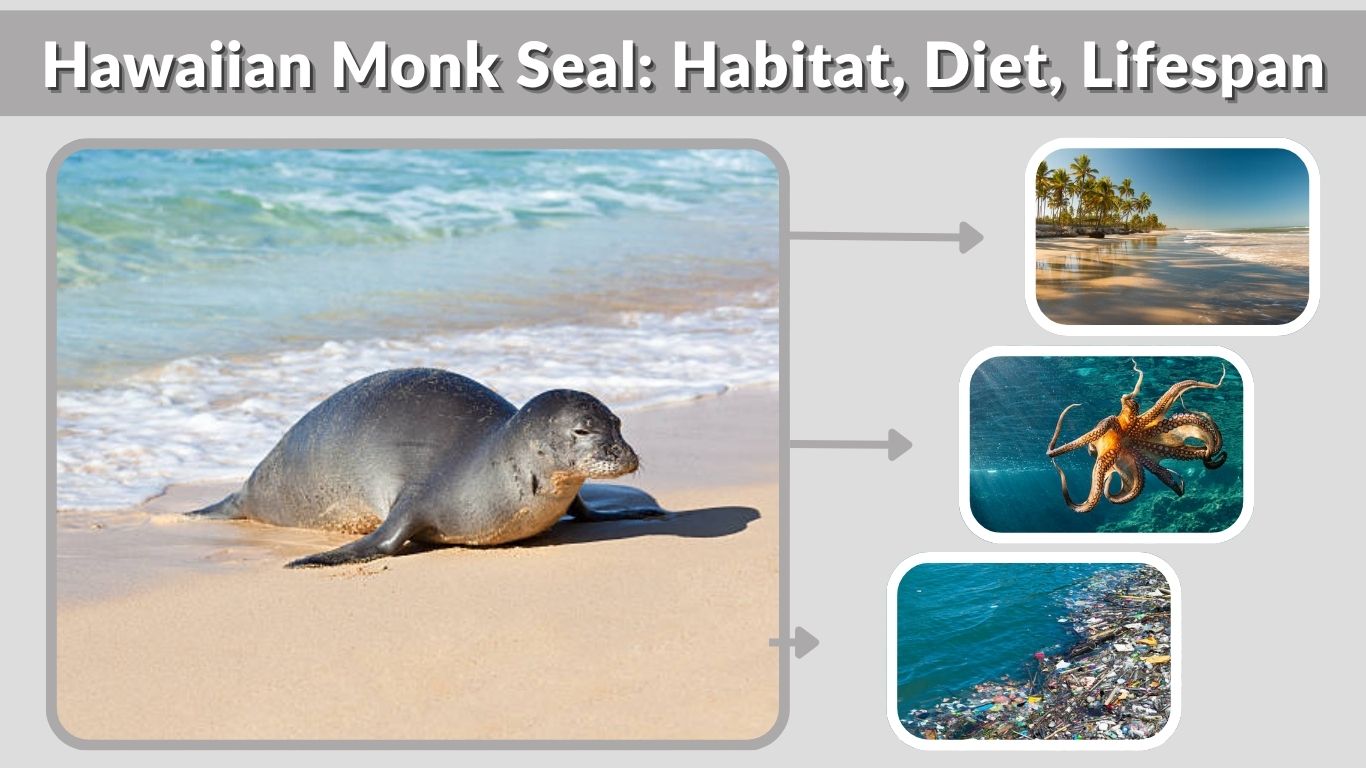
The Hawaiian monk seal is one of the rarest and most endangered marine mammals in the world. Native to the Hawaiian Islands, this unique seal species is known for its gentle nature and its habit of resting on sandy beaches. Unlike many other seals, it thrives in warm tropical waters. With a small population and increasing environmental threats, the Hawaiian monk seal has become a symbol of marine conservation. In this article, we’ll explore its habitat, diet, population, lifespan, and fascinating facts.
What is a Hawaiian Monk Seal?
Scientific Classification
The Hawaiian monk seal’s scientific name is Neomonachus schauinslandi. It belongs to the family Phocidae, also known as true seals. These seals lack external ear flaps and are highly adapted for aquatic life.
The Hawaiian monk seal is one of only two remaining monk seal species in the world, making it extremely important from a conservation perspective.
Physical Description
Hawaiian monk seals are medium-sized marine mammals with a streamlined body built for swimming. Adults typically grow between 2.1 and 2.4 meters (7 to 8 feet) in length and weigh around 140 to 270 kilograms.
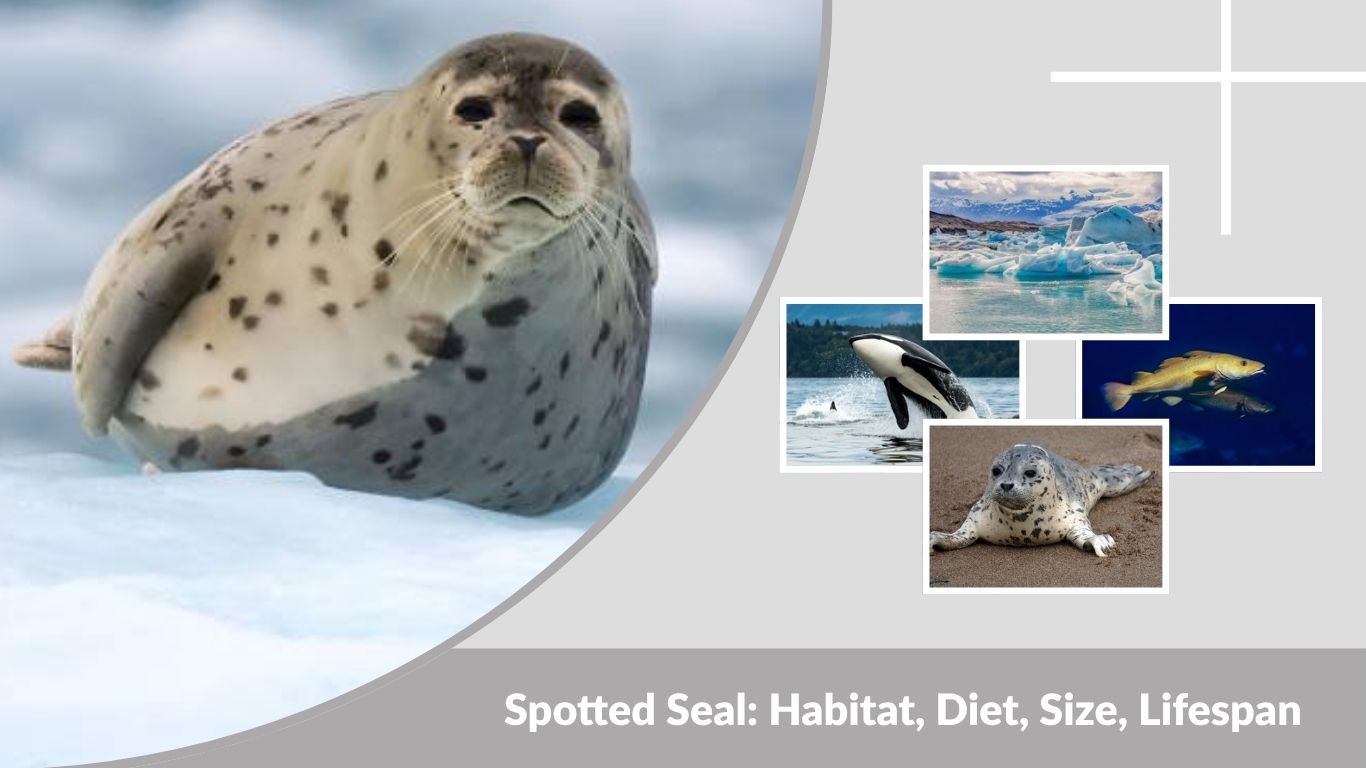
Their skin is usually gray or brown, often appearing darker when wet and lighter when dry. Unlike spotted seals, they do not have distinct markings, giving them a more uniform appearance.
They have a rounded head, large eyes, and short flippers. A thick layer of blubber helps them maintain body temperature and store energy.
Hawaiian Monk Seal Size and Physical Traits

The Hawaiian monk seal has a body well adapted for life in warm coastal waters. Its physical traits allow it to swim efficiently, hunt effectively, and rest comfortably on land.
Key Size and Physical Traits
- Average Length: 2.1 to 2.4 meters (7–8 feet)
- Weight Range: 140 to 270 kilograms
- Body Shape: Streamlined for efficient swimming
- Fur Color: Gray to brown, often changes shade when wet/dry
- Blubber Layer: Provides insulation and energy storage
- Head Shape: Rounded with large eyes
- Flippers: Short and strong for maneuvering
- Whiskers (Vibrissae): Sensitive for detecting prey
- Adaptation: Suited for warm, tropical marine environments
Hawaiian Monk Seal Habitat

Where Do Hawaiian Monk Seals Live?
Hawaiian monk seals are found only in the Hawaiian Islands. Most of the population lives in the Northwestern Hawaiian Islands, a remote chain of islands and atolls.
A smaller number of seals can also be found in the main Hawaiian Islands, where they are sometimes seen resting on beaches.
Habitat Preferences
These seals prefer sandy beaches, coral reefs, and shallow coastal waters. Beaches are important for resting, molting, and giving birth.
In the water, they often hunt near the ocean floor, especially around reefs where food is abundant.
Habitat Challenges
Hawaiian monk seals face several habitat-related challenges. Human activity, tourism, and coastal development can disturb their resting and breeding areas.
Additionally, limited space on beaches and competition for safe habitats make survival more difficult for this already endangered species.
Hawaiian Monk Seal Diet

What Does a Hawaiian Monk Seal Eat?
Hawaiian monk seals are carnivorous and feed on a variety of marine animals. Their diet includes fish, squid, octopus, and crustaceans.
They often hunt species that live near the ocean floor, such as reef fish and eels.
Hunting Behavior
These seals are solitary hunters and usually forage alone. They dive into shallow and moderately deep waters to search for food along reefs and sandy bottoms.
They use their agility and persistence to explore cracks and crevices where prey may be hiding.
Feeding Adaptations
Hawaiian monk seals have strong jaws and sharp teeth that allow them to catch and consume a wide range of prey. Their sensitive whiskers help detect movement in the water, making it easier to locate hidden animals.
Their ability to dive and maneuver through complex reef environments makes them effective hunters.
Hawaiian Monk Seal Facts
Population Status
The Hawaiian monk seal is critically important from a conservation standpoint due to its small population. It is estimated that there are around 1,500 individuals remaining in the wild.
Although conservation efforts have helped stabilize numbers in recent years, the species is still considered endangered.
Behavior
Hawaiian monk seals are generally solitary and calm animals. They spend a significant amount of time resting on beaches, often lying still for hours.
They are not aggressive toward humans but can become defensive if approached too closely, especially mothers with pups.
Predators
The main natural predators of Hawaiian monk seals are sharks, particularly tiger sharks. Young seals are more vulnerable, while adults are less frequently targeted.
However, the greatest threats to their survival come from human-related factors rather than natural predators.
Communication
Hawaiian monk seals communicate through a combination of vocal sounds and body language. These include growls, barks, and soft calls, especially between mothers and pups.
Although generally quiet, communication becomes more noticeable during social interactions and the breeding period.
Hawaiian Monk Seal Baby (Pups)

Breeding Season
Hawaiian monk seals can breed throughout the year, although there are peak periods depending on the region. Breeding usually takes place on sandy beaches where females give birth in safe, quiet areas.
Appearance of Pups
Newborn pups are born with a soft black coat, which helps protect them in their early days. This dark fur is gradually shed as they grow, and they develop the gray-brown coloration of adults.
Maternal Care
Mother monk seals provide strong care for their pups during a nursing period that lasts about five to six weeks. During this time, the mother stays close and feeds the pup with rich, fatty milk.
After weaning, the pup must quickly learn to swim and hunt on its own, relying on its instincts and early development.
Hawaiian Monk Seal Lifespan

Average Lifespan
Hawaiian monk seals typically live between 25 and 30 years in the wild, although some individuals may live longer under favorable conditions.
Factors Affecting Lifespan
Their lifespan is influenced by food availability, habitat quality, and human-related threats such as pollution and fishing gear entanglement.
Healthy ecosystems and protected environments are essential for improving their survival rates.
Life Cycle of Hawaiian Monk Seal
Birth Stage
The life cycle begins with pups being born on beaches. At this stage, they are completely dependent on their mother for nourishment and protection.
Juvenile Stage
After weaning, young seals enter the juvenile stage. They begin learning to swim, dive, and hunt for food. This is a critical period for survival and development.
Adult Stage
As adults, Hawaiian monk seals become skilled hunters and spend most of their time in the ocean. They return to land for resting, breeding, and molting.
Role in the Ecosystem
Hawaiian monk seals play an important role in coral reef ecosystems. As predators, they help regulate populations of fish and other marine organisms.
Their presence is an indicator of a healthy marine environment, making them an important species for conservation.
Threats and Conservation

Historical Threats
In the past, Hawaiian monk seals faced threats from hunting and human disturbance. These factors contributed to a decline in their population.
Current Threats
Today, the main threats include marine debris, entanglement in fishing gear, habitat loss, and climate change. Plastic pollution and discarded fishing nets can be especially dangerous.
Human disturbance on beaches also affects breeding and resting behavior.
Conservation Status
The Hawaiian monk seal is classified as “Endangered.” Conservation efforts include habitat protection, rescue programs, and public awareness campaigns.
Organizations and local communities in Hawaii are working together to protect this species and support its recovery.
Interesting Facts About Hawaiian Monk Seals
- They are one of the rarest seal species in the world.
- They are found only in Hawaii.
- They often rest on beaches during the day.
- They are excellent divers and hunters.
- Each individual has unique scars and markings.
FAQs
Why are Hawaiian monk seals so rare?
Hawaiian monk seals are rare due to historical hunting, habitat loss, low reproduction rates, and modern threats like pollution and fishing gear entanglement.
How deep can Hawaiian monk seals dive?
Hawaiian monk seals can dive up to 500 meters (1,600 feet) and stay underwater for around 20 minutes while hunting for food.
Are Hawaiian monk seals dangerous to humans?
No, they are generally not dangerous. However, they should not be approached, especially mothers with pups, as they may become defensive.
Do Hawaiian monk seals migrate?
They do not migrate long distances like some other seals but may move between islands in search of food and suitable habitat.
What is being done to protect Hawaiian monk seals?
Conservation efforts include habitat protection, rescue programs, removal of marine debris, and public awareness campaigns in Hawaii.
Conclusion
The Hawaiian monk seal is a unique and endangered marine mammal that plays a vital role in Hawaii’s marine ecosystems. Despite facing numerous threats, ongoing conservation efforts offer hope for its survival. Protecting this species requires continued awareness, responsible human behavior, and strong conservation actions. By preserving the Hawaiian monk seal, we also protect the rich biodiversity of the ocean and ensure a healthier marine environment for future generations.