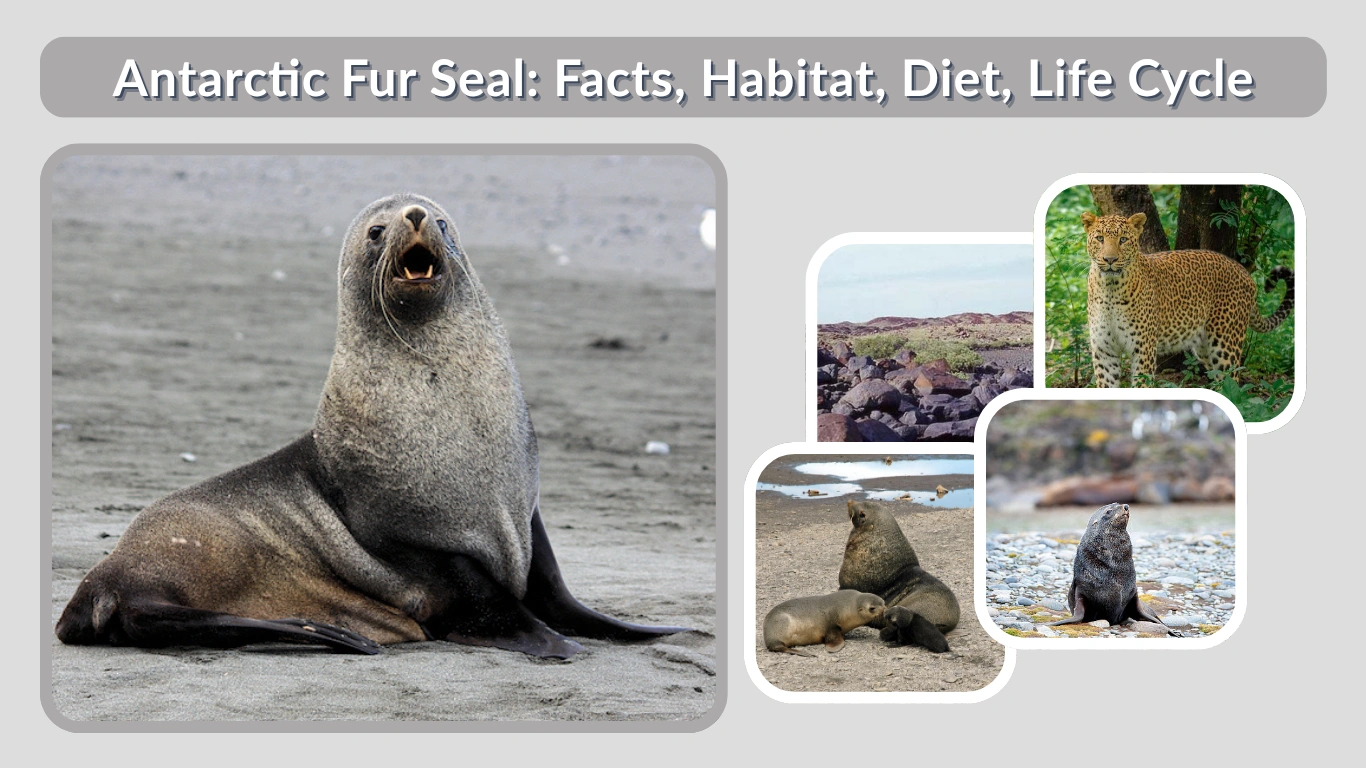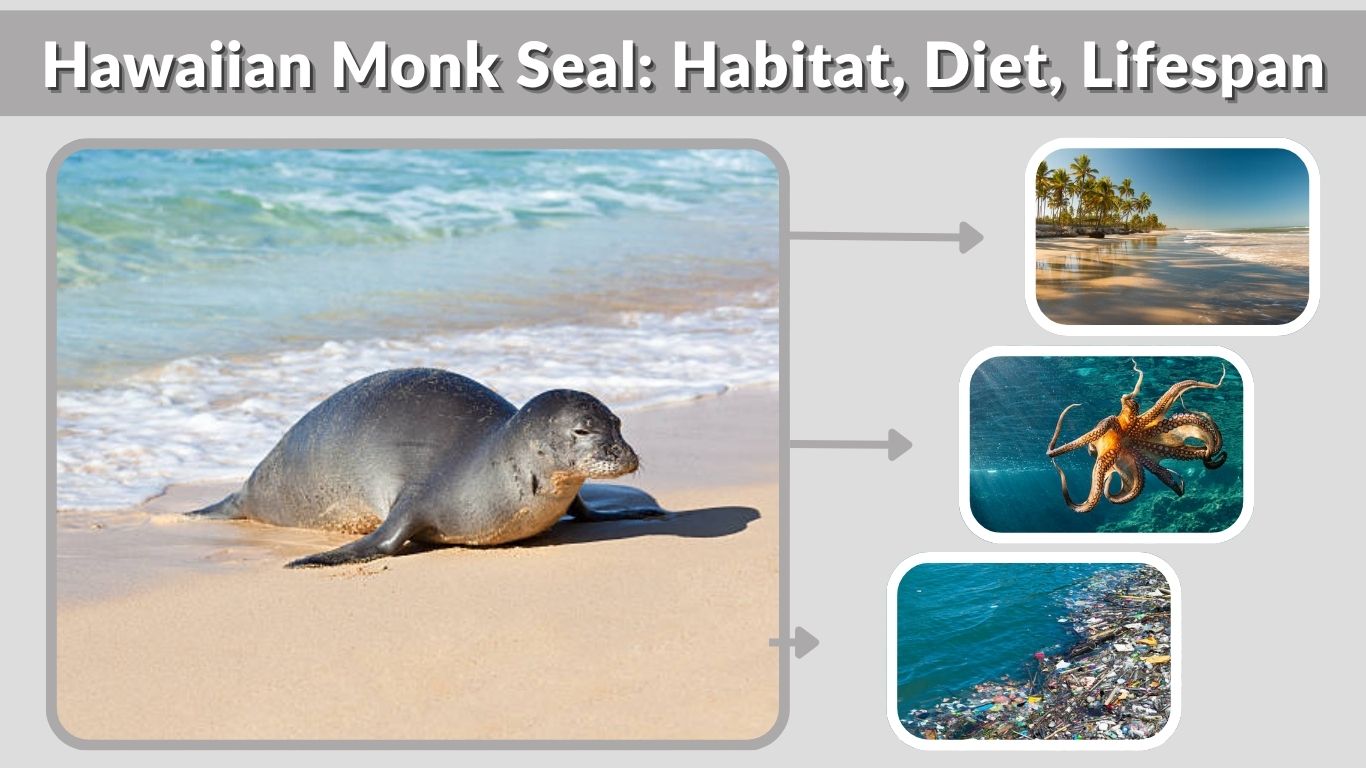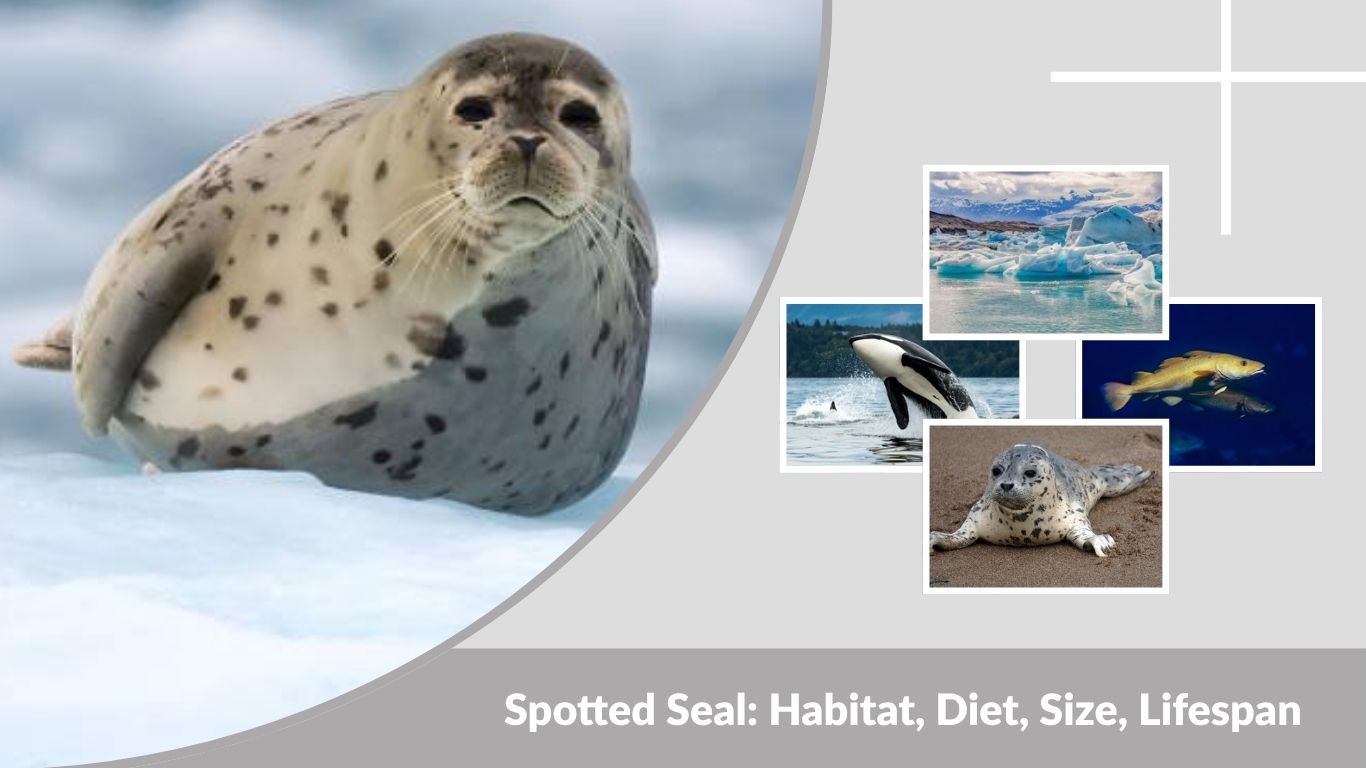





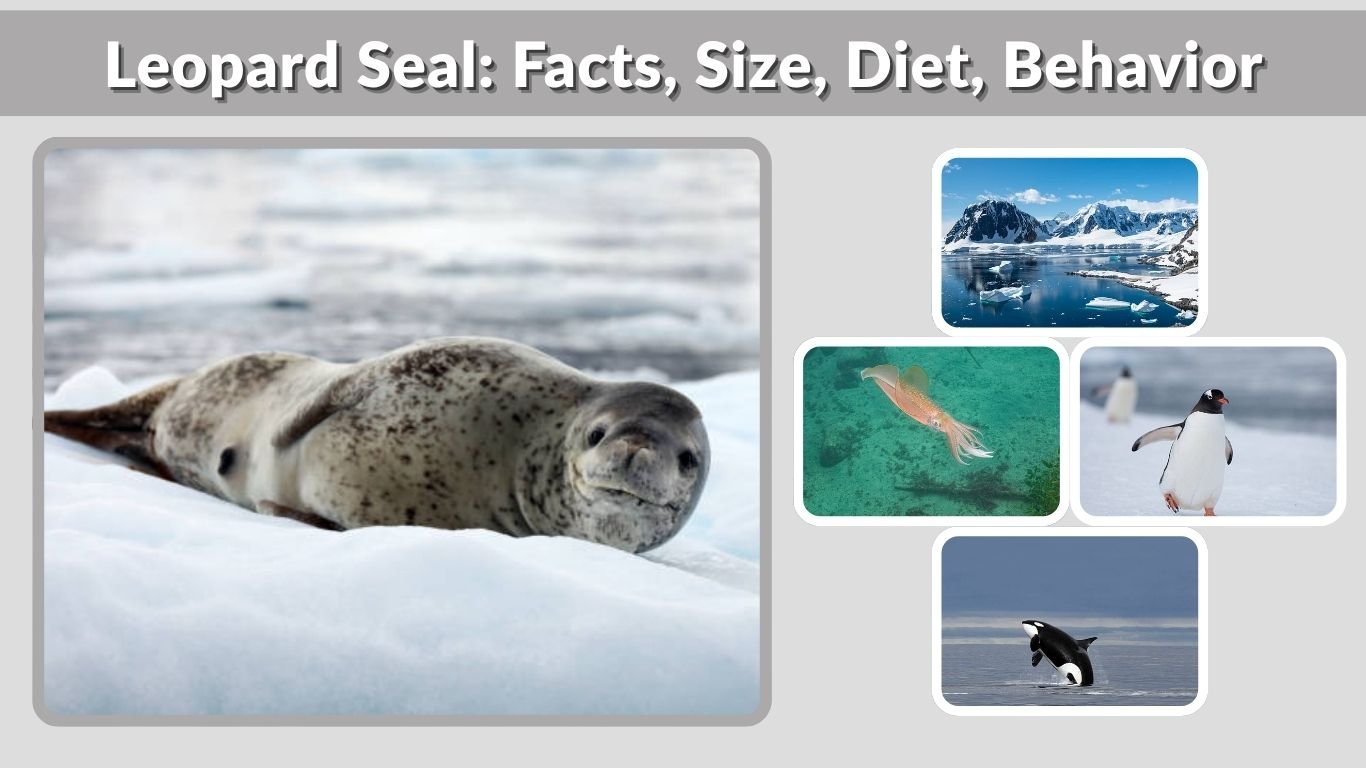
The leopard seal is one of the most powerful and fascinating predators in the Antarctic ecosystem. Known for its sleek body and spotted coat that resembles a leopard, this marine mammal is both graceful and formidable. Unlike many other seals, leopard seals are active hunters that feed on a wide range of prey, including penguins. Their strength, speed, and adaptability make them one of the top predators in the icy waters of the Southern Ocean.
What is a Leopard Seal?
The leopard seal (Hydrurga leptonyx) is a large species of earless seal belonging to the family Phocidae. It is widely recognized for its predatory nature and unique physical features. Found mainly in Antarctic and sub-Antarctic regions, leopard seals spend much of their time in cold ocean waters and around floating sea ice.
They are solitary animals and are often seen alone, unlike some other seal species that form large groups. Their role as an apex predator places them high in the Antarctic food chain.
Leopard Seal Physical Characteristics
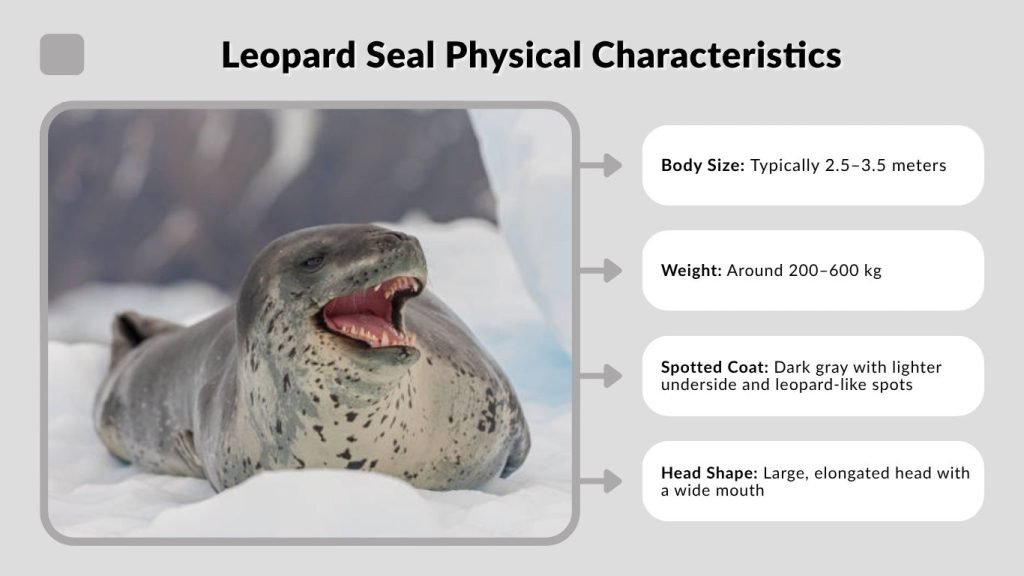
Leopard seals are large, powerful marine mammals built for speed and predation in icy Antarctic waters. Their long, streamlined bodies and strong jaws make them highly efficient hunters. Unlike many other seals, they have a more reptile-like head shape and flexible neck, which helps them capture and handle larger prey with ease.
Key Physical Features:
- Body Size: Typically 2.5–3.5 meters (8–11.5 feet) long
- Weight: Around 200–600 kg, with females larger than males
- Spotted Coat: Dark gray with lighter underside and leopard-like spots
- Head Shape: Large, elongated head with a wide mouth
- Teeth: Sharp, pointed teeth for catching and tearing prey
- Body Shape: Long, sleek, and streamlined for fast swimming
- Flippers: Strong front flippers for powerful movement in water
- Blubber Layer: Thick fat layer for insulation in freezing temperatures
Leopard Seal Habitat
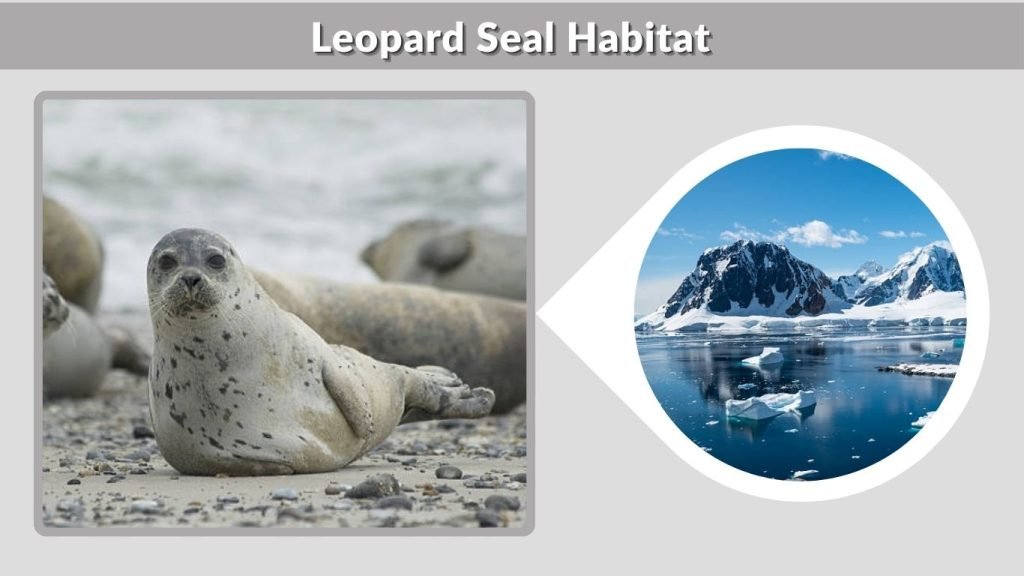
Geographic Distribution
Leopard seals are primarily found in the Antarctic and sub-Antarctic regions. They are commonly seen around Antarctica but may also travel to nearby islands and even reach southern parts of continents such as South America, Africa, and Australia.
Ice and Ocean Environment
These seals are closely associated with pack ice, which they use as a platform for resting and breeding. However, they are also highly comfortable in open ocean waters, where they spend much of their time hunting.
Seasonal Movement
Leopard seals may move seasonally depending on ice conditions and food availability. During colder months, they remain close to the ice, while in warmer seasons, they may travel farther north.
Leopard Seal Behavior and Adaptations
Solitary and Territorial Nature
Leopard seals are generally solitary and highly territorial. They prefer to live and hunt alone, which helps reduce competition for food. Their independence is a key factor in their success as predators.
Hunting Behavior
Unlike many seals that feed mainly on fish, leopard seals are active hunters capable of capturing large prey. They often hunt penguins and other seals, using stealth and speed to ambush their targets. Their hunting skills make them one of the most feared predators in their environment.
Swimming and Diving
Leopard seals are excellent swimmers and can move quickly through the water. They are capable of deep dives and can remain underwater for extended periods while searching for food. Their streamlined bodies and powerful muscles make them highly efficient in the water.
Leopard Seal Diet
Main Food Sources
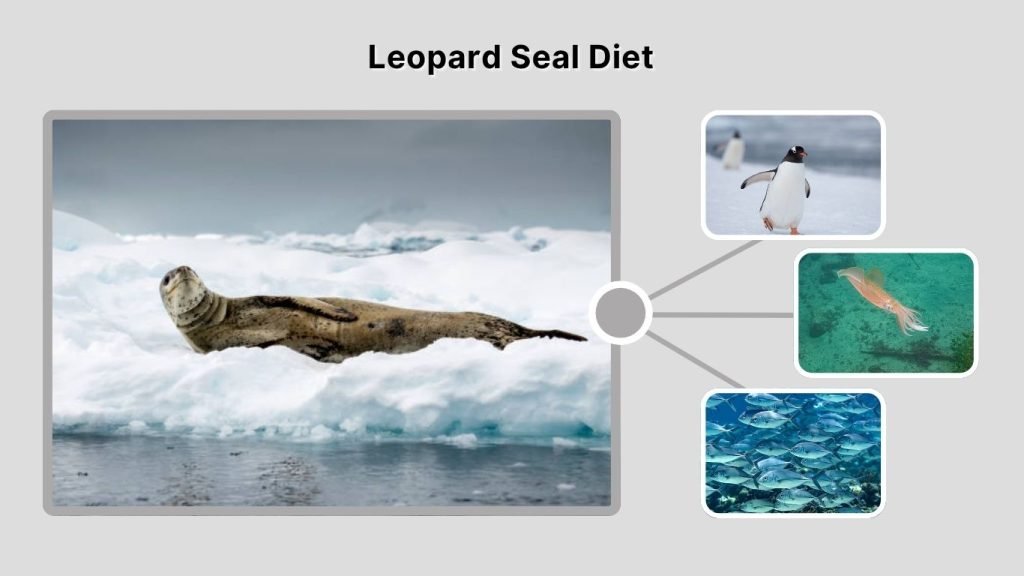
Leopard seals have a varied diet that includes penguins, fish, squid, and krill. Younger seals tend to eat smaller prey like krill and fish, while adults often hunt larger animals such as penguins.
Hunting Techniques
These seals use ambush tactics to catch their prey. They often wait near the edges of ice where penguins enter the water. Once they catch their prey, they may shake it violently to tear it apart into smaller pieces.
Role in the Ecosystem
As apex predators, leopard seals play a crucial role in maintaining the balance of the Antarctic ecosystem. By controlling the populations of penguins and other marine animals, they help ensure the stability of the food chain.
Leopard Seal Reproduction and Life Cycle
Breeding Season
Leopard seals breed during the Antarctic summer, typically between November and February. During this time, males and females come together briefly for mating. Like many seal species, they are otherwise solitary outside of the breeding season.
Birth and Pups
Female leopard seals give birth to a single pup on floating sea ice. The pup is born with a soft coat and depends entirely on its mother for nourishment during the early stages of life. The nursing period lasts several weeks, during which the pup grows rapidly and develops the strength needed to survive in cold waters.
Lifespan
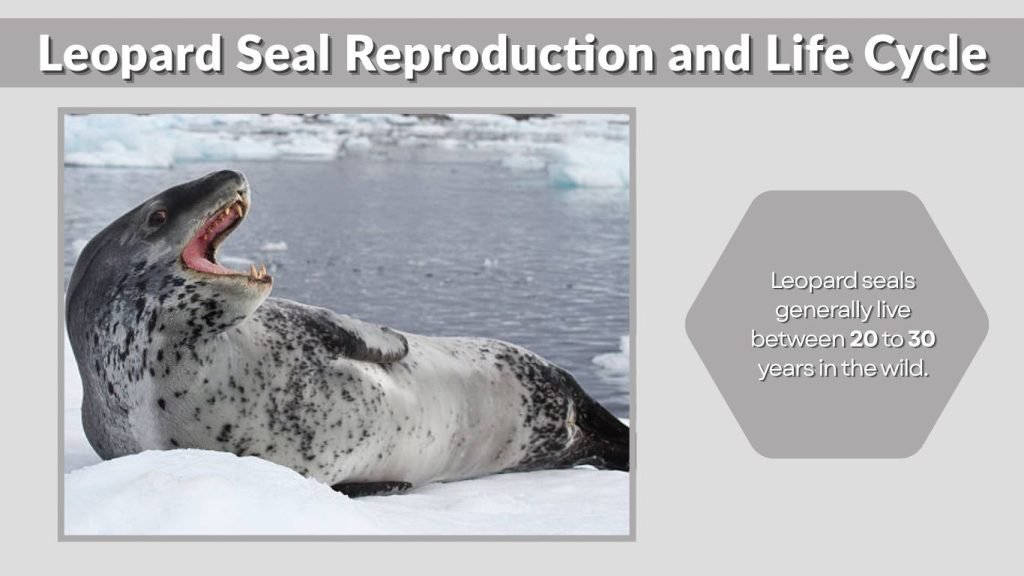
Leopard seals generally live between 20 to 30 years in the wild. Their survival depends on factors such as food availability, environmental conditions, and predation.
Leopard Seal Predators and Threats
Natural Predators
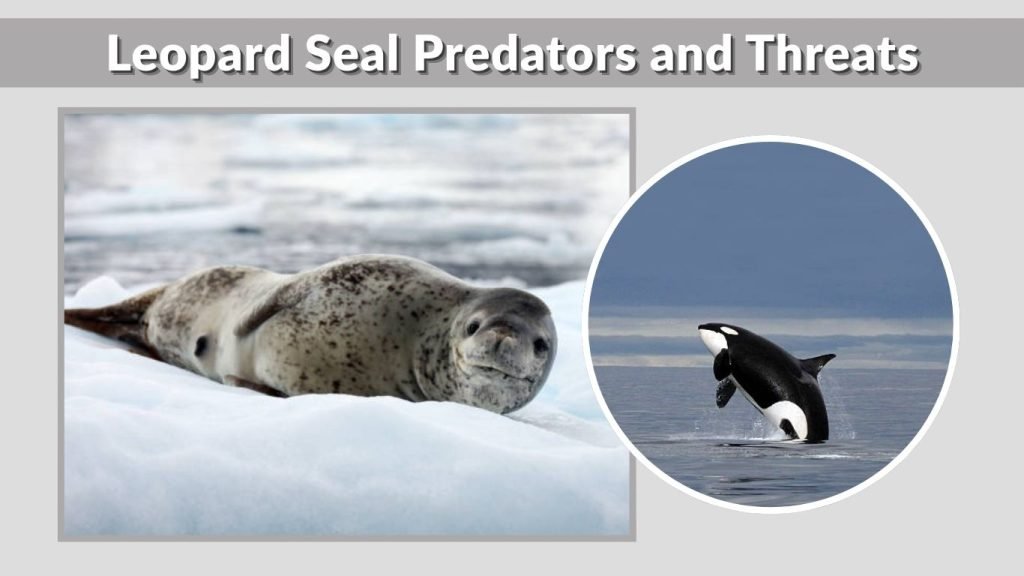
Leopard seals are apex predators, meaning they have very few natural enemies. However, killer whales (orcas) are known to prey on them, especially in open water.
Environmental Threats
Climate change poses a major threat to leopard seals. The reduction of sea ice affects their breeding and resting habitats. Changes in prey availability due to shifting ecosystems can also impact their survival.
Human Impact
Although leopard seals are not heavily hunted, they can be affected by human activities such as pollution, climate change, and increased shipping in Antarctic waters. These factors may disrupt their natural environment over time.
Conservation Status
Leopard seals are currently classified as “Least Concern” by the IUCN, indicating that their population is stable. However, scientists continue to monitor them due to potential future risks associated with environmental changes in the Antarctic.
Interesting Leopard Seal Facts
- Leopard seals are one of the top predators in the Antarctic ecosystem.
- They can hunt and eat penguins, unlike most other seal species.
- Females are usually larger than males.
- Their powerful jaws and sharp teeth make them highly effective hunters.
- They are known for their curiosity and have occasionally approached humans in the water.
Leopard Seal vs Other Seals
Leopard Seal vs Elephant Seal
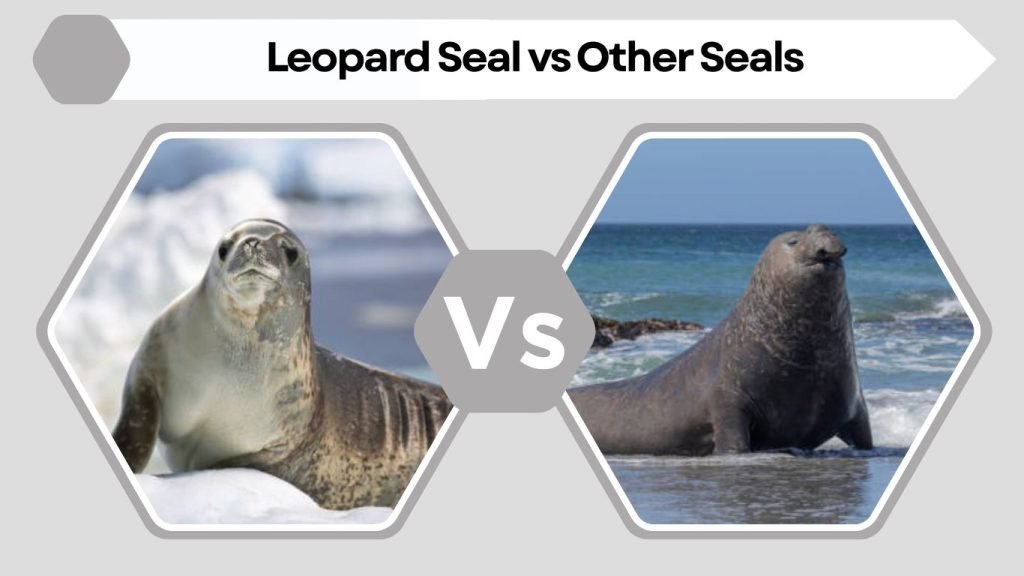
Leopard seals are more agile and predatory, while elephant seals are larger but feed mainly on fish and squid. Elephant seals are less aggressive compared to leopard seals.
Leopard Seal vs Weddell Seal
Weddell seals are generally calm and feed mostly on fish, whereas leopard seals are aggressive hunters that prey on larger animals like penguins and other seals.
FAQs
What do leopard seals eat?
Leopard seals eat penguins, fish, squid, and krill. Adult seals often hunt larger prey like penguins.
Where do leopard seals live?
They live in Antarctic and sub-Antarctic waters, usually around sea ice and cold ocean regions.
How big are leopard seals?
Leopard seals can grow between 2.5 to 3.5 meters long and weigh up to 600 kilograms.
Are leopard seals dangerous to humans?
Yes, they are powerful predators and can be dangerous, but attacks on humans are extremely rare.
Why are they called leopard seals?
They are named for their spotted coat, which resembles the pattern of a leopard.
Conclusion
The leopard seal is a remarkable and powerful marine predator that plays a vital role in the Antarctic ecosystem. With its unique spotted appearance, strong hunting abilities, and adaptability to extreme environments, it stands out among seal species. Although currently not endangered, the ongoing effects of climate change highlight the importance of protecting its habitat. Understanding and conserving leopard seals is essential for maintaining the balance of life in the Southern Ocean.