



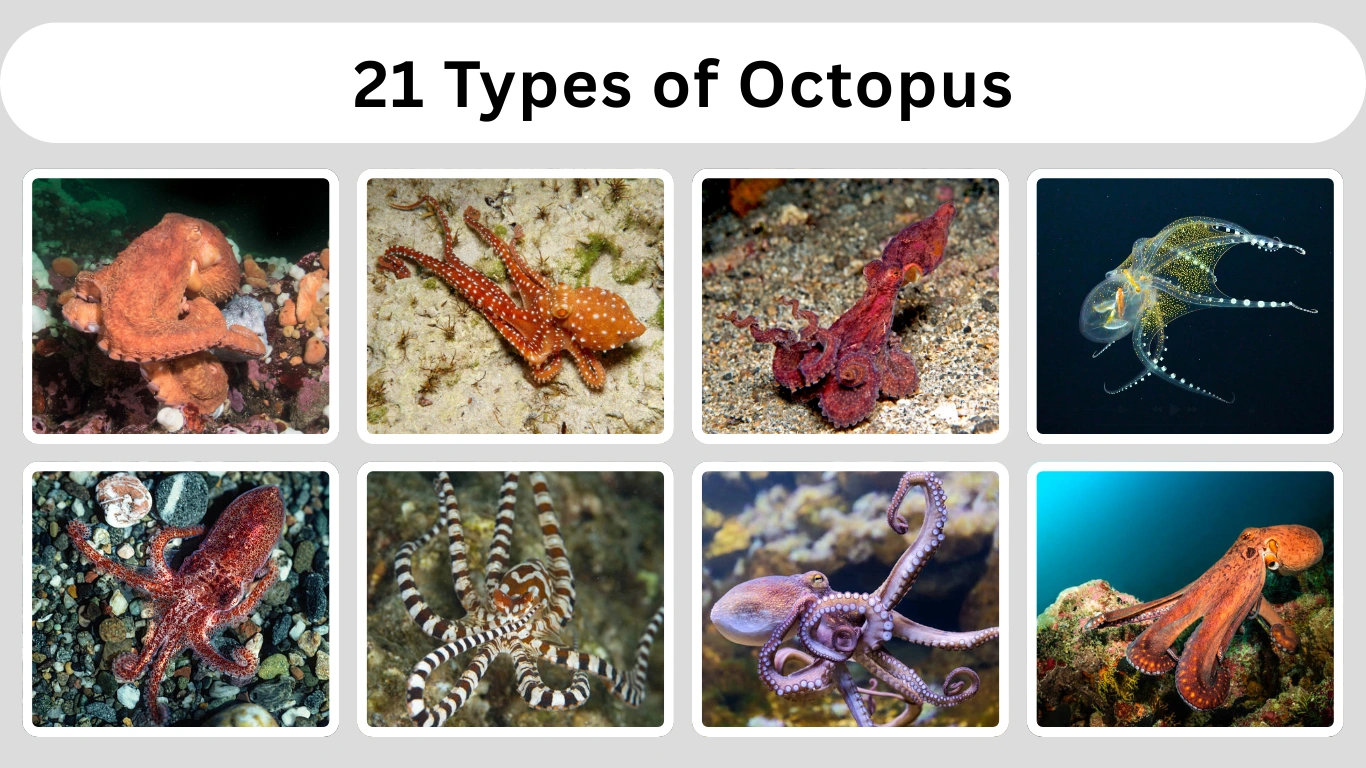
Octopuses are among the most intelligent and adaptable creatures in the ocean, famous for their problem-solving abilities, camouflage skills, and flexible bodies. Found in habitats ranging from shallow coral reefs to the deep sea, each octopus species has unique traits, behaviors, and survival strategies. This guide explores 21 different types of octopus, highlighting their diversity in size, habitat, intelligence, and remarkable adaptations.
1. Common Octopus (Octopus vulgaris)
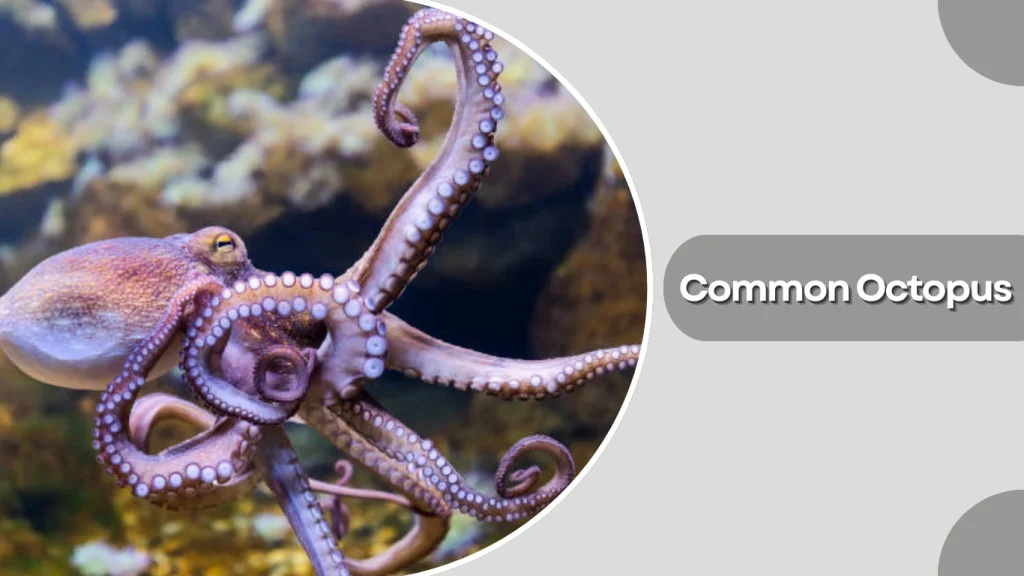
The common octopus is one of the most widespread and well-studied octopus species in the world. Known for its high intelligence, camouflage skills, and adaptability, it inhabits a wide range of marine environments and plays an important role in coastal ecosystems.
Identification
- Soft, rounded body with no internal shell
- Eight arms lined with two rows of suckers
- Color ranges from brown and gray to greenish tones
- Large eyes with horizontal pupils
Habitat and Distribution
Common octopuses are found in tropical and temperate oceans worldwide. They typically live in shallow coastal waters, reefs, rocky areas, and sandy seabeds, often hiding in crevices or self-made dens.
Behavior and Diet
This species is mostly nocturnal and highly intelligent. It feeds on crabs, shellfish, and small fish, using its arms to capture prey and its strong beak to break shells.
Intelligence and Camouflage
The common octopus can solve problems, open containers, and learn through observation. Its ability to rapidly change color and skin texture allows it to blend seamlessly into its surroundings for hunting and defense.
2. Giant Pacific Octopus (Enteroctopus dofleini)
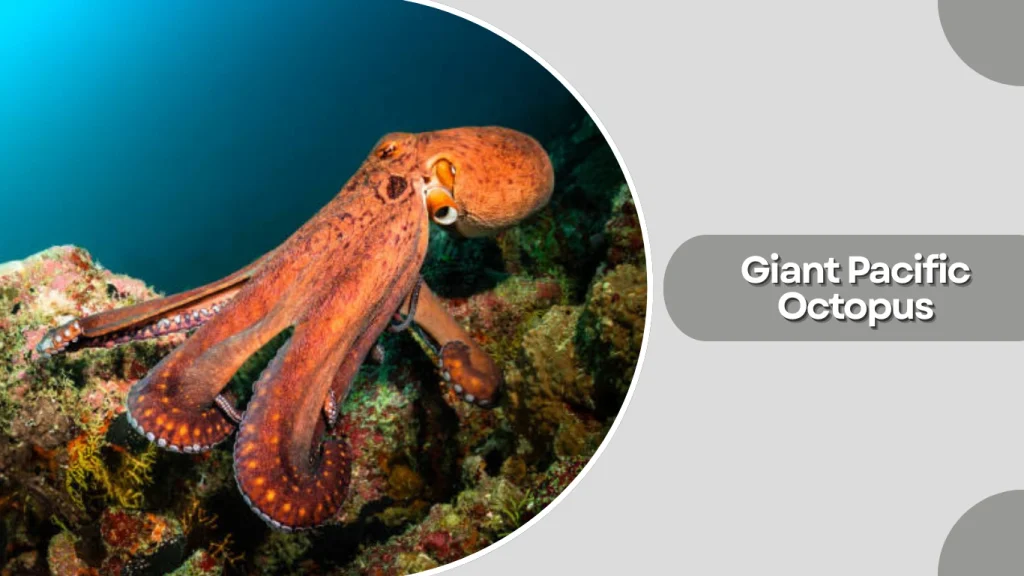
The giant Pacific octopus is the largest octopus species in the world and is known for its impressive strength, intelligence, and size. It is a long-lived species that dominates cold-water coastal ecosystems.
Identification
- Massive body with an arm span reaching over 16 feet
- Weight commonly exceeds 100 pounds
- Reddish-brown skin with rough texture
- Large suckers capable of strong grip
Habitat and Distribution
This species is found in the northern Pacific Ocean, from California to Alaska and across to Japan. It prefers cold, deep coastal waters, rocky reefs, and underwater caves.
Behavior and Diet
Giant Pacific octopuses are solitary and mostly nocturnal. They feed on crabs, clams, fish, and other octopuses, often crushing shells with their powerful beak.
Size and Strength
Its enormous size allows it to overpower large prey. Despite its strength, it is a curious and intelligent animal capable of problem-solving and learning.
3. Blue-Ringed Octopus (Hapalochlaena species)
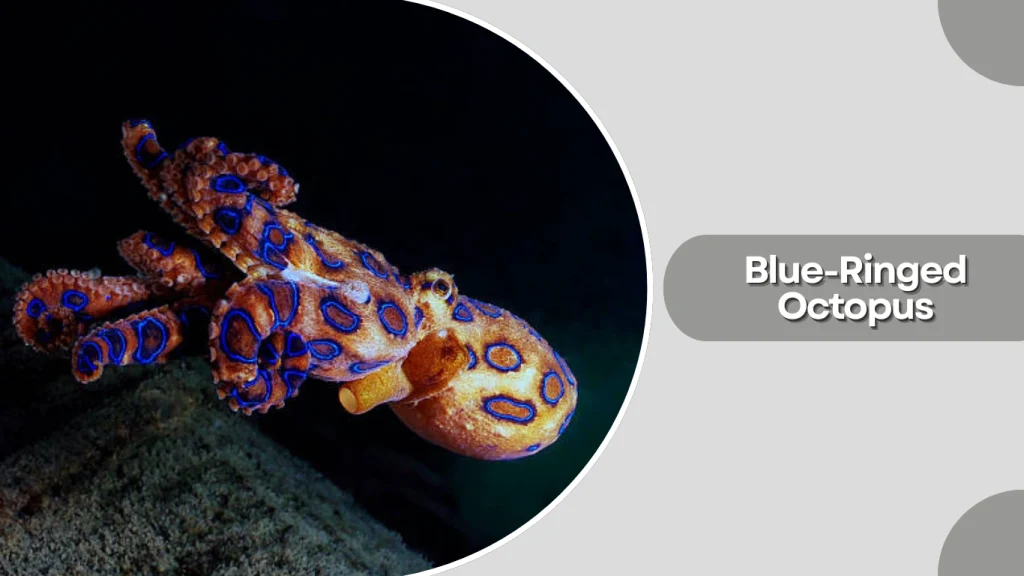
The blue-ringed octopus is small but extremely venomous, making it one of the most dangerous marine animals in the world. Its bright blue rings serve as a clear warning signal.
Identification
- Small body usually under 8 inches including arms
- Yellowish skin with vivid blue rings when threatened
- Short arms with strong suckers
- Smooth, soft body texture
Habitat and Distribution
Blue-ringed octopuses live in shallow coastal waters of the Indo-Pacific region, including tide pools, coral reefs, and sandy bottoms near Australia and Southeast Asia.
Behavior and Diet
They are generally shy and avoid confrontation. Their diet includes small crabs, shrimp, and fish, which they paralyze using venom delivered through a bite.
Venom and Warning Display
The venom contains tetrodotoxin, which can cause paralysis and respiratory failure in humans. The flashing blue rings are a defensive warning, signaling extreme danger.
4. Mimic Octopus (Thaumoctopus mimicus)
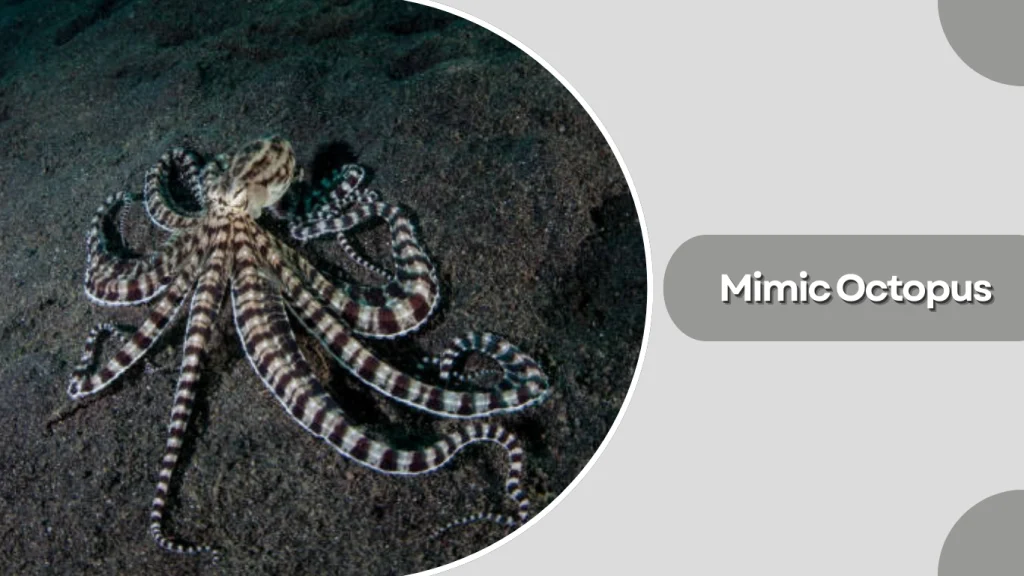
The mimic octopus is famous for its ability to imitate the appearance and movements of other marine animals. This unique survival strategy helps it avoid predators and hunt more effectively.
Identification
- Slender body with long, narrow arms
- Brown and white banded coloration
- Smooth skin texture
- Highly flexible arms used for mimicry
Habitat and Distribution
This species is found in shallow coastal waters of Southeast Asia, especially in sandy and muddy seabeds near river mouths.
Behavior and Diet
Mimic octopuses feed on small fish, crustaceans, and worms. They actively forage during daylight hours, unlike many other octopus species.
Mimicry Ability
They can imitate sea snakes, lionfish, flatfish, and other animals by altering posture, movement, and coloration, confusing predators and prey alike.
5. Dumbo Octopus (Grimpoteuthis species)
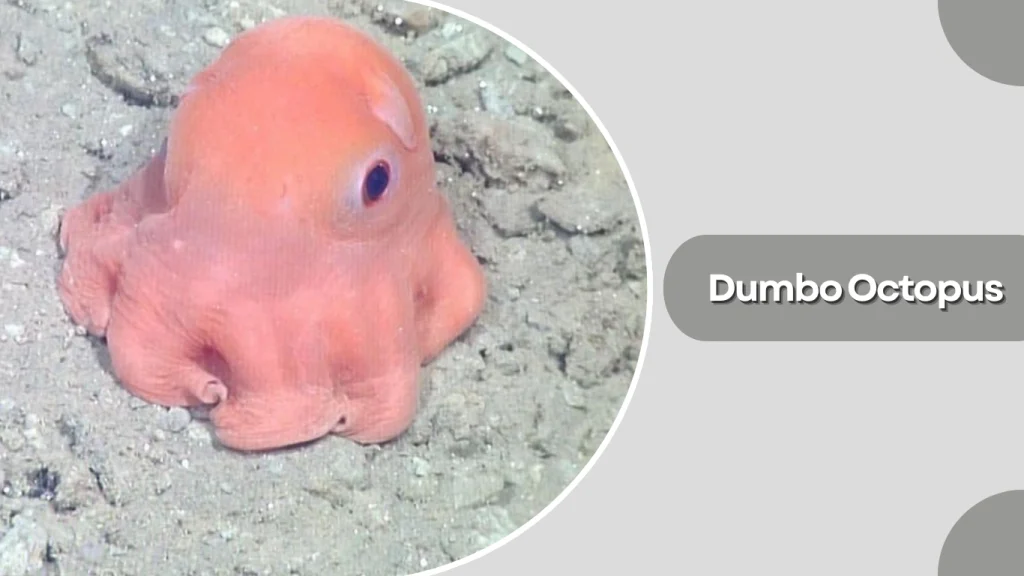
The dumbo octopus is a deep-sea species named for its ear-like fins that resemble Disney’s Dumbo. It is one of the deepest-living octopus species known.
Identification
- Rounded body with large, ear-like fins
- Soft, gelatinous texture
- Small arms connected by webbing
- Pale pink, white, or reddish coloration
Habitat and Distribution
Dumbo octopuses inhabit deep ocean waters worldwide, often at depths of 10,000 to 13,000 feet. They prefer cold, dark environments far from the surface.
Behavior and Diet
They move by gently flapping their fins and feed on small crustaceans, worms, and copepods found on the seafloor.
Deep-Sea Adaptations
Their soft bodies and slow movements help them conserve energy in the deep sea, where food is scarce and pressure is extreme.
6. Coconut Octopus (Amphioctopus marginatus)

The coconut octopus is well known for its tool-using behavior, making it one of the most intelligent invertebrates observed. It often carries coconut shells or other objects for shelter.
Identification
- Medium-sized body with relatively short arms
- Brownish-gray coloration with mottled patterns
- Two rows of suckers on each arm
- Smooth skin texture
Habitat and Distribution
This species is found in tropical waters of the Indo-Pacific region. It prefers sandy or muddy seabeds where it can easily find and transport objects.
Behavior and Diet
Coconut octopuses are active hunters, feeding on crabs, shrimp, and small shellfish. They use their arms skillfully to manipulate prey and tools.
Tool Use
They collect coconut shells, clam shells, or debris and assemble them into shelters. This behavior is considered a rare example of tool use among invertebrates.
7. Day Octopus (Octopus cyanea)
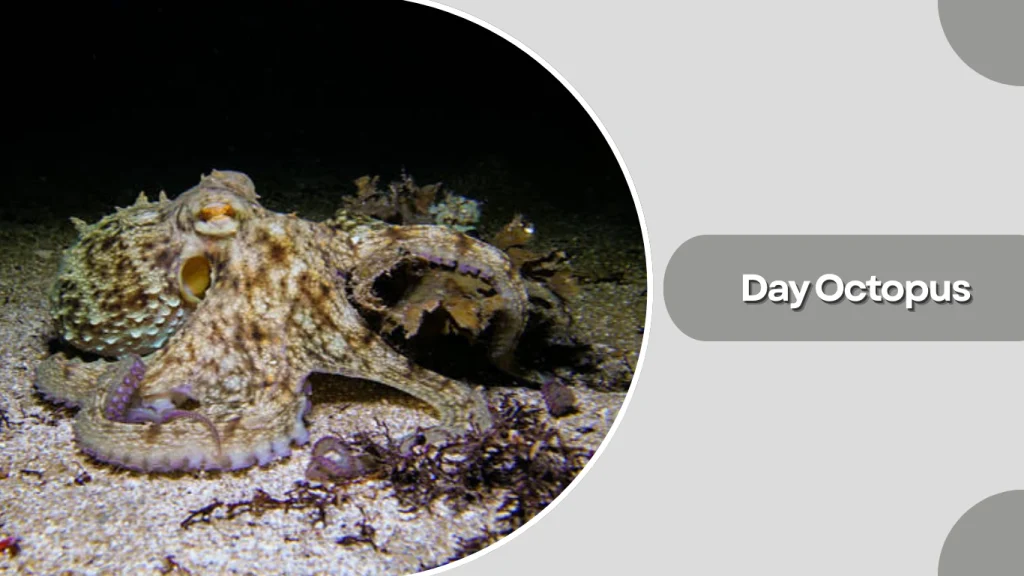
The day octopus is a large, colorful species named for its daytime activity, which is unusual among octopuses. It is highly visible on coral reefs due to its bright coloration.
Identification
- Large mantle with long, muscular arms
- Vibrant colors including blue, green, and brown
- Prominent eyes with horizontal pupils
- Smooth to slightly textured skin
Habitat and Distribution
Day octopuses live in shallow coral reef environments throughout the Indo-Pacific region. They are often found hiding in reef crevices during resting periods.
Behavior and Diet
Unlike most octopuses, this species hunts during the day. It feeds on crabs, lobsters, and fish, often chasing prey across reef surfaces.
Active Lifestyle
Its diurnal behavior and bold movements make it one of the most frequently observed octopus species by divers and snorkelers.
8. Atlantic Pygmy Octopus (Octopus joubini)

The Atlantic pygmy octopus is one of the smallest octopus species and is known for its short lifespan and secretive nature. Despite its size, it shows classic octopus intelligence and camouflage abilities.
Identification
- Very small body, usually under 2 inches long
- Short arms with fine suckers
- Brown to reddish coloration
- Smooth skin with subtle texture changes
Habitat and Distribution
This species is found in the western Atlantic Ocean, including the Gulf of Mexico and Caribbean Sea. It prefers shallow waters with seagrass, rubble, or sandy bottoms.
Behavior and Diet
Atlantic pygmy octopuses are mostly nocturnal and feed on small crustaceans and mollusks. They often hide in shells or small crevices during the day.
Short Life Cycle
They typically live less than one year. Rapid growth, early reproduction, and quick aging characterize their short but active lifespan.
9. California Two-Spot Octopus (Octopus bimaculoides)
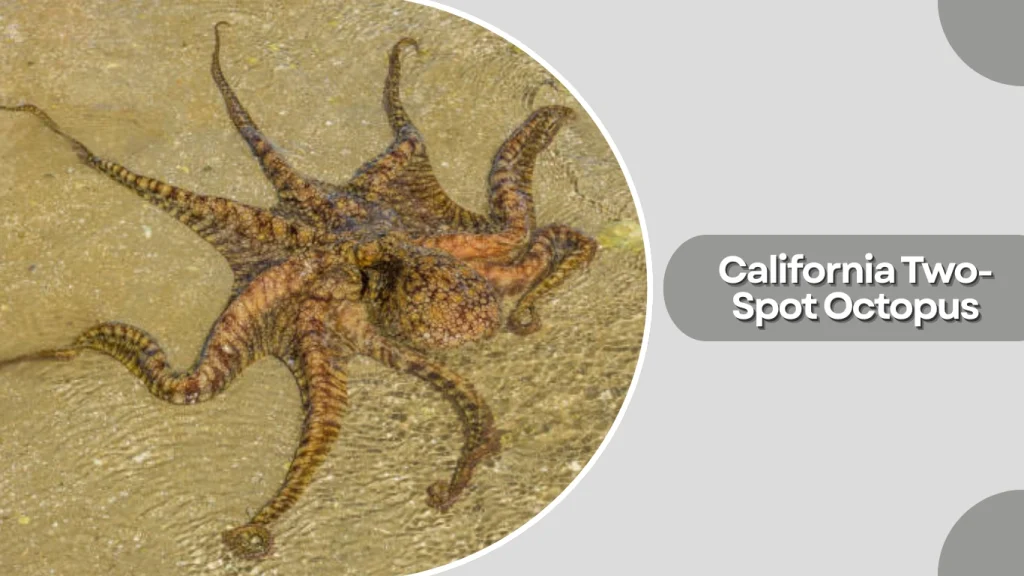
The California two-spot octopus is easily recognized by the blue eye-like spots on its body. It is a popular species in research and public aquariums due to its intelligence and visibility.
Identification
- Medium-sized body with two blue false eyespots
- Mottled brown and cream coloration
- Long arms with strong suckers
- Flexible skin capable of rapid texture change
Habitat and Distribution
This species inhabits the eastern Pacific Ocean, mainly along the coast of California. It lives in shallow reefs, rocky tide pools, and kelp forest areas.
Behavior and Diet
They are curious and intelligent hunters, feeding on crabs, snails, and small fish. California two-spot octopuses are mostly active at night.
Defensive Display
The blue eyespots confuse predators by mimicking the appearance of a larger animal’s eyes, giving the octopus time to escape.
10. Veined Octopus (Amphioctopus marginatus)
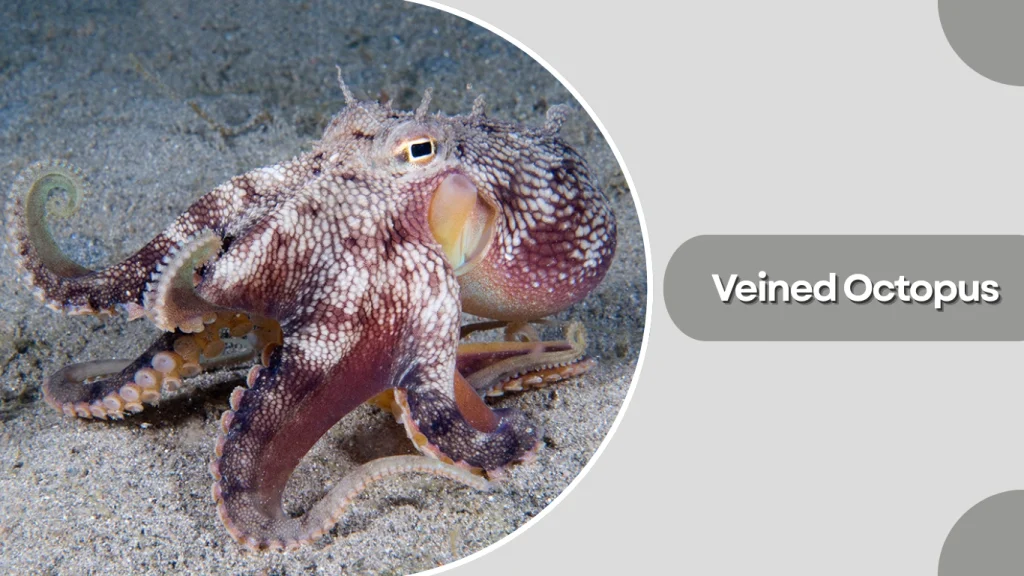
The veined octopus is a highly intelligent species closely related to the coconut octopus. It is known for its problem-solving abilities and creative use of objects for protection.
Identification
- Medium-sized body with long, flexible arms
- Distinct vein-like patterns on the mantle
- Brown, tan, or gray coloration
- Smooth skin with subtle texture changes
Habitat and Distribution
Veined octopuses are found in shallow tropical waters of the Indo-Pacific region. They prefer sandy and muddy seabeds where shells and debris are readily available.
Behavior and Diet
This species feeds on crabs, shrimp, and shellfish. It actively explores its surroundings and is often seen manipulating objects while foraging.
Intelligence and Tool Use
Veined octopuses have been observed carrying shells over long distances and assembling shelters, demonstrating advanced planning and tool use.
11. Wunderpus Octopus (Wunderpus photogenicus)
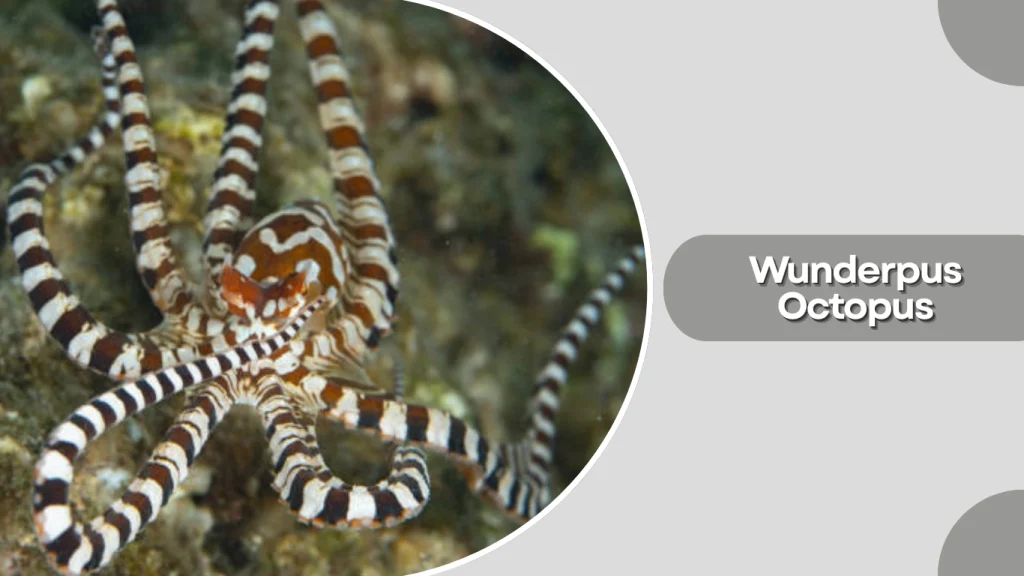
The wunderpus octopus is a rare and visually striking species known for its bold coloration and unique arm patterns. It relies more on display and behavior than camouflage for survival.
Identification
- Reddish-brown body with white bands on arms
- Slender arms with dramatic striping
- Small to medium body size
- Smooth, delicate skin texture
Habitat and Distribution
Wunderpus octopuses inhabit shallow coastal waters of Southeast Asia. They are commonly found on sandy or silty bottoms near reefs.
Behavior and Diet
They are slow-moving, deliberate hunters that feed on small fish and crustaceans. Their hunting strategy often involves probing burrows with long arms.
Visual Signaling
The high-contrast arm patterns may serve as warning signals or help confuse predators. Unlike many octopuses, the wunderpus relies less on camouflage and more on display.
12. Caribbean Reef Octopus (Octopus briareus)
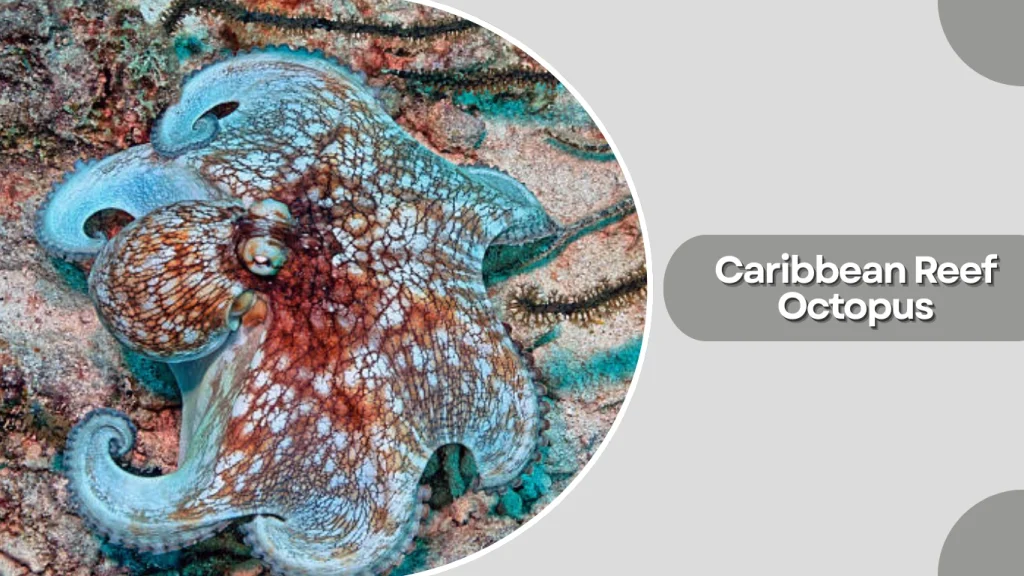
The Caribbean reef octopus is a large, graceful species known for its long arms and striking color changes. It is one of the most common octopuses seen by divers in the Caribbean.
Identification
- Elongated body with very long, slender arms
- Smooth skin with dramatic color shifts
- Blue or green tones often visible
- Large, expressive eyes
Habitat and Distribution
This species is found throughout the Caribbean Sea and western Atlantic Ocean. It lives on coral reefs, rocky bottoms, and seagrass beds in shallow to moderate depths.
Behavior and Diet
Caribbean reef octopuses are mainly nocturnal hunters. They feed on crabs, shrimp, lobsters, and small fish, using stealth and speed to capture prey.
Color-Changing Ability
They can rapidly change color and pattern to blend with reefs or signal aggression. This makes them one of the most visually dynamic octopus species.
13. Seven-Arm Octopus (Haliphron atlanticus)

The seven-arm octopus is a deep-sea species named for the male’s unique appearance. One arm is hidden and modified for reproduction, giving the illusion of only seven arms.
Identification
- Large, gelatinous body
- Arms thick and webbed at the base
- Soft, pale pink to orange coloration
- Male appears to have only seven visible arms
Habitat and Distribution
This species inhabits deep ocean waters worldwide, often at depths below 3,000 feet. It is rarely encountered and mostly known from deep-sea observations.
Behavior and Diet
Seven-arm octopuses feed on jellyfish, small fish, and crustaceans. Their soft bodies are well adapted to the pressure and darkness of the deep sea.
Reproductive Adaptation
Males possess a specialized reproductive arm called a hectocotylus, which is stored internally. This unusual feature led to early confusion about the species’ arm count.
14. Southern Sand Octopus (Octopus kaurna)
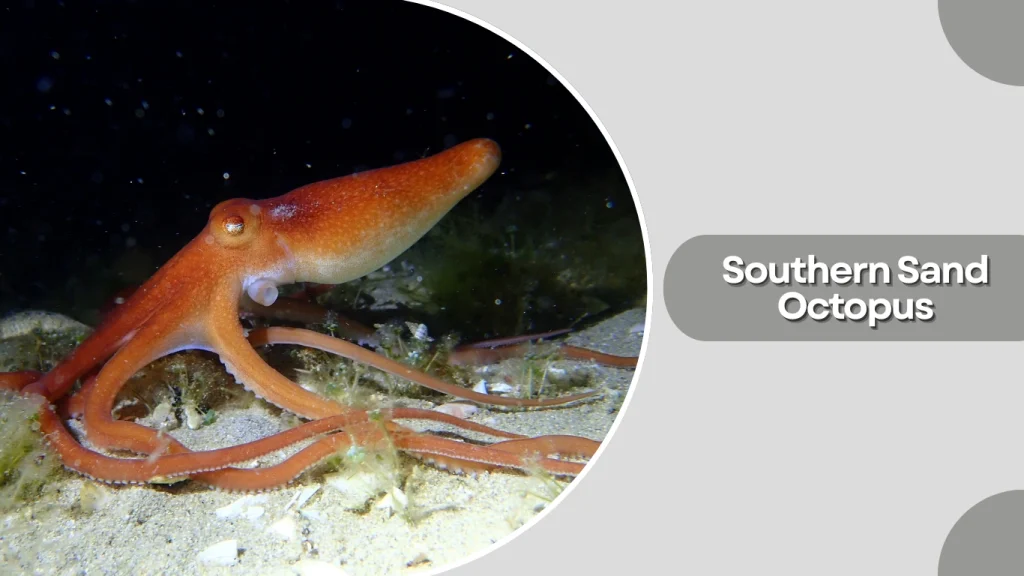
The southern sand octopus is a small, well-camouflaged species adapted to life on sandy seafloors. It is known for burying itself almost completely to avoid predators.
Identification
- Small to medium body size
- Pale brown to sandy coloration
- Smooth skin with subtle texture changes
- Arms often partially buried in sand
Habitat and Distribution
This species is found in southern Australian waters. It prefers shallow sandy and muddy seabeds where it can easily dig and hide.
Behavior and Diet
Southern sand octopuses are nocturnal hunters that feed on small crabs, shrimp, and mollusks. During the day, they remain buried with only their eyes exposed.
Camouflage Strategy
Their ability to match sand color and texture makes them nearly invisible. This adaptation is key to both hunting and predator avoidance.
15. Red Octopus (Octopus rubescens)

The red octopus is a small, cold-water species commonly found along the Pacific coast of North America. It is named for its reddish coloration when disturbed.
Identification
- Small body, usually under 5 inches long
- Reddish-brown coloration
- Short, sturdy arms
- Granular skin texture
Habitat and Distribution
Red octopuses inhabit the northeastern Pacific Ocean, from Alaska to California. They are commonly found in tide pools, rocky reefs, and kelp forests.
Behavior and Diet
They are mostly nocturnal and feed on small crustaceans, snails, and clams. Red octopuses often hide in crevices or empty shells during the day.
Defensive Behavior
When threatened, they may turn a bright red color and release ink to confuse predators and make a quick escape.
16. Long-Arm Octopus (Octopus minor)

The long-arm octopus is named for its unusually elongated arms, which it uses skillfully to search for prey in tight spaces. It is an important species in coastal ecosystems and local fisheries.
Identification
- Medium-sized mantle with very long, slender arms
- Brownish to gray coloration
- Two rows of suckers on each arm
- Flexible, smooth skin
Habitat and Distribution
This species is found in coastal waters of East Asia, especially around China, Korea, and Japan. It prefers muddy and sandy seabeds in shallow waters.
Behavior and Diet
Long-arm octopuses feed on crabs, shrimp, and small fish. They often probe burrows and crevices with their extended arms to locate hidden prey.
Arm Adaptation
The extended arms provide greater reach and sensitivity, allowing efficient hunting in soft-bottom habitats where prey often buries itself.
17. Lesser Octopus (Octopus vulgaris complex)
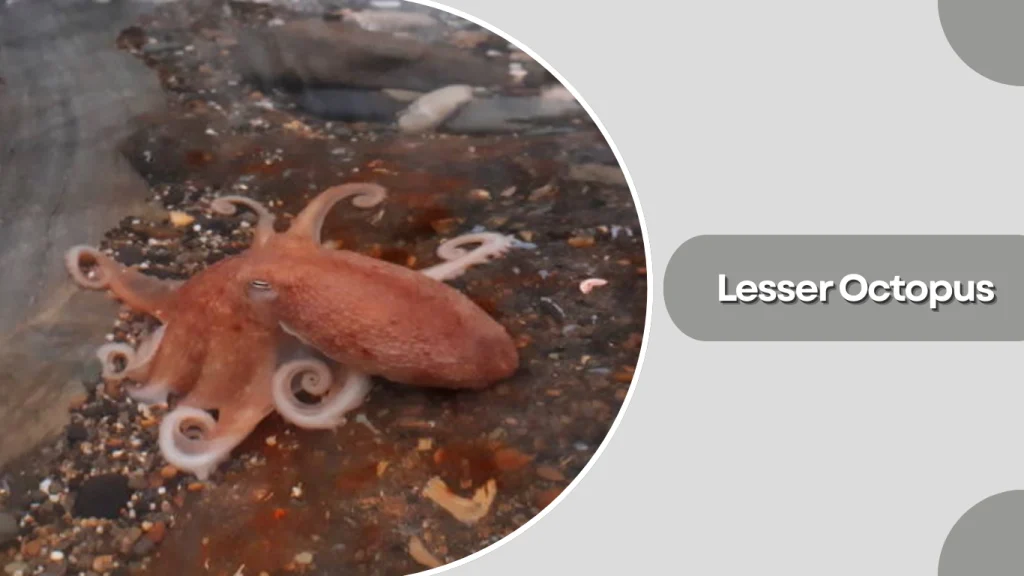
The lesser octopus is a small to medium-sized octopus closely related to the common octopus. It shares many behaviors but is generally smaller and more secretive.
Identification
- Compact body with moderately long arms
- Brown, gray, or olive coloration
- Smooth to slightly textured skin
- Prominent eyes
Habitat and Distribution
Lesser octopuses are found in shallow coastal waters across parts of the Atlantic and Mediterranean regions. They live among rocks, reefs, and sandy bottoms.
Behavior and Diet
They are mostly nocturnal hunters that feed on crabs, mollusks, and small fish. Like other octopuses, they use camouflage to ambush prey.
Similarity to Common Octopus
This species closely resembles the common octopus but is smaller in size. Subtle differences in behavior, size, and habitat help distinguish it.
18. Deep-Sea Glass Octopus (Vitreledonella richardi)
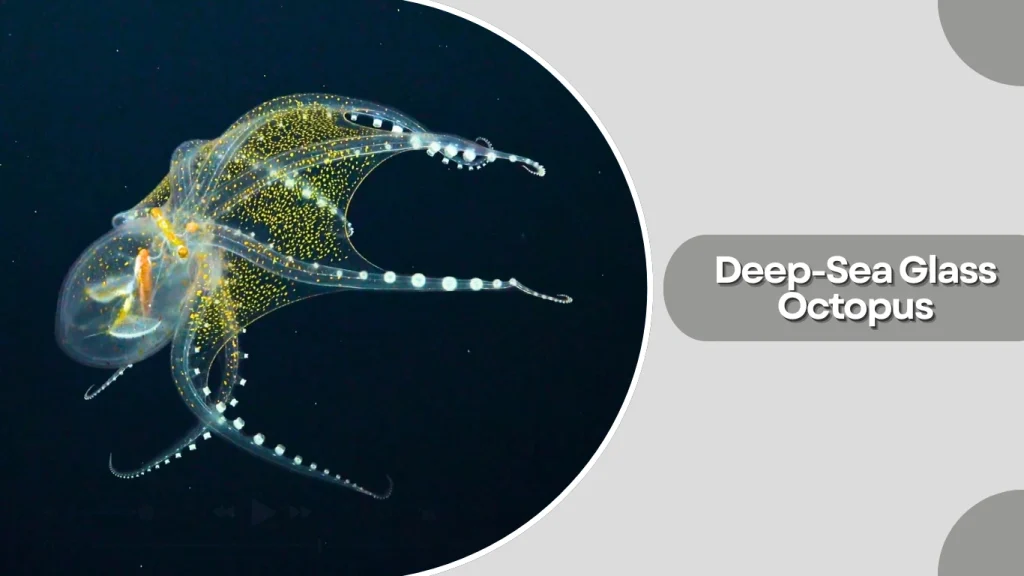
The deep-sea glass octopus is one of the most unusual octopus species, known for its nearly transparent body. Its internal organs are clearly visible, giving it a ghost-like appearance.
Identification
- Almost completely transparent body
- Visible internal organs and eyes
- Short, delicate arms
- Smooth, gelatinous texture
Habitat and Distribution
This species inhabits deep ocean waters worldwide, usually at depths of 2,000 to 7,000 feet. It is rarely encountered and mostly observed through deep-sea exploration.
Behavior and Diet
Deep-sea glass octopuses feed on small crustaceans and drifting organic matter. Their transparency helps them avoid detection by predators.
Transparency Advantage
The see-through body provides effective camouflage in deep water. This adaptation reduces shadows and makes the octopus nearly invisible.
19. Algae Octopus (Abdopus aculeatus)

The algae octopus is a small, highly active species known for its complex behaviors and use of camouflage. It is often seen during the day, which is unusual for octopuses.
Identification
- Small to medium body size
- Brown, green, or mottled coloration
- Textured skin that mimics algae
- Long, flexible arms
Habitat and Distribution
This species lives in shallow tropical waters of the Indo-Pacific region. It is commonly found in seagrass beds, reef flats, and tide pools.
Behavior and Diet
Algae octopuses are diurnal hunters that feed on crabs and small invertebrates. They are fast-moving and often seen actively foraging.
Camouflage Behavior
They frequently raise arm tips and change texture to resemble algae. This disguise helps them avoid predators while moving in open areas.
20. White-Spotted Octopus (Octopus macropus)
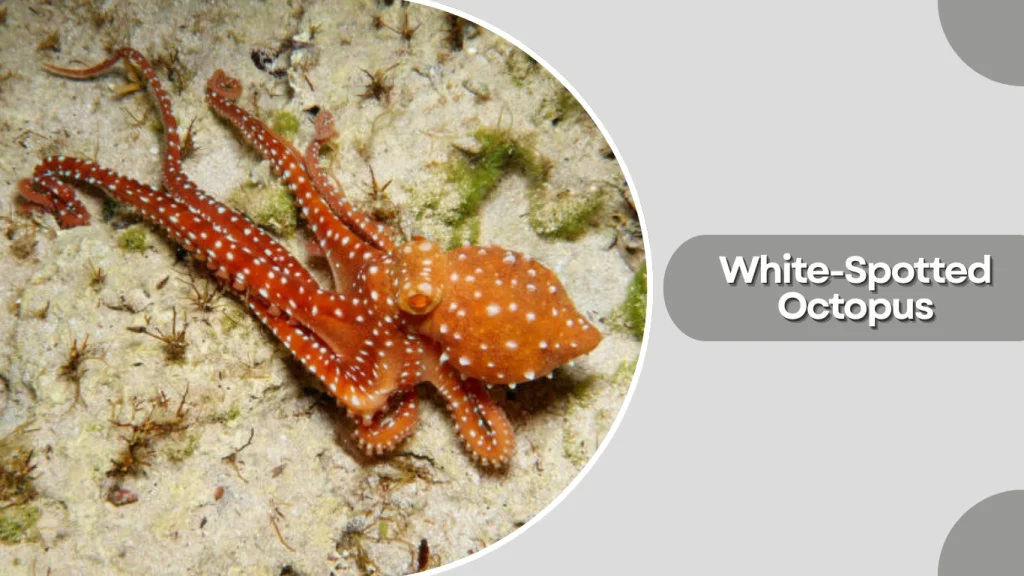
The white-spotted octopus is a striking species recognized by its long arms and bright white spots that become more visible at night. It is an active hunter with excellent camouflage abilities.
Identification
- Reddish-brown body with bright white spots
- Very long, slender arms
- Smooth skin with high contrast patterns
- Large, well-developed suckers
Habitat and Distribution
This species is found in the Mediterranean Sea and eastern Atlantic Ocean. It prefers rocky reefs, coral areas, and sandy bottoms in shallow to moderate depths.
Behavior and Diet
White-spotted octopuses are nocturnal predators. They feed on crabs, shrimp, and small fish, often extending their long arms into crevices to capture prey.
Nighttime Activity
The white spots become more prominent in low light, possibly helping with communication or startling prey during nighttime hunting.
21. Wolf Octopus (Enteroctopus lupinus)

The wolf octopus is a large, powerful species closely related to the giant Pacific octopus. It is known for its strength, intelligence, and solitary nature.
Identification
- Large mantle with thick, muscular arms
- Reddish-brown to dark coloration
- Strong suckers capable of gripping prey firmly
- Rough skin texture
Habitat and Distribution
Wolf octopuses inhabit cold waters of the North Pacific Ocean, particularly around Alaska and nearby regions. They prefer rocky seafloors and deep coastal habitats.
Behavior and Diet
They are solitary and mostly nocturnal hunters, feeding on crabs, clams, fish, and other octopuses. Their strength allows them to overpower hard-shelled prey.
Predatory Nature
The name “wolf octopus” reflects its aggressive hunting style and dominance within its habitat. It relies on strength, stealth, and intelligence to survive.