





Reindeer are among the most iconic animals of the northern world, perfectly adapted to some of the coldest and harshest environments on Earth. From the open Arctic tundra to dense boreal forests and remote polar islands, different types of reindeer have evolved unique body shapes, behaviors, and survival strategies. In this guide, you’ll explore 15 fascinating types of reindeer, highlighting their diversity, habitats, and the remarkable ways they thrive across the circumpolar regions.
1. Tundra Reindeer
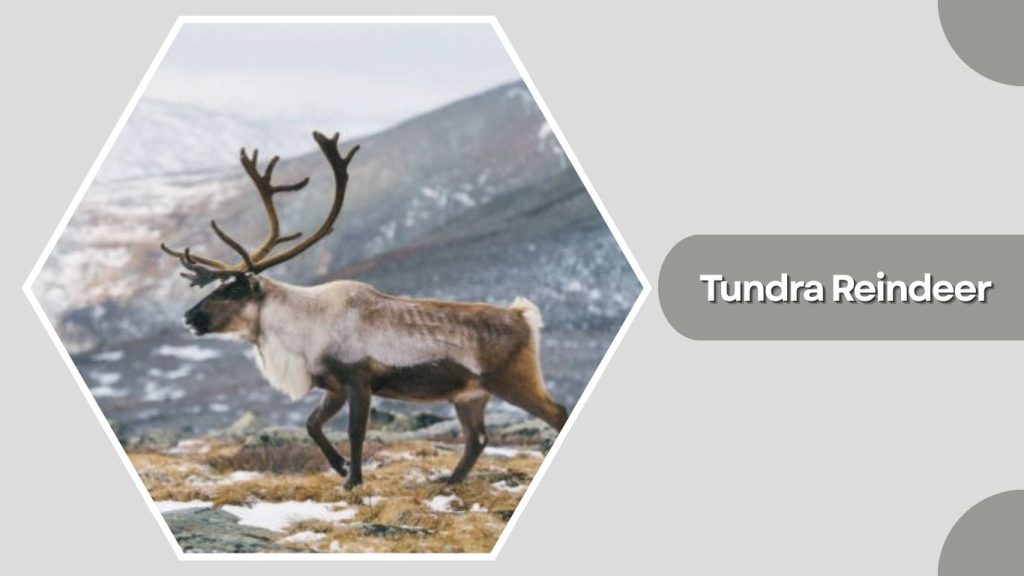
The tundra reindeer is one of the most widespread and well-known forms of reindeer, adapted to life in cold, open Arctic landscapes. It is famous for long seasonal migrations, thick insulating fur, and wide hooves that help it walk on snow and soft tundra ground. These reindeer are closely associated with Arctic tundra ecosystems and play an important role in indigenous cultures and northern wildlife food webs.
Identification
- Medium to large body with long legs and a sturdy build
- Thick, double-layered fur that changes color from brownish in summer to pale gray or white in winter
- Both males and females grow antlers
- Wide, crescent-shaped hooves for walking on snow and digging for food
- Short tail, small ears, and a blunt, hairy muzzle
Habitat
Tundra reindeer live mainly in Arctic and sub-Arctic tundra regions across northern Europe, Russia, Alaska, and Canada. They prefer open, treeless landscapes such as tundra plains, coastal lowlands, and high Arctic islands. In winter, many herds move south into shrub tundra or sparse boreal forest to escape extreme cold and deep snow.
Diet
Their diet is mostly plant-based and changes with the seasons. In winter, tundra reindeer rely heavily on lichens, which they dig out from under snow using their hooves. During summer, they eat grasses, sedges, leaves, mosses, herbs, and small shrubs. This seasonal flexibility helps them survive in harsh environments where food availability changes dramatically.
Behavior and Lifecycle
Tundra reindeer are highly social and usually live in large migrating herds that can include thousands of individuals. They are strong swimmers and long-distance travelers. Calves are born in late spring or early summer, allowing them to grow quickly during the short Arctic summer. These reindeer are constantly on the move, following ancient migration routes between feeding and breeding grounds.
2. Forest Reindeer

The forest reindeer, also known as the Eurasian forest reindeer, is adapted to life in dense boreal forests rather than open tundra. It is generally longer-legged and slimmer than tundra forms, helping it move through deep snow and woodland terrain. This reindeer is less migratory, often staying within large forested home ranges instead of making long seasonal journeys.
Identification
- Taller and more slender body compared to tundra reindeer
- Longer legs adapted for moving through deep forest snow
- Darker brown coat in summer, turning grayish in winter
- Both males and females grow antlers, often narrower and more upright
- Long muzzle and relatively narrow hooves compared to tundra forms
Habitat
Forest reindeer inhabit the vast taiga and boreal forest zones of northern Europe and western Russia. They are closely associated with coniferous forests, forest-tundra edges, and swampy woodland regions. Unlike tundra reindeer, they often remain in forested areas year-round, using thick tree cover for shelter from harsh weather and predators.
Diet
Their diet includes lichens, grasses, sedges, leaves, and shoots. In winter, they dig through snow to reach ground lichens and mosses, while in summer they browse on shrubs, herbs, and young tree growth. Forest reindeer also feed on mushrooms and bark when other food sources are scarce.
Behavior and Lifecycle
Forest reindeer are usually found in smaller groups than tundra reindeer. They are more solitary or live in loosely connected herds, especially outside the breeding season. Calves are born in late spring. These reindeer rely heavily on forest cover for protection and tend to avoid wide, open landscapes.
3. Eurasian Tundra Reindeer

The Eurasian tundra reindeer is a classic Arctic reindeer type found across northern Scandinavia and Russia. It is strongly built for extreme cold, long migrations, and open tundra living. This form is closely linked with traditional reindeer herding cultures and is one of the most economically and culturally important reindeer types in Eurasia.
Identification
- Stocky body with thick neck and heavy winter coat
- Coat color ranges from dark brown to almost white depending on season
- Both sexes carry antlers; males usually have larger, more complex racks
- Broad, rounded hooves for snow travel and digging
- Dense fur covering even the nose area for insulation
Habitat
Eurasian tundra reindeer inhabit Arctic tundra, coastal plains, and high-latitude plateaus of northern Europe and Siberia. In winter, many herds migrate toward forest-tundra or southern tundra zones. During summer, they return north to open tundra where insect pressure is lower and fresh vegetation is abundant.
Diet
In winter, lichens form the core of their diet, supplemented by mosses and dried grasses. In summer, they switch to nutrient-rich foods such as grasses, sedges, herbs, leaves, and flowering plants. This seasonal diet helps them rebuild fat reserves and support rapid calf growth.
Behavior and Lifecycle
These reindeer are famous for mass migrations involving thousands of animals. They are strong swimmers and capable of crossing large rivers and coastal waters. Calving occurs in late spring, often synchronized across herds. Social structure is complex, with large mixed groups forming outside the breeding season.
4. Siberian Tundra Reindeer

The Siberian tundra reindeer is a hardy Arctic form found across northern Siberia, adapted to some of the coldest and most extreme reindeer habitats on Earth. It is well known for massive seasonal migrations, thick insulating fur, and strong endurance. These reindeer are a vital part of Siberian ecosystems and have long been central to indigenous cultures for transport, food, and clothing.
Identification
- Large, heavy-bodied reindeer with a deep chest
- Very thick winter coat with long guard hairs
- Both males and females grow antlers, often broad and complex
- Wide, rounded hooves that spread to support weight on snow
- Short ears and a heavily furred muzzle to reduce heat loss
Habitat
Siberian tundra reindeer live across Arctic Siberia, including the Yamal Peninsula, Taymyr Peninsula, and surrounding tundra lowlands. They occupy open tundra in summer and move south toward forest-tundra and northern taiga zones in winter. Their range includes river valleys, coastal tundra, and vast Arctic plains.
Diet
During winter, their diet is dominated by ground and tree lichens, along with mosses. In summer, they feed on grasses, sedges, herbs, leaves, and young shrub growth. They also eat fungi and mineral-rich plants to support antler growth and body condition.
Behavior and Lifecycle
These reindeer form some of the largest herds in the world, sometimes numbering in the hundreds of thousands. They migrate hundreds of kilometers each year. Calving occurs in late May or June. Siberian tundra reindeer are excellent swimmers and regularly cross wide rivers during migration.
5. Novaya Zemlya Reindeer
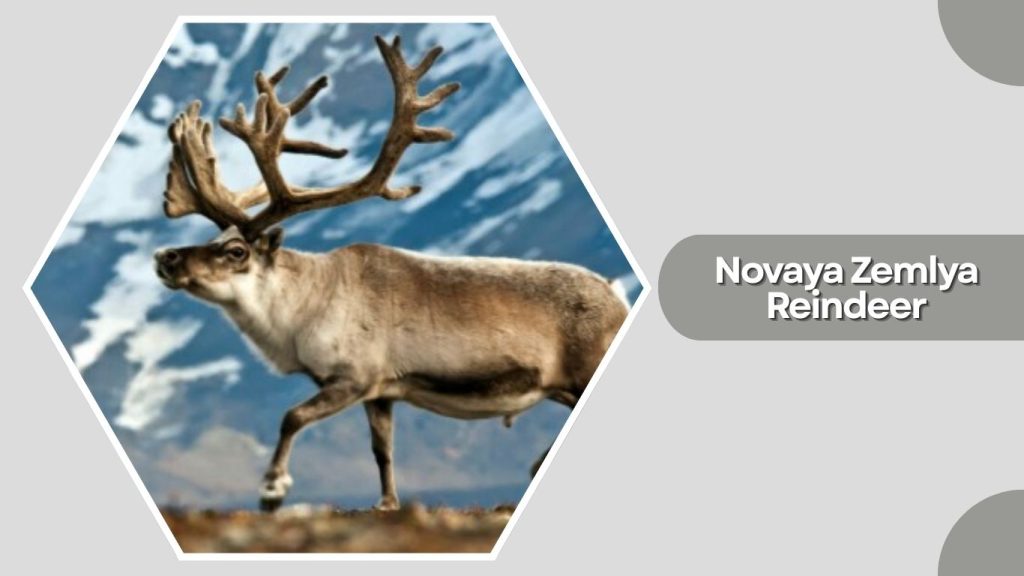
The Novaya Zemlya reindeer is a distinctive Arctic island form native to the remote Novaya Zemlya archipelago in the Russian Arctic. Isolation and extreme climate have shaped it into a compact, cold-adapted reindeer with strong survival abilities in barren tundra and coastal environments.
Identification
- Compact, stocky body with relatively short legs
- Thick, pale winter coat that provides strong insulation
- Both sexes grow antlers, usually shorter and heavier
- Broad hooves adapted for rocky tundra and snow
- Rounded head with dense facial fur
Habitat
This reindeer is restricted to the tundra landscapes of the Novaya Zemlya islands, where vegetation is sparse and the climate is severe. It inhabits coastal tundra, low hills, and inland plains, relying on windswept areas where snow is thinner and food is more accessible.
Diet
Its diet mainly consists of lichens, mosses, and hardy Arctic plants. During the brief summer, it feeds on grasses, sedges, flowering tundra plants, and dwarf shrubs. In winter, it survives largely on lichens dug from beneath the snow.
Behavior and Lifecycle
Novaya Zemlya reindeer live in relatively small, scattered groups compared to mainland tundra herds. Seasonal movements occur within the islands but are not as long as continental migrations. Calves are born in early summer, taking advantage of the short but productive Arctic growing season.
6. Svalbard Reindeer
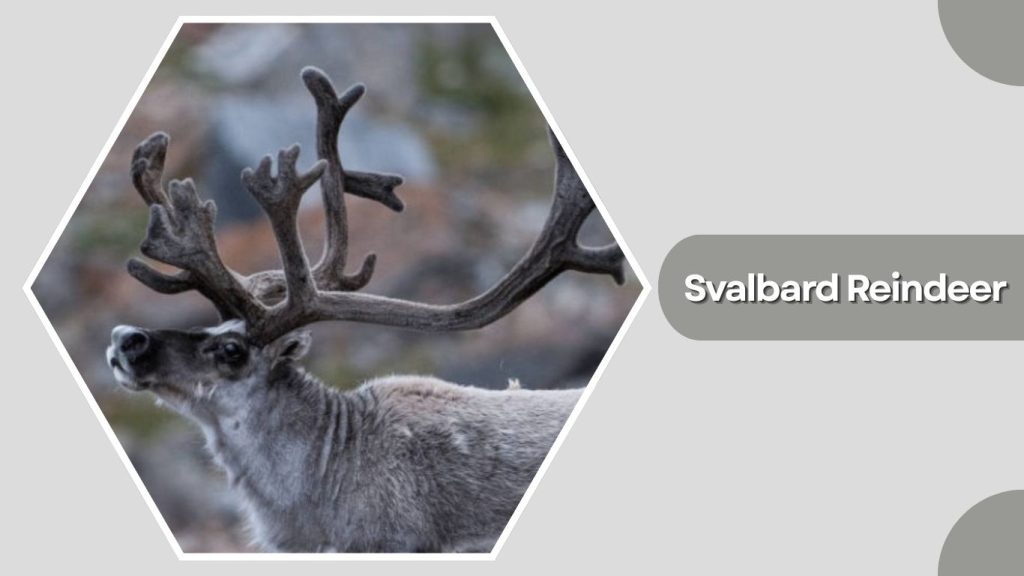
The Svalbard reindeer is one of the smallest and most compact reindeer types, specially adapted to survive on the high-Arctic islands of Svalbard. It is famous for its short legs, thick body, and extremely dense fur, all of which help reduce heat loss in one of the coldest inhabited regions on Earth.
Identification
- Short, stocky body with very short legs
- Extremely thick, pale winter coat
- Both males and females grow antlers, usually short and simple
- Wide hooves adapted for ice, snow, and rocky ground
- Rounded body shape with a relatively small head
Habitat
Svalbard reindeer are found only on the Svalbard archipelago between mainland Norway and the North Pole. They live in high-Arctic tundra, coastal plains, valleys, and low mountain slopes. Unlike many other reindeer, they do not undertake long migrations and usually stay within small home ranges year-round.
Diet
Their diet includes mosses, lichens, grasses, flowering plants, and dwarf shrubs. In winter, they feed heavily on mosses and lichens exposed by wind or shallow snow. During the short summer, they rapidly graze on fresh tundra plants to build fat reserves.
Behavior and Lifecycle
Svalbard reindeer are mostly solitary or live in very small groups. They move slowly and conserve energy rather than migrating long distances. Calves are born in early summer, and rapid growth during the brief Arctic summer is crucial for survival through the long winter.
7. Peary Caribou
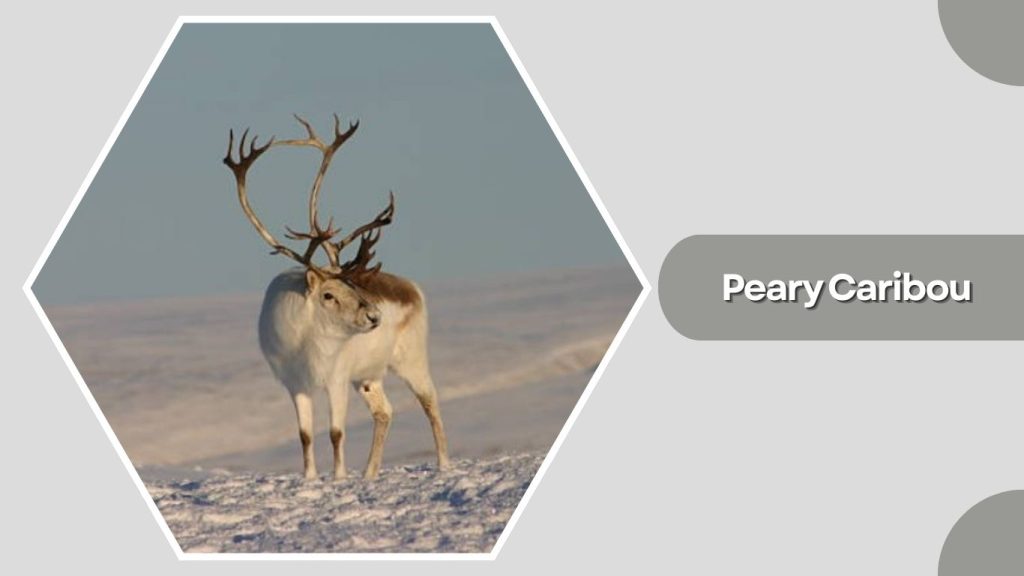
The Peary caribou is a small, pale-colored reindeer type native to the high Arctic islands of northern Canada. It is one of the most cold-adapted and geographically restricted caribou forms, built to survive extreme cold, limited vegetation, and long periods of snow and ice.
Identification
- Small body size with slim legs
- Very light-colored coat, often almost white in winter
- Both sexes grow antlers, usually thin and relatively short
- Broad hooves for traveling over snow and ice
- Short face and dense fur around the muzzle
Habitat
Peary caribou inhabit the Canadian High Arctic, including Ellesmere Island, Banks Island, and other Arctic archipelago islands. They live on polar desert and tundra landscapes where vegetation is sparse. Seasonal movements occur between islands and coastal areas, sometimes involving sea-ice crossings.
Diet
Their diet consists mainly of Arctic grasses, sedges, mosses, lichens, and small flowering plants. In winter, they scrape through snow to reach frozen vegetation. During summer, they feed intensively to restore body condition and support reproduction.
Behavior and Lifecycle
Peary caribou usually occur in small groups or as solitary individuals. They are capable of traveling long distances over sea ice between islands. Calving takes place in early summer, timed to coincide with the brief Arctic plant-growing season.
8. Grant’s Caribou
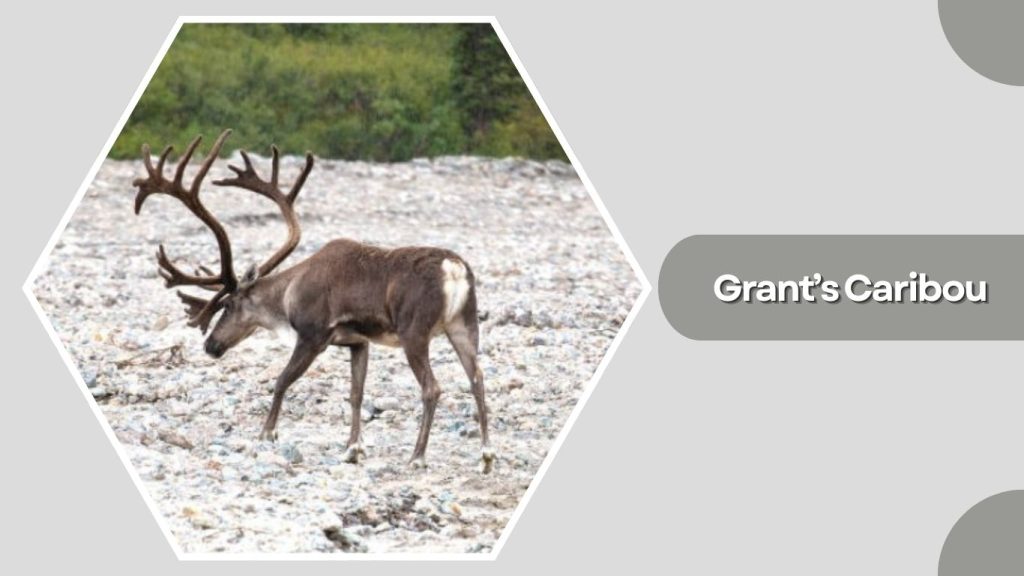
Grant’s caribou is one of the largest North American reindeer types and is closely related to the barren-ground caribou. It is well known for impressive antlers, long-distance migrations, and its importance to northern ecosystems and indigenous communities.
Identification
- Large body size with long legs and deep chest
- Thick coat that becomes very pale in winter
- Both males and females grow antlers; males usually have very large, complex antlers
- Broad hooves for snow travel and swimming
- Distinct light-colored neck and rump area
Habitat
Grant’s caribou range across Alaska and parts of northwestern Canada. They inhabit Arctic tundra, coastal plains, and foothills in summer, moving south toward taiga and forest-tundra zones in winter. These reindeer depend on wide, open landscapes for feeding and migration.
Diet
In winter, their diet is dominated by lichens. During summer, they eat grasses, sedges, leaves, herbs, and flowering plants. This seasonal shift provides the energy needed for migration, antler growth, and calf development.
Behavior and Lifecycle
Grant’s caribou are famous for massive seasonal migrations involving tens of thousands of animals. They are strong swimmers and often cross wide rivers and lakes. Calves are born in late spring, and herds form large aggregations during calving and migration periods.
9. Barren-ground Caribou
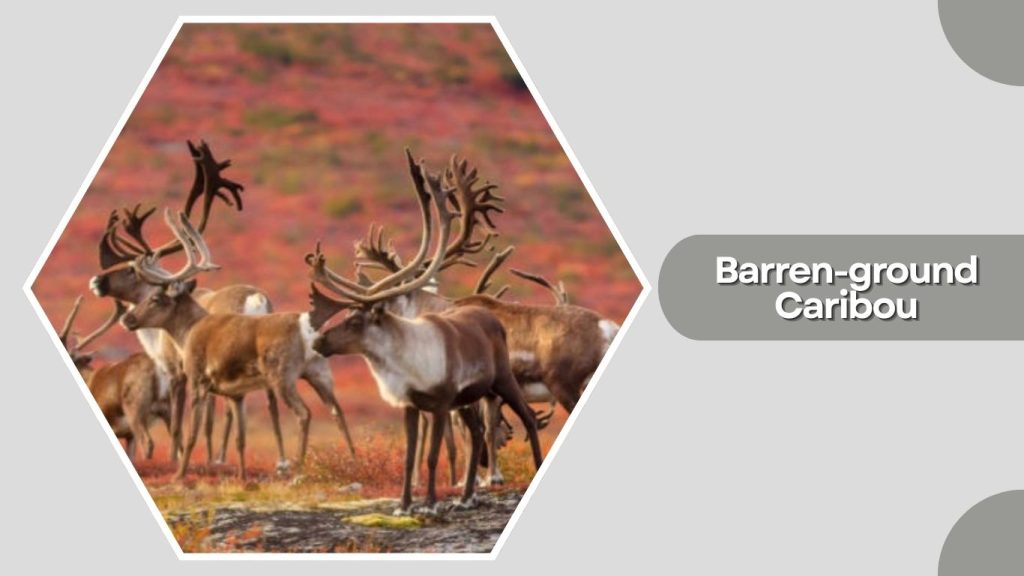
The barren-ground caribou is one of the most migratory reindeer types in the world, traveling enormous distances each year between tundra and forest regions. It is a classic symbol of North American Arctic wildlife.
Identification
- Medium to large body with a relatively slender build
- Light brown to gray coat with a pale neck and belly
- Both males and females grow antlers, often long and curved
- Very large hooves that act like snowshoes
- Slender face with thick fur around the nose
Habitat
Barren-ground caribou live across northern Canada and Alaska. They spend summers on open Arctic tundra where insects are fewer and plants are abundant, then migrate south into boreal forests for winter, where snow conditions allow easier access to lichens.
Diet
Their winter diet mainly consists of ground lichens. In summer, they eat grasses, sedges, leaves, mushrooms, and flowering plants. They are flexible feeders, allowing them to survive in a wide range of seasonal environments.
Behavior and Lifecycle
These caribou form enormous herds and follow ancient migration routes that can stretch hundreds of kilometers. Calving occurs in late May or early June. Herds often synchronize births, which helps reduce calf losses to predators.
10. Woodland Caribou
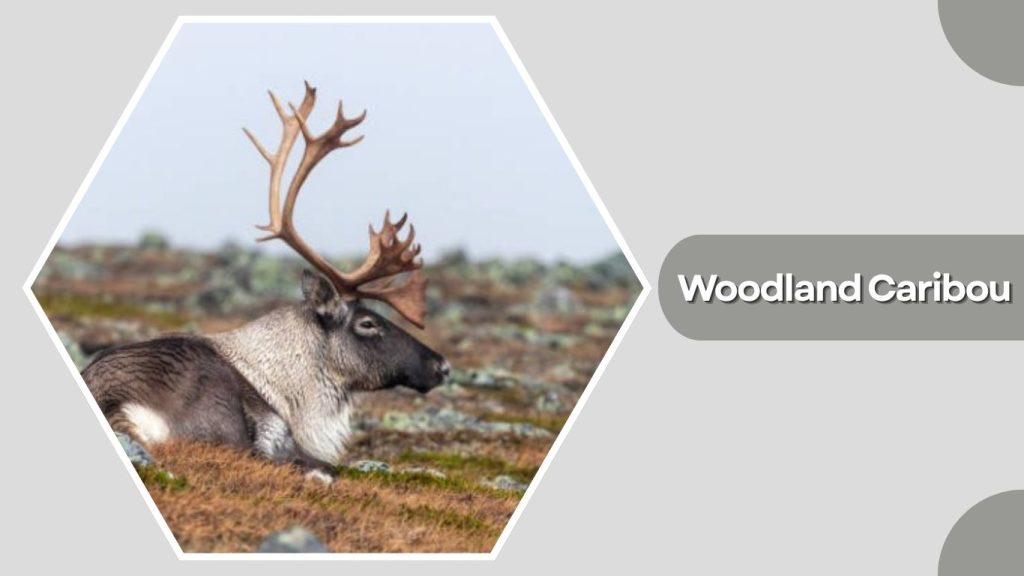
The woodland caribou is a large, forest-adapted reindeer type that prefers dense boreal forests rather than open tundra. It is less migratory than tundra forms and is known for living in smaller, more scattered groups.
Identification
- Large, long-legged body with a dark brown summer coat
- Thicker neck and shoulders compared to tundra caribou
- Both males and females grow antlers, often broad and flattened
- Wide hooves adapted for snow and swampy ground
- Distinct mane-like fur around the neck
Habitat
Woodland caribou inhabit boreal forests, muskeg, and forest-tundra regions across Canada and parts of Alaska. They favor old-growth forests, peatlands, and remote wetlands where human disturbance is low and food sources are stable.
Diet
Their diet includes ground and tree lichens, leaves, grasses, sedges, mushrooms, and twigs. In winter, they often feed on arboreal lichens hanging from trees, which allows them to survive in deeper snow than many other caribou types.
Behavior and Lifecycle
Woodland caribou usually live in small groups or as solitary animals. They rely on spacing and forest cover rather than large herds for predator avoidance. Calves are born in late spring, often in isolated locations to reduce predation risk.
11. Dolphin-Union Caribou
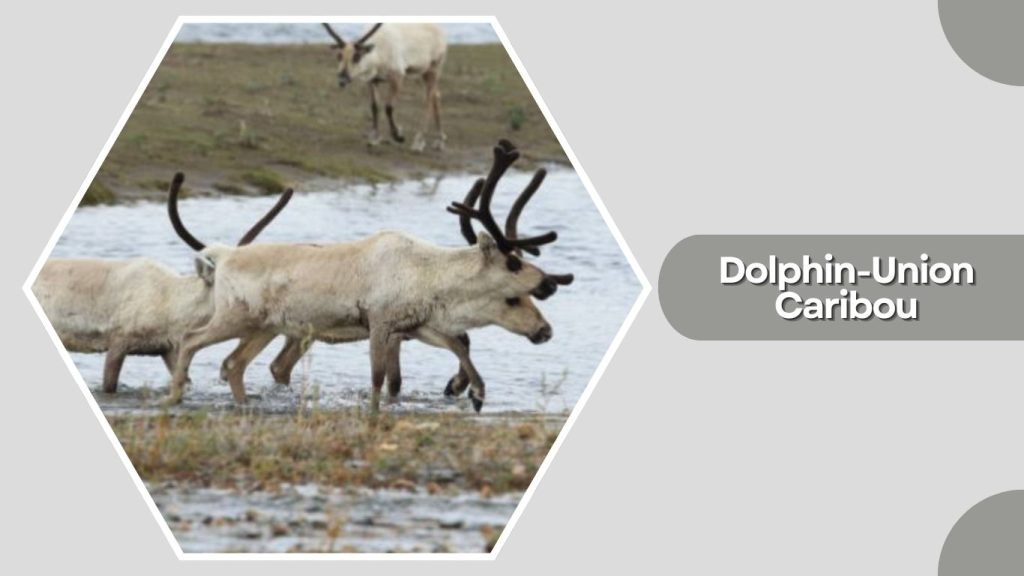
The Dolphin-Union caribou is a unique Arctic reindeer type famous for migrating across frozen sea ice between the mainland and Victoria Island in northern Canada. It represents one of the most remarkable migration behaviors among caribou.
Identification
- Medium-sized body with a compact build
- Light brown to gray coat with a pale belly and neck
- Both sexes grow antlers, usually slender and moderately long
- Broad hooves well suited for snow and ice travel
- Rounded back with relatively short legs
Habitat
Dolphin-Union caribou inhabit the western Canadian Arctic, especially Victoria Island and nearby mainland tundra. They occupy coastal tundra, inland plains, and Arctic lowlands, shifting seasonally between island and mainland habitats.
Diet
They feed on grasses, sedges, lichens, mosses, and flowering tundra plants. In winter, they dig through snow to reach frozen vegetation. Summer diets are richer and help rebuild fat stores after harsh winters.
Behavior and Lifecycle
These caribou are well known for their seasonal sea-ice crossings, sometimes traveling long distances over frozen ocean channels. They form moderate-sized herds. Calving occurs in early summer, timed with tundra plant growth.
12. Central Arctic Caribou
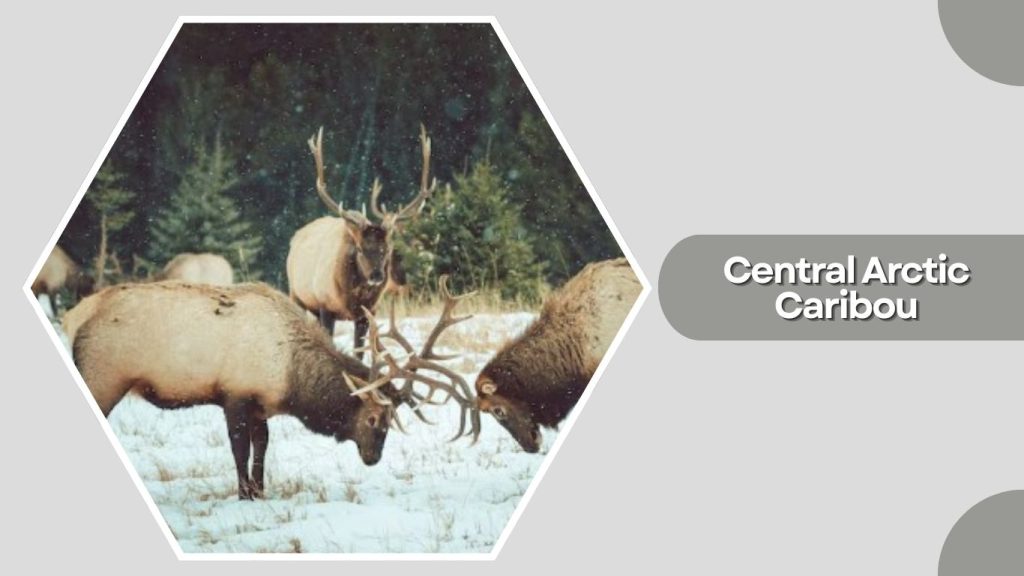
The Central Arctic caribou is a well-known North American tundra reindeer type found mainly in northern Alaska. It is adapted to long migrations, harsh Arctic climates, and open tundra environments, playing a major ecological role in Arctic ecosystems.
Identification
- Medium-sized body with long, strong legs
- Brown to gray coat with a lighter neck and underside
- Both males and females grow antlers, often sweeping and branched
- Large, rounded hooves for snow, mud, and swimming
- Thick fur around the face and neck
Habitat
Central Arctic caribou live on Alaska’s North Slope, using coastal plains and inland tundra during summer. In winter, they move south into foothills and northern boreal regions. Their habitat includes river valleys, tundra plateaus, and Arctic lowlands.
Diet
Their winter diet consists mainly of lichens and mosses. In summer, they switch to grasses, sedges, leaves, herbs, and flowering plants. This seasonal change supports migration, antler development, and reproduction.
Behavior and Lifecycle
These caribou are strongly migratory, forming large herds during calving and seasonal movements. Calves are born in late spring. They are fast runners and good swimmers, often crossing rivers during migration.
13. Porcupine Caribou
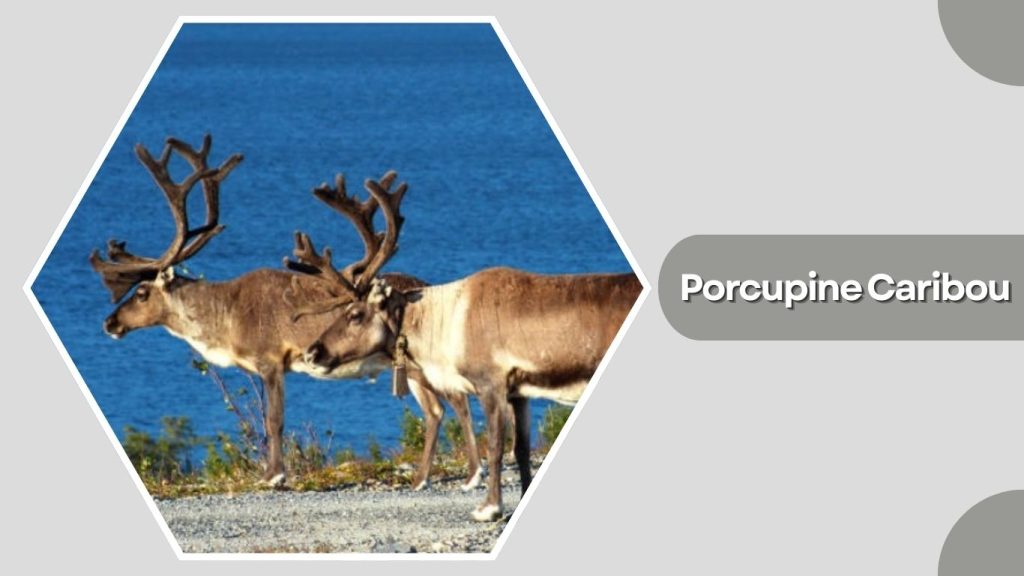
The Porcupine caribou is named after the Porcupine River region and is famous for one of the longest land migrations of any terrestrial mammal. It ranges across Alaska and northwestern Canada.
Identification
- Medium to large body with a slender, athletic build
- Light brown to gray coat with a pale neck and belly
- Both sexes grow antlers, often long and irregularly branched
- Broad hooves for snow travel and river crossings
- Thick winter coat for extreme cold
Habitat
Porcupine caribou inhabit Arctic tundra, foothills, and boreal forest edges. In summer, they migrate to coastal tundra plains, while in winter they move south into taiga and forest-tundra zones across Alaska and Yukon.
Diet
Their diet is seasonally varied, including lichens, mosses, grasses, sedges, leaves, mushrooms, and flowering plants. Summer feeding allows them to store fat for long migrations and winter survival.
Behavior and Lifecycle
Porcupine caribou undertake vast annual migrations, traveling hundreds of kilometers. Calving occurs in early summer on Arctic coastal plains. They form large, moving herds and follow traditional migration routes passed down through generations.
14. George River Caribou
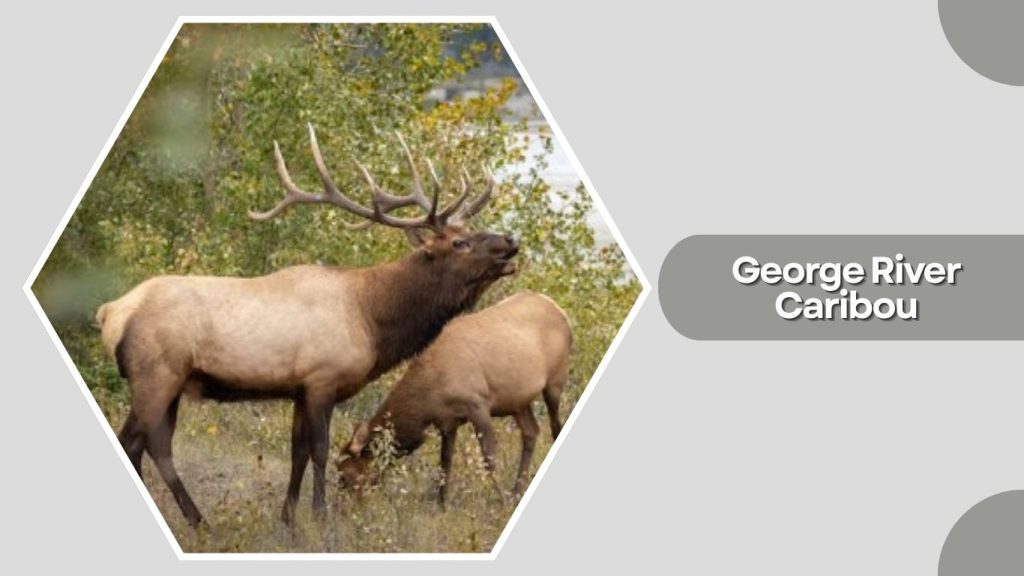
The George River caribou is one of the most famous migratory reindeer types of eastern Canada, historically forming enormous herds that traveled between tundra and boreal forest regions. It is named after the George River in northern Quebec and Labrador.
Identification
- Medium to large body with strong legs and a deep chest
- Brown to gray coat with a pale mane and underside
- Both males and females grow antlers, often long and complex
- Very wide hooves for snow, mud, and swimming
- Thick winter coat with a noticeable neck ruff
Habitat
George River caribou inhabit the tundra of northern Quebec and Labrador during summer and migrate south into boreal forests in winter. Their range includes river valleys, coastal tundra, and vast forested regions.
Diet
In winter, they rely mainly on ground lichens. During summer, they feed on grasses, sedges, herbs, leaves, mushrooms, and flowering plants. This seasonal diet supports long-distance travel and successful reproduction.
Behavior and Lifecycle
These caribou are long-distance migrants, forming massive seasonal herds. Calving occurs in late spring or early summer, often synchronized across the herd. They are powerful swimmers and regularly cross wide rivers during migration.
15. Alaskan Caribou
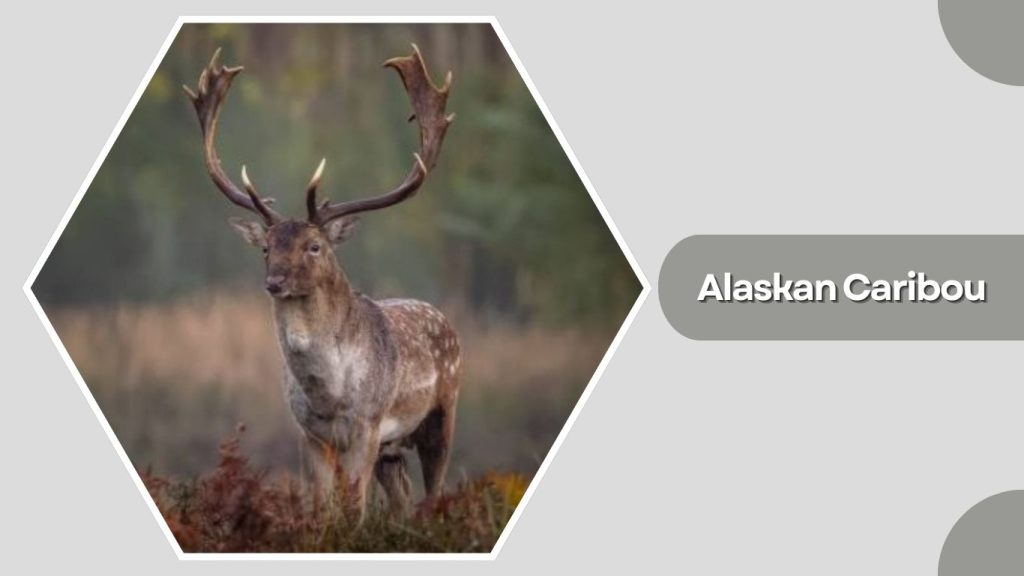
The Alaskan caribou is a general term often used for several large, migratory caribou herds found across Alaska. These reindeer are well adapted to Arctic tundra, mountain foothills, and boreal transition zones.
Identification
- Medium to large body with a thick, insulating coat
- Coat color ranges from dark brown in summer to pale gray in winter
- Both sexes grow antlers, often large and multi-branched
- Broad hooves suited for snow, tundra, and wetlands
- Short ears and dense facial fur
Habitat
Alaskan caribou inhabit large areas of Alaska, including coastal plains, inland tundra, mountain foothills, and northern forests. They shift seasonally between tundra summer grounds and forested wintering areas.
Diet
Their diet includes lichens, grasses, sedges, leaves, herbs, mushrooms, and shrubs. Winter feeding focuses heavily on lichens, while summer diets are rich in green vegetation.
Behavior and Lifecycle
These caribou are highly migratory and form large herds that move hundreds of kilometers each year. Calving occurs in late spring. They are strong swimmers and capable of crossing wide rivers and lakes during migration.