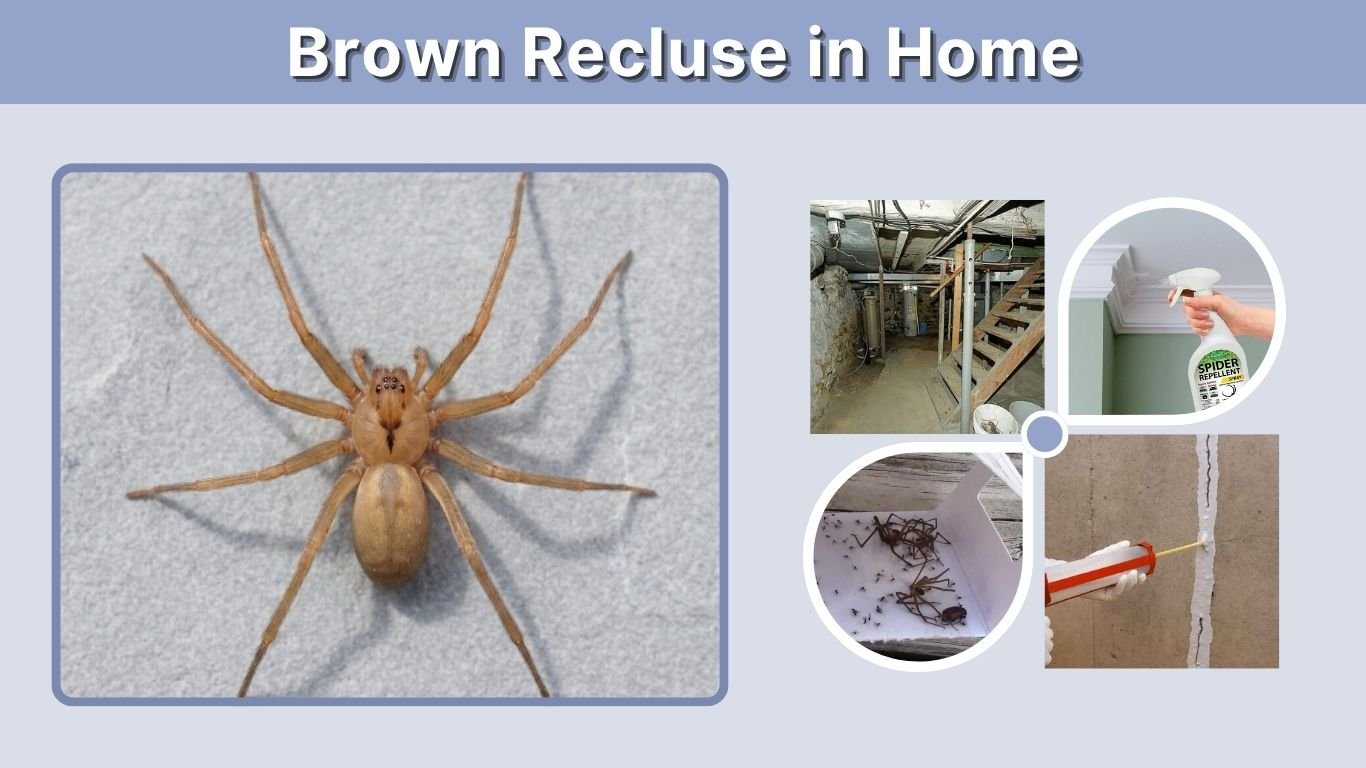
Finding a brown recluse in your home can be alarming, especially because this spider is linked with medically significant bites. The first step is not to panic, but to confirm the spider as carefully as possible and reduce contact risk. Brown recluse spiders are shy, hidden spiders that usually bite only when trapped against skin. If you suspect one indoors, focus on safe removal, sticky trap monitoring, clutter reduction, and professional help when sightings continue.
What to Do Right Away If You Find a Brown Recluse
If you see a spider that may be a brown recluse, avoid touching it with your hands. Brown recluse spiders are not aggressive, but accidental contact can happen when a spider is pressed against skin inside clothing, shoes, bedding, or stored items.
Use a jar, cup, or vacuum to remove the spider safely. If you can capture it without risk, save it in a sealed container for identification. Correct identification matters because many harmless brown spiders are mistaken for brown recluses.
| Situation | What You Should Do |
| One spider found on the floor | Capture or vacuum it, then inspect nearby hiding spots |
| Spider found in clothing or shoes | Shake items outdoors and inspect storage areas |
| Multiple spiders found | Use sticky traps and check closets, basements, and storage rooms |
| Possible bite | Wash the area, apply a cold compress, and seek medical advice if symptoms worsen |
| Repeated sightings | Consider professional pest control |
Brown recluse spiders often stay hidden in quiet areas, so one visible spider may not tell the full story. Sticky traps can help show whether this was a single spider or part of a larger indoor population.
Make Sure It Is Really a Brown Recluse
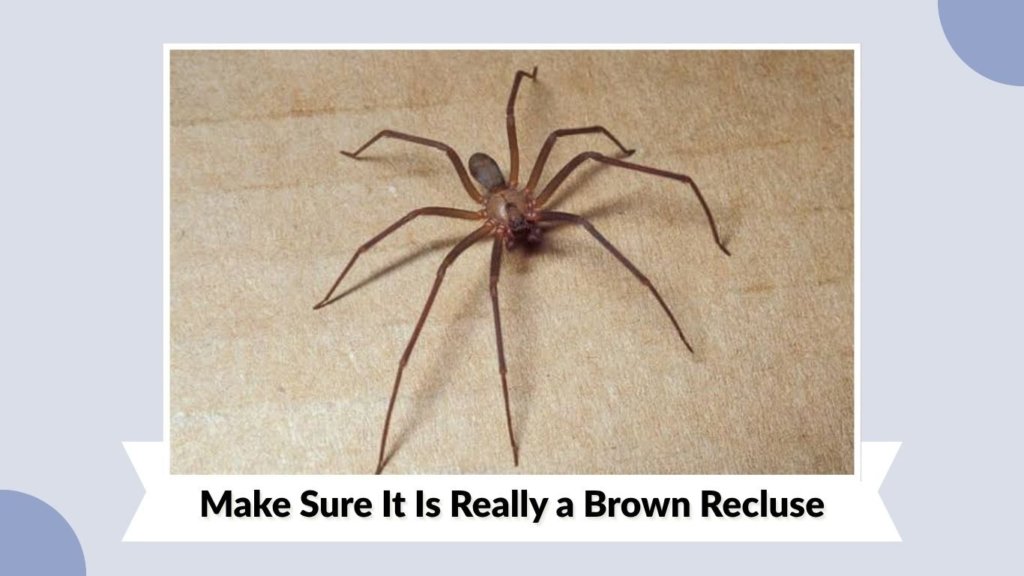
Many people misidentify brown spiders. A true brown recluse has a few important features, but some of them are hard to see without magnification.
Check the Eye Pattern
Brown recluse spiders have six eyes arranged in three pairs, unlike most spiders, which have eight eyes. This is one of the more reliable identification traits, but it can be difficult to see clearly without close inspection.
Look for the Violin Mark Carefully
Adult brown recluse spiders often have a darker violin-shaped mark on the top of the cephalothorax, with the “neck” of the violin pointing toward the abdomen. However, this mark may be faint, and young brown recluses may not show it clearly.
Do not rely on the violin mark alone. Other spiders can have dark markings, and people often see “violin” shapes on spiders that are not brown recluses.
Notice the Body and Legs
Brown recluse spiders are usually tan to brown with long, slender legs. Their legs are not strongly spiny, and their bodies look smoother than many common house spiders. Texas A&M describes recluse spiders as yellowish brown to variable brown, with six eyes in three pairs and a flattened carapace shape.
Where Brown Recluse Spiders Hide in Homes
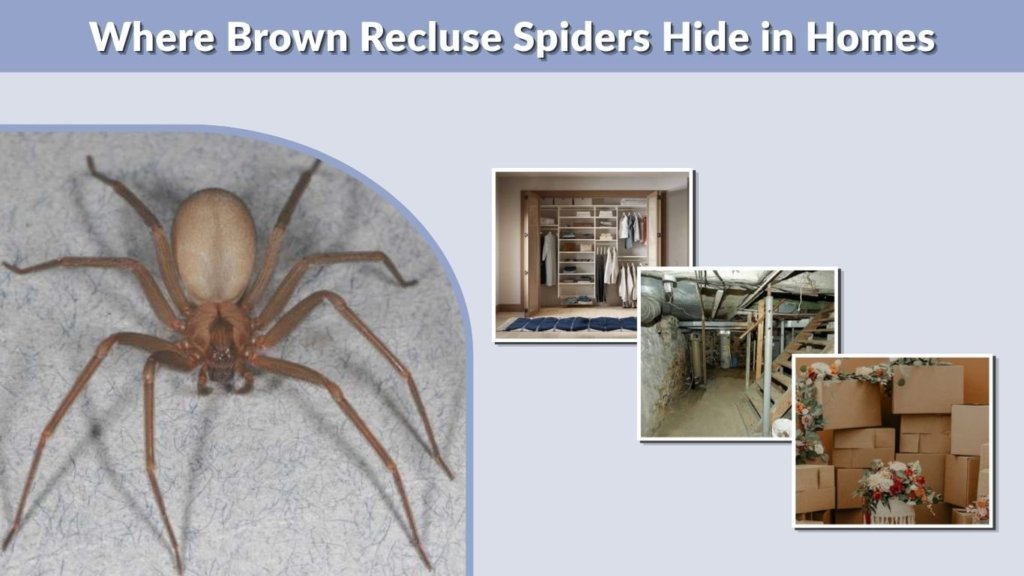
Brown recluse spiders prefer dark, dry, quiet, and undisturbed areas. They are often found where people store items for long periods.
Common hiding places include:
- Closets
- Attics
- Basements
- Garages
- Crawl spaces
- Cardboard boxes
- Stored clothes
- Shoes and boots
- Behind furniture
- Under beds
- Around baseboards
- Inside rarely used drawers
Texas A&M notes that brown recluse spiders are frequently found around stored boxes in closets and attics, and recommends eliminating clutter and taping stored boxes shut to reduce nesting sites.
How to Remove a Brown Recluse Safely
Do not try to pick up a suspected brown recluse with bare hands. Use a vacuum, broom, dustpan, jar, or sticky trap. After vacuuming, empty the vacuum contents into a sealed bag and dispose of it outdoors.
For safer removal:
- Wear gloves when moving stored items.
- Shake out shoes, clothing, towels, and bedding before use.
- Move boxes carefully instead of reaching blindly into them.
- Use a flashlight when inspecting dark corners.
- Keep beds pulled slightly away from walls if spiders are being found indoors.
The goal is to prevent accidental contact. Brown recluse bites commonly happen when the spider is trapped against skin, such as inside clothing, bedding, or shoes.
Use Sticky Traps to Monitor the Problem
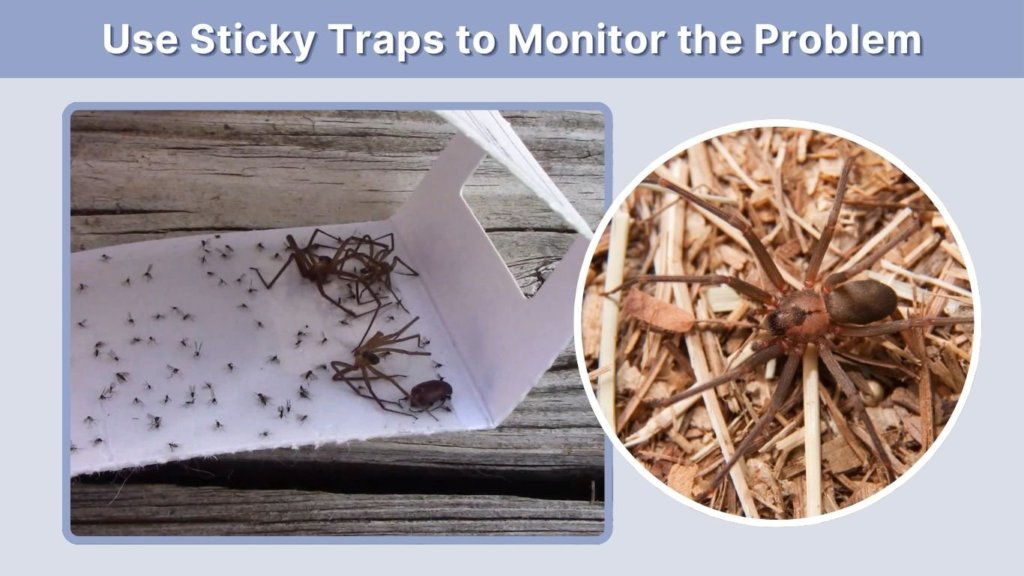
Sticky traps are one of the most useful tools for brown recluse monitoring. Place them flat along walls, behind furniture, in closets, under beds, near storage areas, and along baseboards.
The University of Kentucky recommends placing glue traps in corners, along baseboards, and near wall-floor junctions because brown recluse spiders tend to travel along these areas. Glue traps can also reveal where spiders are most active.
Texas A&M also notes that sticky cards can trap brown recluse spiders and help track control efforts over time.
| Trap Location | Why It Helps |
| Along baseboards | Spiders often travel beside walls |
| Inside closets | Recluses hide near stored items |
| Under furniture | Quiet, dark shelter |
| Garages and basements | Common spider habitat |
| Near cardboard storage | Boxes can provide hiding and nesting sites |
| Behind appliances | Low-disturbance areas |
Check traps regularly. If you catch several suspected brown recluses, the problem may be more than an occasional spider.
Reduce Clutter and Hiding Places
Clutter control is one of the most important steps. Brown recluse spiders do well in undisturbed storage areas, especially where insects are also present.
Start with these areas:
- Cardboard boxes in closets
- Piles of clothing on the floor
- Storage under beds
- Garage shelves
- Attic storage
- Basement corners
- Stacks of paper, fabric, or tools
Replace cardboard boxes with sealed plastic bins when possible. Tape shut boxes that must stay in storage. Vacuum behind furniture, under beds, around baseboards, and inside closets. Texas A&M recommends removing unnecessary clutter, cleaning webs, and vacuuming around, under, and behind furniture before pest control treatment.
Seal Entry Points and Reduce Insects
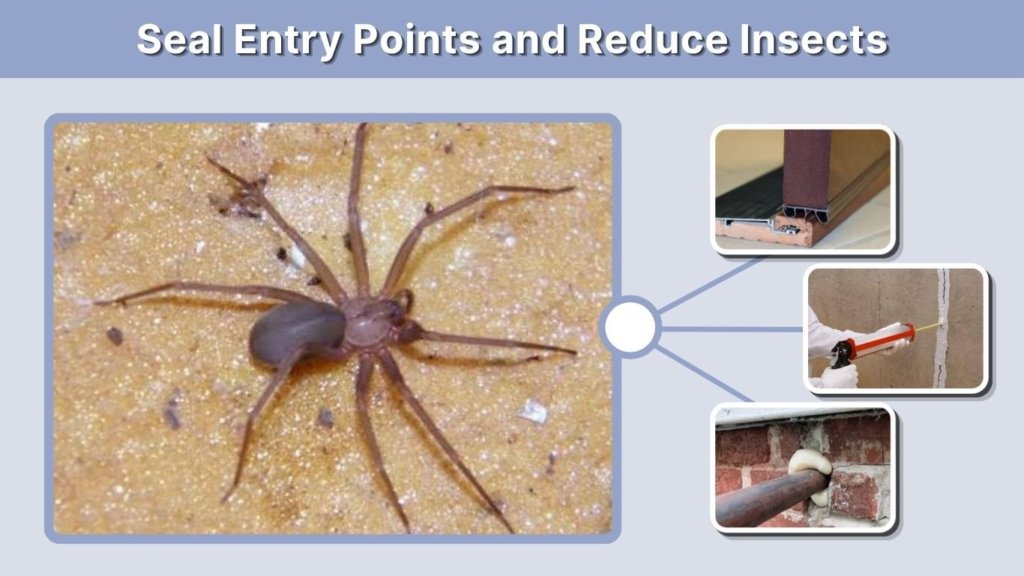
Brown recluse spiders can live indoors, but sealing gaps still helps reduce movement of spiders and insects. Look for openings around doors, windows, utility lines, vents, baseboards, and the foundation.
Also reduce insect prey. Brown recluse spiders feed on insects, so homes with crickets, roaches, flies, silverfish, or other pests may support more spider activity.
Helpful prevention steps include:
- Install door sweeps
- Seal cracks around foundations
- Repair torn window screens
- Caulk gaps around pipes and utility openings
- Keep outdoor lights from attracting insects near doors
- Store firewood away from the home
- Remove leaf litter and debris near the foundation
Reducing prey does not remove every spider immediately, but it makes the home less attractive over time.
Should You Use Sprays for Brown Recluse Spiders?
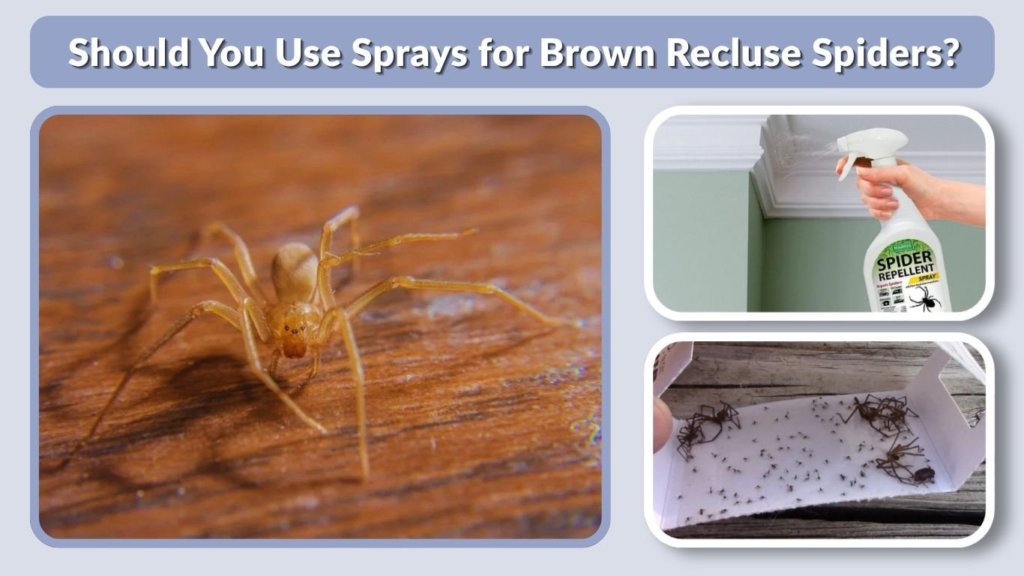
Sprays alone are usually not enough. Brown recluse spiders hide in cracks, voids, clutter, and storage areas where surface sprays may not reach them. A better plan combines inspection, sticky traps, decluttering, exclusion, and targeted treatment.
For repeated sightings, a licensed pest control professional can inspect hidden areas, identify the spider correctly, and apply treatments more strategically. This is especially useful if traps are catching several brown recluses or if spiders are being found in bedrooms, closets, or children’s rooms.
What If You Think You Were Bitten?
Most suspected spider bites are not confirmed spider bites, and many skin problems can look similar. Still, if you believe a brown recluse may have bitten you, take it seriously.
CDC/NIOSH first-aid guidance for spider bites includes staying calm, washing the bite area with soap and water, applying a cold cloth or ice pack to reduce swelling, elevating the area when possible, and not attempting to remove venom.
Seek medical attention if symptoms worsen or if you notice severe pain, spreading redness, blistering, fever, chills, nausea, difficulty breathing, or signs of infection. Cleveland Clinic also advises seeking immediate care for severe symptoms after a spider bite.
When to Call Pest Control
Call a professional if you repeatedly find suspected brown recluse spiders, catch several on sticky traps, or find them in high-contact areas such as bedrooms, closets, laundry rooms, or children’s spaces.
Professional help is also smart when:
- You cannot identify the spider confidently
- You find spiders in stored clothing or bedding
- Sticky traps catch multiple recluses
- You live in an area where brown recluses are common
- Someone in the home has been bitten
- DIY cleaning and trapping do not reduce sightings
A professional should still pair treatment with practical home changes. Without clutter reduction and monitoring, spiders may remain hidden.
How to Prevent Brown Recluse Spiders in the Home
The best prevention strategy is to make your home harder for spiders to enter, hide, and find prey.
Focus on these habits:
- Shake out shoes and clothing before wearing them
- Keep clothes off the floor
- Store seasonal items in sealed plastic bins
- Vacuum closets, baseboards, and storage areas
- Use sticky traps in low-traffic corners
- Wear gloves when moving boxes or firewood
- Keep beds and curtains from touching the floor
- Reduce insects inside and around the home
These steps are especially important in areas where brown recluse spiders are established.
FAQs
Is one brown recluse in the home a sign of infestation?
Not always. One spider could be an accidental visitor, but repeated sightings or several spiders on sticky traps may suggest an indoor population. Use traps to monitor activity before assuming the problem is gone.
Should I kill a brown recluse if I see one?
Yes, if it is indoors and you can do so safely. Do not handle it with bare hands. Use a vacuum, jar, broom, or sticky trap.
Where should I place brown recluse traps?
Place sticky traps along baseboards, in closets, behind furniture, under beds, in basements, garages, and near stored boxes. Brown recluse spiders often travel along wall-floor edges.
Can brown recluse spiders live in beds?
They do not prefer beds as a main habitat, but they can wander into bedding, clothing, or shoes. Keep bedding from touching the floor and shake out items if brown recluses have been found indoors.
What is the fastest way to get rid of brown recluse spiders?
The fastest practical approach is to combine vacuuming, sticky traps, clutter removal, sealed storage, insect reduction, and targeted pest control. Sprays alone are usually less reliable because brown recluses hide in protected areas.