
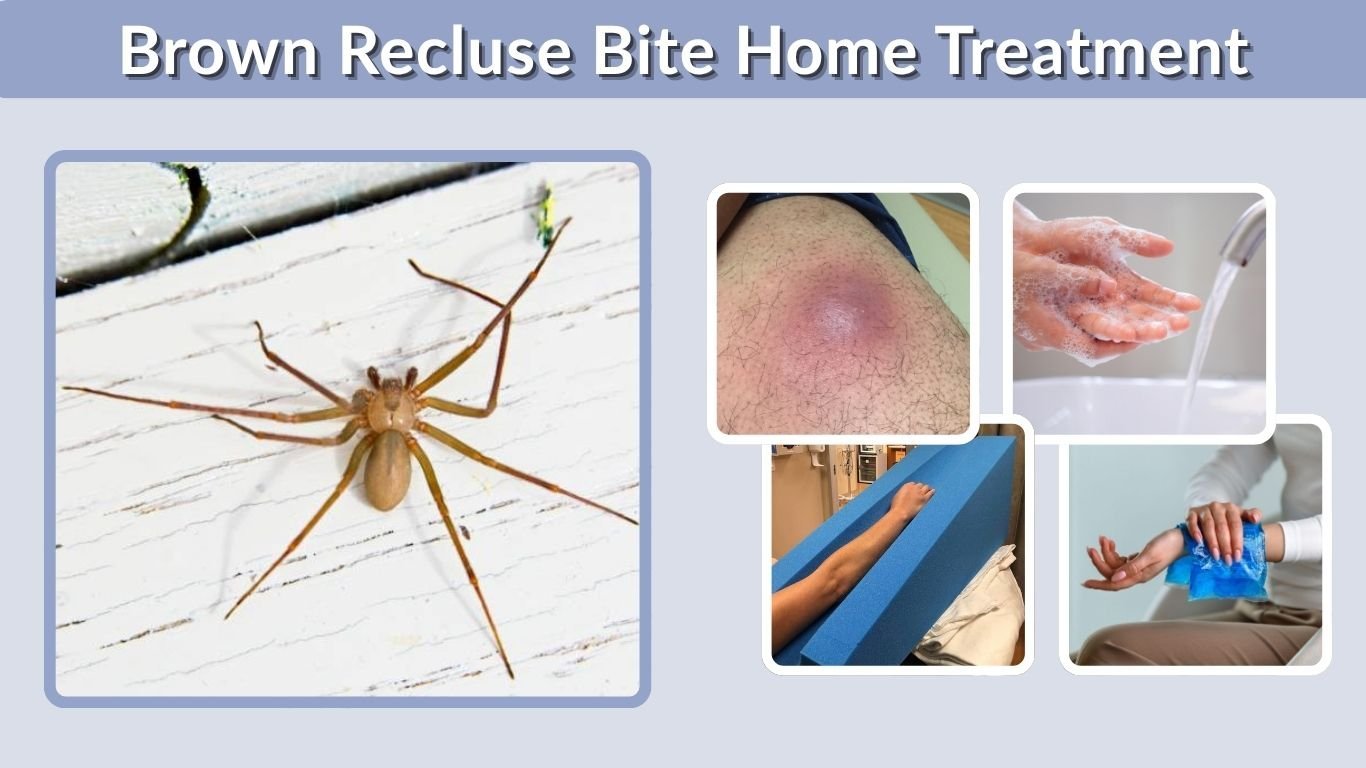
Brown recluse bite home treatment should start with basic first aid: stay calm, wash the bite with soap and water, apply a cold compress, elevate the area if possible, and monitor symptoms closely. A mild bite may heal with simple wound care, but suspected brown recluse bites should be taken seriously because some can lead to blistering, tissue damage, infection, or body-wide symptoms. Home care helps early, but it does not replace medical evaluation when symptoms worsen.
Quick Answer: Can You Treat a Brown Recluse Bite at Home?
Home treatment can help with early pain, swelling, and wound protection, but it cannot neutralize brown recluse venom. The CDC recommends washing the bite area, applying a cold cloth or ice pack, elevating the area, and not trying to remove venom. Medical attention is advised for suspected venomous spider bites, especially if symptoms become severe.
What to Do in the First Few Minutes
If you think you were bitten by a brown recluse, move away from the spider and avoid touching the bite repeatedly. If you can safely take a photo of the spider, do that for identification. Do not risk another bite by trying to catch it with bare hands.
Start with these steps:
- Wash the bite with soap and water.
- Apply a cold compress or ice pack wrapped in cloth.
- Elevate the bitten arm or leg if possible.
- Keep the area still and avoid scratching.
- Mark the edge of redness with a pen to track spreading.
- Call a doctor or Poison Control if you are unsure what to do.
MedlinePlus also lists washing, using an ice pack or wet compress, and taking over-the-counter pain medicine when needed as basic spider bite care.
What Home Treatment Cannot Do
Home treatment cannot remove venom, stop all tissue damage, or confirm that the bite came from a brown recluse. Poison Control notes that brown recluse bites are often not felt when they happen, serious illness is rare, and there is no antidote; treatment focuses on wound care and preventing infection.
Brown Recluse Bite Symptoms to Watch
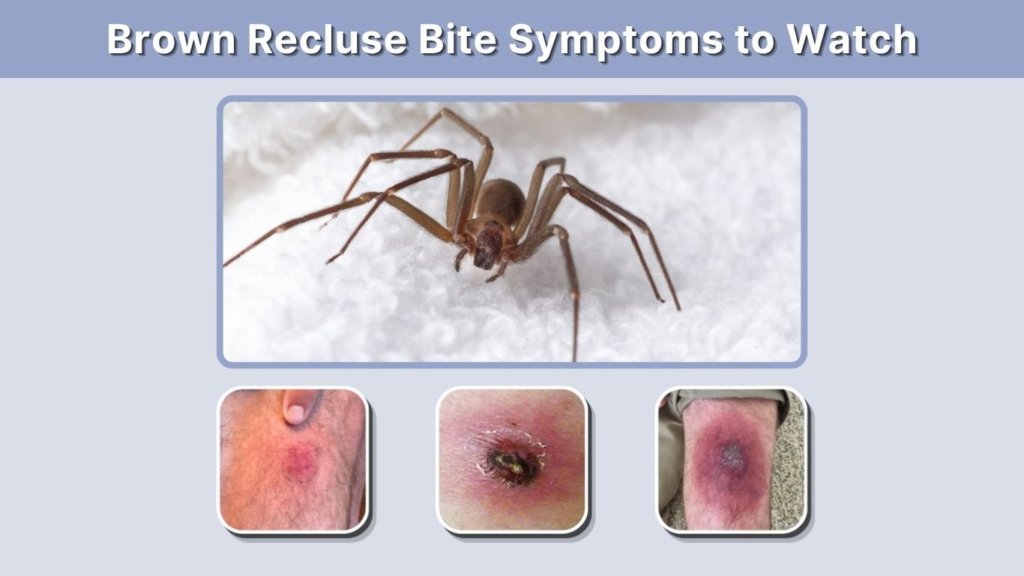
A brown recluse bite may look mild at first. Some people notice only redness, itching, or slight pain. Others may develop worsening pain, blistering, bruising, or an open sore. Mayo Clinic lists increasing pain during the first eight hours, fever, chills, body aches, and a wound with a pale center that may turn blue or purple as possible recluse bite symptoms.
| Time After Bite | Possible Symptoms | What to Do |
| First few minutes to hours | Mild redness, itching, stinging, or no pain | Wash, cool, elevate, and monitor |
| 2–8 hours | Increasing pain, swelling, redness | Continue first aid and consider medical advice |
| 12–24 hours | Blistering, bruising, pale center, darkening skin | Contact a healthcare provider |
| 1–7 days | Open sore, black center, spreading redness | Seek medical care |
| Any time | Fever, chills, nausea, severe pain, weakness | Get urgent medical help |
Mild Local Symptoms
Mild symptoms may include redness, tenderness, itching, or swelling around the bite. These symptoms can happen with many insect bites, not only spider bites. Mayo Clinic notes that many skin sores blamed on spider bites are actually caused by other insects, skin infections, burns, or other conditions.
Serious Symptoms
A more serious reaction can include worsening pain, a blister, a dark blue or purple area, a growing ulcer, fever, chills, body aches, or signs of infection. Cleveland Clinic notes that brown recluse bites may cause redness, itchiness, pain, wounds, bruising, blisters, open sores, and scarring if untreated.
Brown Recluse Bite Treatment at Home
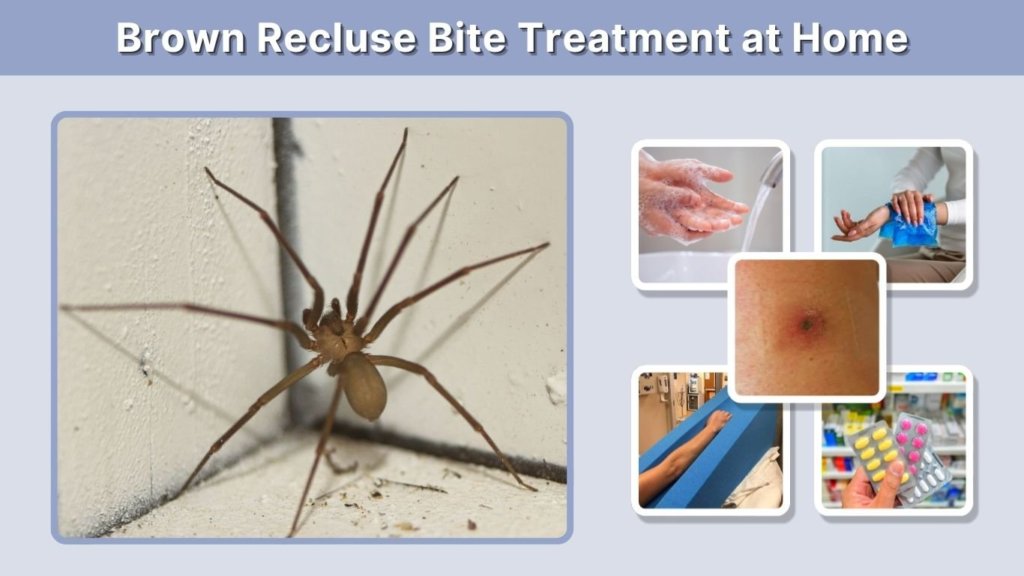
At-home treatment should focus on safe first aid, not experimental remedies. The goal is to reduce swelling, protect the skin, prevent infection, and identify worsening symptoms early.
Clean the Bite Gently
Wash the area with mild soap and clean running water. Do not scrub aggressively because irritated skin can become more inflamed. After washing, pat the area dry with a clean towel.
You may cover the bite with a clean, dry bandage if clothing rubs against it. Change the bandage daily or sooner if it becomes wet or dirty. Mayo Clinic’s first-aid guidance also recommends cleaning the wound with mild soap and water and applying an over-the-counter antibiotic ointment to help prevent infection.
Use a Cold Compress
Apply a cool cloth or wrapped ice pack for about 10 to 15 minutes at a time. Do not place ice directly on the skin. A cold can help reduce pain and swelling, especially in the early stage.
Mayo Clinic recommends a cool cloth for 15 minutes each hour as part of spider bite first aid.
Elevate the Bite Area
If the bite is on your hand, arm, foot, or leg, raise it when possible. Elevation may help reduce swelling. The CDC and Mayo Clinic both include elevation as a recommended first-aid step for spider bites.
Use Over-the-Counter Medicine Carefully
For pain, many people use common over-the-counter pain relievers, following the label directions. For itching or swelling, some may use an antihistamine if it is safe for them. MedlinePlus includes over-the-counter pain medicine and antihistamines for severe swelling as possible supportive care steps.
Avoid giving aspirin to children unless a healthcare professional specifically says to do so. People who are pregnant, have kidney disease, take blood thinners, have stomach ulcers, or have medication allergies should ask a clinician or pharmacist before using pain relievers.
Home Remedies to Avoid
Some “brown recluse bite home remedies” can make the wound worse. The safest home care is simple: clean, cool, elevate, protect, and monitor.
Do not:
- Cut the bite open.
- Try to suck out venom.
- Apply heat to the bite.
- Use a tourniquet.
- Scratch or squeeze the wound.
- Apply bleach, gasoline, alcohol, or harsh chemicals.
- Use unverified herbal pastes on broken skin.
- Delay medical care if symptoms are worsening.
The CDC specifically says not to attempt to remove venom after a spider bite.
When to Seek Medical Care
A suspected brown recluse bite should be watched closely. Home treatment is reasonable for very mild symptoms, but medical care is important when pain, redness, swelling, or skin damage progresses.
Seek medical help if you notice:
- Severe or increasing pain
- Fever, chills, nausea, or body aches
- A blister or open sore
- Skin turning blue, purple, black, or gray
- Redness spreading away from the bite
- Pus, warmth, or signs of infection
- Bite on the face, genitals, hand, or near a joint
- Symptoms in a child, older adult, or person with immune problems
- Trouble breathing, dizziness, or widespread rash
Cleveland Clinic warns that more serious spider bites can cause symptoms such as trouble breathing, severe headache, and painful muscle cramps that require immediate medical care.
Brown Recluse Bite Home Treatment vs Medical Treatment
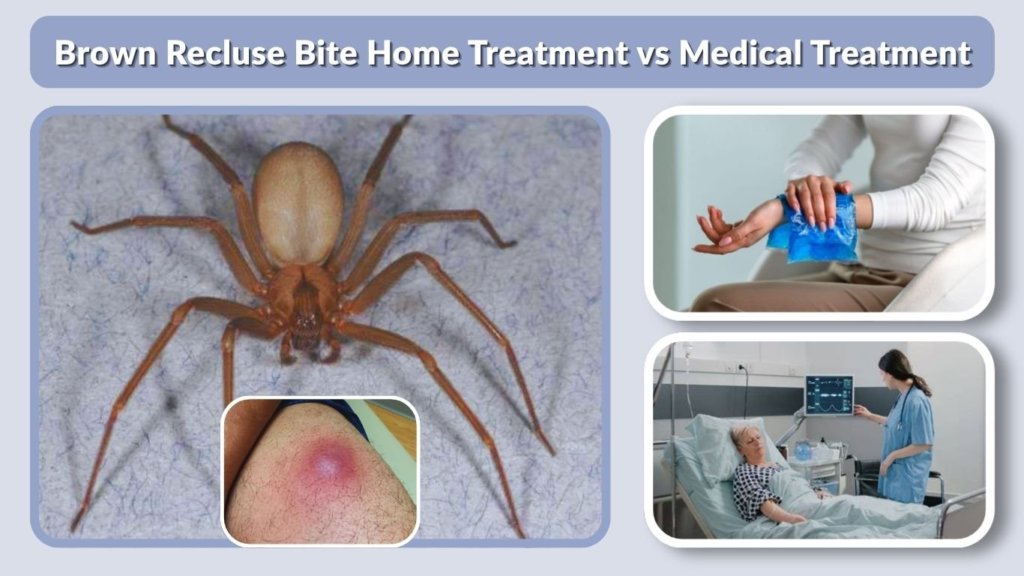
Home care supports healing, but medical treatment may be needed if the wound progresses. A healthcare provider may check for infection, update tetanus protection, manage pain, monitor tissue damage, or treat complications.
| Care Option | What It Does | When It Helps |
| Soap and water | Cleans the bite area | Right away |
| Cold compress | Reduces pain and swelling | Early symptoms |
| Elevation | May reduce swelling | Bites on arms or legs |
| Clean bandage | Protects wound from friction and dirt | If skin is irritated or open |
| Medical exam | Checks for infection, necrosis, or other causes | Worsening or uncertain cases |
| Prescription treatment | Treats infection, pain, or complications | Moderate to severe cases |
MSD Manual notes that common treatment for spider bites includes wound cleaning, ice for pain, elevation, tetanus protection, and observation; most local reactions respond to these measures alone.
How to Track the Bite at Home
Monitoring is an important part of brown recluse spider bite treatment at home. Take a clear photo of the bite when you first notice it, then take another photo every few hours on the first day. Use the same lighting when possible.
Helpful tracking steps include:
- Write down the time you noticed the bite.
- Mark the edge of redness with a pen.
- Measure the swollen area.
- Note pain level from 1 to 10.
- Watch for color changes.
- Record fever, chills, nausea, or fatigue.
- Keep photos in case you need medical care.
If the red area spreads beyond your pen mark, the center darkens, or pain increases instead of improving, contact a healthcare professional.
What If the Bite Is on a Dog?
Do not rely on home treatment alone for a suspected brown recluse bite on a dog. You can gently clean the area and prevent licking, but a veterinarian should guide care if swelling, pain, weakness, fever, vomiting, dark skin, or a worsening wound appears.
Merck Veterinary Manual says treatment for recluse spider envenomation in animals is supportive, and antivenom is not available for most recluse envenomations in countries including the United States.
Preventing Another Brown Recluse Bite at Home
Prevention matters because brown recluse bites often happen when a spider is trapped against the skin. Reduce clutter and check items that have been stored for a long time.
Useful prevention steps include:
- Shake out shoes before wearing them.
- Wear gloves when moving boxes, firewood, or stored items.
- Keep clothes and towels off the floor.
- Store seasonal clothing in sealed plastic bins.
- Move beds slightly away from walls.
- Vacuum closets, baseboards, garages, and storage rooms.
- Use sticky traps in quiet areas.
- Seal gaps around doors, windows, and utility lines.
These steps reduce accidental contact and make your home less attractive to spiders and the insects they eat.
FAQs
What is the best brown recluse bite home treatment?
The best early home treatment is to wash the bite with soap and water, apply a cold compress, elevate the area, protect it with a clean bandage if needed, and watch symptoms closely. Do not cut the wound or try to remove venom. If pain, swelling, discoloration, blistering, or fever develops, contact a healthcare professional.
Can a brown recluse bite heal without medical treatment?
Some mild bites may heal with basic wound care, but it is hard to know early which bites will worsen. Brown recluse bites can sometimes lead to tissue damage or infection. If the wound grows, darkens, blisters, becomes very painful, or causes fever or body aches, it should be checked by a medical professional.
Should I put ice on a brown recluse bite?
Yes, a cold compress or wrapped ice pack can help reduce pain and swelling. Do not place ice directly on the skin, and do not keep it on continuously. Mayo Clinic recommends using a cool cloth for 15 minutes each hour as part of spider bite first aid.
Are brown recluse bite home remedies safe?
Many home remedies are not safe, especially harsh chemicals, cutting the skin, suction, heat, or unverified pastes on broken skin. Safe home care is simple: clean the area, cool it, elevate it, protect it, and monitor for changes. Worsening pain, spreading redness, blisters, or dark skin should not be treated with home remedies alone.
When should I go to the ER for a brown recluse bite?
Go to urgent care or the ER if you have trouble breathing, severe pain, fever, chills, vomiting, dizziness, spreading redness, a rapidly growing wound, black or purple skin, or signs of infection. Children, older adults, pregnant people, and people with immune problems should get medical advice sooner after a suspected brown recluse bite.