
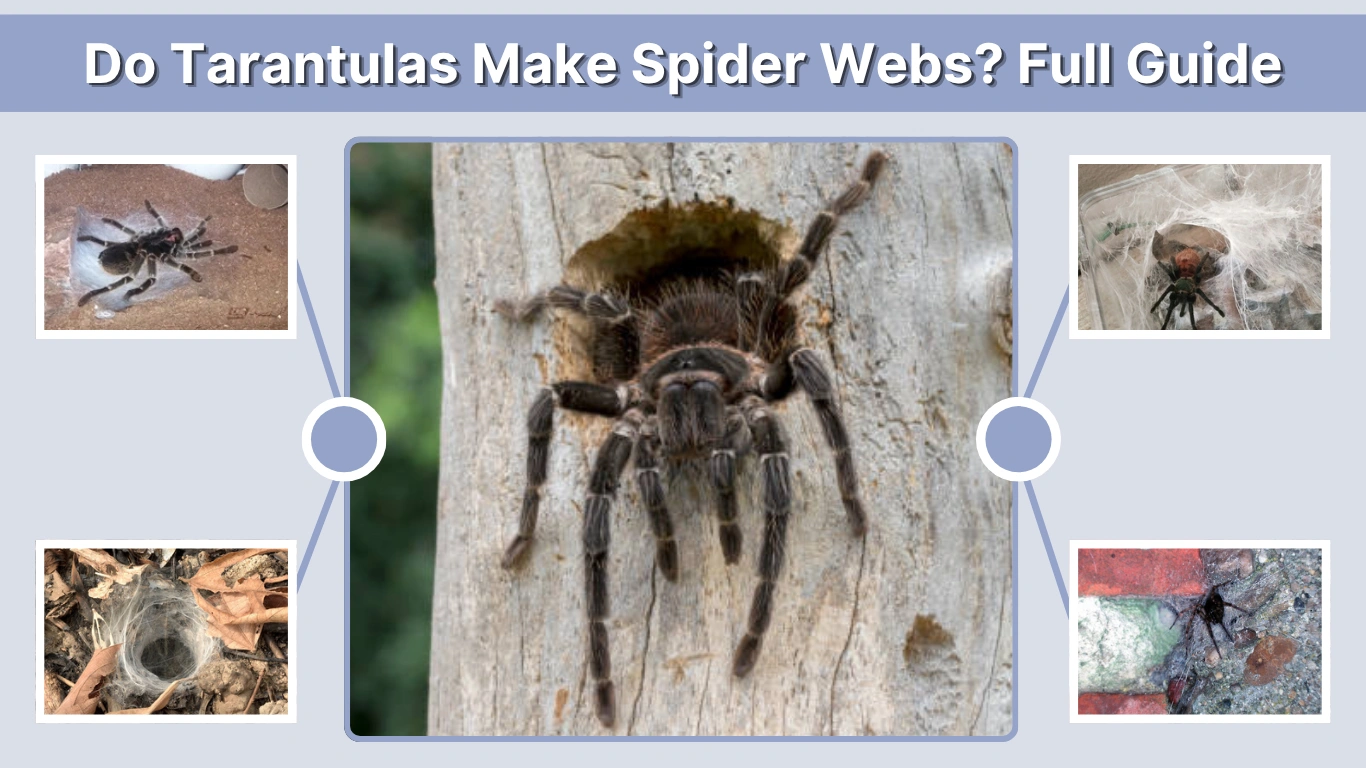
Tarantulas are among the most fascinating spiders in the world, yet they’re also widely misunderstood. When most people think of spiders, they imagine intricate webs stretched between trees or corners of a room. Naturally, this leads to a common question: do tarantulas make webs like other spiders?
The short answer is yes—but not in the way you might expect. Unlike classic web-building spiders, tarantulas use silk in a completely different and more subtle way. In this guide, you’ll learn how tarantulas use silk, the types of “webs” they create, and how their behavior differs across species.
Do Tarantulas Make Webs? (Quick Answer)
Yes, tarantulas do make silk, but they do not spin large, sticky webs to catch prey like many other spiders. Instead, they create smaller silk structures such as burrow linings, trip lines, and web mats. These serve practical purposes like protection, sensing vibrations, and supporting their bodies.
How Tarantulas Use Silk
Tarantula silk plays a crucial role in their survival, even though it doesn’t resemble the classic spider web. Rather than trapping insects, tarantulas rely on ambush hunting—waiting patiently for prey to come close before striking.
Their silk acts more like a tool than a trap. It helps them interact with their environment, stay safe, and even reproduce. Whether they live on the ground or in trees, all tarantulas produce silk in some form, but how they use it depends largely on their species and habitat.
Types of Webs Tarantulas Make
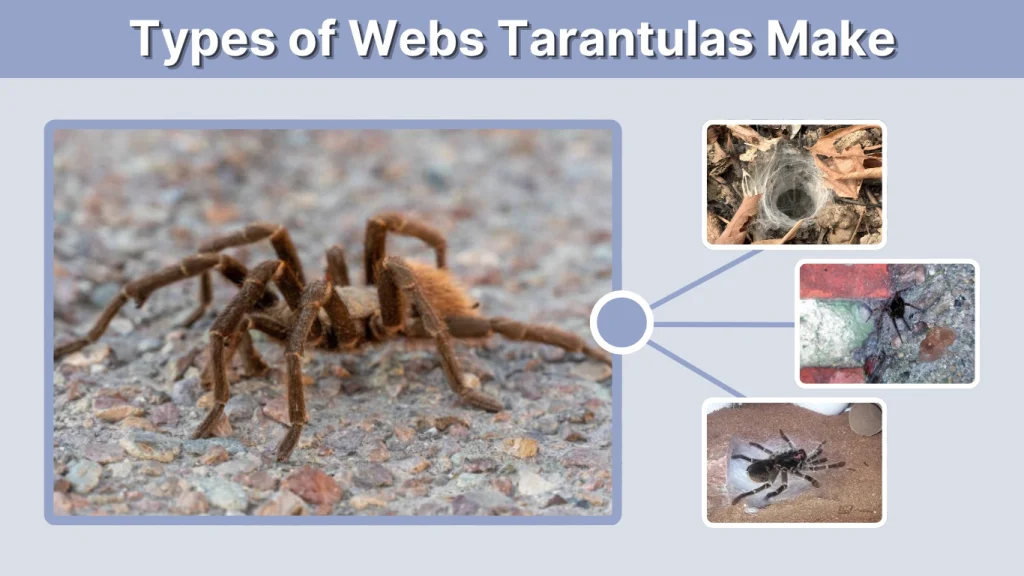
Burrow Linings
One of the most common uses of silk in tarantulas is lining their burrows. Ground-dwelling species dig tunnels in soil and reinforce them with silk to prevent collapse.
- Adds structural stability to the burrow
- Helps maintain moisture levels inside
- Creates a smoother and more comfortable surface
This lining is not visible like a traditional web but is essential for the spider’s safety and comfort.
Trip Lines
Tarantulas are highly sensitive to vibrations, and silk helps them “feel” their surroundings. They lay down fine strands of silk—called trip lines—around the entrance of their burrow.
- Detect movement from nearby prey
- Alert the tarantula to potential threats
- Act like an early warning system
When an insect walks across these silk lines, the vibrations travel directly to the tarantula, signaling that it’s time to strike.
Web Mats
Tarantulas also create flat silk surfaces known as web mats. These are often used for resting or during molting, which is when the spider sheds its old exoskeleton.
- Provide a stable and clean surface
- Reduce the risk of injury during molting
- Help the tarantula maintain balance
Molting is a vulnerable time for tarantulas, so this silk layer plays an important protective role.
Sperm Webs (Brief Overview)
Male tarantulas create a special type of silk structure called a sperm web. This is used in reproduction and is very different from other silk uses.
- Small, temporary silk platform
- Used to transfer sperm to reproductive organs
- Essential for mating
We’ll explore this in more detail later in the article.
Do All Tarantulas Make Webs?
Differences Between Species
All tarantulas produce silk, but not all of them create noticeable web structures. Some species use very little silk, while others produce large amounts that are easy to see.
For example, a tarantula living in a dry, ground-based environment may only use silk to line its burrow. On the other hand, a tree-dwelling species may build extensive silk retreats.
Arboreal vs Terrestrial Tarantulas
The biggest difference in web use comes down to habitat: whether a tarantula lives in trees or on the ground.
Arboreal tarantulas (tree-dwelling):
- Produce more visible silk
- Build webbed shelters in branches or bark
- Use silk for climbing and stability
Terrestrial tarantulas (ground-dwelling):
- Use less visible silk
- Focus on burrow construction
- Rely more on ambush than structure
This distinction explains why some people think tarantulas don’t make webs at all—they may simply be observing species that use silk less visibly.
Species-Specific Web Behavior

Do Curly Hair Tarantulas Make Webs?
Curly hair tarantulas are mostly ground-dwelling and do not create noticeable webs. They use silk mainly to line their burrows and occasionally create thin layers around their resting areas. Their webbing is minimal and purely functional.
Do Mexican Red Knee Tarantulas Make Webs?
Mexican red knee tarantulas produce small amounts of silk, usually near their hiding spots. They may create light webbing around their burrow entrance, but they do not build webs for catching prey. Their silk use is subtle and often goes unnoticed.
Do Pink Toe Tarantulas Make Webs?
Pink toe tarantulas are arboreal and are among the more active web users. They build visible silk retreats in elevated areas like branches or enclosure corners.
- Create tube-like web shelters
- Use silk for climbing and stability
- Produce more noticeable webbing than ground species
Because of this, they are often mistaken for traditional web-building spiders.
Do Chilean Rose Tarantulas Make Webs?
Chilean rose tarantulas use very little silk. They may line their burrows or create a thin silk layer in their enclosure, but they do not produce large or visible webs. Their behavior is typical of terrestrial tarantulas.
Do Goliath Tarantulas Make Webs?
Goliath tarantulas, one of the largest spider species in the world, rely on burrows rather than webs. They use silk to reinforce their tunnels but do not create any web structures for hunting or trapping prey.
Do Zebra Knee Tarantulas Make Webs?
Zebra knee tarantulas use a moderate amount of silk, but like most terrestrial species, their webbing is not very visible. They primarily use silk to line their burrows and create a stable environment.
- Limited surface webbing
- Functional rather than decorative silk use
- Similar behavior to other ground-dwelling tarantulas
Do Pet Tarantulas Make Webs?
What to Expect in Captivity
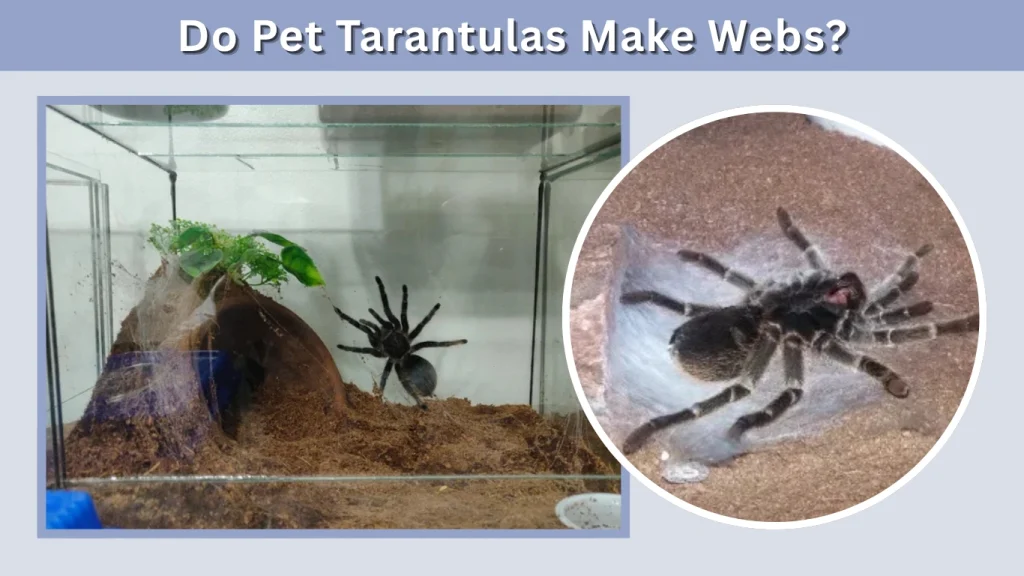
Yes, pet tarantulas do make silk, but the amount and visibility depend heavily on the species. Some owners may rarely notice webbing, while others may see significant silk structures.
- Arboreal species tend to web more
- Terrestrial species show minimal webbing
- Silk use may increase during molting or stress
Factors That Affect Webbing
Several environmental and behavioral factors influence how much silk a tarantula produces in captivity.
- Enclosure setup: More anchor points encourage webbing
- Humidity levels: Proper conditions promote natural behavior
- Security: A comfortable tarantula webs more confidently
A lack of webbing doesn’t necessarily mean something is wrong—it may simply reflect the species’ natural habits.
How Do Tarantulas Make Webs?
Silk Production Process
Tarantulas produce silk from specialized organs called spinnerets, located at the rear of their abdomen. The silk starts as a liquid protein and quickly hardens when exposed to air.
- Spinnerets control silk release
- Silk solidifies instantly
- Different movements create different silk patterns
Types of Silk
Tarantulas can produce multiple types of silk, each suited for a specific purpose. While not as diverse as some web-building spiders, their silk is still highly versatile.
- Strong silk for structure and support
- Fine silk for sensing vibrations
- Soft silk for lining and comfort
Why Do Tarantulas Make Webs?
Protection and Shelter
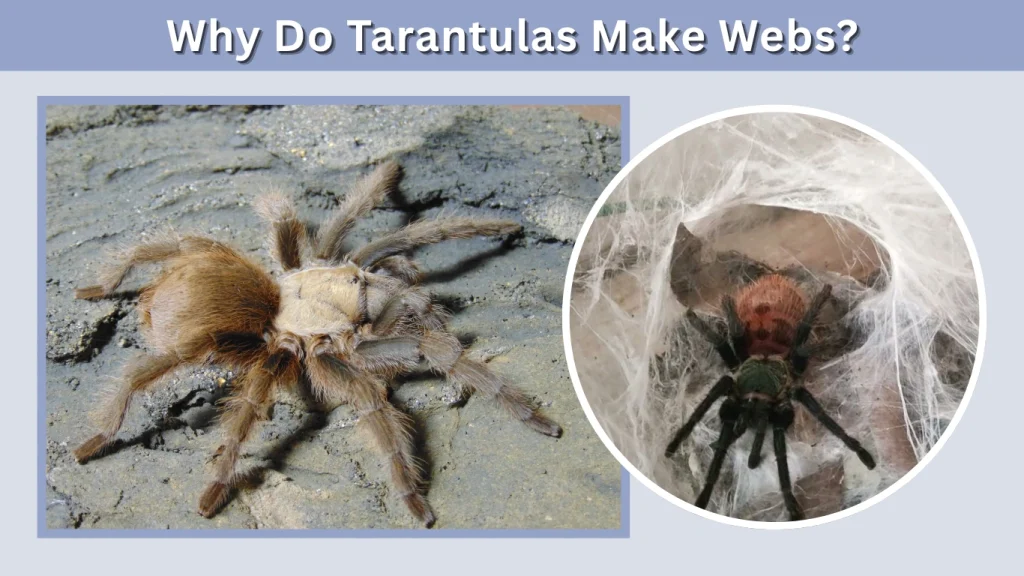
Silk plays a key role in keeping tarantulas safe. By lining their burrows or retreats, they create a stable and secure environment.
- Prevents burrow collapse
- Offers protection from predators
- Helps regulate internal conditions
Hunting Assistance
Although tarantulas don’t use webs to trap prey, silk still supports their hunting strategy.
- Detects vibrations from insects
- Alerts the spider to movement
- Improves timing for ambush attacks
Molting Support
Molting is one of the most vulnerable stages in a tarantula’s life. Silk helps create a safe surface for this process.
- Provides stability during shedding
- Reduces risk of injury
- Keeps the area clean
Reproduction
Silk also plays an essential role in reproduction, especially for male tarantulas. This leads to one of the most unique silk structures they create—the sperm web.
What Is a Sperm Web?
How It Works
A sperm web is a small, temporary silk structure created by male tarantulas when they reach maturity.
- The male spins a thin silk mat
- Deposits sperm onto the surface
- Draws the sperm into specialized appendages (pedipalps)
This process prepares the male for mating.
Why It Matters
Without creating a sperm web, a male tarantula cannot successfully reproduce. It is a critical step that ensures sperm is safely transferred during mating.
- Enables controlled sperm storage
- Increases mating success
- Essential part of the reproductive cycle
Tarantulas vs Other Spiders
Key Differences
Tarantulas behave very differently from typical web-building spiders.
- Tarantulas are ambush predators
- Most other spiders rely on webs to catch prey
- Tarantulas depend on strength and speed instead
Web Structure Comparison
The type of silk structure also differs significantly.
- Tarantulas: simple, functional silk
- Other spiders: complex, sticky webs
- Purpose: support vs trapping
This is why tarantulas are rarely seen with large, visible webs.
Common Misconceptions
- “Tarantulas don’t make webs at all” – False; they produce silk regularly
- “All spiders spin big webs” – Not true; many, like tarantulas, don’t
- “Pet tarantulas don’t behave naturally” – They still follow natural instincts
Understanding these myths helps clarify how unique tarantulas really are.
FAQs
Do tarantulas make spider webs like house spiders?
Tarantulas do not create large, sticky webs like house spiders. Instead, they produce silk for practical purposes such as lining burrows, detecting vibrations, and supporting molting. Their silk is functional rather than used for trapping prey.
Why do tarantulas make sperm webs?
Male tarantulas create sperm webs to transfer sperm from their bodies into their pedipalps. This allows them to store and deliver sperm during mating. Without this step, reproduction would not be possible.
Do arboreal tarantulas make more webs than ground species?
Yes, arboreal tarantulas generally produce more visible silk. They build webbed retreats in elevated areas, while ground-dwelling species mainly use silk inside burrows or for subtle environmental interaction.
Do tarantulas need webs to catch food?
No, tarantulas are ambush predators. They rely on sensing vibrations and quickly attacking prey rather than trapping it in webs. Silk helps them detect movement but is not used to capture insects.
Do baby tarantulas make webs?
Yes, young tarantulas often produce more silk than adults. This helps protect them from predators and creates a safer environment while they grow and develop.
Conclusion
Tarantulas do make silk, but they don’t build the large, sticky webs most people associate with spiders. Instead, their silk serves practical purposes—supporting their environment, detecting prey, aiding in molting, and enabling reproduction.
By understanding how tarantulas use silk, it becomes clear that their behavior is not only different from other spiders but also perfectly adapted to their unique lifestyle.