

The harvestman spider is one of the most misunderstood arachnids in the world. Often mistaken for true spiders, these long-legged creatures are commonly called “daddy longlegs,” leading to widespread myths about their danger to humans. Many people believe harvestmen are highly venomous, but the truth is quite different.
In reality, harvestman spiders belong to a completely separate group of arachnids known as Opiliones. They are harmless, fascinating, and play an important role in the ecosystem. In this article, we’ll explore everything you need to know about harvestman spiders, including their habitat, diet, lifespan, bite, and reproduction.
What is a Harvestman Spider?
A harvestman spider is an arachnid belonging to the order Opiliones. Although they look similar to spiders at first glance, they are not true spiders. Unlike spiders, harvestmen have a unique body structure and lack several key features such as venom glands and silk-producing organs.
Key Physical Characteristics
Harvestman spiders are easily recognizable due to their distinctive appearance:
- A single, fused body segment (unlike spiders, which have two parts)
- Extremely long, thin legs relative to body size
- Small, rounded body
- No silk glands, meaning they cannot spin webs
Their long legs help them navigate their environment and detect vibrations, making them highly sensitive to movement around them.
Harvestman Spider Habitat
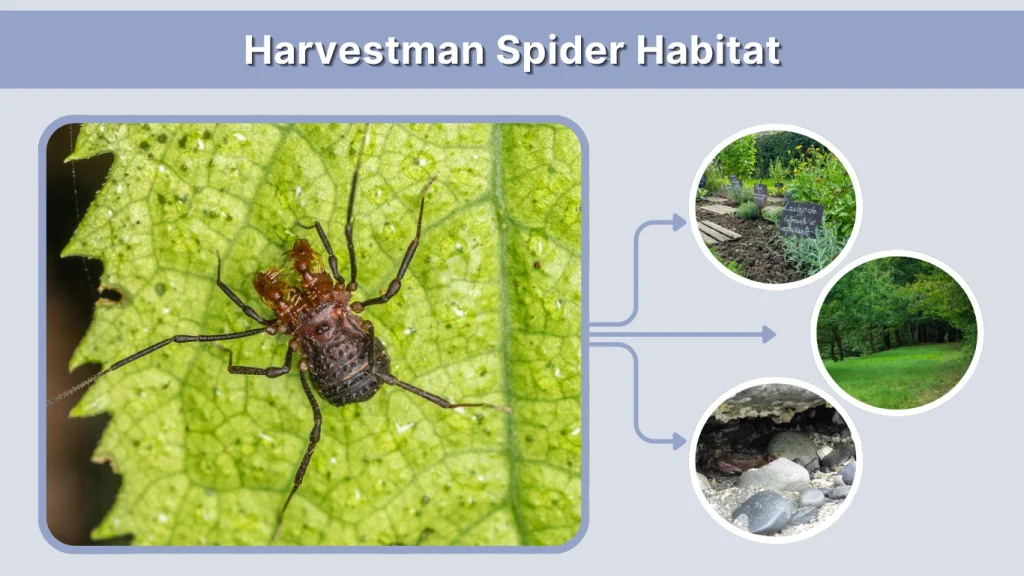
Harvestman spiders are highly adaptable and can live in a variety of environments. However, they tend to prefer areas that provide moisture and protection.
Common Environments
You can commonly find harvestman spiders in:
- Forest floors covered with leaf litter
- Gardens and grassy areas
- Under rocks, logs, and tree bark
- Damp basements or shaded outdoor spaces
These locations offer both shelter and access to food sources.
Preferred Conditions
Harvestmen thrive in moist, shaded environments. They are sensitive to dehydration, so they avoid dry and exposed areas. Most species are nocturnal, meaning they are active at night and hide during the day.
During daylight hours, they often remain hidden in cracks, crevices, or beneath debris to stay protected from predators and harsh environmental conditions.
Harvestman Spider Diet
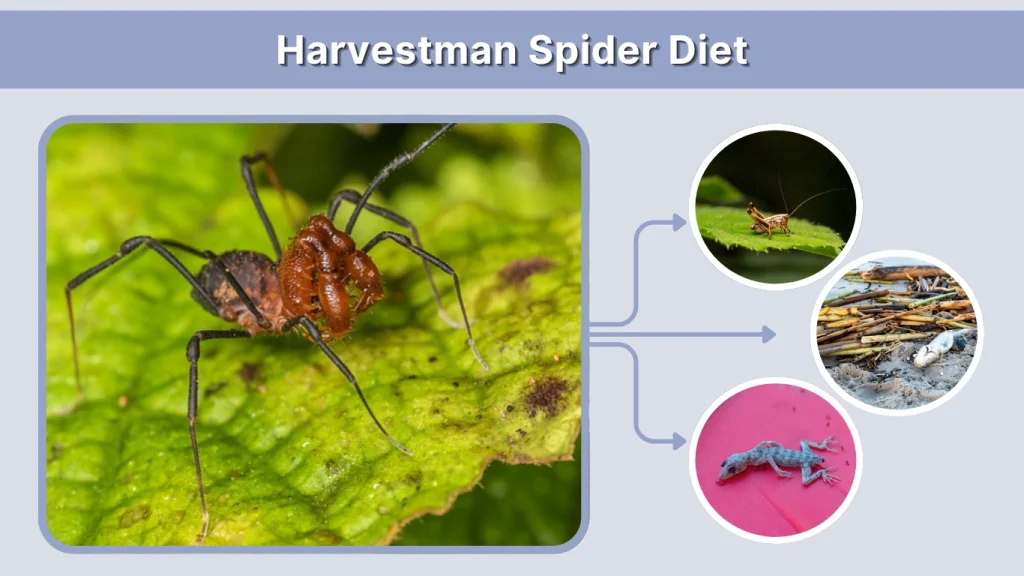
Harvestman spiders are opportunistic feeders with a highly flexible diet. Unlike many spiders that rely solely on live prey, harvestmen are omnivorous and consume a wide range of food sources.
Feeding Habits
Harvestmen do not use webs to catch food. Instead, they actively search for food or scavenge from their surroundings. Their feeding behavior is best described as opportunistic—they eat whatever is available.
They use their small mouthparts to chew food, which is another key difference from many spiders that liquefy their prey.
Typical Food Sources
Their diet may include:
- Small insects and invertebrates
- Dead organic matter (scavenging)
- Fungi and plant material
Because they consume both living and decaying matter, harvestman spiders play an important role in maintaining ecological balance.
Harvestman Spider Bite
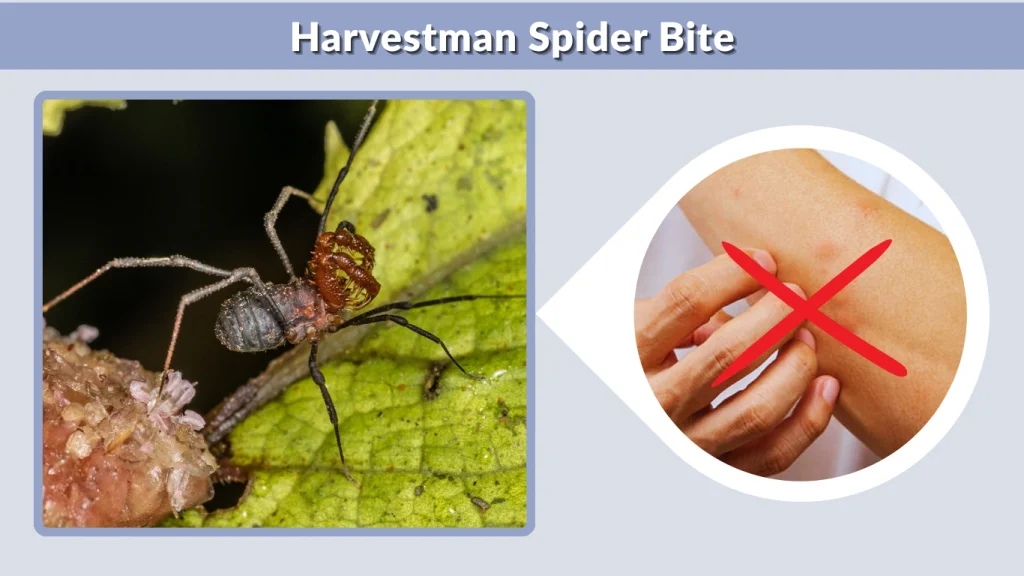
One of the most common questions people ask is whether harvestman spiders can bite humans.
Bite Mechanics
Harvestmen do have mouthparts known as chelicerae, but these are relatively small and not designed to pierce human skin effectively. As a result, their ability to bite is extremely limited.
Effects of a Bite
In rare cases where a bite might occur, it is typically harmless. Most people would not even notice it, as it causes little to no pain and has no venom involved.
Are Harvestman Spiders Poisonous?
One of the most widespread myths about harvestman spiders is that they are extremely poisonous but unable to bite humans. This claim has circulated for years, but it is completely false.
Myth vs Reality
The myth likely comes from confusion between harvestmen and other long-legged spiders, such as cellar spiders. However, harvestmen are not spiders at all—and more importantly, they do not have venom glands.
Because they lack venom, they cannot be poisonous or dangerous in the way many people assume. Scientifically, there is no evidence supporting the idea that harvestmen are harmful to humans.
Safety Around Humans
Harvestman spiders are entirely harmless to both humans and pets. They do not attack, do not inject venom, and pose no medical risk. In fact, they are beneficial creatures that help control small insect populations and clean up organic debris.
Harvestman Spider Eggs & Reproduction
Harvestman spiders have a unique reproductive process that differs from many true spiders.
Mating Behavior
Unlike most spiders that transfer sperm indirectly, male harvestmen use a direct mating method. This involves a specialized organ that allows them to transfer sperm directly to the female.
This reproductive strategy is considered more primitive compared to other arachnids.
Egg-Laying Process
After mating, the female lays eggs in protected locations such as:
- Soil
- Under bark
- Inside small crevices
The number of eggs can vary depending on the species, but they are usually deposited in clusters.
Parental Care
In some species, the male harvestman takes on the role of guarding the eggs. He protects them from predators and environmental threats until they hatch. This level of parental care is relatively uncommon among arachnids and makes harvestmen particularly interesting.
Harvestman Spider Nest
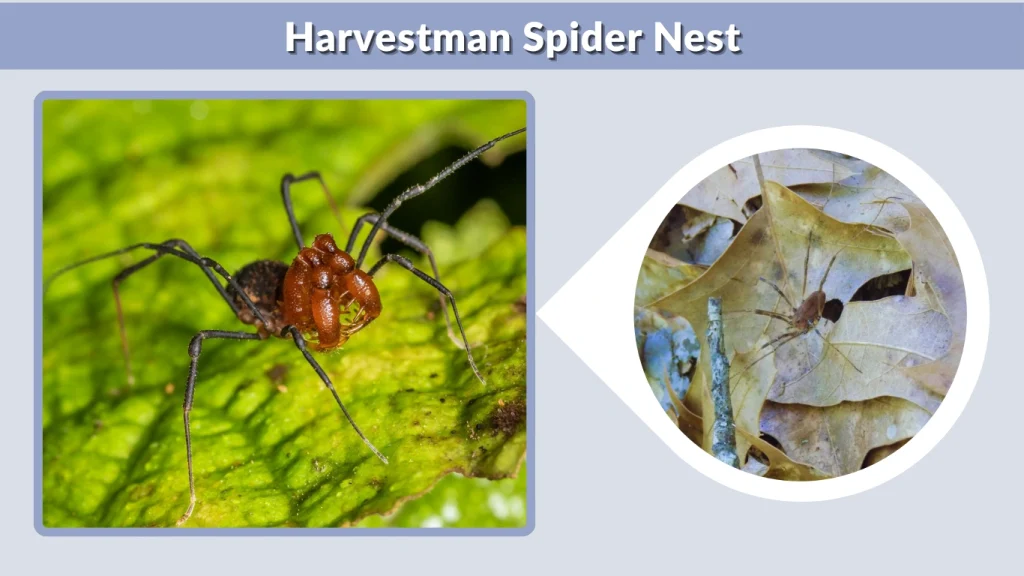
Many people wonder whether harvestman spiders build nests like other spiders.
Do They Build Nests?
The answer is no. Harvestmen do not build webs or structured nests. Since they cannot produce silk, they rely entirely on natural shelters for protection.
Where Eggs Are Placed
Instead of nests, eggs are laid in hidden and secure locations such as:
- Soil and leaf litter
- Cracks in wood or bark
- Under stones or debris
These areas provide enough protection for the eggs to develop safely.
Harvestman Spider Lifespan
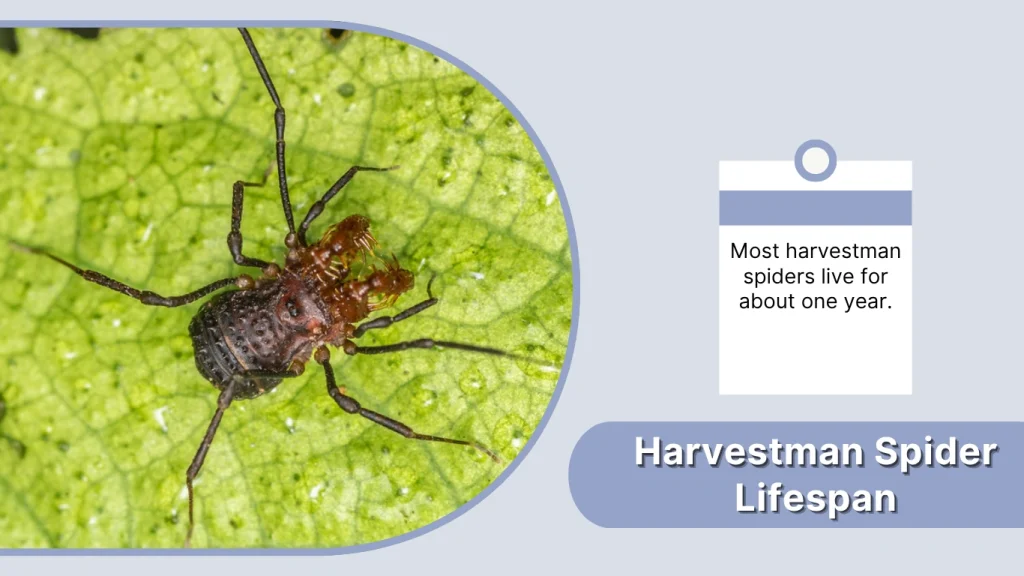
The lifespan of a harvestman spider is relatively short but follows a clear developmental cycle.
Life Cycle Stages
Harvestmen go through three main stages:
- Egg
- Nymph (juvenile stages with multiple molts)
- Adult
As they grow, they shed their outer layer several times before reaching maturity.
Average Lifespan
Most harvestman spiders live for about one year. They are often most visible during late summer and autumn, which is when adults are fully developed.
Their name “harvestman” actually comes from this seasonal appearance, as they are commonly seen during harvest time.
Behavior and Defense Mechanisms
Despite their fragile appearance, harvestman spiders have several effective ways to protect themselves.
Defense Strategies
One of their most notable defenses is leg autotomy, where they intentionally detach a leg to escape predators. The detached leg continues to twitch, distracting the predator while the harvestman escapes.
Additionally, some species release a strong-smelling chemical that repels predators. This odor acts as a natural deterrent and helps increase their chances of survival.
Social Behavior
Unlike many arachnids, some harvestman species display social behavior. They may gather in large groups, especially in sheltered areas. This clustering behavior can help reduce moisture loss and provide safety in numbers.
Most harvestmen are nocturnal, becoming active at night when they search for food.
Harvestman Spider Facts
Harvestman spiders are full of interesting traits that make them unique among arachnids. Despite their simple appearance, they have evolved several fascinating adaptations.
Unique Features
One of the most surprising facts about harvestmen is that they do not have venom glands. This means they cannot inject venom like true spiders. They also lack the ability to produce silk, so they never build webs.
Another remarkable feature is their defense mechanism called autotomy. When threatened, a harvestman can detach one of its legs to escape predators. The detached leg may continue to twitch, distracting the predator while the animal escapes.
Some species also release a foul-smelling chemical to deter predators, adding another layer of protection.
Global Presence
Harvestman spiders are found across the globe, except in extremely harsh environments like polar regions. Scientists have identified more than 6,000 species worldwide, and new species are still being discovered.
They are especially common in temperate and tropical regions, where environmental conditions support their survival.
Importance in the Ecosystem
Harvestman spiders play an important role in maintaining ecological balance.
They act as natural pest controllers by feeding on small insects and other invertebrates. At the same time, their scavenging behavior helps break down dead organic matter, contributing to nutrient recycling in the environment.
Because of this dual role, they are both predators and decomposers, making them valuable to ecosystems.
Common Myths and Misconceptions
There are several misconceptions about harvestman spiders that often lead to unnecessary fear.
- Myth: They are the most venomous spiders
Fact: They have no venom at all - Myth: They are dangerous to humans
Fact: They are completely harmless - Myth: They are true spiders
Fact: They belong to a different arachnid group
Understanding these facts helps reduce fear and encourages appreciation for these harmless creatures.
FAQs
Are harvestman spiders really spiders?
No, harvestman spiders are not true spiders. They belong to a different arachnid order called Opiliones, which distinguishes them from spiders (Araneae).
Why are harvestmen called “daddy longlegs”?
They are called “daddy longlegs” because of their extremely long, thin legs. However, this name is also used for other creatures, which often causes confusion.
Do harvestman spiders come inside homes?
Yes, they can occasionally enter homes, especially in damp or shaded areas like basements. However, they do not infest homes and usually wander in by accident.
What time of year are harvestman spiders most active?
They are most commonly seen in late summer and autumn. This is when they reach adulthood and are more active outdoors.
Do harvestman spiders help control pests?
Yes, they are beneficial because they eat small insects and organic matter. This helps reduce pest populations and supports a healthy ecosystem.
Conclusion
Harvestman spiders are fascinating creatures that are often misunderstood. Despite their spider-like appearance, they are harmless arachnids that lack venom and do not pose any danger to humans.
From their unique body structure to their important ecological role, harvestmen are an essential part of the natural world. By understanding the facts and dispelling common myths, we can learn to appreciate these creatures rather than fear them.