
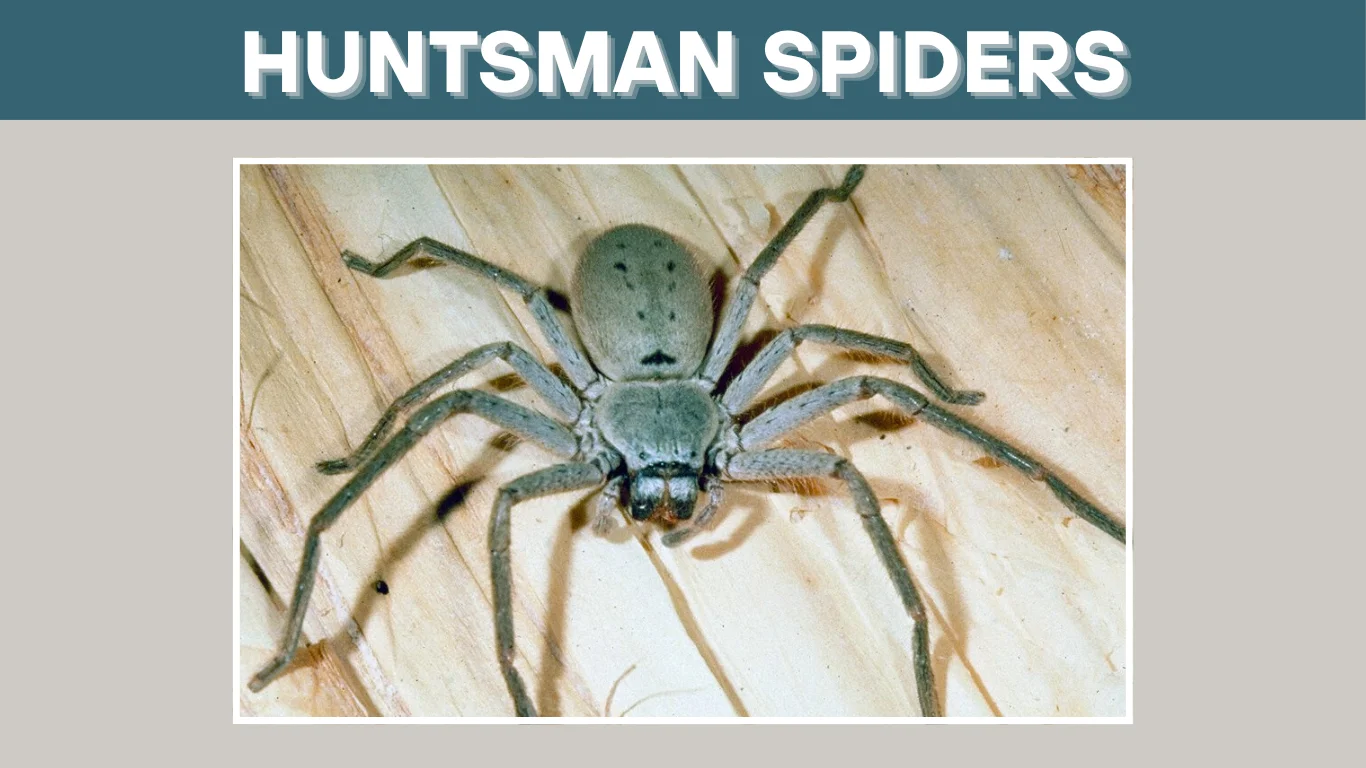
Huntsman spiders are large, fast, and often misunderstood. With their long legs and surprising speed, they tend to scare people—but are they really dangerous? In this guide, we answer 40 of the most common questions about huntsman spiders, covering their bites, venom, behavior, diet, and where they live. Whether you’re curious or cautious, this detailed breakdown clears up myths and helps you understand these fascinating, helpful hunters.
FAQs About General Topic
Huntsman spiders are large, fast, and often misunderstood. Despite their intimidating size and quick movements, they play an important role in natural pest control. This section covers their basic habits, habitats, and unique behaviors.
What do huntsman spiders eat?

Huntsman spiders are carnivorous hunters. They do not rely on webs to catch prey. Instead, they chase down and overpower insects and other small animals.
Their diet includes:
- Cockroaches
- Ants
- Crickets
- Moths
- Small lizards or geckos (for larger species)
They are especially valued in some areas for their ability to control cockroach populations naturally.
Where do huntsman spiders live?

Huntsman spiders are found in warm, tropical and subtropical regions around the world. They commonly live in:
- Loose bark on trees
- Under rocks or logs
- Inside sheds, garages, and homes (especially in corners or behind furniture)
They prefer dark, dry, undisturbed areas where they can hide during the day and hunt at night.
Why do huntsman spiders come inside?

Huntsman spiders often enter homes looking for:
- Shelter from extreme heat, rain, or cold
- An abundance of prey (like cockroaches or insects)
- Quiet, undisturbed hiding places like behind curtains or inside shoes
They are not attracted to humans and usually avoid confrontation.
Why do huntsman spiders eat their own silk?

While not common, some spiders recycle silk to conserve energy. In huntsman spiders, this behavior is rarely observed but may occur when:
- Rebuilding a silk retreat
- Cleaning up old web strands from previous shelters
Unlike web-building spiders, huntsman spiders don’t use silk for prey capture, so silk recycling is minimal and mostly practical.
Why do huntsman spiders stay in one spot?

Huntsman spiders may remain still for hours or even days, especially when:
- Conserving energy
- Hiding from predators
- Waiting for nightfall to hunt
- Guarding eggs or molting
Stillness is a defensive and energy-efficient behavior that helps them avoid detection.
Do huntsman spiders travel in pairs?
No, huntsman spiders are solitary by nature. They do not live or hunt in pairs. However, during mating season, a male may temporarily stay near a female. After mating, they part ways, and in some cases, the female may become aggressive if the male stays too long.
Do huntsman spiders live in pairs?

They don’t. Each huntsman spider typically has its own hiding spot. Any sighting of two spiders close together is usually due to coincidence, mating activity, or a mother with spiderlings—not a social pair.
FAQs About Bite, Venom, and Danger
Huntsman spiders often look intimidating due to their large size and speed, but their danger to humans is often exaggerated. This section answers the most common questions about bites, venom, and potential risk.
Are huntsman spiders dangerous?

Not seriously. Huntsman spiders are not considered medically dangerous to humans. They may bite in rare defensive situations, but their venom is typically mild and symptoms are limited to temporary pain and swelling.
Are huntsman spiders poisonous?
No. The term “poisonous” refers to organisms that cause harm when touched or eaten. Huntsman spiders are not poisonous, though they are venomous—they inject venom when they bite, which is different.
Are huntsman spiders venomous?
Yes, huntsman spiders are venomous, but their venom is not harmful to humans in most cases. It is used to subdue their prey (usually insects), and symptoms in people are mild unless there is an allergic reaction.
Are huntsman spiders deadly?
No. Huntsman spiders are not deadly. There are no confirmed deaths from a huntsman bite. Most bites result in minor symptoms like pain, redness, or mild swelling, which usually resolve on their own.
Are huntsman spiders aggressive?
Huntsman spiders are not aggressive toward humans. They may run fast and appear threatening, but this is typically a flight response. Biting is a last resort, and they would rather escape than fight.
Can huntsman spiders hurt you?

While they can bite, they rarely do, and their bite is not considered dangerous. At most, it might cause:
- Mild local pain
- Redness
- Slight swelling
These symptoms usually go away without medical treatment.
Can huntsman spiders bite?

Yes, huntsman spiders can bite if provoked, especially if they feel cornered or are accidentally pressed against the skin. Bites are uncommon and usually occur when people disturb them unknowingly (e.g., reaching into shoes or behind furniture).
Do huntsman spiders bite?
They can bite, but rarely do. Huntsman spiders are more likely to flee than attack. Bites typically happen when a person accidentally traps or handles the spider.
Do huntsman spiders bite humans?

Yes, but only in defensive situations. They don’t seek out humans or bite without reason. If a bite occurs, it’s typically mild and doesn’t require medical attention unless symptoms persist.
Do huntsman spiders attack humans?
No. Huntsman spiders do not attack humans. If one runs toward you, it’s likely trying to escape and doesn’t know where to go. Their speed can be startling, but it’s not an act of aggression.
Are huntsman spiders dangerous to humans?
For the average person, huntsman spiders are not dangerous. Their venom is weak against humans, and bites are rare. They are more helpful than harmful, often preying on cockroaches and other pests.
Are huntsman spiders venomous to humans?
Yes, but only mildly. Their venom may cause short-term discomfort but does not pose a serious medical threat to most people. Allergic reactions are possible but very rare.
Do huntsman spiders have venom?
Yes, all huntsman spiders have venom used to paralyze their prey. In humans, this venom typically causes only minor symptoms and is not considered a serious concern.
Does huntsman spider bite?
Yes, it can bite, but rarely does. Like most spiders, huntsmans bite only when they feel threatened or trapped. Their bites are not known to be medically significant.
FAQs About Behavior and Traits
Huntsman spiders are known for their speed, size, and ability to surprise people, especially when spotted indoors. Understanding their behavior can help reduce fear and correct common misconceptions.
Are huntsman spiders friendly?
In human terms, they are not friendly, but they are also not hostile. Huntsman spiders are shy and avoid confrontation. Many tolerate handling without biting, especially species that are used to human presence. However, they are wild animals and should be treated with caution and respect.
Can huntsman spiders jump?
Huntsman spiders do not jump in the traditional sense like jumping spiders. However, they may lunge or quickly leap short distances during hunting or escape attempts. Their agility and speed can make it seem like they’re jumping, but their movement is more of a rapid dash than a leap.
Do huntsman spiders spin webs?

Yes, but not for catching prey. Huntsman spiders do produce silk, but they use it for:
- Creating shelters or retreats behind bark, in crevices, or under rocks
- Lining egg sacs
- Anchoring themselves while resting or molting
They are active hunters and do not rely on webs to trap food.
Do huntsman spiders make webs?
They do make silk-based shelters, but they do not weave typical webs like orb-weaving spiders. If you see a classic spiderweb in your home, it’s not from a huntsman.
Huntsman spiders use silk for practical purposes only and rely on speed and ambush tactics to catch prey, not webs.
FAQs About Behavior and Traits
Huntsman spiders are known for their speed, size, and ability to surprise people, especially when spotted indoors. Understanding their behavior can help reduce fear and correct common misconceptions.
Are huntsman spiders friendly?
In human terms, they are not friendly, but they are also not hostile. Huntsman spiders are shy and avoid confrontation. Many tolerate handling without biting, especially species that are used to human presence. However, they are wild animals and should be treated with caution and respect.
Can huntsman spiders jump?
Huntsman spiders do not jump in the traditional sense like jumping spiders. However, they may lunge or quickly leap short distances during hunting or escape attempts. Their agility and speed can make it seem like they’re jumping, but their movement is more of a rapid dash than a leap.
Do huntsman spiders spin webs?
Yes, but not for catching prey. Huntsman spiders do produce silk, but they use it for:
- Creating shelters or retreats behind bark, in crevices, or under rocks
- Lining egg sacs
- Anchoring themselves while resting or molting
They are active hunters and do not rely on webs to trap food.
Do huntsman spiders make webs?

They do make silk-based shelters, but they do not weave typical webs like orb-weaving spiders. If you see a classic spiderweb in your home, it’s not from a huntsman.
Huntsman spiders use silk for practical purposes only and rely on speed and ambush tactics to catch prey, not webs.
FAQs About Geographic Range
Huntsman spiders are native to warm climates but have spread to various parts of the world. Their presence in the U.S. and other countries often raises questions about where they live and how common they are.
Do huntsman spiders live in the US?
Yes, certain species of huntsman spiders do live in the United States. The most well-known is the Pantropical huntsman (Heteropoda venatoria), often found in southern, warmer states. They are more common in Florida, Texas, and Hawaii, typically in urban and semi-urban environments.
Do huntsman spiders live in Florida?
Yes, huntsman spiders are well-established in Florida. They thrive in the warm, humid climate and are frequently found in homes, garages, and gardens. They are not native to the U.S. but were introduced and have adapted well.
Do huntsman spiders live in Texas?
Yes, especially in southern and coastal areas of Texas. Like in Florida, they are more commonly seen in structures like sheds, barns, and older homes where they can hunt undisturbed.
Are huntsman spiders in California?
They are not native to California, but isolated sightings have occurred, mostly in greenhouses or through imported goods. Established populations are not confirmed. If seen, they are usually introduced individuals, not part of a breeding population.
Are huntsman spiders in Colorado?
No, huntsman spiders are not native or established in Colorado. The state’s colder climate is not suitable for their survival. Any sightings are likely accidental introductions and extremely rare.
Are huntsman spiders in Michigan?
No, huntsman spiders do not live in Michigan. The cold winters and northern climate make it unsuitable for their survival. Any reports from this state are likely due to misidentification.
Are huntsman spiders in New Jersey?
Unlikely. New Jersey’s climate is not ideal, and there are no known breeding populations. Occasionally, one may be found via shipping or transport, but they are not established there.
Are huntsman spiders in Pennsylvania?
Similar to New Jersey, huntsman spiders are not native to Pennsylvania, and sightings are rare. Cold winters and lack of habitat limit their presence.
Are huntsman spiders in the UK?
No, the UK does not have native huntsman spiders. Its cool, damp climate is unsuitable. Very rarely, a huntsman spider may arrive in shipping containers or imported goods, but they do not survive long or reproduce in the wild.
Do huntsman spiders live in the UK?
No. Any appearance of a huntsman spider in the UK is purely accidental and short-lived. They are tropical and subtropical spiders that require warm, stable temperatures to survive and thrive.