

Blue mud wasps often alarm people because of their striking metallic blue color and wasp-like appearance. Many assume they are aggressive or dangerous at first glance. In reality, these insects behave very differently from more familiar wasps like yellowjackets. They are mostly solitary, focused on hunting spiders, and rarely interact with humans. Understanding their true nature helps reduce fear and prevents unnecessary harm to a beneficial species that plays an important ecological role.
What Are Blue Mud Wasps?
Blue mud wasps, also known as blue mud daubers, are solitary wasps commonly found in warm and temperate regions. Unlike social wasps that live in large colonies, these insects prefer to live and work alone. Their behavior, diet, and nesting habits make them unique and generally less threatening.
- Metallic blue or black shiny body
- Long, slender shape with a narrow waist
- Build tube-like nests using mud
- Commonly found in sheltered areas like walls and eaves
These wasps are especially known for their role as hunters. They actively search for spiders, which they paralyze and store in their nests as food for their larvae. This behavior makes them beneficial for controlling spider populations around homes and gardens.
Are Blue Mud Wasps Dangerous?
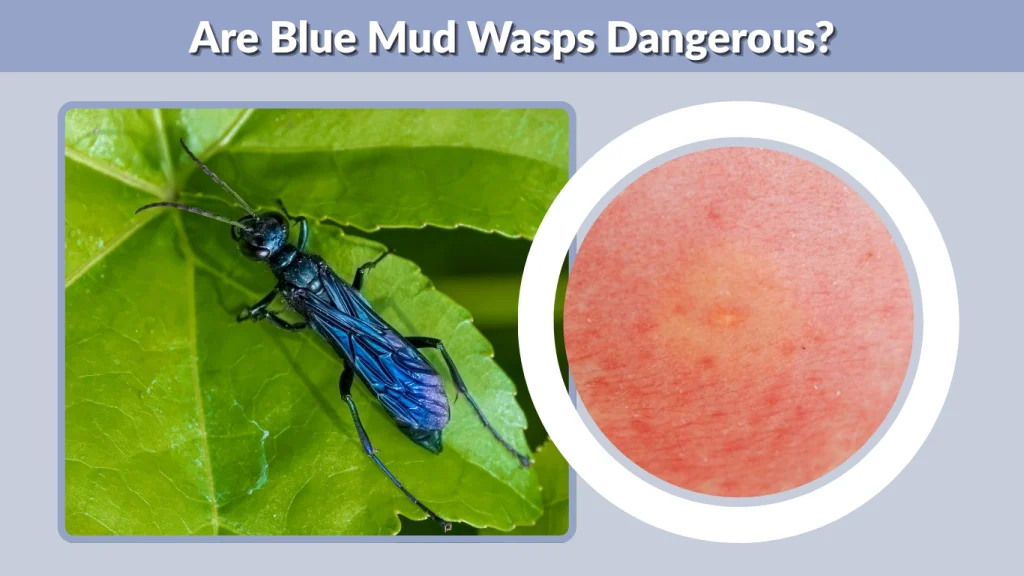
Blue mud wasps are not considered dangerous to humans in most situations. Although they are capable of stinging, they are not aggressive and rarely use their stinger on people. Their primary focus is hunting prey, not defending territory or attacking humans.
- Can sting, but rarely do so
- Not aggressive unless provoked
- Venom is mild for most people
- Pose little threat in everyday encounters
For most individuals, the presence of blue mud wasps is more of a curiosity than a danger. They do not swarm, chase people, or defend nests aggressively, which significantly lowers the risk of being stung.
Do Blue Mud Wasps Sting and Why?
Blue mud wasps do have the ability to sting, but their stinger is mainly used for hunting rather than defense. Female wasps use it to paralyze spiders, which they then place in their nests to feed their young. Human stings are rare and usually occur only under specific conditions.
- Sting is used to paralyze prey
- Only females have stingers
- Stings occur if they feel threatened
- Accidental contact increases the risk
If left undisturbed, these wasps are unlikely to sting. Most incidents happen when someone tries to handle them or accidentally presses against them. Their defensive behavior is minimal compared to more aggressive species.
How Painful Is a Blue Mud Wasp Sting?
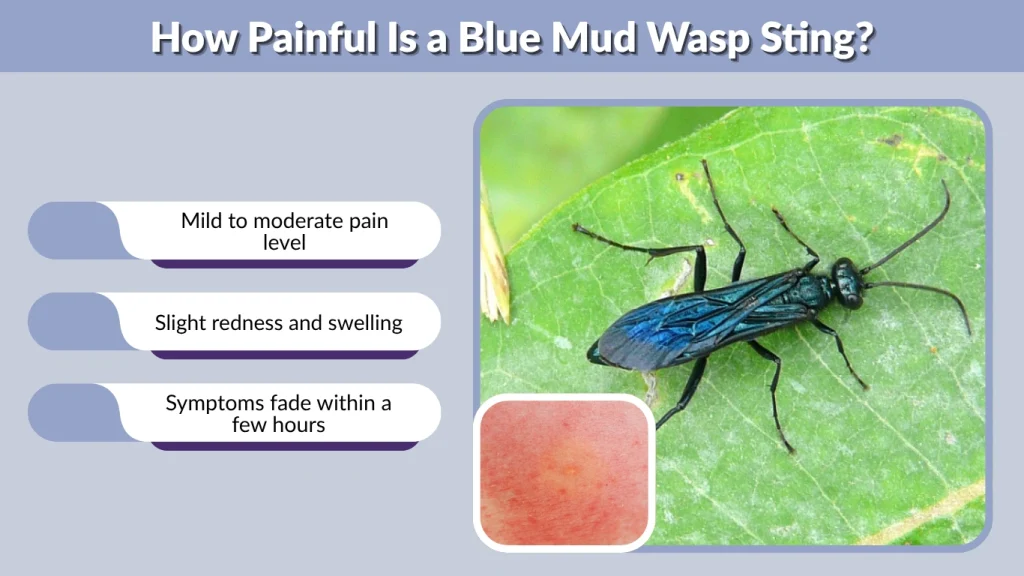
The sting of a blue mud wasp is generally mild compared to other wasps. While any insect sting can cause discomfort, the intensity is usually low and short-lived. Most people recover quickly without complications.
- Mild to moderate pain level
- Slight redness and swelling
- Symptoms fade within a few hours
- Serious reactions are uncommon
For individuals without allergies, the sting is more of a temporary irritation than a serious concern. However, like any insect sting, it is important to monitor for unusual symptoms, especially if someone has a known sensitivity.
Are Blue Mud Wasps Aggressive?
Blue mud wasps are known for their calm and non-aggressive nature. Their solitary lifestyle plays a major role in this behavior, as they do not need to defend a colony or cooperate in groups. This makes them far less likely to sting compared to social wasps.
- Solitary lifestyle reduces aggression
- Do not defend nests aggressively
- Prefer to avoid humans
- Much calmer than yellowjackets or hornets
Instead of confronting threats, blue mud wasps typically choose to fly away. Their natural instinct is to avoid conflict, which is why they are rarely involved in negative encounters with humans.
Benefits of Blue Mud Wasps
Despite their intimidating appearance, blue mud wasps are highly beneficial insects. They contribute to natural pest control and help maintain ecological balance. Their presence around homes can actually be helpful rather than harmful.
- Control spider populations effectively
- Help reduce unwanted pests
- Do not damage property
- Support a balanced ecosystem
By preying on spiders, they indirectly help keep insect populations under control as well. Their nests are usually small and unobtrusive, causing little to no disruption to human environments.
How to Stay Safe Around Blue Mud Wasps
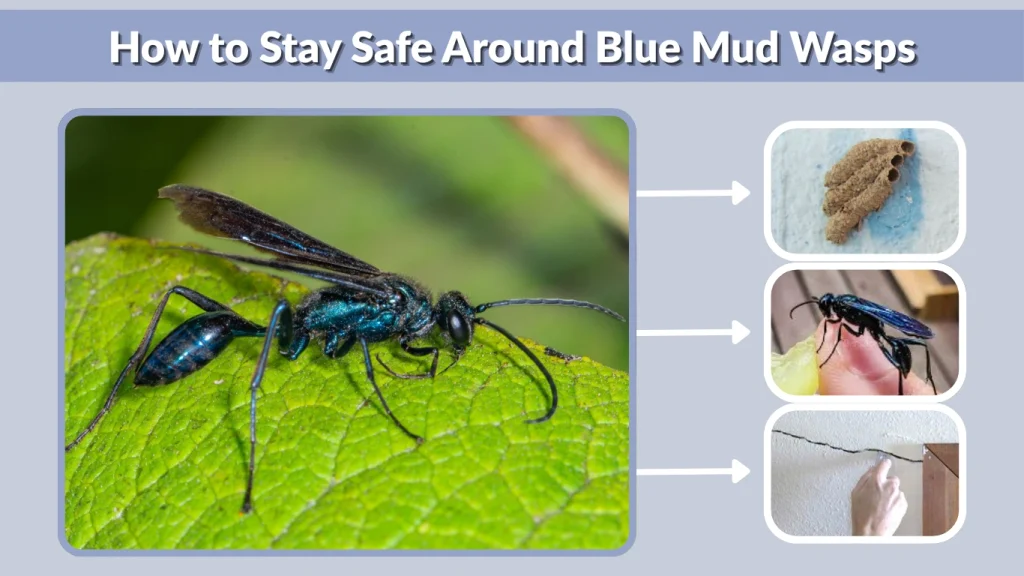
Although blue mud wasps are not dangerous, it is still a good idea to take simple precautions to avoid accidental stings. Because they are naturally non-aggressive, safety mainly involves avoiding actions that might make them feel threatened.
- Do not disturb or touch their nests
- Avoid trying to handle the wasps
- Stay calm and still if one flies nearby
- Seal cracks and small openings in walls or roofs
Most encounters end without any issues if you simply leave them alone. They are more interested in hunting spiders than interacting with humans, so maintaining distance is usually enough to stay safe.
When Should You Be Concerned?
Allergic Reactions
While blue mud wasp stings are typically mild, individuals with insect sting allergies should be cautious. Even a single sting can cause serious reactions in sensitive people, including swelling beyond the sting site or breathing difficulty.
Indoor Nesting Issues
If blue mud wasps build nests inside your home, such as in vents or wall spaces, it may become inconvenient. In such cases, safe removal methods or professional pest control may be necessary to prevent repeated activity.
Frequent Encounters
Seeing multiple wasps regularly may indicate nearby nesting or a high spider population attracting them. While not dangerous, frequent encounters can increase the chances of accidental contact and may require attention.
Conclusion
Blue mud wasps are not dangerous for most people and are among the least aggressive types of wasps. They rarely sting, avoid human interaction, and play a helpful role by controlling spider populations. Understanding their behavior can ease fear and promote safe coexistence. Instead of viewing them as a threat, it is more accurate to see them as beneficial insects that contribute positively to the environment.
FAQs
Are blue mud wasps more dangerous than other wasps?
No, blue mud wasps are much less dangerous than common wasps like yellowjackets. They are solitary and do not defend nests aggressively, which greatly reduces the likelihood of stings or attacks on humans.
What happens if a blue mud wasp stings you?
A sting usually causes mild pain, slight swelling, and redness. These symptoms typically fade within a few hours. Serious reactions are rare unless the person has an allergy to insect stings.
Do blue mud wasps attack humans?
Blue mud wasps do not attack humans. They only sting when they feel directly threatened, such as when handled or accidentally pressed against. Otherwise, they prefer to avoid contact and fly away.
Why are blue mud wasps around my house?
They are usually present because of nearby spiders, which they hunt for food. They may also build nests in sheltered spots like walls, eaves, or sheds, where they can safely raise their young.
Should I remove a blue mud wasp nest?
If the nest is in a low-traffic area, it is best to leave it alone since these wasps are beneficial. If it becomes a problem indoors or in busy areas, safe removal or professional help may be considered.
