

Blue-winged wasps are eye-catching insects known for their shimmering blue wings and bold body colors. While they often look intimidating, they are generally harmless and play an important role in controlling garden pests. Many people search about them due to fear or curiosity after spotting them in yards. This guide explains what they are, how to identify them, where they live, and whether they pose any real danger to humans.
What Is a Blue-Winged Wasp?
Blue-winged wasps are solitary insects belonging to the Scoliidae family, commonly referred to as digger wasps. The most well-known species is Scolia dubia, often seen in gardens and lawns. Unlike social wasps, they do not form colonies or act aggressively in groups. Their primary role in nature is controlling harmful soil pests. Because of their unique appearance and behavior, they are frequently mistaken for more dangerous species, even though they are mostly harmless.
- Scientific name: Scolia dubia
- Family: Scoliidae
- Behavior: Solitary, non-aggressive
- Role: Natural pest control
How to Identify a Blue-Winged Wasp
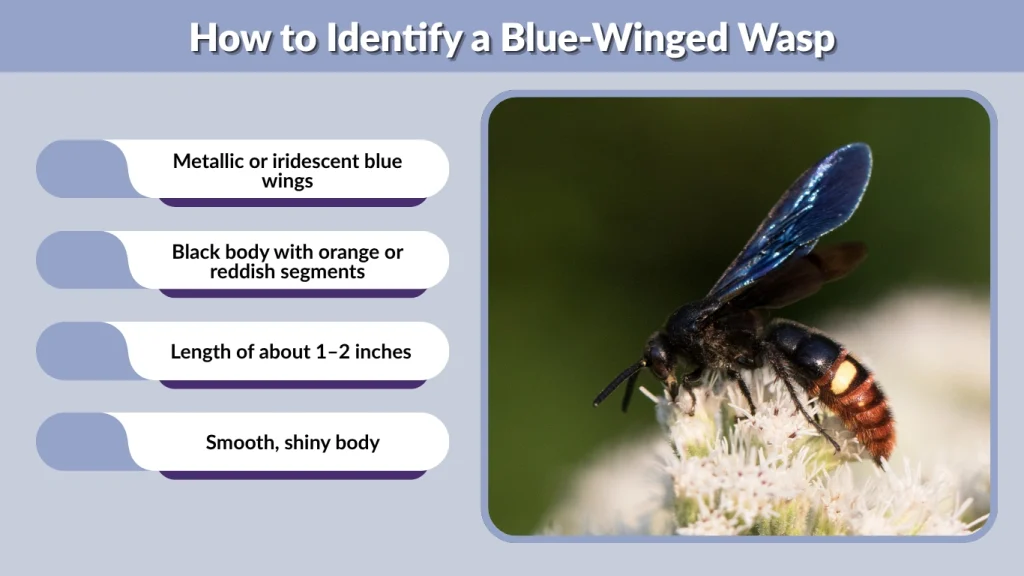
Identifying a blue-winged wasp is relatively simple once you understand its key features. These wasps are known for their metallic blue wings that shimmer in sunlight and their contrasting body colors. They are larger than many common wasps and often fly close to the ground. People frequently describe them using phrases like “black wasp with blue wings” or “wasp with orange body and blue wings,” which reflects their common color variations.
- Metallic or iridescent blue wings
- Black body with orange or reddish segments
- Length of about 1–2 inches
- Smooth, shiny body
- Slow, low flight pattern
Types of Blue-Winged Wasps (Lookalikes Explained)
Many insects resemble blue-winged wasps, leading to confusion during identification. Some species share similar colors, while others have comparable body shapes or behaviors. Understanding these differences is important, especially when distinguishing harmless species from more aggressive ones. For example, tarantula hawks are often mistaken for blue-winged wasps but are much larger and have a more painful sting. Recognizing these variations helps avoid unnecessary fear and ensures proper identification.
- Blue-winged scoliid wasp (Scolia dubia)
- Blue-winged digger wasp
- Thread-waisted wasp (slender body)
- Tarantula hawk (larger, more intense sting)
- Regional lookalikes (Australia, etc.)
Where Do Blue-Winged Wasps Live?
Blue-winged wasps are widely distributed and commonly found in warm and temperate regions. They are especially active in North America but can also be found in other parts of the world. These insects prefer open environments where they can easily access soil and flowering plants. Their presence is often linked to the availability of food sources and suitable nesting conditions. During warmer months, they become more visible as they actively search for nectar and hosts for reproduction.
- Common in North America (e.g., Georgia, Ohio)
- Found in gardens, lawns, and fields
- Prefer sandy or loose soil
- Active during summer
Blue-Winged Wasp Habitat and Nesting Behavior
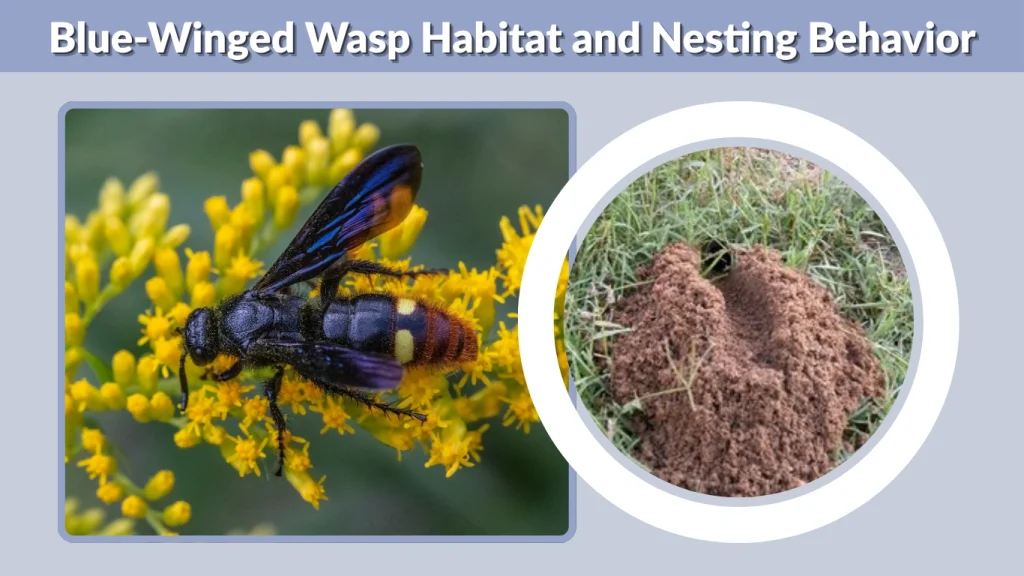
Unlike many wasps that build visible nests, blue-winged wasps have a unique underground nesting behavior. Females dig into the soil to locate beetle larvae, which serve as hosts for their eggs. This behavior makes them beneficial for controlling pests that damage lawns and plants. Their nests are rarely noticed because they are hidden beneath the surface. This underground lifestyle also explains why they are often seen flying low over grass rather than around structures.
- Nest underground in soil
- Lay eggs on beetle grubs
- Do not build paper nests
- Solitary nesting behavior
What Do Blue-Winged Wasps Eat?
The diet of blue-winged wasps varies depending on their life stage, making them both pollinators and pest controllers. Adult wasps primarily feed on nectar from flowers, contributing to pollination. In contrast, their larvae rely on beetle grubs as a food source. This dual feeding behavior plays an important role in maintaining ecological balance. By reducing grub populations, they help protect lawns and gardens from damage, which is why they are often considered beneficial insects.
- Adults feed on nectar
- Larvae feed on grubs
- Help control lawn pests
- Support pollination
Do Blue-Winged Wasps Sting?
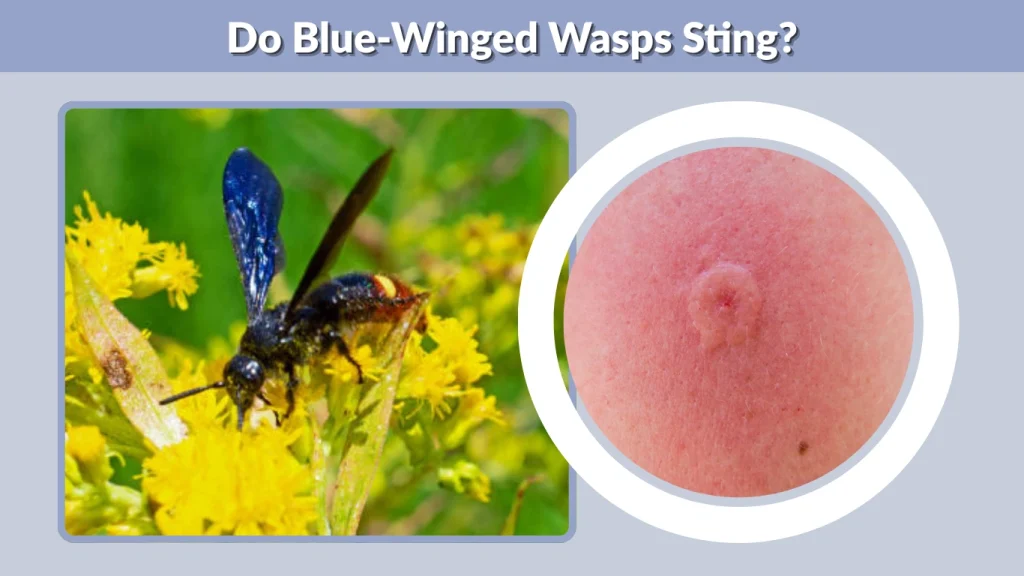
One of the most common questions people have is whether blue-winged wasps can sting. The answer is yes, but only female wasps possess a stinger. However, these wasps are not aggressive and rarely sting humans unless they feel threatened or are handled directly. Most encounters are harmless, as the wasps are focused on feeding or nesting activities. Their calm nature makes them far less dangerous compared to more aggressive wasp species.
- Only females can sting
- Males are harmless
- Stings are rare
- Defensive, not aggressive
Are Blue-Winged Wasps Dangerous?
Despite their large size and bold appearance, blue-winged wasps are not considered dangerous to humans. They do not attack in groups and typically avoid human interaction. Their presence is actually beneficial, as they help control harmful insects in the soil. The only real risk comes from accidental contact or if someone has an allergic reaction to stings. Overall, they are far less threatening than common aggressive wasps like yellowjackets or hornets.
- Non-aggressive behavior
- Rarely sting humans
- Beneficial for pest control
- Low risk unless allergic
Blue-Winged Wasp Sting: Symptoms and Treatment
Although stings from blue-winged wasps are uncommon, it is still useful to know what to expect and how to respond. The sting usually causes mild pain and localized swelling, similar to other non-aggressive wasps. Most reactions are short-lived and can be treated at home with simple remedies. However, individuals with allergies should be cautious and seek medical attention if severe symptoms develop after a sting.
- Pain, redness, mild swelling
- Clean area with soap and water
- Apply ice to reduce swelling
- Use antihistamines if needed
Blue-Winged Wasp Size and Appearance Variations
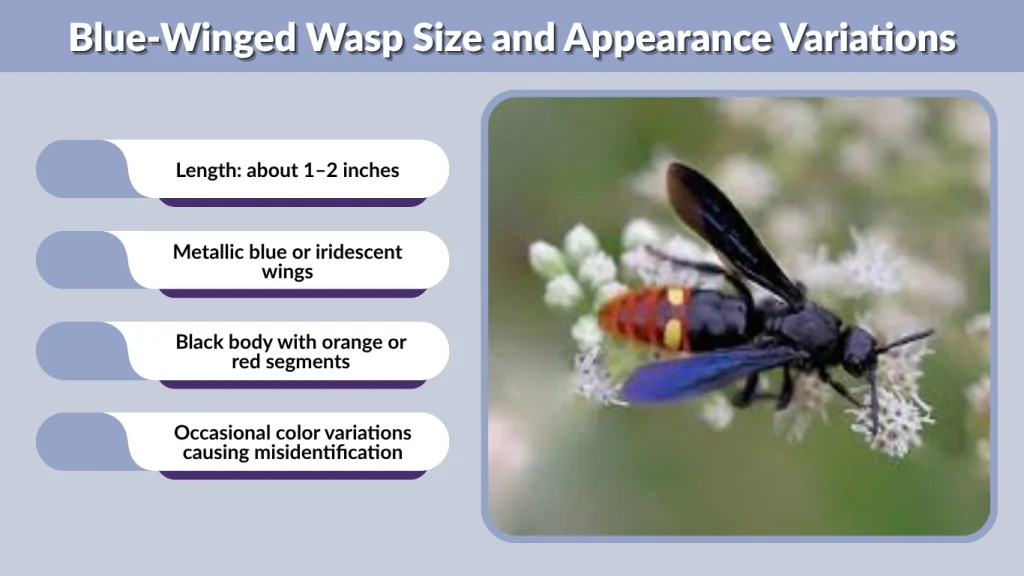
Blue-winged wasps can vary slightly in size and coloration, which often leads to confusion when identifying them. While most share the signature metallic blue wings, their body colors can range from solid black to combinations of orange, red, or even faint yellow markings. These variations depend on species, region, and age. Understanding these differences helps distinguish them from other wasps that may appear similar but behave very differently in terms of aggression and habitat.
- Length: about 1–2 inches
- Metallic blue or iridescent wings
- Black body with orange or red segments
- Occasional color variations causing misidentification
Why Are Blue-Winged Wasps in Your Yard?
Blue-winged wasps are usually attracted to yards because they provide the perfect environment for feeding and reproduction. Lawns with a high population of beetle grubs are especially appealing, as these serve as hosts for their larvae. Additionally, flowering plants offer nectar for adult wasps. Warm, moist soil makes it easier for them to dig and nest. Their presence often indicates a healthy ecosystem but may also suggest underlying lawn pest issues.
- Presence of grubs in soil
- Availability of flowering plants
- Warm, loose, or sandy soil
- Moist conditions that support digging
How to Get Rid of Blue-Winged Wasps (Safely)
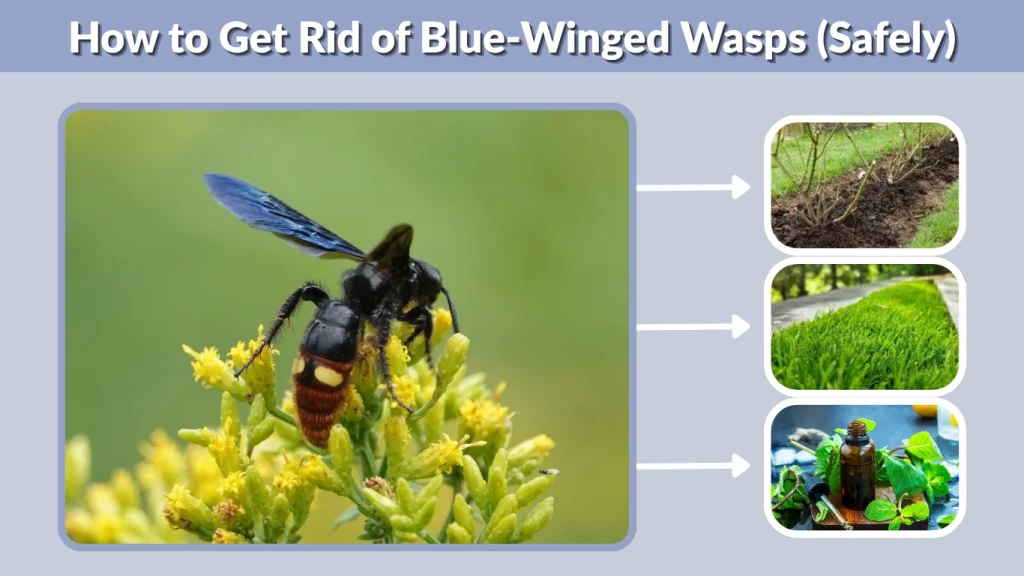
While blue-winged wasps are beneficial, some homeowners prefer to reduce their presence. The safest and most effective approach is to eliminate what attracts them rather than targeting the wasps directly. Since they rely on grubs for reproduction, controlling these pests will naturally reduce wasp activity. Chemical treatments should be avoided when possible, as they can harm beneficial insects. Instead, focus on preventive lawn care and natural deterrents to manage the situation.
- Reduce grub population in lawn
- Avoid overwatering soil
- Maintain healthy grass
- Use natural repellents like mint or citrus
- Limit flowering weeds if needed
Blue-Winged Wasp vs Other Wasps
Blue-winged wasps are often confused with more aggressive species, but their behavior and lifestyle are quite different. Unlike yellowjackets or hornets, they are solitary and do not defend large nests. Their sting is also less painful compared to species like tarantula hawks. They spend most of their time near the ground searching for food rather than hovering around people or structures. Understanding these differences helps reduce unnecessary fear and promotes coexistence.
- Less aggressive than yellowjackets
- Do not swarm or attack in groups
- Less painful sting than larger wasps
- Do not build visible nests
Are Blue-Winged Wasps Good or Bad?
Blue-winged wasps are generally considered beneficial insects due to their role in controlling harmful pests. By targeting beetle larvae, they help maintain healthier lawns and gardens. They also contribute to pollination by feeding on nectar. However, their presence can still be unsettling for some people, especially when they appear in large numbers. Overall, the benefits they provide far outweigh the minimal risks they pose to humans.
- Help control lawn-damaging grubs
- Support pollination
- Non-aggressive toward humans
- Minor nuisance in large numbers
FAQs
Are blue-winged wasps dangerous?
Blue-winged wasps are not dangerous in most situations. They are non-aggressive and rarely sting unless provoked or handled. Their primary focus is feeding and reproduction, not defending territory. In fact, they are beneficial insects that help control lawn pests. The only concern arises for individuals who are allergic to insect stings, as even mild stings can trigger stronger reactions in such cases.
Do blue-winged wasps sting humans?
Yes, blue-winged wasps can sting, but only females have the ability to do so. Even then, stings are very rare because these wasps are not aggressive and tend to avoid human interaction. Most encounters occur when they are busy searching for food or nesting. Unless they are directly disturbed or threatened, they are unlikely to sting, making them relatively safe to be around.
How do I get rid of blue-winged wasps?
The most effective way to reduce blue-winged wasps is by removing what attracts them. Since they depend on beetle grubs for reproduction, treating your lawn for grubs can significantly reduce their presence. Maintaining dry, well-managed soil and limiting flowering weeds can also help. Avoid using harsh chemicals, as these wasps are beneficial and contribute to a balanced garden ecosystem.
What is a black wasp with blue wings?
A black wasp with blue wings is most commonly the blue-winged scoliid wasp, scientifically known as Scolia dubia. It is recognized by its dark body and shiny blue wings, sometimes with orange markings on the abdomen. This species is harmless to humans in most cases and plays a useful role in controlling soil pests, making it a helpful insect rather than a harmful one.
Where do blue-winged wasps nest?
Blue-winged wasps nest underground, usually in loose or sandy soil found in lawns, gardens, or open fields. Unlike other wasps, they do not build visible nests above ground. Females dig into the soil to locate beetle larvae, where they lay their eggs. Because their nests are hidden, people often see the wasps flying low over the ground without realizing where they live.
