
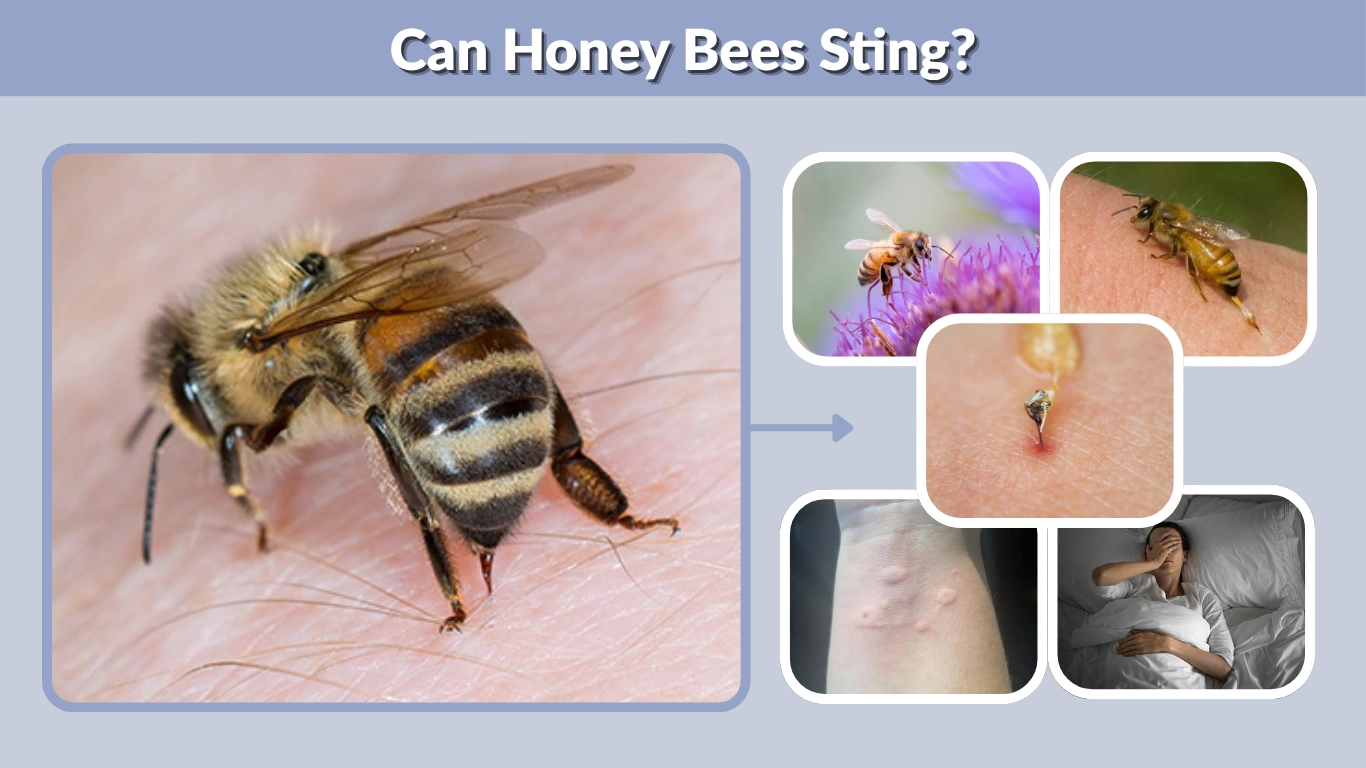
Honey bees are essential pollinators, but many people worry about their ability to sting. The truth is that honey bees can sting, but they are not naturally aggressive and usually do so only in defense. Understanding how and why they sting helps reduce fear and prevents unnecessary harm to both humans and bees. This guide explains which honey bees can sting, how often they sting, and what happens after a sting, along with important safety facts you should know.
Can Honey Bees Sting?
Honey bees are capable of stinging, but this behavior is mainly used as a defense mechanism. They do not actively seek to harm humans and typically sting only when they feel threatened or when their hive is disturbed.
Basic Facts About Stinging
- Honey bees can sting humans and animals
- Stinging is used to protect the hive
- They are generally calm when foraging
- Most stings happen due to accidental contact
Which Honey Bees Can Sting?
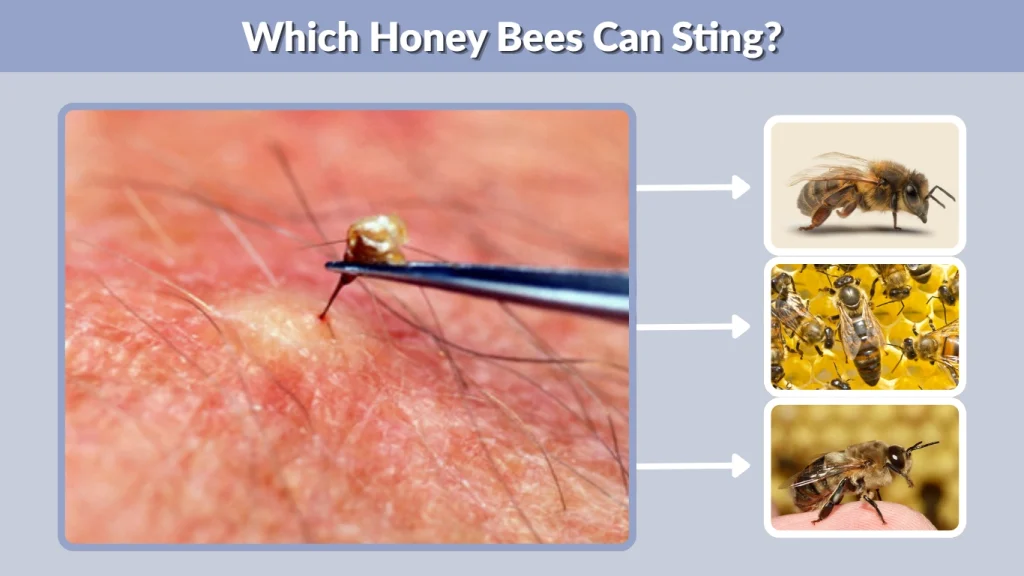
Not all honey bees have the ability to sting. Their role in the colony determines whether they can defend themselves or not. This distinction helps clear up common confusion.
Worker Bees
- Female bees responsible for defense
- Most common source of stings
- Protect the hive from threats
- Act quickly when disturbed
Queen Bees
- Also female and capable of stinging
- Rarely sting humans
- Use stinger mainly against rival queens
Drone Bees (Males)
- Cannot sting at all
- Lack a stinger entirely
- Focus only on reproduction
Can Honey Bees Sting More Than Once?
This is one of the most common questions about honey bees. The answer depends on the type of bee and the structure of its stinger.
Why Worker Bees Sting Only Once
- Have a barbed stinger
- Stinger gets stuck in the skin
- Causes fatal injury to the bee
- Bee dies shortly after stinging
Exceptions to the Rule
- Queen bees can sting multiple times
- Worker bees cannot sting again
- Multiple bees may sting at once
- Group defense increases risk
Can a Honey Bee Survive After Stinging?
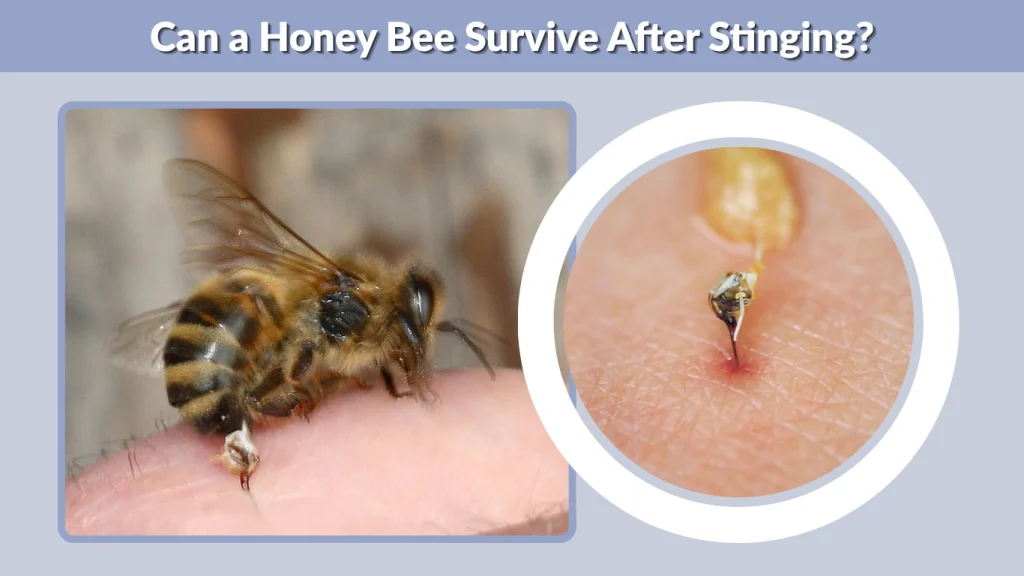
When a honey bee stings, it usually suffers severe internal damage. This is because its stinger becomes lodged in the skin, pulling part of its body away when it tries to fly off.
A worker bee cannot survive this process and will die shortly after stinging. The detached stinger continues to release venom into the skin for a short time. This is why removing the stinger quickly is important. The bee’s sacrifice is part of its role in defending the colony, making stinging a last-resort action rather than a common behavior.
Can a Queen Honey Bee Sting More Than Once?
Queen honey bees differ from worker bees in their stinging ability. Their stinger is smooth, allowing them to sting multiple times without harming themselves.
Queen Bee Sting Facts
- Can sting repeatedly
- Does not die after stinging
- Rarely stings humans
- Uses stinger mainly inside the hive
Why Queens Don’t Sting People Often
- Stay inside the hive
- Focus on reproduction
- Avoid direct threats
- Protected by worker bees
How Many Times Can a Honey Bee Sting You?
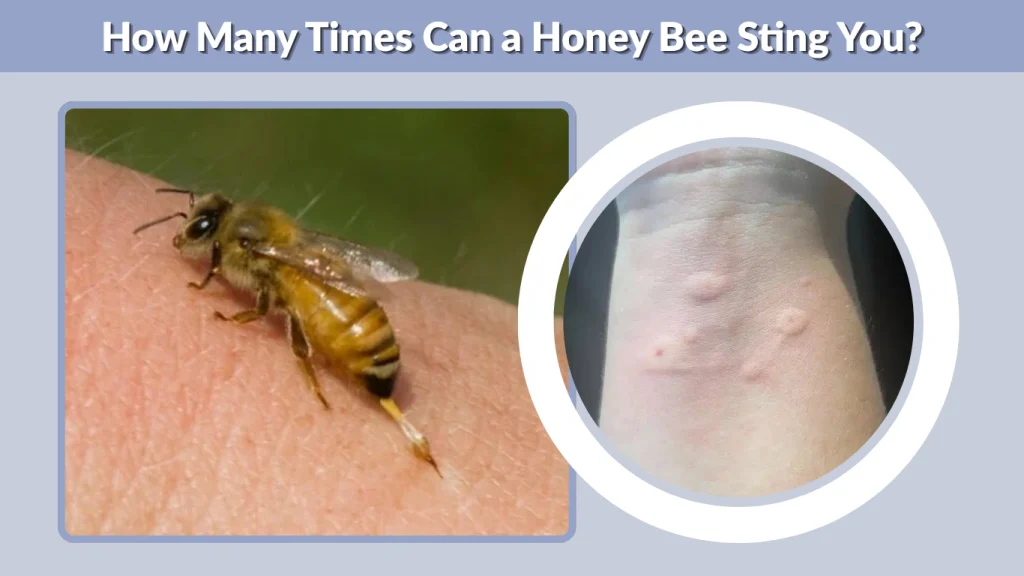
While an individual worker bee can sting only once, multiple bees can attack at the same time if they feel their colony is under threat.
Key Points to Understand
- One worker bee = one sting
- Multiple bees can sting in groups
- Defensive swarms increase sting count
- Risk rises near hives
What Increases Sting Risk
- Disturbing a hive
- Loud noises or vibrations
- Sudden movements
- Strong scents or perfumes
Can Honey Bee Stings Kill You?
For most people, a honey bee sting is painful but not dangerous. However, there are situations where stings can become serious or even life-threatening.
For Most People
Honey bee stings usually cause temporary pain, redness, and swelling. The symptoms often fade within a few hours or days without serious complications.
For Allergic Individuals
People with bee sting allergies can experience severe reactions known as anaphylaxis. This condition requires immediate medical attention and can be life-threatening if untreated.
Multiple Stings
Receiving a large number of stings at once can overwhelm the body. This can lead to toxic reactions, especially in children, elderly individuals, or those with health conditions.
How Many Honey Bee Stings Can Kill You?
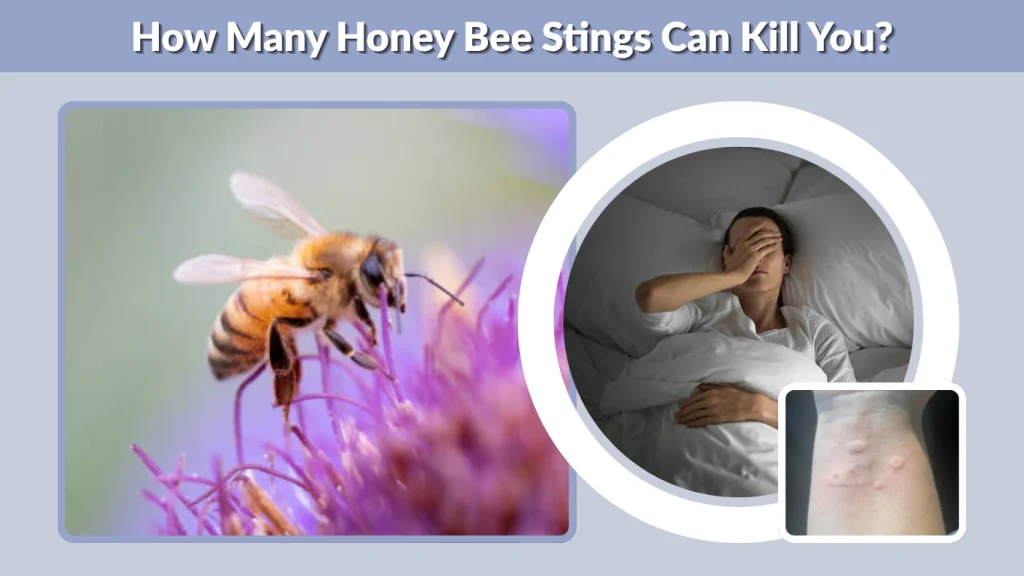
The number of stings required to become life-threatening varies depending on body size, health, and sensitivity. While a single sting is rarely dangerous, large numbers of stings can overwhelm the body.
General Risk Estimates
- Hundreds of stings may be dangerous for adults
- Fewer stings can harm children or elderly individuals
- Allergic reactions can be fatal even from one sting
- Immediate treatment reduces risk significantly
Factors That Increase Danger
- Body weight and age
- Pre-existing health conditions
- Delay in medical care
- Number of stings received
Can Honey Bees Sting Through Clothes?
Many people assume clothing offers full protection, but that is not always the case. The ability of a honey bee to sting through fabric depends on thickness and material.
Clothing Protection Levels
- Thin fabrics can be penetrated
- Loose clothing reduces sting risk
- Thick materials offer better protection
- Protective gear is most effective
Common Situations
- Tight clothing increases risk
- Outdoor activities expose skin areas
- Beekeeping suits provide strong protection
- Gloves vary in effectiveness
Can a Dead Honey Bee Sting You?
A common myth is that dead bees are harmless, but their stinger can still pose a risk. The stinger remains active for a short time even after the bee dies.
When a honey bee stings, the stinger detaches and continues pumping venom into the skin. If you touch or press the stinger, it can still inject venom. This is why it is important to remove the stinger carefully and quickly without squeezing it. Although the bee itself is no longer alive, the stinging mechanism can still cause irritation and pain.
What to Do After a Honey Bee Sting
Proper first aid can reduce pain and prevent complications. Acting quickly is important to limit the amount of venom entering the body.
First Aid Steps
- Remove the stinger immediately
- Wash the area with soap and water
- Apply a cold compress
- Keep the area clean and dry
Home Remedies
- Use aloe vera for soothing
- Apply baking soda paste
- Try honey for mild relief
- Avoid scratching the area
Can You Be Allergic to Honey Bee Stings?
Allergic reactions to bee stings vary from mild to severe. Recognizing the signs early can help prevent serious complications.
Common Allergy Symptoms
- Swelling beyond the sting area
- Difficulty breathing
- Dizziness or fainting
- Rapid heartbeat
When to Seek Medical Help
- Severe swelling or pain
- Trouble breathing
- Signs of anaphylaxis
- Multiple stings at once
FAQs
Can a honey bee sting you more than once?
No, a worker honey bee can sting only once because its barbed stinger gets stuck in the skin, causing it to die after the sting. However, multiple bees can sting at the same time.
Can honey bee stings kill you?
Yes, but it is rare. Death can occur due to severe allergic reactions or a large number of stings overwhelming the body.
Can male honey bees sting?
No, male honey bees, known as drones, do not have stingers and cannot sting. Only female bees are capable of stinging.
Can you put honey on a bee sting?
Yes, honey may help soothe the skin and reduce irritation slightly, but it is not a medical treatment and should not replace proper first aid.
Can a honey bee survive after stinging?
No, worker honey bees usually die after stinging because their barbed stinger is torn from their body during the process.
