
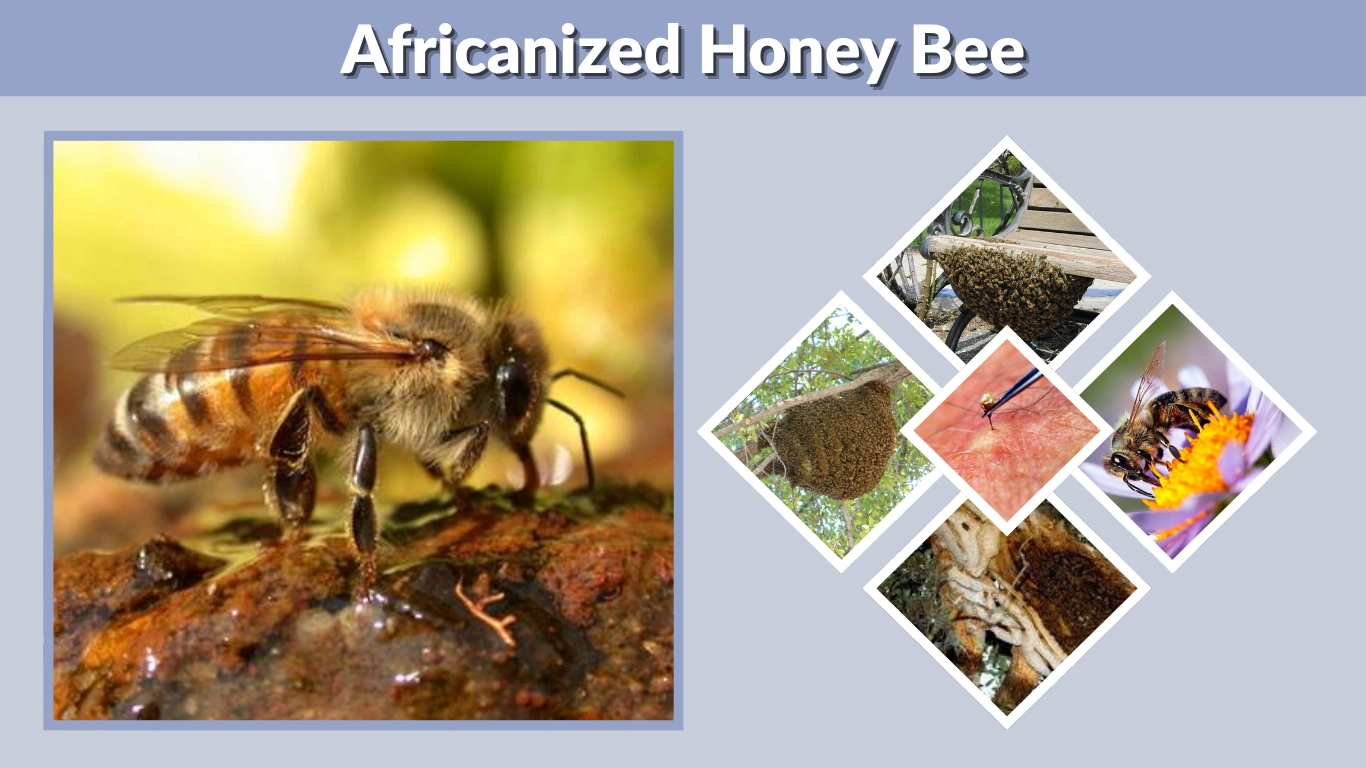
Africanized honey bees are often called “killer bees,” but the name can be misleading without proper context. These bees are not a separate species but a hybrid of African and European honey bees. They are known for their heightened defensive behavior and rapid spread across warm regions. Understanding their origin, traits, and risks is essential for safety and awareness. This guide explains what Africanized honey bees are, how they differ from regular honey bees, and why they are often considered dangerous.
What Is an Africanized Honey Bee?
Africanized honey bees are a hybrid strain of honey bees that combine traits from African and European subspecies. They behave similarly to regular honey bees in many ways but are much more defensive when disturbed. Their adaptability has allowed them to spread quickly across different regions.
Definition and Key Traits
- Hybrid of African and European honey bees
- Known for strong defensive behavior
- Often called “killer bees” in media
- Thrive in warm climates
Scientific Classification
- Scientific name: Apis mellifera scutellata hybrid
- Belong to the same species as regular honey bees
- Differ mainly in behavior, not appearance
- Part of the broader honey bee group
Africanized Honey Bee Origin and History
The origin of Africanized honey bees dates back to a scientific experiment that unintentionally led to their spread. Their history explains why they are now found across many parts of the Americas.
Where Did They Come From?
- Native African honey bee subspecies
- Brought to Brazil for research
- Intended to improve honey production
How They Spread
- Escaped from a research facility in the 1950s
- Gradually spread through South and Central America
- Reached parts of the United States over time
- Expanded due to adaptability and climate suitability
Africanized Honey Bee vs Honey Bee
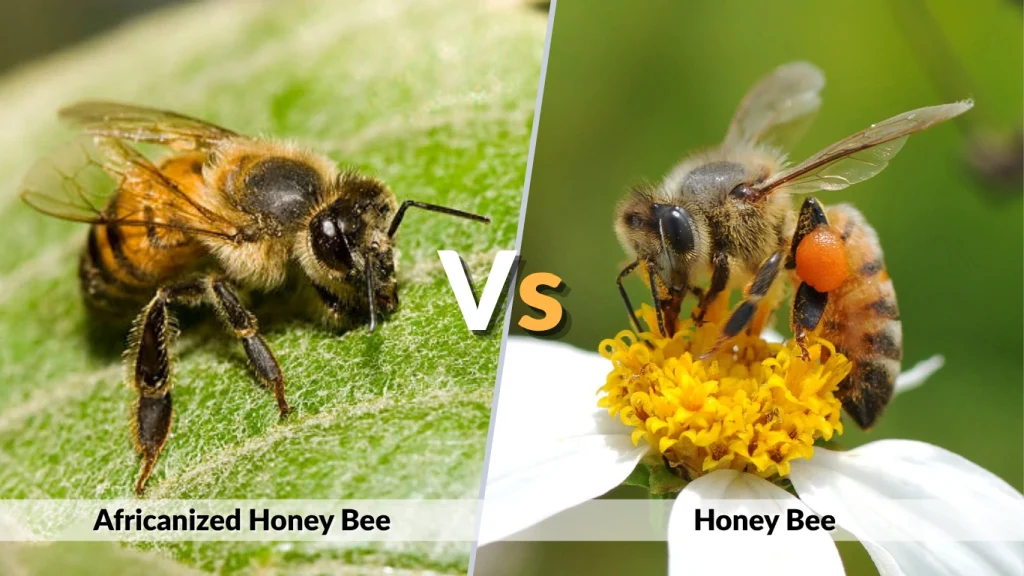
Although Africanized honey bees and European honey bees look very similar, their behavior sets them apart. This difference is the main reason they are considered more dangerous in certain situations.
Physical Differences
- Nearly identical in size and color
- Both have striped yellow and brown bodies
- Visual identification is very difficult
- Lab testing is often required
Behavioral Differences
- Africanized bees are more defensive
- React faster to perceived threats
- Attack in larger numbers
- Chase threats over longer distances
Honey Production
- Both produce honey
- Africanized bees produce less surplus honey
- Frequent swarming reduces storage
- Less suitable for commercial beekeeping
Africanized Honey Bee Characteristics
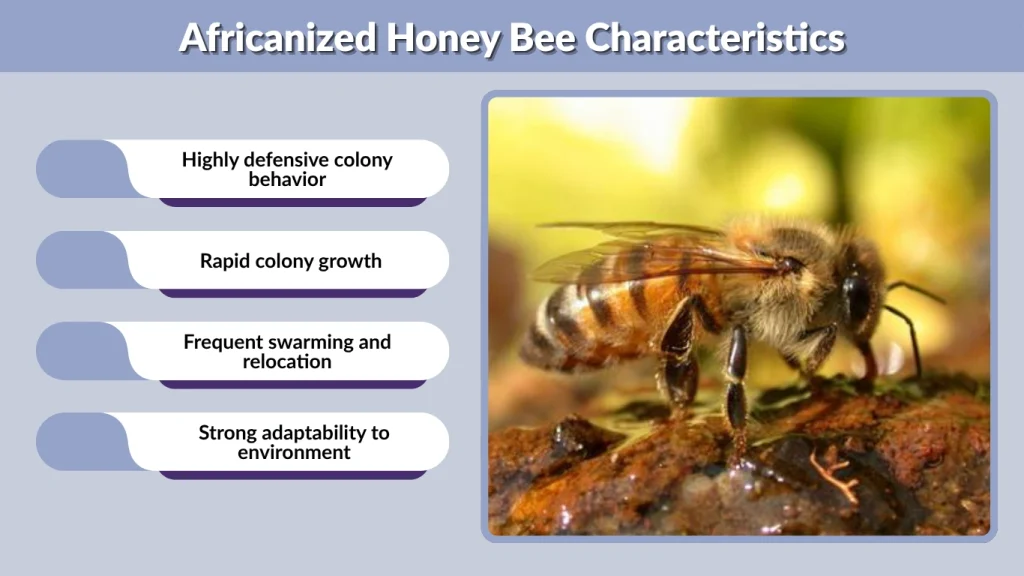
Africanized honey bees have several distinct traits that influence their behavior and survival. These characteristics make them highly adaptable but also more challenging to manage.
Key Features
- Highly defensive colony behavior
- Rapid colony growth
- Frequent swarming and relocation
- Strong adaptability to environment
Survival Advantages
- Thrive in warmer climates
- Efficient at finding food sources
- Quickly establish new colonies
- Better resistance to certain threats
What Do Africanized Honey Bees Look Like?
Identifying Africanized honey bees based on appearance alone is extremely difficult. They closely resemble European honey bees, which often leads to confusion in the field.
Africanized honey bees are similar in size, typically small to medium, with yellow and brown striped bodies. Their wings, legs, and body shape do not show obvious differences from regular honey bees. Because of this, visual identification is unreliable. Instead, behavior—especially aggression and rapid response—is often the only noticeable clue. For accurate identification, scientific testing is required to analyze their genetic makeup.
Africanized Honey Bee Sting and Danger
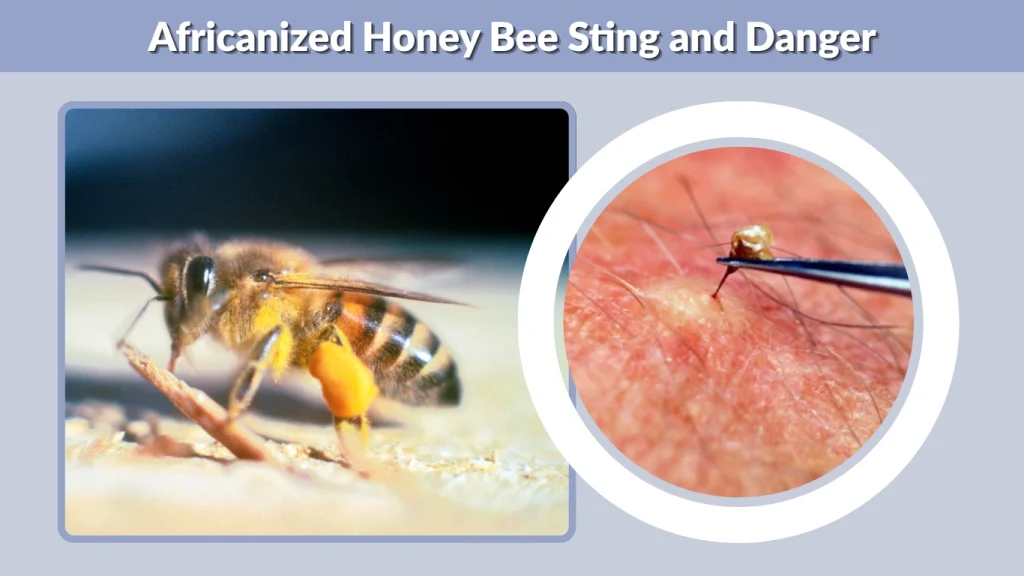
The main concern surrounding Africanized honey bees is their defensive behavior and the risk of multiple stings. While their venom is not stronger than that of regular honey bees, their response to threats makes them more dangerous.
Are They Dangerous?
- Highly defensive when disturbed
- Attack in large groups
- Respond quickly to threats
- Can chase targets over long distances
Sting Behavior
- Can sting multiple times as a group
- Each individual bee stings once
- Swarm attacks increase risk
- More stings lead to greater harm
Risk Factors
- Disturbing or approaching a nest
- Loud noises or vibrations
- Accidental contact with colonies
- Lack of protective measures
Africanized Honey Bee Habitat and Range

Africanized honey bees thrive in warm climates and have spread widely across the Americas. Their ability to adapt quickly allows them to survive in diverse environments, from rural areas to urban spaces.
Where Do They Live?
- Prefer warm and tropical climates
- Common in South and Central America
- Found in southern U.S. states
- Avoid colder northern regions
Nesting Locations
- Trees and hollow spaces
- Wall cavities and roofs
- Underground areas
- Abandoned structures
Africanized Honey Bees in the United States
Africanized honey bees have established populations in several U.S. states, especially in warmer regions. Their spread has been gradual but consistent over the years.
They are most commonly found in states like Texas, Arizona, California, and Florida. These areas provide the climate conditions they need to thrive. While they continue to expand their range, colder climates limit their movement northward. Monitoring and awareness programs help track their presence and reduce risks to the public.
Africanized Honey Bee Invasive Impact
Africanized honey bees are considered an invasive strain due to their aggressive behavior and ability to outcompete other bee populations. Their presence can affect both ecosystems and human activities.
Why They Are a Problem
- Increased risk of stings to humans and animals
- Displacement of European honey bees
- More frequent human-bee conflicts
- Difficult to manage in urban areas
Environmental Impact
- Compete with native pollinators
- Alter local pollination patterns
- Disrupt ecological balance
- Spread rapidly in suitable habitats
How to Identify Africanized Honey Bees
Because they look nearly identical to regular honey bees, identification relies more on behavior than appearance. Observing how they react can help determine if they may be Africanized.
Behavior-Based Identification
- Extremely defensive reactions
- Rapid response to disturbance
- Large number of bees involved in defense
- Persistent chasing behavior
When to Be Cautious
- Unusual bee aggression near nests
- Bees reacting from a distance
- Large swarms in unexpected places
- Repeated attacks without clear reason
Africanized Honey Bee Control and Removal
Managing Africanized honey bees requires caution and professional expertise. Attempting to remove them without proper knowledge can be dangerous.
Professional pest control or beekeeping experts are usually needed to safely remove or relocate colonies. Preventive measures, such as sealing entry points in buildings and avoiding disturbance of unknown nests, can reduce risks. Public awareness and proper response strategies are essential in areas where these bees are present.
FAQs
What are Africanized honey bees?
Africanized honey bees are a hybrid of African and European honey bees known for their highly defensive behavior. They belong to the same species as regular honey bees but react more aggressively to threats.
Are Africanized honey bees more dangerous than regular honey bees?
Yes, they are considered more dangerous because they respond faster and attack in larger numbers. Their venom is similar, but the number of stings increases the overall risk.
Can Africanized honey bees produce honey?
Yes, they do produce honey like regular honey bees. However, their frequent swarming and aggressive nature make them less suitable for commercial beekeeping.
Where are Africanized honey bees found?
They are mostly found in warm regions, including parts of South America, Central America, and the southern United States such as Texas, Arizona, California, and Florida.
How can you tell Africanized honey bees from regular honey bees?
It is difficult to tell them apart by appearance. Their behavior, especially strong aggression and rapid response to disturbance, is the main indicator. Accurate identification requires laboratory testing.
