

The Polyphemus moth (Antheraea polyphemus) is one of the largest and most fascinating silk moths found in North America. While the adult moth is known for its striking eye spots, the caterpillar stage is equally impressive and plays a crucial role in its life cycle.
Polyphemus moth caterpillars are popular among nature enthusiasts and beginner insect keepers due to their large size, calm behavior, and relatively simple care requirements. They are often compared to Luna moth caterpillars because of their similar appearance and diet.
In this guide, you’ll learn everything you need to know about the Polyphemus moth caterpillar, including its diet, care, life cycle, and how it compares to the Luna moth caterpillar.
What is a Polyphemus Moth Caterpillar?
The Polyphemus moth caterpillar is the larval stage of the silk moth species Antheraea polyphemus. It is known for its vibrant green color and impressive size, making it easy to spot in the wild.
These caterpillars have a thick, segmented body covered with small, raised bumps called tubercles, which are often tinted blue or yellow. As they grow, they can reach lengths of up to 7–10 cm (about 3–4 inches), making them one of the larger caterpillars in their range.
How to Identify One
Identifying a Polyphemus caterpillar is relatively simple if you know what to look for. Their bright green body helps them blend into leaves, while their colorful tubercles give them a slightly textured appearance.
You’ll most commonly find them on trees such as oak, maple, and birch. Unlike some other caterpillars, they are not hairy or spiny, which is a helpful clue when distinguishing them from potentially harmful species.
What Do Polyphemus Moth Caterpillars Eat?
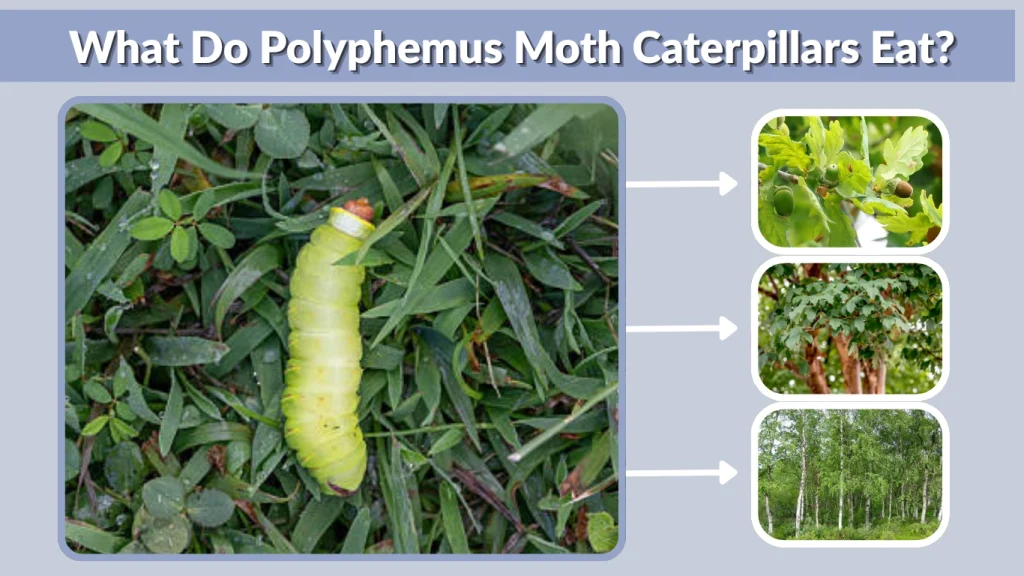
Polyphemus caterpillars are herbivores, meaning they feed exclusively on plant leaves. Their diet consists mainly of deciduous trees and shrubs, which provide the nutrients needed for their rapid growth.
Common Host Plants
Some of the most common host plants include:
- Oak
- Maple
- Birch
- Willow
- Apple
- Cherry
These caterpillars usually stick to the plant they were born on, so it’s best not to switch their food source suddenly.
Feeding Tips in Captivity
If you are raising a Polyphemus caterpillar at home, proper feeding is essential. Always provide fresh, clean leaves from a known host plant. Avoid leaves that may have been exposed to pesticides or pollution.
It’s also important to keep the leaves hydrated. You can do this by placing cut branches in water or replacing leaves daily to ensure freshness. A well-fed caterpillar will grow quickly and remain active.
How to Care for a Polyphemus Moth Caterpillar
Caring for a Polyphemus caterpillar is relatively simple, which makes it a great choice for beginners interested in raising insects.
Habitat Setup
A proper enclosure is key to keeping your caterpillar healthy. Use a well-ventilated container, such as a mesh cage or a box with air holes. Add small branches so the caterpillar can climb and rest naturally.
Make sure the enclosure is not overcrowded and has enough space for the caterpillar to move freely as it grows.
Cleaning & Maintenance
Polyphemus caterpillars produce a significant amount of waste, known as frass. Regular cleaning is important to prevent mold and bacteria buildup.
Remove old leaves and waste daily, and keep the enclosure dry and clean. This helps reduce the risk of disease.
Handling Tips
While these caterpillars are harmless, they should still be handled with care. Avoid excessive handling, as it can stress them. If you need to move one, gently let it crawl onto your hand rather than picking it up.
Life Cycle of the Polyphemus Moth
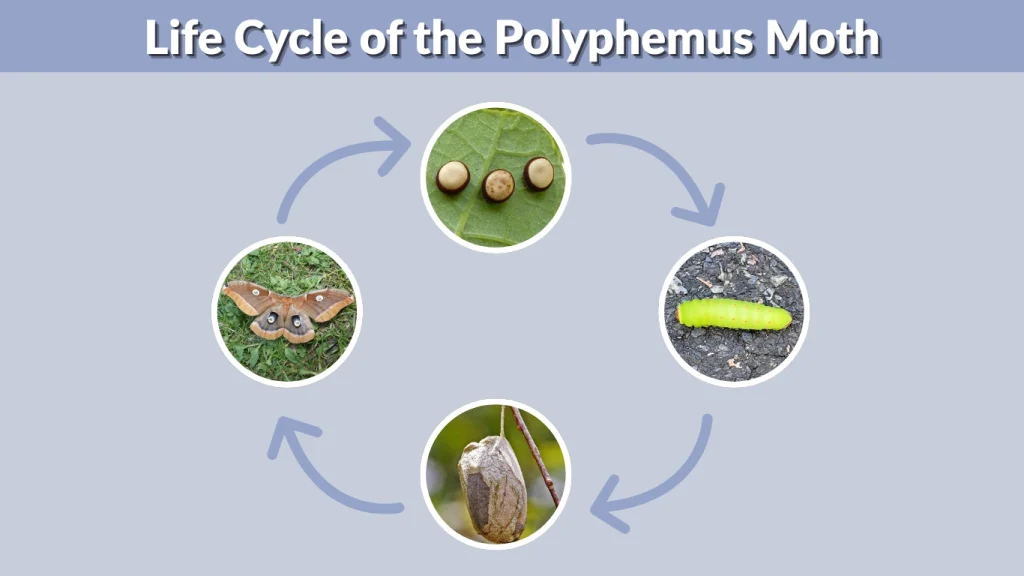
Like all moths, the Polyphemus undergoes complete metamorphosis, meaning it transforms through several distinct stages.
Egg Stage
The life cycle begins when a female moth lays eggs on the leaves of suitable host plants. These eggs are small, round, and typically hatch within one to two weeks.
Caterpillar (Larval) Stage
Once hatched, the caterpillar begins feeding immediately. This stage is focused entirely on eating and growing. As it grows, the caterpillar sheds its skin multiple times in a process known as molting.
This larval stage lasts several weeks and is the most active phase of the life cycle.
Cocoon Stage
After reaching its full size, the caterpillar stops eating and begins preparing for the next stage of its life. It spins a thick, silk cocoon, often wrapped inside a leaf for protection.
Inside this cocoon, the caterpillar undergoes a dramatic transformation into a pupa. This stage can last anywhere from a few weeks to several months, depending on environmental conditions. In colder climates, the Polyphemus moth may overwinter inside the cocoon and emerge in spring.
Adult Moth Stage
Once development is complete, the adult moth emerges from the cocoon. The Polyphemus moth is large and brown with distinctive eye spots on its wings, which help deter predators.
Interestingly, adult Polyphemus moths do not eat. Their sole purpose is to reproduce, and they typically live for about one week.
Caterpillar Stages (Instars) Explained
During the larval phase, the Polyphemus caterpillar goes through several growth stages known as instars.
Growth Changes
Typically, there are five instars. After each molt, the caterpillar becomes larger and slightly changes in appearance. Early instars are smaller and less vibrant, while later stages develop the characteristic bright green color and more pronounced tubercles.
Each molt allows the caterpillar to expand rapidly, preparing it for the cocoon stage.
Are Polyphemus Moth Caterpillars Poisonous?
One of the most common questions is whether Polyphemus caterpillars are dangerous. The simple answer is no—they are not poisonous and are generally safe to handle.
Unlike some caterpillars that have stinging hairs or toxic chemicals, Polyphemus caterpillars are harmless. However, as with any insect, it’s a good idea to wash your hands after handling them, as some individuals may experience mild skin irritation.
Polyphemus vs Luna Moth Caterpillar
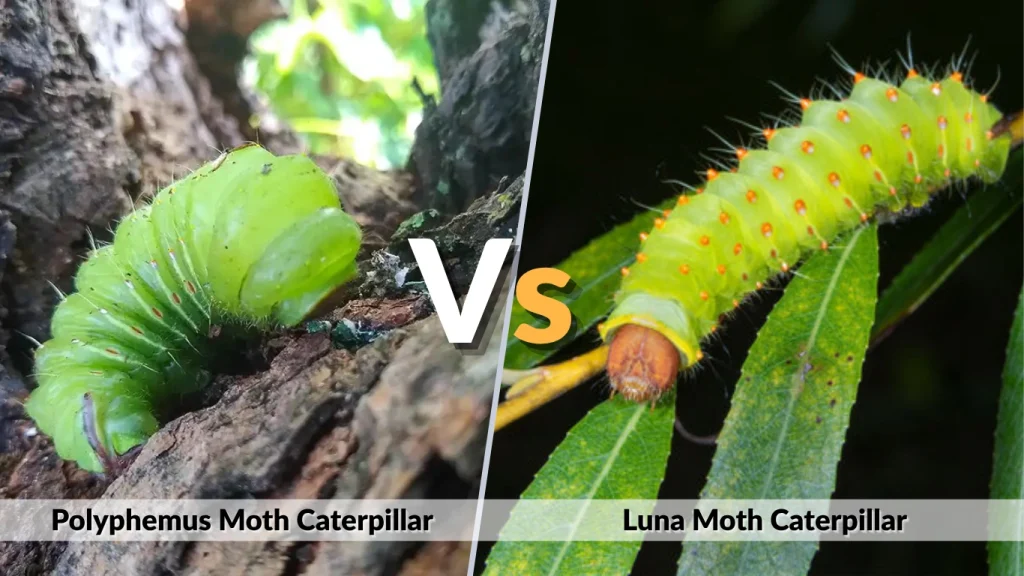
Polyphemus and Luna moth caterpillars are often confused because they share similar colors and habitats. However, there are some key differences.
Physical Differences
Polyphemus caterpillars are generally larger and have more noticeable, colorful tubercles along their bodies. In contrast, Luna moth caterpillars tend to be slightly slimmer with a smoother appearance.
Diet & Habitat Differences
Both species feed on similar host plants such as oak, maple, and birch. However, slight variations in preference may occur depending on region and availability.
Cocoon Differences
The cocoon is one of the easiest ways to tell them apart. Polyphemus moths create thick, durable cocoons that are often wrapped in leaves. Luna moth cocoons are thinner and less tightly constructed.
Size and Growth Timeline
Polyphemus caterpillars grow quickly under the right conditions. From hatching to full size, the process typically takes a few weeks.
At their largest, they can reach about 7–10 cm (3–4 inches) in length. Their rapid growth is fueled by constant feeding, especially during the later instars.
Seasonal factors such as temperature and food availability can affect how quickly they develop and when they enter the cocoon stage.
Can You Raise a Polyphemus Caterpillar at Home?
Yes, Polyphemus caterpillars are considered beginner-friendly and can be raised at home with proper care.
They require minimal equipment—just a clean enclosure, fresh leaves, and regular maintenance. Watching their transformation from caterpillar to moth can be a rewarding experience.
However, it’s important to collect them responsibly and avoid disrupting local ecosystems. If possible, raise caterpillars from eggs rather than removing them from the wild.
FAQs
What is the lifespan of a Polyphemus moth caterpillar?
The caterpillar stage typically lasts about 4 to 6 weeks, during which it focuses on feeding and growing before forming a cocoon.
How big do Polyphemus caterpillars get?
They can grow up to 7–10 cm (3–4 inches) in length, making them one of the larger caterpillars.
Do Polyphemus caterpillars bite or sting?
No, they do not bite or sting. They are completely harmless and safe to handle gently.
Can you keep a Polyphemus caterpillar as a pet?
Yes, they are easy to care for and are often kept by beginners interested in observing metamorphosis.
When do Polyphemus moths emerge from cocoons?
They usually emerge in late spring or summer, but if they overwinter, they may emerge the following spring depending on climate.
Conclusion
The Polyphemus moth caterpillar is a fascinating and accessible species for anyone interested in insects or nature. With its striking appearance, simple diet, and remarkable transformation, it offers a unique glimpse into the process of metamorphosis.
Whether you’re observing them in the wild or raising one at home, understanding their care, diet, and life cycle can deepen your appreciation for these incredible creatures.
