
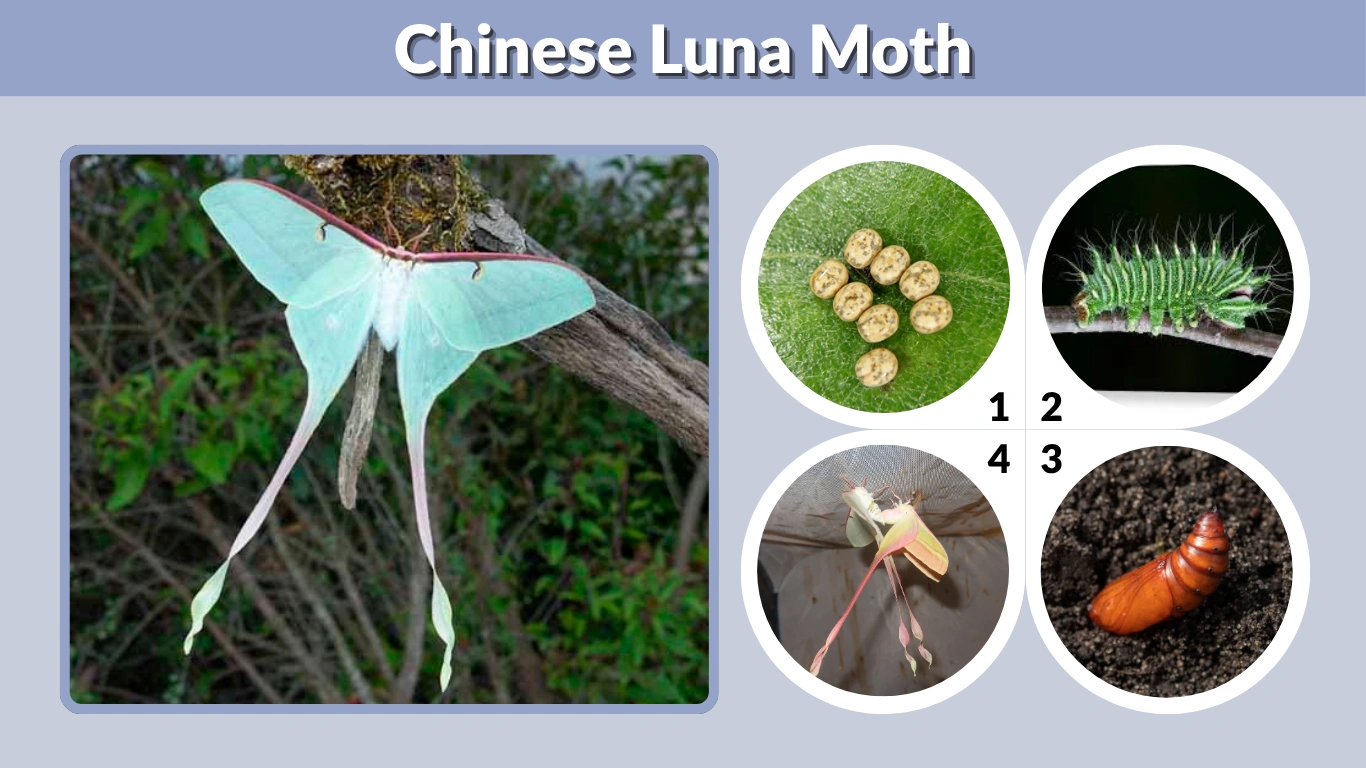
The Chinese luna moth, scientifically known as Actias dubernardi, is one of the most visually striking moths in the world. Often confused with the American luna moth, this species is native to parts of Asia and is admired for its long tails and soft yellow-green wings. Its beauty, short lifespan, and symbolic meaning make it a fascinating subject for nature lovers, artists, and researchers alike. Understanding its life cycle and behavior helps explain why it continues to capture attention globally.
What Is a Chinese Luna Moth?
The Chinese luna moth belongs to the Saturniidae family, a group known for large and colorful moths. This species stands out due to its elegant wing shape and delicate appearance. It is commonly referred to as the Chinese moon moth or Chinese lunar moth, reflecting its soft, glowing color and nighttime activity.
Key Characteristics
- Long, trailing hindwing tails
- Pale yellow to green coloration
- Distinct eye spots on wings
Chinese Luna Moth vs Luna Moth
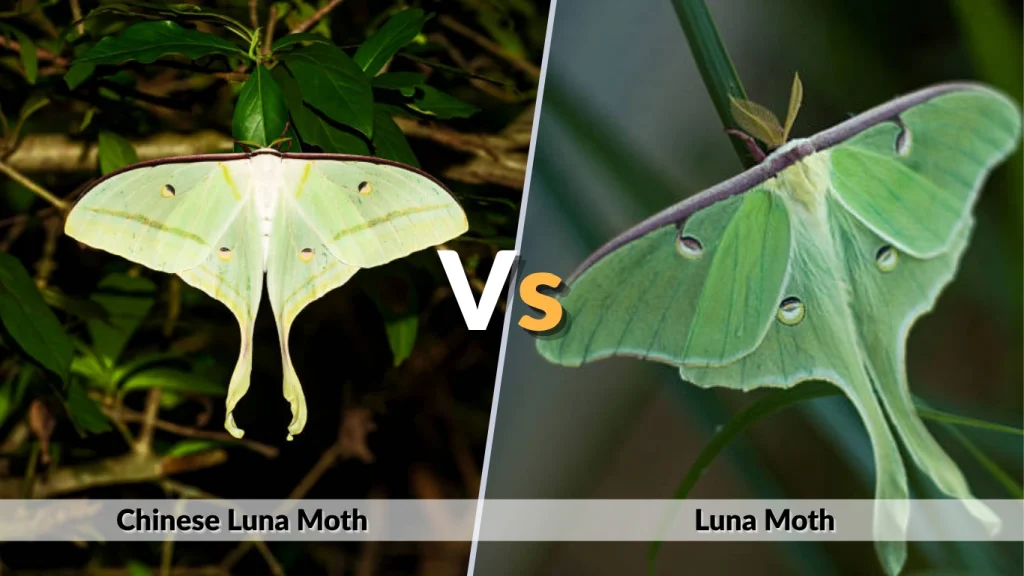
Although they share a similar name, the Chinese luna moth and the American luna moth are different species. The confusion mainly comes from their similar body shapes and long wing tails, but there are clear distinctions between them.
Main Differences
- Chinese species has a more yellow tone, while the American one is greener
- Found in Asia vs North America
- Slight differences in wing structure and size
Shared Traits
- Both belong to the same moth family
- Undergo complete metamorphosis
- Adults live only a short time
Where Do Chinese Luna Moths Live?
The Chinese luna moth is primarily found in China and nearby regions in Southeast Asia. It thrives in natural environments where there is plenty of vegetation to support its early life stages. Forested areas, especially those in mountainous regions, provide the ideal combination of shelter and food sources.
These moths prefer humid and subtropical climates. Their presence often depends on the availability of specific host plants required by their caterpillars. Because of this, they are not evenly distributed and may be rare in certain areas despite suitable weather conditions.
Chinese Luna Moth Life Cycle
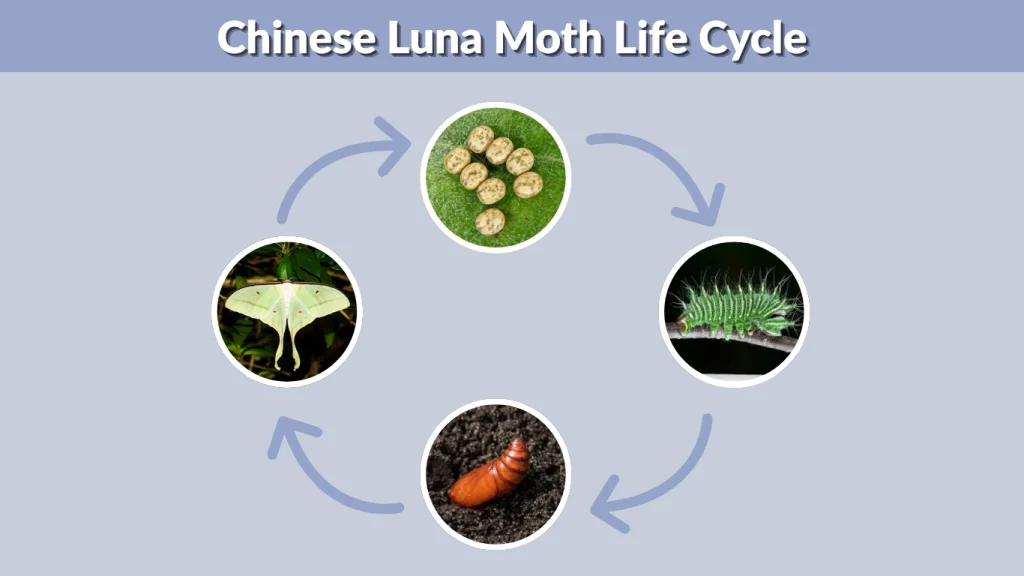
Like all moths in its family, the Chinese luna moth goes through a complete metamorphosis. This process includes several distinct stages, each playing an important role in its development. From a tiny egg to a fully formed adult, the transformation is both rapid and remarkable.
Stages of Development
- Egg
- Caterpillar (larva)
- Pupa (cocoon)
- Adult moth
Chinese Luna Moth Caterpillar
The caterpillar stage is the longest and most important part of the moth’s life. During this time, it feeds continuously and stores energy that will sustain it during adulthood. As it grows, the caterpillar sheds its skin multiple times, progressing through several stages known as instars.
Its appearance changes as it matures, often becoming brighter and more robust. The caterpillar primarily feeds on leaves from specific host plants, which are essential for its survival and growth. This stage is crucial because the energy gathered here determines how long the adult moth can live.
Adult Chinese Luna Moth
Once it emerges from the cocoon, the Chinese luna moth enters its final stage. The adult moth is delicate and does not live long, focusing entirely on reproduction. Its wings are fully developed, allowing it to fly and locate a mate.
Male vs Female
- Females are larger with fuller bodies
- Males have feathery antennae for detecting pheromones
Behavior
- Active mostly at night
- Attracted to light sources
- Does not feed during this stage
Chinese Luna Moth Lifespan
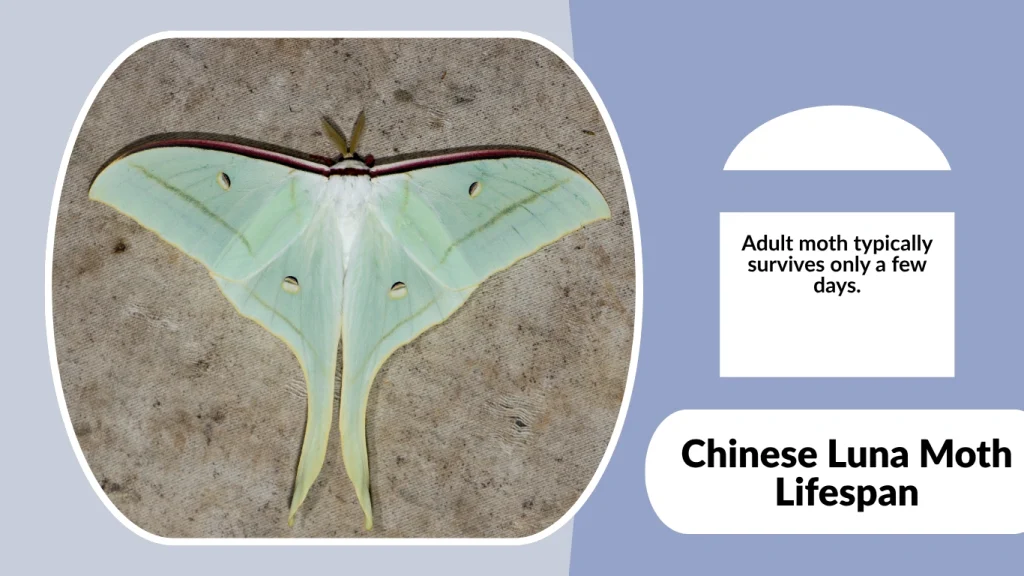
The lifespan of the Chinese luna moth is surprisingly short once it reaches adulthood. While the earlier stages can last several weeks, the adult moth typically survives only a few days. This brief life is dedicated entirely to reproduction.
Unlike many insects, the adult moth does not eat. It relies on the energy stored during its caterpillar phase, which explains its limited lifespan. This unique trait often surprises people and adds to the moth’s mysterious nature.
Are Chinese Luna Moths Poisonous?
Many people wonder whether such a striking insect could be dangerous, but the Chinese luna moth is completely harmless. Neither the adult moth nor its caterpillar poses any threat to humans. They do not bite, sting, or produce toxins that can harm people.
Even though some caterpillars in other species may have defensive features, this particular moth relies more on camouflage than protection. Its soft colors help it blend into leaves and natural surroundings, making it less visible to predators rather than dangerous.
Chinese Luna Moth Meaning and Symbolism
The Chinese luna moth is often associated with transformation and spiritual growth. Its dramatic life cycle—from caterpillar to winged adult—naturally represents change and renewal. This symbolism is widely appreciated in different cultures and creative expressions.
In many interpretations, the moth is linked to the moon and night, symbolizing intuition, mystery, and inner development. Because of its short lifespan, it can also represent the fleeting nature of beauty and life, encouraging mindfulness and appreciation of the present moment.
Chinese Luna Moth Care Guide
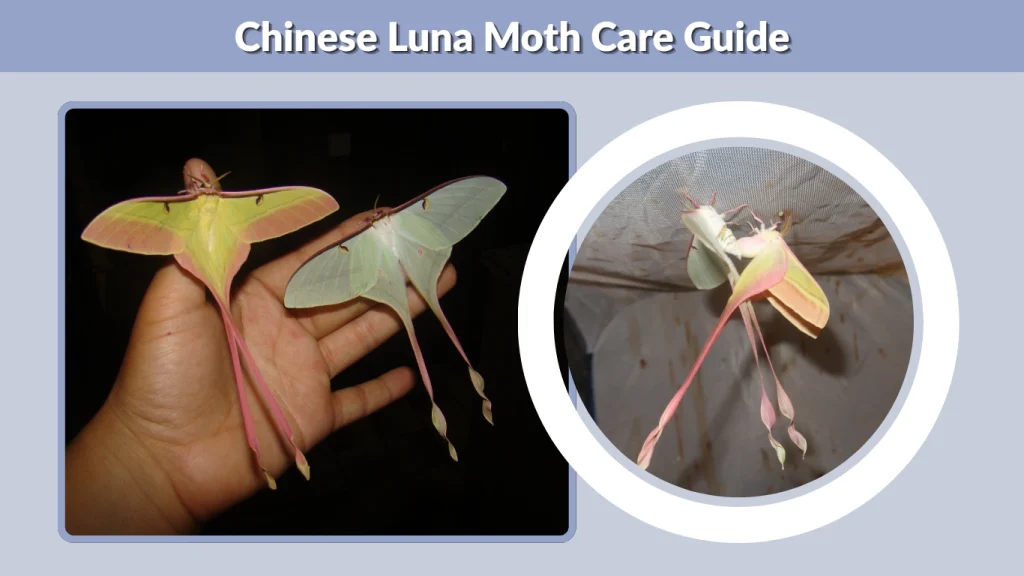
Keeping a Chinese luna moth as a pet is possible, but it requires careful attention and understanding of its life cycle. Because the adult moth does not eat, most of the care focuses on the caterpillar stage, where proper nutrition is essential.
Can You Keep Them as Pets?
Yes, but they are best suited for enthusiasts who understand insect care. Their short lifespan means they are not traditional pets, but more of a temporary observation experience.
Basic Care Requirements
- Access to suitable host plants for feeding
- Warm and humid environment
- Safe space for cocoon formation
Chinese Luna Moth for Sale
Chinese luna moths and their caterpillars are sometimes available through specialized breeders and insect suppliers. However, availability can vary depending on location and season. It is important to ensure that any purchase follows local regulations and ethical practices.
Prices may differ based on the life stage, rarity, and seller reputation. Buyers should also be cautious when purchasing online to avoid unreliable sources or improperly handled specimens.
Interesting Facts About Chinese Luna Moths
These moths are not only beautiful but also full of surprising traits that make them unique among insects.
- Adults do not eat at all
- Their lifespan is extremely short
- They are naturally attracted to light
- Rarely seen despite their size
Common Misconceptions
There are several misunderstandings surrounding the Chinese luna moth, mostly due to confusion with similar species. One common myth is that they live for a long time, when in reality their adult stage lasts only a few days.
Another misconception is that they are dangerous or poisonous, which is not true. People also often confuse them with the American luna moth, even though they belong to different regions and have noticeable differences in color and appearance.
Chinese Lunar Age (Clarification)
This topic is often searched alongside the Chinese luna moth but refers to something entirely different. Chinese lunar age is part of a traditional system based on the lunar calendar rather than biological species.
What Is the Chinese Lunar Age?
Chinese lunar age counts a person as one year old at birth and increases age based on the lunar new year rather than the exact birth date. This makes it different from the Western age system.
Mother’s Lunar Age at Conception
This concept is often used in traditional beliefs and is calculated using the mother’s lunar age at the time of conception. It is commonly associated with prediction methods rather than scientific measurement.
Chinese Gender Chart Explanation
- Based on mother’s lunar age and conception month
- Used in traditional gender prediction
- Not scientifically proven
FAQs
How long do Chinese luna moths live?
Chinese luna moths live only about 5 to 10 days as adults. Their entire life cycle, including the caterpillar and pupal stages, can last several weeks. The adult stage is short because they do not eat and rely on stored energy.
Where do Chinese luna moths live?
They are mainly found in China and parts of Southeast Asia. These moths prefer forested and mountainous regions with humid climates that support the plants their caterpillars feed on.
Do Chinese luna moths have mouths?
Adult Chinese luna moths have very limited or non-functional mouthparts. They cannot eat and survive on the energy stored during their caterpillar stage, which limits their lifespan.
Are Chinese luna moths poisonous?
No, they are completely harmless to humans. They do not bite, sting, or produce toxins, making them safe to observe and handle with care.
Can you buy a Chinese luna moth?
Yes, they can sometimes be purchased from breeders or insect suppliers. However, availability depends on location, and buyers should always ensure ethical sourcing and legal compliance.
