
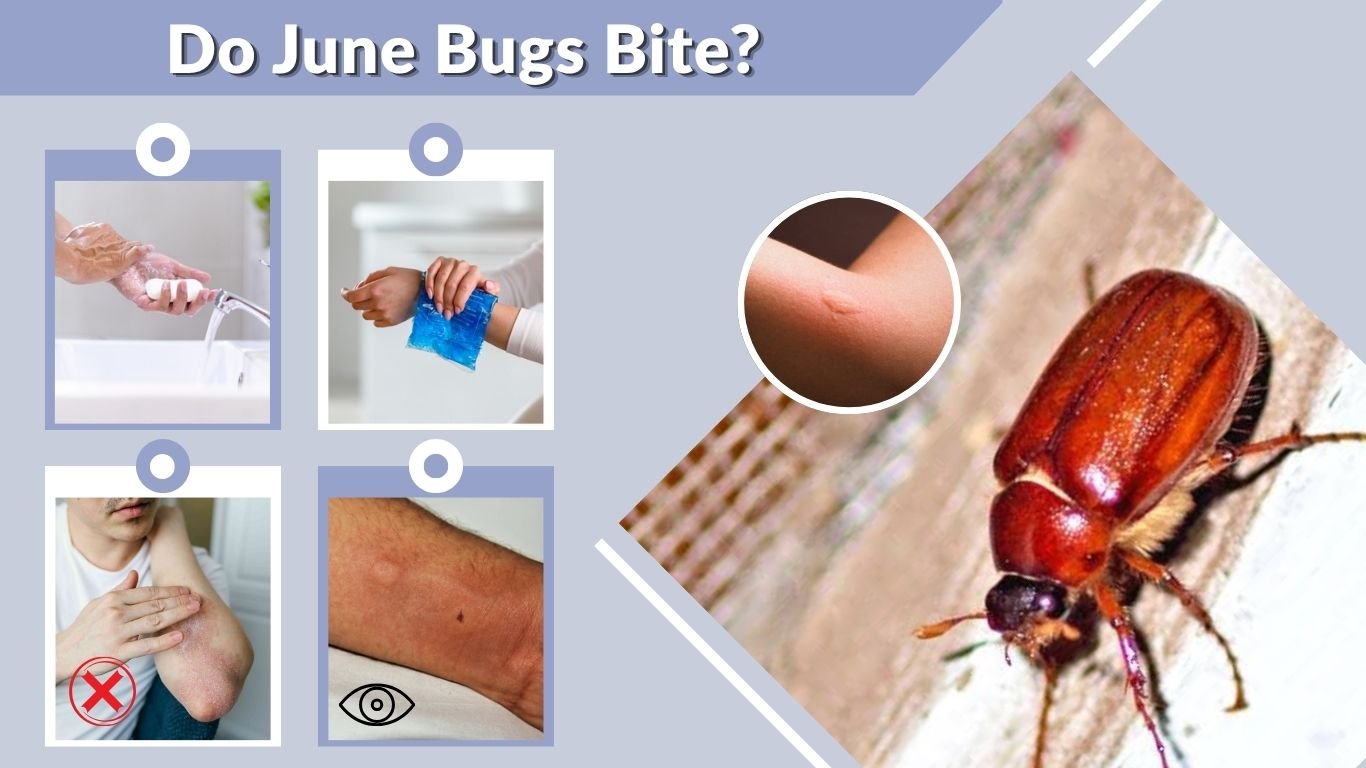
June bugs are large, noisy beetles that often fly around porch lights during late spring and summer. Because they have strong legs, hard bodies, and noticeable mouthparts, many people worry that June bugs may bite or sting. The good news is that June bugs are generally harmless to humans and pets. They do not seek out people, inject venom, or feed on blood. A June bug may occasionally scratch, cling, or create a mild pinching sensation when handled, but a true bite is extremely uncommon. Understanding their behavior can help you avoid unnecessary concern when these clumsy beetles appear around your home.
Do June Bugs Bite?
June bugs do not normally bite humans. They are plant-feeding beetles whose mouthparts are designed for chewing leaves, flowers, fruit, and other vegetation—not human skin.
Although they technically have chewing mouthparts, June bugs are not aggressive. They do not chase people, defend nests, or bite as a way of feeding. Most encounters happen when the beetles fly toward lights and accidentally land on clothing, hair, or skin.
A person may feel a small pinch if a June bug is trapped against the skin or held tightly. However, this is uncommon and usually does not break the skin.
Can June Bugs Bite Humans?
June bugs can theoretically use their mouthparts to pinch, but they are very unlikely to bite a person. Their jaws are small and not powerful enough to cause a serious wound.
Most reported “June bug bites” are probably caused by the beetle’s spiny legs. June bugs have hooked claws that help them grip leaves and branches. When one lands on your skin, these claws can feel sharp or uncomfortable.
Do June Bugs Bite or Sting?
June bugs do not sting. They have no stinger, venom gland, or defensive structure capable of injecting venom.
They also do not bite in the way mosquitoes, ticks, fleas, or biting flies do. June bugs are not blood-feeding insects and do not need to bite animals or people for survival.
Do June Bugs Pinch?
A June bug may create a mild pinching feeling if it grips the skin with its legs or mouthparts. This usually happens when someone tries to pick it up, squeeze it, or remove it forcefully.
The sensation can be surprising, but it is normally harmless and lasts only a few seconds.
What Does a June Bug Bite Look Like?
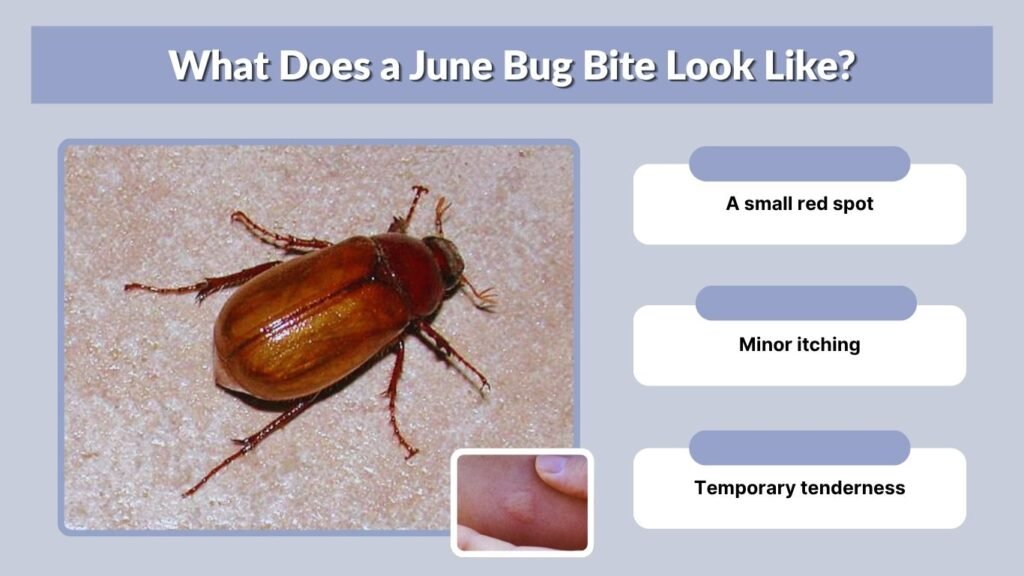
A genuine June bug bite mark is rare. If a June bug scratches or pinches the skin, the affected area may show very mild irritation.
Possible signs include:
- A small red spot
- Minor itching
- Temporary tenderness
- A light scratch
- Mild skin irritation
There should not be significant swelling, severe pain, blistering, spreading redness, or tissue damage from a normal June bug encounter.
If you notice a painful or worsening mark, another insect may be responsible. Mosquitoes, fleas, bed bugs, ants, spiders, and biting flies are more likely to cause noticeable skin reactions.
June Bug Bite Symptoms
Most people experience no symptoms after touching or handling a June bug. When mild irritation occurs, it is usually caused by the beetle’s claws scratching the skin.
Mild Symptoms
The most common minor symptoms may include brief discomfort, a tiny red mark, or light itching. These effects usually disappear without treatment.
Sensitive skin may become slightly red after contact, especially if the beetle was brushed or pulled away roughly.
Serious Symptoms Are Unusual
June bugs are not venomous, so they should not cause poisoning or a venom reaction. Serious allergic reactions are also extremely uncommon.
Seek medical help if you experience difficulty breathing, facial swelling, severe pain, spreading redness, fever, or signs of infection. These symptoms would be unusual for June bug contact and may indicate another cause.
What Happens If a June Bug Bites You?
In the unlikely event that a June bug pinches or scratches you, very little should happen. The skin may feel irritated for a short time, but there is normally no lasting damage.
June bugs are not known to spread diseases to humans through biting. They do not remain attached to the skin, drink blood, or inject saliva like mosquitoes and ticks.
Wash the area and monitor it for unusual changes. Most minor marks should improve quickly.
June Bug Bite Treatment
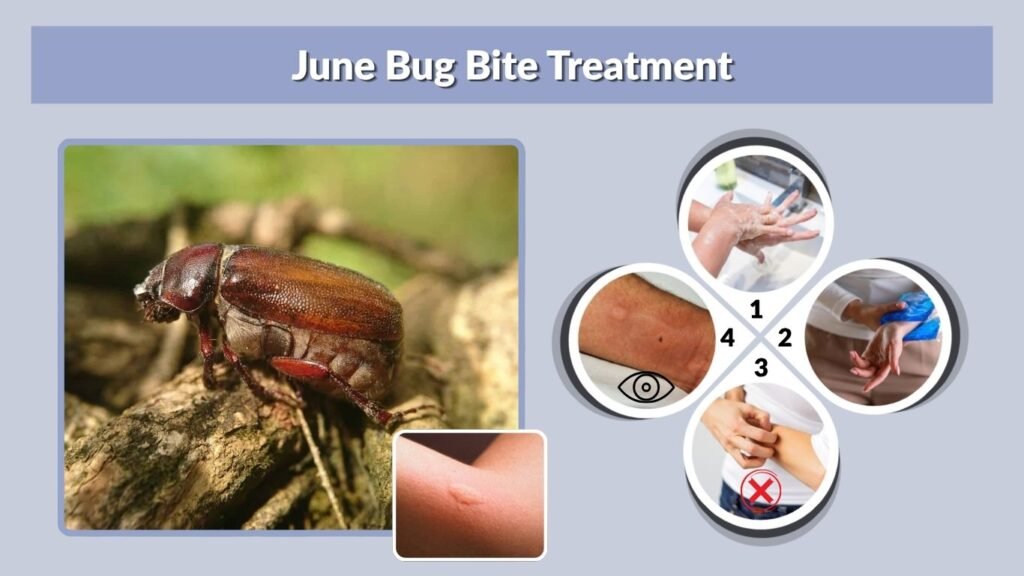
June bug contact rarely requires medical treatment. Basic skin care is usually enough for a minor scratch or irritated spot.
Wash the Area
Clean the affected skin with soap and water. This removes dirt and bacteria that could enter through a small scratch.
Pat the area dry with a clean towel instead of rubbing it.
Apply a Cold Compress
A cold compress may help reduce mild redness, itching, or tenderness. Wrap ice in a cloth and hold it against the skin for about 10 minutes.
Do not place ice directly on bare skin.
Avoid Scratching
Scratching irritated skin can create a larger wound and increase the risk of infection. Keep the area clean and avoid picking at it.
An over-the-counter anti-itch cream may help if mild itching continues, but it is rarely necessary.
Watch for Infection
Contact a healthcare professional if the area becomes increasingly painful, warm, swollen, or filled with pus. These signs may suggest an infection or a bite from a different insect.
Do Green June Bugs Bite?
Green June bugs are large beetles with shiny green or bronze bodies. Despite their intimidating size, they do not normally bite humans.
Green June bugs feed mainly on ripe fruit, decaying fruit, plant juices, and other soft plant materials. They may fly close to people because they are strong but sometimes awkward fliers.
Their legs can feel prickly when they land on bare skin, but they are not considered dangerous.
Do Brown June Bugs Bite?
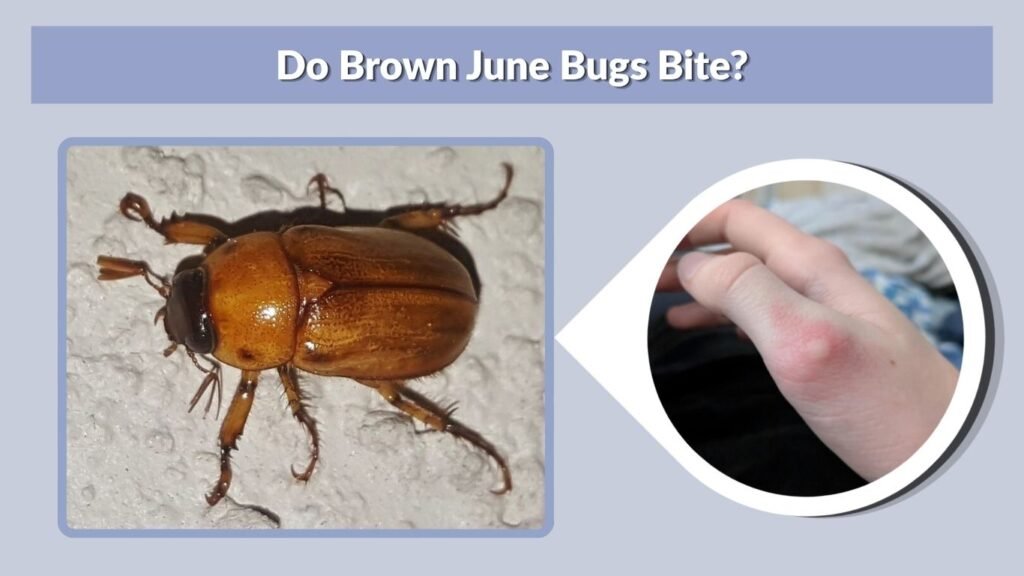
Brown June bugs, often called May beetles or June beetles, do not typically bite people. They feed on plant leaves as adults, while their larvae feed on grass roots underground.
Brown June bugs commonly gather around outdoor lights at night. They may bump into people, windows, doors, and furniture, but this behavior is accidental rather than aggressive.
Their feet may cling firmly to clothing or skin, creating a pinching sensation during removal.
Do Texas June Bugs Bite?
June bugs found in Texas do not generally bite humans. The term “June bug” can refer to several beetle species, including brown May beetles and green June beetles.
These beetles may be abundant during warm evenings, especially near bright lights. They can be noisy and startling, but they are not known for biting or stinging.
The same is true for June bugs found in Oklahoma and other parts of the United States.
Do Flying June Bugs Bite?
Flying June bugs do not attack people while flying. Their unpredictable flight makes them seem aggressive, but they are simply poor navigators.
June bugs are strongly attracted to artificial light. They may fly toward porch lights, illuminated windows, or light-colored clothing and accidentally collide with people.
Turning off unnecessary outdoor lights or switching to less attractive lighting can reduce their activity around entrances.
Do June Bug Larvae Bite?
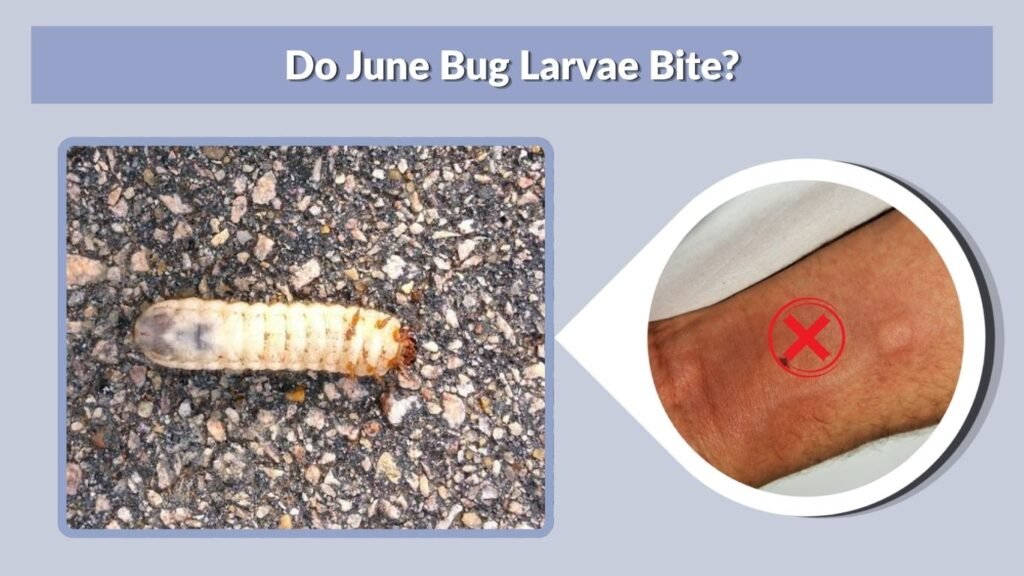
June bug larvae, commonly called white grubs, do not normally bite humans. They live underground and feed mainly on grass roots and plant roots.
The grubs are soft, white, and usually curled into a C shape. They may move or squirm when handled, but they are not aggressive.
Their mouthparts are adapted for chewing roots. While a very large grub might produce a weak pinch when handled, it is unlikely to break human skin.
Do June Bugs Bite Dogs?
June bugs do not normally bite dogs. A beetle may cling to a dog’s fur or skin, but it is not trying to attack the animal.
Some dogs chase and eat June bugs. Eating one or two usually causes no serious problem, although the beetle’s hard shell may cause drooling, gagging, vomiting, or stomach upset.
Contact a veterinarian if your dog eats many beetles or develops repeated vomiting, weakness, breathing problems, or unusual behavior.
Are June Bugs Poisonous?
June bugs are not poisonous or venomous to humans. They do not inject toxins, and touching one is generally safe.
Their appearance can be intimidating because of their large bodies, buzzing wings, and hooked legs. However, they rely more on their hard outer shell and clumsy escape behavior than biting or stinging for protection.
June bugs are also different from kissing bugs. Kissing bugs are blood-feeding insects that may bite humans, while June bugs are beetles that feed mainly on plants.
Why Does a June Bug Feel Like It Is Biting?
A June bug may feel like it is biting because its legs have small spines and claws. These structures allow the beetle to cling tightly to plants and other surfaces.
When the beetle lands on skin, its feet may catch on fine hairs. Pulling it away quickly can create a sharp scratching or pinching sensation.
The beetle may also move its mouthparts while exploring a surface. This movement can feel strange but is unlikely to injure healthy skin.
How to Safely Remove a June Bug
Avoid crushing or squeezing a June bug against your skin. Instead, allow it to crawl onto a piece of paper, a container, or your open hand.
Carry the beetle outside and place it near vegetation. Washing your hands afterward is a reasonable precaution, especially if the insect was found in soil or decaying material.
If a June bug is tangled in hair or clothing, remove it slowly. Pulling forcefully may cause its claws to scratch the skin or damage the beetle’s legs.
How to Keep June Bugs Away From People
June bugs are most active at night and are attracted to bright outdoor lighting. Reducing light around doors and patios can limit unwanted encounters.
Close doors and repair damaged window screens to prevent beetles from entering the house. Curtains or blinds can also reduce the amount of indoor light visible from outside.
Remove fallen and overripe fruit from the yard because some June bug species are attracted to sweet, fermenting plant material. Maintaining a healthy lawn may also help reduce white grub populations.
FAQs
Can a June Bug Bite You?
A June bug is technically capable of producing a very weak pinch, but it does not normally bite humans. Its mouthparts are designed for chewing plants. Most pinching sensations come from the beetle’s hooked feet gripping or scratching the skin.
What Time Do June Bugs Bite?
June bugs do not have a specific biting time because they do not normally bite people. They are most active during warm evenings and at night, when they fly around outdoor lights. Accidental contact is therefore more common after sunset.
Why Do June Bugs Bite?
June bugs do not intentionally bite humans. A beetle may move its mouthparts or grip the skin when frightened, trapped, or handled roughly. Any resulting pinch is defensive or accidental, not a feeding behavior.
Can June Bugs Bite Through Clothing?
June bugs cannot normally bite through clothing. Their jaws are not designed to penetrate fabric or human skin. However, their legs may cling to thin clothing, making it feel as though the beetle is pinching.
Are June Bug Bites Dangerous?
June bug bites are not considered dangerous because true bites are extremely rare, and the beetles are neither venomous nor blood-feeding. A mild scratch can be washed with soap and water. Seek medical attention for severe or worsening symptoms.
