
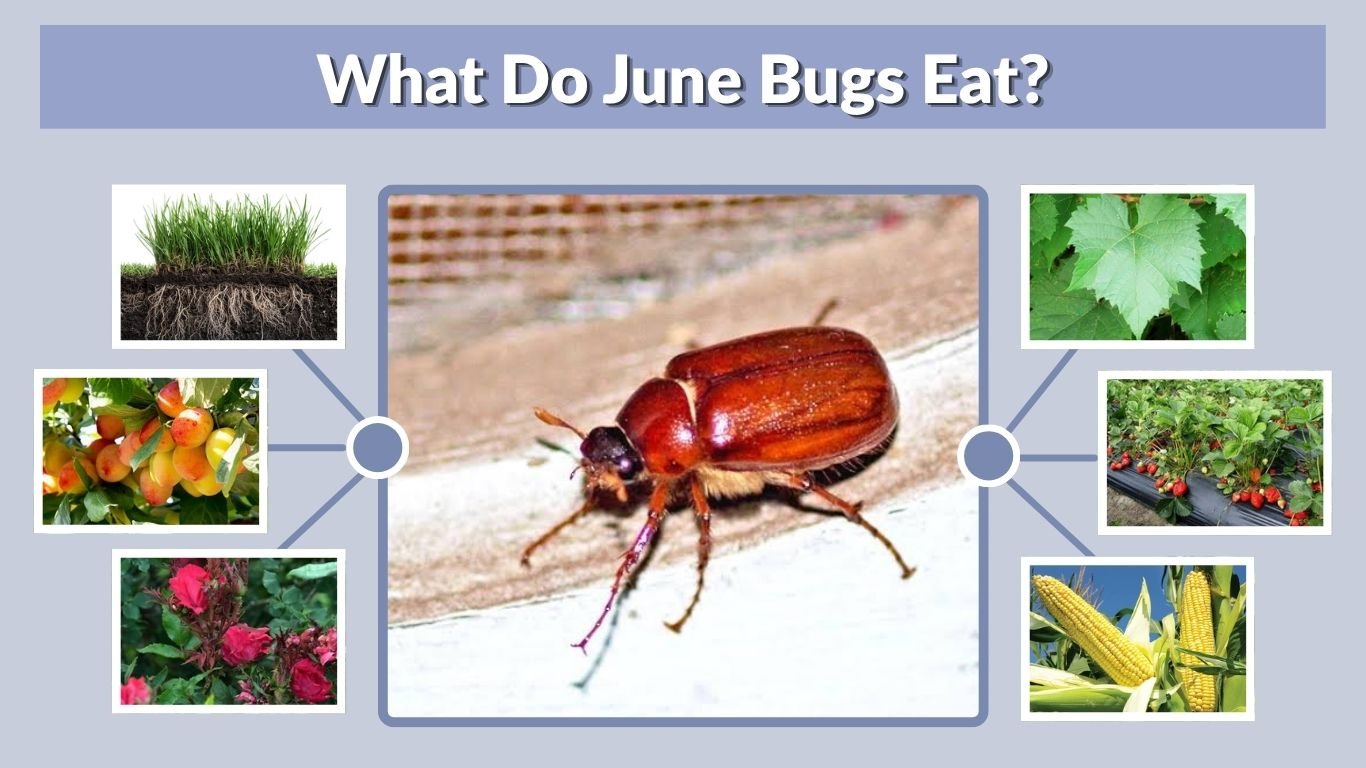
June bugs are common beetles that often appear around gardens, lawns, porch lights, and fruit trees during late spring and summer. Although adult June bugs are usually noticed first, their larvae live underground and feed on very different foods. Adult beetles mainly eat leaves, flowers, and ripe fruit, while June bug grubs feed on grass roots and other plant roots beneath the soil. Understanding what June bugs eat can help gardeners recognize damage early and protect valuable plants. Below are 10 common foods June bugs love to eat, along with signs that they may be feeding in your yard.
What Do June Bugs Normally Eat?
June bugs are plant-eating beetles, but their diet changes throughout their life cycle. Adult June bugs usually feed above ground on leaves, flowers, fruits, and tender plant tissue. Their white, C-shaped larvae, commonly called grubs, remain underground and consume roots and decaying organic material.
| June Bug Stage | Common Foods |
|---|---|
| Adult June bug | Leaves, flowers, fruit, plant sap, and soft vegetation |
| June bug larva | Grass roots, crop roots, plant roots, and organic matter |
Adult June bugs rarely cause serious harm when only a few are present. However, large groups may strip leaves from trees and damage fruit. Grubs can be more destructive because their root-feeding weakens lawns and plants from below.
1. Grass Roots
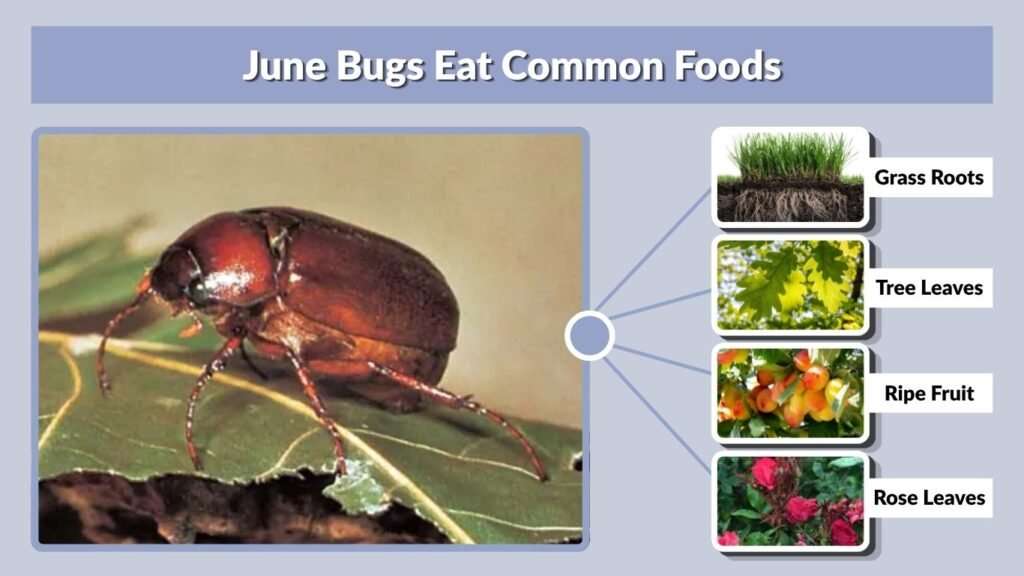
Grass roots are one of the most important foods for June bug larvae. The grubs remain beneath the soil and chew through the roots of lawn grasses, especially during warm months when they are actively growing.
When a large number of grubs feed in one area, the grass can no longer absorb enough water and nutrients. As a result, affected sections may turn yellow or brown. The turf may also feel loose and lift easily from the soil because many roots have been destroyed.
Animals such as birds, skunks, raccoons, and moles may dig into the lawn to eat the grubs. Their digging can create even more visible damage. Healthy lawns can tolerate a small grub population, but severe infestations may require treatment.
2. Tree Leaves
Adult June bugs commonly feed on the leaves of trees. They are especially attracted to broad, tender leaves that are easy to chew. Common host trees may include oak, maple, birch, willow, walnut, and fruit trees.
June bugs usually begin feeding along the edges of leaves, creating irregular holes or ragged margins. In heavy infestations, they may consume much of the leaf tissue and leave behind only the larger veins.
Healthy mature trees often recover from minor feeding. However, repeated defoliation can stress young trees, newly planted trees, and trees already weakened by drought or disease. Since June bugs are active at night, gardeners may see the damage without immediately finding the beetles.
3. Ripe Fruit
Sweet, ripe, and overripe fruit is highly attractive to many adult June bugs. They may feed on peaches, plums, grapes, cherries, apples, pears, berries, and other soft fruits.
June bugs are more likely to attack fruit that has already been damaged by birds, insects, cracking, or disease. They use their chewing mouthparts to widen openings and consume the soft flesh and juices inside.
Fruit that falls to the ground can also attract June bugs. Removing fallen or rotting fruit helps reduce feeding activity around trees and garden beds. Harvesting ripe fruit promptly is another effective way to make the area less appealing.
4. Rose Leaves and Flowers
Roses can provide several food sources for adult June bugs. The beetles may chew rose leaves, soft flower petals, and developing buds. Their feeding often leaves irregular holes and damaged edges.
June bugs are particularly attracted to fragrant flowers and tender new growth. Although a small amount of damage is mainly cosmetic, large numbers of beetles may destroy blooms and reduce the plant’s ability to produce energy.
Gardeners can inspect roses in the evening or early morning, when June bugs may still be resting on the plants. Hand-picking the beetles and dropping them into soapy water can help manage small populations without using strong insecticides.
5. Corn
June bugs may feed on several parts of corn plants. Adult beetles can chew leaves, silks, and exposed kernels, while larvae may attack the roots of young plants underground.
Root damage can cause corn plants to grow slowly, become weak, or fall over during windy weather. Adult feeding on the silks may interfere with pollination when beetle numbers are high.
Cornfields and home gardens with grassy weeds can be especially attractive to egg-laying beetles. Keeping the area weed-free and maintaining healthy soil may help reduce the likelihood of a serious grub infestation.
6. Potatoes and Other Root Crops
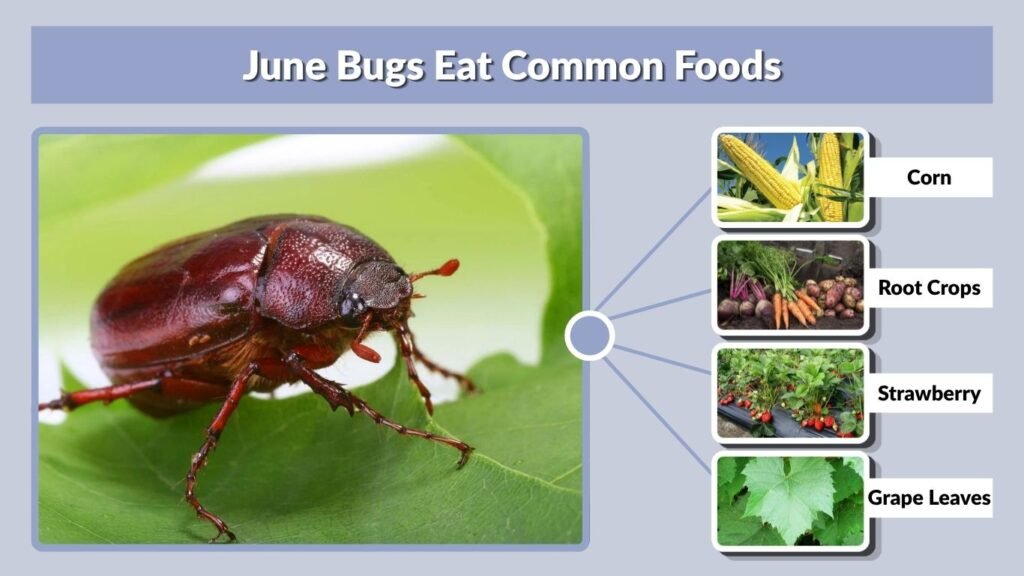
June bug grubs may feed on the roots and underground portions of potatoes, carrots, beets, turnips, and other root vegetables. They can chew shallow holes into tubers or damage the small roots that support plant growth.
Affected crops may appear weak above ground, even when watering and sunlight seem adequate. When harvested, potatoes and root vegetables may show rough holes, scars, or missing sections.
Gardeners sometimes confuse grub damage with damage caused by wireworms or other underground pests. Examining the soil around affected plants may reveal the large, creamy-white, C-shaped grubs responsible.
7. Strawberry Plants
June bugs can damage strawberries both above and below the soil. Adult beetles may eat ripe berries and chew holes in the leaves, while grubs can feed on the roots.
Root feeding is especially harmful to young strawberry plants because it limits their ability to absorb moisture. Infested plants may wilt quickly during hot weather, produce fewer berries, or die unexpectedly.
Ripe strawberries close to the soil are also vulnerable to adult beetles. Picking fruit regularly, removing overripe berries, and keeping weeds controlled can make strawberry beds less attractive to June bugs.
8. Grape Leaves and Grapes
Grapevines are another favorite food source for adult June bugs. The beetles chew on grape leaves and may gather around ripe or damaged grapes.
Leaf feeding produces irregular holes and can reduce the amount of healthy foliage available for photosynthesis. A few damaged leaves usually do not affect the harvest, but severe feeding can weaken young vines.
Cracked, overripe, or bird-damaged grapes release sweet juices that attract June bugs. Protective netting may reduce bird damage, while timely harvesting helps prevent ripe grapes from remaining on the vines too long.
9. Flowers and Flower Buds
Adult June bugs eat the flowers and developing buds of many garden plants. They are often attracted to soft petals, fragrant blossoms, and tender reproductive tissue.
Possible food plants include peonies, marigolds, dahlias, zinnias, petunias, and other ornamental flowers. Feeding damage may appear as torn petals, missing buds, or holes in leaves surrounding the blooms.
Flower damage is usually more noticeable than harmful. However, if June bugs destroy unopened buds, the plant may produce fewer flowers. Regular nighttime inspections can help gardeners identify which plants are being targeted.
10. Decaying Organic Matter
June bug grubs may also consume decaying plant material and organic matter in the soil. This can include dead roots, decomposing leaves, and other natural debris.
Organic matter is not usually their main food source, but it can support grub development when combined with living roots. Soil rich in organic material may provide a suitable habitat, especially if it is moist and covered with healthy grass.
The presence of compost or mulch does not automatically cause a June bug infestation. Adult females are more strongly attracted to areas with moist soil and abundant roots where their young can feed.
How Much Do June Bugs Eat?
The amount a June bug eats depends on its age, species, food supply, and environmental conditions. Adult beetles usually feed for several weeks during their short above-ground lives. Their feeding may be light and scattered or concentrated in large groups.
June bug grubs feed for a much longer period underground. Depending on the species, they may remain in the soil for one to three years. During this time, they repeatedly consume roots as they grow and molt.
A few June bugs normally cause limited damage. Problems occur when many adults gather on the same plants or when large numbers of grubs develop under a lawn.
What Eats June Bugs?
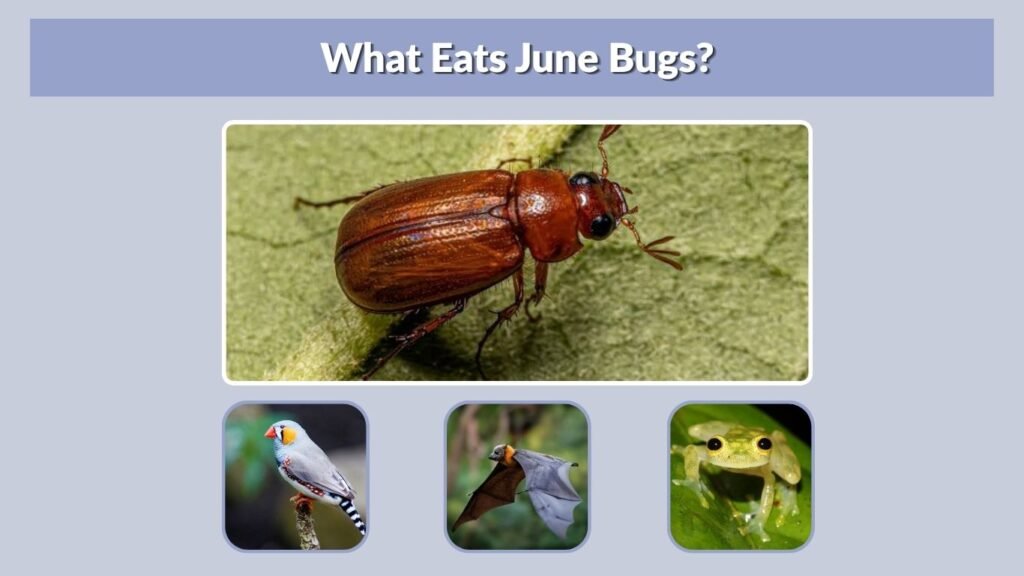
June bugs are an important food source for many animals. Their natural predators help keep populations under control.
Common June bug predators include:
- Birds
- Bats
- Frogs and toads
- Spiders
- Skunks
- Raccoons
- Moles
- Parasitic wasps
Birds often eat adult beetles during the day, while bats may catch them in flight at night. Skunks and raccoons dig through lawns to find the nutrient-rich grubs beneath the soil.
How to Reduce June Bug Feeding Damage
You do not always need to remove every June bug. Minor leaf feeding is usually harmless, and the beetles play a role in the food chain. Management is most useful when plants, crops, or lawns are showing serious damage.
Keep lawns healthy by watering deeply but not excessively. Adult June bugs prefer laying eggs in moist soil, so overwatering during egg-laying season may encourage infestations. Removing fallen fruit, controlling weeds, and harvesting produce promptly can also reduce available food.
Adult beetles can be hand-picked from small plants in the evening. For grub problems, beneficial nematodes may help when applied at the correct time and under suitable soil conditions.
FAQs
Do June Bugs Eat Mosquitoes?
No, June bugs do not eat mosquitoes. They are primarily herbivores that feed on leaves, flowers, fruit, grass roots, and other plant material. Adult June bugs may fly near mosquitoes around outdoor lights, but they do not hunt or consume them.
Do June Bugs Eat Wood?
June bugs do not normally eat solid wood. Adult beetles may rest on trees and feed on leaves, flowers, or fruit, while larvae feed on roots underground. Decaying plant material may be consumed occasionally, but they do not damage wooden homes like termites.
Do June Bugs Eat Other Insects?
June bugs generally do not eat other insects. Both adults and larvae mainly consume plant-based foods. Adults feed on vegetation and fruit, while grubs feed on roots and organic matter in the soil. They are not active predators.
Why Are June Bugs Eating My Plants?
June bugs eat plants because leaves, flowers, fruit, and roots provide the nutrients they need to grow and reproduce. Adult beetles usually feed above ground, while larvae damage roots below the soil. Warm weather and abundant vegetation can attract larger populations.
Do June Bugs Eat Garden Vegetables?
Yes, June bugs may eat garden vegetables. Adult beetles can chew leaves and flowers, while their larvae may damage the roots of corn, potatoes, carrots, strawberries, and other crops. Severe infestations can reduce plant growth and crop production.
