
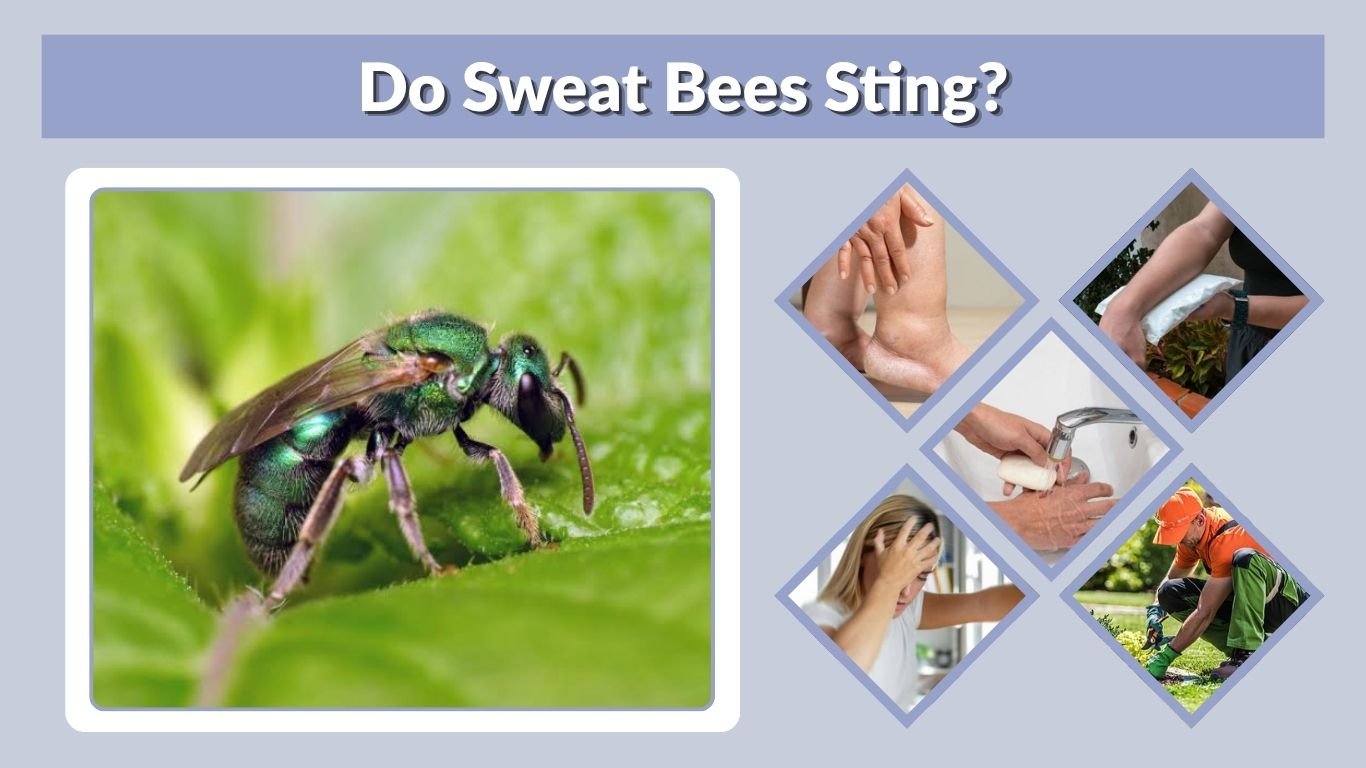
Sweat bees are small pollinators often attracted to perspiration because they seek salts and moisture from human skin. Their close contact with people raises an obvious question: do sweat bees sting? Female sweat bees can sting, but they are generally gentle and rarely sting unless trapped, squeezed, or disturbed. Males cannot sting. Most sweat bee stings cause brief pain, redness, itching, or a small swollen bump. Serious reactions are uncommon, although anyone with a severe insect-sting allergy should treat symptoms carefully.
Do Sweat Bees Sting or Bite?
Yes, female sweat bees can sting. Sweat bees belong mainly to the family Halictidae, a large and diverse family containing hundreds of species. Many are tiny metallic green, blue, bronze, or dark-colored bees.
They may land directly on sweaty skin to obtain salt, but landing on you does not usually mean they intend to sting.
Why Do Sweat Bees Sting?
Sweat bees normally sting in self-defense rather than aggression.
A sting is more likely if a bee becomes trapped between your skin and clothing, is accidentally slapped, squeezed, stepped on, or picked up.
Their interest in human sweat sometimes brings them extremely close to people, which increases the chance of accidental contact.
Do Male Sweat Bees Sting?
Male sweat bees cannot sting.
The stinger of female bees evolved from an egg-laying structure, so males do not possess a functional stinger.
Male sweat bees may land on people or fly nearby, but they cannot deliver a sting.
What Does a Sweat Bee Sting Feel Like?
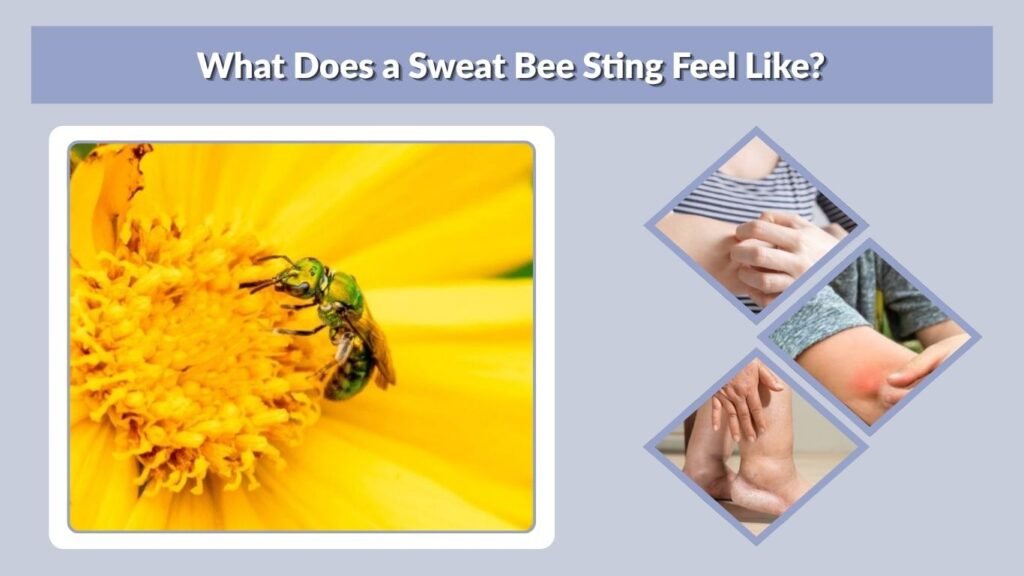
A sweat bee sting is often described as sharp or burning but relatively mild compared with stings from many larger bees and wasps. Individual reactions vary, so one person may barely notice the sting while another develops noticeable soreness and swelling.
Most uncomplicated reactions remain limited to the immediate sting area.
Common Sweat Bee Sting Symptoms
Possible symptoms include:
- Brief sharp or burning pain
- Small red bump
- Mild swelling
- Itching
- Tenderness
- Warmth around the sting
- Minor redness
Symptoms usually begin soon after the sting.
A larger local reaction can occur in some people, producing more noticeable swelling around the affected area.
Does a Sweat Bee Sting Hurt?
Yes, but the pain is generally relatively mild and short-lived.
Sweat bees are small insects and normally deliver less dramatic stings than many larger defensive bees or wasps.
Pain intensity also depends on where you were stung. Sensitive areas such as fingers, lips, or around the eyes may feel considerably more painful.
What Does a Sweat Bee Sting Look Like?
A sweat bee sting often looks similar to many other minor insect stings. It may produce a small red bump surrounded by limited swelling.
The appearance alone usually cannot identify which bee caused the sting.
Sweat Bee Sting Mark
A typical reaction may involve:
- One small raised bump
- Redness surrounding the sting
- Mild localized swelling
- Itchy or irritated skin
- A tiny central point where the stinger entered
The area may become slightly larger during the first several hours before beginning to improve.
If redness continues expanding, becomes very hot or painful, or develops drainage, seek medical advice because another condition or infection could be responsible.
Why Does a Sweat Bee Sting Itch?
Itching occurs because your immune system reacts to proteins and other substances introduced during the sting.
Histamine and related inflammatory processes can cause redness, swelling, and itching.
Avoid scratching aggressively because broken skin can increase the chance of infection.
Do Sweat Bees Leave a Stinger?
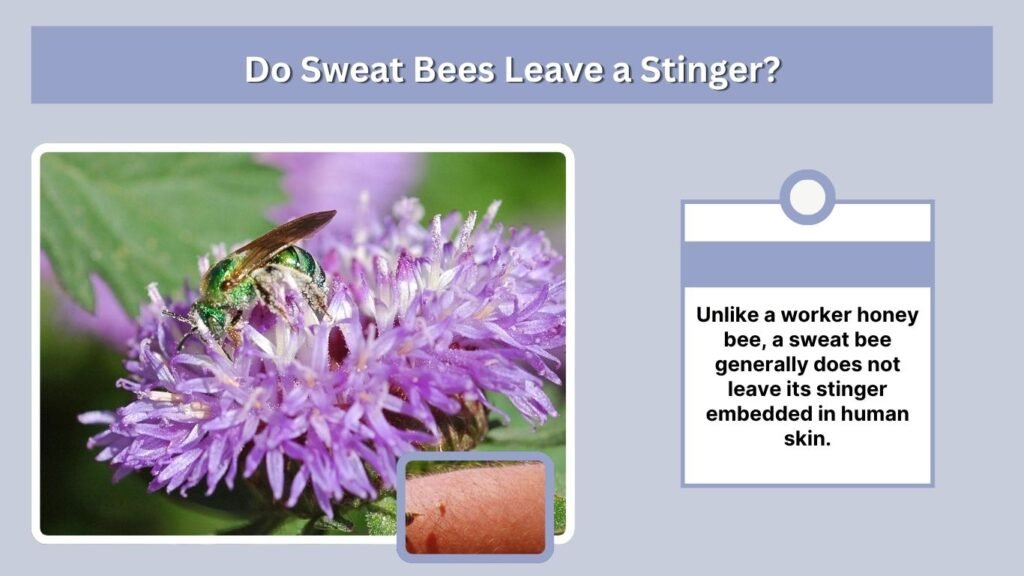
Unlike a worker honey bee, a sweat bee generally does not leave its stinger embedded in human skin.
Honey bee workers have strongly barbed stingers that often become lodged in elastic mammalian skin. Many other bees, including sweat bees, have stingers that can usually be withdrawn.
Can Sweat Bees Sting More Than Once?
Yes. A female sweat bee can potentially sting multiple times because she normally retains her stinger.
This also means sweat bees do not generally die simply because they sting a person.
However, repeated stinging is uncommon because these bees are usually interested in escaping rather than continuing an attack.
Do Sweat Bees Die After They Sting?
Usually, no.
The well-known phenomenon of a bee dying after stinging is primarily associated with worker honey bees when they sting mammals.
Sweat bees generally retain their stinger and can survive after delivering a sting.
How Long Does a Sweat Bee Sting Last?
For many people, the strongest pain lasts only a short time. Redness, tenderness, or itching may continue for several hours or a few days.
The exact duration depends on your immune response, sting location, and whether the area becomes repeatedly irritated.
Normal Sting Reaction
A mild reaction generally improves gradually rather than becoming increasingly severe.
You may notice a small bump or itch after the initial pain disappears.
Larger local swelling can take longer to resolve. If symptoms continue worsening instead of improving, particularly after the first day or two, consider getting medical advice.
How to Treat a Sweat Bee Sting
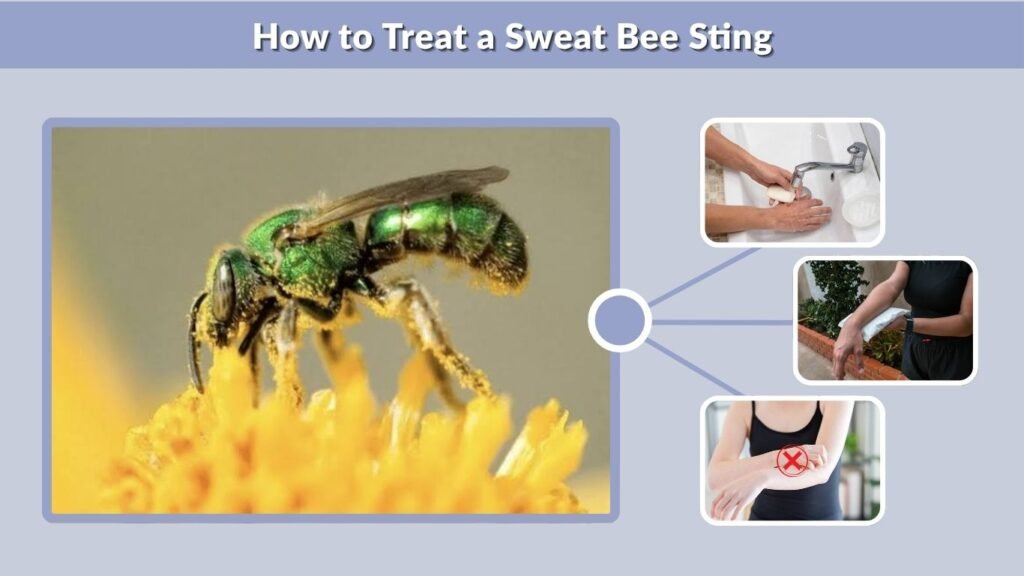
Most mild sweat bee stings can be managed with simple first aid. The main goals are cleaning the skin, reducing swelling, controlling itching, and monitoring for a more serious reaction.
Because sweat bees normally do not leave a stinger, removal is usually unnecessary.
Sweat Bee Sting Treatment
For a typical mild sting:
- Wash the area gently with soap and water.
- Check whether anything remains embedded in the skin.
- Apply a cold pack wrapped in cloth for short periods.
- Elevate the affected arm or leg if swelling develops.
- Avoid scratching the area.
- Consider an appropriate over-the-counter treatment for pain or itching if you can normally use it safely.
- Monitor symptoms over the following hours.
Do not cut the skin, squeeze the sting site, or attempt to remove venom by suction.
How to Stop Sweat Bee Sting Itching
A wrapped cold compress can reduce both itching and swelling.
Keeping the skin clean and avoiding scratching is also helpful.
If itching becomes persistent, a pharmacist or healthcare professional can advise whether an antihistamine or topical treatment is appropriate for you.
Allergic Reaction to a Sweat Bee Sting
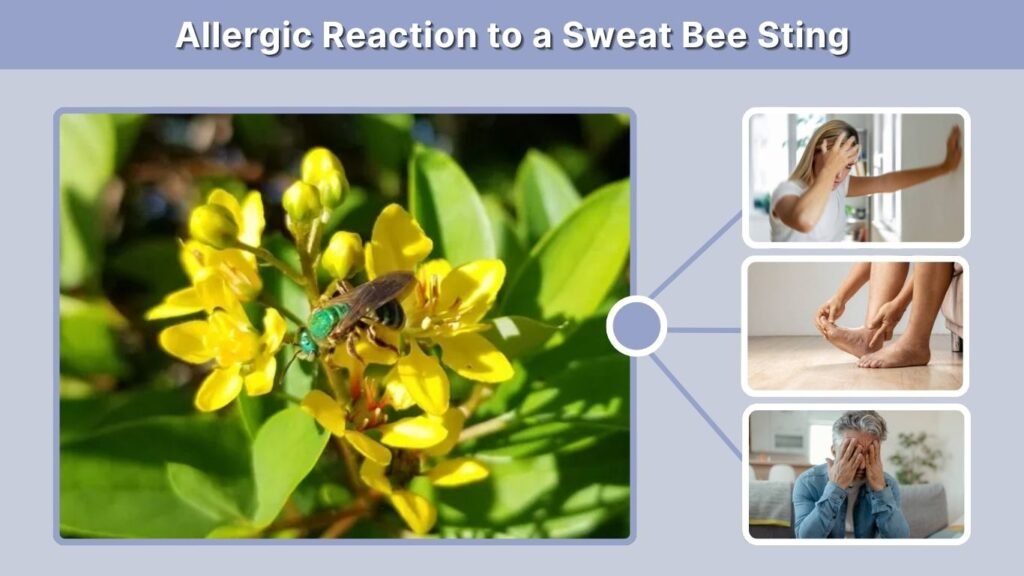
Although most sweat bee stings are minor, allergic reactions to insect venom are possible.
Someone who has previously experienced a serious reaction to a bee or wasp sting should follow their prescribed emergency plan after another sting.
Signs of a Severe Allergic Reaction
Emergency symptoms can include:
- Difficulty breathing
- Wheezing
- Swelling of the tongue or throat
- Widespread hives
- Severe dizziness
- Fainting
- Rapidly developing facial swelling
- Weakness or collapse
These symptoms can indicate anaphylaxis and require immediate emergency medical attention.
A person prescribed an epinephrine auto-injector should use it according to their medical instructions and seek emergency care.
Green Sweat Bee Sting
Metallic green sweat bees are some of the most recognizable members of the Halictidae family. They may look dramatically different from typical yellow-and-black bees because their bodies can shine green, blue, turquoise, or bronze.
Their unusual appearance does not mean their sting is especially dangerous.
Do Green Sweat Bees Sting?
Female green sweat bees can sting, while males cannot.
Like other sweat bees, they generally avoid stinging unless trapped or physically threatened.
A metallic green bee calmly feeding on a flower or landing briefly on sweaty skin usually does not need to be killed or disturbed.
Why Are Sweat Bees Attracted to People?
The common name “sweat bee” comes from the tendency of some species to drink perspiration.
Human sweat contains salts and moisture that can provide valuable minerals.
What Attracts Sweat Bees?
They may be attracted by:
- Perspiration
- Salt on the skin
- Moisture
- Outdoor physical activity
- Flowering plants nearby
- Warm sunny weather
They may land on arms, legs, faces, or other exposed skin to obtain moisture.
Gently brushing or blowing the bee away is preferable to crushing it against the skin.
Are Sweat Bee Stings Dangerous?
For most people, a single sweat bee sting causes only temporary discomfort.
Sweat bees are beneficial pollinators and generally pose very little danger when left alone.
The greatest concern involves people who experience severe allergic reactions to insect venom.
When to Seek Medical Attention
Consider medical evaluation for:
- Severe or persistent pain
- Swelling that continues spreading
- Sting near or inside the eye
- Signs of infection
- Extensive rash
- Numerous stings
- Symptoms that continue worsening
- Any unusual systemic reaction
Call emergency services immediately for breathing difficulty, throat swelling, fainting, or other symptoms suggestive of anaphylaxis.
How to Avoid Sweat Bee Stings
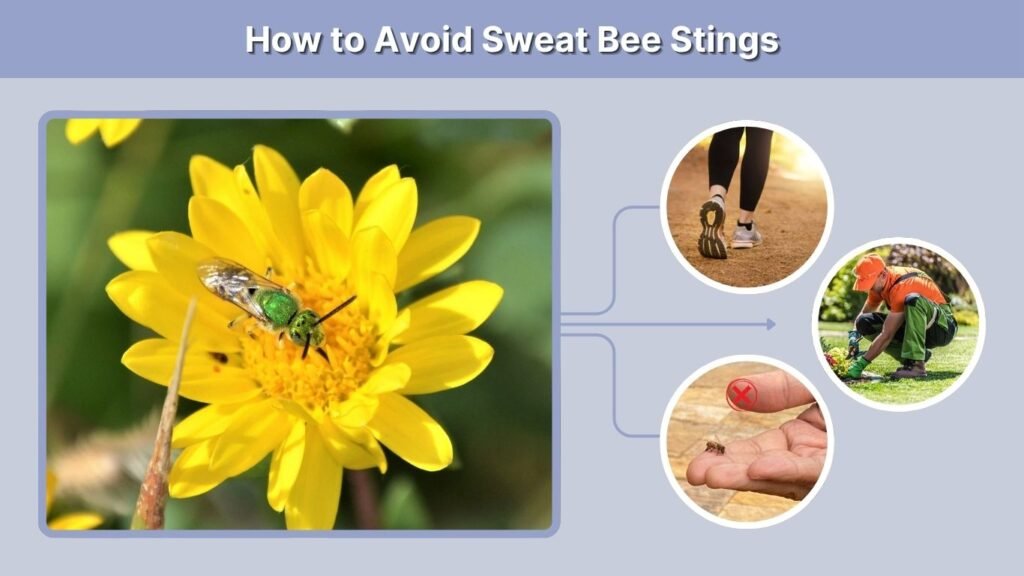
Preventing a sting mostly involves avoiding accidentally trapping or crushing a bee that has landed on your skin.
Sweat bees are important pollinators, so there is generally no need to eliminate them from gardens.
Prevention Tips
- Do not slap bees that land on sweaty skin.
- Gently brush them away.
- Wear shoes outdoors.
- Wear light protective clothing when gardening.
- Avoid handling bees with bare hands.
- Keep sugary drinks covered outdoors.
- Be careful around flowering plants.
- Shake out outdoor clothing before wearing it.
If many sweat bees are nesting in an inconvenient location, reducing exposed nesting soil after their active season may discourage future nesting.
Sweat Bee Sting vs Honey Bee Sting
Both sweat bees and honey bees can sting, but their defensive behavior and stingers differ.
Main Differences
- Sweat bee: Usually delivers a relatively mild sting.
- Honey bee: Can produce a stronger localized reaction.
- Sweat bee: Usually retains its stinger.
- Honey bee worker: Often leaves a barbed stinger behind.
- Sweat bee: Can potentially sting repeatedly.
- Honey bee worker: Usually dies after leaving its stinger in human skin.
- Sweat bee: Generally solitary or primitively social depending on species.
- Honey bee: Lives in large, highly organized colonies.
Either type of sting can potentially cause a serious allergic reaction in a susceptible person.
FAQs
Do sweat bees sting humans?
Yes. Female sweat bees can sting humans, but they are generally gentle and usually sting only if squeezed, trapped, or threatened.
Do sweat bees bite or sting?
They sting rather than bite people as a defensive mechanism. Their mouthparts are primarily used for feeding rather than attacking humans.
Can sweat bees sting multiple times?
Yes. Unlike worker honey bees, sweat bees usually retain their stingers and can potentially sting more than once.
Do sweat bees leave their stinger in your skin?
Usually not. Their stingers generally do not become embedded in human skin, so they normally survive after stinging.
How long does a sweat bee sting last?
Initial pain is usually brief, while itching, redness, or mild swelling may remain for several hours or a few days. Seek medical attention if symptoms become severe or progressively worsen.
