
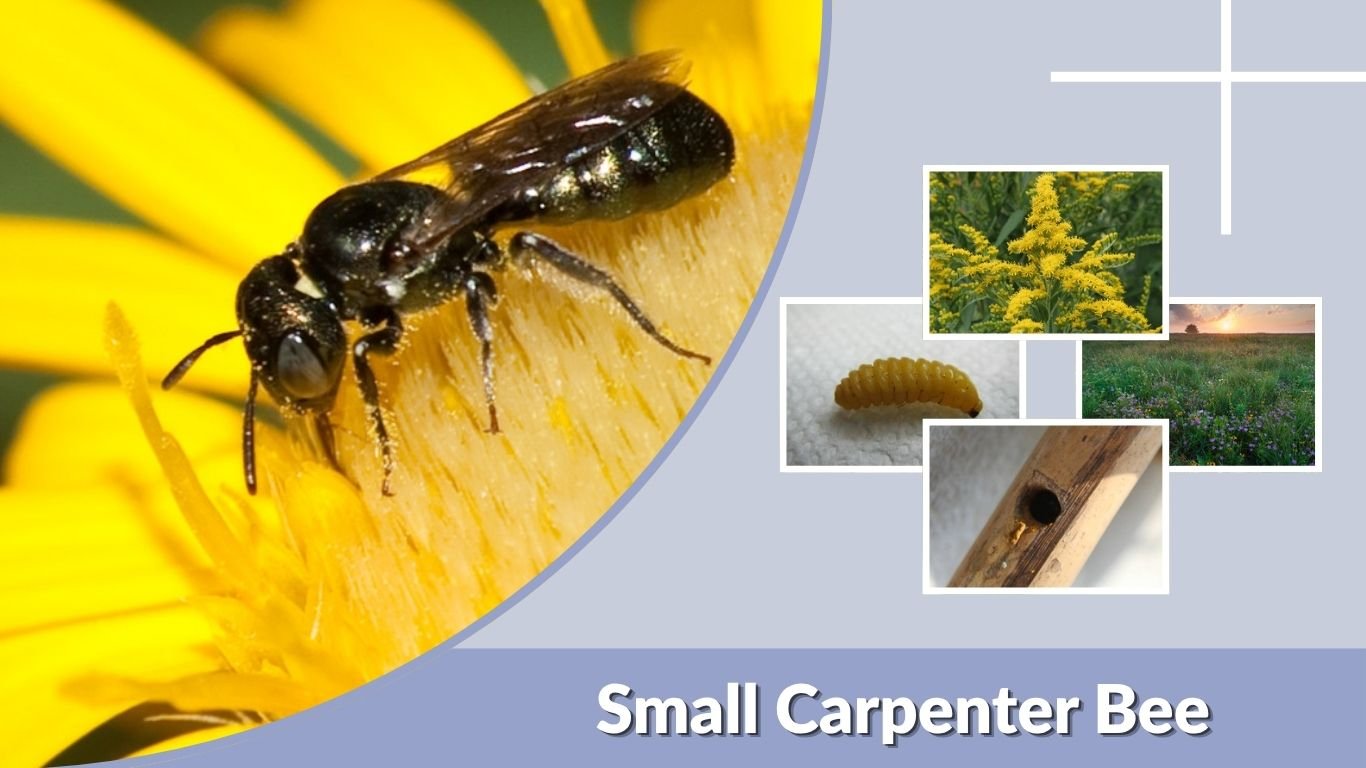
Small carpenter bees are tiny solitary bees known for nesting inside hollow or soft plant stems rather than excavating large tunnels in structural wood. Most belong to the genus Ceratina and are considerably smaller than the familiar large carpenter bees in the genus Xylocopa. Depending on the species, small carpenter bees may appear black, metallic blue, greenish, or bronze. They are useful pollinators, generally nonaggressive, and rarely cause meaningful property damage. Their nesting behavior, appearance, size, and ability to sting make them interesting backyard bees.
What Is a Small Carpenter Bee?
Small carpenter bees are members of the bee family Apidae and primarily belong to the genus Ceratina. They occur in many parts of the world and are especially common wherever dead stems, twigs, and flowering plants provide both nesting sites and food.
Unlike honey bees, most small carpenter bees do not form large colonies.
Small Carpenter Bee Classification
- Common name: Small carpenter bee
- Main genus: Ceratina
- Family: Apidae
- Order: Hymenoptera
- Lifestyle: Mostly solitary
- Nest location: Hollow or pithy stems
- Food: Nectar and pollen
There are many Ceratina species, so the term “small carpenter bee” refers to a group rather than a single species.
Why Are They Called Carpenter Bees?
They receive the carpenter bee name because females modify plant material to create nesting chambers.
However, their behavior differs from that of large carpenter bees. Rather than drilling conspicuous holes into lumber, small carpenter bees commonly excavate the soft pith inside broken stems and twigs.
Their tiny nests therefore usually cause little concern around homes.
Small Carpenter Bee Identification
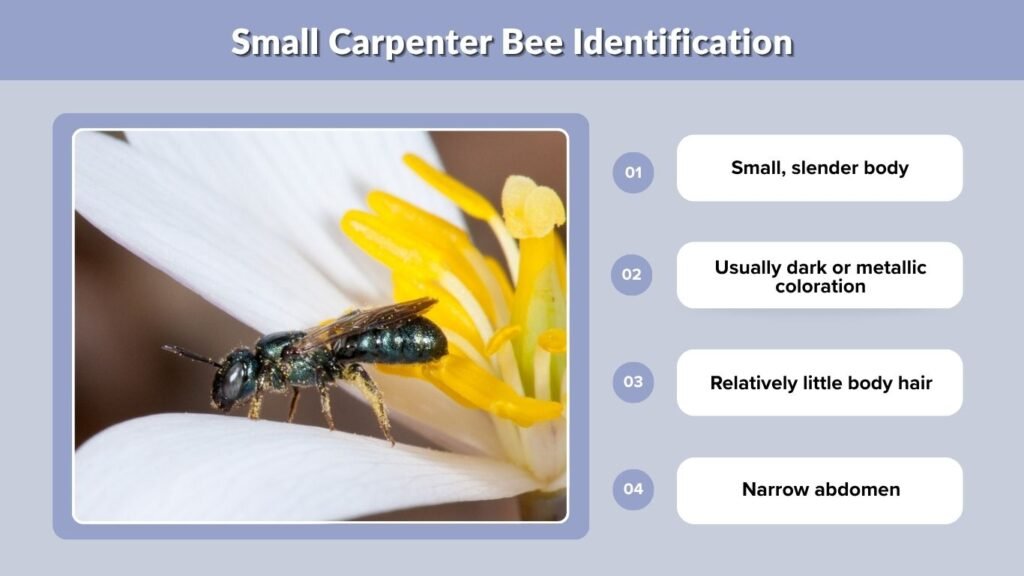
Small carpenter bees can be mistaken for sweat bees, small wasps, or other metallic bees. Their slender bodies and relatively sparse hair give them a different appearance from fuzzy bumble bees or honey bees.
Color is variable, so several characteristics should be considered together.
Identification Features
Look for:
- Small, slender body
- Usually dark or metallic coloration
- Black, blue, greenish, or bronze appearance
- Relatively little body hair
- Narrow abdomen
- Small pale facial markings in some species
- Females carrying pollen on hind-leg hairs
- Frequent visits to small flowers
- Nesting activity around broken plant stems
Their metallic sheen can become especially noticeable in bright sunlight.
Small Carpenter Bee Size
Most small carpenter bees are only several millimeters long, commonly around 5–8 mm depending on species.
That makes them dramatically smaller than large carpenter bees, which can approach bumble bee size.
Their small size allows females to use narrow stems that would be unsuitable for larger bees.
Small Black and Blue Carpenter Bees
Some Ceratina species appear almost completely black, while others have a metallic blue or blue-green sheen.
People sometimes describe them as “small black carpenter bees” or “small blue carpenter bees.”
Color alone cannot reliably determine the species because lighting, age, sex, and geographic variation can alter their appearance.
Small Carpenter Bee vs Large Carpenter Bee
Small and large carpenter bees share a common name but are fairly easy to separate once size and nesting behavior are considered.
Large carpenter bees generally belong to Xylocopa, whereas small carpenter bees belong mainly to Ceratina.
Main Differences
- Small carpenter bee: Usually around 5–8 mm
- Large carpenter bee: Often around 12–25 mm
- Small carpenter bee: Slender body
- Large carpenter bee: Broad, robust body
- Small carpenter bee: Often nests in plant stems
- Large carpenter bee: Excavates wood
- Small carpenter bee: Causes little structural damage
- Large carpenter bee: May damage exposed lumber over time
- Small carpenter bee: Often metallic
- Large carpenter bee: Frequently black with a shiny abdomen
Both groups are useful flower pollinators.
Where Do Small Carpenter Bees Live?
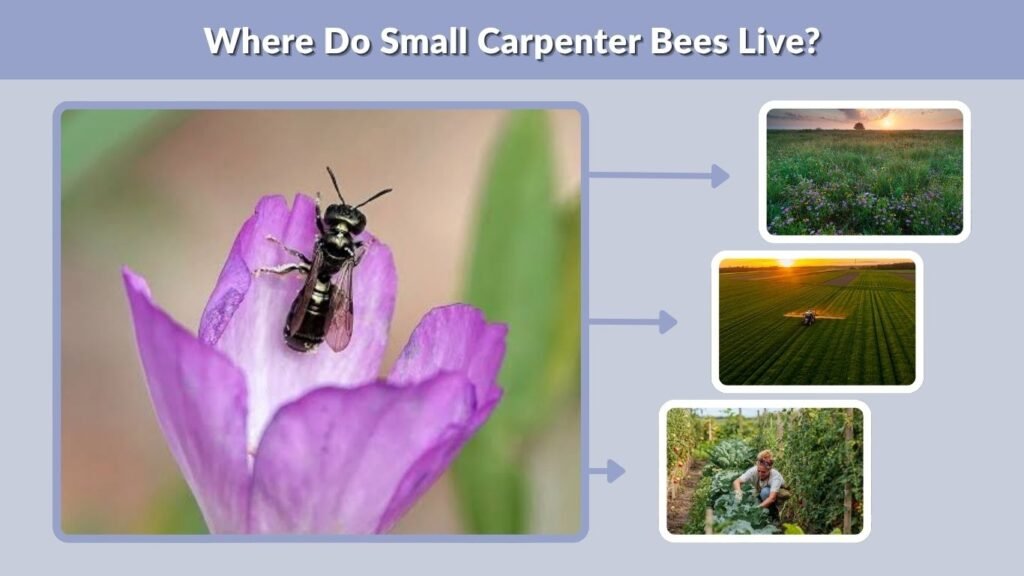
Small carpenter bees occupy gardens, meadows, woodland edges, farms, prairies, roadsides, and other habitats containing flowering plants and dead stems.
Their geographic distribution is broad, with Ceratina species found across much of North America and many other regions worldwide.
Small Carpenter Bee Habitat
Good habitat includes:
- Gardens
- Wildflower meadows
- Woodland margins
- Prairie vegetation
- Farms
- Roadsides
- Shrubby areas
- Dead flower stems
- Hollow twigs
Unlike many solitary bees that nest underground, these bees depend heavily on standing stems and woody plant material.
Small Carpenter Bees in North America
Numerous species occur across the United States, including areas such as California, Oregon, Kansas, Ohio, Oklahoma, and Georgia.
The exact species varies geographically.
Wherever native flowers and suitable pithy stems are available, small carpenter bees may become regular garden visitors.
Small Carpenter Bee Nest
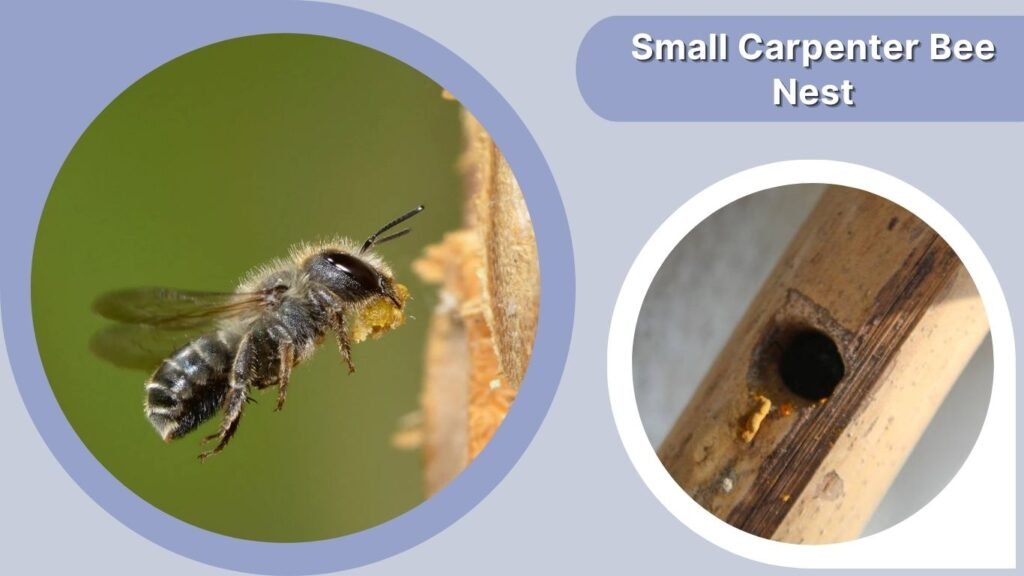
Small carpenter bee nesting behavior is one of the easiest ways to understand how they differ from larger carpenter bees. Females usually select broken stems containing soft internal pith and excavate a narrow tunnel.
The nest contains several individual chambers for offspring.
Where Do Small Carpenter Bees Nest?
Typical nest sites include:
- Dead plant stems
- Broken twigs
- Raspberry canes
- Elderberry stems
- Rose stems
- Weed stalks
- Other pithy vegetation
The entrance can be extremely small and easy to overlook.
A gardener may remove these nests unknowingly while cutting down dead stems.
How Does a Female Build the Nest?
A female enters an exposed stem and removes soft pith from the interior.
She creates a linear series of brood cells. Each cell receives pollen and nectar before an egg is laid.
Partitions made from plant material separate the developing offspring.
In some species, females remain near the nest for extended periods and may show more parental behavior than many other solitary bees.
Ceratina calcarata Small Carpenter Bee
Ceratina calcarata is a North American small carpenter bee that has attracted scientific interest because of its unusual maternal behavior.
Females nest inside plant stems and provide considerable care for developing offspring compared with many solitary bee species.
Interesting Behavior of Ceratina calcarata
A female may remain inside or near the nest while her young develop.
Research on this species has shown that mothers can interact with their offspring in ways more complex than the simple “lay an egg and leave” behavior associated with many solitary bees.
This makes C. calcarata useful for studying the evolution of social behavior in bees.
What Do Small Carpenter Bees Eat?
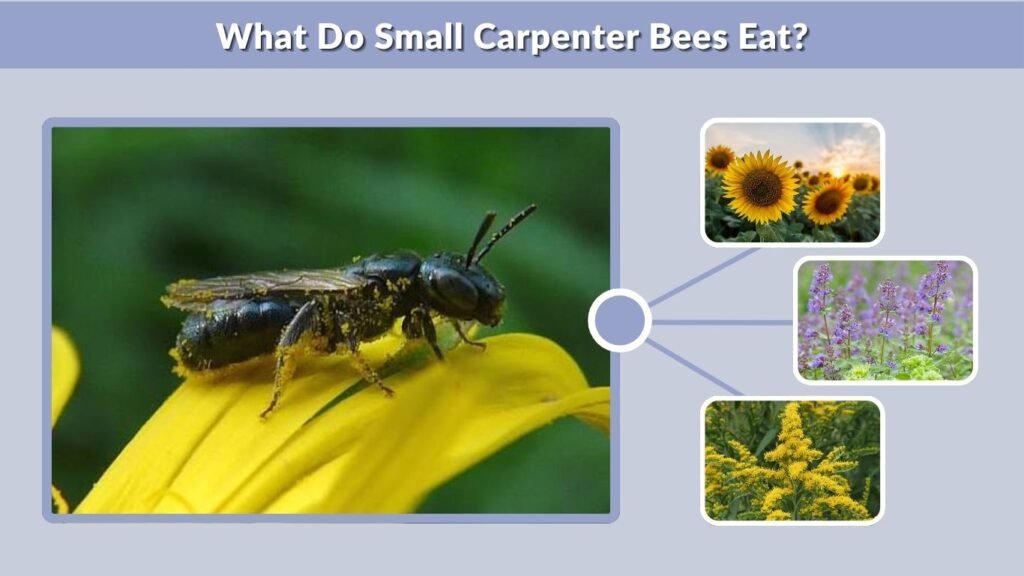
Adults feed on nectar for energy, while females collect pollen to provision their young.
They visit a variety of flowering plants rather than depending on a single host species.
Common Food Sources
Small carpenter bees may visit:
- Asters
- Daisies
- Sunflowers
- Goldenrod
- Mint flowers
- Clover
- Fruit blossoms
- Native wildflowers
- Small garden flowers
Their small bodies make them effective visitors to flowers that larger bees may find difficult to access.
Are Small Carpenter Bees Pollinators?
Yes. Small carpenter bees contribute to pollination as they travel between flowers collecting nectar and pollen.
Pollen sticks to their bodies and can be transferred to other flowers.
Although individual bees are small, their combined contribution can be important in gardens, farms, and natural plant communities.
Do Small Carpenter Bees Sting?
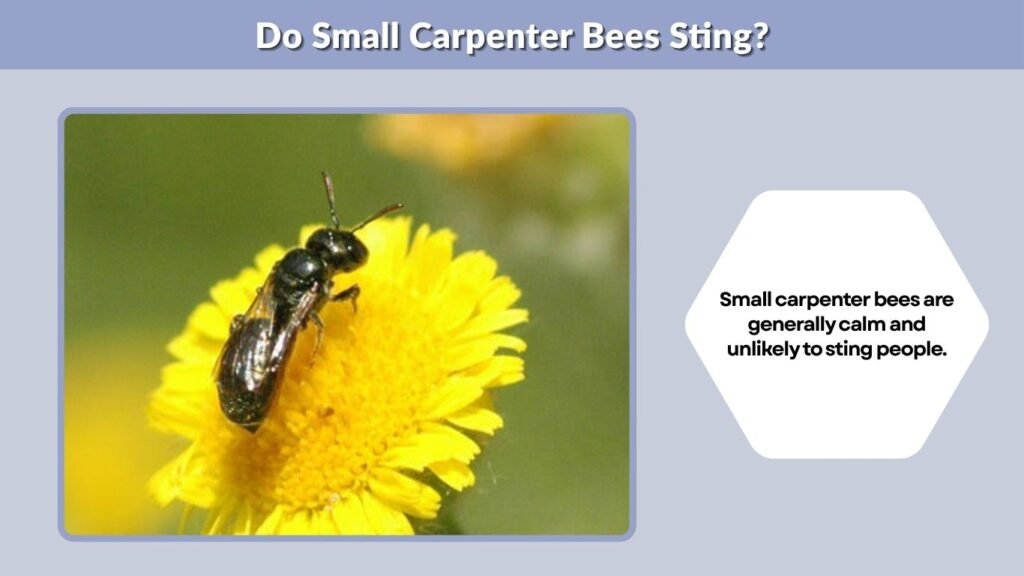
Small carpenter bees are generally calm and unlikely to sting people.
Females possess functional stingers, but they have little reason to use them unless physically trapped or handled.
Males cannot sting.
Small Carpenter Bee Sting
A sting is uncommon because these bees do not aggressively defend large colonies.
Most people can safely observe them feeding on flowers without concern.
Avoid squeezing or picking up a female with bare hands. If a minor sting occurs, washing the area and applying a cold compress is usually reasonable basic care.
Seek urgent medical attention for symptoms of a severe allergic reaction, such as breathing difficulty or swelling of the face or throat.
Are Small Carpenter Bees Pests?
Small carpenter bees are rarely considered serious structural pests.
Their nests are normally excavated in plant stems rather than building timbers, decks, siding, or roof structures.
This distinguishes them from large carpenter bees, which can reuse and expand tunnels in wood.
Do Small Carpenter Bees Damage Houses?
Generally, no.
Their small nesting tunnels are usually found in natural stems and twigs. A bee discovered indoors may simply have entered accidentally or emerged from plant material brought into the home.
Repeated large holes in structural wood are more likely to involve a large carpenter bee or another wood-associated insect.
How to Get Rid of Small Carpenter Bees
Control is rarely necessary because these bees are beneficial pollinators and usually cause no significant damage.
If they are nesting somewhere inconvenient, modifying the nesting habitat after the bees have completed development is generally preferable to killing them.
Non-Lethal Management
You can:
- Remove unwanted dead stems after nesting has finished.
- Seal obvious openings into buildings.
- Repair damaged screens.
- Avoid storing cut plant stems indoors.
- Move suitable nesting vegetation away from doorways.
- Leave harmless nests undisturbed when possible.
- Preserve alternative stems elsewhere in the garden.
Avoid spraying flowering plants because this can harm small carpenter bees and many other beneficial pollinators.
Small Carpenter Bee Life Cycle
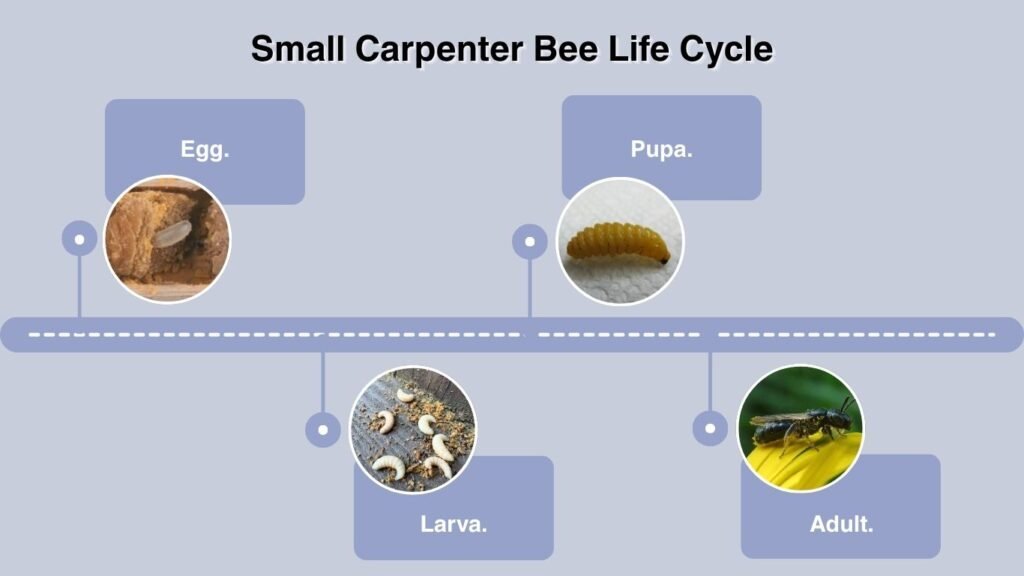
Small carpenter bees undergo complete metamorphosis through egg, larva, pupa, and adult stages.
Much of their development occurs hidden inside stems.
Life Cycle Stages
- Egg: The female lays an egg inside a provisioned cell.
- Larva: The young bee consumes stored pollen and nectar.
- Pupa: The bee transforms into its adult form.
- Adult: It eventually emerges from the stem to feed and reproduce.
Seasonal timing differs between species and climates. Adults of some species may overwinter inside stems before becoming active again.
Interesting Small Carpenter Bee Facts
Small carpenter bees are easy to overlook, yet they display fascinating nesting and reproductive behaviors.
Quick Facts
- Most belong to the genus Ceratina.
- They are much smaller than Xylocopa carpenter bees.
- Many have metallic blue or greenish bodies.
- Females nest mainly inside plant stems.
- They rarely damage structural wood.
- Females can sting but rarely do.
- Males cannot sting.
- They are valuable pollinators.
- Some species display extended maternal care.
- Leaving dead stems can provide important nesting habitat.
FAQs
Are there really small carpenter bees?
Yes. Small carpenter bees mainly belong to the genus Ceratina. They are distinct from the much larger carpenter bees in the genus Xylocopa.
How big is a small carpenter bee?
Many species are roughly 5–8 mm long, although size varies. They are considerably smaller and more slender than large carpenter bees.
Do small carpenter bees sting?
Females can sting but rarely do unless trapped or handled. Males cannot sting.
Where do small carpenter bees nest?
They usually nest inside hollow or pithy stems, dead twigs, canes, and similar plant material rather than structural lumber.
How do I get rid of small carpenter bees?
Control is usually unnecessary. If a nest causes a problem, wait until it is inactive and modify or remove the nesting material. These bees are beneficial pollinators and generally cause little damage.
