
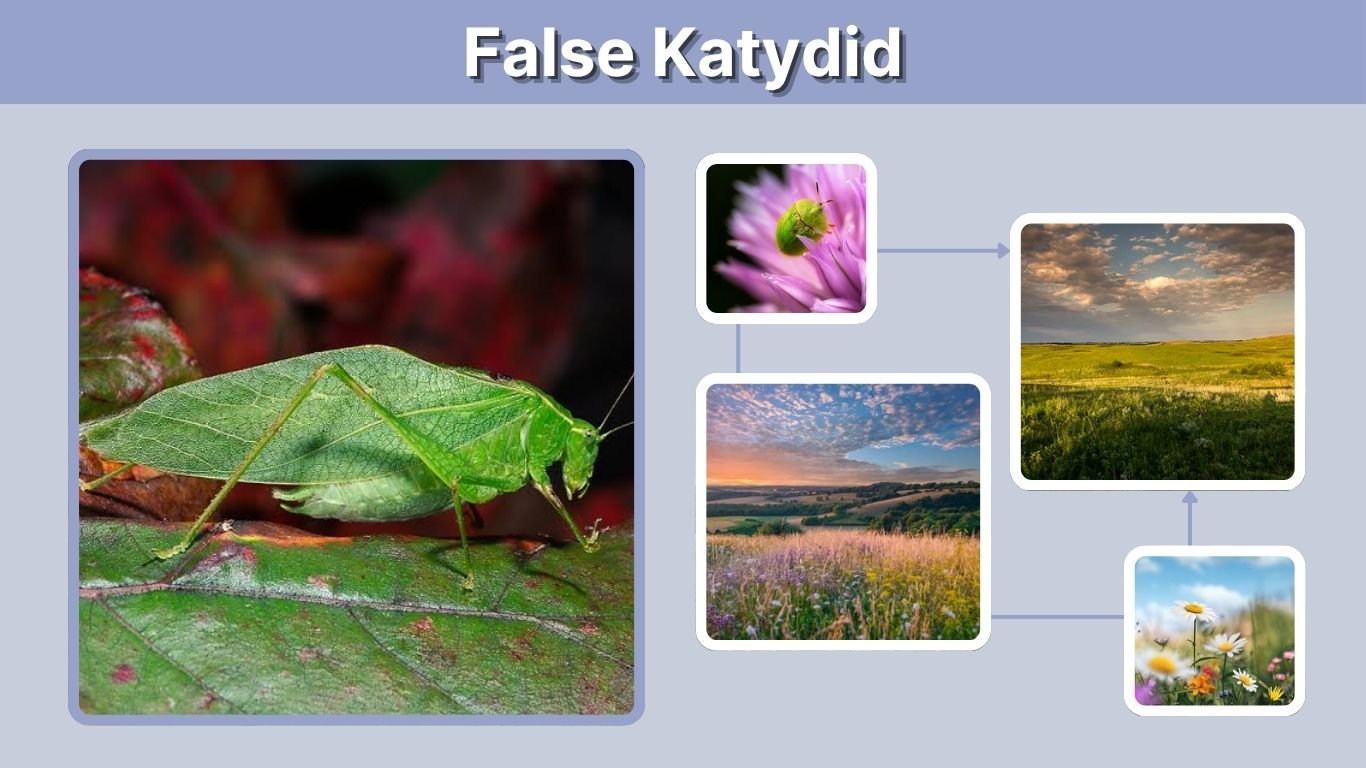
The false katydid is a leaflike insect known for its green coloration, extremely long antennae, jumping legs, and nighttime calls. In North American entomology, the name usually refers to katydids in the subfamily Phaneropterinae, which includes angle-winged, oblong-winged, round-winged, and bush katydids. Despite the word “false,” these insects really are katydids within the family Tettigoniidae. Their remarkable camouflage allows them to disappear among leaves and shrubs. This guide covers identification, habitat, diet, sounds, nymphs, and the difference between false and true katydids.
What Is a False Katydid?
The term false katydid is commonly applied to members of the subfamily Phaneropterinae. They belong to the same family, Tettigoniidae, as other katydids, so “false” does not mean they are unrelated insects. The name mainly distinguishes them from the group traditionally called true katydids, the Pseudophyllinae, in North American identification systems.
False Katydid Family and Scientific Classification
A typical classification is:
- Order: Orthoptera
- Family: Tettigoniidae
- Subfamily: Phaneropterinae
- Common group name: False katydids
- Examples: Amblycorypha, Microcentrum, and Scudderia
Phaneropterinae contains many species that live primarily in shrubs and trees and possess excellent leaflike camouflage.
There is no single scientific name covering only an animal called “the false katydid,” because the term refers to an entire group containing numerous genera and species.
False Katydid Identification
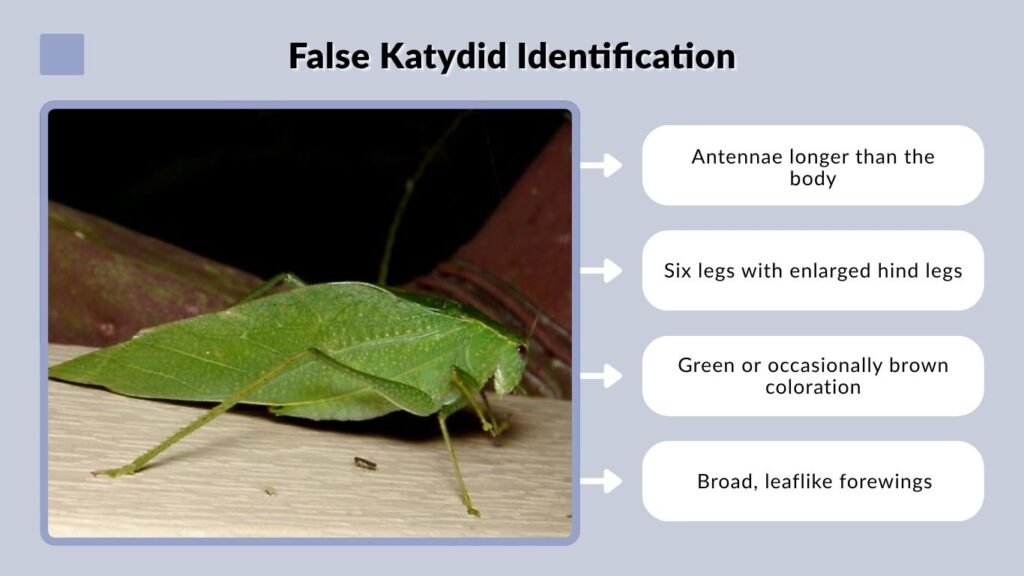
False katydids typically have slender bodies, long hind legs, very long antennae, and broad wings that resemble leaves. Most are green, although brown, yellow, orange, or even pink individuals occur. Their shape and coloration can make an unmoving katydid surprisingly difficult to distinguish from surrounding vegetation.
How to Identify a False Katydid
Common features include:
- Antennae longer than the body
- Six legs with enlarged hind legs
- Green or occasionally brown coloration
- Broad, leaflike forewings
- Visible veins resembling leaf veins
- Wings extending along the abdomen
- Chewing mouthparts
- Long or curved ovipositor in females
One technical feature used to distinguish adult false katydids is that their hind wings commonly extend beyond their leathery forewings. They also possess exposed hearing organs, or tympana, near the bases of the front legs.
False Katydid vs. True Katydid
False and true katydids belong to the same insect family but are placed in different subfamilies in the classification commonly used for North American species. False katydids belong to Phaneropterinae, while true katydids are placed in Pseudophyllinae. Their wings, body shape, songs, and behavior can help separate the groups.
Main Differences
| Feature | False Katydid | True Katydid |
| Subfamily | Phaneropterinae | Pseudophyllinae |
| Typical shape | Often slender | Usually broader |
| Hind wings | Often extend beyond forewings | Generally less exposed |
| Habitat | Shrubs, trees, meadows | Often trees and forests |
| Calls | Ticks, rattles, buzzes, phrases | Includes classic “katy-did” calls |
| Camouflage | Usually leaflike | Strongly leaflike |
The oblong-winged katydid is a good example of a false katydid. UF/IFAS notes that adults can be distinguished from true katydids partly because their hind wings extend beyond the leathery forewings.
False Leaf Katydid
“False leaf katydid” can be even more confusing because it may be used for particular leaf-mimicking species rather than the entire Phaneropterinae group. One example is Orophus tessellatus, a Phaneropterinae species occurring from Mexico into Central and South America. It may appear green or brown and can show mottling or spots.
Why Do They Look Like Leaves?
Leaf mimicry provides camouflage from predators.
A false leaf katydid may imitate:
- Leaf shape
- Leaf veins
- Green plant tissue
- Brown or aging leaves
- Irregular discoloration
- Leaf edges
When a katydid remains motionless among vegetation, its wing veins and flattened outline can make it blend closely with real foliage.
This camouflage helps protect katydids from predators such as birds, bats, frogs, spiders, and other insect-eating animals.
Giant False Leaf Katydid
The giant false leaf katydid deserves separate attention because its common name creates a taxonomic complication. Pseudophyllus titan is called a giant false-leaf katydid, but it belongs to Pseudophyllinae, not the Phaneropterinae group commonly called “false katydids” in North America.
Giant False Leaf Katydid Identification
Pseudophyllus titan is an exceptionally large, tropical leaf-mimicking katydid with:
- Broad green leaflike wings
- Strongly visible wing veins
- Very long antennae
- Powerful jumping legs
- Heavy body
- Excellent foliage camouflage
A scientific record of a Vietnamese male reported a body length of about 58 mm and tegmina approximately 102 mm long, illustrating how substantial this species can become.
The species has been recorded from parts of southern and Southeast Asia, and current taxonomic records place it firmly within the genus Pseudophyllus.
What Does a False Katydid Sound Like?
Male false katydids produce calls by rubbing specialized structures on their forewings together, a behavior called stridulation. Their songs vary greatly by species, which means sound is often an important identification tool. Some produce simple ticks or short rattles, while others give more complicated sequences of buzzes and pulses.
Common False Katydid Sounds
Calls may resemble:
- Short ticks
- Rapid rattles
- Buzzes
- Shuffling noises
- Repeated pulses
- Complex rhythmic phrases
For example, the lesser angle-winged katydid produces a short multi-pulsed rattle followed by a brief period of silence.
The oblong-winged katydid produces its own distinctive call, another reason recordings are useful when separating similar-looking species.
Where Do False Katydids Live?
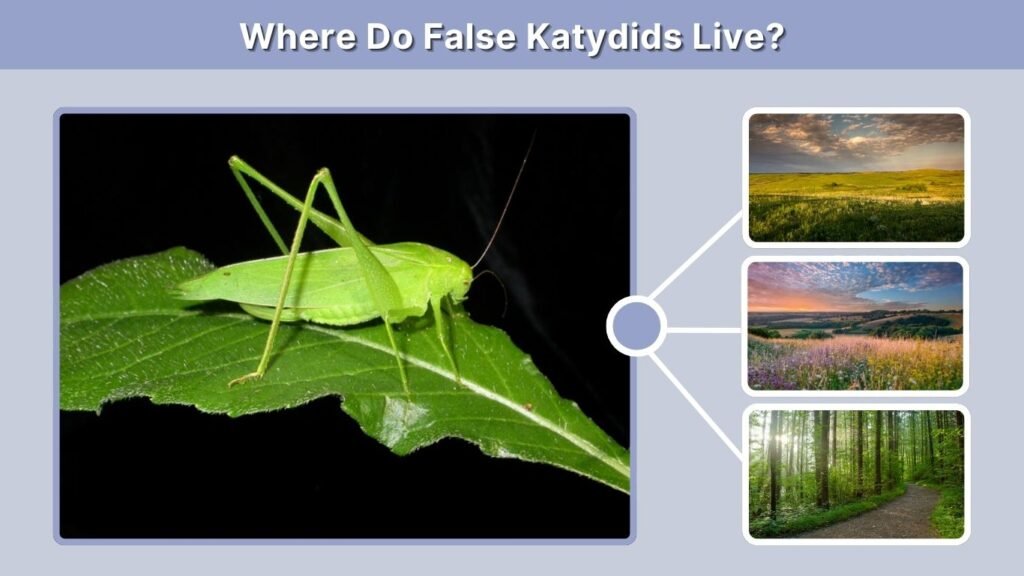
False katydids occupy many vegetation-rich environments. Phaneropterinae species are particularly associated with shrubs and trees, although some occur in meadows and lower vegetation. Their leaflike bodies allow them to remain concealed while resting and feeding.
Common Habitats
They may be found in:
- Deciduous forests
- Woodland edges
- Shrubs
- Gardens
- Meadows
- Tall vegetation
- Suburban plantings
- Tree canopies
In the United States, different species occupy different regions. For example, the oblong-winged katydid occurs widely through the eastern United States and into parts of Canada, whereas the closely related Florida false katydid is associated with Florida.
What Do False Katydids Eat?
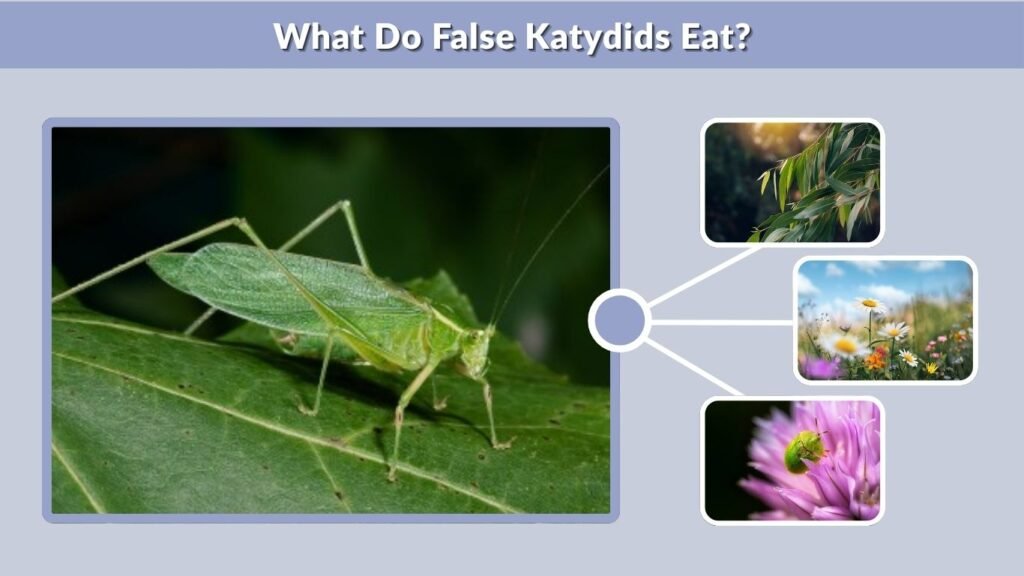
Many false katydids are mainly plant feeders. They commonly feed on foliage and other tender plant tissues, although diets vary between species. Their chewing mouthparts allow them to cut pieces from leaves rather than sucking plant juices.
False Katydid Diet
Food may include:
- Leaves
- Tender shoots
- Flowers
- Plant tissue
- Pollen
- Fruits or seeds in some species
- Occasionally small insects
Phaneropterinae are largely associated with trees and shrubs, where many species consume leaves and twigs. Significant plant damage is unusual under normal conditions because these katydids tend to occur as scattered individuals rather than enormous feeding swarms.
False Katydid Nymph
A false katydid nymph is an immature individual. Katydids undergo incomplete metamorphosis, so there is no caterpillar or pupal stage. A nymph resembles a miniature adult but initially lacks fully developed wings and reproductive structures.
Nymph Identification
A young false katydid generally has:
- Long antennae
- Six legs
- Enlarged jumping legs
- Small or absent wing pads
- Green or brown coloration
- Leaflike appearance
- Increasingly developed wings after each molt
Nymphs shed their exoskeleton repeatedly as they grow. With successive molts, the wings become larger until the final molt produces a sexually mature adult.
Are False Katydids Dangerous?
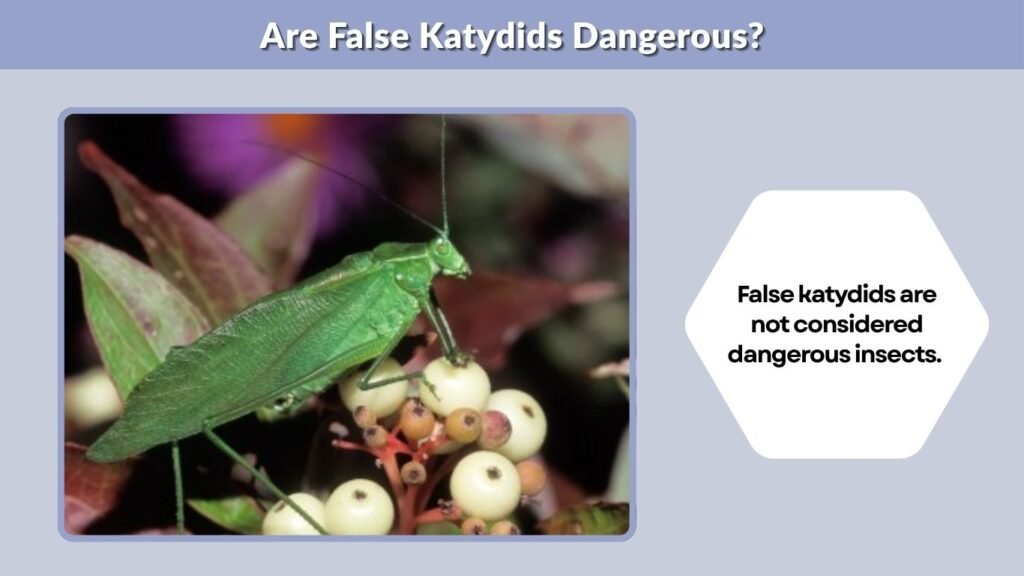
False katydids are not considered dangerous insects. They have strong chewing mouthparts, and a large individual could potentially pinch the skin when roughly handled, but they do not hunt humans or possess a venomous stinger.
Should You Handle One?
It is better to observe a false katydid without squeezing or restraining it. Large katydids can defend themselves with their jaws when they cannot escape.
The long blade- or sickle-shaped structure visible on some females is an ovipositor used to place eggs. It should not be mistaken for a stinger.
False katydids are generally harmless inhabitants of gardens, forests, and other vegetated environments.
FAQs
Is a False Katydid Really a Katydid?
Yes. False katydids are genuine katydids in the family Tettigoniidae. In North American usage, the term commonly refers to members of the subfamily Phaneropterinae.
What Is the Scientific Name of a False Katydid?
There is no single species-level scientific name. False katydids generally belong to Phaneropterinae, which includes genera such as Amblycorypha, Microcentrum, and Scudderia.
Are False Katydids Found in Texas?
Yes. Multiple Phaneropterinae species occur in the United States, including species associated with Texas and other southern states.
Are False Katydids Found in Florida?
Yes. Florida has several Phaneropterinae species, including the Florida false katydid and other false katydid groups documented by the University of Florida.
Is the Giant False Leaf Katydid a False Katydid?
Its common name says “false leaf katydid,” but Pseudophyllus titan belongs to the subfamily Pseudophyllinae. Therefore, it is taxonomically separate from the Phaneropterinae insects commonly grouped as “false katydids” in North American references.
