
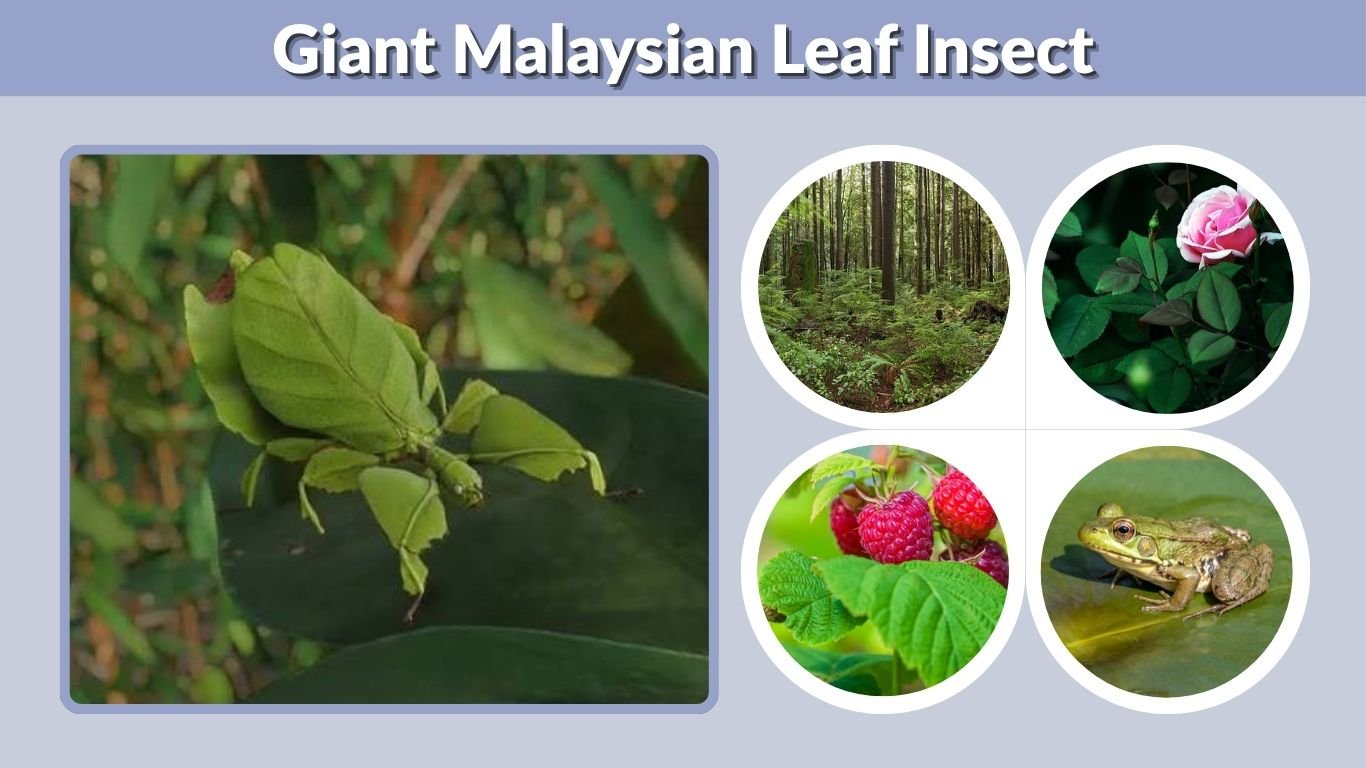
The giant Malaysian leaf insect is one of the most impressive examples of camouflage in the insect world. With a broad green body, leaf-shaped wings, vein-like markings, and irregular edges, it can look almost identical to a living leaf.
Also commonly called the Malaysian giant leaf insect, this remarkable species belongs to the stick and leaf insect group. Its unusual appearance, gentle behavior, and large size have also made it popular among exotic insect keepers. Here is everything you need to know about its habitat, diet, lifespan, life stages, and adaptations.
What Is a Giant Malaysian Leaf Insect?
The giant Malaysian leaf insect is a large leaf-mimicking insect native to Southeast Asia. Its scientific name is Pulchriphyllium giganteum, although it has historically also been known as Phyllium giganteum.
It belongs to the order Phasmatodea, the same group that includes stick insects.
Giant Malaysian Leaf Insect Identification
You can recognize this species by several distinctive features:
- Large, broad, flattened body
- Bright green to yellowish-green coloration
- Leaf-shaped abdomen
- Vein-like markings across the body and wings
- Flattened, leaf-like legs
- Irregular body edges resembling damaged foliage
- Long antennae, particularly noticeable in males
- Adult females considerably larger and broader than males
Females have an especially convincing leaf-like appearance because their bodies are wide and heavily flattened.
Giant Malaysian Leaf Insect Size
The giant Malaysian leaf insect is one of the larger leaf insects commonly encountered in captivity.
Adult females can reach approximately 4 to 5 inches long, although individual size varies. Males are generally smaller, slimmer, and more delicate in appearance.
Female vs. Male Giant Malaysian Leaf Insect
Female and male leaf insects can look surprisingly different.
Females are broad, heavy-bodied, and strongly resemble leaves. Their abdomen is wide, while their legs have noticeable flattened extensions that contribute to the camouflage.
Males are typically:
- Smaller
- Narrower
- Lighter
- Equipped with longer antennae
- More capable of flying
Adult males rely more heavily on flight when searching for females, whereas females usually spend much of their time resting and feeding among vegetation.
Why Does the Giant Malaysian Leaf Insect Look Like a Leaf?
Its appearance is an adaptation that helps it avoid predators.
In a tropical forest full of green vegetation, an obvious insect could quickly become food for birds, reptiles, or other insect-eating animals. Looking like part of a plant provides significant protection.
How Its Camouflage Works
The disguise involves far more than simply having a green body.
The insect can possess features resembling:
- Leaf veins
- Leaf edges
- Brown spots
- Damaged plant tissue
- Small holes or imperfections
- Changes in leaf coloration
Even the legs have flattened areas that help prevent the insect from having a recognizable insect-like outline.
Leaf-Like Movement
Its behavior makes the camouflage even more effective.
When walking, leaf insects may gently rock from side to side. This motion can resemble a leaf moving in a light breeze.
When resting, they often remain extremely still, making them difficult to distinguish from the leaves surrounding them.
Where Do Giant Malaysian Leaf Insects Live?
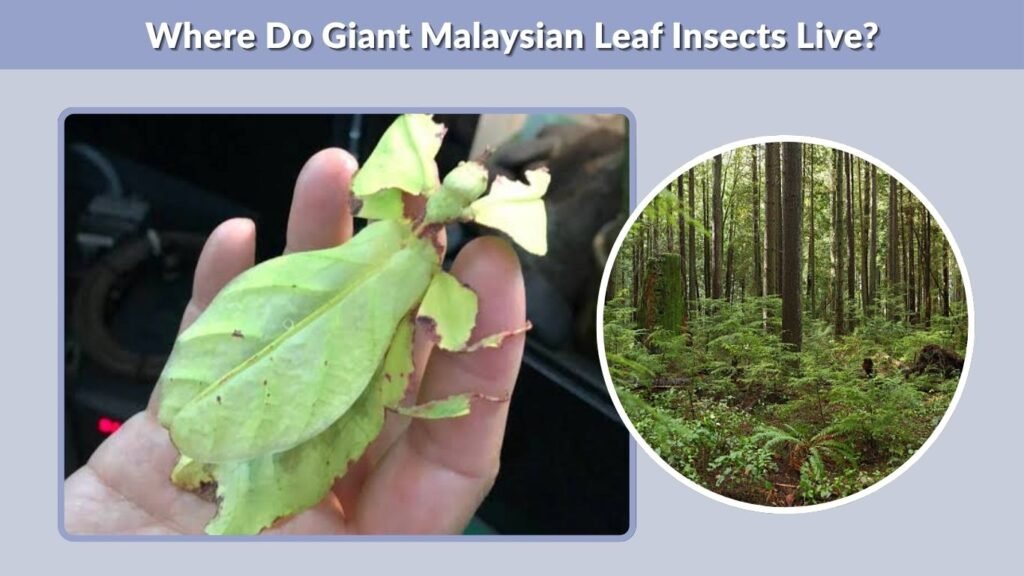
As their common name suggests, giant Malaysian leaf insects originate from Southeast Asia, including Malaysia.
They are adapted to warm, humid environments with abundant vegetation.
Giant Malaysian Leaf Insect Habitat
Their natural environment generally consists of tropical forests and other heavily vegetated areas.
Suitable habitat provides:
- High humidity
- Warm temperatures
- Dense foliage
- Plenty of edible leaves
- Protection from extreme sunlight
- Branches and plants for climbing
Their green camouflage works particularly well in forest canopies and understory vegetation.
What Do Giant Malaysian Leaf Insects Eat?
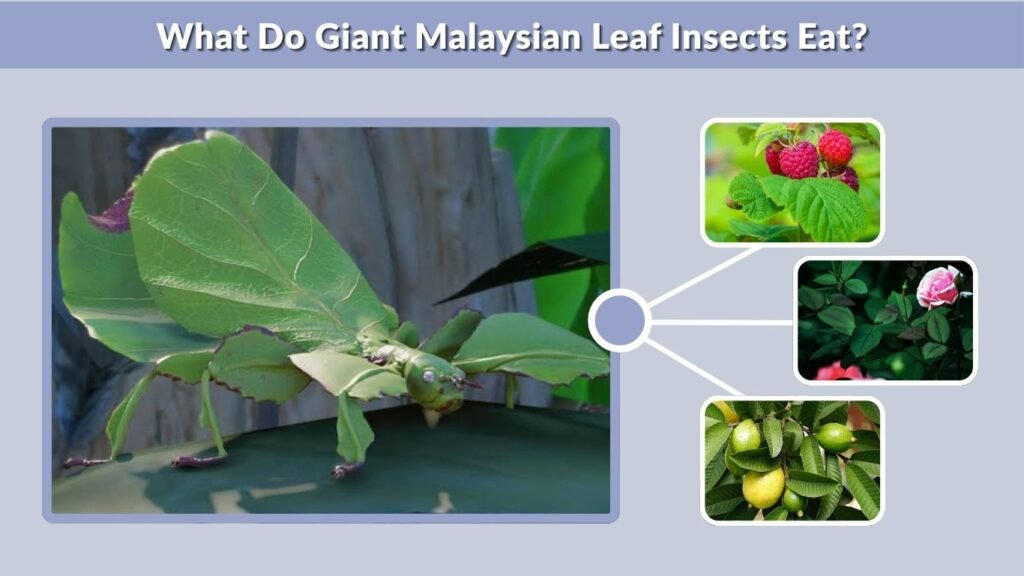
Unlike praying mantises and many other large insects, giant Malaysian leaf insects are completely herbivorous.
They spend much of their time feeding on leaves.
Giant Malaysian Leaf Insect Diet
In captivity, commonly offered food plants can include:
- Bramble or blackberry leaves
- Raspberry leaves
- Rose leaves
- Oak leaves
- Guava leaves
- Other suitable pesticide-free host plants
Food availability depends partly on location and the experience of the keeper.
Fresh foliage should always be free from insecticides, herbicides, and other chemicals because even small pesticide residues can be dangerous to leaf insects.
Giant Malaysian Leaf Insect Life Cycle
The giant Malaysian leaf insect undergoes incomplete metamorphosis. Unlike butterflies and beetles, it does not develop through a caterpillar or pupal stage.
Its life cycle consists of three main stages.
1. Egg
Adult females produce relatively large eggs that fall to the forest floor.
Leaf insect eggs can look surprisingly similar to small plant seeds. This appearance may help them remain unnoticed while they develop.
The eggs may take several months to hatch, depending on environmental conditions.
2. Nymph
A young leaf insect is called a nymph.
Freshly hatched nymphs often look very different from mature adults. They may initially have reddish, brownish, or darker coloration rather than immediately appearing bright green.
After beginning to feed on foliage, their coloration becomes more leaf-like.
3. Adult
Nymphs grow by repeatedly shedding their exoskeleton.
Each shedding event is called a molt. The insect becomes progressively larger until it completes its final molt and reaches adulthood.
Females generally take longer to mature because they develop into significantly larger adults.
Giant Malaysian Leaf Insect Molting
Molting is one of the most vulnerable periods in a leaf insect’s life.
Before molting, the insect may stop eating and become less active. It usually hangs securely from a branch or leaf before emerging from its old exoskeleton.
Why Space Is Important During Molting
The insect needs enough vertical room to hang freely.
If it touches the ground or another object before finishing the molt, its legs or body can become deformed.
This is particularly important for captive giant leaf insects because females grow quite large.
After molting, the new exoskeleton remains soft for a while. The insect should be left undisturbed until its body hardens.
Giant Malaysian Leaf Insect Lifespan
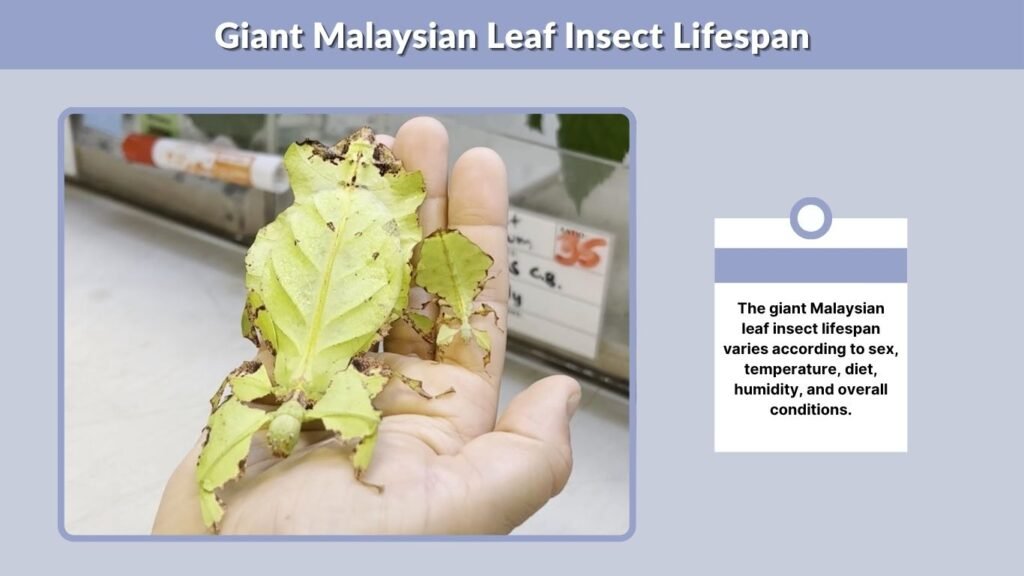
The giant Malaysian leaf insect lifespan varies according to sex, temperature, diet, humidity, and overall conditions.
Females generally live considerably longer than males.
The complete journey from egg to adult can take many months, while adult females may survive for several additional months after reaching maturity. Under good captive conditions, the entire life cycle can extend to around a year or longer.
Males typically mature faster and have shorter adult lives.
Giant Malaysian Leaf Insect Reproduction
One of the most fascinating characteristics of some leaf insects is their ability to reproduce without mating.
Female giant Malaysian leaf insects may produce eggs through parthenogenesis, meaning embryos can develop from unfertilized eggs.
What Happens Without a Male?
When eggs are produced without mating, the offspring are generally female.
Sexual reproduction can also occur when males are present.
Females may lay numerous eggs throughout their adult lives, usually dropping them individually rather than attaching them permanently to leaves.
The long incubation period means breeders often need considerable patience before young nymphs appear.
Giant Malaysian Leaf Insect as a Pet
Because they are quiet, harmless, and visually impressive, giant Malaysian leaf insects are sometimes kept as exotic pets.
However, their enclosure must meet their biological requirements.
Enclosure Requirements
A suitable enclosure should provide:
- Plenty of vertical space
- Good ventilation
- Appropriate humidity
- Fresh food plants
- Branches for climbing
- Secure surfaces for molting
The enclosure must be tall enough for the insect to hang freely during a molt.
Temperature and Humidity
These tropical insects generally prefer warm conditions and moderate-to-high humidity.
Humidity should not come at the expense of ventilation. A constantly wet enclosure with poor airflow can encourage mold and create unhealthy conditions.
Light misting and access to fresh foliage can help maintain an appropriate environment.
Handling
Giant Malaysian leaf insects are not aggressive and cannot sting.
However, their legs and bodies are delicate. They should never be pulled from a branch because their feet grip surfaces firmly and can be damaged.
Allowing the insect to walk voluntarily onto a hand is much safer than forcing it to move.
Are Giant Malaysian Leaf Insects Dangerous?
No. Giant Malaysian leaf insects are generally harmless to people.
They do not possess venom or a stinger and are not predators.
Their primary survival strategy is avoiding danger rather than fighting it. When disturbed, they may remain motionless, sway, walk away, or rely on their camouflage to avoid detection.
Predators of Giant Malaysian Leaf Insects
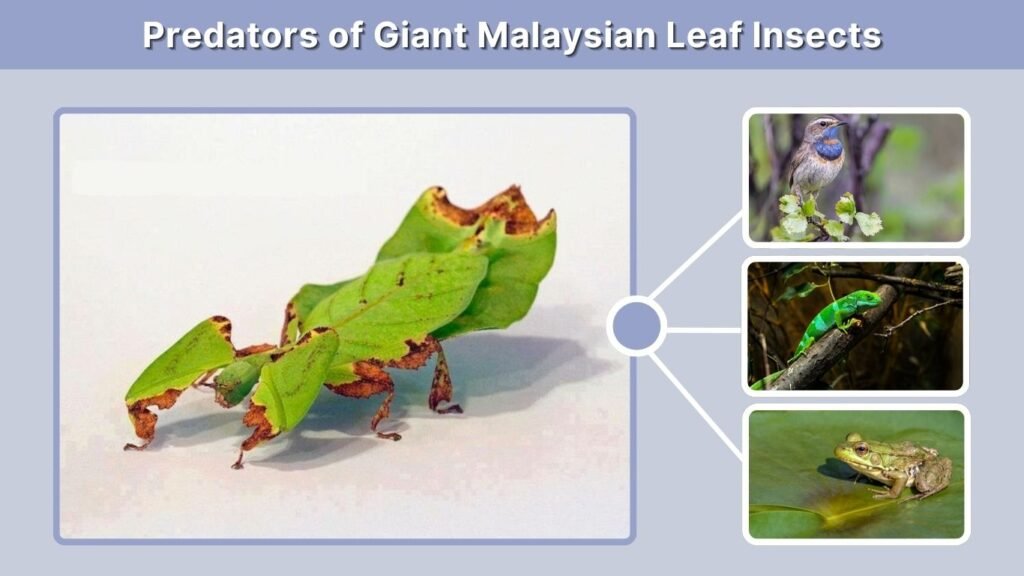
Even excellent camouflage cannot provide complete protection.
Potential predators include:
- Birds
- Lizards
- Frogs
- Spiders
- Small mammals
- Predatory insects
Their resemblance to leaves makes them difficult for visually hunting predators to detect.
Young nymphs are particularly vulnerable because of their small size.
Interesting Giant Malaysian Leaf Insect Facts
- Females can grow around 4–5 inches long.
- Their bodies resemble broad green leaves.
- Their markings can imitate leaf veins and damaged foliage.
- They eat plants rather than other insects.
- Females are considerably larger than males.
- Males are better flyers than females.
- They grow by repeatedly molting.
- Newly hatched nymphs may not initially be green.
- Females can potentially reproduce without mating.
- Their rocking movement can imitate leaves blowing in the wind.
- They are harmless to humans.
- Their eggs can resemble small seeds.
FAQs
How long do giant Malaysian leaf insects live?
Their lifespan varies with sex and environmental conditions. Females generally live longer than males. Including the egg and nymph stages, the complete life cycle may last around a year or longer under suitable conditions.
How big does a giant Malaysian leaf insect get?
Adult females commonly reach around 4 to 5 inches in length and have very broad bodies. Males remain noticeably smaller and slimmer. Their flattened abdomen and legs make females appear even larger than their actual body length suggests.
What does a giant Malaysian leaf insect eat?
It is herbivorous and feeds entirely on vegetation. In captivity, keepers commonly provide fresh bramble, blackberry, raspberry, rose, oak, or other appropriate leaves. All foliage must be free from pesticides and other potentially harmful chemicals.
Can giant Malaysian leaf insects fly?
Adult males are generally capable of flying and have bodies adapted for greater mobility. Females are much heavier and broader and rely primarily on walking and camouflage rather than sustained flight.
Are giant Malaysian leaf insects good pets?
They can be fascinating pets for people interested in insects. They are quiet, harmless, and do not require a large enclosure, but they need fresh food leaves, proper humidity, good ventilation, warmth, and enough vertical space to molt safely.
