
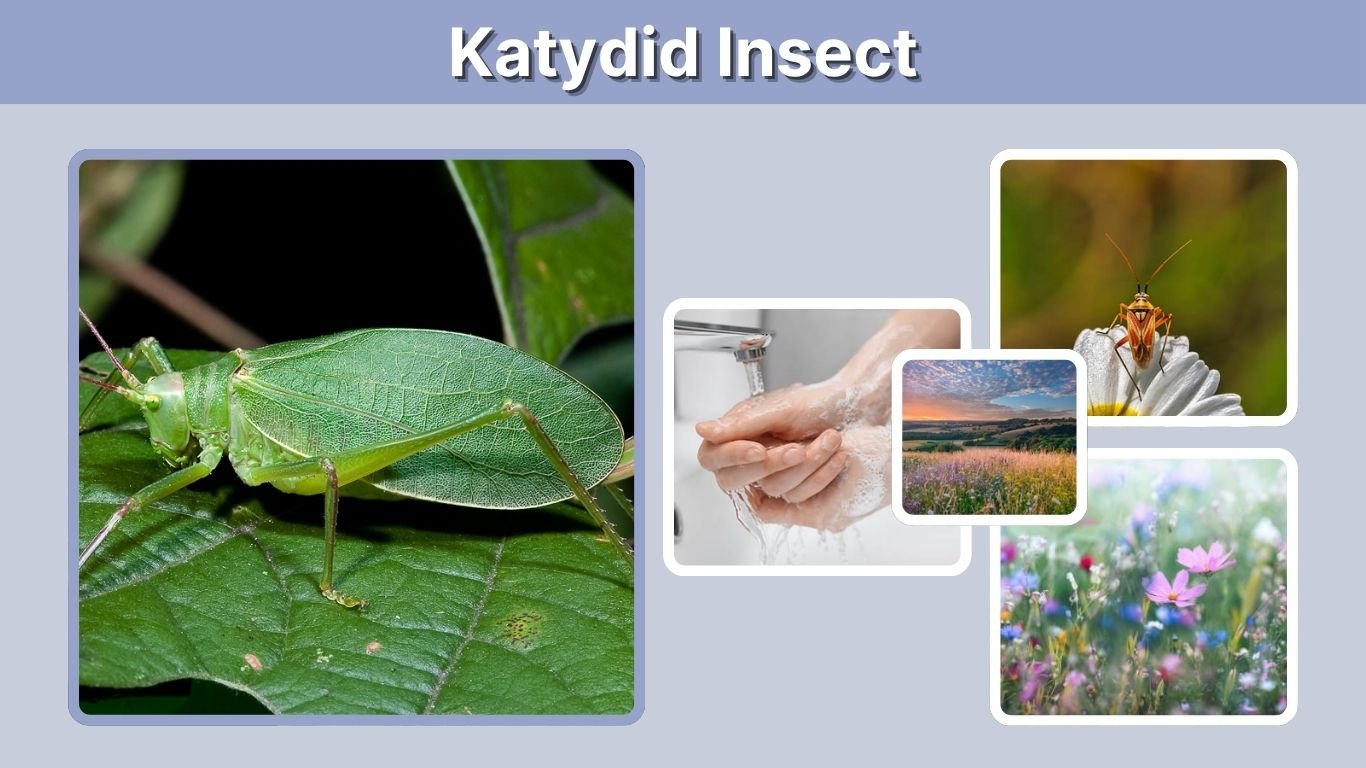
Katydids are remarkable insects known for their leaf-like appearance, long antennae, and distinctive nighttime sounds. Often mistaken for grasshoppers or even cicadas, these insects belong to the family Tettigoniidae and occur in many habitats around the world. Most katydids are green or brown, although unusual pink forms also occur. They spend much of their lives among leaves, shrubs, grasses, and trees. Learning about katydid identification, sounds, bites, eggs, diet, and life cycle makes these well-camouflaged insects easier to recognize.
What Is a Katydid?
A katydid is a long-horned insect closely related to crickets and grasshoppers. Thousands of species occur worldwide, ranging from small meadow katydids to impressive giant tropical species. Their long antennae, powerful hind legs, and leaf-like wings make them distinctive once you know what to look for. Many species rely heavily on camouflage to avoid predators.
Katydid Identification Features
Common characteristics of a katydid include:
- Extremely long, threadlike antennae
- Green, brown, or occasionally pink coloration
- Broad or narrow wings that may resemble leaves
- Large hind legs adapted for jumping
- Chewing mouthparts
- Long, slender body
- Wings held along the sides or back
- Females often have a noticeable blade-like ovipositor
Some species, such as the broad-winged katydid and greater angle-wing katydid, have wings that strongly resemble living leaves.
Katydid Size and Appearance
Katydid size varies considerably among species. Many familiar species measure roughly one to three inches long, while some giant tropical katydids can become considerably larger.
Green is particularly common because it allows katydids to disappear among leaves. Brown katydids blend into bark and dry vegetation, while rare pink katydids result from unusual pigmentation. Their excellent camouflage can make a stationary katydid surprisingly difficult to notice.
What Does a Katydid Sound Like?
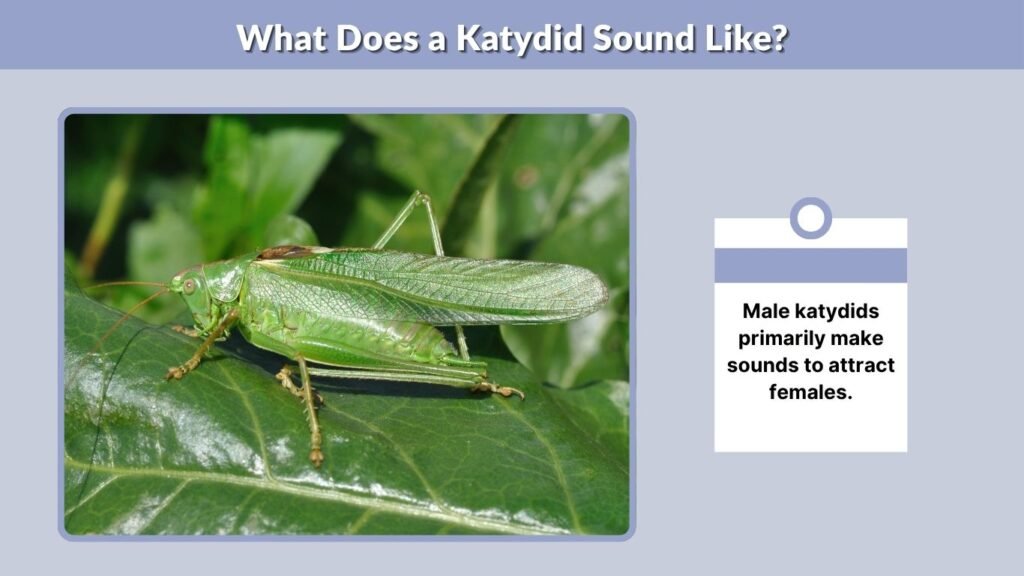
Katydids are among the most recognizable nighttime insects because many males produce repetitive calls after sunset. Depending on the species, their noises may sound like clicks, rasps, buzzes, chirps, or repeated syllables resembling “katy-did.” These calls are especially noticeable during warm summer evenings when multiple individuals may be calling from trees and dense vegetation.
Why Do Katydids Make Sounds?
Male katydids primarily make sounds to attract females. Instead of singing with their mouths, they generally produce sound by rubbing specialized areas of their wings together, a process called stridulation.
Each species has its own characteristic rhythm and pattern. Females of some species can respond to male calls, allowing the insects to locate potential mates despite darkness and dense vegetation.
Why Do Katydids Sound at Night?
Katydids are often most active during the evening and nighttime hours. Calling after dark allows males to communicate while remaining partly hidden within vegetation.
Warm temperatures can increase insect activity, so katydid noises may become especially noticeable on warm summer nights. Their sounds can sometimes be confused with crickets or cicadas, although the rhythm and tone differ between these insect groups.
Where Do Katydids Live and What Do They Eat?
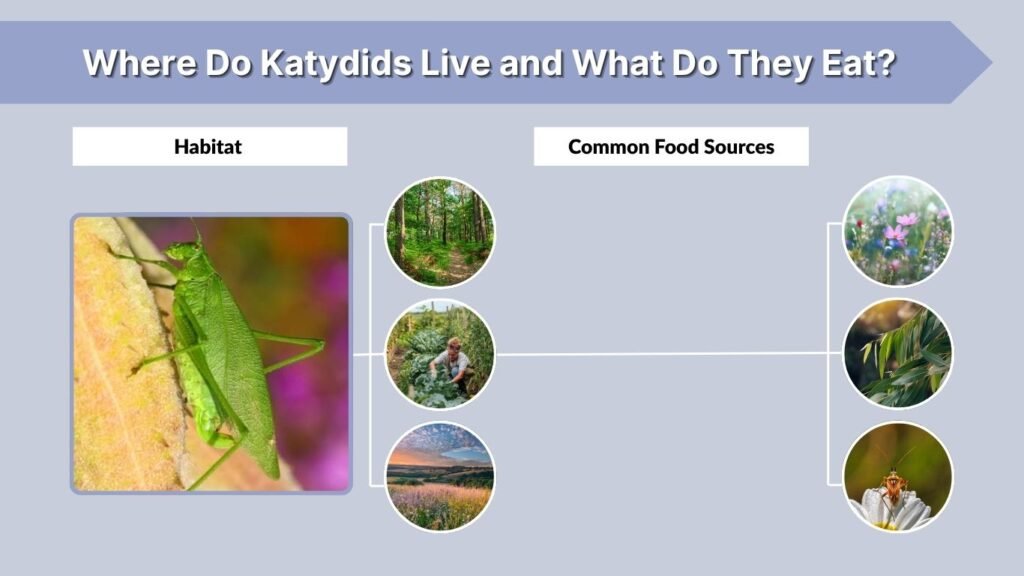
Katydids occupy forests, gardens, meadows, grasslands, wetlands, agricultural areas, and tropical habitats. Their preferred environment depends on the species. Many remain high in shrubs or trees, while meadow species stay closer to grasses. Their colors and body shapes frequently match the vegetation where they spend most of their lives.
Katydid Habitat
Green katydids frequently stay among leaves, where their camouflage provides protection from birds, reptiles, and other predators. Leaf-mimicking species may have wing patterns resembling leaf veins, spots, or damaged edges.
Tropical regions support some particularly large and unusual species, including giant Malaysian katydids, giant false-leaf katydids, and spiny forms with elaborate defensive structures.
What Do Katydids Eat?
Depending on the species, katydids may eat:
- Leaves
- Flowers
- Seeds
- Fruits
- Pollen
- Plant stems
- Smaller insects
- Caterpillars
- Other soft-bodied arthropods
Many katydids are primarily plant eaters, but some are omnivorous or strongly predatory. Giant carnivorous katydids and certain related species can capture other insects using their powerful legs and chewing mouthparts.
Katydid Eggs and Life Cycle
The katydid life cycle involves three main stages: egg, nymph, and adult. Unlike butterflies and beetles, katydids do not have a pupal stage. Instead, young katydids gradually become more adult-like through successive molts. Seasonal timing differs among species and climates, but eggs commonly provide a way for populations to survive unfavorable environmental conditions.
What Do Katydid Eggs Look Like?
Katydid eggs can vary by species, but they are commonly:
- Small and flattened or oval
- Arranged individually or in groups
- Attached to leaves, stems, or bark
- Inserted into plant tissue by some females
- Brown, gray, tan, or greenish
- Protected in relatively concealed locations
Female katydids use an ovipositor to place their eggs in suitable locations. The long structure can look intimidating, but it is an egg-laying organ rather than a stinger.
From Katydid Nymph to Adult
A newly hatched katydid is called a nymph. Nymphs resemble miniature adults but usually lack fully developed wings and reproductive organs.
As they grow, nymphs repeatedly shed their exoskeleton. Their wing pads become progressively larger after each molt until the final molt produces an adult with functional wings.
Young katydids can sometimes be mistaken for small grasshoppers because their characteristic adult features have not fully developed.
How Long Do Katydids Live?
Katydid lifespan depends on species, climate, and environmental conditions. Many species complete their active life cycle within a year, with adults appearing during warmer months before reproducing.
Eggs may remain dormant during cold or dry periods and hatch when suitable conditions return. Tropical species living in consistently warm environments can follow somewhat different seasonal patterns.
Do Katydids Bite Humans?
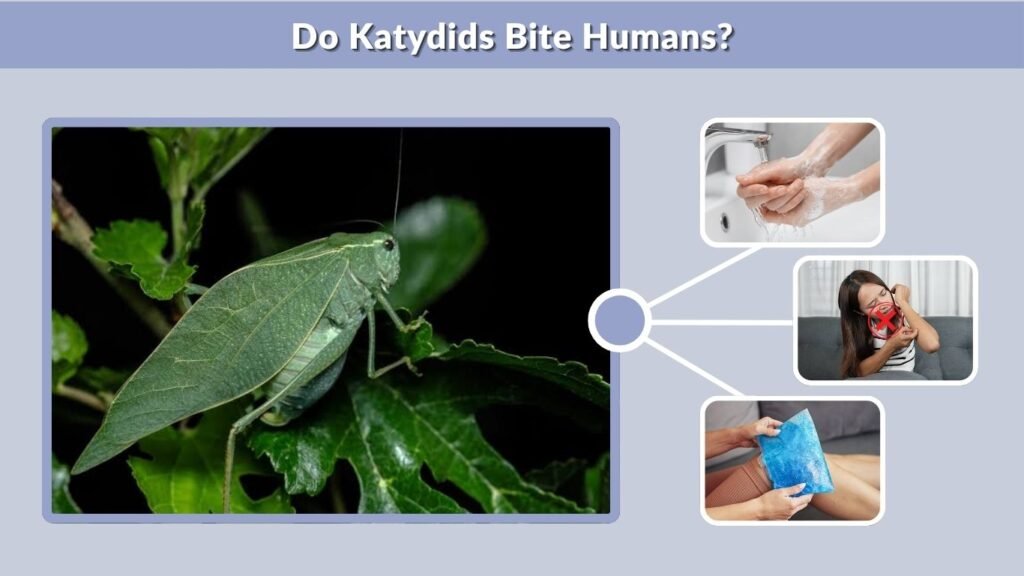
Katydids have strong chewing mouthparts capable of cutting plant material and capturing prey. Although they can bite when handled or strongly threatened, katydids do not normally seek out humans. A typical bite is more likely to feel like a pinch than a medically significant injury, and most encounters require little more than basic care.
What Happens If a Katydid Bites You?
A large katydid may produce a noticeable pinch if it bites exposed skin. The affected area might temporarily feel sore or become mildly red.
Katydids are not blood-feeding insects and do not bite people for food. Bites are generally defensive and most likely when someone catches, squeezes, or holds the insect.
Larger species may produce a stronger pinch simply because their jaws are more powerful.
What to Do After a Katydid Bite
If a katydid bites you:
- Wash the area with soap and clean water.
- Avoid scratching irritated skin.
- Apply a wrapped cold pack if mild swelling develops.
- Keep the area clean until irritation disappears.
- Seek medical advice if severe swelling, persistent pain, or signs of infection develop.
Most minor encounters resolve without special treatment.
Katydid vs. Grasshopper and Cicada
Katydids, grasshoppers, and cicadas can all be noisy insects encountered during warmer months, but they belong to different groups. Katydids are especially easy to confuse with grasshoppers because both have powerful jumping legs and similar body structures. Cicadas are more distantly related and differ substantially in their body shape, antennae, feeding behavior, and sound production.
Katydid vs. Grasshopper
The easiest difference is usually the antennae. Katydids typically have extremely long, thin antennae that can exceed their body length. Grasshoppers generally have much shorter antennae.
Katydids also tend to have flatter, more leaf-like wings and are frequently active at night. Many grasshoppers are more active during daylight. Both groups have strong hind legs and can jump effectively when disturbed.
Katydid vs. Cicada
Cicadas have broad bodies, short antennae, and large transparent wings with prominent veins. Katydids have long antennae, powerful jumping legs, and usually leaf-like wings.
Their sounds are produced differently as well. Katydids generally rub portions of their wings together, while male cicadas produce their loud calls with specialized abdominal structures called tymbals. Cicada choruses can also be considerably louder.
FAQs
Katydids generate plenty of questions because their unusual appearance and loud nighttime calls can make them seem mysterious. People commonly wonder whether they are dangerous, why they enter homes, what their sounds mean, and how they differ from similar insects. The following answers cover five of the most common questions about katydid insects.
Are Katydids Harmful to Humans?
Katydids are generally harmless to humans. They are not aggressive and normally try to escape when disturbed. Large individuals may pinch or bite when handled, but they do not feed on human blood and are not considered a significant danger to people.
Can Katydids Fly?
Yes. Adult katydids of many species have functional wings and can fly, although their flying ability varies. They may rely on jumping and short flights to move between plants. Some species are powerful flyers, while others have reduced wings and depend more heavily on climbing or jumping.
Are Katydids the Same as Grasshoppers?
No. Katydids and grasshoppers are related but belong to different groups. Katydids usually have very long antennae and often resemble leaves. Grasshoppers generally have shorter antennae and thicker bodies. Katydids are also commonly active and vocal at night.
What Is a Pink Katydid?
A pink katydid is typically a color variation caused by unusual pigmentation rather than a completely different type of insect. Instead of the common green coloration, its body may appear pink or reddish. The unusual color makes these katydids particularly noticeable because they lose much of their normal green camouflage.
Are Katydids Good or Bad for Gardens?
Most katydids cause relatively minor problems in gardens. Many eat leaves and flowers, while some also consume pest insects. Large populations can damage plants, but occasional katydids usually do not require control. Their presence is also a normal part of a diverse garden ecosystem.
