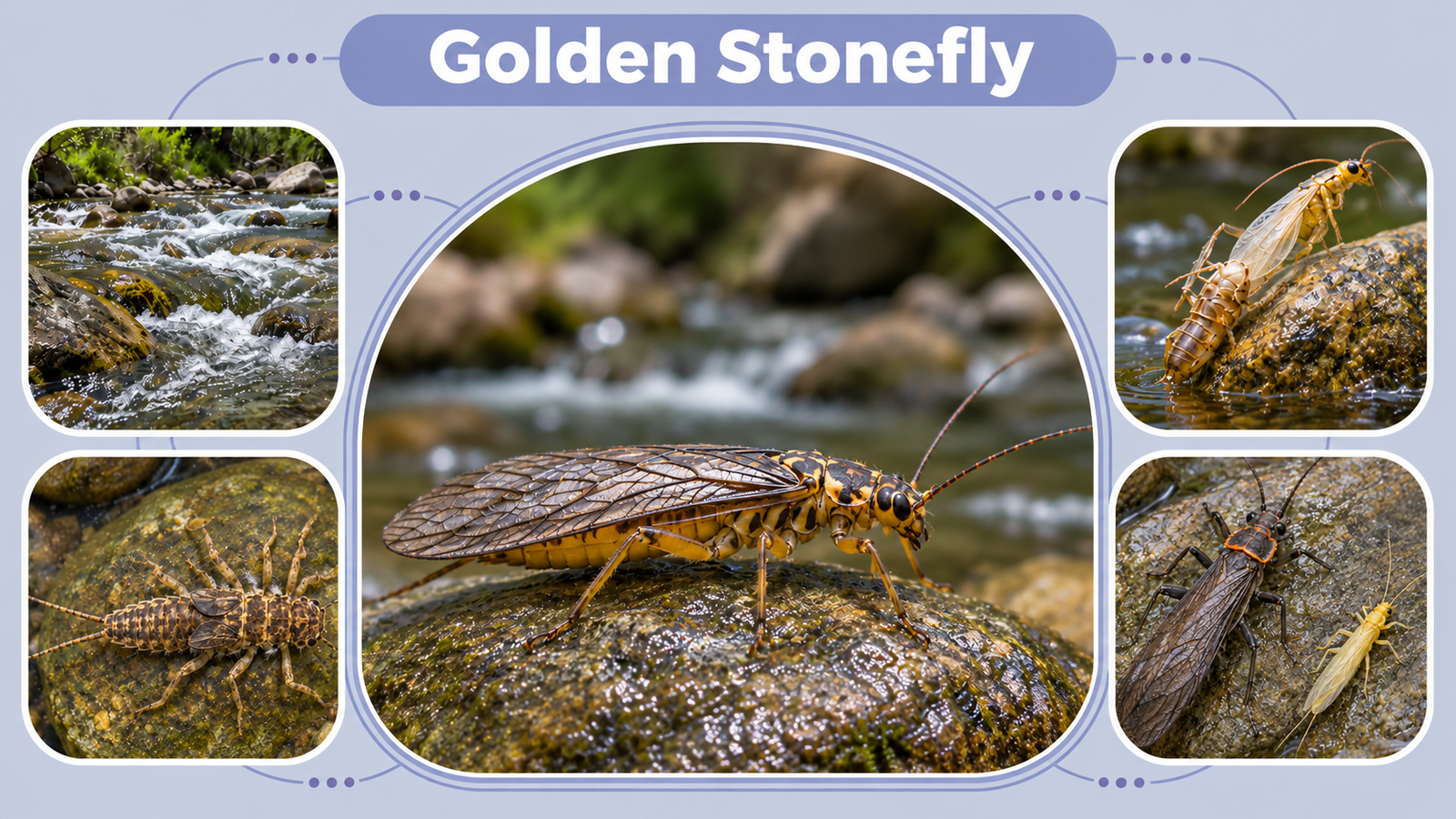
A golden stonefly can spend years among submerged rocks before crawling ashore and emerging as a winged adult. In western North America, Hesperoperla pacifica is commonly called the golden stone or golden stonefly. Its dark markings, amber to yellow-orange underside, and long wings help distinguish the adult, while its aquatic nymph has two tails and tufts of gills around the thorax. The name also appears in fly fishing, where anglers may use “golden stonefly” for several similar insects. Here’s how to recognize a golden stonefly, where to look for one, and what happens during its seasonal hatch.
What Is a Golden Stonefly?
The golden stonefly belongs to the order Plecoptera and the family Perlidae, often called the common stoneflies. The species Hesperoperla pacifica is native to western North America. In fly-fishing conversations, the same common name may also refer to Calineuria californica, a related insect known as the western stone. That distinction matters if you’re identifying a specimen from a photo or comparing hatch reports from different rivers. An angler’s report of “golden stones” usually describes a recognizable group of insects active on the water. A species identification calls for a closer look at features such as the nymph’s head markings.
How to Identify a Golden Stonefly
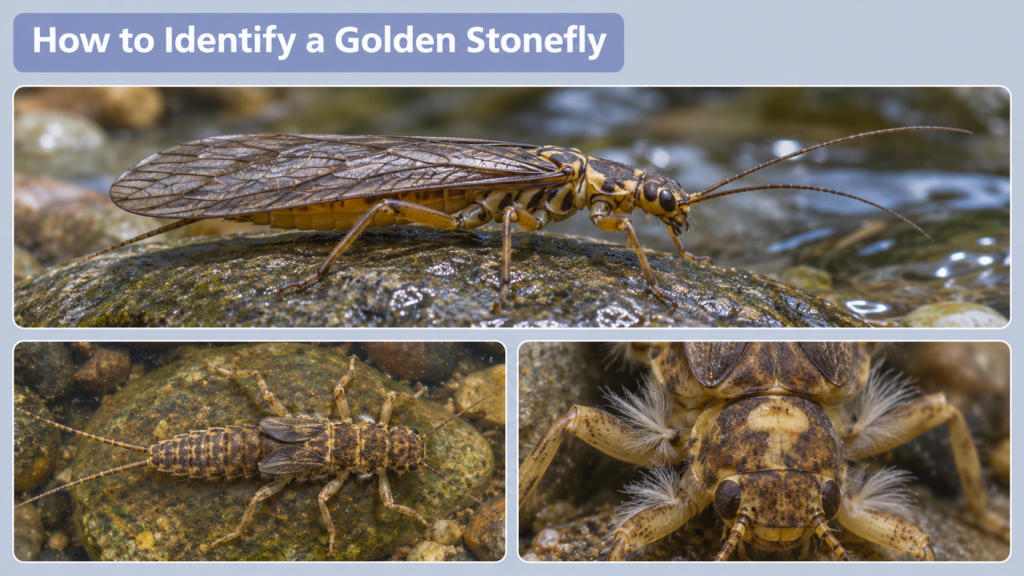
Start by noting where you found it. A six-legged insect crawling under a submerged rock is likely to be at a different stage from a long-winged insect resting on streamside vegetation. Both stages have elongated bodies. Look for gills and wing pads on a nymph and fully developed wings on an adult.
Golden Stonefly Nymph
The nymph has six legs, two segmented tails, and a flattened body suited to crawling among rocks in a current. Its upper surface is commonly brown with paler markings. On a close specimen, you may see tufts of gills around the thorax, the section where the legs attach. Older nymphs develop obvious wing pads behind the head.
In Hesperoperla pacifica, a pale area near the front of the head can look mushroom-shaped. It’s a useful clue when paired with other features. If you’re working from a photograph, look for a clear view of the head, thorax, and tails. Some mayfly nymphs also have two tails, so check where the gills appear as well. Mayfly nymphs typically have gills along the sides of the abdomen.
Adult Golden Stonefly
An adult has long antennae and two pairs of wings that fold flat along its back when it rests. The folded wings often extend beyond the abdomen and can make the insect look longer than its body. The back may appear mostly brown, while the underside can show a warmer amber, gold, or yellow-orange band.
Look for adults on rocks, grasses, and shrubs near the water. You may also find dry, hollow shells clinging to rocks or logs. A shell with a split along its back is the skin a nymph left behind when it emerged. The legs and tails often retain their shape, so an empty shell can look like a live insect at first glance.
Where Do Golden Stoneflies Live?
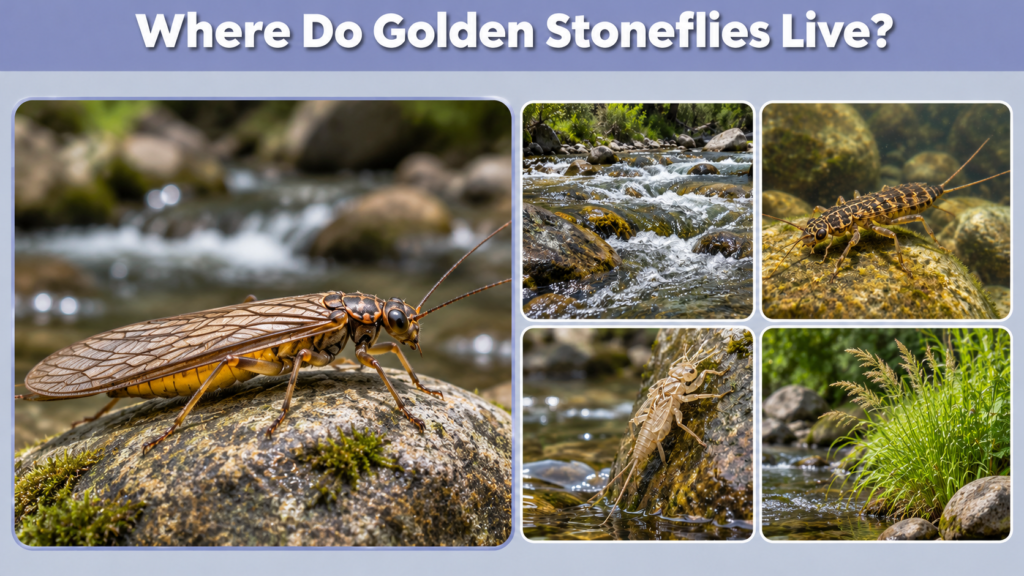
Golden stonefly nymphs live in flowing water, especially streams and rivers with cobble and boulder beds. Hesperoperla pacifica can be found among rocks in medium to fast current. A shallow riffle, where the water ripples over a rocky bed, is a good place to see the type of habitat they use. The spaces between rocks provide shelter, and the surrounding streambed supports other aquatic insects that the nymphs eat. During emergence, check exposed rocks and logs close to the waterline for shed skins. Several fresh skins can show where nymphs recently came ashore, even if the adults have moved into nearby vegetation.
What Do Golden Stoneflies Eat?
Golden stonefly nymphs are predators. Hesperoperla pacifica feeds on small aquatic insects, including midge larvae, blackfly larvae, and small mayfly nymphs. It finds prey in the same streambed habitat it uses for shelter. The nymph can also become prey when it enters the current, where trout can intercept it. Adult golden stoneflies give fish another feeding opportunity when they fall into the river or when females touch the water to release their eggs.
Golden Stonefly Life Cycle and Hatch Timing
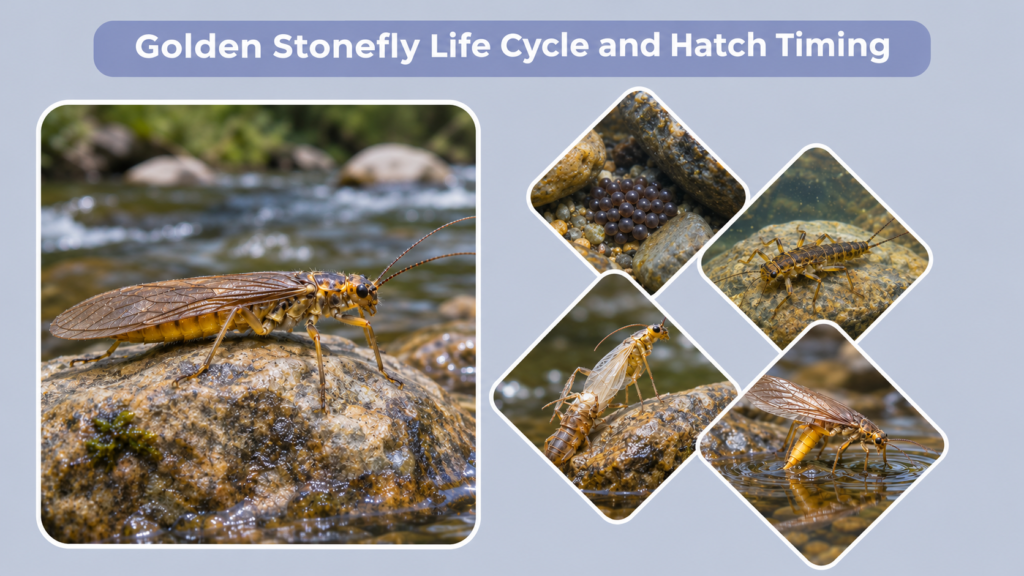
A golden stonefly develops through three stages: egg, nymph, and adult. It spends most of its life underwater and has no pupal stage. When anglers talk about the golden stonefly hatch, they mean the seasonal emergence of winged adults. The eggs hatch underwater much earlier in the insect’s life.
From Egg to Winged Adult
After mating, females return to the river to release their eggs. The young nymphs settle into the streambed, feeding and shedding their outer skin as they grow. Life cycles among common stoneflies can span one to three years, and large-bodied species often spend more than a year developing.
When a mature nymph is ready to emerge, it crawls out of the water onto a rock, log, or the bank. Its skin splits along the back, the winged adult pulls free, and the empty shell stays attached to the surface. Because the transformation happens at the water’s edge, the bank is a good place to look for evidence of emergence.
When Does the Golden Stonefly Hatch?
Late spring through summer is a broad window for adult emergence, with timing varying by river and location. On some western rivers, golden stoneflies overlap with the giant salmonfly hatch or continue emerging after it. A hatch report from one river can give you a general idea of the season, but timing can vary across stretches of the same river.
Check the stretch you’re visiting for fresh skins near the waterline and adults resting on streamside vegetation. Females touching down on the water are another sign that adults are active. You may find skins clustered on a few rocks or logs if those surfaces give nymphs an easy route out of the current.
Golden Stonefly vs. Salmonfly and Yellow Sally
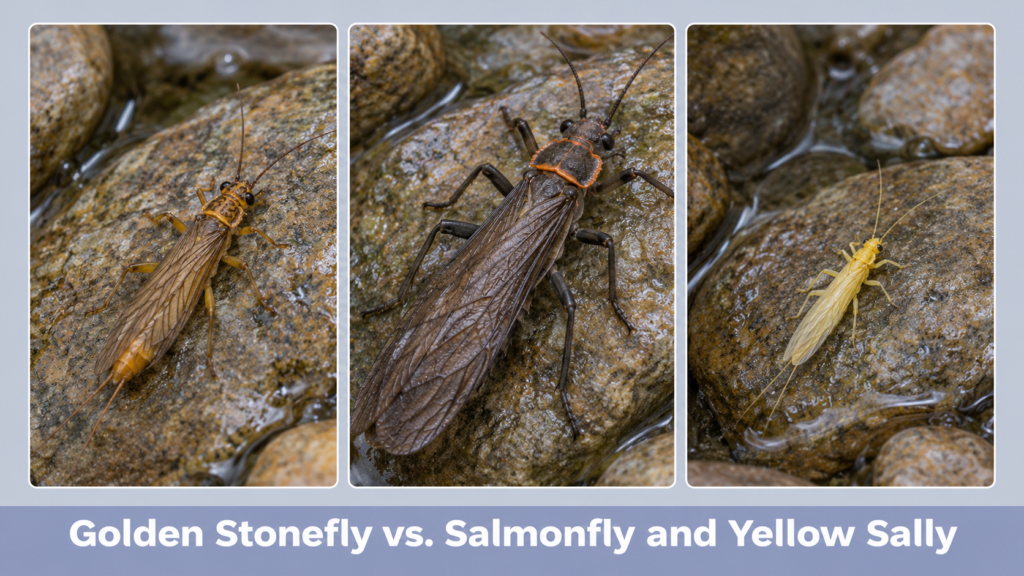
When several kinds of stoneflies emerge from the same river, compare body length and underside color together. The golden stonefly generally falls between the bulky giant salmonfly and the smaller insects anglers call yellow sallies.
| Feature | Golden stonefly | Giant salmonfly | Yellow sally |
|---|---|---|---|
| Relative adult size | Large | Typically the largest of the three | Typically the smallest of the three |
| Common color clues | Brown with amber to yellow-orange tones underneath | Dark body with conspicuous orange markings | Usually pale yellow to yellow-green |
| What the name describes | Often Hesperoperla pacifica or a similar common stonefly | Pteronarcys californica in western hatch reports | Several smaller stoneflies grouped under one fishing name |
Why Golden Stoneflies Matter to Fly Anglers
A golden stonefly pattern can imitate either the nymph or the adult. A weighted nymph pattern works for the underwater stage. Fish it close to the streambed beside rocky runs or near the softer current along the bank, where nymphs may move before emerging. If you see adults in streamside cover and trout feeding at the surface, try a floating imitation with a tan, amber, or golden underside. Compare the fly’s body length with the local insects, since “golden stonefly” can cover more than one species in hatch reports. Fresh shells on the bank show that adults have emerged. Where the trout are feeding can help you decide whether to fish below the surface or switch to a dry fly.
Frequently Asked Questions
What Is the Scientific Name of the Golden Stonefly?
Hesperoperla pacifica is the species commonly called the golden stone. Anglers also use “golden stonefly” for similar species, including Calineuria californica.
Why Does a Golden Stonefly Have Two Tails?
The two tail-like appendages are called cerci. They’re easy to see on the nymph and are one feature used to recognize stoneflies. Look for them alongside six legs, long antennae, and tufts of gills near the thorax.
Where Should I Look for Golden Stonefly Nymphs?
Look in flowing streams with rocky bottoms, especially among cobbles and boulders. Along the bank, check rocks or logs for the empty skins left behind by emerging adults.
Do Golden Stoneflies Indicate Good Water Quality?
Stoneflies are widely used in stream assessments because many are sensitive to environmental disturbance. Finding a golden stonefly gives you one clue about local conditions. A fuller assessment considers which other aquatic insects are present and how abundant they are.
Is a Golden Stonefly Bigger Than a Yellow Sally?
Usually, yes. Golden stoneflies tend to be larger and darker, while yellow sallies are generally smaller and paler. Both common names can cover several species, so compare insects from the same river if you’re choosing a fly pattern.