
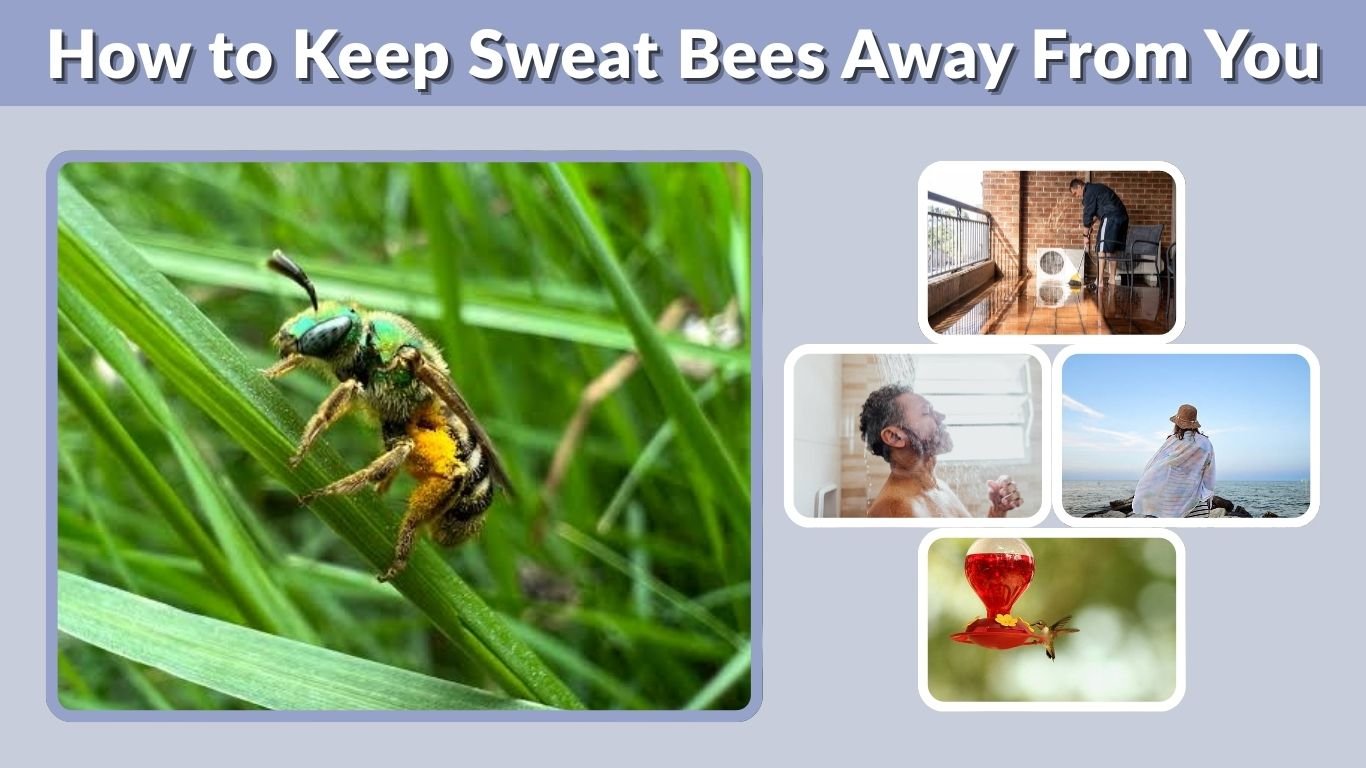
If tiny bees keep landing on your arms, legs, or face during hot weather, they may be sweat bees. These small bees belong to the family Halictidae and are attracted to the salts in human perspiration. They are important pollinators and are usually not aggressive, but a female can sting if trapped against the skin. The best way to keep sweat bees away is to reduce sweat and attractive moisture, use physical barriers, manage nearby nesting areas carefully, and avoid creating concentrated food or water sources where people gather.
Why Are Sweat Bees Attracted to You?
Sweat bees get their common name from the tendency of some species to land on people and consume salty perspiration. Hot summer weather can make the problem especially noticeable because people sweat more and bee activity is generally high. Most sweat bees are small, and many species are solitary rather than living in large defensive colonies.
Sweat and Salt Attract Them
Human sweat contains salts that certain sweat bees seek. This explains why they may repeatedly land on exposed skin during gardening, exercise, swimming, or outdoor work.
They are generally looking for minerals rather than trying to attack you.
Are Sweat Bees Aggressive?
Usually not. Many sweat bees are solitary or loosely social and have little reason to defend large colonies.
A sting is most likely when a bee becomes:
- Trapped against your skin
- Caught in clothing
- Squeezed between fingers
- Crushed in an elbow crease
- Swatted while sitting on the body
Their stings are generally considered mild compared with many other stinging insects.
How to Keep Sweat Bees Away From You
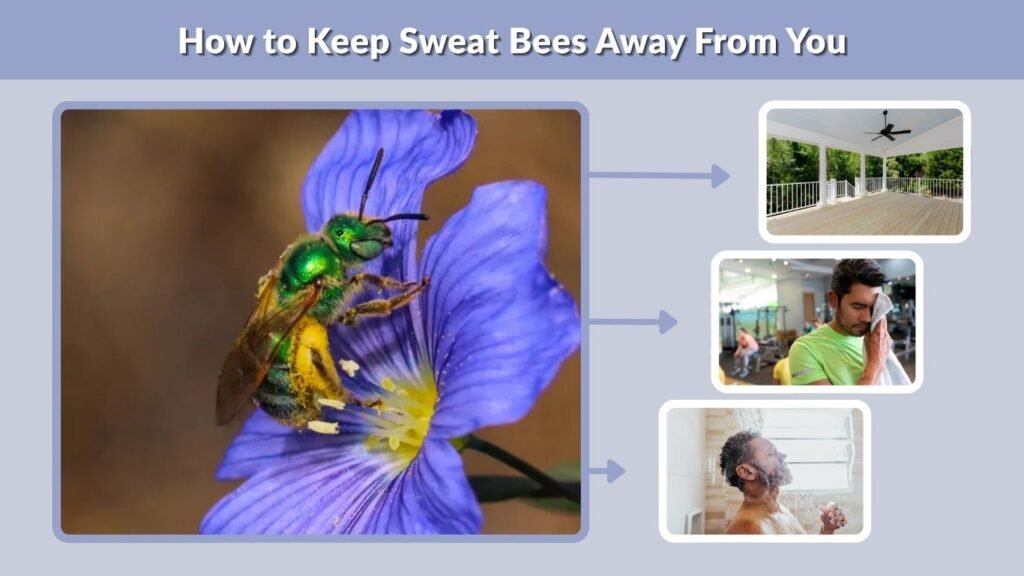
The most effective personal strategy is to make yourself less attractive while preventing bees from becoming trapped against your skin. Because perspiration is a major attraction, reducing sweat around peak bee activity can make a noticeable difference.
Reduce Sweat When Possible
Try these simple measures:
- Stay hydrated and cool.
- Take breaks in shaded areas.
- Use a fan on patios or porches.
- Dry perspiration with a towel.
- Shower after heavy outdoor exercise.
- Change out of sweat-soaked clothing.
- Schedule strenuous outdoor work for cooler times of day.
Penn State Extension specifically recommends adjusting outdoor activity during very hot weather to reduce perspiration when sweat bees are troublesome.
Wear More Protective Clothing
When sweat bees are particularly abundant, lightweight clothing can reduce the amount of exposed sweaty skin available to them.
Consider:
- Lightweight long sleeves
- Long pants
- Closed shoes
- A hat
- Light, breathable fabrics
If a bee lands on you, gently brush or blow it away instead of slapping it.
What Keeps Sweat Bees Away?
There is no single guaranteed sweat-bee repellent. Managing what attracts them is usually more dependable than trying to create a strong odor they supposedly dislike.
Use Moving Air
A strong outdoor fan can make an area less comfortable for small flying insects while also reducing perspiration.
Fans can be particularly practical around:
- Patios
- Decks
- Outdoor dining areas
- Covered porches
- Seating areas
They also provide relief without spraying pollinators or flowering plants with pesticides.
Remove Unnecessary Moisture
Bees and other insects may visit water sources more frequently during hot, dry weather.
Repair:
- Leaking faucets
- Constantly dripping hoses
- Leaky irrigation
- Persistent puddles
Reducing unnecessary moisture can make gathering areas less attractive.
How to Keep Sweat Bees Away From a Pool
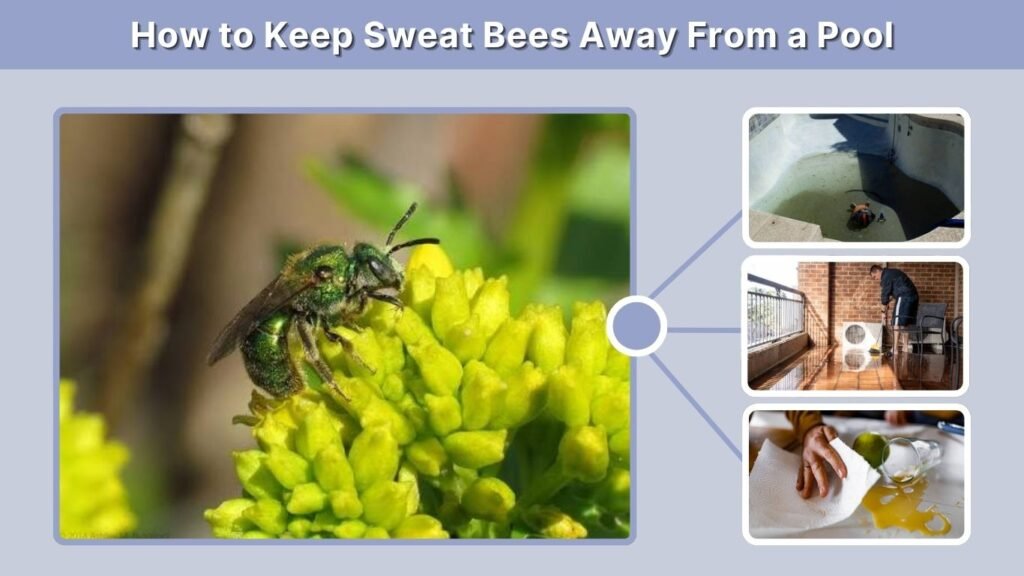
Pools can be particularly frustrating because people are sweating while a large water source is nearby. Bees and wasps may also seek water during hot, dry weather, and some bees are attracted to water containing dissolved minerals or salts.
Keep the Pool Area Dry
To reduce activity:
- Repair leaking pool equipment.
- Drain standing water around furniture.
- Rinse sticky drink spills immediately.
- Keep trash containers closed.
- Dry frequently wet deck areas when practical.
- Cover the pool when appropriate and not in use.
You may still see occasional bees because eliminating every source of water around a swimming pool is unrealistic.
Provide Water Away From the Pool
An alternative water source located well away from people may sometimes redirect bee activity.
Penn State Extension notes that providing another water source can sometimes help when bees or wasps are repeatedly visiting swimming pools during hot, dry weather.
Place the alternative away from:
- Doors
- Children’s play areas
- Patio seating
- Pool entrances
Avoid placing it immediately beside the pool, where it would simply concentrate more insects near swimmers.
How to Keep Sweat Bees Away From a Porch or Deck
If sweat bees repeatedly appear around a porch, determine whether they are visiting people, flowers, water, or a nearby nesting area.
Many sweet bees nest in soil, and favorable patches may contain numerous individual nest entrances even though the bees are not necessarily living as one large colony.
Check for Ground Nests
Look for small holes in:
- Bare soil
- Thin lawn areas
- Garden edges
- Dry exposed banks
- Areas beside walkways
If nests are in a location that does not interfere with people, leaving them alone is usually preferable because sweat bees are beneficial pollinators.
Reduce Nesting in High-Traffic Areas
Utah State University recommends covering or renovating bare soil when ground-nesting bees create a recurring problem in places people must use.
Options may include:
- Establishing turf
- Using appropriate groundcover
- Maintaining denser vegetation
- Reducing large patches of exposed soil
Do not destroy nests unnecessarily in low-traffic areas.
How to Keep Sweat Bees Away From Hummingbird Feeders
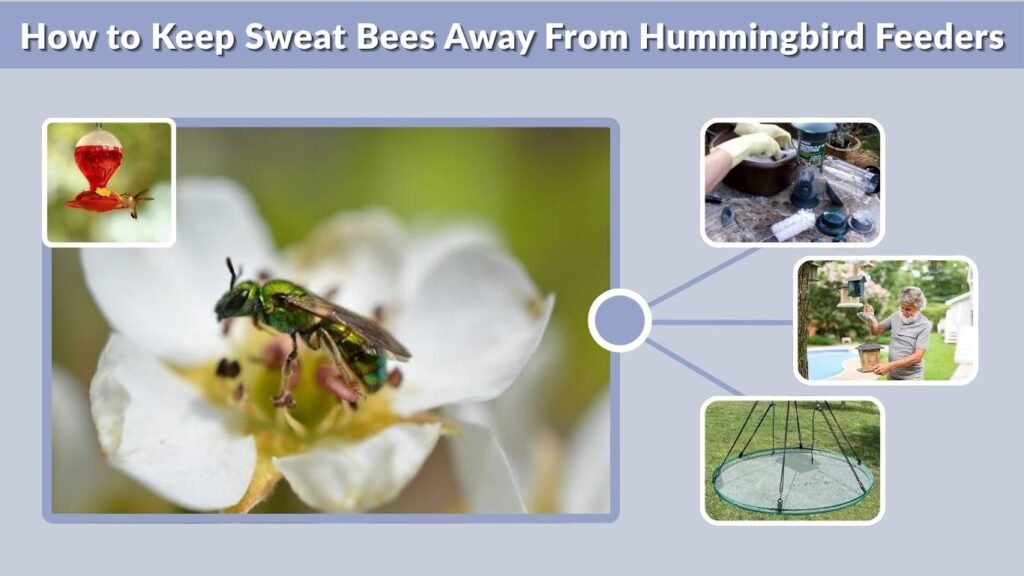
Sugar-water feeders can attract bees and other insects, especially when nectar leaks or splashes around the openings.
Keeping the feeder clean and physically limiting insect access is better than spraying pesticides around it.
Use Bee Guards
Many hummingbird feeders are designed with bee guards that allow a hummingbird’s long bill and tongue to access nectar while making it harder for bees to reach the liquid.
Penn State Extension recommends bee guards as one way to reduce bee problems at hummingbird feeders.
Clean Sugar Spills
Regularly:
- Wipe nectar from the outside.
- Check for leaks.
- Wash feeding ports.
- Replace spoiled nectar.
- Keep the area underneath clean.
Do not spray insecticides on or around hummingbird feeders. Utah State guidance specifically recommends bee guards and advises against insect sprays at feeders.
Does Bug Spray Keep Sweat Bees Away?
People commonly ask whether products such as OFF or other skin repellents will keep sweat bees away.
Most conventional personal insect repellents are primarily tested and labeled for pests such as mosquitoes and ticks. Their effectiveness should not automatically be assumed for sweat bees unless the product label specifically includes the insect.
Should You Spray Bees Directly?
No. Sweat bees are valuable native pollinators, so broad insecticide spraying should generally be avoided when simple nuisance management will work.
Pesticides can expose pollinators directly, through residues, or through contaminated flowers and water.
Does Citronella Keep Sweat Bees Away?
Citronella is frequently recommended online for many insects, but evidence specifically showing reliable control of sweat bees is limited.
Citronella oil has demonstrated repellent activity against some insects, but plant-derived products generally provide shorter and less consistent protection than established repellents used for their labeled pests.
What About Citronella Plants?
Simply placing citronella-scented plants around a patio should not be expected to create a dependable barrier against sweat bees.
Instead, focus on reducing sweat, moisture, nesting conflicts, and sugary spills.
Will Peppermint Oil Keep Sweat Bees Away?
Peppermint oil is another popular home remedy.
Peppermint and several other essential oils have demonstrated repellent properties against certain insects, but that does not establish that peppermint reliably repels sweat bees. Evidence for using it specifically as sweat-bee control is limited.
Avoid spraying concentrated essential oils directly onto bees, flowering plants, pets, or skin without checking appropriate safety guidance.
Do Plants Keep Sweat Bees Away?
There is no well-established “sweat bee repellent plant” that reliably creates a bee-free zone.
In fact, planting flowers near a sitting or swimming area may increase bee activity because sweat bees are pollinators that visit many flowers. Mississippi State Extension notes that sweat bees are particularly associated with white, blue, and violet flowers.
Better Landscape Strategy
Instead of trying to repel them with plants:
- Place pollinator gardens farther from patios.
- Keep heavily flowering plants away from pool edges.
- Maintain some distance between flowers and walkways.
- Preserve pollinator habitat in lower-traffic parts of the yard.
This allows the bees to forage without constantly crossing paths with people.
When Do Sweat Bees Go Away?
Timing depends on species and climate.
In temperate areas, activity generally increases during warm weather and declines as temperatures fall. Utah State University lists sweat-bee activity from roughly March through October, with particularly high activity from June through August, although this schedule is regional and will vary elsewhere.
Why They May Suddenly Disappear
Numbers can decline because:
- Temperatures become cooler.
- Flowering decreases.
- Seasonal nesting ends.
- Rain or weather changes activity.
- Adults naturally complete their life cycle.
If the problem is seasonal, you may only need temporary management rather than attempting to eliminate the bees.
Best Way to Keep Sweat Bees Away
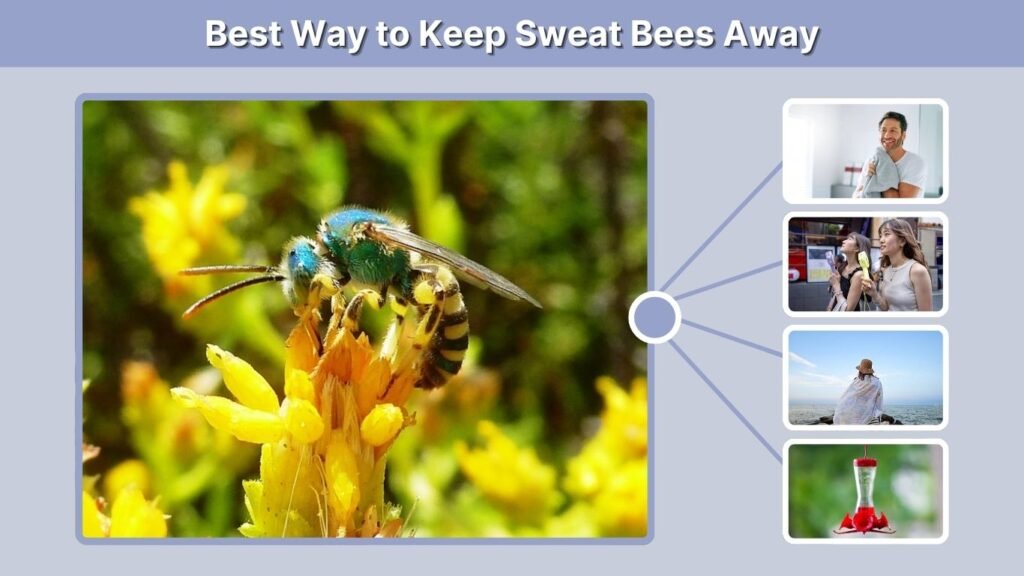
The best approach combines several nonlethal methods rather than relying on sprays.
Quick Sweat Bee Control Checklist
- Keep your skin as dry as practical.
- Avoid heavy outdoor activity during the hottest hours.
- Use outdoor fans.
- Wear lightweight covering clothing.
- Remove standing water where possible.
- Keep food and sugary drinks covered.
- Clean hummingbird feeder spills.
- Use bee guards on feeders.
- Move pollinator flowers away from high-traffic areas.
- Reduce bare-soil nesting habitat only where necessary.
- Avoid unnecessary insecticide applications.
Sweat bees provide valuable pollination, so the goal should usually be reducing unwanted encounters rather than eliminating them from the landscape.
FAQs
What keeps sweat bees away from you?
Reducing perspiration, drying sweaty skin, wearing lightweight covering clothing, staying cooler, and using moving air can reduce encounters.
How do you keep sweat bees away from a swimming pool?
Reduce nearby standing water and spills, keep the pool area clean, and consider providing an alternative water source farther away from swimmers.
Does OFF keep sweat bees away?
OFF products vary by formulation and are generally marketed for specific pests such as mosquitoes or ticks. Do not assume a product will reliably repel sweat bees unless its label specifically supports that use.
Will citronella or peppermint oil keep sweat bees away?
They may have general insect-repellent properties, but there is limited evidence that either provides reliable protection specifically against sweat bees.
When will sweat bees go away?
Activity usually declines as temperatures cool and the seasonal nesting period ends. Timing varies by climate and species, with activity often highest during warm summer weather.
