
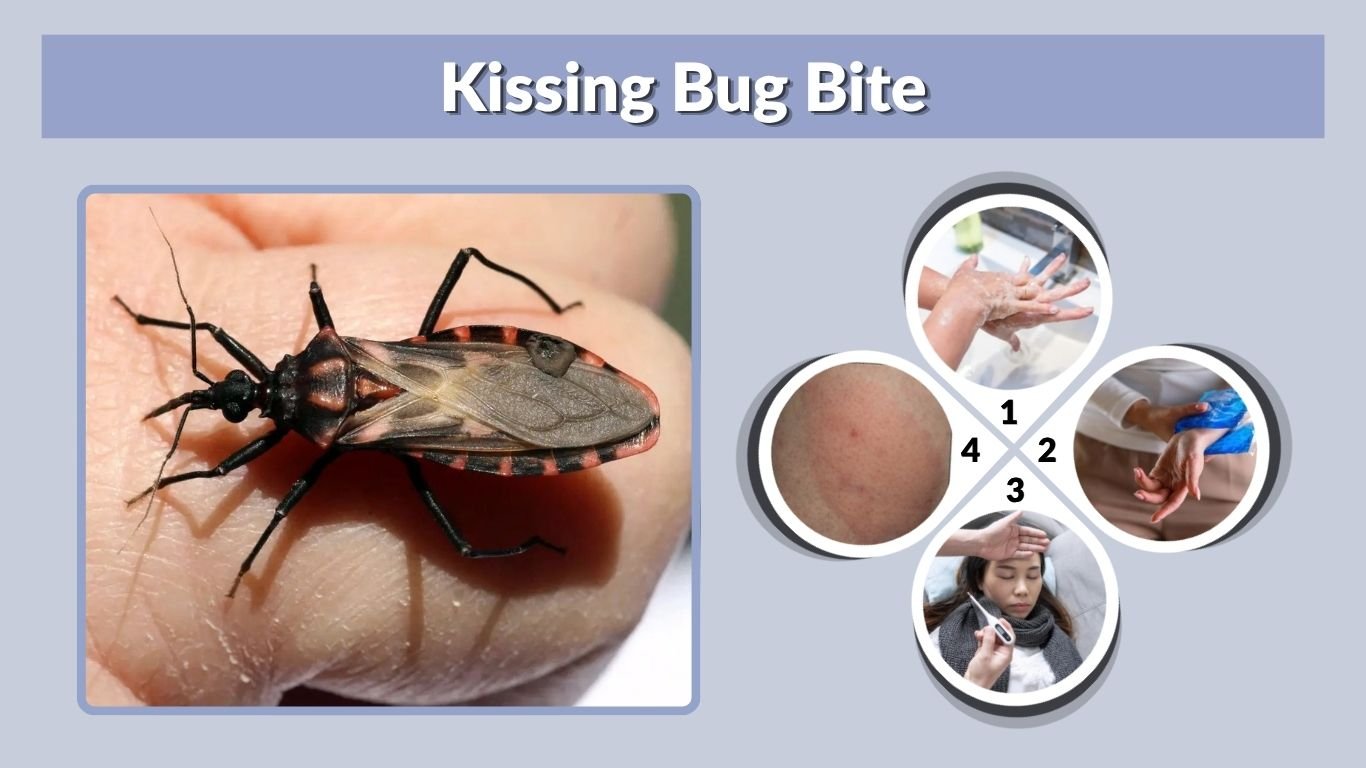
A kissing bug bite can be difficult to recognize because it may resemble a mosquito bite, flea bite, or another minor skin reaction. Kissing bugs are blood-feeding insects that usually become active at night and may bite sleeping people or animals. Their bites are often painless, but some people develop itching, redness, swelling, or an allergic reaction. The main medical concern is not the bite itself but possible contact with infected bug feces, which can transmit the parasite responsible for Chagas disease. Knowing what a kissing bug bite looks like, how to treat it, and when to seek medical care can help you respond safely.
What Is a Kissing Bug Bite?
Kissing bugs are members of the triatomine group of insects. They feed on the blood of mammals, birds, and reptiles by piercing the skin with a narrow feeding mouthpart.
The insects are commonly called kissing bugs because some species may bite exposed skin around the mouth, eyes, or face while a person sleeps. However, they can also bite the arms, hands, legs, neck, or other uncovered areas.
A kissing bug usually feeds for several minutes before leaving. Many people do not notice the bite as it happens because the insect’s saliva may make the feeding process difficult to feel.
Kissing bugs are also called conenose bugs because of their long, cone-shaped heads.
What Does a Kissing Bug Bite Look Like?
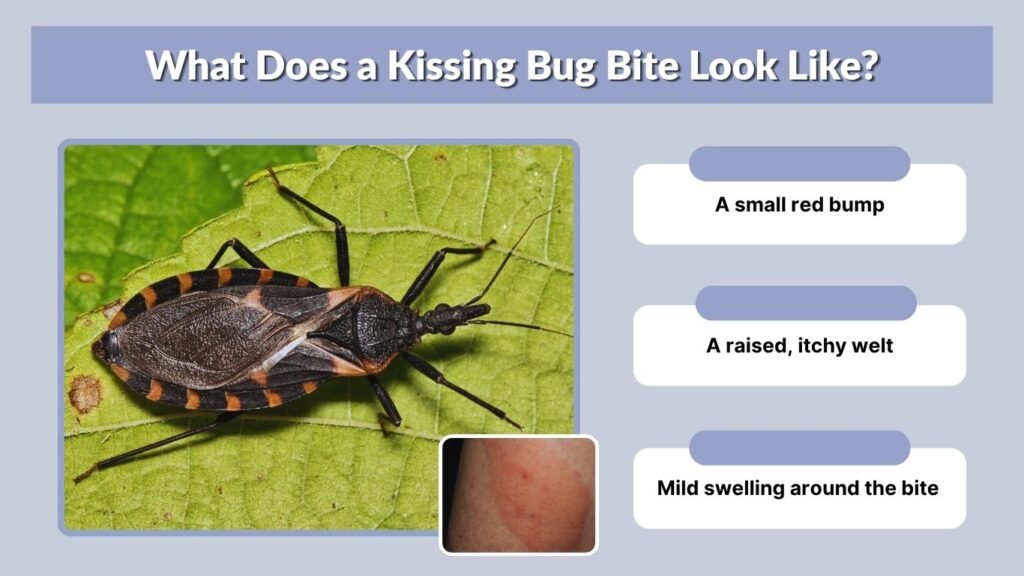
There is no single appearance that confirms a kissing bug bite. Skin reactions vary depending on the person’s sensitivity, the number of bites, and whether the area has been scratched.
A kissing bug bite may appear as:
- A small red bump
- A raised, itchy welt
- Mild swelling around the bite
- A cluster of red marks
- A small puncture point
- A larger area of inflammation
- Redness around the face, mouth, or eyes
Some people have little or no visible reaction. Others may develop a swollen, itchy mark that remains noticeable for several days.
A bite mark alone cannot reliably identify the insect responsible. Mosquitoes, bed bugs, fleas, mites, ants, and other insects can create similar-looking spots.
Can Kissing Bug Bite Pictures Confirm the Cause?
Pictures of kissing bug bites may help you compare general skin reactions, but they cannot provide a definite diagnosis. The same insect can create different reactions in different people, while unrelated pests may produce nearly identical marks.
Finding and correctly identifying the insect is more useful than relying only on a bite picture. A healthcare professional may also consider where the exposure occurred, whether kissing bugs are present in the area, and whether other symptoms have developed.
Kissing Bug Bite Symptoms in Humans
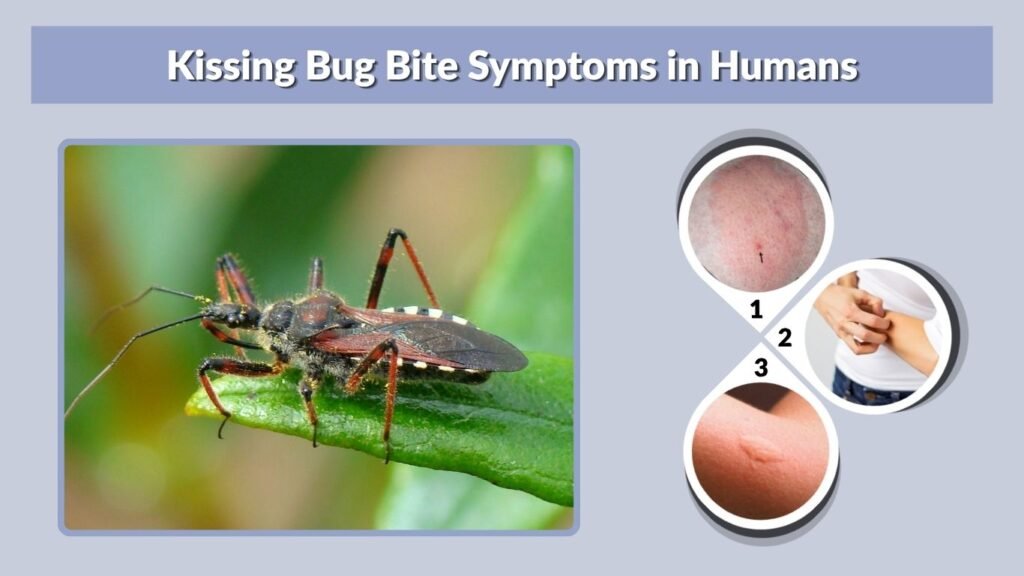
The immediate symptoms of a kissing bug bite are usually limited to the skin. The mark may appear shortly after the bite or become noticeable several hours later.
Common symptoms can include:
- Redness
- Itching
- Mild pain or tenderness
- Localized swelling
- Warmth around the affected area
- A small raised bump
- Several marks close together
Not everyone develops symptoms. A person may be bitten without knowing it, particularly when the feeding occurs during sleep.
Do Kissing Bug Bites Hurt?
Kissing bug bites are often painless while the insect is feeding. Some people may later notice mild soreness, burning, or itching around the bite site.
A painful bite does not necessarily mean that a kissing bug was responsible. Many biting insects and skin conditions can cause discomfort, so the appearance and pain level should not be used as the only means of identification.
Do Kissing Bug Bites Itch?
Yes, kissing bug bites can itch. Itching occurs when the immune system reacts to substances in the insect’s saliva.
The intensity may range from barely noticeable to severe. Scratching can break the skin, increase inflammation, and introduce bacteria that may lead to a secondary infection.
Kissing Bug Bites on the Face, Lips, and Eyes
Kissing bugs may feed on exposed skin, making the face a possible bite location when someone is sleeping. Bites around the lips, cheeks, eyelids, or forehead can produce more noticeable swelling because facial tissue is sensitive.
A bite near the lip may look like a red, swollen bump. However, lip swelling can have many causes, including food allergies, cold sores, other insect bites, and allergic reactions.
Swelling around one eye requires special attention. In acute Chagas disease, contamination near the eye can sometimes cause painless swelling of the eyelid and surrounding tissue, known as Romaña’s sign. This is not simply an ordinary bite reaction and should be evaluated by a healthcare professional, particularly after possible exposure in an area where Chagas disease occurs.
How Do Kissing Bugs Transmit Chagas Disease?
Chagas disease is caused by the parasite Trypanosoma cruzi. A common misunderstanding is that the parasite is injected directly through the kissing bug’s bite.
Instead, an infected kissing bug may pass the parasite in its feces after feeding. Infection can occur when contaminated material is rubbed or scratched into the bite wound, another break in the skin, the mouth, or the eyes.
Therefore, being bitten does not automatically mean that a person has contracted Chagas disease. Several conditions must occur:
- The insect must be a true triatomine kissing bug.
- The insect must carry T. cruzi.
- Infected fecal material must enter the body.
- The parasite must establish an infection.
Chagas disease is most common in parts of Mexico, Central America, and South America. Kissing bugs are also present in parts of the United States, but locally acquired human infections have been documented far less often there.
Symptoms of Acute Chagas Disease
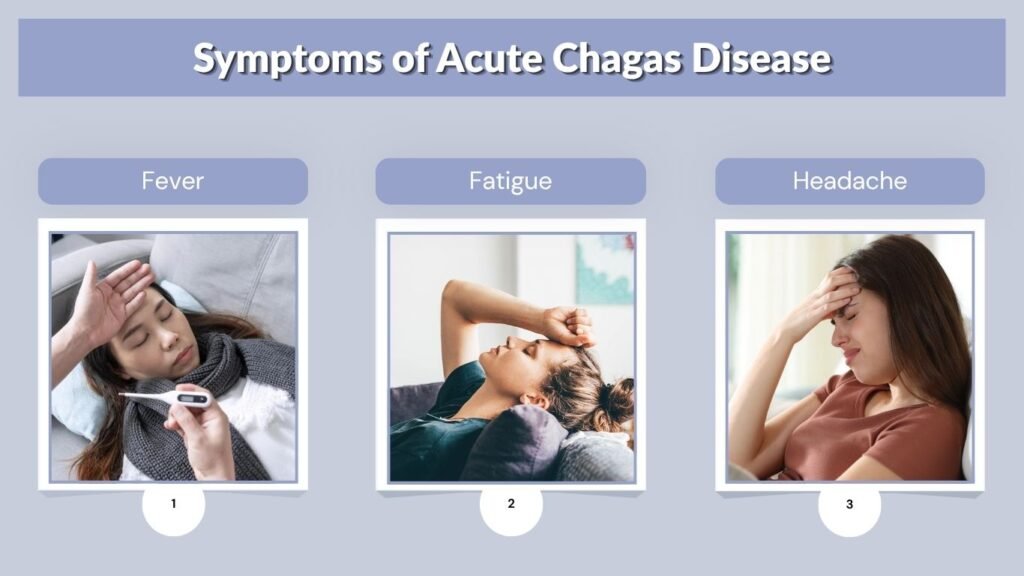
The early or acute stage of Chagas disease can occur during the first weeks or months after infection. Many infected people have no symptoms, while others develop mild, nonspecific illness that can be mistaken for another infection.
Possible symptoms include:
- Fever
- Fatigue
- Headache
- Body aches
- Rash
- Loss of appetite
- Nausea or digestive discomfort
- Swollen lymph nodes
- Swelling near the infection site
- Swelling around one eye
Because these symptoms are not unique to Chagas disease, laboratory testing is needed to diagnose the infection. Early diagnosis is important because antiparasitic treatment is generally most effective during the early stage.
Are Kissing Bug Bites Dangerous?
Most kissing bug bites cause only a localized skin reaction. However, they deserve attention for two main reasons: allergic reactions and possible exposure to Chagas disease.
Some people can become sensitized to kissing bug saliva and develop a significant allergic response. Severe reactions, including anaphylaxis, have been reported in susceptible individuals.
Seek emergency care immediately if a bite is followed by:
- Trouble breathing
- Tightness in the throat
- Wheezing
- Faintness or confusion
- Rapidly spreading hives
- Severe facial or tongue swelling
- A sudden drop in alertness
These signs may indicate anaphylaxis, which is a medical emergency.
Kissing Bug Bite Treatment
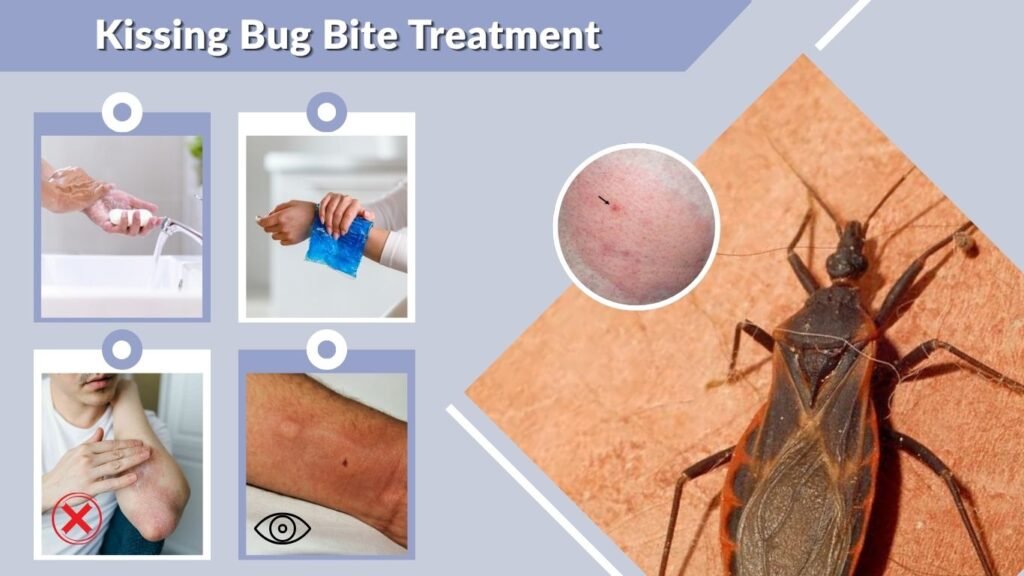
A mild skin reaction can usually be managed with basic first aid. Treatment should focus on cleaning the area, controlling itching, and watching for unusual symptoms.
Wash the Bite
Clean the skin gently with soap and water. Washing may remove dirt, bacteria, and any material that remains on the skin.
Avoid rubbing the eyes or mouth before washing your hands, especially after handling a suspected kissing bug.
Use a Cold Compress
Apply a cold, damp cloth or an ice pack wrapped in fabric for approximately 10 to 15 minutes. Cold may help reduce swelling, itching, and discomfort.
Do not apply ice directly to the skin.
Control Itching
An over-the-counter anti-itch lotion, topical hydrocortisone product, or oral antihistamine may help with mild itching when used according to its label. Ask a pharmacist or clinician for guidance when treating a child, during pregnancy, or when taking other medicines.
Avoid scratching because damaged skin can become infected.
Monitor the Area
Check the bite over the following days. Medical evaluation may be appropriate if redness continues spreading, pain becomes stronger, pus appears, or the skin feels increasingly hot.
These changes may indicate a secondary bacterial infection rather than a normal bite reaction.
Kissing Bug Bite Home Remedies to Avoid
Simple cleaning and a cold compress are safer than unproven remedies. Avoid applying bleach, gasoline, kerosene, strong disinfectants, or undiluted essential oils to the bite.
These substances can burn or irritate the skin and may make the reaction worse. Cutting the bite, attempting to suction it, or aggressively squeezing the area will not prevent Chagas disease.
A suspected exposure to T. cruzi requires professional medical assessment rather than a home remedy.
How Long Does a Kissing Bug Bite Last?
A mild bite reaction may improve within a few days, but redness or itching can sometimes persist for a week or longer. The duration depends on the person’s immune response and whether the bite has been scratched.
A mark that lasts longer does not by itself prove that Chagas disease is present. Likewise, a quickly disappearing bite does not rule out exposure.
Seek medical advice when a bite reaction is severe, worsening, repeatedly returning, or accompanied by fever, unusual fatigue, facial swelling, swollen lymph nodes, or other systemic symptoms.
Kissing Bug Bite vs. Mosquito Bite
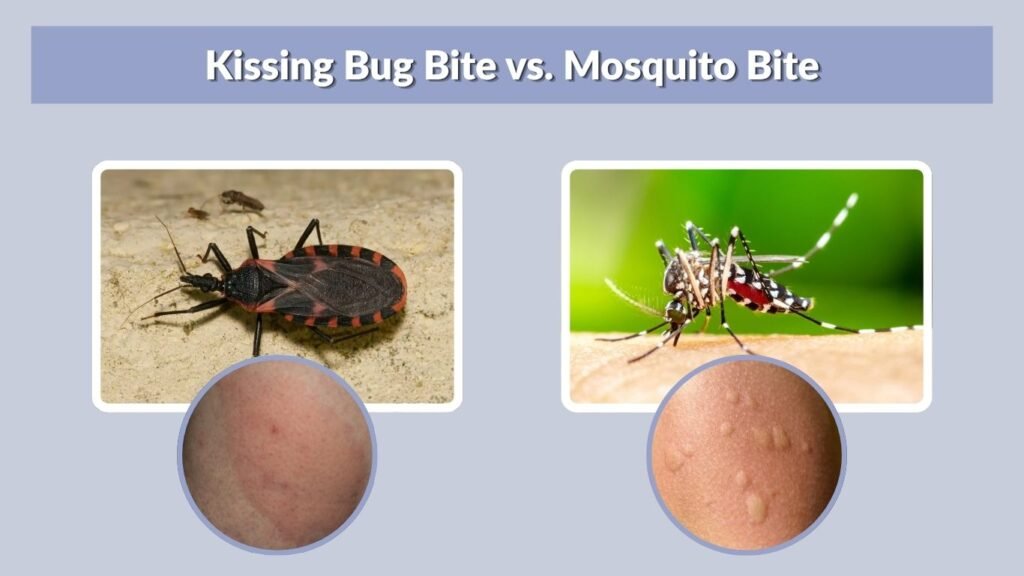
Kissing bug and mosquito bites can both produce red, itchy bumps, making them difficult to distinguish by appearance alone.
| Feature | Kissing bug bite | Mosquito bite |
|---|---|---|
| Typical feeding time | Often at night | Day, evening, or night depending on species |
| Common location | Exposed skin, sometimes face | Any exposed skin |
| Immediate sensation | Often unnoticed | Sometimes felt shortly afterward |
| Skin reaction | Red bump, swelling, or no reaction | Commonly an itchy raised bump |
| Main disease concern | Chagas disease in relevant exposures | Varies by location and mosquito species |
| Identification by mark | Not reliable | Not reliable |
The surrounding evidence is often more useful than the skin mark. Finding a suspected insect indoors, seeing repeated nighttime activity, or living in a structure that allows kissing bugs to enter may increase suspicion.
What to Do After Finding a Kissing Bug
Do not crush a suspected kissing bug with bare hands. Crushing it could expose you to its blood or fecal material.
Place a container over the insect, slide stiff paper beneath it, and transfer it into a secure container without touching it directly. Wash your hands afterward.
Local public-health departments, agricultural extension services, or qualified pest-identification professionals may be able to help determine whether the insect is a kissing bug. Not every dark, elongated insect is a triatomine; wheel bugs, leaf-footed bugs, and other true bugs are frequently mistaken for them.
Contact a healthcare professional when there has been possible fecal contamination of the eyes, mouth, broken skin, or bite wound, especially in a region where T. cruzi exposure is possible.
How to Prevent Kissing Bug Bites
Preventing contact with kissing bugs is the primary way to reduce bite and Chagas disease risks because no vaccine or preventive medication is currently available.
Helpful prevention measures include:
- Repairing damaged window and door screens
- Sealing cracks around walls, roofs, doors, and windows
- Closing gaps where utility lines enter the home
- Reducing clutter near sleeping areas
- Moving woodpiles away from the house
- Removing animal nests near buildings when safe and legal
- Keeping outdoor pet areas clean
- Using mosquito netting in high-risk sleeping environments
- Limiting unnecessary lights that attract insects near entrances
- Consulting a licensed pest-control professional when bugs repeatedly enter the home
During travel, sleeping in well-constructed accommodations and using properly treated bed nets can reduce exposure in areas where Chagas disease is common. CDC also recommends appropriate insect-bite prevention practices during travel.
FAQs
Where Do Kissing Bugs Usually Bite?
Kissing bugs feed on exposed skin. Bites may occur on the face, lips, neck, arms, hands, or legs while a person sleeps. The face is associated with their common name, but these insects are not limited to biting near the mouth.
Can You Feel a Kissing Bug Bite?
Many people do not feel the initial bite because kissing bugs generally feed quietly at night. Itching, redness, tenderness, or swelling may develop later. Others experience no visible reaction and may never realize that feeding occurred.
How Do You Know Whether a Kissing Bug Bit You?
A skin mark alone cannot confirm a kissing bug bite. Suspicion is stronger when a correctly identified kissing bug is found nearby, particularly around a sleeping area. A pest expert or health authority may help identify a safely collected specimen.
What Happens If a Kissing Bug Bites a Dog?
Dogs may develop localized redness, swelling, or itching after a bite. They can also become infected with T. cruzi, particularly in regions where the parasite circulates. Contact a veterinarian if a dog develops facial swelling, breathing trouble, weakness, collapse, or other unusual symptoms.
Should You See a Doctor for a Kissing Bug Bite?
Seek medical advice when you have a severe reaction, possible exposure to bug feces, concerning symptoms, or a confirmed kissing bug encounter in a Chagas-risk area. Call emergency services immediately for breathing difficulty, faintness, or rapidly progressing facial or throat swelling.
