
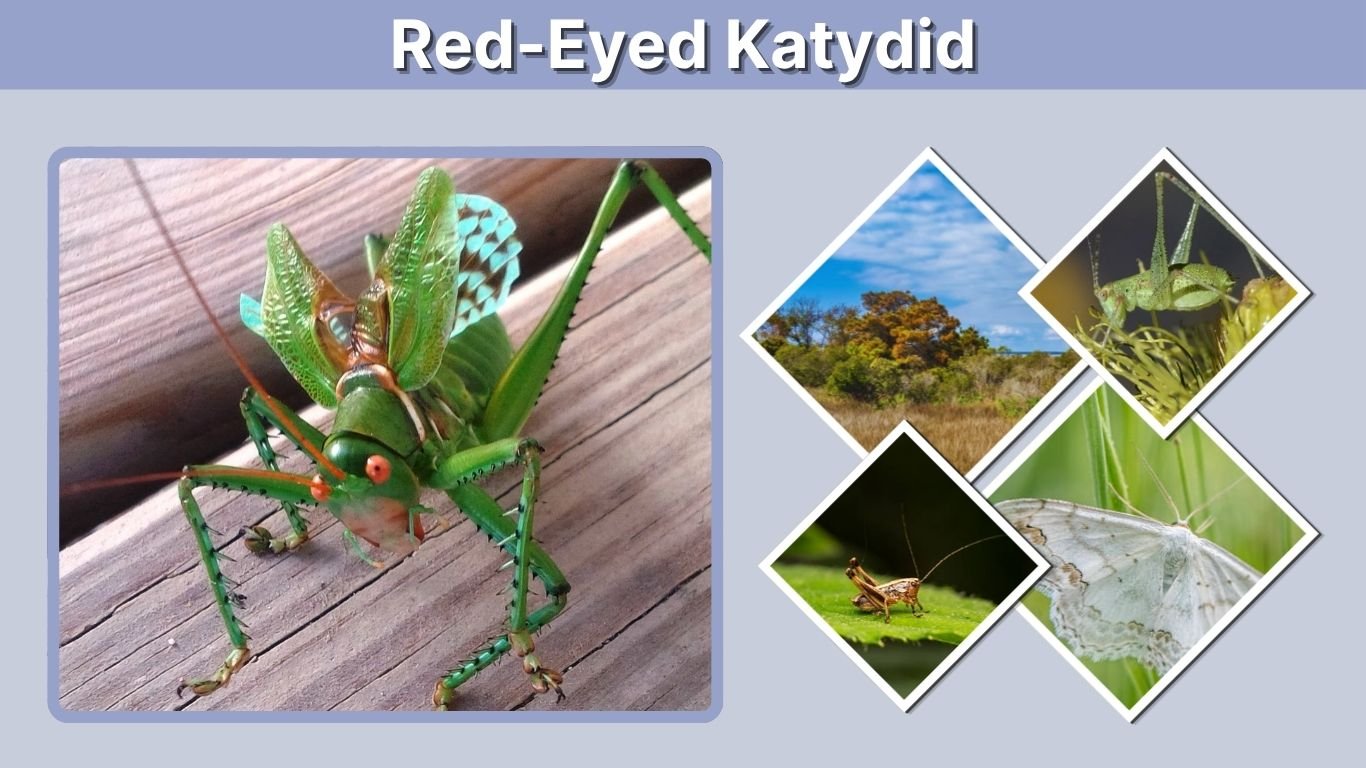
The red-eyed katydid is a striking long-horned insect recognized by its vivid eyes, powerful hind legs, long antennae, and often green or dark-colored body. The name may describe several katydids, but it is especially associated with the red-eyed devil katydid, Neobarrettia spinosa, a large predatory species found in parts of the southern United States. Unlike many leaf-eating katydids, this formidable insect can hunt other arthropods. This guide covers identification, size, habitat, diet, bite risk, behavior, nymphs, and other useful facts.
What Is a Red-Eyed Katydid?
“Red-eyed katydid” is more of a descriptive common name than a single universal species name. Several katydids can show reddish eyes or red markings, so identification should consider body shape, location, coloration, and behavior. One of the best-known examples is the red-eyed devil katydid, a robust predatory insect sometimes encountered in Texas and neighboring areas.
Red-Eyed Devil Katydid
The red-eyed devil katydid, scientifically known as Neobarrettia spinosa, belongs to the katydid family Tettigoniidae.
Its appearance can include:
- Bright reddish or orange-red eyes
- Very long threadlike antennae
- Powerful jaws
- Long hind legs designed for jumping
- Spines on the legs
- Green, brown, or dark coloration
- Long wings in mature adults
- A robust body compared with many delicate katydids
Its large jaws and predatory behavior give it a much more intimidating appearance than an ordinary leaf-feeding katydid.
Red-Eyed Katydid Identification
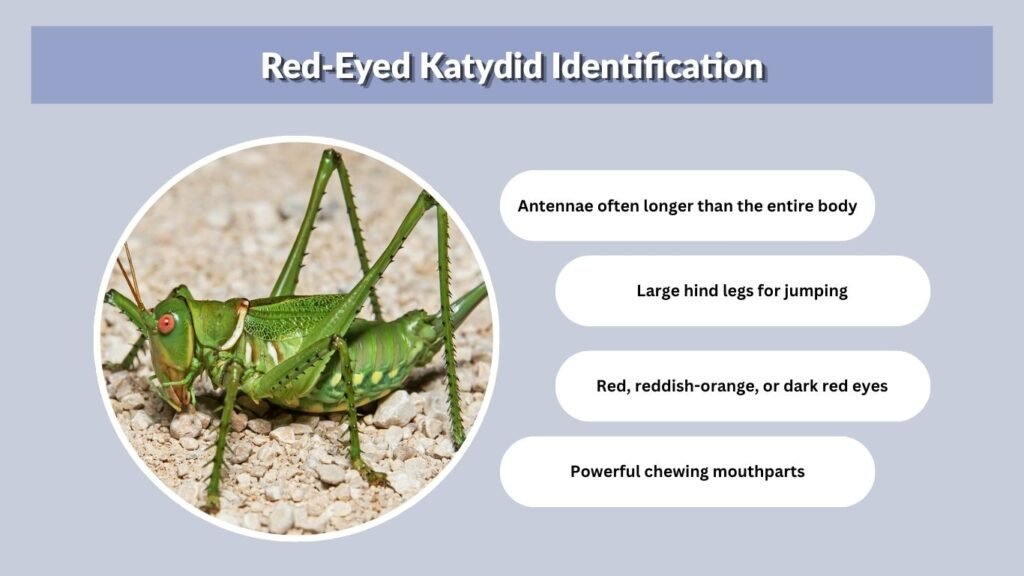
Identifying a katydid only by eye color can be difficult because coloration varies between species, individuals, and life stages. A red-eyed specimen may be green, brown, blackish, or patterned. Some young katydids also develop colors that differ noticeably from those they display as adults.
Key Identification Features
Look for these characteristics:
- Antennae often longer than the entire body
- Large hind legs for jumping
- Red, reddish-orange, or dark red eyes
- Powerful chewing mouthparts
- Four walking legs plus two enlarged hind legs
- Leaflike wings in many adults
- Spines along the legs in predatory species
- Long ovipositor on adult females
A female’s ovipositor may resemble a curved blade extending from the rear of the abdomen. It is an egg-laying structure rather than a stinger.
Red-Eyed Devil Katydid Size
The red-eyed devil katydid is relatively large compared with many familiar katydids. Its long legs and antennae make it appear even bigger when encountered on vegetation at night. Exact dimensions vary with sex, maturity, and individual development, but adults are substantial insects capable of overpowering other arthropods.
How Big Is a Red-Eyed Devil Katydid?
The body can reach roughly 2 to 3 inches long, depending on the individual and how it is measured. The antennae extend much farther beyond the body.
Females may look particularly impressive because of their larger abdomen and prominent ovipositor.
Size characteristics include:
- Body approximately several centimeters long
- Antennae considerably longer than the body
- Large muscular hind legs
- Broad head with strong jaws
- Females often appearing heavier than males
Although intimidating, its appearance should not be confused with a dangerous venomous insect.
Where Do Red-Eyed Katydids Live?
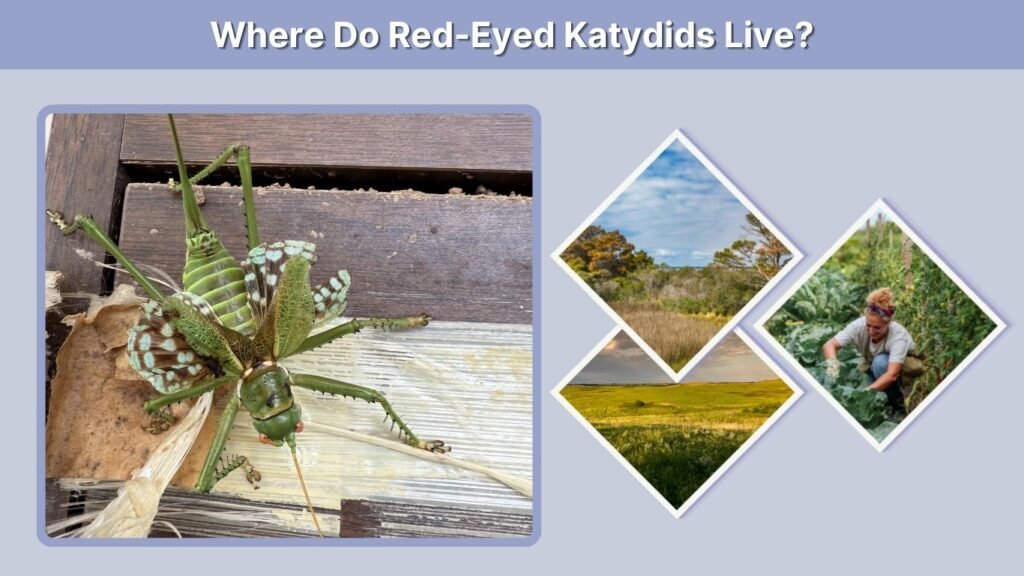
Red-eyed katydids are generally associated with warm environments containing plenty of vegetation and insect prey. The exact habitat depends on which species is being discussed. The red-eyed devil katydid is particularly associated with the southern United States and parts of Mexico, where warm nights provide excellent conditions for katydid activity.
Red-Eyed Katydids in Texas
Texas red-eyed katydid searches commonly refer to Neobarrettia spinosa. These insects may occur in brushy landscapes, grasslands, gardens, woodland edges, and other areas containing shrubs and tall plants.
They may be noticed:
- On bushes and shrubs
- In tall grass
- Around woodland edges
- On garden vegetation
- Near outdoor lights attracting insect prey
- In warm, dry or semi-arid environments
Red-eyed devil katydids are largely nocturnal, making nighttime encounters more likely.
What Do Red-Eyed Katydids Eat?
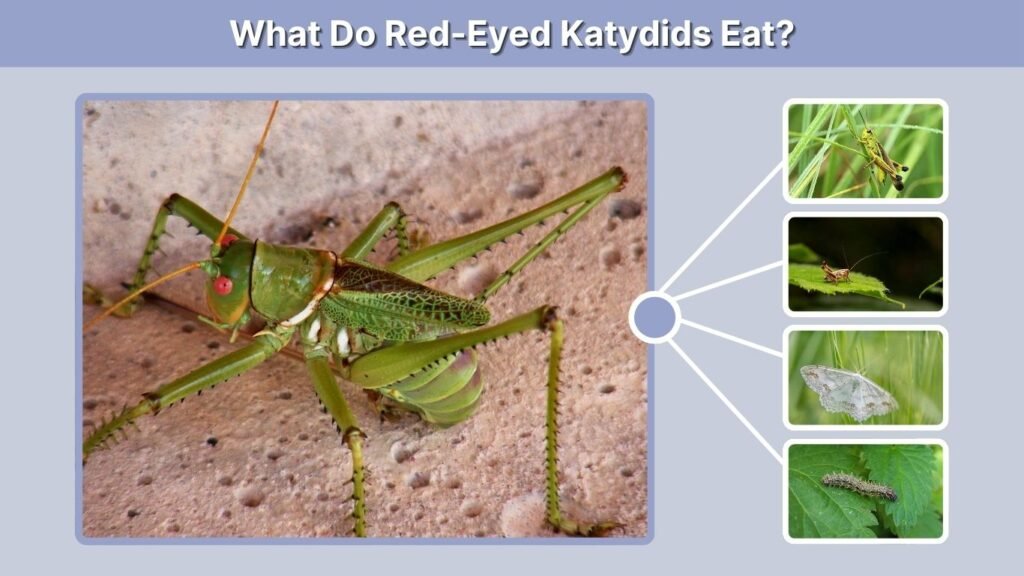
Many katydids primarily consume plant material, but the red-eyed devil katydid is notable because it is a predatory katydid. It uses its strong jaws and spiny legs to capture other insects and small arthropods. This hunting behavior distinguishes it from the gentle leaf-eating image often associated with katydids.
Red-Eyed Devil Katydid Diet
Potential prey can include:
- Grasshoppers
- Smaller katydids
- Crickets
- Moths
- Caterpillars
- Beetles
- Other insects
- Small arthropods
Its spiny legs help grip struggling prey while the powerful mandibles cut and crush food.
Some katydids are omnivorous and may supplement animal prey with vegetation, although hunting is an important feature of predatory species such as Neobarrettia.
Do Red-Eyed Katydids Bite?
Yes, a red-eyed katydid can bite if it is picked up, restrained, squeezed, or otherwise feels threatened. The large mandibles of a red-eyed devil katydid are particularly capable of pinching human skin. However, these insects do not normally chase or attack people and would prefer to escape when given the opportunity.
Red-Eyed Devil Katydid Bite
A defensive bite can be surprisingly painful because of the insect’s powerful jaws.
Possible effects include:
- Immediate pinching pain
- Mild redness
- Temporary swelling
- Small superficial skin injury
- Tenderness around the area
The bite does not inject venom, and red-eyed devil katydids are not poisonous to humans.
Wash any broken skin with soap and water and keep the area clean. Medical attention may be appropriate if a wound becomes increasingly red, swollen, painful, or develops signs of infection.
Are Red-Eyed Katydids Dangerous?
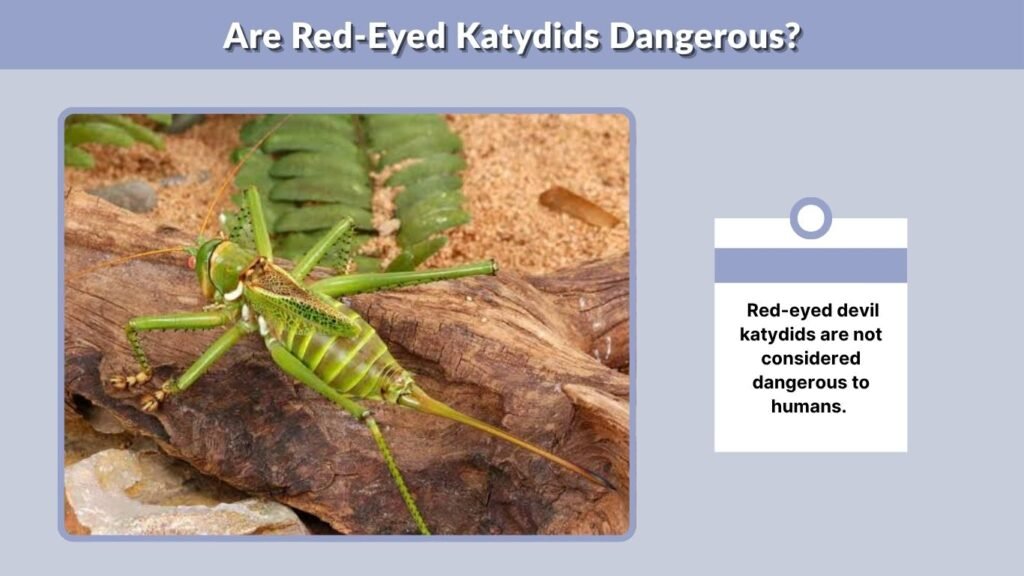
Despite their dramatic name and appearance, red-eyed devil katydids are not considered dangerous to humans. Their jaws are designed for capturing prey rather than attacking large animals. Problems are most likely when someone deliberately handles the insect and gives it no way to escape.
Can a Red-Eyed Katydid Hurt You?
A large individual can deliver a painful defensive pinch, but serious injury is unlikely.
They do not have:
- A venomous stinger
- Dangerous venom glands
- Blood-feeding behavior
- An instinct to hunt humans
- Medically significant toxins delivered by biting
The safest option is simply to observe the insect without grabbing it.
Red Katydids and Color Variations
Not every red katydid is a red-eyed devil katydid. Katydids occur in an extraordinary range of colors, including green, brown, yellow, pink, red, and combinations of several colors. Color can result from genetics, development, camouflage, or differences between species.
Why Are Some Katydids Red?
A red katydid may simply have an unusual color variation rather than belonging to a species specifically known for being red.
Young katydids can also show temporary colors before reaching adulthood. A red katydid nymph may eventually develop a very different adult appearance after successive molts.
Identification should therefore consider body structure, wings, leg markings, antennae, location, and other features rather than relying on color alone.
Red-Headed Meadow Katydid vs. Red-Eyed Katydid
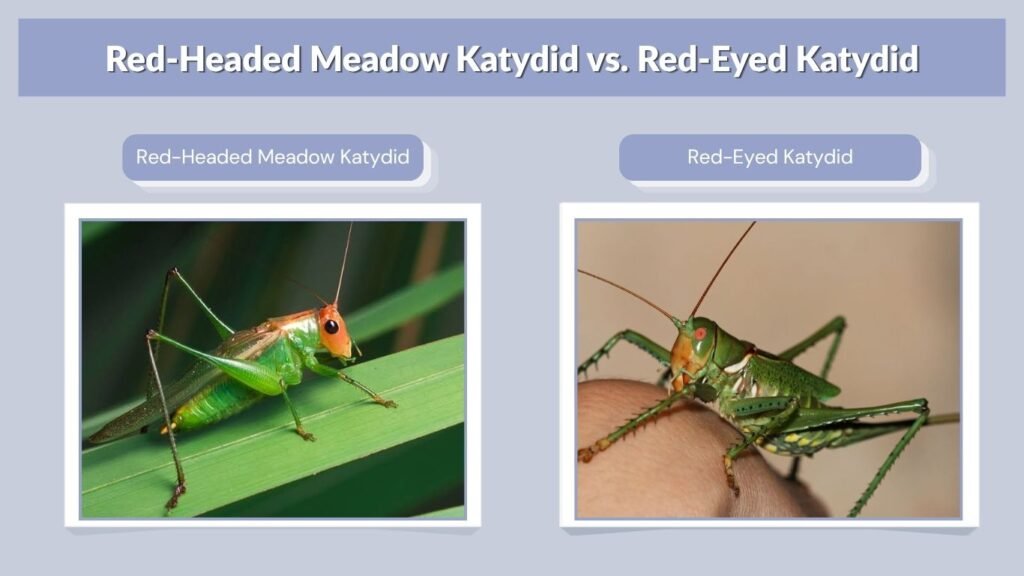
The red-headed meadow katydid is another insect that may appear in searches for red katydids. However, it should not automatically be confused with the much larger red-eyed devil katydid. Meadow katydids are generally slimmer and associated with grassy or wet vegetation.
Main Differences
Typical differences include:
- Red-headed meadow katydids are generally more slender.
- Their red coloration is especially noticeable around the head.
- Red-eyed devil katydids are larger and more robust.
- Devil katydids have strong predatory jaws.
- Their legs often appear more heavily armed with spines.
- Habitat and geographic location can help separate species.
A clear photograph showing the head, wings, legs, and side of the body is much more useful for identification than eye color alone.
Red-Eyed Katydid Nymphs
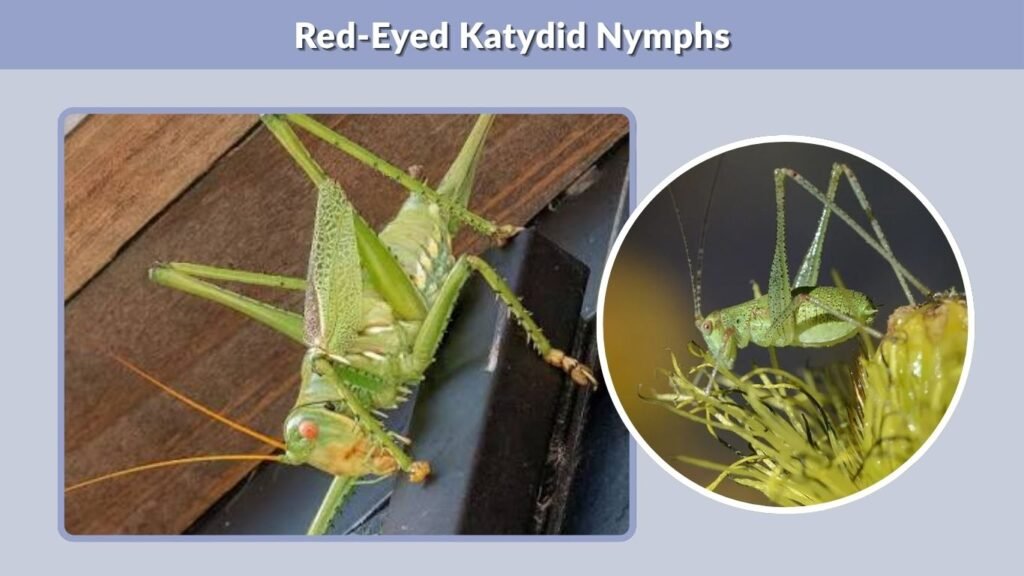
Young katydids are called nymphs. They resemble small wingless versions of adults but change considerably as they grow. Nymphs pass through a series of molts, becoming progressively larger and developing wing structures before reaching adulthood.
How Nymphs Develop
A katydid’s development generally follows these stages:
- Eggs are deposited in plant material, soil, or another suitable substrate.
- Wingless nymphs hatch.
- Nymphs feed and grow.
- They shed their outer skeleton repeatedly.
- Wings and adult reproductive structures gradually develop.
- The final molt produces a mature adult.
Young red or unusually colored katydids can therefore look considerably different from mature adults of the same species.
Red-Eyed Katydid Behavior and Sound
Like many katydids, red-eyed species are often most active after dark. Long antennae allow them to detect their surroundings while moving through dense vegetation. Males of many katydid species produce calls by rubbing specialized parts of their wings together, a process called stridulation.
What Do They Do at Night?
After sunset, katydids may emerge to:
- Search for food
- Hunt insects
- Find mates
- Call from vegetation
- Move between plants
- Hide from daytime predators
Outdoor lights can attract moths, crickets, and other insects, which may indirectly bring predatory katydids closer to homes.
FAQs
Red-eyed katydids are unusual enough to create confusion, particularly because several species can have red eyes or red body markings. The red-eyed devil katydid receives the most attention because of its large size, powerful jaws, and predatory lifestyle. These answers address five of the most common concerns about these insects.
Is a Red-Eyed Devil Katydid Dangerous?
No. It can deliver a painful defensive bite, but it does not have medically significant venom and normally avoids humans.
What Is the Scientific Name of the Red-Eyed Devil Katydid?
The red-eyed devil katydid is commonly identified as Neobarrettia spinosa.
Do Red-Eyed Katydids Bite Humans?
They can bite if handled or trapped. Large individuals have strong jaws, so the bite can hurt, but serious effects are uncommon.
Are Red-Eyed Devil Katydids Found in Texas?
Yes. Neobarrettia spinosa is associated with Texas and other parts of the southern United States as well as areas farther south.
What Do Red-Eyed Devil Katydids Eat?
They are predatory and can feed on grasshoppers, crickets, smaller katydids, moths, caterpillars, beetles, and other small arthropods.
