

Stink bugs are one of the most troublesome pests for gardeners, especially those growing tomatoes and other vegetables like peppers, squash, and cucumbers. These shield-shaped insects feed by piercing plant tissues and sucking out nutrients, leaving behind scars and distorted fruit. Their damage can ruin an entire crop if left untreated. Whether you’re dealing with green stink bugs or brown marmorated stink bugs, understanding their behavior and control methods is essential to protect your garden naturally.
Understanding Stink Bugs and Their Impact on Plants
Stink bugs belong to the Pentatomidae family and are named for the foul odor they release when threatened. The most common species in gardens include the brown marmorated stink bug and the green stink bug, both known to attack tomatoes and other crops.
Unlike caterpillars or beetles, stink bugs don’t chew on leaves. Instead, they use their needle-like mouthparts to pierce fruits, stems, and leaves to suck plant juices. This feeding habit leaves behind visible scars, reduces plant vitality, and affects fruit quality. Because of their adaptability and high reproductive rate, infestations can escalate quickly, especially during warm, humid months.
Do Stink Bugs Eat or Damage Plants?

Yes — stink bugs feed on plant sap, and their damage can be quite extensive. They attack a wide variety of crops, including tomatoes, peppers, beans, squash, and even corn. When feeding, they puncture the fruit’s surface, inject digestive enzymes, and suck out the juices. This process causes discoloration, pitted spots, and cloudy patches on the skin of tomatoes and other fruits.
As a result, the damaged areas often fail to ripen properly, leading to sunken, corky patches inside the fruit. This is commonly known as “catfacing,” a typical sign of stink bug feeding. Severe infestations can also cause leaves to wilt and young plants to weaken, though the bugs rarely kill entire plants directly.
Are Stink Bugs Bad for Tomato Plants?
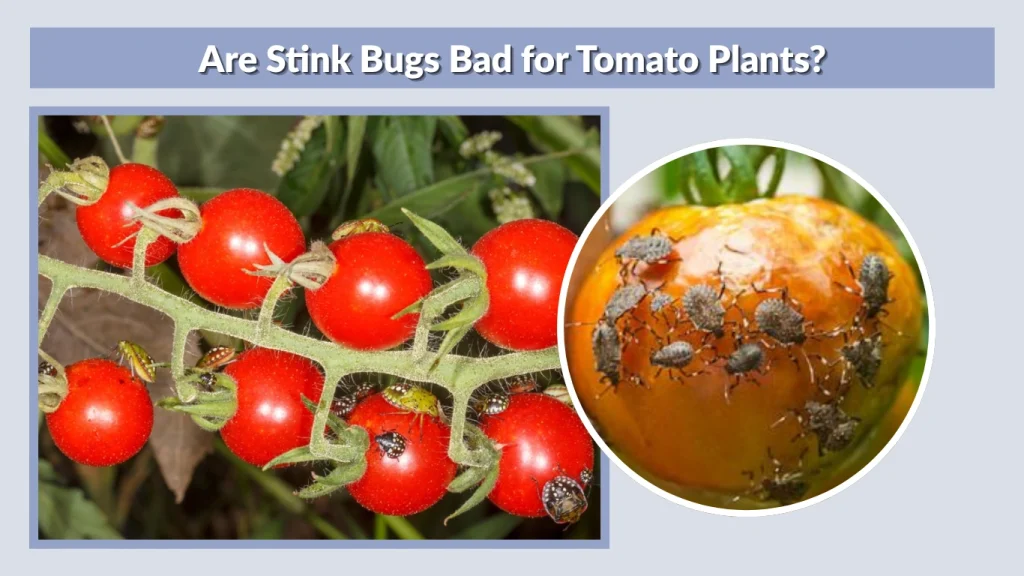
Stink bugs are highly destructive to tomato plants. They are most active during mid to late summer, feeding on developing fruit. The most visible damage appears as small, cloudy white or yellowish spots that later turn brown. These spots don’t just affect the fruit’s appearance but also its taste and shelf life.
If the infestation continues unchecked, the fruit becomes misshapen, making it unsuitable for sale or consumption. Both green and brown stink bugs feed on tomato plants, but the green species are more common in warmer climates and tend to appear earlier in the growing season.
Unlike some garden pests, stink bugs do not transmit diseases to tomato plants. However, the wounds they create can serve as entry points for bacteria or fungal infections, further damaging the crop.
What Plants Do Stink Bugs Eat or Target Most?

Stink bugs are not picky eaters. They feed on a wide variety of plants, including:
- Tomatoes – their preferred food source during summer.
- Peppers – often attacked once tomatoes are harvested.
- Squash and Zucchini – a favorite during early planting seasons.
- Cucumbers – particularly vulnerable to stink bug nymphs.
- Corn, beans, and potatoes – secondary crops they move to when populations increase.
Stink bugs also feed on ornamental and house plants when outdoor food sources decline. Gardeners often notice them clustering on window sills or potted plants indoors during cooler months, seeking warmth.
Stink Bug Damage Symptoms on Tomato Plants
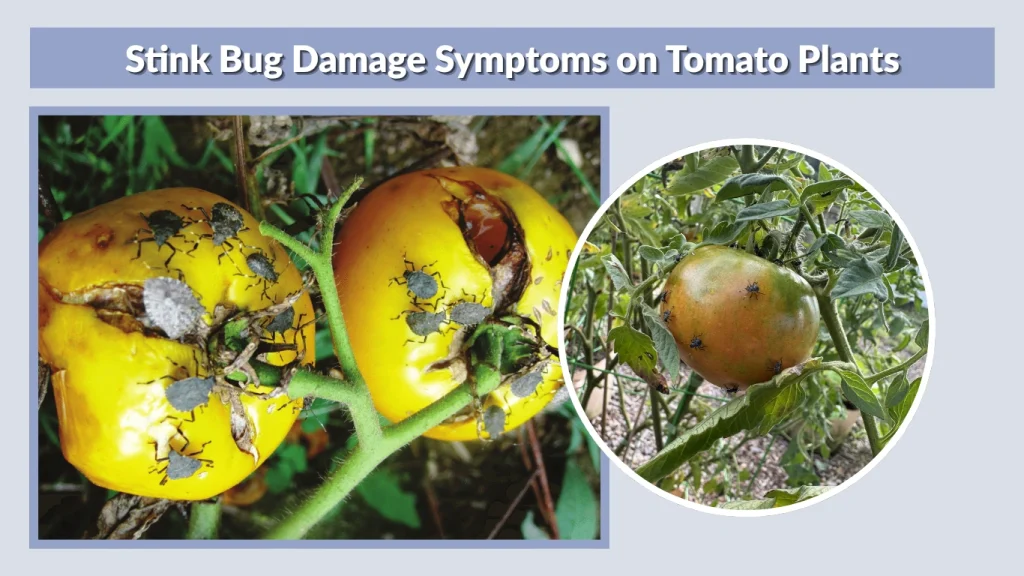
Identifying stink bug damage early can save your plants. Look for the following signs:
- Pale or cloudy spots on tomato skin that resemble bruises.
- Puckered or wrinkled surfaces, especially near the top of the fruit.
- White or yellow puncture marks that later turn dark and sunken.
- Deformed or uneven ripening, where parts of the fruit remain hard and green.
- Clusters of eggs — light-colored and barrel-shaped — often laid on the underside of leaves.
Nymphs (young stink bugs) are smaller, rounder, and may have bright red or black markings. They cause the same type of damage as adults and can multiply quickly if not managed.
Are Stink Bugs Dangerous or Harmful to Plants?
While stink bugs are not toxic, they are very harmful to plants. Their feeding weakens crops, causes fruit deformities, and can ruin a season’s harvest. Repeated infestations can stunt growth, reduce yield, and stress plants, making them more susceptible to other pests and diseases.
Stink bugs can also act as carriers of plant pathogens, spreading fungal spores or bacterial infections through their feeding wounds. Though they rarely kill plants outright, their cumulative damage significantly reduces fruit quality and market value.
Plants That Attract and Repel Stink Bugs
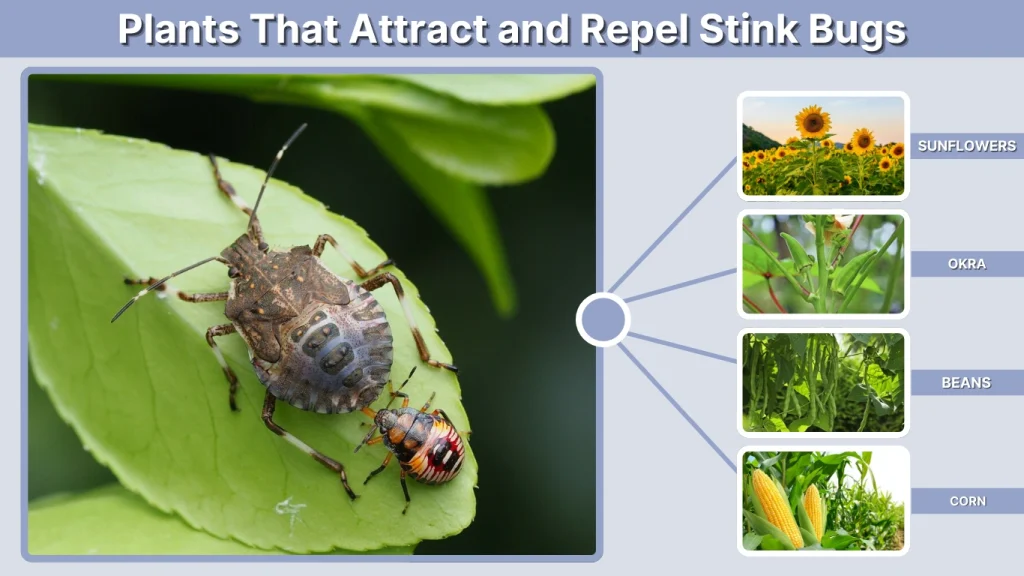
Plants That Attract Stink Bugs
Some plants naturally draw stink bugs into your garden. These include:
- Sunflowers
- Okra
- Beans
- Corn
- Mustard and kale
Gardeners often use these “trap crops” to lure stink bugs away from tomatoes and other valuable vegetables.
Plants That Repel Stink Bugs
Certain aromatic plants help deter stink bugs naturally. These include:
- Garlic – strong scent disrupts stink bug communication.
- Marigolds – repel a wide range of insects, including stink bugs.
- Mint and Catnip – strong odors that bugs dislike.
- Lavender – adds fragrance while repelling pests.
- Chrysanthemums – contain pyrethrins, a natural insect deterrent.
Planting these stink bug repellent plants around your tomato beds can reduce infestations and keep your garden pest-free.
How to Get Rid of Stink Bugs on Tomato Plants Naturally

For organic gardeners, chemical insecticides aren’t always the first choice. Fortunately, there are several eco-friendly ways to eliminate stink bugs:
- Handpick and Trap: Early in the morning, when bugs are sluggish, shake plants and collect them in soapy water.
- Neem Oil Spray: Mix neem oil with water and spray on leaves and fruit; it kills eggs and nymphs without harming beneficial insects.
- Insecticidal Soap: Spray directly on the bugs to suffocate them. It’s safe for tomatoes and other edible plants.
- Diatomaceous Earth: Sprinkle around the base of plants to deter crawling insects.
- Vacuuming: A small handheld vacuum helps remove clusters from leaves without damaging plants.
Repeat these treatments weekly during peak stink bug season for the best results.
Preventing Stink Bugs on Tomato and Vegetable Plants
Prevention is the most effective way to keep stink bugs away from your garden. Once these pests establish colonies, they can be difficult to remove completely. Here are proven prevention tips:
- Use Row Covers: Lightweight fabric covers keep stink bugs and other insects from reaching your plants while still allowing sunlight and air circulation.
- Remove Weeds and Debris: Stink bugs often hide and breed in tall weeds, grass, and garden litter. Keeping your garden clean limits their hiding spots.
- Inspect Plants Regularly: Look under leaves for clusters of eggs and remove them manually.
- Rotate Crops: Avoid planting tomatoes or peppers in the same place each year. Crop rotation helps disrupt stink bug breeding cycles.
- Install Garden Barriers: A border of plants like garlic or marigolds can act as a natural stink bug deterrent.
These strategies not only protect tomato plants but also prevent stink bugs from spreading to other crops like cucumbers, squash, and zucchini.
Natural Predators and Organic Solutions
Nature provides excellent allies in fighting stink bugs. Many beneficial insects prey on stink bug eggs and nymphs, helping control populations naturally.
Common predators include:
- Parasitic Wasps (Trissolcus spp.): Lay their eggs inside stink bug eggs, preventing new generations.
- Assassin Bugs: Feed on adult and immature stink bugs.
- Spiders and Birds: Consume stink bugs found on leaves or near fruit.
- Carnivorous Plants: Pitcher plants and sundews can trap and digest stink bugs, especially in humid regions.
Encouraging these natural predators is an eco-friendly way to maintain balance in your garden without using harsh chemicals.
You can also make an organic spray by mixing 2 cups of water, 1 teaspoon of dish soap, and 1 teaspoon of neem oil. Spray the mixture on tomato leaves once a week to repel and kill stink bugs safely.
Do Stink Bugs Eat Other Plants Like Cucumbers, Peppers, or Squash?
Yes. Stink bugs are not selective feeders — they damage a wide range of vegetables. After tomatoes, they often move on to peppers, cucumbers, squash, and beans, where they cause similar puncture marks and discoloration.
Their feeding makes cucumbers appear speckled and distorted, while squash and pumpkins may develop rough patches or rotting spots. Even pepper plants suffer when stink bugs pierce young pods, causing premature ripening and lower yields.
For these crops, the same organic treatments — neem oil, insecticidal soap, and diatomaceous earth — can be used to protect against infestations.
Insecticides and Professional Control
If natural methods fail or the infestation becomes severe, using targeted insecticides may be necessary. Choose products labeled safe for vegetables, such as:
- Pyrethrin-based sprays: Derived from chrysanthemum flowers, these control adult bugs effectively.
- Spinosad sprays: Organic option approved for edible crops.
- Kaolin clay barriers: Create a thin film that deters bugs from landing on fruits.
Apply treatments early in the morning or late evening when pollinators are less active. For large gardens or greenhouse infestations, hiring a professional pest control service ensures complete coverage and long-term results.
Are There Plants That Eat or Deter Stink Bugs Naturally?
Yes — a few carnivorous plants are known to capture stink bugs. Pitcher plants and Venus flytraps lure insects with sweet nectar before trapping and digesting them. These can be placed near vegetable gardens as part of a natural pest-control ecosystem.
As for deterrents, strong-scented herbs such as basil, rosemary, catnip, and peppermint help repel stink bugs. Planting these alongside tomatoes not only protects your crops but also enhances your garden’s fragrance and aesthetic appeal.
Protecting Indoor and House Plants
Stink bugs often invade homes in autumn, seeking warmth as temperatures drop. They may rest on indoor plants, walls, or windows. To keep them out:
- Seal cracks and window gaps with caulk.
- Use essential oils like lavender or eucalyptus as natural indoor repellents.
- Vacuum bugs instead of crushing them to avoid odor release.
- Wipe plant leaves with a mild vinegar solution to deter feeding.
Indoor infestations are usually temporary, but quick action prevents stink bugs from laying eggs or damaging house plants.
FAQs
1. Are stink bugs bad for tomato plants?
Yes. Stink bugs puncture tomato skins to suck out juices, causing pale spots, deformities, and uneven ripening. Severe infestations can ruin entire crops if untreated.
2. What plants naturally repel stink bugs?
Plants such as garlic, marigolds, mint, lavender, and chrysanthemums are known to deter stink bugs. Their strong aromas confuse and repel the insects, keeping them away from tomatoes and other vegetables.
3. How can I get rid of stink bugs on vegetable plants?
Spray neem oil or insecticidal soap directly on the bugs and leaves. For organic control, shake bugs into soapy water or dust plants with diatomaceous earth.
4. Do stink bugs kill plants?
Not directly, but their feeding weakens plants and damages fruit. Over time, repeated infestations can stunt growth and reduce productivity.
5. What attracts stink bugs to gardens?
Stink bugs are drawn to ripe fruits, weeds, and certain crops like tomatoes, beans, and corn. Keeping your garden tidy, rotating crops, and using repellent plants helps minimize their presence.
