
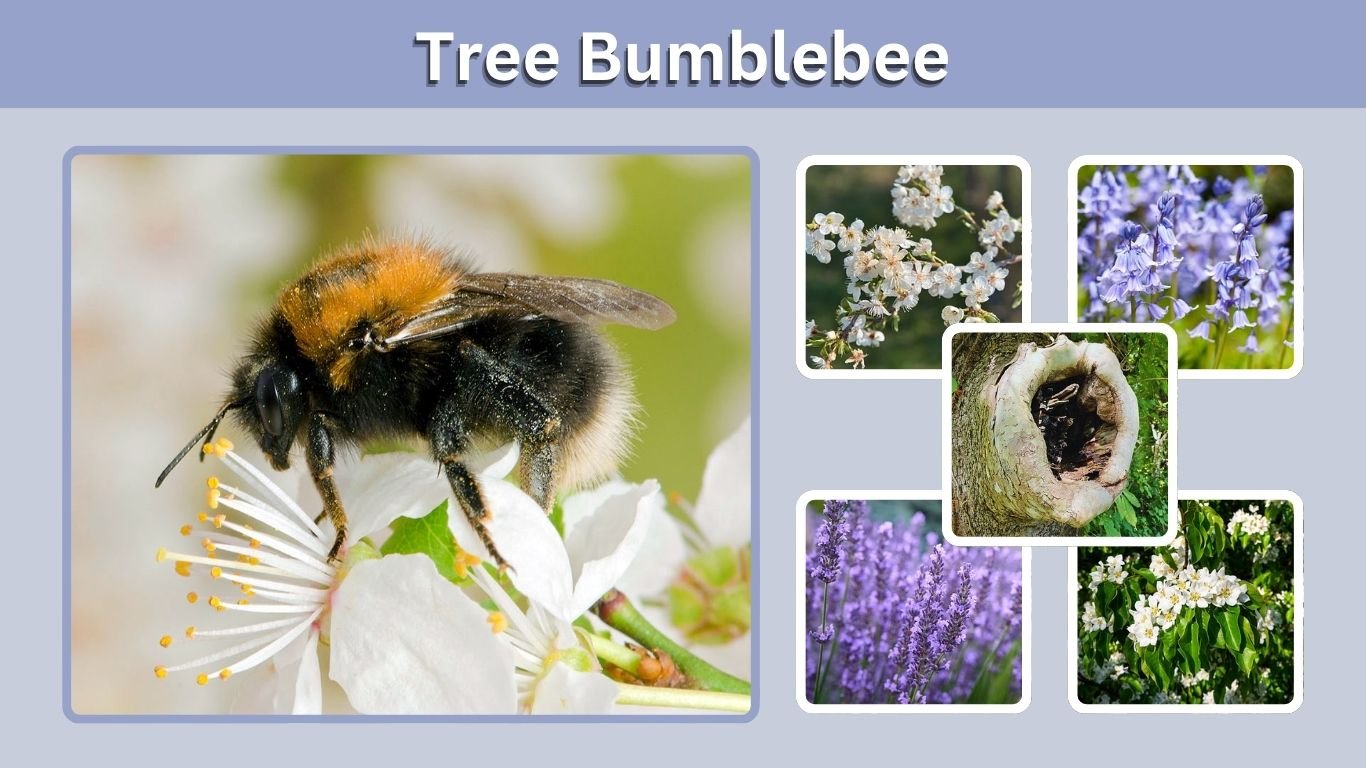
The tree bumblebee (Bombus hypnorum) is an easily recognized species with a ginger-brown thorax, black abdomen, and bright white tail. Originally associated with continental Europe and parts of Asia, it has successfully expanded across the United Kingdom. Unlike many ground-nesting bumblebees, it prefers elevated cavities such as bird boxes, tree holes, lofts, and roof spaces. Although activity around its nest can appear intimidating, the tree bumblebee is generally peaceful and plays a valuable role in pollinating garden plants, fruit trees, and wildflowers.
Tree Bumblebee Identification
The tree bumblebee has one of the clearest color combinations among European bumblebees. Its ginger thorax and white tail contrast sharply with its black abdomen. Queens, workers, and males share these general markings, although their size, facial hair, and behavior can help observers distinguish between them.
Physical Characteristics
- Scientific name: Bombus hypnorum
- Queen size: Approximately 17–20 mm long
- Worker size: Usually 11–16 mm long
- Male size: Approximately 13–15 mm long
- Thorax: Ginger, reddish-brown, or chestnut
- Abdomen: Predominantly black
- Tail: Clearly white
- Wings: Transparent with a slightly brown tint
- Body: Rounded and densely covered with hair
- Legs: Female workers have pollen baskets on their hind legs
The ginger thorax can vary in shade. Older individuals may look faded, while newly emerged bees usually have richer coloring. Some individuals also have small patches of black hair mixed into the thorax.
Queen, Worker, and Male Differences
The queen tree bumblebee is the largest member of the colony. She has a broad body and spends early spring searching for a nesting cavity. After establishing her nest and producing workers, she remains inside and concentrates on laying eggs.
Workers are smaller versions of the queen. They collect nectar and pollen and can often be seen carrying colored pollen loads on their hind legs. Males have longer antennae, lack pollen baskets, and often possess ginger facial hair. They cannot sting.
Similar Bumblebee Species
The tree bumblebee may be confused with the common carder bee because both can have ginger hair. However, the common carder bee usually has ginger coloring across much of its body and lacks the tree bumblebee’s strongly contrasting white tail.
Tree Bumblebee Habitat and Distribution
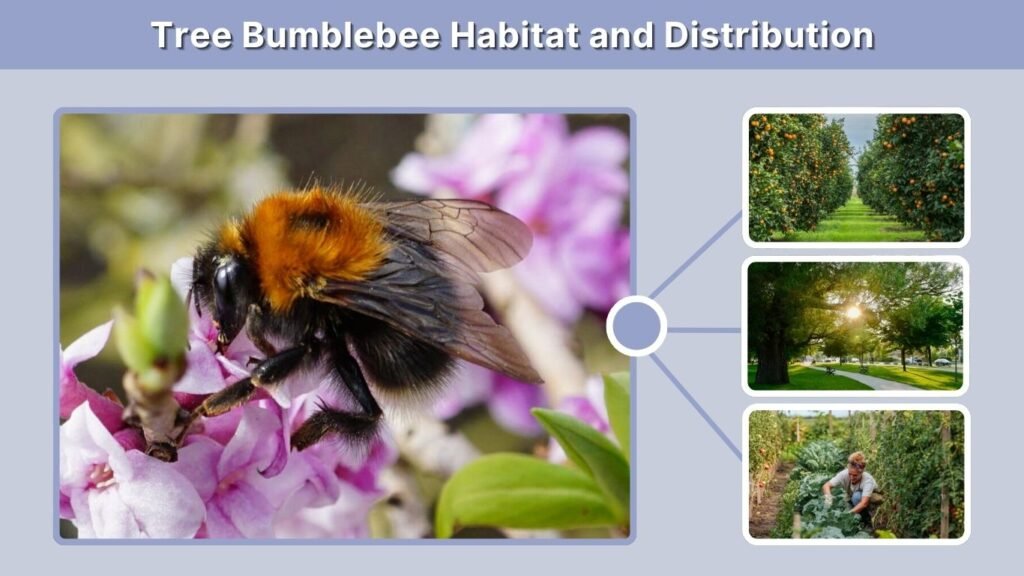
Tree bumblebees occur in woodland, farmland, gardens, parks, and urban areas. Their willingness to use buildings and artificial bird boxes has helped them thrive around people. They require suitable cavities for nesting and a steady supply of flowering plants from spring until the colony completes its seasonal cycle.
Common Habitats
- Gardens and allotments
- Woodland edges
- Parks and cemeteries
- Orchards
- Hedgerows
- Farmland
- Suburban neighborhoods
- Urban green spaces
- Areas containing mature trees
- Properties with bird boxes and roof cavities
Tree Bumblebees in the UK
The tree bumblebee was first recorded in Britain in 2001. It subsequently spread across England, Wales, and much of Scotland. Its rapid expansion was probably supported by the abundance of gardens, bird boxes, buildings, and flowering plants.
The species is now familiar in many British towns and rural communities. It is also present across large areas of continental Europe and parts of northern Asia. Despite its relatively recent arrival in Britain, it is considered a useful pollinator rather than a destructive pest.
Tree Bumblebee Nests
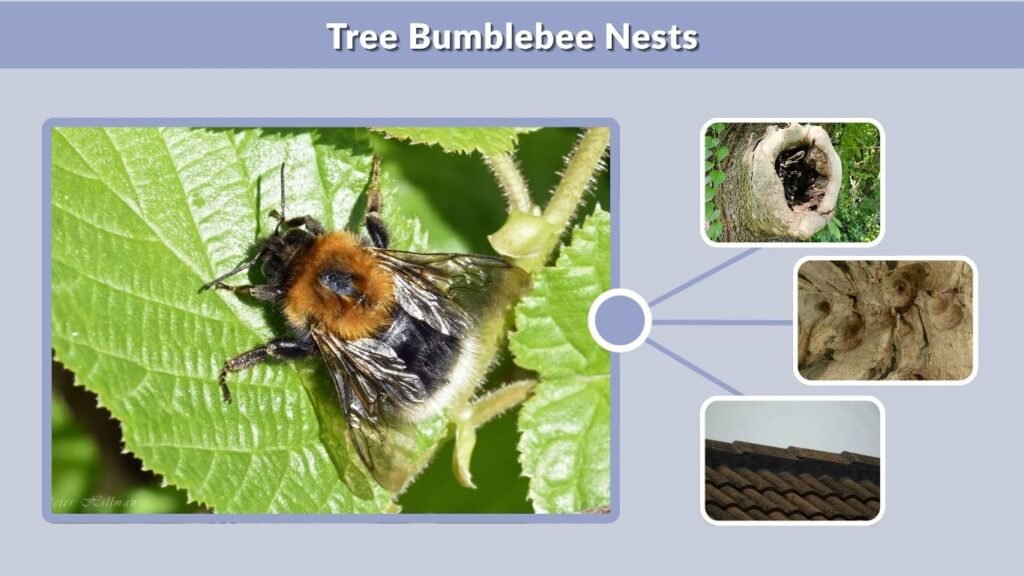
Tree bumblebees prefer elevated, enclosed nesting locations, although they occasionally nest closer to the ground. The queen usually chooses a cavity containing insulating material, such as an abandoned bird nest. Colonies are annual, meaning the nest naturally becomes inactive after the reproductive season ends.
Common Nesting Locations
- Abandoned bird boxes
- Holes inside trees
- Empty bird nests
- Roof cavities
- House lofts
- Gaps beneath roof tiles
- Wall spaces
- Shed roofs
- Building eaves
- Air vents and enclosed pipes
What Does a Tree Bumblebee Nest Look Like?
Inside the cavity, the nest consists of irregular wax cells and rounded brood chambers. It does not contain the organized hexagonal comb associated with honeybee colonies. The brood cells hold eggs and larvae, while separate wax containers store small quantities of nectar and pollen.
Because the nest is usually hidden, homeowners may only notice bees entering a small hole. A continuous stream of workers carrying pollen is a strong indication that an active colony is present.
Nests in Bird Boxes, Lofts, and Roofs
Bird boxes are especially attractive because they are elevated, sheltered, and may contain nesting material left by birds. Tree bumblebees rarely damage the box or surrounding tree. Once the colony dies naturally, the box can be cleaned during the colder months.
A loft or roof nest may produce noticeable buzzing, but the bees usually remain inside their cavity. They do not chew through structural timber like some wasps or carpenter bees. Blocking the entrance while the nest is active should be avoided because trapped bees may enter living areas while searching for another exit.
Should the Nest Be Removed?
- Leave the colony undisturbed whenever it presents no immediate danger.
- Keep children and pets away from the entrance.
- Avoid standing directly in the bees’ flight path.
- Do not spray the nest with household pesticides.
- Never seal an active entrance.
- Contact an experienced bee specialist when the nest threatens vulnerable residents.
- Clean bird boxes only after activity has completely ended.
Relocation can be difficult because the nest is delicate. Most colonies remain active for only a few months, so waiting for the natural cycle to finish is generally the safest approach.
Tree Bumblebee Life Cycle
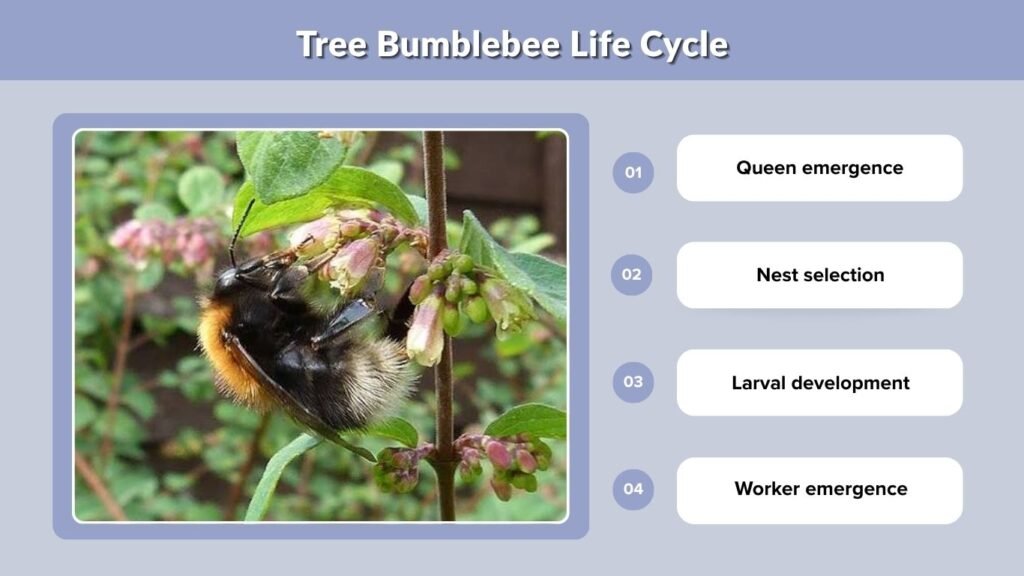
A tree bumblebee colony begins with a single fertilized queen. She emerges from hibernation during spring, feeds on flowers, and searches for a suitable cavity. After producing the first workers, the colony expands rapidly before eventually creating males and new queens that continue the next generation.
Stages of the Life Cycle
- Queen emergence: A fertilized queen leaves hibernation and begins feeding on spring flowers.
- Nest selection: She investigates tree holes, bird boxes, lofts, and other cavities.
- Egg laying: The queen creates wax cells and lays her first group of eggs.
- Larval development: Larvae feed on pollen and nectar supplied by the queen.
- Worker emergence: The first adult workers take over foraging and nest maintenance.
- Colony growth: The queen remains inside and produces additional workers.
- Reproductive stage: Males and new queens emerge later in the colony cycle.
- Mating and hibernation: New queens mate and find protected places to spend winter.
Larvae and Colony Size
Tree bumblebee larvae are pale, legless grubs that remain concealed inside the nest. Workers provide them with pollen and nectar until they pupate inside silk cocoons. These cocoons may remain visible after the adult bees emerge.
A mature nest may contain around 100–300 bees, although its size depends on weather, food, and available space. Workers and males generally live for several weeks. A successful queen may survive for approximately one year when her winter hibernation is included.
Tree Bumblebee Behavior and Sting Risk
Tree bumblebees are active pollinators that normally ignore humans while visiting flowers. Nest activity can look more dramatic, especially when several males fly outside the entrance. Understanding this behavior helps prevent an unnecessary nest removal or accidental disturbance.
Are Tree Bumblebees Aggressive?
Tree bumblebees are not naturally aggressive, but workers may defend their colony when the entrance or nesting cavity is disturbed. Vibrations caused by striking a bird box, moving roof materials, or using machinery nearby may provoke defensive activity.
Away from the nest, they are usually calm. A foraging worker is unlikely to sting unless it is trapped, stepped on, or handled.
Can a Tree Bumblebee Sting?
Queens and workers can sting because they are female. Their smooth stingers allow them to sting more than once, but they usually use this defense only when seriously threatened. Males cannot sting.
A sting normally causes temporary pain, redness, and swelling. Anyone experiencing breathing difficulty, widespread hives, dizziness, or swelling around the mouth should seek emergency medical assistance.
Male Nest-Surveillance Behavior
Groups of bees hovering outside a nest are often males waiting for young queens to emerge. They may patrol the entrance throughout the day, producing an alarming cloud of activity. This behavior is called nest surveillance.
These males are not guarding the colony, and they cannot sting. Watching their movement from a safe distance can help distinguish harmless mating activity from defensive worker behavior.
Tree Bumblebee Diet and Pollination
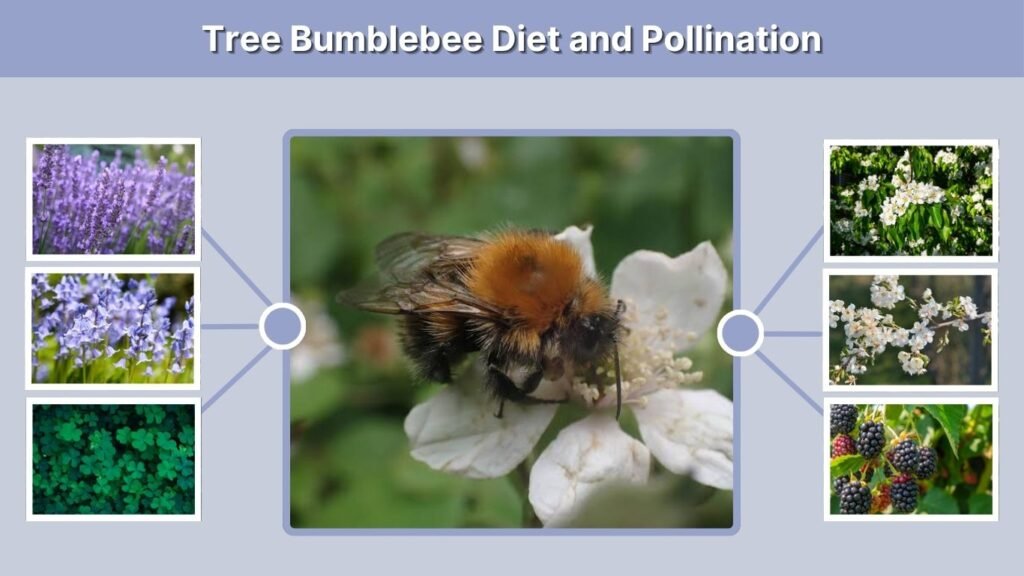
Tree bumblebees collect nectar for energy and pollen to feed their developing larvae. They visit many trees, shrubs, garden plants, and wildflowers. Their ability to forage during relatively cool weather makes them particularly valuable during spring when fewer pollinating insects may be active.
Important Food Plants
- Apple and pear blossoms
- Cherry and plum blossoms
- Raspberry and blackberry
- Willow
- Cotoneaster
- Comfrey
- Lavender
- Bluebell
- Clover
- Dandelion
- Rhododendron
- Garden herbs
Tree bumblebees store only small amounts of nectar for short-term use. They do not produce harvestable honey like honeybees. Their main value comes from transferring pollen between flowers, supporting fruit production and plant reproduction.
FAQs
1. Do tree bumblebees damage houses?
Tree bumblebees do not normally chew timber or cause structural damage. They usually occupy an existing roof, loft, wall, or vent cavity.
2. How many bees live in a tree bumblebee nest?
A developed nest may contain approximately 100–300 bees, although smaller or larger colonies are possible depending on available food and nesting space.
3. How long does a tree bumblebee nest last?
Most nests remain active for only a few months. The original queen, workers, and males eventually die, while newly mated queens leave to hibernate elsewhere.
4. Why are bees hovering outside the nest?
The hovering bees are often stingless males waiting for new queens. This nest-surveillance behavior is common and does not necessarily indicate aggression.
5. Can I remove a tree bumblebee nest myself?
It is safer to leave the nest until it naturally becomes inactive. If its location creates a serious risk, contact a qualified bee specialist rather than sealing, spraying, or moving it yourself.
