
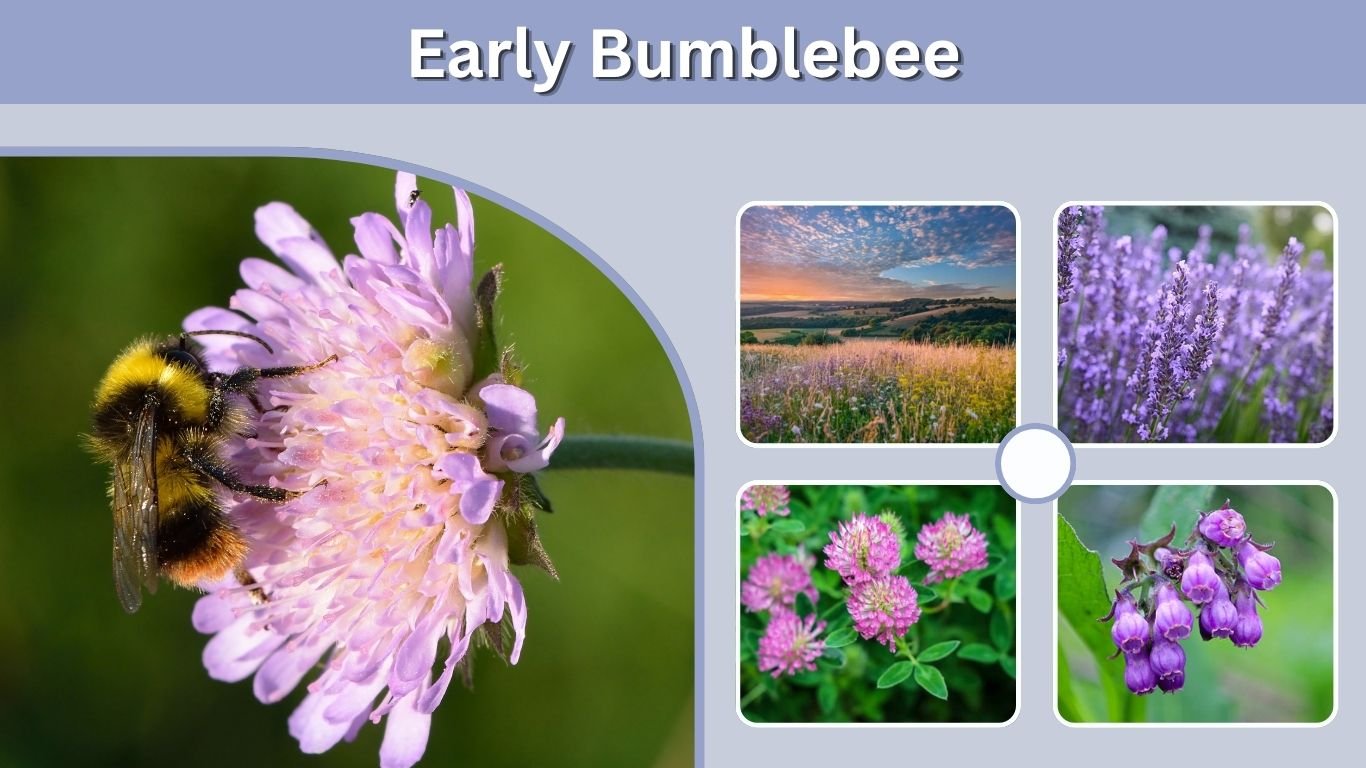
The early bumblebee (Bombus pratorum) is a small, colorful bee commonly found across the United Kingdom and much of Europe. As its name suggests, it is among the first bumblebee species to become active in spring. Queens often appear when early flowers begin blooming, while workers emerge later to collect pollen and nectar. Recognizable by its yellow bands and orange-red tail, this useful pollinator inhabits gardens, woodlands, parks, and farmland. Its short seasonal life cycle may sometimes allow a second colony to develop.
Early Bumblebee Identification
Early bumblebees are relatively small compared with many other familiar bumblebee species. Their appearance varies slightly between queens, workers, and males. However, the combination of yellow markings and an orange or reddish tail usually makes the species recognizable. Careful observation is important because several other bumblebees possess similar colors.
Physical Characteristics
- Scientific name: Bombus pratorum
- Queen size: Approximately 15–17 mm long
- Worker size: Usually 10–14 mm long
- Male size: Approximately 11–13 mm long
- Body color: Mostly black
- Thorax band: Yellow band near the front of the thorax
- Abdominal band: Often yellow, although it may be faint or absent
- Tail color: Orange, reddish-orange, or occasionally yellowish-orange
- Body shape: Compact and covered with dense hair
- Wings: Transparent with light brown or gray shading
Queen, Worker, and Male Differences
An early bumblebee queen is larger and more robust than the workers she produces. She has a black body, yellow thoracic band, and distinct orange-red tail. Workers resemble the queen but are considerably smaller, and their abdominal yellow band may be reduced or missing.
Male early bumblebees usually have more extensive yellow hair, particularly around the face. Their tails may appear yellowish or orange rather than deep red. Males also lack pollen baskets on their hind legs and cannot sting.
Similar Bumblebee Species
The early bumblebee can be confused with the red-tailed bumblebee and bilberry bumblebee. Red-tailed bumblebees normally lack the bright yellow thoracic band seen on early bumblebees. Bilberry bumblebees may have similar markings, but they are strongly associated with upland heathlands and generally display a more extensively reddish abdomen.
Early Bumblebee Habitat and Distribution
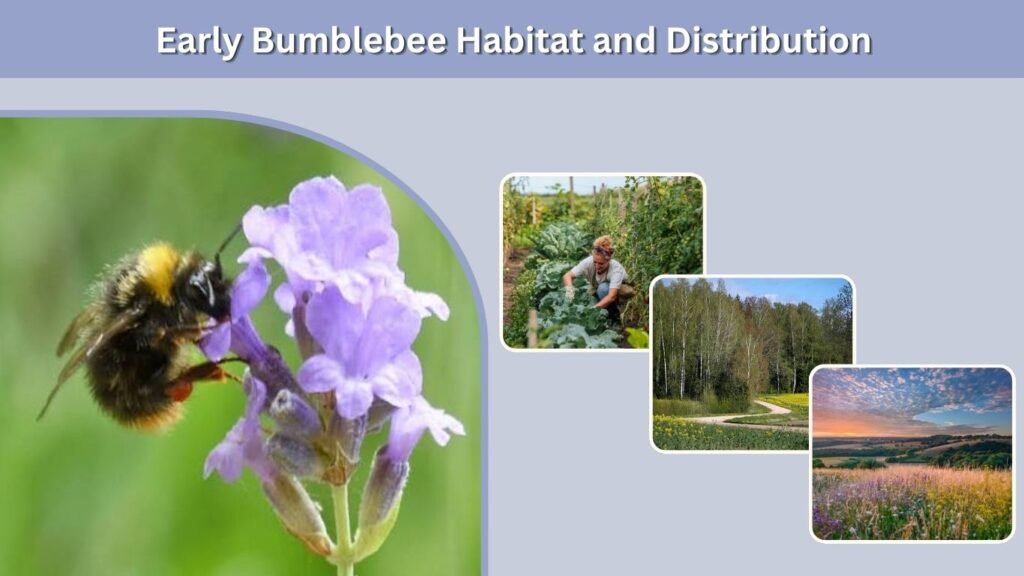
The early bumblebee is widely distributed across Britain, Ireland, Europe, and parts of northern Asia. It is adaptable and can survive in natural, agricultural, and urban environments. Colonies need access to sheltered nesting sites and a continuous supply of suitable flowers from early spring through summer.
Common Habitats
- Gardens and allotments
- Woodland edges and clearings
- Hedgerows and field margins
- Parks and cemeteries
- Grasslands and meadows
- Orchards and farms
- Urban green spaces
- Heathlands and coastal areas
Early Bumblebee Nests
Early bumblebees usually nest in sheltered spaces at or above ground level. Common locations include abandoned bird boxes, roof spaces, wall cavities, tree holes, compost piles, and old rodent burrows. They may also occupy dense vegetation or gaps underneath garden sheds.
Their colonies are relatively small, commonly containing fewer than 100 workers. The bees generally behave calmly around the nest when left undisturbed. A nest discovered in a garden rarely needs to be removed because the colony naturally declines within a few months.
Territory and Foraging Range
Workers normally forage relatively close to their nest when abundant flowers are available. Their smaller body size may limit them to shorter distances than some larger bumblebee species. Gardens containing several types of flowers can provide most of the food a colony needs throughout its active period.
Early Bumblebee Life Cycle
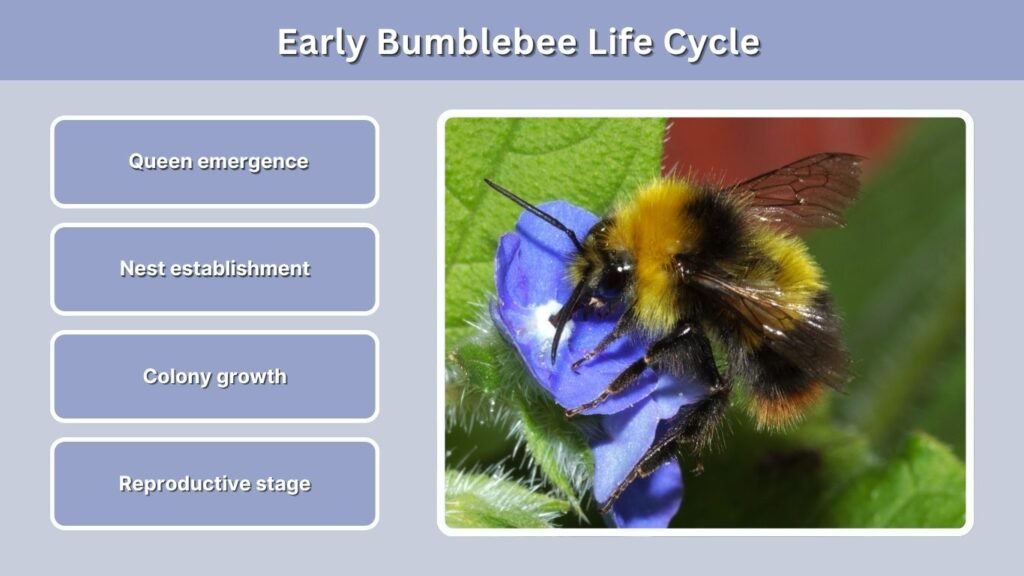
The life cycle begins earlier than that of many other bumblebees. A mated queen emerges from hibernation during early spring and searches for food before establishing a nest. The colony develops quickly, produces reproductive individuals, and may finish its complete cycle before the middle or end of summer.
Main Life Cycle Stages
- Queen emergence: A fertilized queen leaves hibernation, sometimes as early as February or March.
- Nest establishment: She finds a protected cavity and creates a small wax structure for food storage and egg laying.
- First workers: The queen raises the first brood alone until adult workers emerge and begin foraging.
- Colony growth: Workers collect nectar and pollen while the queen concentrates on producing more eggs.
- Reproductive stage: The colony produces males and new queens relatively early in the season.
- Mating: Young queens mate with males after leaving their original nest.
- Colony decline: The founding queen, workers, and males die as the colony completes its cycle.
- Hibernation: Newly mated queens find protected places underground and remain inactive until the following spring.
Lifespan
Individual worker early bumblebees generally survive for only several weeks because foraging exposes them to weather, predators, and physical wear. Males also have short adult lives and die after the mating period.
A queen may live for about a year when her hibernation period is included. However, the active colony itself often lasts only a few months. Because this species completes its cycle early, favorable conditions can occasionally allow a second generation later in the summer.
Early Bumblebee Queen in Spring
The queen needs nectar immediately after hibernation to restore her energy. She visits early-blooming plants while searching for a suitable nest. Once she begins laying eggs, she must keep the brood warm and periodically leave to collect food. Poor weather or a shortage of spring flowers can make this stage particularly difficult.
Early Bumblebee Diet, Flowers, and Pollination
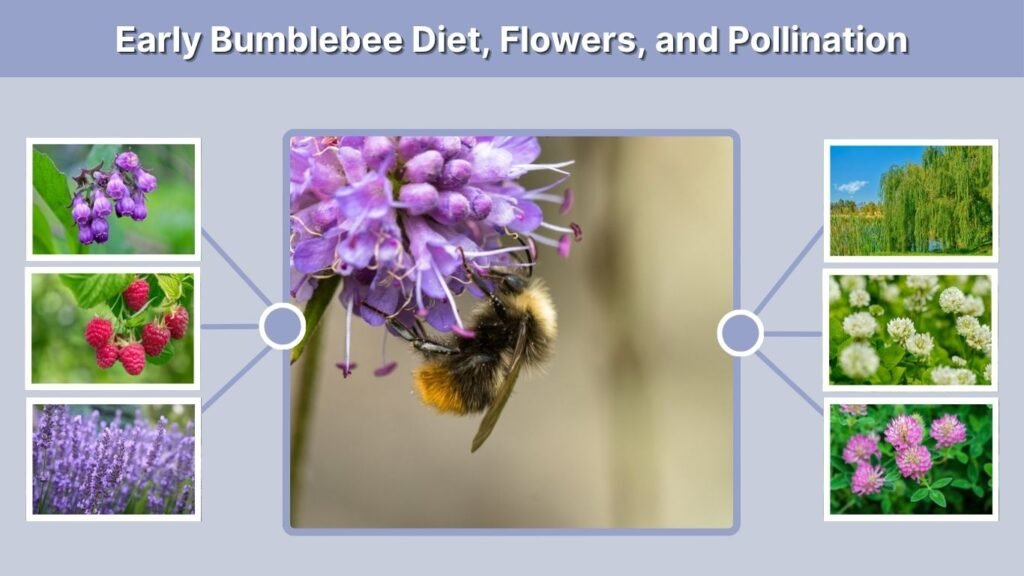
Early bumblebees feed on nectar for energy and collect pollen as a protein-rich food for developing larvae. They have relatively short tongues and often favor shallow flowers. Nevertheless, they visit numerous plant species, making them useful pollinators in gardens, wild habitats, and agricultural areas.
Important Food Plants
- Willow
- Dandelion
- White clover
- Red clover
- Crocus
- Comfrey
- Raspberry
- Blackberry
- Bluebell
- Lavender
- Cotoneaster
- Fruit-tree blossoms
Pollination Behavior
A worker moves between flowers while gathering nectar and pollen. Pollen grains stick to its hairy body and are transferred to other flowers during later visits. The worker combs much of the remaining pollen into baskets on its hind legs before returning to the nest.
Early activity makes this species especially valuable for spring plants. It may pollinate fruit-tree blossoms, berries, and native wildflowers before several later-emerging bee species become abundant.
Supporting Early Bumblebees
Gardeners can help by growing flowers that bloom at different times of the year. Crocuses, lungwort, willow, and fruit trees provide important early food. Lavender, clover, comfrey, and brambles maintain supplies later in the season.
Avoiding pesticides is equally important. Leaving some sheltered corners, undisturbed vegetation, and old nesting cavities can provide queens with places to establish colonies or hibernate.
Early Bumblebee Behavior, Sting, and Natural Threats
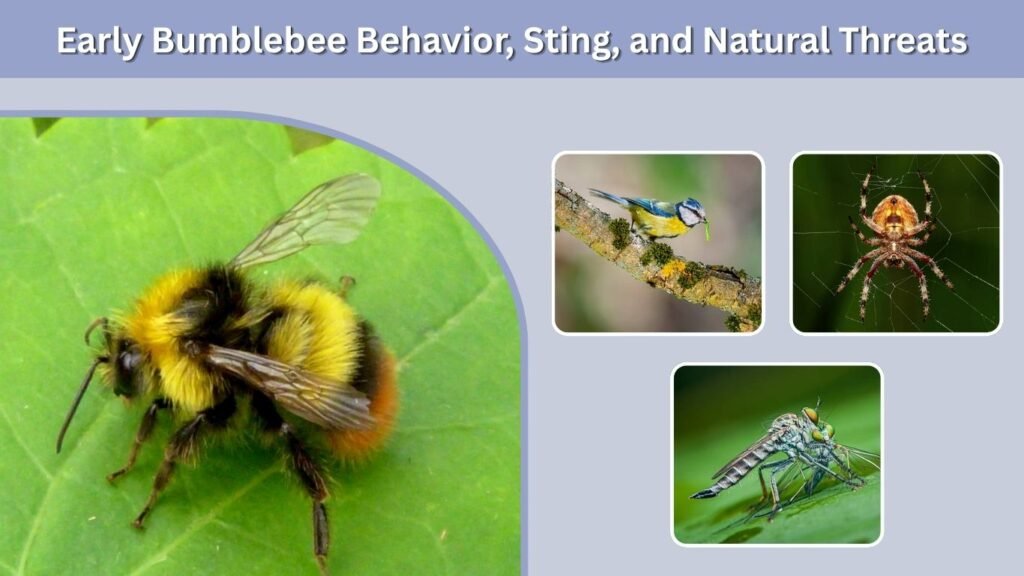
Early bumblebees are active, efficient foragers that can continue working during cool conditions. Workers communicate mainly through scent and physical contact within their dark nest. Outside the colony, they concentrate on locating productive flowers and transporting food back to the developing brood.
Are Early Bumblebees Aggressive?
Early bumblebees are not naturally aggressive toward people. Foraging bees normally ignore humans and can be observed safely from a respectful distance. Activity near a nest entrance may appear intense, but the bees are usually focused on arriving and departing.
Females can sting if trapped, squeezed, or if their nest is seriously disturbed. Unlike honeybees, they may sting more than once because their stingers are not strongly barbed. Males have no stinger and are harmless.
Predators and Other Threats
Early bumblebees face threats from birds, spiders, predatory insects, parasites, and small mammals. Colonies may also be harmed by habitat loss, pesticide exposure, prolonged bad weather, and shortages of flowering plants.
Queens are especially vulnerable after hibernation. They must find both food and a safe nesting site while operating on limited energy reserves. Protecting early flowers and varied habitats can therefore improve their chances of establishing successful colonies.
FAQs
1. Why is it called the early bumblebee?
It receives its name because queens emerge and establish nests early in spring. Colonies may produce males and new queens before many other bumblebee colonies reach their reproductive stage.
2. Where do early bumblebees build their nests?
They nest in bird boxes, tree cavities, wall spaces, roof gaps, compost piles, abandoned rodent burrows, and other protected locations.
3. Can an early bumblebee sting?
Female queens and workers can sting, but they rarely do so unless handled, trapped, or threatened near their nest. Male early bumblebees cannot sting.
4. How long does an early bumblebee live?
Workers and males commonly live for several weeks. A queen can survive for approximately a year, including the months she spends hibernating underground.
5. Is Bombus ruderatus an early bumblebee?
No. The scientific name of the early bumblebee is Bombus pratorum. Bombus ruderatus is the large garden bumblebee, a different species with a longer tongue and different markings.
