
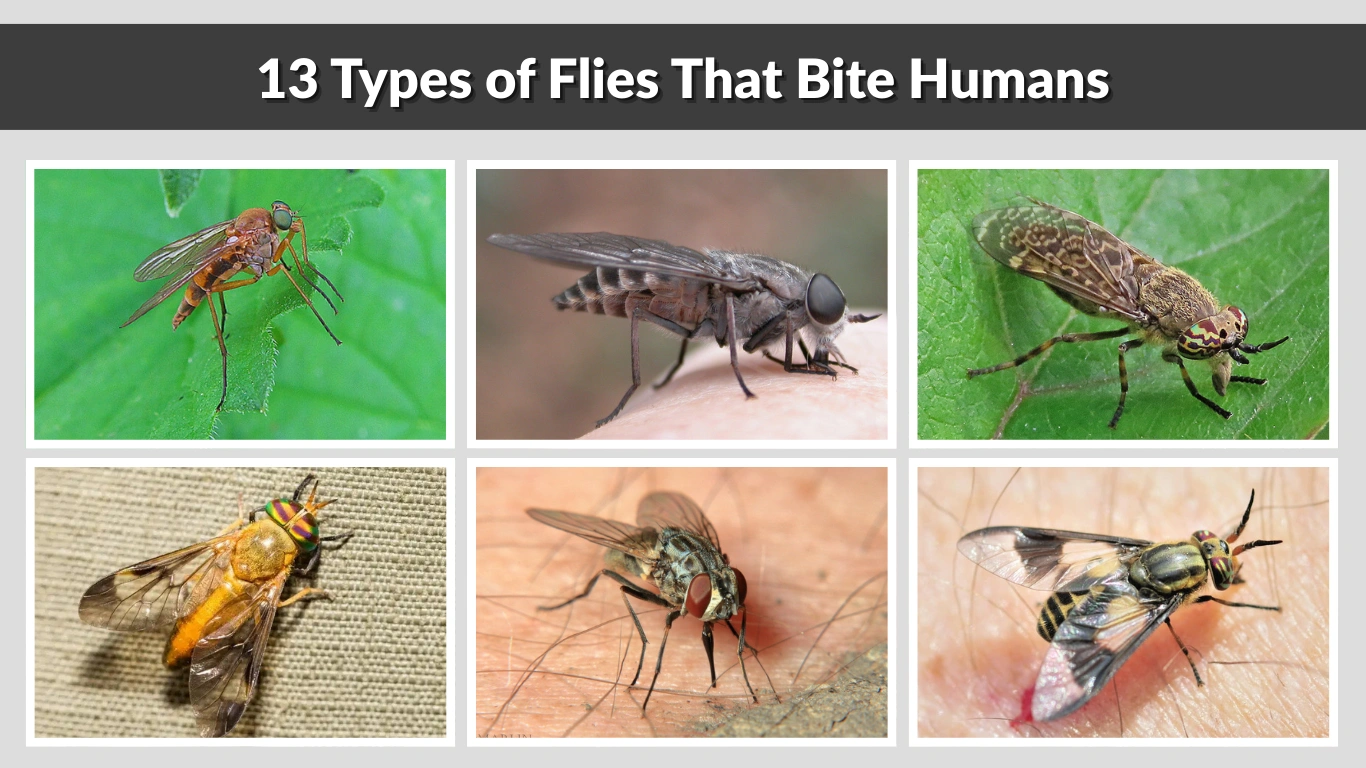
Flies are not just annoying buzzing insects; many species actively bite humans, leaving behind painful welts, swelling, and itching. Some even transmit dangerous diseases. From the large and aggressive horse fly to the nearly invisible biting midge, these blood-feeding flies have adapted unique ways to survive at our expense. In this article, we’ll explore 13 different types of flies that bite humans, how to identify them, where they live, and the risks they pose.
1. Horse Fly

Horse flies are among the most aggressive biting flies that target humans and animals. They are well-known for their painful bites, which can cause swelling, itching, and even allergic reactions. These flies thrive in warm, humid areas, especially near wetlands, farms, and forests.
Identification
- Size: Large, typically 10–30 mm in length
- Color: Usually gray or black with bright, patterned eyes
- Mouthparts: Strong, blade-like mandibles designed for cutting skin
- Wings: Clear or slightly smoky, often with dark bands
Habitat
Horse flies prefer areas close to water sources such as ponds, rivers, and marshes. They also gather around livestock farms, fields, and wooded regions where they can find both animals and humans to feed on.
Behavior
Female horse flies are the ones that bite, as they need blood to develop eggs. They use their sharp mouthparts to cut into the skin and lap up the blood. Males, on the other hand, feed on nectar and plant juices. Horse flies are strong fliers and can chase humans or animals for long distances.
Risks to Humans
Their bites are painful and can cause redness, swelling, and sometimes secondary infections. In rare cases, horse flies may transmit diseases and parasites to animals, though human disease transmission is uncommon.
2. Deer Fly

Deer flies are smaller relatives of horse flies but just as aggressive when it comes to biting humans. They are especially active during the summer and are known for attacking in swarms, making outdoor activities very uncomfortable.
Identification
- Size: 5–12 mm in length (smaller than horse flies)
- Color: Often yellowish or brown with distinct dark bands on wings
- Eyes: Brightly colored, often green or gold, with noticeable patterns
- Body: Compact and fast-flying, resembling small horse flies
Habitat
Deer flies are commonly found near wetlands, swamps, and forested areas, especially where deer and other large mammals are present. They prefer shaded areas but will follow humans into open fields and near water sources.
Behavior
Female deer flies require blood meals to produce eggs. They use their sharp mouthparts to cut into skin and feed on blood, leaving painful bites. Unlike horse flies, deer flies are more likely to attack in groups, which can be overwhelming for both humans and animals.
Risks to Humans
Deer fly bites are painful and can cause itching, swelling, and allergic reactions. They are also known vectors of diseases such as tularemia and the parasitic eye worm (Loa loa) in some regions.
3. Stable Fly

Stable flies, often mistaken for house flies, are notorious for their painful bites on humans and animals. Unlike house flies that feed on waste, stable flies feed on blood, making them a direct nuisance.
Identification
- Size: 6–8 mm long, similar to a house fly
- Color: Gray with dark stripes on the thorax
- Mouthparts: Piercing proboscis that extends forward
- Key Feature: Unlike house flies, stable flies bite and cause pain
Habitat
Stable flies are commonly found around farms, stables, barns, and coastal areas where livestock are present. They breed in decaying organic matter such as manure mixed with straw, seaweed, or rotting vegetation.
Behavior
Both male and female stable flies bite, usually targeting the lower legs of humans and animals. They are persistent biters and will return repeatedly if swatted away. Stable flies are active during the day and prefer sunny weather.
Risks to Humans
Their bites are sharp and painful, often causing welts, itching, and irritation. Stable flies are known to reduce livestock productivity due to stress and blood loss, but for humans, they are mainly a painful nuisance rather than disease carriers.
4. Black Fly

Black flies, also called buffalo gnats, are small but fierce biting flies that often attack in swarms. Despite their tiny size, their bites are extremely irritating and can cause severe reactions in sensitive individuals.
Identification
- Size: 1–5 mm (very small compared to horse or deer flies)
- Color: Black or dark gray with a humpbacked body
- Wings: Broad and short, giving them a stocky appearance
- Mouthparts: Sharp enough to slice into skin and lap up blood
Habitat
Black flies thrive in areas with fast-flowing rivers and streams, as their larvae develop in clean, oxygen-rich water. They are common in forested or mountainous regions during spring and early summer.
Behavior
Female black flies feed on blood to produce eggs, while males consume nectar. They usually bite around the head, neck, and ears of humans and animals. Swarms of black flies can make outdoor activities unbearable.
Risks to Humans
Bites cause severe itching, swelling, burning, and sometimes fever or nausea. In certain parts of the world, black flies transmit diseases such as Onchocerciasis (river blindness). While this disease isn’t common globally, the irritation from their bites is universal.
5. Tsetse Fly

The tsetse fly is infamous in Africa for being the carrier of deadly diseases. Unlike many other biting flies, both males and females feed on blood, making them significant vectors of human and animal illnesses.
Identification
- Size: 6–14 mm long, similar to a house fly but more robust
- Color: Brown or tan with clear wings
- Key Feature: When resting, their wings fold directly on top of each other like scissors
- Mouthparts: Long proboscis used to pierce skin and suck blood
Habitat
Tsetse flies are native to sub-Saharan Africa, where they inhabit savannas, woodlands, and riverine forests. They thrive in warm, humid environments where both humans and animals are present.
Behavior
Both male and female tsetse flies bite during the day, often targeting exposed skin. They are silent fliers, making them hard to detect before biting. Unlike other flies, they don’t breed in decaying matter; instead, females give birth to live larvae, which pupate in soil.
Risks to Humans
The most significant danger is their role in spreading Trypanosomiasis (African Sleeping Sickness), a potentially fatal disease if untreated. Symptoms include fever, headaches, joint pain, and neurological issues. Their bites are also painful and can cause localized swelling.
6. Sand Fly

Sand flies are tiny, delicate insects that pack a powerful bite despite their small size. They are best known for transmitting dangerous diseases in tropical and subtropical regions, though their bites alone can cause severe itching and discomfort.
Identification
- Size: 2–3 mm (smaller than a mosquito)
- Color: Pale, golden, or light brown with long legs
- Wings: Hairy and held in a “V” shape while resting
- Key Feature: Very small, almost silent, often mistaken for gnats
Habitat
Sand flies thrive in warm, humid environments, often in forests, deserts, and rural areas. They hide in cracks, crevices, and animal burrows during the day and emerge at night to feed.
Behavior
Only female sand flies bite, feeding on blood for egg production. They are most active from dusk to dawn, silently biting exposed skin. Unlike mosquitoes, they do not buzz, making them difficult to detect.
Risks to Humans
Sand fly bites cause intense itching, swelling, and red bumps. More importantly, they can transmit Leishmaniasis, a parasitic disease that can lead to severe skin sores or organ damage if untreated. In many tropical countries, sand flies are considered a major public health concern.
7. Biting Midge (No-see-um)
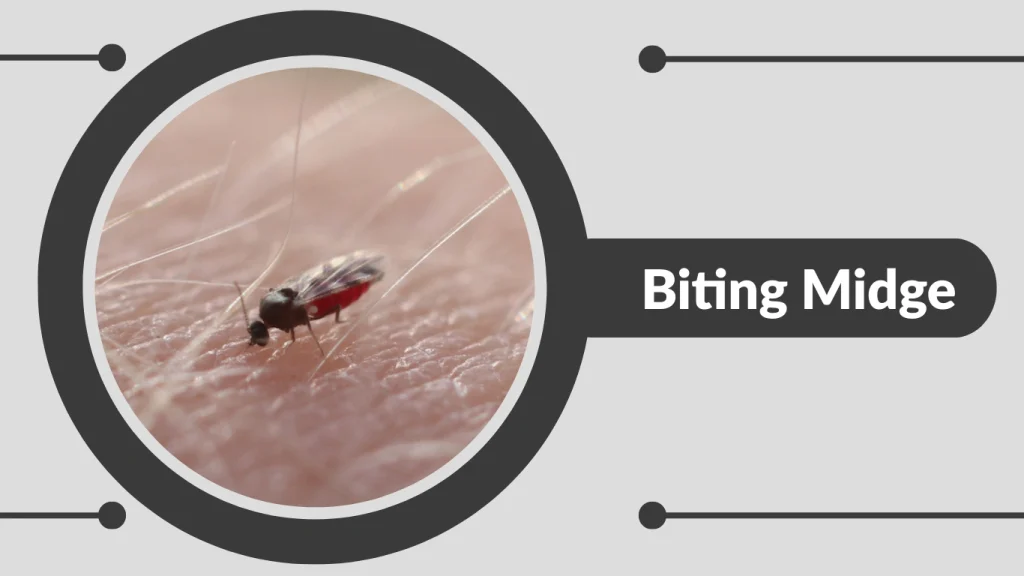
Biting midges, commonly called “no-see-ums,” are notorious for their nearly invisible size and extremely painful bites. These tiny flies often swarm, making them a severe nuisance in coastal and humid areas.
Identification
- Size: 1–3 mm, barely visible to the naked eye
- Color: Grayish to black, with short, stubby bodies
- Wings: Short, sometimes patterned, giving them a fuzzy appearance
- Key Feature: Extremely small but capable of painful bites
Habitat
Biting midges are abundant in coastal regions, wetlands, marshes, and areas with damp soil. They breed in moist organic matter, such as mud flats or rotting vegetation.
Behavior
Only females bite, drawing blood for egg development. They attack in swarms, often at dawn and dusk, targeting exposed skin. Despite their tiny size, their bites are far more painful than expected.
Risks to Humans
Their bites cause red welts, severe itching, and allergic reactions. In some regions, biting midges also transmit parasites and viruses to animals, though human disease transmission is less common. The sheer irritation from their bites, however, makes them dreaded pests.
8. Yellow Fly

Yellow flies are close relatives of deer flies and horse flies, well known in the southeastern United States for their painful, persistent bites. They are most active in warm months, especially near wooded and swampy areas.
Identification
- Size: 6–12 mm in length
- Color: Yellowish body with darker markings
- Eyes: Bright green or gold with iridescent streaks
- Wings: Clear with dark patches, similar to deer flies
Habitat
Yellow flies are abundant in humid, shaded areas such as swamps, creeks, marshes, and forest edges. They prefer spots near water sources where both humans and animals frequent.
Behavior
Only females bite, using their sharp mouthparts to cut the skin and feed on blood. They are highly aggressive, often circling and chasing their targets repeatedly. Unlike mosquitoes, yellow flies are daytime feeders, especially active in the late afternoon.
Risks to Humans
Their bites are extremely painful and can cause swelling, itching, and burning sensations. Some individuals may experience severe allergic reactions. While yellow flies are not significant disease carriers, their persistent biting can make outdoor activities unbearable.
9. Greenhead Fly

Greenhead flies are notorious beach pests found along the Atlantic coast of the United States. They are strong fliers and can chase humans for long distances, delivering painful bites that quickly swell.
Identification
- Size: 10–12 mm (medium-sized, stocky flies)
- Color: Dark, shiny body with metallic green eyes
- Mouthparts: Blade-like mandibles that slice skin
- Wings: Clear or slightly smoky, strong for coastal winds
Habitat
Greenhead flies are common in coastal marshes, salt marshes, and beach areas, especially in summer. They breed in salt marsh vegetation and thrive in humid, breezy climates.
Behavior
Females are the blood-feeders, attacking during the day. They are relentless biters, capable of piercing through clothing to reach skin. Their persistence and painful bites make them one of the most dreaded flies in coastal areas.
Risks to Humans
Their bites cause sharp pain, immediate swelling, and prolonged itching. Greenhead flies are not major disease carriers, but their aggressive attacks can ruin beach outings, fishing trips, and other outdoor activities.
10. Sheep Fly

Sheep flies are large, aggressive members of the horse fly family and are especially common in rural and farming areas. They attack both livestock and humans, delivering very painful bites.
Identification
- Size: 10–15 mm in length
- Color: Dark body with patterned wings and striking eye colors
- Eyes: Often green or gold with horizontal stripes
- Body Shape: Robust, resembling deer flies but larger
Habitat
Sheep flies thrive in farmlands, meadows, and areas near rivers and lakes. They are particularly common where sheep, cattle, and horses graze, making them a major nuisance for farmers.
Behavior
Females feed on blood, cutting into the skin with scissor-like mouthparts. They are strong fliers, capable of pursuing humans and animals over long distances. Males, as with most biting flies, consume nectar instead of blood.
Risks to Humans
Bites are extremely painful and may bleed profusely. Swelling, redness, and itching often follow. Sheep flies are not major disease vectors for humans but cause significant stress to livestock, leading to reduced productivity.
11. Cleg Fly

Cleg flies, also known simply as “horse flies” in some regions, are infamous for their sharp bites. They are particularly active during warm summer months and are difficult to swat because of their quick movements.
Identification
- Size: 7–12 mm long
- Color: Grayish-brown with patterned wings
- Eyes: Large, iridescent, and close-set
- Mouthparts: Designed for slicing skin and sucking blood
Habitat
Cleg flies prefer damp woodlands, pastures, and areas near water sources such as streams and ponds. They are most common in rural and semi-rural regions where livestock are present.
Behavior
Only females bite, and they target both animals and humans. They are sneaky in their attacks, often landing silently before cutting into the skin. Unlike deer flies, they usually attack individually rather than in large swarms.
Risks to Humans
Their bites are painful, causing swelling, welts, and itching. Some individuals may experience allergic reactions. While not known to spread human diseases, cleg flies are highly irritating and persistent outdoor pests.
12. March Fly

March flies, also called “lovebugs” in some regions, are a diverse group, with certain species known for their bloodsucking bites. While many are harmless, the biting species are a nuisance to both humans and animals.
Identification
- Size: 6–12 mm long
- Color: Usually dark brown or black
- Eyes: Large, often touching at the top in males
- Wings: Clear or slightly smoky
- Key Feature: Some species have a stocky, hairy body
Habitat
March flies are widespread and found in forests, grasslands, and near wetlands. They breed in moist soil rich with decaying vegetation and are most active in the warmer months.
Behavior
Females of biting species feed on blood, while males and other species consume nectar. They often appear in large numbers, swarming around people, livestock, and even vehicles in open areas.
Risks to Humans
Bites from March flies are painful and can cause irritation, redness, and swelling. Although they are not significant vectors of human disease, their swarming behavior and aggressive biting make them an outdoor nuisance.
13. Snipe Fly

Snipe flies are less commonly mentioned than horse or deer flies, but several species bite humans. They are quick, sharp biters often found in shaded, moist habitats.
Identification
- Size: 6–10 mm long
- Color: Usually gray, brown, or yellowish with a slender body
- Eyes: Large and iridescent, typical of predatory flies
- Wings: Often patterned or smoky-colored
- Mouthparts: Designed for piercing skin
Habitat
Snipe flies live in damp, shaded areas near streams, ponds, and wetlands. They perch on plants or hover low to the ground, waiting for potential hosts.
Behavior
Only females bite, requiring blood meals for egg development. They typically attack silently and quickly, often going unnoticed until after the bite. Unlike horse flies, they do not usually chase hosts for long distances.
Risks to Humans
Their bites are painful and often leave small, red welts that itch for days. While they are not known to spread diseases to humans, their presence in outdoor areas can make activities like hiking or fishing uncomfortable.
