
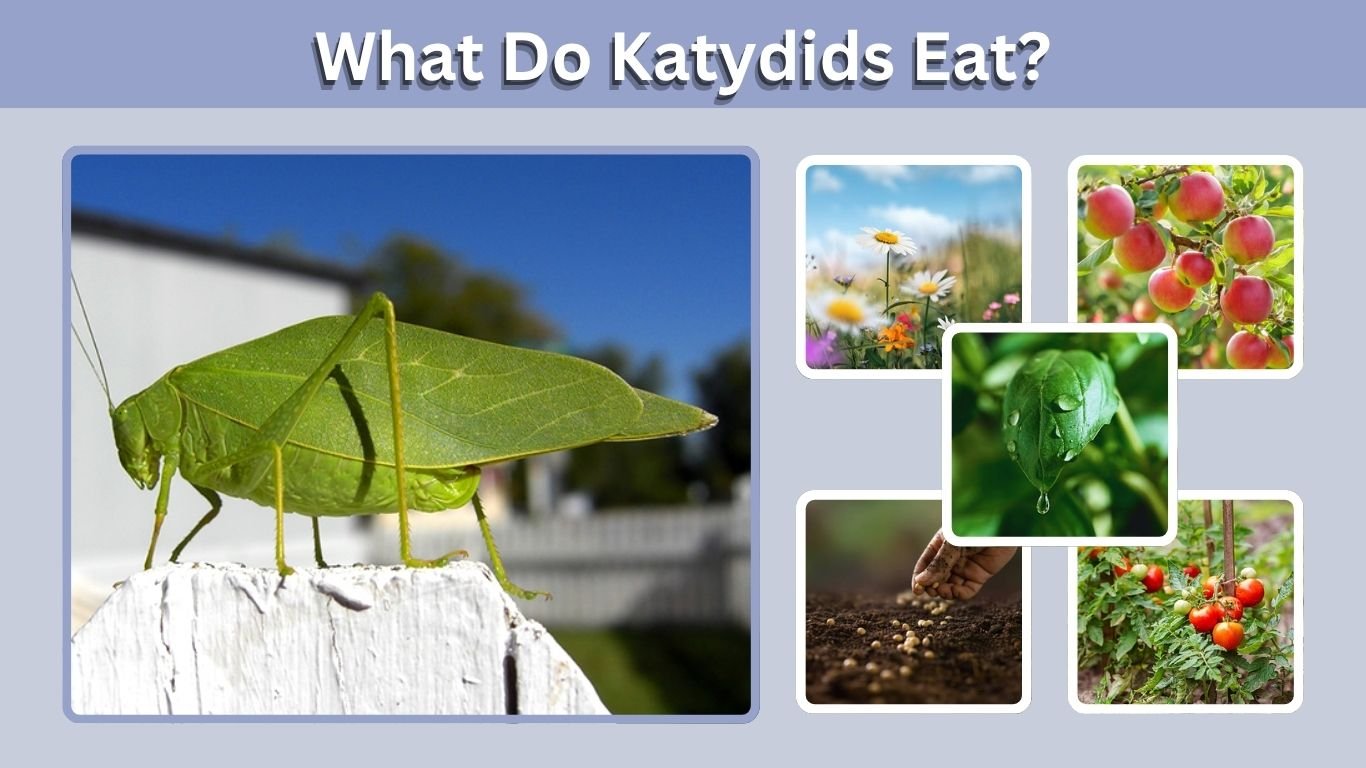
Katydids eat a surprisingly varied diet that can include leaves, grasses, flowers, fruits, seeds, and even other insects. Most species are primarily herbivorous, but some are omnivorous or predatory depending on their habitat and available food. Baby katydids generally eat soft plant material, while larger species may capture small insects. Understanding what katydids eat can help explain their role in gardens, forests, and grasslands, as well as why they sometimes appear feeding on vegetables and ornamental plants.
What Do Katydids Eat? 10 Common Foods
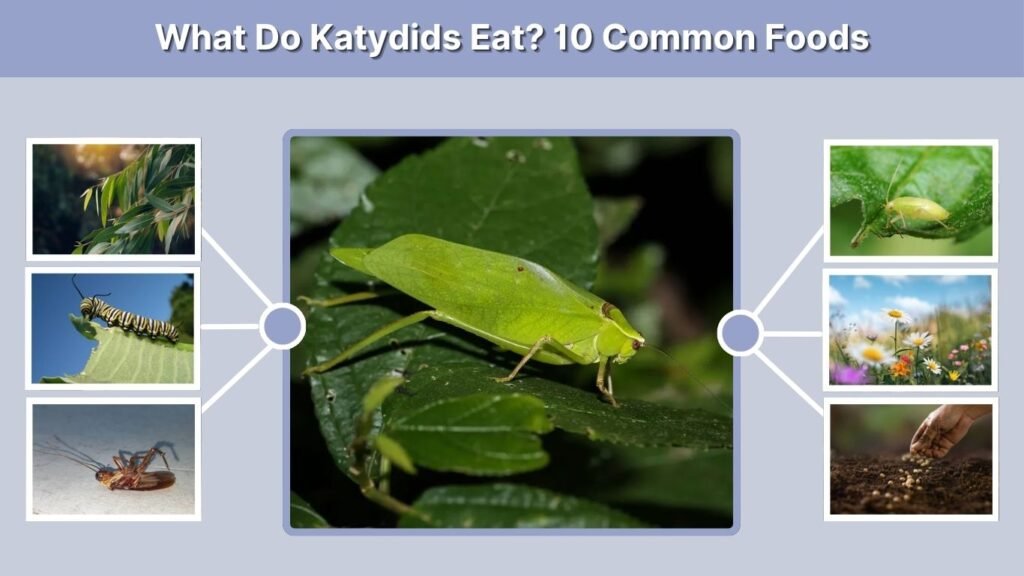
Katydids belong to the family Tettigoniidae, a diverse group with thousands of species. Because different katydids live in different environments, their diets are not identical. Most feed heavily on vegetation, while others combine plant material with animal prey. The following foods represent some of the most common items consumed by katydids in the wild.
1. Leaves
Leaves are one of the most important foods for many katydids. Their strong chewing mouthparts allow them to remove sections from tender foliage.
They commonly choose young, softer leaves because these are easier to chew and often contain more moisture than mature foliage. Leaf-feeding may leave irregular holes or missing sections along the edges.
2. Grass
Meadow and grassland katydids frequently eat grasses. They may chew grass blades, tender shoots, and other soft vegetation growing close to their resting places.
Grass is particularly important for species inhabiting fields, meadows, wetlands, and roadsides.
3. Flowers
Many katydids eat flower petals, pollen, and tender flower parts. Flowers provide both moisture and nutrients and may be particularly attractive when other vegetation becomes tougher.
Katydids visiting flowers may also encounter smaller insects that become additional food.
4. Fruits
Some katydids will feed on soft, ripe fruit. They are more likely to eat exposed or damaged fruit than fruits protected by thick skins.
Sweet, moist fruits can provide carbohydrates and water, making them an occasional but useful food source.
5. Seeds
Seeds are eaten by certain katydid species, especially when they are soft or newly developing. Katydids may reach seeds while feeding on flowers, grasses, or seed-producing plants.
Their powerful mandibles allow some larger individuals to chew relatively tough plant materials.
6. Plant Stems
Tender stems and shoots may also be eaten. Young plant growth is generally easier to chew than older, woody material.
Katydids may nibble stems while moving through dense vegetation, although leaves are usually more noticeable in their diet.
7. Aphids
Omnivorous and predatory katydids sometimes eat aphids. These small, soft-bodied insects are relatively easy to capture and commonly occur on the same plants where katydids forage.
Eating aphids means certain katydids can function as both plant feeders and insect predators.
8. Caterpillars
Larger katydids may capture small caterpillars when the opportunity arises. Predatory species can use their legs to hold prey while biting it with strong mandibles.
Not every katydid hunts caterpillars, so this behavior depends greatly on species.
9. Small Insects
Katydids may eat flies, small moths, insect larvae, eggs, and other tiny arthropods. Predatory species rely more heavily on animal prey than typical leaf-eating katydids.
Some large tropical species can be particularly active hunters.
10. Dead Insects
Some omnivorous katydids will scavenge dead insects. This provides protein without requiring them to capture living prey.
Their ability to use both plant and animal foods helps certain species survive when their preferred food becomes temporarily scarce.
What Leaves and Plants Do Katydids Eat?
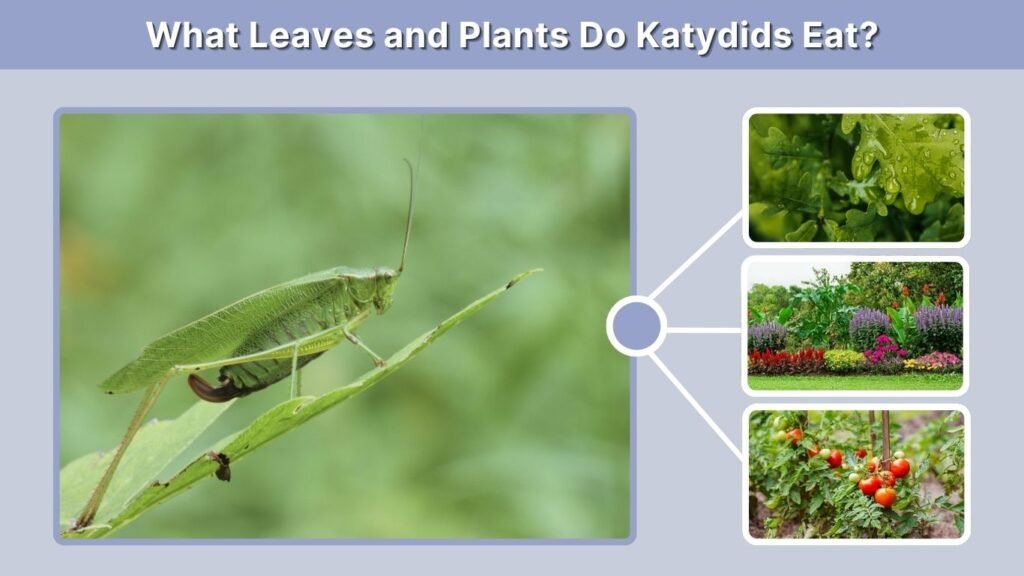
Plant material forms the foundation of the diet for many katydids. Their exact preferences depend on species and habitat, but they frequently select tender vegetation that is easy to chew. Wild plants, garden plants, weeds, grasses, and shrubs may all provide food, particularly when katydids are abundant during warm months.
What Kind of Leaves Do Katydids Eat?
Katydids may feed on leaves from:
- Oak and other trees
- Shrubs
- Brambles
- Weeds
- Grasses
- Herbaceous plants
- Garden flowers
- Vegetable plants
They tend to prefer young or tender growth. Some species specialize more heavily on particular plants, whereas generalist feeders consume many different types of foliage.
What Plants Do Katydids Eat?
Katydids may eat plants found naturally within their habitat rather than seeking one particular species. They commonly feed on grasses, shrubs, weeds, flowers, and broadleaf plants.
In gardens, they may occasionally chew ornamentals or vegetables. Moderate feeding usually causes cosmetic damage rather than destroying an established healthy plant.
What Grasses Do Katydids Eat?
Meadow katydids and related species consume several types of grasses and grass-like plants. Tender blades and new growth are particularly suitable.
Because katydids often spend much of their lives among tall grasses, they can feed without traveling far and remain concealed from predators at the same time.
What Fruits and Vegetables Do Katydids Eat?
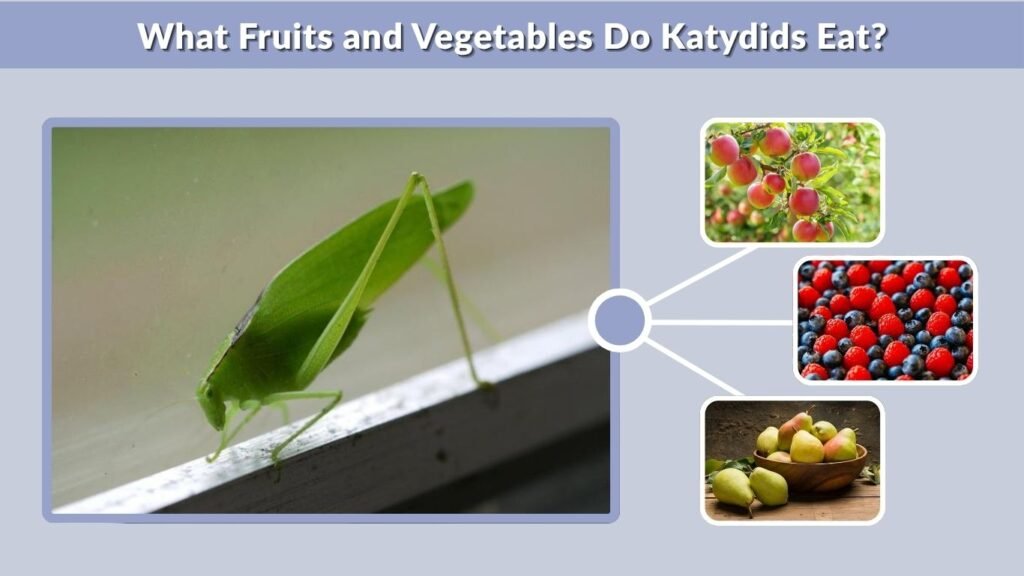
Katydids are not primarily fruit or vegetable specialists, but opportunistic individuals may feed on both. Soft, juicy foods are easier for their chewing mouthparts to penetrate. Garden katydids may therefore sample fruits and vegetables when these foods are readily available, especially if fruit has already cracked, ripened, or been damaged.
Fruits Katydids May Eat
Possible fruits include:
- Apples
- Berries
- Grapes
- Peaches
- Pears
- Melons
- Bananas
- Citrus pulp
Katydids are generally more attracted to soft or damaged portions than to tough outer skins. Fruit consumption varies considerably between species.
What Vegetables Do Katydids Eat?
Katydids may nibble:
- Lettuce
- Cabbage leaves
- Kale
- Bean leaves
- Pea plants
- Carrot tops
- Spinach
- Other leafy vegetables
They usually feed on foliage rather than consuming an entire vegetable. Damage often appears as irregular chewing around leaf margins or holes through softer tissue.
Do Katydids Damage Gardens?
A few katydids normally cause little concern. Their feeding may leave holes in leaves, but most garden plants tolerate minor damage.
Large populations can cause more noticeable feeding. However, some katydids also eat pest insects, meaning they can have both beneficial and unwanted effects in a garden ecosystem.
What Do Baby Katydids Eat?
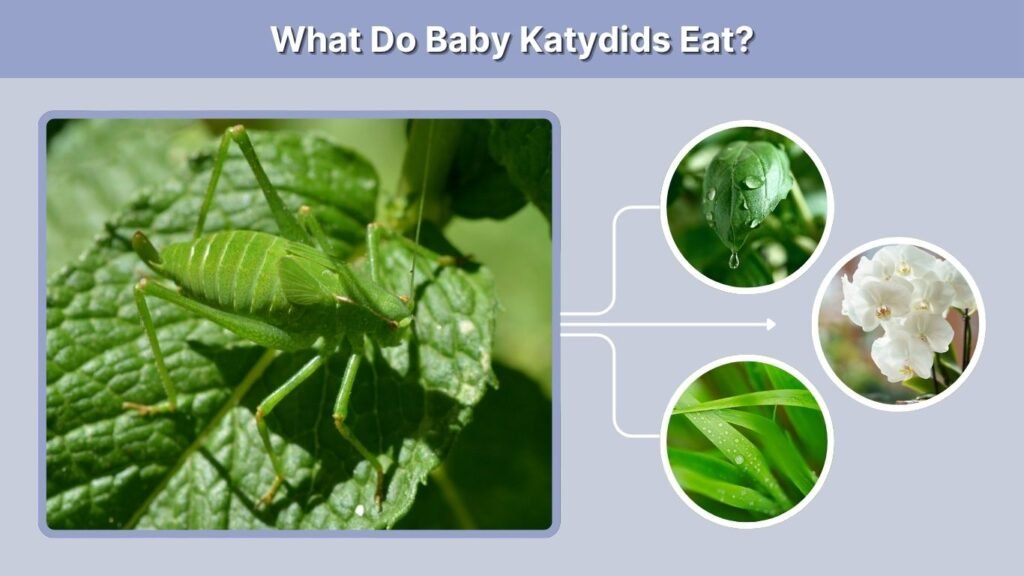
Young katydids, called nymphs, resemble smaller wingless versions of adults. They undergo incomplete metamorphosis and gradually grow through repeated molts. Their diets generally overlap with adult diets, although young nymphs often rely more heavily on tender plant material because their bodies and mouthparts are smaller.
Foods for Katydid Nymphs
Baby katydids commonly eat:
- Young leaves
- Soft grasses
- Tender plant shoots
- Flower petals
- Pollen
- Small pieces of plant tissue
- Tiny soft-bodied insects in omnivorous species
As nymphs become larger, they can handle tougher vegetation and, in predatory species, larger animal prey.
What Do Young Katydids Eat in the Wild?
Young katydids usually begin feeding close to where they hatched. Vegetation provides both food and shelter from predators.
Their green or brown camouflage allows them to remain hidden while chewing leaves and shoots. Because nymphs cannot rely fully on developed wings to escape danger, staying within dense vegetation is particularly useful.
What Do Different Types of Katydids Eat?
With thousands of species in Tettigoniidae, there is no single diet shared by every katydid. Body size, habitat, season, and species all influence what an individual eats. A leaf mimic from a tropical forest may feed differently from a meadow katydid living among grasses, while some large katydids are far more predatory.
What Do True Katydids Eat?
True katydids are strongly associated with trees and shrubs. They mainly consume leaves and other plant tissues, although individual species may occasionally eat flowers or small insects.
Their leaf-like wings provide excellent camouflage while they rest and feed in vegetation.
What Do Bush Katydids Eat?
Bush katydids may consume leaves, flowers, grasses, seeds, and small insects. Some are strongly herbivorous, while others are opportunistic omnivores.
Fork-tailed bush katydids, for example, are frequently encountered among shrubs and herbaceous vegetation where both plant foods and small arthropods are available.
What Do Giant and Leaf Katydids Eat?
Large tropical and leaf-mimicking katydids have especially varied diets. Some feed primarily on vegetation, while others are active predators or omnivores.
Giant species may be capable of overpowering relatively large insects compared with smaller katydids. Diet should therefore be considered species-specific rather than determined simply by size or color.
What Do Katydids Eat and Drink?
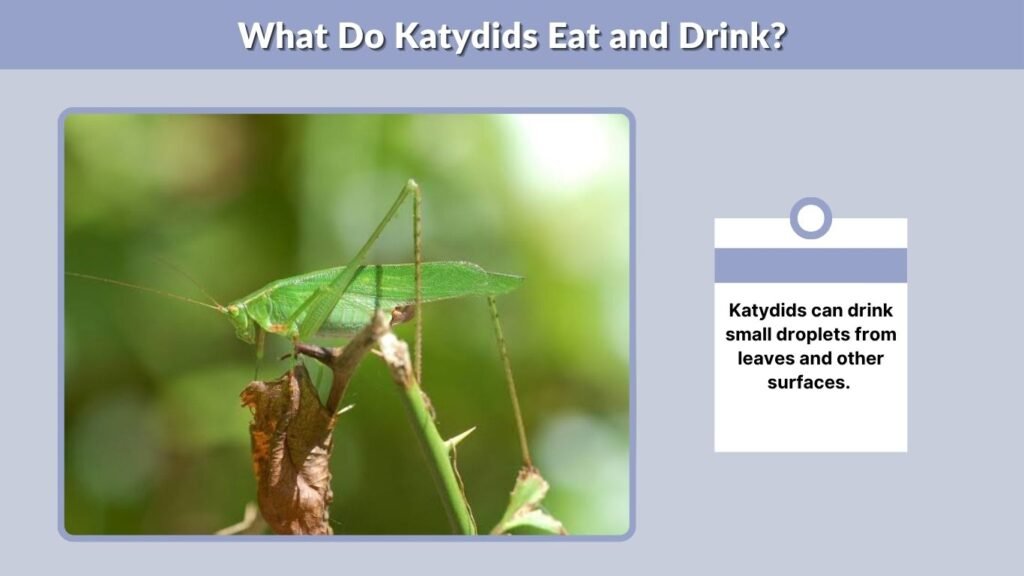
Katydids obtain much of the water they require from fresh leaves, fruits, plant surfaces, and environmental moisture. They may also drink droplets of rain or dew. Their need for free-standing water varies according to habitat, temperature, and species, but moisture remains essential for normal activity and survival.
How Do Katydids Drink Water?
Katydids can drink small droplets from leaves and other surfaces. Early-morning dew provides an important natural water source in many habitats.
Fresh plant tissue also contains significant moisture. A katydid eating succulent leaves may therefore obtain both food and water during the same feeding session.
When Do Katydids Feed?
Many katydids are most active after sunset. During the day, they often remain motionless among leaves where their camouflage protects them.
At night, they begin moving, calling, mating, and feeding. Nocturnal activity can help reduce exposure to daytime predators while allowing them to forage throughout vegetation.
FAQs
Do katydids eat other insects?
Yes. Although many katydids primarily eat plants, some species are omnivorous or predatory. They may consume aphids, caterpillars, insect eggs, flies, moths, and other small arthropods. The importance of insects in the diet varies considerably among different katydid species.
What do green katydids eat?
Green katydids commonly eat leaves, grasses, flowers, seeds, and other plant material. Some also consume small insects. Their green coloration often helps them blend into the same vegetation where they find food, making both feeding and hiding easier.
What do katydids eat in the rainforest?
Rainforest katydids may eat leaves, flowers, fruits, seeds, insects, and other small arthropods. Tropical Tettigoniidae are extremely diverse, so diets differ widely. Some leaf-mimicking species mainly consume vegetation, while other rainforest katydids are active predators.
Do katydids eat fruit?
Yes, some katydids eat fruit, particularly when it is ripe, soft, or already damaged. They may feed on berries, grapes, apples, peaches, melons, or other available fruits. However, fruit is generally only one part of a broader diet.
What do pink katydids eat?
Pink katydids are usually color variations of species that are normally green, so their unusual coloration does not require a different diet. They generally eat the same leaves, flowers, grasses, and other vegetation as typical individuals of their species, with some also consuming small insects.
