

Grasshoppers are among the most familiar insects in fields, backyards, and grassland ecosystems. Despite how common they are, many people wonder how long a grasshopper lives, how long it can survive without food or water, how long eggs take to hatch, and whether different species live longer than others. Grasshoppers also endure surprising conditions—some can survive underwater briefly, live for hours without a head, and jump or fly for impressive lengths. This guide explores every major question about grasshopper longevity and survival.
Grasshopper Lifespan Overview
Grasshoppers do not live for many years like some insects; instead, their lives are short, seasonal, and strongly influenced by climate and habitat. Most species complete their entire life cycle within a single year.
Average Lifespan Across Most Species
The typical grasshopper lifespan ranges from 2 to 12 months. Most species live around 6–12 months, though this includes their egg stage, nymph stage, and adult stage. In harsh climates, predators, cold weather, and lack of food can shorten their lives significantly. In warm, stable environments, they often reach the higher end of their lifespan.
Wild Lifespan vs Captive Lifespan
Grasshoppers generally live longer in captivity than in the wild.
- Wild lifespan: Usually 6–12 months
- Captive lifespan: Often 10–14 months
In captivity, grasshoppers avoid predators, extreme weather, and parasites. With steady food, humidity, and safe shelter, they can survive well beyond their natural outdoor limits.
Species-Specific Lifespan Differences
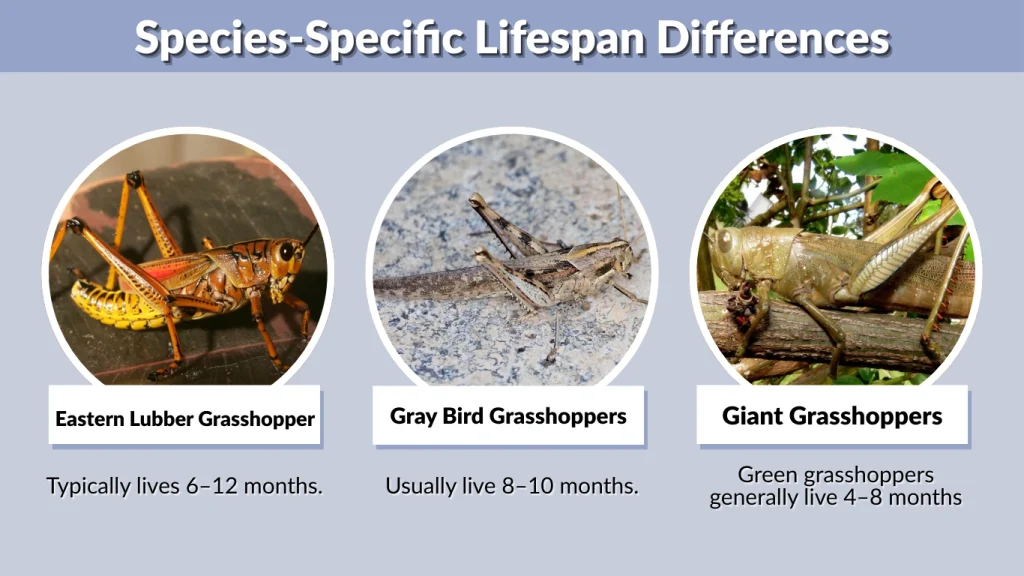
Not all grasshopper species age the same way. Some grow rapidly and die within a few months, while others are larger, slower-developing, and longer-lived.
Eastern Lubber Grasshopper Lifespan
The Eastern Lubber Grasshopper, common in Florida and the southeastern United States, typically lives 6–12 months. Because they move slowly and produce toxins that deter predators, they often survive longer than faster, more delicate species.
California & Gray Bird Grasshoppers
California species—including the gray bird grasshopper—usually live 8–10 months. These grasshoppers are adapted to dry climates and can withstand long periods of heat and drought, contributing to their longer survival.
Green & Giant Grasshoppers
Green grasshoppers generally live 4–8 months, reflecting their faster life cycle.
Giant grasshopper species, especially those found in tropical regions, may live 10–12 months or more. Some giant species can grow up to 5 or even 6 inches long, though this size is rare and limited to specialized environments.
Life Cycle: From Egg to Adult
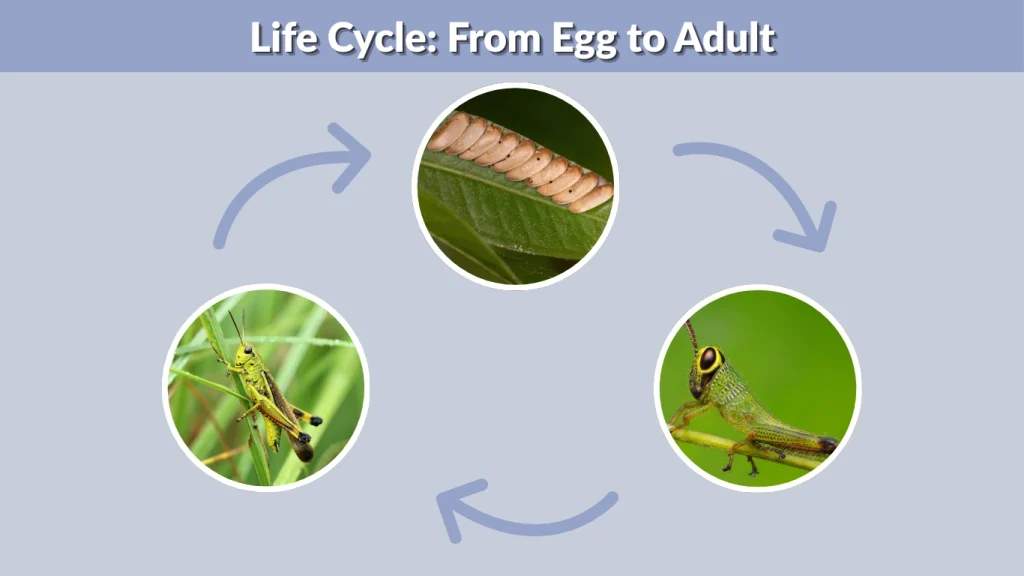
A grasshopper’s lifespan includes multiple stages: egg, nymph, and adult.
How Long Grasshopper Eggs Take to Hatch
Grasshopper eggs typically take 3 to 9 months to hatch. Most species lay eggs in late summer or fall, and the eggs overwinter underground. Warmer climates cause earlier hatching, while colder climates delay development until spring.
Nymph Stage Duration
Once hatched, the grasshopper enters the nymph stage, lasting 5–8 weeks. During this period, it goes through multiple molts—shedding its exoskeleton as it grows larger and develops functional wings.
Adult Stage Duration
The final stage, adulthood, generally lasts 2–5 months, depending on species and environmental conditions. During this period, grasshoppers feed heavily, mate, and lay eggs for the next generation.
How Long Grasshoppers Live Without Food or Water

Grasshoppers are resilient and can survive short periods without resources, but deprivation quickly shortens their lifespan.
How Long Without Food
Most grasshoppers can survive 3 to 7 days without food. Survival depends on temperature—warmer weather increases metabolism and reduces survival time. Larger species may survive slightly longer by conserving energy.
How Long Without Water
Grasshoppers do not drink water the way mammals do; they get moisture from fresh plants. Without access to water-rich vegetation, they typically survive 4 to 7 days. Desert species, however, can last longer due to their physiological tolerance for dehydration.
How Long Without Food AND Water
Deprivation of both food and water results in rapid decline. Most grasshoppers survive only 2 to 5 days without either resource. Their energy reserves quickly drain, leading to reduced movement, inability to jump, and eventual death.
Strange Survival Questions (Air, Water, Headless)
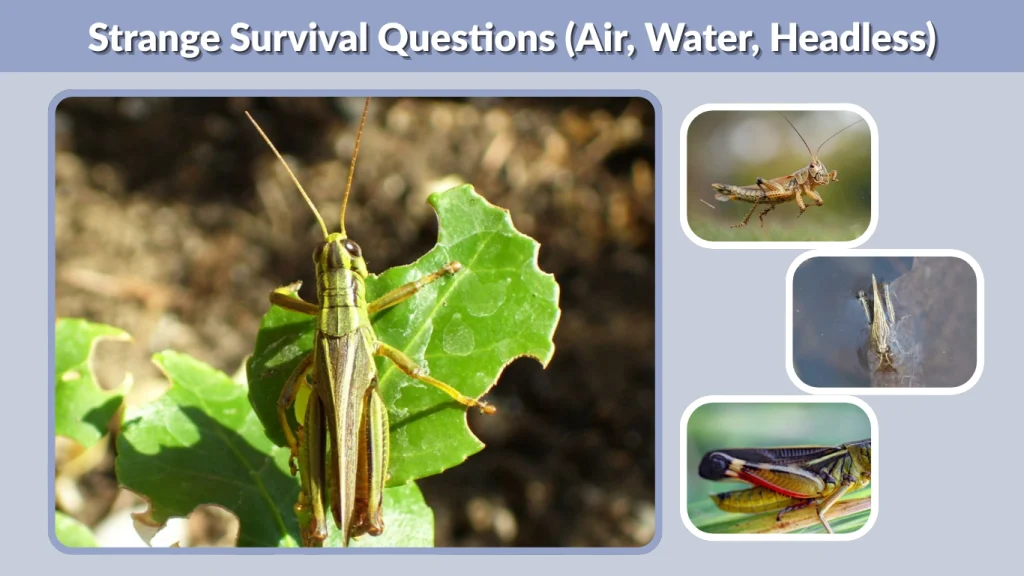
Grasshoppers can survive in unusual situations, which explains many of the unique questions people ask.
How Long Grasshoppers Live Without Air
Grasshoppers breathe through spiracles—tiny holes along their abdomen—rather than lungs. While they can tolerate low oxygen for short periods, they typically survive only a few minutes without air.
How Long They Survive Underwater
Most grasshoppers survive 2 to 9 minutes underwater. Some may last slightly longer if trapped air gets caught between their body segments, but none can breathe underwater for long.
Can Grasshoppers Live Without a Head?
Surprisingly, yes—grasshoppers can survive several hours, sometimes up to a day, without a head. Their nervous system is distributed throughout the body, and spiracles allow them to breathe independently. However, they cannot eat or drink and eventually die from dehydration or internal damage.
Grasshopper Behavior & Activity Duration
Grasshoppers are active, mobile insects that spend most of their day feeding, moving, and reproducing. Much of their behavior is influenced by temperature, which means they are most active during warm daylight hours.
How Long Grasshoppers Sleep
Grasshoppers do not sleep the way mammals do. Instead, they enter short resting periods throughout the day and night. These rest phases last minutes to hours, depending on temperature and energy levels. Because they lack eyelids, their rest is subtle and hard to observe, but essential for conserving energy.
How Long They Stay in One Place
A grasshopper may remain in one location for several minutes to hours, especially if food is abundant. When temperatures drop or predators appear, they move quickly. Nymphs stay put longer than adults since they cannot fly away from threats.
How Long They Make Noise
Male grasshoppers create sound by rubbing their legs across their wings. This “stridulation” occurs primarily during the mating season and may last for hours, especially in warm weather. The noise attracts females and warns rival males.
Jumping, Flying & Physical Abilities
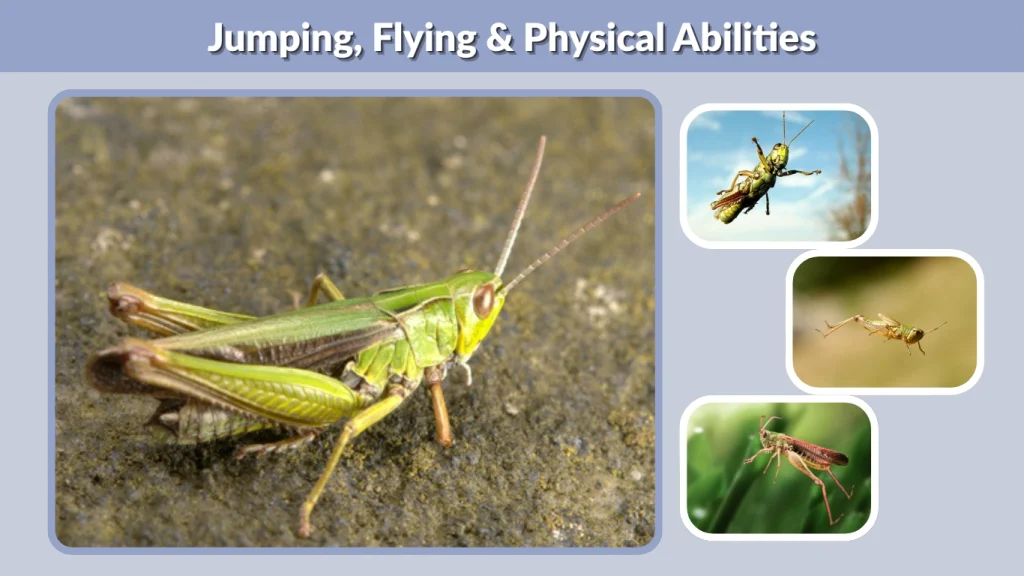
Grasshoppers are known for their strong jumping and flight capabilities, both of which help them escape predators and search for food.
How Long Grasshoppers Can Jump
Grasshoppers jump repeatedly throughout the day. Each leap can cover 20 times their body length, and they may jump dozens to hundreds of times depending on activity level. This connects well with keyword themes like “a grasshopper is jumping on a long staircase,” which symbolizes repeated jumping over time.
How Long Grasshoppers Can Fly
Flight abilities vary by species.
- Short bursts: Most species can fly for a few minutes at a time.
- Long migrations: Certain locust-related species can travel many miles when swarming.
Grasshoppers use flight mostly to escape predators or relocate when food becomes scarce.
How Long Grasshoppers Grow
Growth continues from hatching until adulthood, lasting 5–8 weeks. During this period, the nymph molts several times until its wings are fully developed.
Size & Length Questions
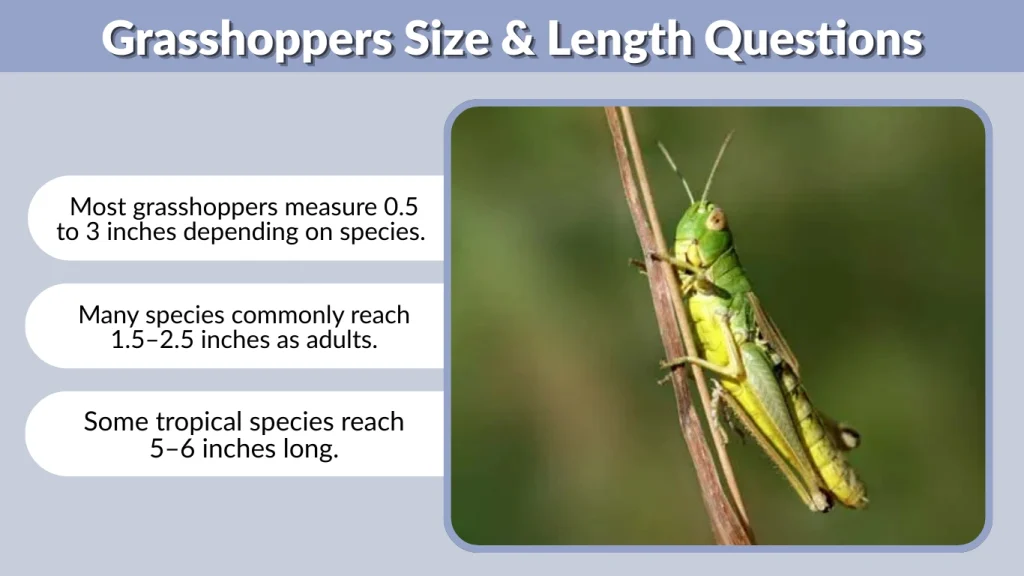
Keywords related to size and “how long grasshoppers are” are addressed here.
How Long Grasshoppers Are
Most grasshoppers measure 0.5 to 3 inches depending on species. This falls within the typical size range for North American grasshoppers.
Two-Inch-Long Grasshoppers
A “two-inch-long grasshopper” is completely normal. Many species commonly reach 1.5–2.5 inches as adults.
World’s Largest Grasshoppers
Some tropical species reach 5–6 inches long. While rare, they are among the largest insects on Earth. This answers the question:
Can grasshoppers be 6 inches long?
Yes—but only in specific giant species rarely seen outside rainforests.
Grasshopper Lifespan in Human Environments
Grasshoppers often wander into homes or get captured temporarily, leading to questions about indoor survival.
How Long They Live in a House
Inside a home, grasshoppers usually live 1–2 weeks if they find food such as houseplants. Without access to green vegetation, they die sooner. Indoor temperatures may extend their activity, but limited food shortens survival.
How Long They Live in a Jar or Container
A grasshopper in a sealed jar without ventilation may survive only 1–3 days.
In a ventilated container with food and moisture-rich plants, it may live weeks or months, depending on species and care.
How Long Grasshopper Season Lasts
Grasshopper season typically lasts from late spring through early fall, but varies by region:
- Las Vegas: Summer peaks
- Florida: Longer season due to warm climate
- Northern states: June–September
Season duration is tied to temperature and grass growth.
Grasshopper Infestations & Pest Behavior

Grasshopper outbreaks can cause crop damage and occur cyclically in some areas.
How Long Grasshopper Infestations Last
Infestations usually last weeks to several months, depending on drought, vegetation levels, and breeding cycles. They often continue until cold weather kills adults or food shortages limit survival.
How Long Diatomaceous Earth Takes to Kill Grasshoppers
Diatomaceous earth breaks down the insect’s protective coating, causing dehydration. It typically takes 24–72 hours to kill a grasshopper after contact.
How Long Grasshopper Species Stay Around Each Year
Most species appear during warm months and remain active until the first frost ends adult life.
What Long-Horned Grasshoppers Eat
Long-horned grasshoppers (katydids) eat:
- Leaves
- Flowers
- Soft stems
- Occasional small insects
Their diet differs slightly from true grasshoppers but overlaps in many ways.
Evolution & History
Grasshoppers are ancient, resilient insects with a long evolutionary history.
How Long Ago Grasshoppers Appeared
Grasshoppers have existed for over 250 million years, making them older than many dinosaurs. Their simple yet effective body structure has changed little over time.
How Long They’ve Been Around
Fossil evidence shows that early ancestors of grasshoppers existed even before flowering plants evolved. Their long history explains their adaptability and widespread distribution today.
Odd & Miscellaneous Keyword Clarifications
- Do daddy long legs eat grasshoppers? Rarely—only if injured or small.
- Do grasshoppers fly on Long Island? Yes, multiple species inhabit the area.
- Grasshopper Point hike length? Not insect-related—clarify as an unrelated location.
- Greensboro Grasshoppers game length? Minor League Baseball games last ~2.5 hours.
FAQs
How long do grasshoppers live?
Most grasshoppers live 6–12 months, depending on species and climate. Their lifespan includes egg, nymph, and adult stages. Cold weather, predators, and food availability greatly impact survival, while warm climates and steady vegetation allow certain species to reach the upper range of their lifespan.
How long can grasshoppers live without food or water?
Grasshoppers typically survive 3–7 days without food and 4–7 days without water, since most of their moisture comes from fresh plants. Without food and water, they last only 2–5 days. Hot temperatures shorten survival because their metabolism increases, causing dehydration and energy loss more quickly.
How long do grasshopper eggs take to hatch?
Grasshopper eggs usually take 3–9 months to hatch. Many species lay eggs in late summer or fall, and the eggs overwinter underground. Warmer regions may see earlier hatching, while colder climates delay development until spring, ensuring nymphs emerge when food is abundant.
How long do grasshopper infestations last?
Grasshopper infestations typically last weeks to several months, depending on rainfall, vegetation levels, and breeding cycles. Outbreaks often peak in mid-summer and decline when temperatures drop or food becomes scarce. Heavy infestations may persist until the first frost kills the adult population.
Can grasshoppers survive without a head?
Yes—grasshoppers can survive several hours, sometimes up to a day, without a head. Their breathing occurs through spiracles along the body, not the mouth, and their nervous system continues functioning temporarily. However, without the ability to eat or drink, they eventually die from dehydration or internal damage.
