
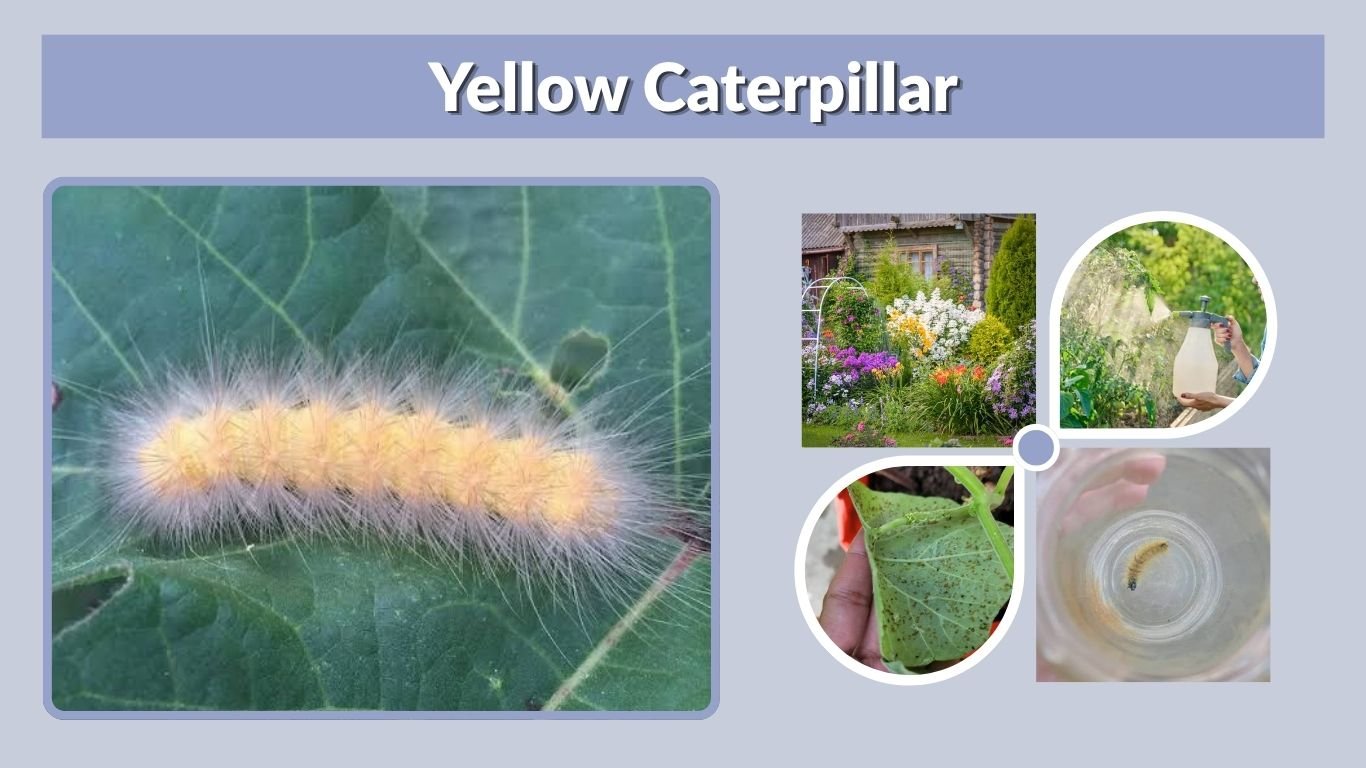
Yellow caterpillars are common in gardens, forests, fields, and even around homes. Some are smooth and harmless, while others are fuzzy, spiky, or brightly marked with black stripes and warning colors. Because many species look similar, careful identification matters. This guide explains common yellow caterpillar types, key features, poisonous concerns, host plants, and safe handling tips.
What Is a Yellow Caterpillar?
Yellow caterpillar is not the name of one single species. It is a general description for many moth and butterfly larvae that appear yellow, yellow-green, golden, cream-yellow, or yellow with black markings. Some are fully fuzzy, some have long hairs, and others have stripes, dots, horns, or spines.
Most yellow caterpillars are plant feeders. They eat leaves, flowers, or crop plants before turning into moths or butterflies. Their bright color can help them blend with yellow leaves and flowers, but in some species, it also works as a warning signal to predators.
Common Features of Yellow Caterpillars
Many yellow caterpillars can be identified by checking color pattern, hair, body shape, and the plant they are feeding on.
- Yellow, cream, golden, or yellow-green body color
- Black stripes, black spots, or black spikes on some species
- Fuzzy, hairy, smooth, or spiny body texture
- Found on trees, garden plants, weeds, vegetables, or flowers
- Usually active during spring, summer, and early fall
- Some curl up or drop from leaves when disturbed
A yellow caterpillar with black spikes may not be the same species as a yellow fuzzy caterpillar. That is why body texture and markings are more useful than color alone.
Yellow Fuzzy Caterpillar Identification
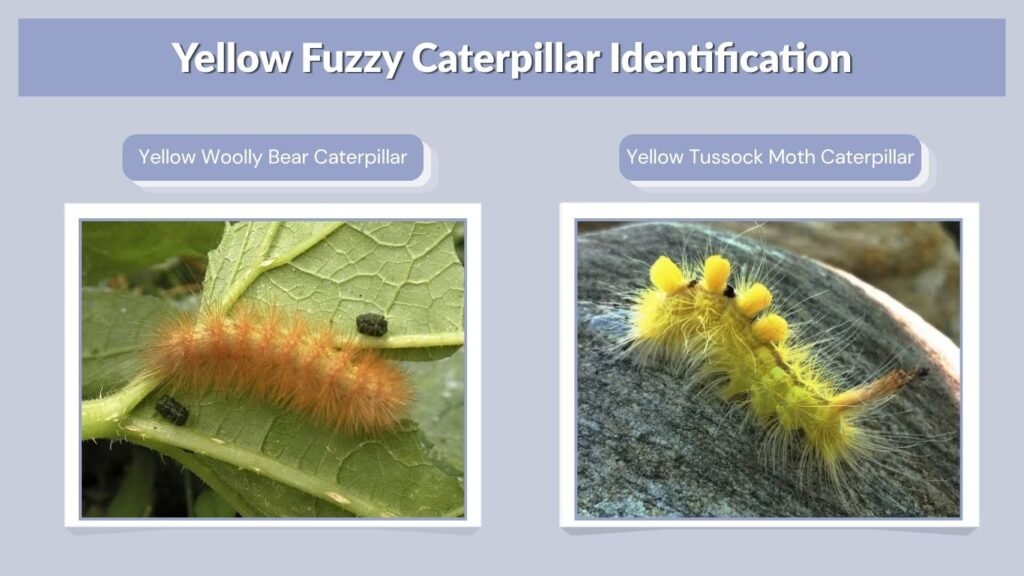
Yellow fuzzy caterpillars are among the most searched types because they look soft and unusual. However, fuzzy does not always mean safe to touch. Their hairs may irritate sensitive skin, and some species have hidden defensive bristles.
These caterpillars are often larvae of tiger moths, tussock moths, or woolly bear moth relatives. They may appear bright yellow, pale yellow, or yellow mixed with white and black.
Yellow Woolly Bear Caterpillar
The yellow woolly bear caterpillar is one of the best-known fuzzy yellow caterpillars. It is usually pale yellow, tan, orange-yellow, or cream-colored, with a thick coat of soft-looking hairs. It may be seen crawling across sidewalks, lawns, or garden beds.
This caterpillar turns into the Isabella tiger moth. Although it looks touchable, it is better to avoid handling it. The hairs can cause mild irritation for some people, especially children or those with sensitive skin.
Yellow Tussock Moth Caterpillar
Yellow tussock moth caterpillars often have tufts of hair sticking upward or outward from the body. They may look decorative, but their bristles can be irritating. Some have yellow bodies with black or white hair pencils, making them easy to notice on leaves.
They feed on various trees and shrubs. If you find many on a plant, check the leaves for chewing damage. A few caterpillars are usually not a major problem, but large groups can defoliate small plants.
Black and Yellow Caterpillars
Black and yellow caterpillars are easier to notice because the contrast is strong. Some have black stripes across a yellow body, while others are mostly black with yellow bands, dots, or patches. This color pattern often warns birds and other predators that the caterpillar may taste bad.
Not all black and yellow caterpillars are dangerous. Many are harmless plant feeders, but some can irritate skin or damage garden plants if they appear in large numbers.
Black and Yellow Striped Caterpillar
A black and yellow striped caterpillar usually has repeating bands along the body. These stripes may run lengthwise from head to tail or appear as rings around each segment. Species with striped patterns are often found on milkweed, parsley family plants, trees, or wildflowers.
When identifying this type, look closely at the stripe direction. Long side stripes, broken stripes, and full ring-like bands can point to different species. The host plant is also very important.
Yellow Caterpillar With Black Spots
A yellow caterpillar with black spots may look similar to a striped caterpillar from a distance. Spots can be round, oval, or irregular. Some species have black dots on each body segment, while others have large black patches near the head or tail.
Black spots may be natural markings, breathing openings, or defensive patterning. Avoid touching the caterpillar until you know the species, especially if it also has hairs or spines.
Yellow Caterpillar With Black Spikes
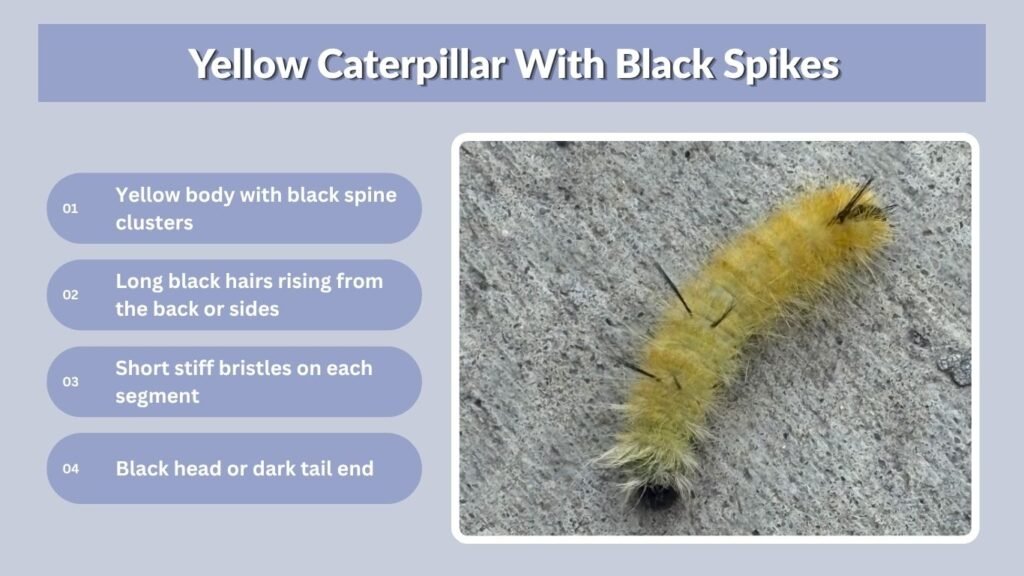
A yellow caterpillar with black spikes often gets attention because it looks dangerous. The word “spikes” may describe true spines, soft hair tufts, black bristles, or horn-like projections. Some are harmless, but others may sting or irritate skin.
Spiky caterpillars are usually best observed, not handled. If you need to move one, use a leaf, stick, paper, or gloves instead of bare fingers.
How to Recognize Spiky Yellow Caterpillars
Spiky yellow caterpillars may show several noticeable traits:
- Yellow body with black spine clusters
- Long black hairs rising from the back or sides
- Short stiff bristles on each segment
- Black head or dark tail end
- Warning colors such as yellow, black, orange, or white
- Slow movement on leaves or tree trunks
The shape of the spikes matters. Soft hairs are different from stiff spines. If the caterpillar has sharp-looking bristles, do not touch it.
Are Yellow Spiky Caterpillars Poisonous?
Some yellow spiky caterpillars can cause skin irritation, burning, itching, or a rash. This does not always mean they are deadly or truly poisonous, but it means they should be handled with caution. Caterpillar hairs can break off and enter the skin like tiny splinters.
If contact causes irritation, wash the area with soap and water. Sticky tape may help remove fine hairs from the skin. Seek medical help if swelling, breathing problems, severe pain, or allergic symptoms occur.
Common Yellow Caterpillars and Key Differences
Many yellow caterpillars look alike at first glance, but their body texture, pattern, and food plant can help separate them. The table below gives a simple comparison for quick identification.
| Caterpillar Type | Main Look | Common Clue | Touch Safety |
| Yellow woolly bear | Fuzzy yellow or tan body | Crawls on lawns, paths, and weeds | Avoid handling if sensitive |
| Yellow tussock moth caterpillar | Hair tufts and yellow body | Found on trees and shrubs | Can irritate skin |
| Yellow necked caterpillar | Striped body, dark head area | Often feeds in groups on trees | Do not handle directly |
| Yellow swallowtail caterpillar | Smooth green-yellow or patterned body | Found on host plants like herbs or trees | Usually safer, but observe only |
| Yellow caterpillar with black spikes | Yellow body with dark bristles | Often warning-colored | Avoid touching |
Yellow Necked Caterpillar
The yellow necked caterpillar is often found in groups on trees. It can have yellowish markings with dark stripes and a dark head area. When disturbed, several caterpillars may raise their head and tail at the same time.
These caterpillars can feed heavily on leaves. In large numbers, they may make branches look bare. Young trees may need protection if many caterpillars are present, but mature trees often recover from light feeding.
Yellow Swallowtail Caterpillar
A yellow swallowtail caterpillar is usually connected with butterfly species, not moths. Depending on its stage, it may look dark, green, yellowish, or patterned. Some young swallowtail caterpillars mimic bird droppings, while older ones become smoother and brighter.
Swallowtail caterpillars are often found on specific host plants. For example, some use parsley-family plants, citrus, tulip tree, or wild cherry, depending on the species. Host plant identification helps greatly.
Where Yellow Caterpillars Live
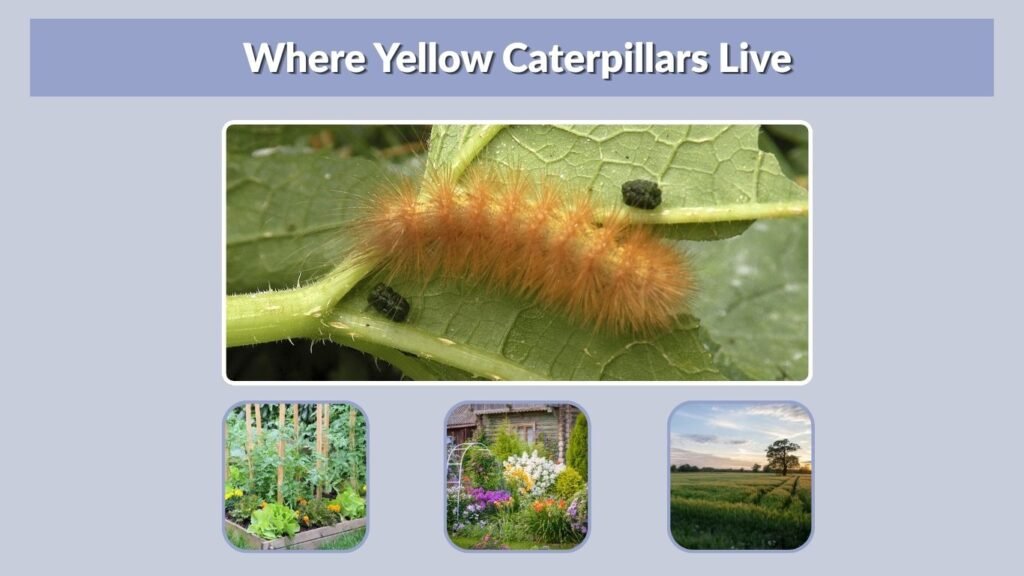
Yellow caterpillars can live almost anywhere plants are available. They are common in backyards, vegetable gardens, flower beds, fields, forests, roadsides, and orchards. Their exact habitat depends on the adult moth or butterfly species and the plants their larvae need.
Some appear on low-growing weeds, while others feed high in trees. A caterpillar found on milkweed, for example, may be very different from one found on oak, maple, cabbage, or parsley.
Common Places to Find Them
You may see yellow caterpillars in several places:
- Under leaves of garden plants
- On tree branches and shrubs
- Crawling across sidewalks or driveways
- On wildflowers, weeds, and grasses
- Around vegetable gardens
- Near porch lights after moths lay eggs nearby
- On host plants where butterflies are active
When identifying one, take note of the plant. A clear photo of the caterpillar and the leaf it was eating can make identification much easier.
What Do Yellow Caterpillars Eat?
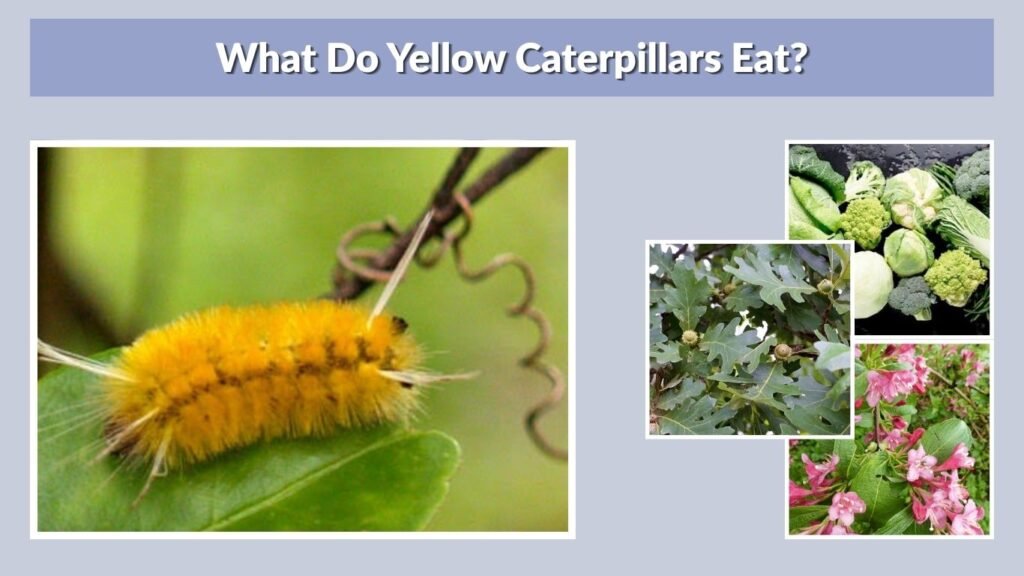
Yellow caterpillars mainly eat plant material. Their diet depends on the species. Some are general feeders and eat many kinds of leaves. Others are specialists and survive only on certain host plants.
Gardeners may notice holes in leaves, missing edges, skeletonized leaves, or droppings under plants. A few caterpillars usually do not destroy a garden, but a large group can cause visible damage quickly.
Common Food Sources
Yellow caterpillars may feed on:
- Tree leaves such as oak, maple, willow, birch, or cherry
- Garden herbs like parsley, dill, fennel, or carrot tops
- Vegetable crops such as cabbage, beans, or leafy greens
- Wild plants, weeds, and grasses
- Flowering shrubs and ornamental plants
- Milkweed or other butterfly host plants
Before removing caterpillars, decide whether they are serious pests or future butterflies and moths. Many are part of a healthy garden ecosystem.
Are Yellow Caterpillars Dangerous?
Most yellow caterpillars are not dangerous to humans. The main concern is skin irritation from hairs, bristles, or spines. Children may want to touch fuzzy caterpillars, but this should be avoided unless the species is known to be harmless.
Pets may also investigate caterpillars. Dogs and cats can get mouth irritation if they bite hairy or spiny larvae. If a pet drools, paws at the mouth, vomits, or seems distressed after contact, call a veterinarian.
Safe Handling Tips
Use simple safety steps when dealing with unknown caterpillars:
- Do not touch fuzzy, hairy, or spiky caterpillars with bare hands
- Use gloves, paper, a leaf, or a small container to move them
- Keep children from picking them up
- Wash skin after accidental contact
- Do not crush caterpillars with bare hands
- Take a photo before moving them for easier identification
Observation is usually the safest choice. Many caterpillars are temporary visitors and will leave the plant after feeding.
How to Identify a Yellow Caterpillar Correctly
Correct identification depends on more than color. Many unrelated species can be yellow. A bright yellow fuzzy caterpillar, a black and yellow striped caterpillar, and a yellow caterpillar with black spikes may belong to completely different moth or butterfly families.
Start by studying the body, then check the plant, location, season, and behavior. This combination gives a more reliable answer than color alone.
Identification Checklist
Use this checklist before deciding what species it may be:
- Is the body smooth, hairy, fuzzy, or spiky?
- Are the markings stripes, spots, bands, or patches?
- Does it have black spikes, black hairs, or a black head?
- What plant is it feeding on?
- Is it alone or in a group?
- What season did you find it?
- Does it curl up, raise its body, or drop when touched?
- Is it in a garden, forest, lawn, or tree canopy?
A clear photo from the top and side can help separate similar species.
Should You Remove Yellow Caterpillars From Plants?
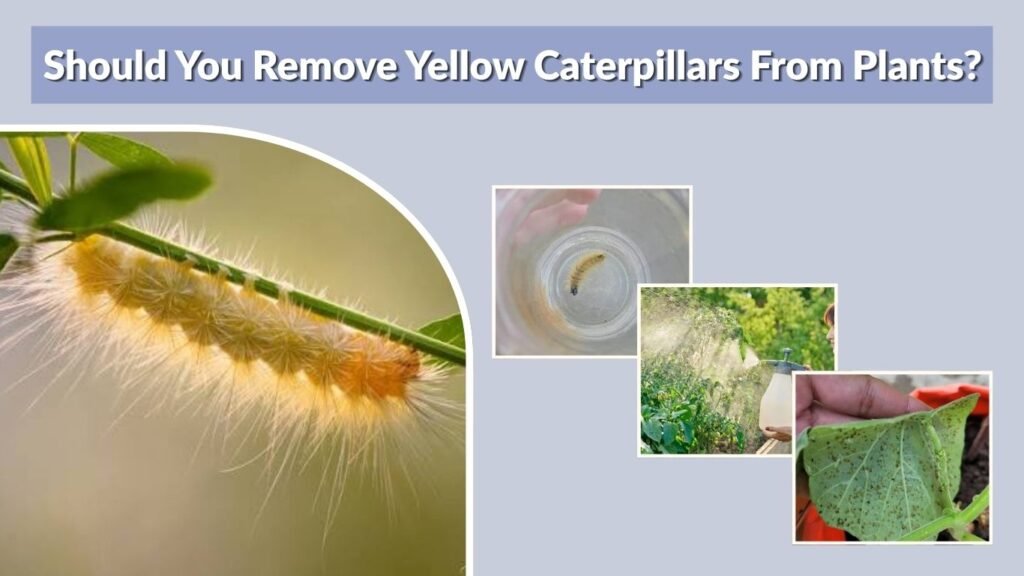
You do not always need to remove yellow caterpillars. If they are feeding lightly on a mature plant, they may cause little harm. Many will become useful pollinators as adult moths or butterflies. However, removal may be needed if they are damaging vegetables, young trees, or ornamental plants.
The best method is hand removal with gloves or relocating them to a nearby host plant. Avoid using strong pesticides when possible because they can harm butterflies, bees, and other beneficial insects.
Natural Control Methods
For garden-friendly control, try these options:
- Pick caterpillars off with gloves and move them away
- Spray plants with water to dislodge small groups
- Check leaf undersides for eggs
- Encourage birds and beneficial insects
- Use row covers for vegetables before eggs are laid
- Prune heavily infested small branches if needed
- Avoid broad insecticides in butterfly-friendly gardens
If the caterpillar is rare or belongs to a butterfly species you want to protect, leave it alone unless it is causing serious plant damage.
FAQs
Are yellow caterpillars poisonous?
Most yellow caterpillars are not seriously poisonous, but some hairy or spiky types can irritate skin. Their hairs or bristles may cause itching, redness, burning, or rash. It is safest not to touch unknown yellow caterpillars, especially fuzzy ones with black spikes or stiff-looking hairs.
What does a yellow fuzzy caterpillar turn into?
A yellow fuzzy caterpillar often turns into a moth, especially a tiger moth, tussock moth, or woolly bear type. The exact adult depends on the species. Color alone is not enough for identification, so check the body markings, hair pattern, host plant, and location.
Is a yellow caterpillar with black spikes dangerous?
A yellow caterpillar with black spikes may cause irritation if touched. Some have harmless-looking hairs that can still bother the skin. It is not always dangerous, but it should be treated carefully. Move it with a leaf, stick, gloves, or container instead of bare hands.
Why are some caterpillars yellow and black?
Yellow and black colors often work as warning colors in nature. They may tell birds or predators that the caterpillar tastes bad, has irritating hairs, or should be avoided. In other cases, the pattern helps the caterpillar blend with leaves, flowers, or shadows.
How can I identify a black and yellow caterpillar?
Look at the stripe direction, body texture, head color, spikes, and host plant. A black and yellow striped caterpillar may be smooth, fuzzy, or spiny, and each type can belong to a different species. Photos from the top and side make identification much easier.
