

The term wood spider is commonly used to describe spiders found in wooded areas, forests, woodpiles, and even backyard gardens. However, “wood spider” is not a single scientific species. Instead, it’s a general name people use for several types of spiders that live around woodlands or wooden structures. Depending on your location, a wood spider might actually be a wolf spider, fishing spider, or even another ground-dwelling species.
Because of this naming confusion, many people search online trying to identify a large brown spider they found in their shed, basement, or woodpile. Understanding what a wood spider really is requires looking at its appearance, behavior, and habitat. In this guide, we’ll break down identification, bite risks, and key facts to help you properly recognize a wood spider.
What Is a Wood Spider?
The phrase wood spider is a common nickname rather than an official scientific term. In North America, it most often refers to:
- Wolf spiders (family Lycosidae)
- Fishing spiders (genus Dolomedes)
- Large woodland hunting spiders
In the UK, “wood spider” can sometimes refer to species that inhabit forests and hedgerows, but again, it is not a precise scientific classification.
Because common names vary by region, two people in different states—or even different countries—might use “wood spider” to describe completely different species.
Key Wood Spider Facts
- Most wood spiders are ground hunters, not web builders.
- They are commonly brown, gray, or mottled to blend into bark and leaves.
- Many are nocturnal and more active at night.
- They help control insect populations naturally.
Understanding that “wood spider” is a broad label helps prevent misidentification and unnecessary fear.
Wood Spider Identification Guide

Identifying a wood spider begins with observing its size, color, and behavior.
Size & Appearance
Most spiders referred to as wood spiders are medium to large in size. Body lengths often range from ½ inch to over 1 inch, with leg spans appearing much larger.
Common features include:
- Brown, gray, or earthy tones
- Camouflage patterns
- Hairy legs
- Stout body structure
Fishing spiders, sometimes called wood spiders, can be particularly large and may have long legs with banded markings.
Habitat
Wood spiders are typically found in:
- Woodpiles
- Forest floors
- Under logs and bark
- Sheds and garages
- Basements near foundations
They prefer dark, sheltered areas where insects are plentiful.
Do Wood Spiders Jump?
Many people wonder whether wood spiders jump. While they are not true jumping spiders (family Salticidae), some species—especially wolf spiders—can make short, quick lunges toward prey. However, they do not leap long distances like jumping spiders do. Their movements are fast but generally low to the ground.
Wood Spider vs Wolf Spider
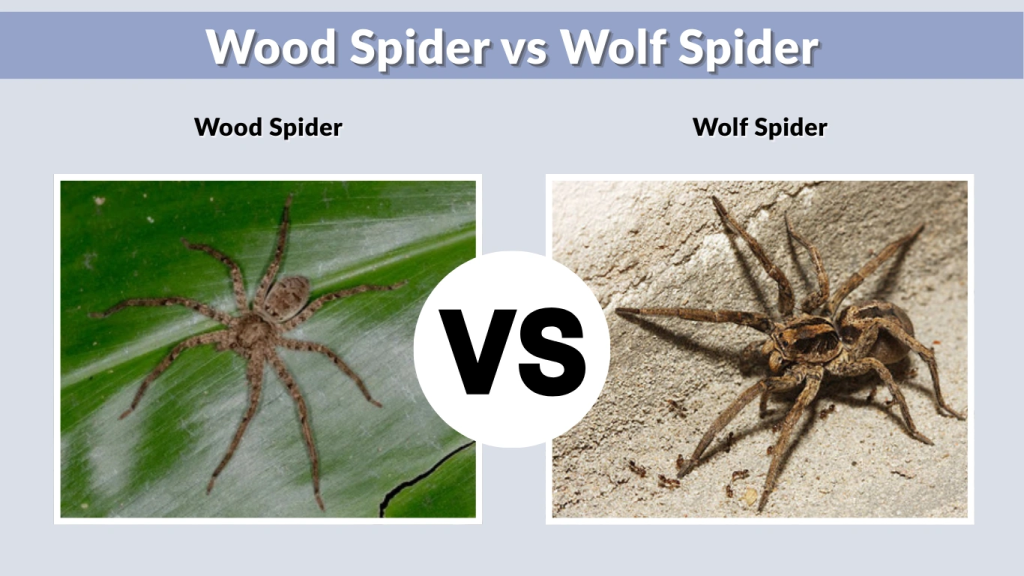
One of the most searched comparisons is wood spider vs wolf spider. In many cases, the two terms refer to the same spider.
Are They the Same?
Often, yes. In North America, what people call a “wood spider” is frequently a wolf spider.
Key Differences (When Applicable)
If the spider is actually a fishing spider rather than a wolf spider, you may notice:
| Feature | Wolf Spider | Fishing Spider |
| Body Build | Stout, compact | Larger, longer legs |
| Habitat | Ground, leaf litter | Near water, tree trunks |
| Eye Pattern | Distinct row of large front eyes | Less prominent eye row |
| Size | Medium to large | Often larger |
Wolf spiders are known for their excellent night vision and reflective eyes when illuminated by a flashlight. Fishing spiders are often found near ponds, lakes, or damp wooded environments.
Wood Spider Bite: Are They Dangerous?
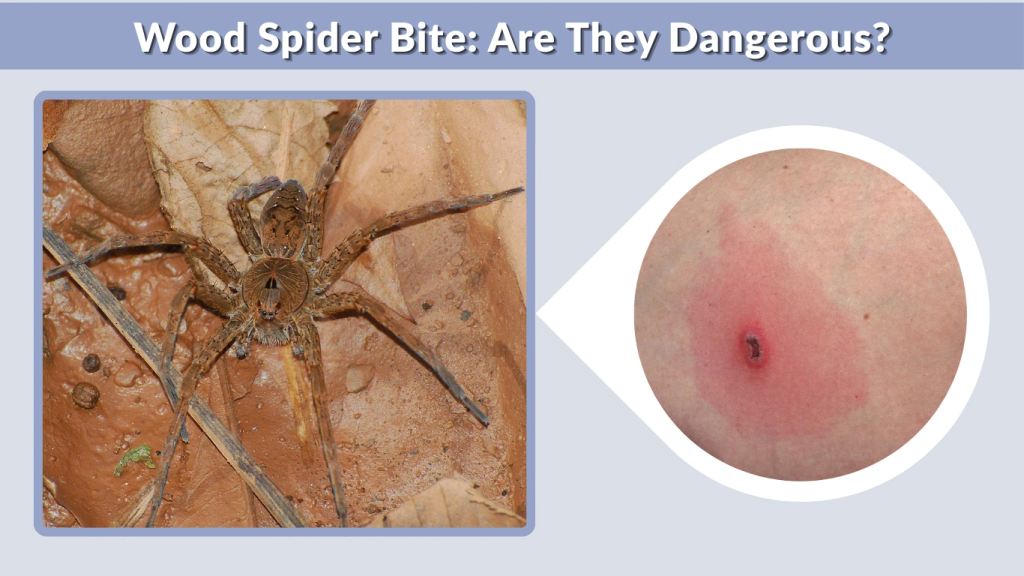
A common concern is the wood spider bite. The good news is that spiders commonly called wood spiders are not considered dangerous to humans.
Do Wood Spiders Bite?
Yes, but only in self-defense. Bites usually occur when a spider is:
- Accidentally pressed against skin
- Trapped inside clothing
- Handled roughly
They do not actively seek out humans.
Bite Symptoms
A wood spider bite typically causes:
- Mild redness
- Localized swelling
- Minor pain similar to a bee sting
Severe reactions are rare. Most symptoms fade within a few hours to a couple of days.
When to Seek Medical Attention
Seek medical help if:
- Pain worsens significantly
- Signs of infection appear
- You experience an allergic reaction
However, serious complications from wood spider bites are extremely uncommon.
Wood Spider Eggs & Reproduction

Wood spiders, particularly wolf spiders, have fascinating reproductive behaviors.
Female wolf spiders are known for carrying their egg sacs attached to their spinnerets (the silk-producing organs). The round, white or tan egg sac may contain dozens to hundreds of eggs.
After hatching, baby spiders often climb onto the mother’s back and remain there for several days. This maternal care is unusual among spiders and is one of the most interesting wood spider facts.
Egg sacs are commonly found in:
- Leaf litter
- Woodpiles
- Under logs
- Protected corners of sheds
Breeding activity typically increases in warmer months.
Wood Spiders by Location
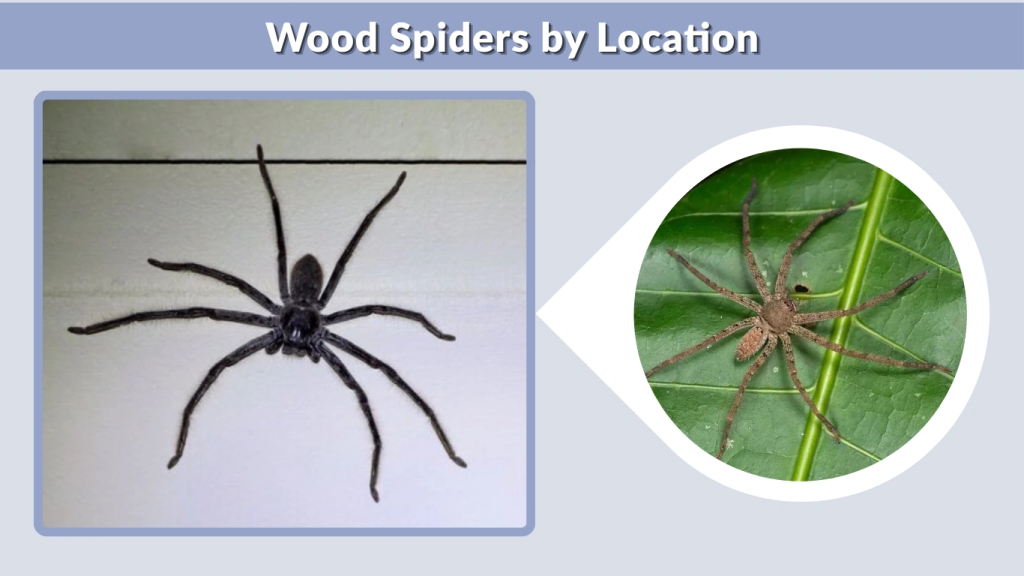
Because “wood spider” is a broad term, the species you encounter can vary depending on where you live. Climate, habitat, and regional ecosystems all influence which spiders are commonly labeled as wood spiders.
Wood Spider Florida
In Florida, large wolf spiders and fishing spiders are frequently called wood spiders. The warm climate allows spiders to remain active for much of the year. Fishing spiders are especially common near lakes, canals, and wooded wetlands. Due to Florida’s size and biodiversity, sightings of large spiders are more frequent, leading many homeowners to search for identification online.
Wood Spider CT (Connecticut)
In Connecticut and other northeastern states, wolf spiders are the most common spiders referred to as wood spiders. They are often found in wooded yards, basements, and woodpiles—especially in late summer and early fall when they may wander indoors seeking warmth.
Wood Spider Ohio
Ohio’s forests and suburban areas support healthy populations of wolf spiders. During autumn, these spiders become more noticeable as they roam in search of mates. Many Ohio residents mistake them for more dangerous species due to their size, but they are generally harmless.
Wood Spider Maine
In colder states like Maine, wood spiders are typically hardy wolf spider species that can tolerate lower temperatures. They remain active during warmer months and overwinter in protected areas such as under logs or inside structures.
Wood Spider Canada
Across Canada, wolf spiders dominate wooded environments. In southern regions, they are common in forests, gardens, and rural properties. Their ability to survive cold winters makes them one of the more resilient spider groups in northern climates.
Wood Spider UK
In the United Kingdom, the term “wood spider” is less formally defined but may refer to large ground-dwelling spiders found in forests and hedgerows. Some people may use the term for certain orb-weavers or house spiders found near wooden structures. As in North America, it is not a precise scientific name.
Wood Spider Behavior & Ecology
Wood spiders play an important role in natural ecosystems. As predators, they help regulate insect populations, reducing pests in forests and gardens.
Nocturnal Hunters
Most spiders referred to as wood spiders are nocturnal. They hunt at night, using speed and stealth rather than webs. Wolf spiders, in particular, rely on strong vision and vibration detection to locate prey.
Do Wood Spiders Build Webs?
Unlike orb-weaving spiders, wood spiders such as wolf spiders do not build large capture webs. Instead, they may create small silk retreats under debris for shelter but actively chase or ambush prey.
Seasonal Activity
- Spring & Summer: Peak hunting and breeding season
- Fall: Increased sightings indoors
- Winter: Shelter in protected areas
Their seasonal movement is often what brings them into contact with humans.
How to Prevent Wood Spiders Around Your Home
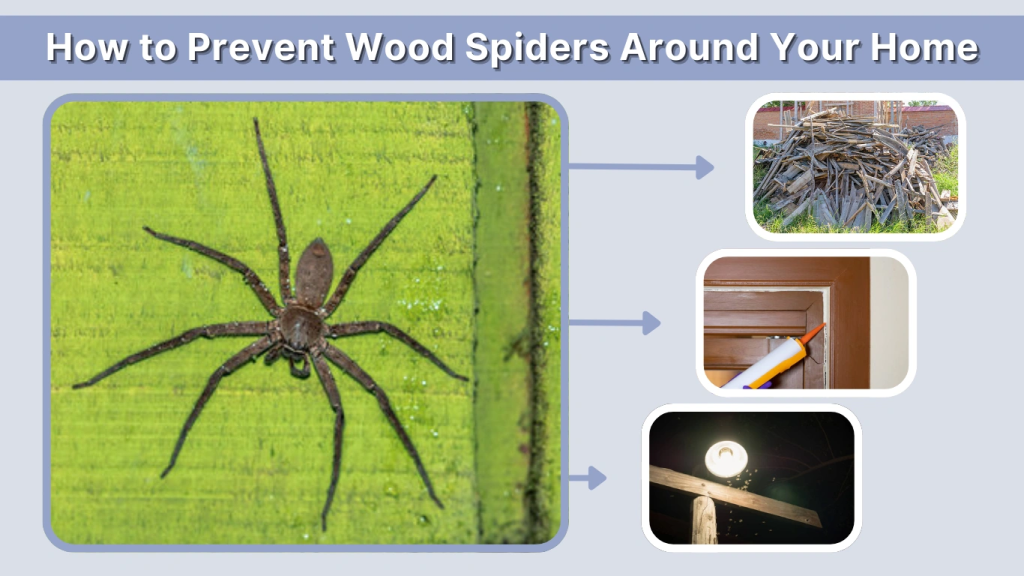
While wood spiders are generally harmless, some homeowners prefer to limit their presence indoors.
Here are practical prevention tips:
- Remove stacked wood away from house foundations
- Seal cracks and gaps around doors and windows
- Reduce outdoor lighting that attracts insects
- Keep basements dry and clutter-free
- Clear leaf litter and debris near entry points
If spiders repeatedly appear indoors, professional pest control can help identify and manage entry points safely.
Fun Wood Spider Facts
- Some wolf spiders carry their babies on their backs after hatching.
- Their eyes can reflect light at night, making them visible with a flashlight.
- They do not rely on webs to catch food.
- They are beneficial predators in gardens and forests.
- Despite their size, they are rarely aggressive toward humans.
FAQs
Are wood spiders poisonous?
Wood spiders are venomous, like most spiders, but they are not dangerous to humans. Their venom is used to subdue insect prey. A bite may cause mild redness or swelling, but serious reactions are rare.
How big do wood spiders get?
Most spiders referred to as wood spiders range from ½ inch to over 1 inch in body length, with a larger leg span that makes them appear bigger. Fishing spiders, sometimes called wood spiders, can have a leg span of 3 inches or more.
Do wood spiders jump at people?
No, wood spiders do not jump at people. Some species, like wolf spiders, may make short, quick movements when hunting, which can look like jumping. However, they do not intentionally leap at humans.
Why am I seeing wood spiders in my house?
Wood spiders often enter homes in search of shelter, warmth, or food—especially during fall. Basements, garages, and areas near woodpiles are common entry points. Sealing cracks and reducing insects around your home can help prevent them.
Do wood spiders build webs?
Most spiders commonly called wood spiders, especially wolf spiders, do not build large capture webs. They are active hunters that chase or ambush prey instead of trapping it in webs.
