

Ducks are fascinating waterfowl found in a wide range of habitats, from freshwater ponds and rivers to coastal seas and wetlands. Known for their adaptability, unique behaviors, and diverse appearances, ducks play an important role in ecosystems worldwide. Some species are familiar backyard visitors, while others thrive in remote wilderness areas. This guide explores 27 common types of ducks, highlighting their key characteristics, habitats, and lifestyles.
1. Mallard Duck

The mallard is one of the most common and recognizable duck species in the world. Known for its adaptability, it thrives in both wild wetlands and human-made environments. Mallards are widely distributed and are often the species people picture when they think of a “typical duck.”
Identification
- Males have a glossy green head, yellow bill, white neck ring, chestnut-brown chest, and gray body
- Females are mottled brown with an orange-and-black bill, helping them blend into their surroundings
- Both sexes have a blue wing patch (speculum) bordered with white
- Average length ranges from 20–26 inches with a wingspan of about 32–39 inches
Habitat and Behavior
Mallards inhabit a wide range of freshwater environments, including ponds, lakes, rivers, marshes, and urban parks. They are highly adaptable and often live close to humans. Mallards are social birds, frequently seen in pairs or small groups, especially outside the breeding season. They are strong fliers and may migrate short or long distances depending on climate and food availability.
Diet and Lifecycle
Mallards are omnivorous and feed on aquatic plants, seeds, grasses, insects, snails, and small crustaceans. In urban areas, they may also consume human-provided food. Breeding usually occurs in spring, with females laying 8–13 eggs in well-hidden nests near water. Ducklings hatch after about 28 days and are able to swim and feed themselves shortly after birth.
2. Pekin Duck

The Pekin duck is one of the most popular domestic duck breeds in the world, especially valued for meat production. Originating from China, this duck is now widely raised on farms and small homesteads due to its fast growth, calm temperament, and high productivity.
Identification
- Large white body with smooth, dense feathers
- Bright orange bill, legs, and feet
- Upright posture with a slightly arched back
- Broad head and stout body shape
- Adults typically weigh between 8–11 pounds
Habitat and Behavior
Pekin ducks are fully domesticated and are commonly found on farms, backyard ponds, and agricultural settings. They prefer access to clean water for swimming but do not require large natural wetlands. Pekins are calm, friendly, and less flighty than wild ducks, making them easy to manage. They are poor fliers and usually stay close to their living area. These ducks are social and do best when kept in groups.
Diet and Lifecycle
Pekin ducks are omnivorous and thrive on a balanced diet of commercial duck feed, grains, grasses, insects, and vegetables. Clean water is essential for proper digestion. They grow very rapidly and can reach market size within 7–9 weeks. Females lay around 150–200 eggs per year, though they are not known for broodiness. The average lifespan ranges from 8–12 years with proper care.
3. Muscovy Duck

The Muscovy duck is a large, hardy duck species known for its distinctive appearance and quiet nature. Unlike most ducks, it is not closely related to mallard-derived breeds and is valued for meat, pest control, and adaptability to various climates.
Identification
- Large body with broad wings and a long, flat tail
- Red, bumpy facial skin (caruncles) around the eyes and bill
- Plumage varies: black, white, chocolate, blue, or mixed colors
- Males are much larger than females
- Sharp claws used for perching and roosting
Habitat and Behavior
Muscovy ducks prefer warm climates and are commonly found near rivers, ponds, wetlands, farms, and wooded areas. They are excellent perchers and often roost in trees or on elevated structures. Unlike other ducks, Muscovies are mostly silent, communicating through hissing or soft puffing sounds. They are less dependent on water and spend a lot of time walking on land. Muscovy ducks are strong fliers and may travel short distances if not clipped.
Diet and Lifecycle
Muscovy ducks are omnivorous and effective for natural pest control. Their diet includes insects, mosquitoes, snails, small reptiles, aquatic plants, grains, and kitchen scraps. Females are good mothers and typically lay 8–16 eggs per clutch. The incubation period lasts about 35 days, longer than most duck species. Ducklings mature slowly, with males taking several months to reach full size. With proper care, Muscovy ducks can live 10–15 years.
4. Indian Runner Duck
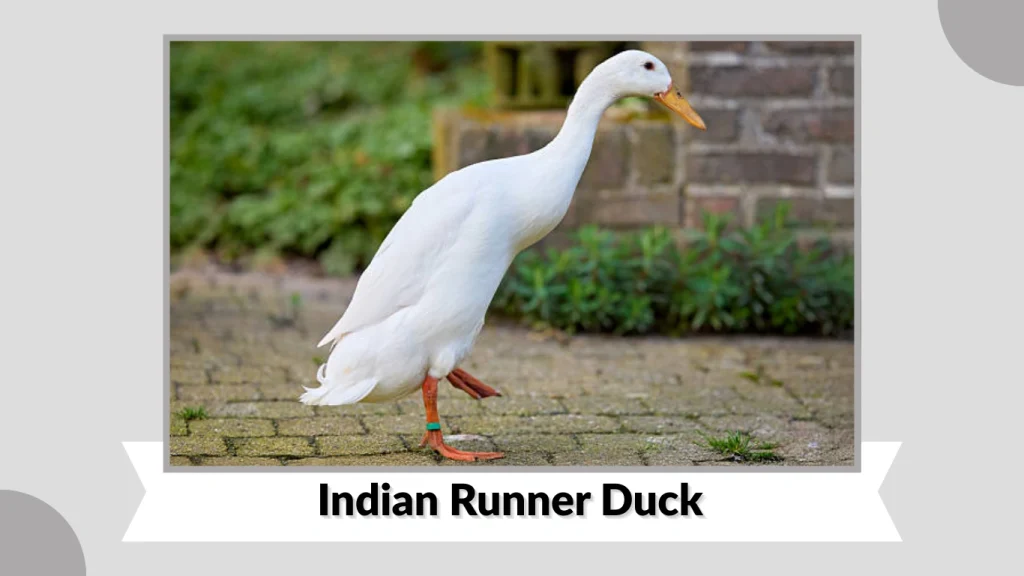
The Indian Runner duck is a unique and energetic breed best known for its upright posture and exceptional egg-laying ability. Originally developed in Southeast Asia, this duck is popular among farmers and backyard keepers for both productivity and pest control.
Identification
- Tall, slender body with an almost vertical, penguin-like stance
- Long neck and narrow head
- Smooth, tight feathers that come in many colors including fawn, white, black, and chocolate
- Legs set far back on the body, aiding fast movement
- Medium size with lightweight build
Habitat and Behavior
Indian Runner ducks adapt well to a variety of environments, including farms, gardens, and open grasslands near water sources. They do not require deep ponds but enjoy shallow water for bathing. These ducks are extremely active and prefer walking or “running” rather than flying. They are social birds that move together in groups and are excellent foragers, especially effective at controlling insects and slugs. Their alert nature makes them more nervous than heavier duck breeds.
Diet and Lifecycle
Indian Runner ducks are omnivorous and thrive on a diet of grains, grasses, insects, weeds, and commercial layer feed. They are one of the best egg-laying duck breeds, producing 200–300 eggs per year. Females are rarely broody, so eggs are often incubated artificially. Ducklings grow quickly and reach maturity within a few months. With good care, Indian Runner ducks typically live 8–12 years.
5. Rouen Duck

The Rouen duck is a large, heavy-bodied breed known for its striking resemblance to the mallard and its calm, domestic nature. Originally developed in France, this duck is primarily kept for ornamental purposes and small-scale meat production rather than egg laying.
Identification
- Males have a green head, white neck ring, chestnut chest, and gray body
- Females are mottled brown with darker markings, similar to female mallards
- Large, broad body with a deep keel
- Orange legs and feet with a flat, wide bill
- Heavier and less streamlined than wild mallards
Habitat and Behavior
Rouen ducks are best suited to farms, homesteads, and large backyard settings with access to water. They enjoy ponds and slow-moving water but are not strong fliers due to their size. Rouens are calm, friendly, and less active than lighter duck breeds, making them easy to manage. They are social birds and do well in groups. Their relaxed temperament makes them popular for ornamental flocks.
Diet and Lifecycle
Rouen ducks are omnivorous and require a balanced diet of grains, grasses, aquatic plants, insects, and commercial duck feed. Females lay around 35–125 eggs per year, making them poor layers compared to other breeds. They may show occasional broodiness. Ducklings grow slowly, reaching full size in several months. With proper care, Rouen ducks can live between 8–10 years.
6. Khaki Campbell Duck
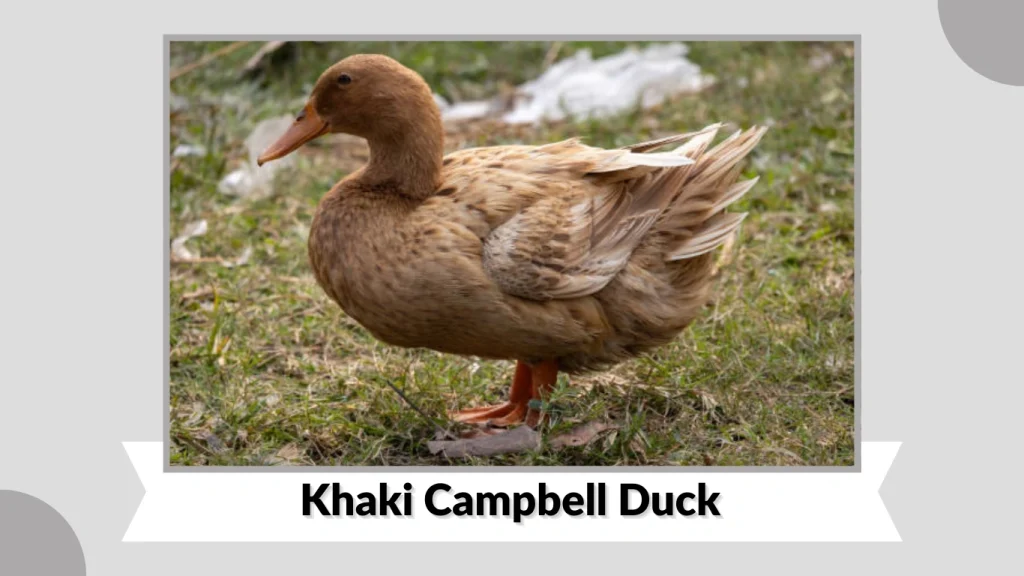
The Khaki Campbell duck is a highly productive domestic breed best known for its outstanding egg-laying ability. Developed in England, this duck is widely kept by farmers and backyard keepers for its efficiency, hardiness, and low maintenance needs.
Identification
- Medium-sized body with a sleek, streamlined shape
- Uniform khaki-brown plumage in females; males may show a darker head
- Dark bill with orange to brown legs and feet
- Alert posture with strong, well-set legs
- Lighter build compared to meat-focused duck breeds
Habitat and Behavior
Khaki Campbell ducks adapt well to farms, backyards, and open grazing areas near water. They do not require large ponds but benefit from shallow water for cleaning and comfort. These ducks are active, alert, and excellent foragers, often spending much of the day searching for insects and plants. They are social birds that thrive in groups and are known for being hardy in both warm and cool climates. While capable of flight, they usually stay close to their home area.
Diet and Lifecycle
Khaki Campbells are omnivorous and thrive on a diet of commercial layer feed, grains, grasses, weeds, insects, and kitchen scraps. They are among the top egg-laying duck breeds, producing 250–300 eggs per year. Females are rarely broody, so eggs are commonly incubated artificially. Ducklings mature quickly and begin laying within 5–7 months. With proper care, they can live 8–12 years.
7. Mandarin Duck
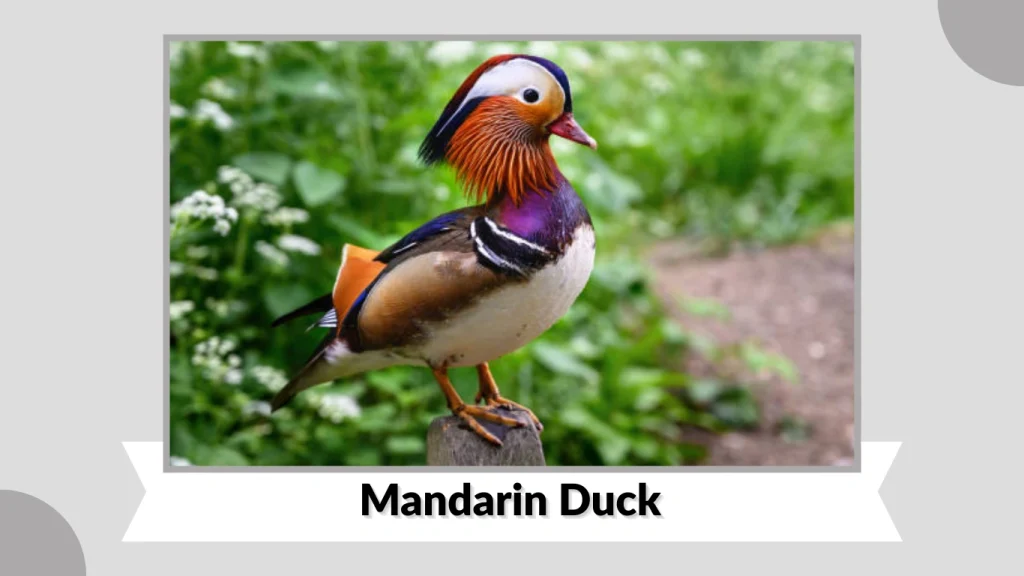
The Mandarin duck is one of the most visually striking duck species in the world, famous for its vibrant colors and ornate feather patterns. Native to East Asia, this duck is often kept for ornamental purposes and is admired for its unique appearance.
Identification
- Males display bright orange “sail” feathers on the wings
- Colorful plumage with shades of orange, purple, green, blue, and white
- Red bill with a white facial crescent behind the eye
- Females are gray-brown with a white eye-ring and spotted sides
- Small to medium body size with a compact shape
Habitat and Behavior
Mandarin ducks prefer wooded wetlands, slow-moving rivers, ponds, and lakes surrounded by trees. They are strong fliers and often perch in trees, nesting in natural tree cavities. These ducks are generally shy and avoid human disturbance. Outside the breeding season, they may form small groups. Mandarins are agile on water and land and are more commonly seen in pairs during spring.
Diet and Lifecycle
Mandarin ducks are omnivorous, feeding on seeds, acorns, aquatic plants, insects, snails, and small fish. Breeding occurs in spring, with females laying 9–12 eggs in tree cavities near water. The incubation period lasts about 28–30 days. After hatching, ducklings leap from the nest to the ground and follow the mother to water. Mandarin ducks can live 10–15 years in suitable conditions.
8. Wood Duck
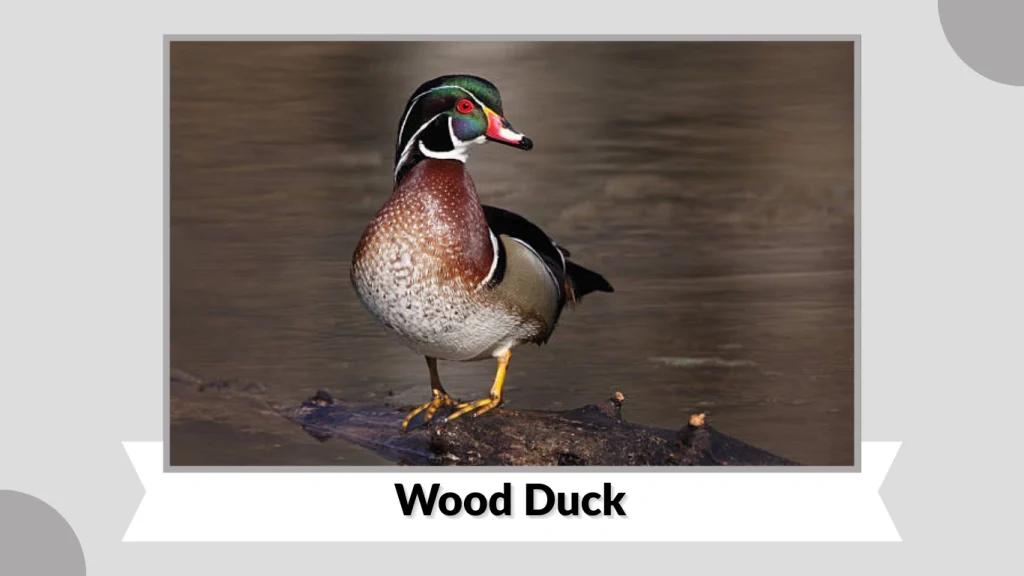
The wood duck is a colorful and distinctive perching duck native to North America. It is well known for its brilliant plumage, tree-nesting habits, and successful conservation recovery, making it a favorite among birdwatchers.
Identification
- Males have an iridescent green and purple head with bold white facial stripes
- Red eyes and a yellow-tipped red bill
- Chestnut breast with white spotting and bronze sides
- Females are gray-brown with a white eye-ring and crest
- Compact body with broad wings and a squared tail
Habitat and Behavior
Wood ducks inhabit wooded swamps, marshes, ponds, rivers, and lakes with abundant trees. They are excellent fliers and frequently perch on branches near water. Unlike many ducks, wood ducks nest in tree cavities and readily use nest boxes. They are generally shy but active, often seen flying swiftly through forested waterways. Outside the breeding season, they may form small flocks.
Diet and Lifecycle
Wood ducks are omnivorous, feeding on acorns, seeds, berries, aquatic plants, insects, and small invertebrates. Breeding begins in early spring, with females laying 10–15 eggs in tree cavities. Incubation lasts about 30 days. Ducklings leave the nest within 24 hours of hatching by jumping to the ground. With proper habitat, wood ducks typically live 6–10 years.
9. Northern Pintail
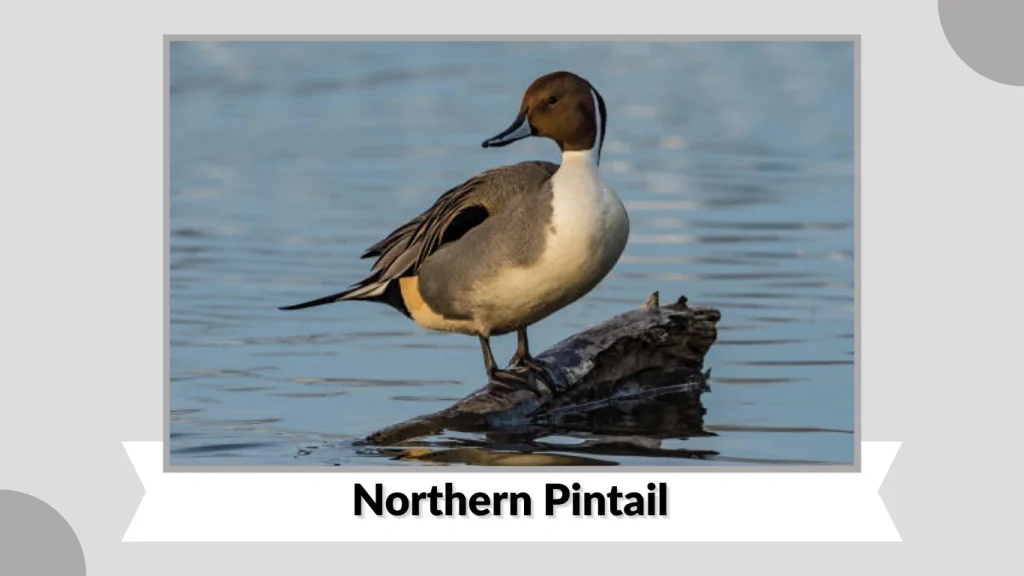
The northern pintail is a graceful and elegant duck species recognized for its slender body and long tail feathers. It is a widespread migratory duck found across the Northern Hemisphere and is admired for its swift flight and streamlined appearance.
Identification
- Males have a chocolate-brown head with a white stripe running up the neck
- Long, pointed central tail feathers giving a “pin” shape
- Gray body with black and white markings
- Females are mottled brown with a more slender profile than other ducks
- Long neck and narrow wings
Habitat and Behavior
Northern pintails favor open wetlands, shallow lakes, marshes, flooded fields, and coastal lagoons. They are strong, fast fliers and are among the earliest ducks to migrate in both spring and fall. Pintails are often seen dabbling in shallow water or grazing on land. They are generally calm and form loose flocks outside the breeding season, sometimes mixing with other duck species.
Diet and Lifecycle
Northern pintails are omnivorous, feeding mainly on seeds, grains, aquatic plants, insects, and small crustaceans. Breeding usually occurs in open grasslands near wetlands, where females lay 6–12 eggs in ground nests. The incubation period lasts about 22–24 days. Ducklings are precocial and feed themselves shortly after hatching. In the wild, northern pintails typically live 5–8 years.
10. American Black Duck
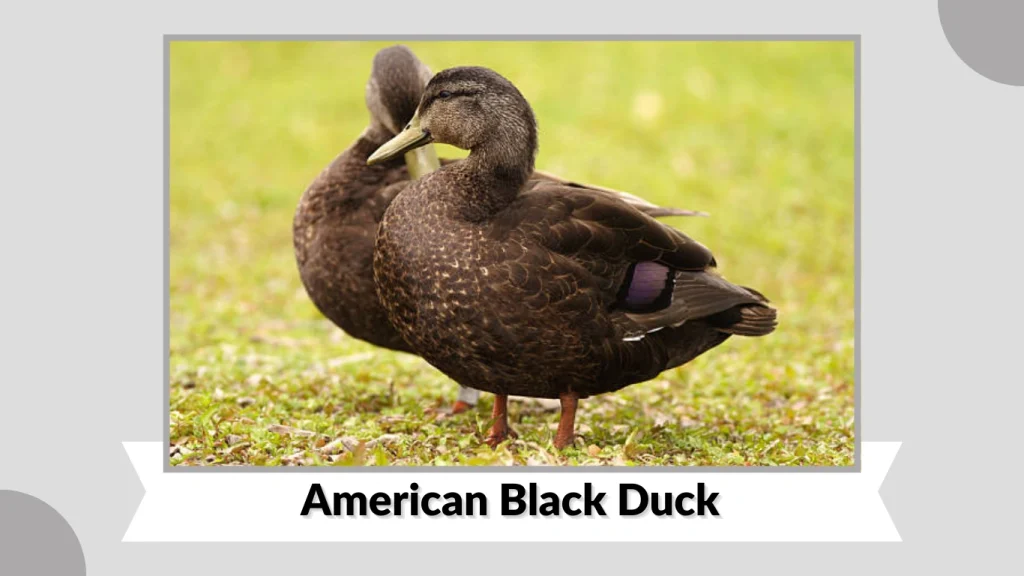
The American black duck is a large dabbling duck native to eastern North America. It closely resembles the mallard but is darker overall and is especially valued by birdwatchers for its subtle beauty and strong association with coastal wetlands.
Identification
- Dark brown to blackish body with lighter brown streaking
- Pale grayish face with a dark eye stripe
- Yellow to olive-green bill, brighter in males
- Violet-blue wing patch without white borders
- Stout body with broad wings
Habitat and Behavior
American black ducks inhabit freshwater and brackish wetlands, including marshes, ponds, rivers, estuaries, and coastal bays. They are more cautious and less tolerant of human disturbance than mallards. These ducks are strong fliers and migrate seasonally, often traveling at night. Outside the breeding season, they form small flocks and may mix with mallards, leading to frequent hybridization.
Diet and Lifecycle
American black ducks are omnivorous, feeding on aquatic plants, seeds, grains, mollusks, crustaceans, and insects. Breeding occurs in spring, with females nesting on the ground near water and laying 6–14 eggs. Incubation lasts about 26–28 days. Ducklings are led to water soon after hatching and mature quickly. The average lifespan in the wild ranges from 5–10 years.
11. Blue-winged Teal
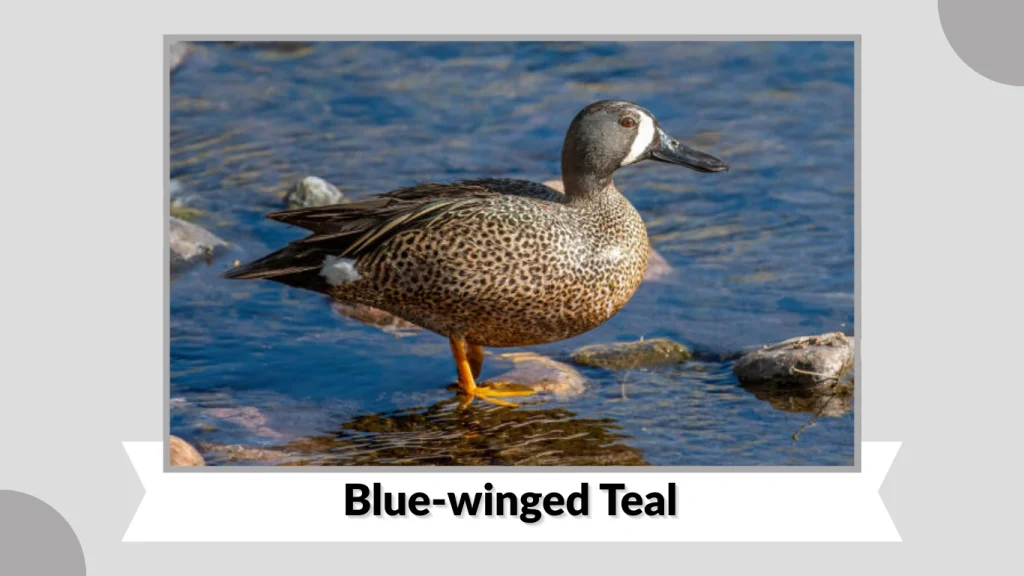
The blue-winged teal is a small, fast-flying dabbling duck known for its early migration and preference for shallow wetlands. It is one of the most widespread teal species in North America and is easily recognized by its distinctive wing markings.
Identification
- Males have a grayish-blue head with a bold white crescent in front of the eye
- Speckled brown body with black spots on the sides
- Females are mottled brown and resemble small mallards
- Light blue wing patch visible in flight
- Small body with a short neck and narrow bill
Habitat and Behavior
Blue-winged teals prefer shallow marshes, flooded fields, ponds, and prairie wetlands. They are among the first ducks to migrate south in fall and return late in spring. These ducks are active dabblers, often feeding by skimming the water’s surface. They are social outside the breeding season and commonly form large flocks during migration.
Diet and Lifecycle
Blue-winged teals are omnivorous, feeding mainly on seeds of aquatic plants, grasses, algae, insects, and small invertebrates. Breeding occurs in late spring, with females nesting in dense vegetation near water. They lay 6–14 eggs, which incubate for about 23–24 days. Ducklings grow quickly and are capable of flight within 5–6 weeks.
12. Green-winged Teal
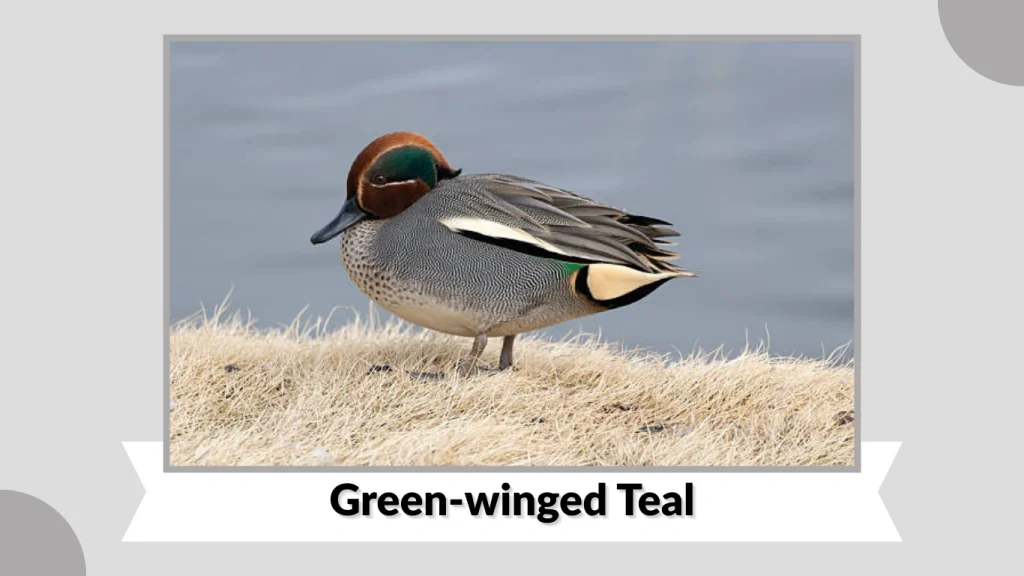
The green-winged teal is the smallest dabbling duck in North America and is known for its quick flight and compact size. Despite its small stature, it is highly migratory and widely distributed across multiple continents.
Identification
- Males have a chestnut-brown head with a broad green eye patch
- Cream-colored vertical stripe on the side of the breast
- Gray body with fine patterning
- Females are mottled brown with a dark eye line
- Bright green wing patch visible in flight
Habitat and Behavior
Green-winged teals inhabit shallow wetlands, marshes, ponds, and sheltered coastal waters. They are agile fliers, often taking off suddenly in tight flocks. These ducks are highly social outside the breeding season and frequently mix with other small duck species. During migration and winter, they may gather in large numbers on protected waters.
Diet and Lifecycle
Green-winged teals feed on seeds, aquatic plants, grasses, insects, and small crustaceans. Breeding takes place in northern wetlands, where females nest on the ground in concealed vegetation. Clutches usually contain 8–11 eggs, with an incubation period of about 21–23 days. Ducklings grow rapidly and typically fledge within five weeks.
13. Gadwall
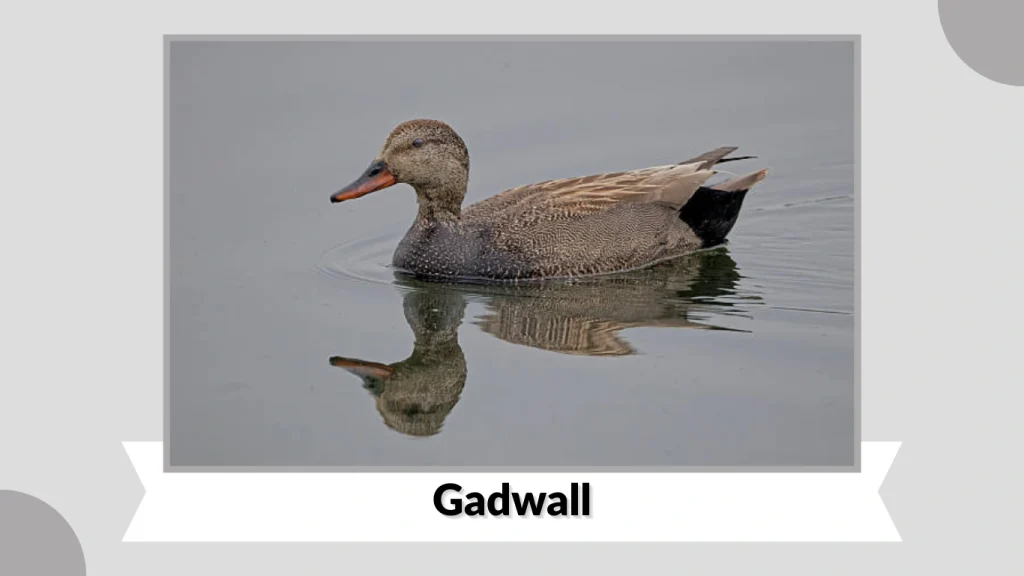
The gadwall is a medium-sized dabbling duck known for its subtle, elegant plumage rather than bright colors. Often overlooked among flashier species, it is a widespread and adaptable duck found across much of the Northern Hemisphere.
Identification
- Males have gray-brown bodies with fine barring and a black rear end
- White wing patch visible in flight
- Females are mottled brown, similar to female mallards but slightly slimmer
- Yellowish bill with darker markings
- Compact head and relatively short neck
Habitat and Behavior
Gadwalls favor freshwater marshes, ponds, lakes, slow rivers, and occasionally coastal wetlands. They are calm and quiet ducks, often feeding alongside other dabbling species. Gadwalls are strong migrators and travel in small to medium-sized flocks. During breeding season, they are more territorial, but outside of it they mix freely with other ducks.
Diet and Lifecycle
Gadwalls primarily feed on aquatic vegetation, including pondweeds, algae, and grasses, but they also consume insects and small invertebrates during breeding season. Females nest on the ground near water, laying 7–12 eggs per clutch. Incubation lasts about 24–27 days. Ducklings are precocial and begin feeding soon after hatching. Gadwalls typically live 6–10 years in the wild.
14. Northern Shoveler
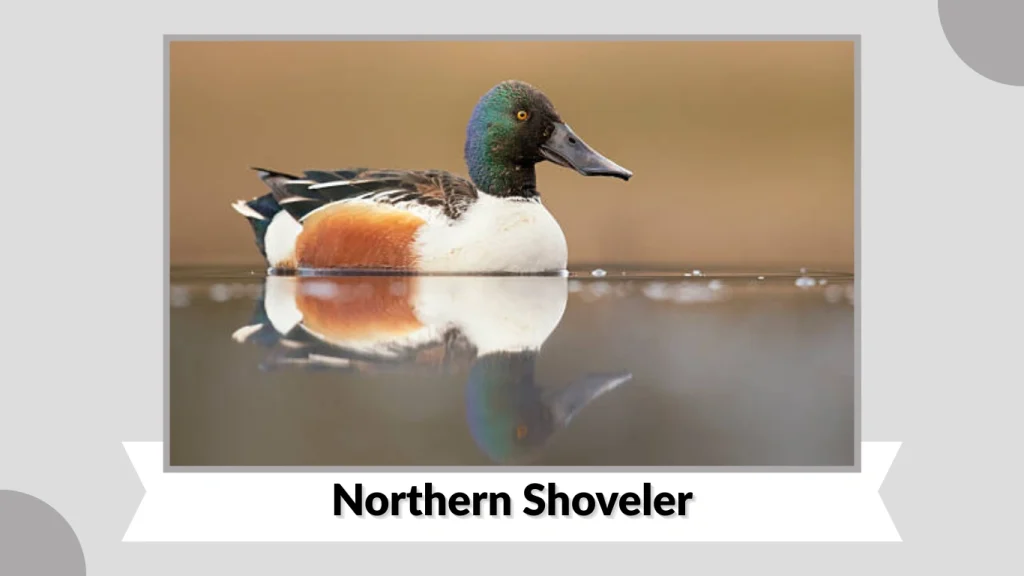
The northern shoveler is a distinctive dabbling duck best known for its large, spoon-shaped bill. This specialized bill helps it filter food from shallow water, making the species easy to identify and unique among ducks.
Identification
- Males have a dark green head, white chest, and rich chestnut sides
- Large, broad, shovel-shaped black bill
- Females are mottled brown with an orange-edged bill
- Light blue wing patch visible in flight
- Medium-sized body with a thick neck
Habitat and Behavior
Northern shovelers prefer shallow wetlands, marshes, ponds, flooded fields, and slow-moving lakes. They are often seen swimming in tight circles while feeding, using their bills to filter small organisms from the water. These ducks are social and commonly form small flocks, especially during migration and winter. They are strong migrants and travel long distances between breeding and wintering grounds.
Diet and Lifecycle
Northern shovelers feed mainly on aquatic invertebrates, plankton, insects, seeds, and plant matter filtered from the water. Breeding occurs in spring, with females nesting on the ground in dense vegetation near wetlands. They lay 6–14 eggs, which incubate for about 22–28 days. Ducklings are able to swim and feed themselves shortly after hatching and grow rapidly.
15. Canvasback
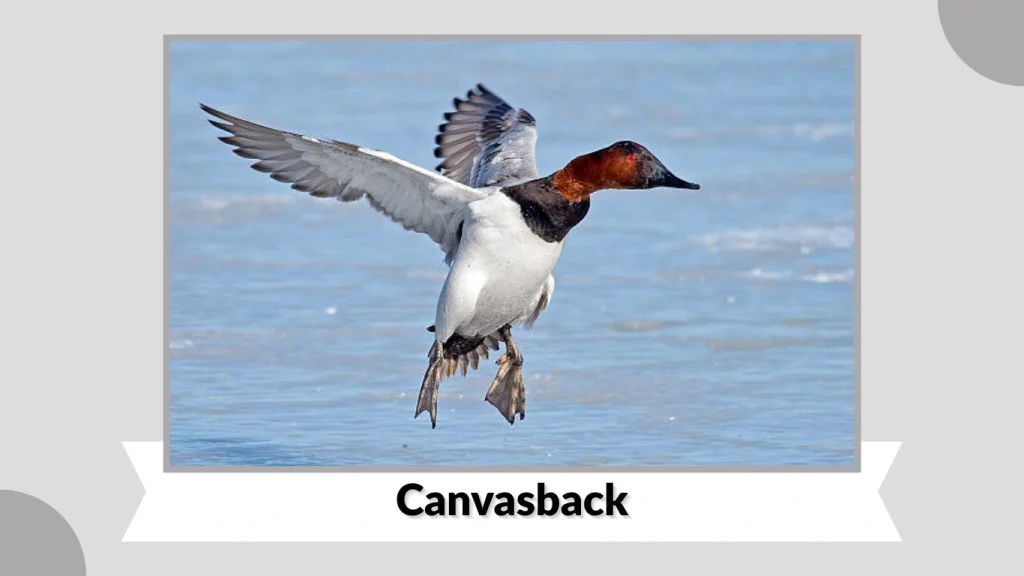
The canvasback is a large diving duck prized for its sleek shape and powerful swimming ability. It is one of North America’s most recognizable diving ducks, often found on large bodies of water during migration and winter.
Identification
- Males have a chestnut-red head and neck with a black chest
- Long, sloping profile from head to bill
- White back with fine gray patterning
- Females are light brown with a darker cap and pale face
- Large body with strong legs set far back
Habitat and Behavior
Canvasbacks prefer large lakes, deep marshes, rivers, and coastal bays. As diving ducks, they feed by diving underwater rather than dabbling at the surface. They are strong swimmers and fast fliers, often forming sizable flocks in open water. During migration, canvasbacks may travel long distances and are commonly seen resting on expansive lakes.
Diet and Lifecycle
Canvasbacks mainly feed on aquatic plants, especially tubers and roots, but also consume insects, mollusks, and crustaceans. Breeding takes place in northern prairie wetlands, where females nest in dense vegetation near water. Clutches usually contain 7–10 eggs, with incubation lasting about 24–29 days. Ducklings are capable swimmers soon after hatching and develop rapidly.
16. Redhead Duck

The redhead duck is a robust diving duck recognized for its rounded head and warm reddish coloring in males. It is commonly found in large wetlands and open waters across North America, especially during migration and winter.
Identification
- Males have a coppery-red head with a black chest
- Gray body with fine patterning
- Blue-gray bill with a black tip
- Females are brown with a lighter face and dark crown
- Rounded head with a thick neck
Habitat and Behavior
Redhead ducks inhabit large lakes, marshes, reservoirs, and coastal bays. They are strong divers and spend much of their time underwater searching for food. Redheads are social birds and often form mixed flocks with other diving ducks. They are capable of long-distance migration and are typically seen in open water during winter.
Diet and Lifecycle
Redheads primarily feed on aquatic vegetation, especially roots and tubers, but also eat insects, mollusks, and small crustaceans. Breeding occurs in prairie wetlands, where females nest in dense marsh vegetation. They lay 6–12 eggs, which incubate for about 22–26 days. Ducklings are excellent swimmers soon after hatching and grow quickly during the summer months.
17. Common Eider
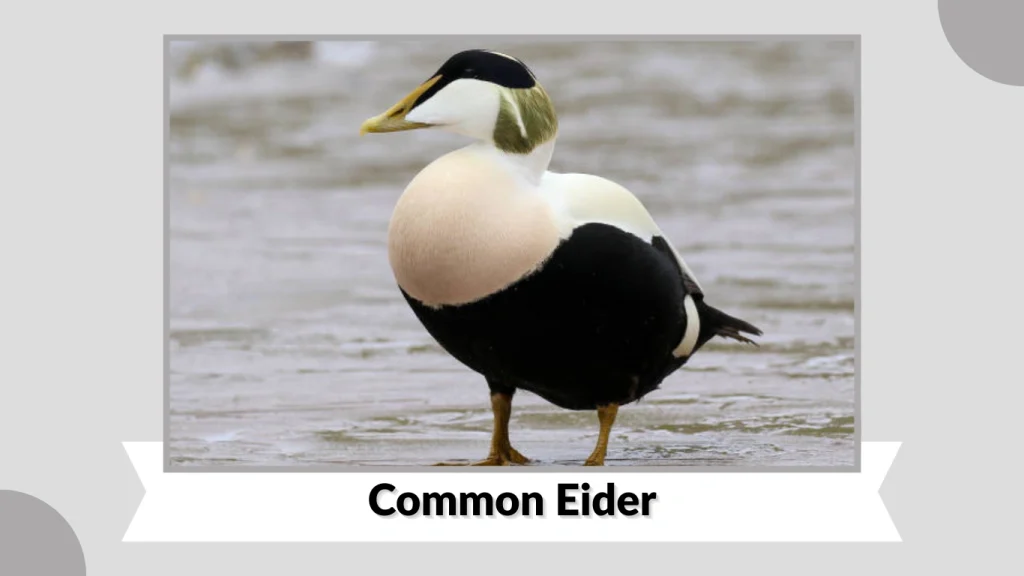
The common eider is a large sea duck best known for its thick, insulating down feathers. Found mainly in coastal and marine environments, it is one of the heaviest duck species in the Northern Hemisphere.
Identification
- Males have bold black-and-white plumage with a pale green nape
- Females are mottled brown with strong barring
- Large, heavy body with a long wedge-shaped bill
- Thick neck and broad head
- Short wings adapted for powerful flight
Habitat and Behavior
Common eiders inhabit coastal waters, rocky shorelines, islands, and shallow marine areas. They are strong divers, capable of reaching significant depths to forage. These ducks are often seen in large flocks on open water, especially outside the breeding season. During nesting, females form colonies on coastal islands and line their nests with soft down feathers.
Diet and Lifecycle
Common eiders feed primarily on mollusks such as mussels and clams, along with crustaceans and small marine animals. Breeding occurs in spring, with females laying 4–6 eggs in ground nests near the coast. Incubation lasts about 24–28 days. Ducklings leave the nest soon after hatching and are often cared for in groups. Common eiders can live 15–20 years in the wild.
18. Harlequin Duck
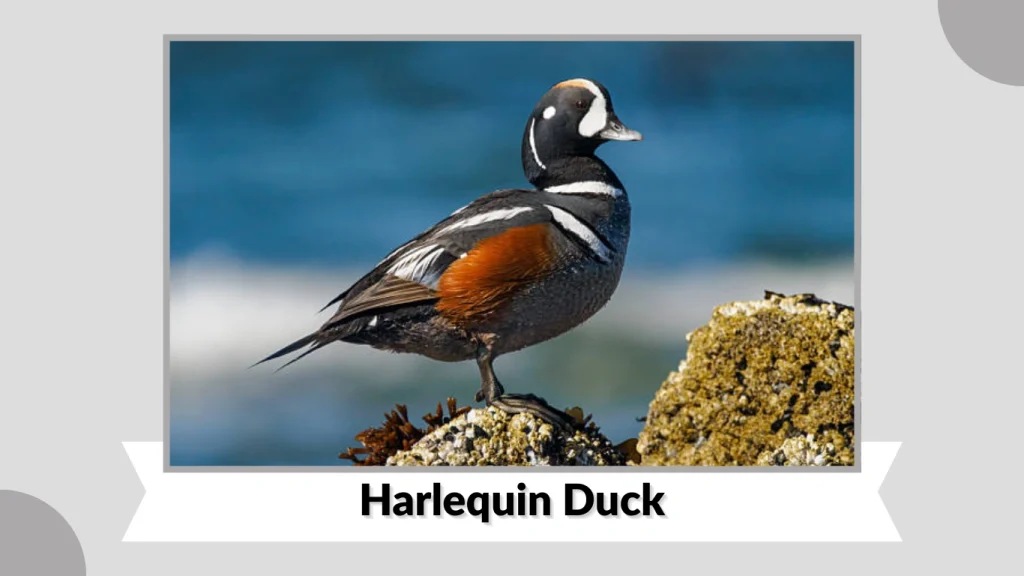
The harlequin duck is a small, striking sea duck known for its bold coloration and preference for fast-moving water. It is one of the most visually distinctive duck species found in coastal and mountainous regions.
Identification
- Males have slate-blue plumage with chestnut sides and bold white markings
- Females are brown with white patches around the eye and ear
- Short, dark bill with a compact head
- Small, sturdy body adapted for strong currents
- Rounded tail and powerful wings
Habitat and Behavior
Harlequin ducks breed along fast-flowing mountain streams and rivers, often in rugged terrain. During winter, they migrate to rocky coastal shorelines and offshore waters. These ducks are strong swimmers and divers, able to navigate turbulent water with ease. Harlequins are usually seen in pairs or small groups and tend to be shy and elusive.
Diet and Lifecycle
Harlequin ducks feed mainly on aquatic invertebrates such as insects, crustaceans, mollusks, and small fish. Breeding occurs in late spring, with females nesting near fast-moving streams. Clutches usually contain 5–8 eggs, and incubation lasts about 27–30 days. Ducklings are capable swimmers soon after hatching and must quickly adapt to swift currents.
19. Long-tailed Duck
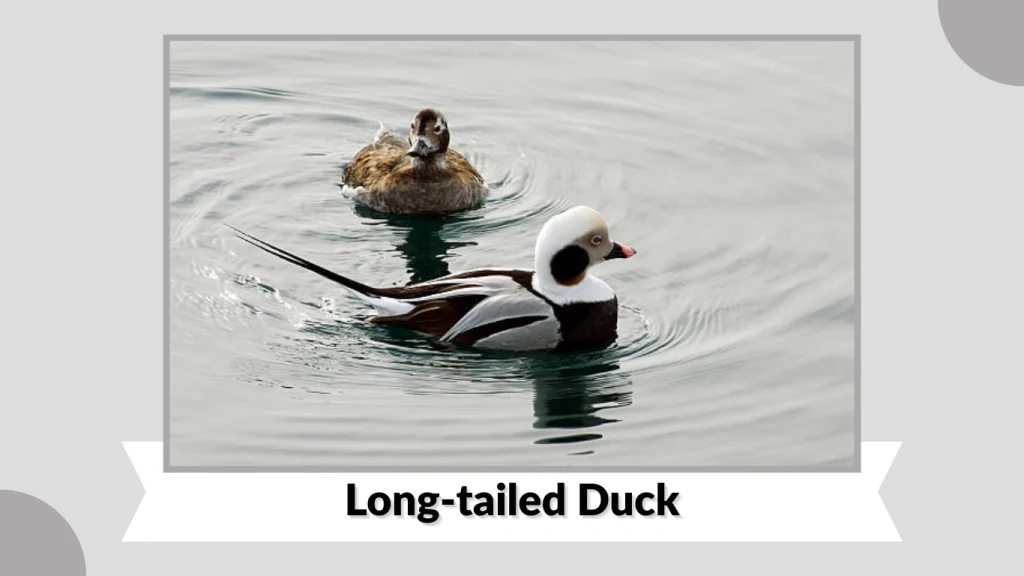
The long-tailed duck is a medium-sized sea duck well known for its striking seasonal plumage changes and long central tail feathers in males. It is a highly vocal and energetic species found in Arctic and coastal waters.
Identification
- Males have very long, pointed central tail feathers
- Plumage changes dramatically between breeding and non-breeding seasons
- Breeding males show white bodies with dark faces and neck markings
- Females are brown with white face patches and a shorter tail
- Small, rounded head with a short bill
Habitat and Behavior
Long-tailed ducks breed in Arctic tundra lakes and ponds, then migrate to coastal waters, large lakes, and open seas during winter. They are exceptional divers, capable of reaching deep water to forage. These ducks are very active and vocal, often heard calling while in flight or on water. They commonly form large, dense flocks in wintering areas.
Diet and Lifecycle
Long-tailed ducks feed on mollusks, crustaceans, insects, and small fish. During breeding season, they rely more on freshwater invertebrates. Females nest on the ground near tundra ponds, laying 6–9 eggs. Incubation lasts about 24–29 days. Ducklings are able to swim and feed themselves shortly after hatching and grow rapidly in short Arctic summers.
20. Ring-necked Duck
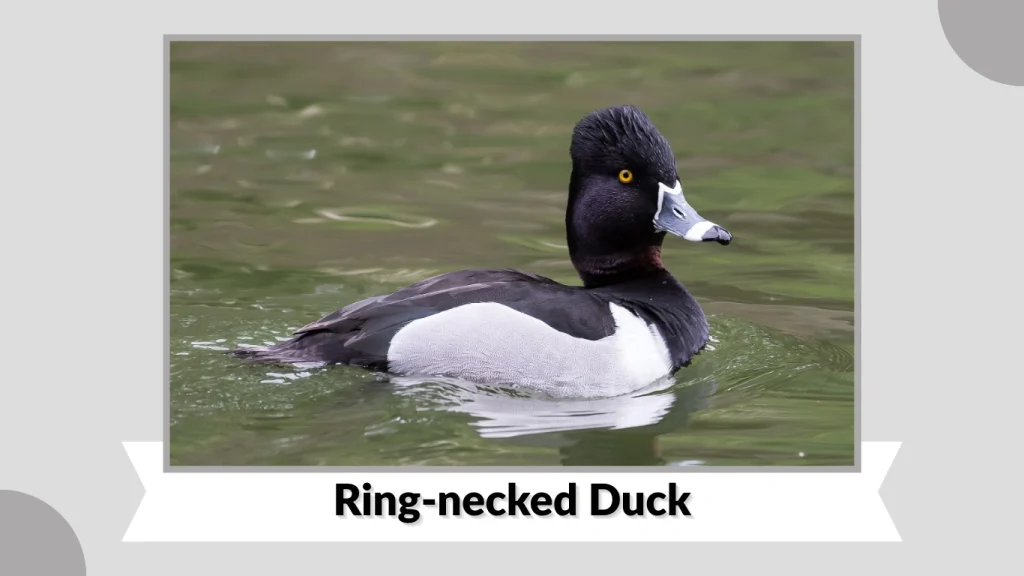
The ring-necked duck is a medium-sized diving duck commonly found on freshwater lakes and marshes. Despite its name, the faint neck ring is rarely visible, making its head shape and bill markings more useful for identification.
Identification
- Males have a black head with a subtle purple sheen
- Distinct white ring near the tip of the bill
- Gray body with black chest and back
- Females are brown with a gray face and white eye ring
- Compact body with a peaked rear head
Habitat and Behavior
Ring-necked ducks prefer freshwater ponds, lakes, marshes, and wooded wetlands. They are skilled divers and spend much of their time underwater searching for food. These ducks are strong migrants and are often seen in small to medium-sized flocks during migration and winter. They tend to stay closer to shore than many other diving ducks.
Diet and Lifecycle
Ring-necked ducks feed on aquatic plants, seeds, tubers, insects, and mollusks. Breeding occurs in northern forested wetlands, where females nest near water in dense vegetation. Clutches usually contain 8–10 eggs, with incubation lasting about 25–29 days. Ducklings are capable swimmers shortly after hatching and grow quickly during summer.
21. Lesser Scaup
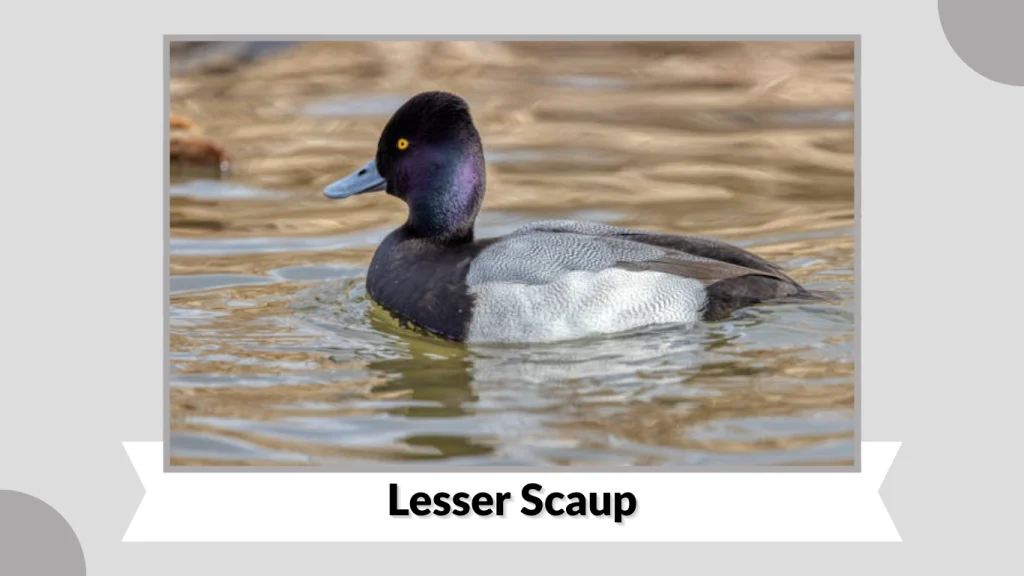
The lesser scaup is a common diving duck found across North America, especially during migration and winter. It closely resembles the greater scaup but is slightly smaller and more widespread, often seen in large flocks on open water.
Identification
- Males have a black head with a purplish sheen
- Black chest and rear with gray, finely patterned sides
- Bright blue bill with a black tip
- Females are brown with a white patch at the base of the bill
- Rounded head with a slight rear peak
Habitat and Behavior
Lesser scaup inhabit freshwater lakes, ponds, reservoirs, and marshes during breeding season, and move to coastal bays and large lakes in winter. They are strong divers, frequently diving for food rather than feeding at the surface. These ducks are highly social and often form very large flocks, sometimes numbering in the thousands. They are strong migrants and travel long distances between breeding and wintering grounds.
Diet and Lifecycle
Lesser scaup feed on aquatic plants, seeds, insects, crustaceans, and mollusks. During breeding season, animal matter becomes more important for nutrition. Females nest near freshwater wetlands, laying 6–10 eggs per clutch. Incubation lasts about 23–27 days. Ducklings are able to swim shortly after hatching and develop rapidly in summer months.
22. Greater Scaup
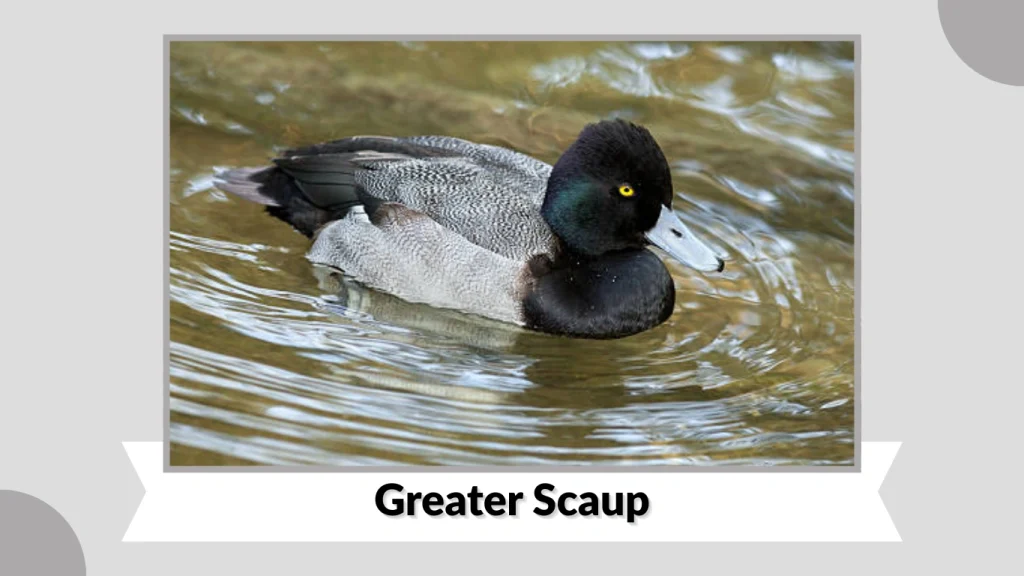
The greater scaup is a large diving duck commonly found on open water, especially in coastal and offshore environments. It is similar in appearance to the lesser scaup but is generally larger and more associated with marine habitats.
Identification
- Males have a glossy black head with a green sheen
- Broad black chest with light gray, finely barred sides
- Wide blue bill with a prominent black tip
- Females are brown with a white patch near the base of the bill
- Rounder head profile compared to lesser scaup
Habitat and Behavior
Greater scaup prefer large lakes, coastal bays, estuaries, and open ocean waters. They are excellent divers and spend much of their time underwater foraging. These ducks are highly social and often gather in large flocks, especially during winter. Greater scaup are strong fliers and migrate long distances between northern breeding grounds and southern wintering areas.
Diet and Lifecycle
Greater scaup feed mainly on mollusks such as clams and mussels, along with aquatic insects, crustaceans, and plant matter. Breeding occurs in northern tundra and boreal wetlands, where females nest close to water. Clutches usually contain 6–9 eggs, with incubation lasting about 24–28 days. Ducklings are capable swimmers shortly after hatching and grow rapidly during the short breeding season.
23. Bufflehead
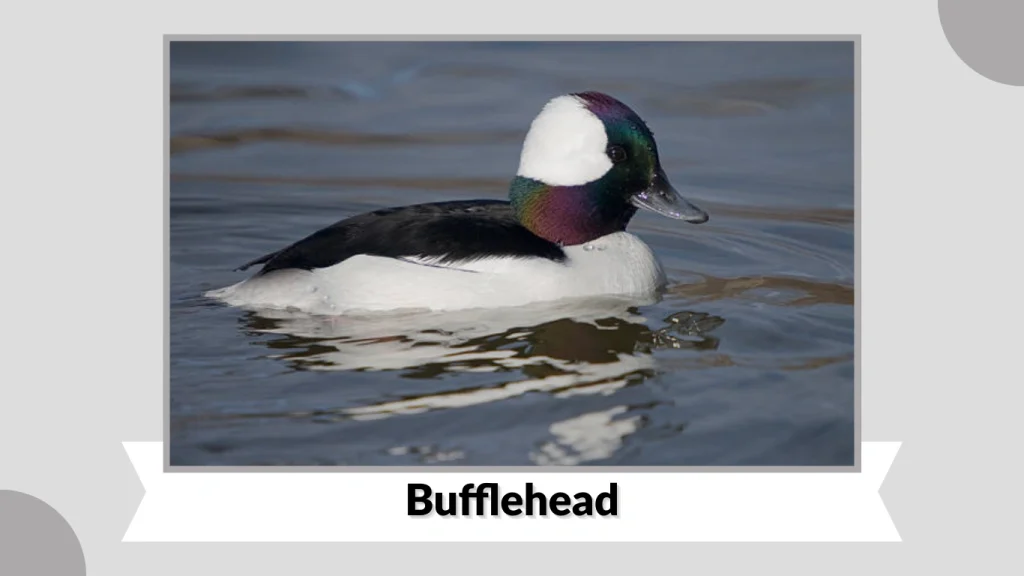
The bufflehead is a small, compact diving duck easily recognized by its large head and bold black-and-white patterning. It is one of the smallest diving ducks in North America and is commonly seen on lakes and coastal waters.
Identification
- Males have a glossy black head with a large white patch behind the eye
- White body with black back and wings
- Females are brown with a smaller white cheek patch
- Short, blue-gray bill
- Compact, round body with a large head
Habitat and Behavior
Buffleheads inhabit freshwater lakes, ponds, rivers, and coastal bays. They are agile divers and frequently dive for food, often staying underwater for short periods. These ducks are usually seen in small groups or pairs rather than large flocks. Buffleheads are cavity nesters, often using old woodpecker holes in trees near water.
Diet and Lifecycle
Buffleheads feed mainly on aquatic insects, crustaceans, mollusks, and small fish. During breeding season, they rely heavily on animal matter. Females lay 6–11 eggs in tree cavities, and incubation lasts about 28–33 days. Ducklings leave the nest shortly after hatching and are led to water by the mother. Buffleheads typically live 5–8 years in the wild.
24. Common Goldeneye
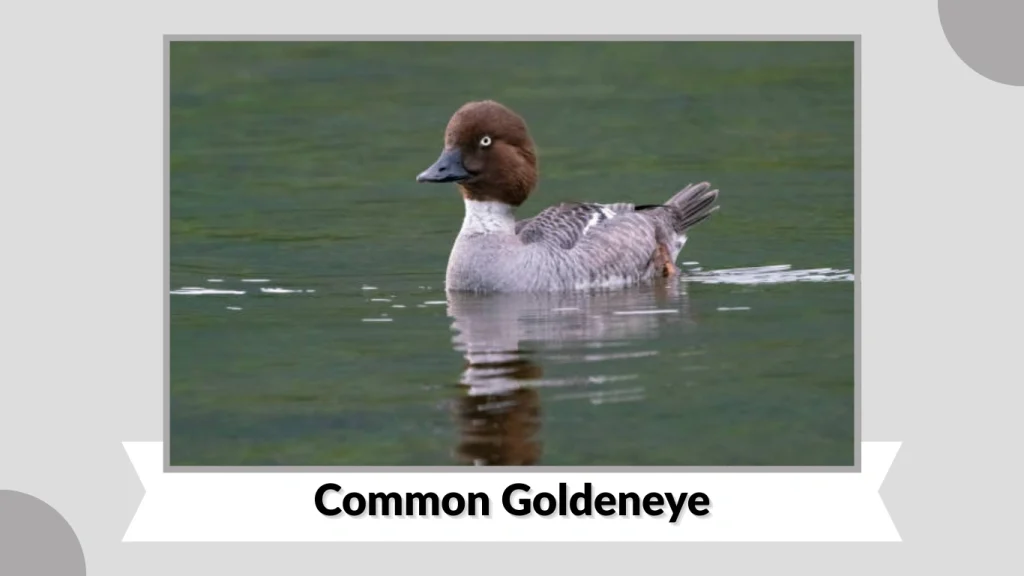
The common goldeneye is a striking diving duck known for its bright yellow eyes and bold black-and-white plumage. It is a hardy species often seen in cold northern waters during winter.
Identification
- Males have a dark green head with a round white spot near the bill
- Bright yellow eyes, giving the species its name
- White body with black back and wings
- Females are gray with a chocolate-brown head and yellow-tipped bill
- Strong, compact body with a short neck
Habitat and Behavior
Common goldeneyes inhabit lakes, rivers, reservoirs, and coastal waters, especially in colder regions. They are powerful divers and feed underwater for most of their diet. These ducks are often seen in small flocks and are known for their distinctive whistling wing sound during flight. They are cavity nesters, using tree holes or nest boxes near water.
Diet and Lifecycle
Common goldeneyes feed on aquatic insects, crustaceans, mollusks, small fish, and plant matter. Breeding occurs in boreal forests, where females lay 6–12 eggs in tree cavities. Incubation lasts about 28–32 days. Ducklings leave the nest shortly after hatching and are able to swim and dive within days. Goldeneyes can live up to 10–15 years in the wild.
25. Mottled Duck
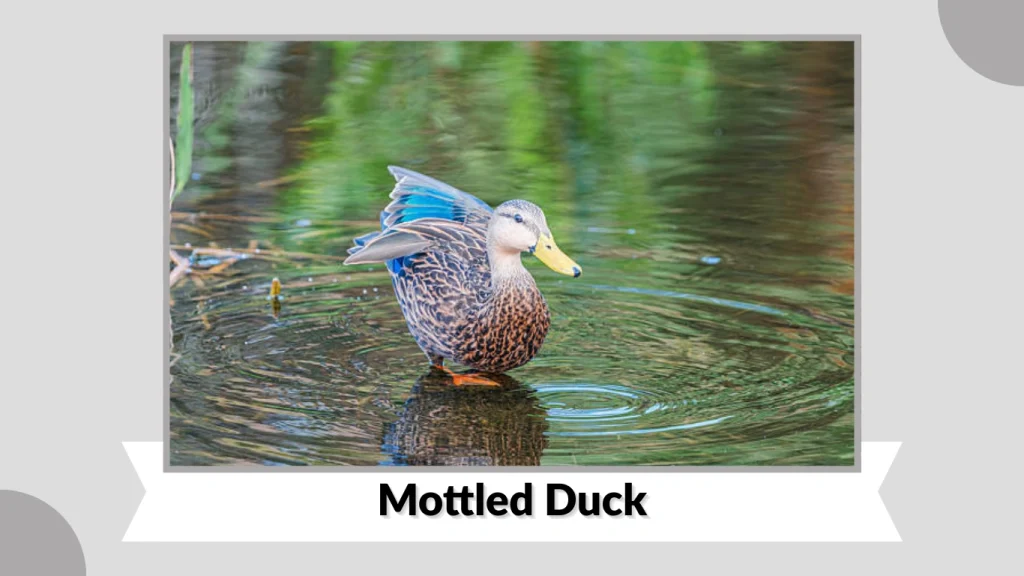
The mottled duck is a medium-sized dabbling duck native to the southern United States. It closely resembles the female mallard but is darker overall and is notable for its limited range and non-migratory nature.
Identification
- Mottled brown body with darker streaking throughout
- Pale buff face with a dark eye line
- Yellow bill in males; orange bill with dark markings in females
- Blue wing patch bordered by white
- Stocky body with broad wings
Habitat and Behavior
Mottled ducks inhabit freshwater marshes, coastal wetlands, ponds, and shallow lakes. They prefer warm climates and usually do not migrate long distances. These ducks are wary and less tolerant of human disturbance than mallards. They are most often seen in pairs or small groups and spend much of their time dabbling in shallow water for food.
Diet and Lifecycle
Mottled ducks feed on aquatic plants, seeds, grasses, insects, snails, and small crustaceans. Breeding occurs in spring and early summer, with females nesting on the ground in dense vegetation near water. They lay 7–12 eggs, which incubate for about 26–28 days. Ducklings are precocial and begin feeding shortly after hatching.
26. White-winged Scoter
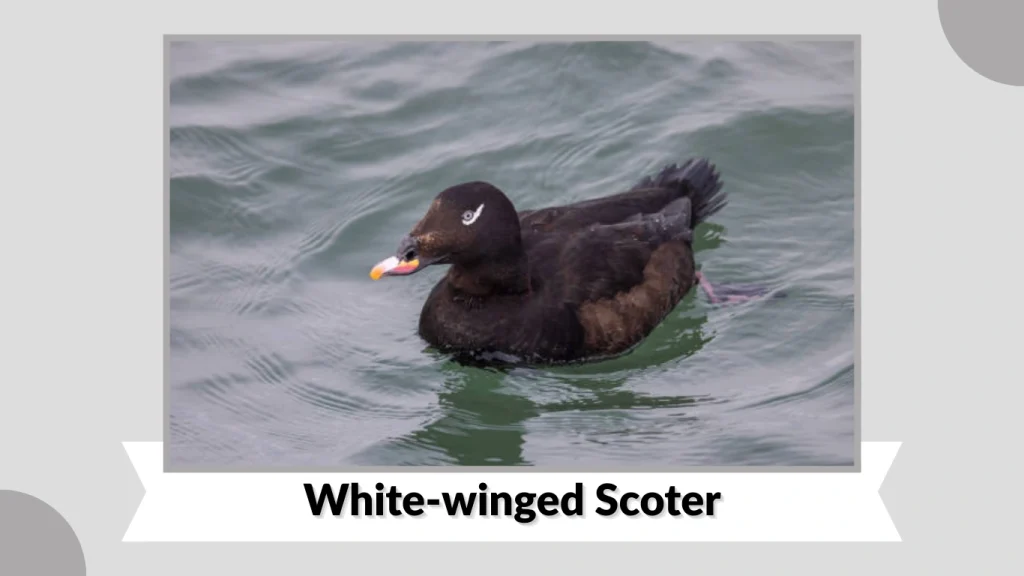
The white-winged scoter is a large, heavy sea duck commonly found in coastal and offshore waters. It is the largest of the scoter species and is easily recognized by its bold wing markings and thick bill.
Identification
- Males are mostly black with a distinct white patch on the wing
- Small white mark near the eye
- Thick, orange-and-black bill with a swollen base
- Females are dark brown with pale patches on the face
- Large, bulky body with a thick neck
Habitat and Behavior
White-winged scoters inhabit large lakes during breeding season and migrate to coastal waters, bays, and open seas in winter. They are powerful divers and spend much of their time underwater searching for food. These ducks often form large rafts on open water, especially outside the breeding season. They are strong fliers but require a long running start to take off from water.
Diet and Lifecycle
White-winged scoters feed primarily on mollusks, crustaceans, aquatic insects, and small fish. Breeding occurs in northern freshwater wetlands, where females nest on the ground near lakes or ponds. Clutches usually contain 6–9 eggs, with incubation lasting about 25–30 days. Ducklings are capable swimmers soon after hatching and grow steadily through the summer.
27. Hooded Merganser
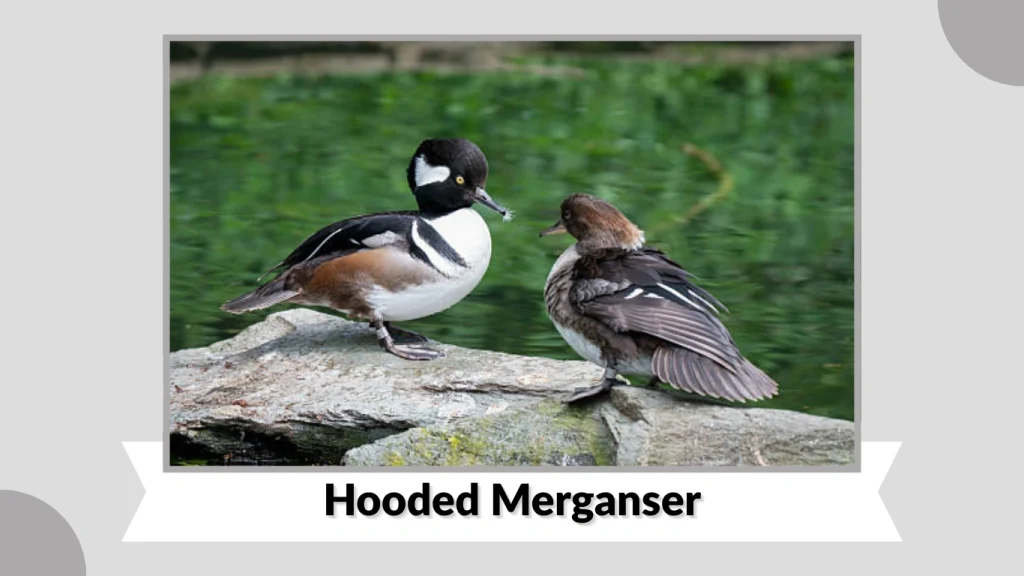
The hooded merganser is a small, striking diving duck best known for its large, fan-shaped crest. Native to North America, it is easily recognized and admired for its dramatic appearance and agile hunting skills.
Identification
- Males have a large black-and-white hood that can be raised or lowered
- White chest with bold black striping on the sides
- Females are brown with a cinnamon-colored crest
- Thin, pointed bill adapted for catching fish
- Compact body with short wings
Habitat and Behavior
Hooded mergansers prefer wooded ponds, rivers, swamps, and lakes with plenty of tree cover. They are excellent divers and agile swimmers, often diving repeatedly to catch prey. These ducks are shy and usually seen in pairs or small groups. They are cavity nesters, using tree holes or nest boxes near water, and are strong fliers capable of quick takeoffs.
Diet and Lifecycle
Hooded mergansers feed mainly on small fish, aquatic insects, crustaceans, and amphibians. Breeding occurs in spring, with females laying 7–15 eggs in tree cavities. Incubation lasts about 29–37 days. Ducklings leave the nest within a day of hatching and are led to water by the mother. In the wild, hooded mergansers typically live 7–10 years.
FAQs
What is the most common type of duck?
The mallard is considered the most common duck species in the world. It is widely distributed across North America, Europe, and Asia and adapts easily to wetlands, lakes, rivers, and urban parks. Many domestic duck breeds are also descendants of the mallard.
What do ducks usually eat?
Ducks are omnivorous birds. Their diet commonly includes aquatic plants, seeds, grasses, insects, snails, small fish, and crustaceans. Some species focus more on plant matter, while diving ducks consume more animal-based food depending on habitat and season.
Do all ducks migrate?
Not all ducks migrate long distances. Many wild duck species migrate seasonally to find food and suitable breeding areas, while others move only short distances. Domestic ducks and some wild species living in warm regions may remain in the same area year-round.
What is the difference between dabbling and diving ducks?
Dabbling ducks feed mainly at the water’s surface or by tipping forward in shallow water, while diving ducks fully submerge to find food underwater. Dabblers usually have lighter bodies, while diving ducks have heavier builds and legs set farther back.
How long do ducks usually live?
The lifespan of ducks varies by species and environment. In the wild, most ducks live between 5 and 10 years, though some sea ducks can live much longer. Domestic ducks often live 8–12 years with proper care, nutrition, and protection from predators.