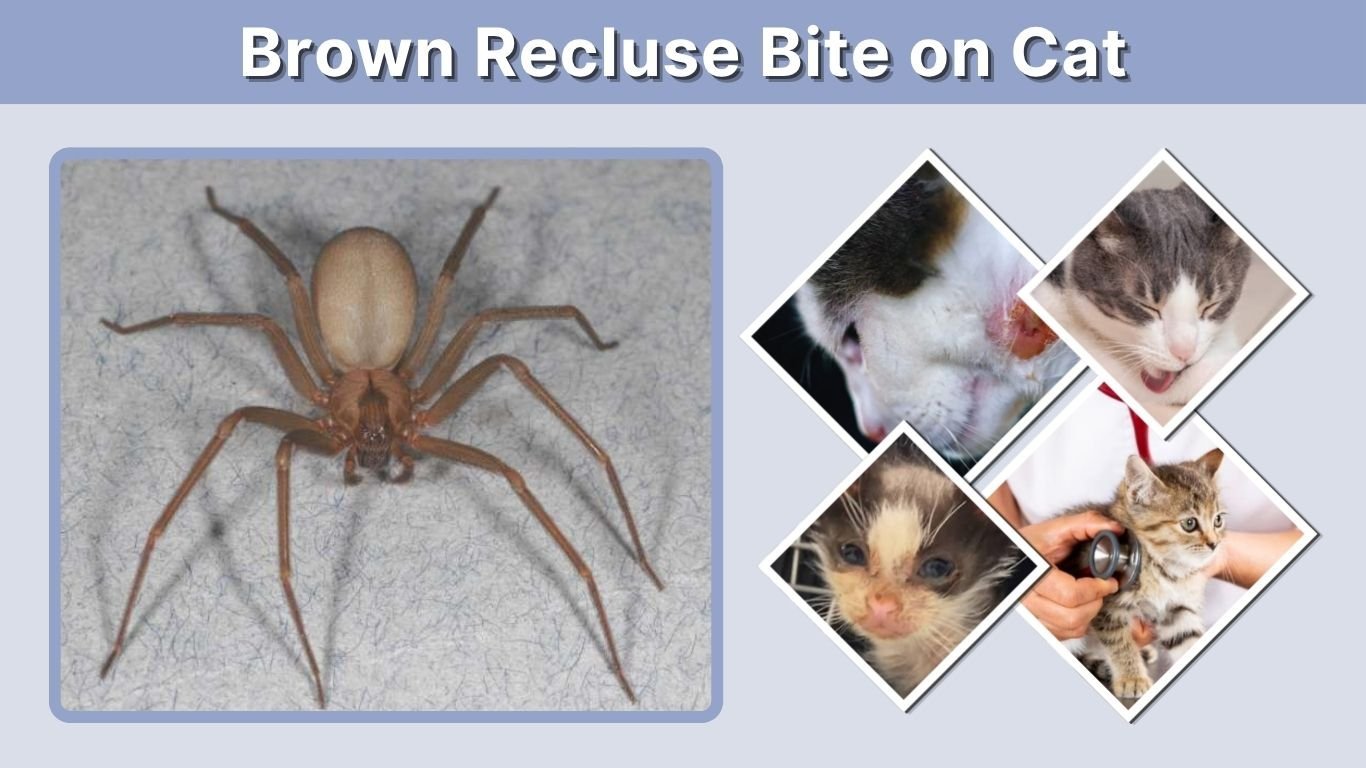
A brown recluse bite on a cat can cause a painful skin wound, swelling, blistering, dark tissue, fever, weakness, or vomiting. Some bites may look minor at first, but the wound can worsen over hours or days. If you suspect a brown recluse spider bite on your cat, contact a veterinarian, especially if the area grows, drains, turns dark, or your cat acts sick. Home care should only be basic first aid until a vet gives instructions.
Can a Brown Recluse Bite a Cat?
Yes, a brown recluse spider can bite a cat, although most bites happen by accident. Recluse spiders are usually hidden and not aggressive. Animals are commonly bitten when the spider is trapped and compressed between the pet’s body and another surface, such as bedding, stored fabric, boxes, or a floor area.
A confirmed spider bite is also difficult to diagnose. VCA Animal Hospitals notes that the only definitive way to diagnose a spider bite is to collect and identify the spider that caused it, but this is rarely done. That means many suspected “spider bites” on cats may actually be abscesses, infected scratches, allergic reactions, wounds, insect bites, or other skin problems.
Is a Brown Recluse Bite Dangerous for Cats?
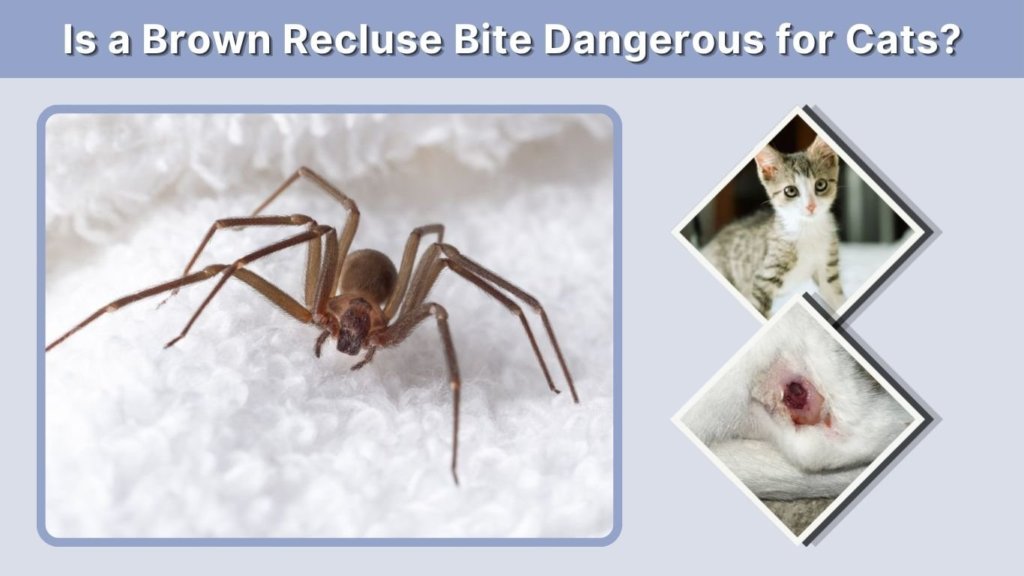
A brown recluse spider bite can be serious for cats because the venom may damage skin and surrounding tissue. Merck Veterinary Manual explains that recluse venom contains necrotizing enzymes, including sphingomyelinase D, which is the main dermonecrotic factor involved in tissue damage.
Systemic signs are rare in companion animals, but they can happen. Possible serious signs include fever, vomiting, weakness, anemia, blood in the urine, clotting problems, muscle pain, and other body-wide illness. Severe signs may take several days to develop.
Signs of a Brown Recluse Spider Bite on a Cat
A brown recluse bite may not be obvious at first. Merck Veterinary Manual says recluse bites are often painless, so the spider is usually not seen and the bite is often not witnessed.
Common signs to watch for include:
- Redness or swelling
- Itching or irritation
- Pain around the wound
- A blister
- A target or “bull’s-eye” lesion
- Pale, blue, purple, or dark skin in the center
- An open sore or ulcer
- Skin sloughing
- Fever, chills, weakness, vomiting, or lethargy
PetPlace lists signs in cats such as pain at the lesion, a central dark area, skin sloughing, fever, chills, and rash.
Stages of a Brown Recluse Bite on a Cat
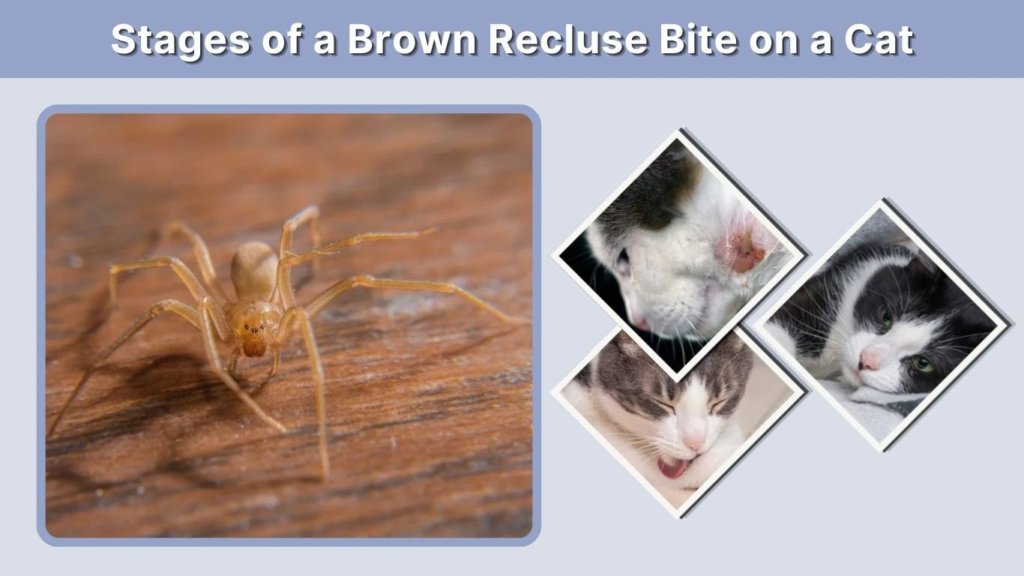
Not every cat follows the same pattern, but brown recluse bites often change over time. The wound may look small early, then worsen as tissue damage develops.
| Stage | What You May Notice | What to Do |
| First few hours | Mild redness, itching, swelling, or no obvious pain | Call your vet for advice and monitor closely |
| 2–8 hours | Blister or target-like lesion may appear | Arrange a veterinary exam |
| 12–24 hours | Center may look pale, blue, purple, or darker | Seek veterinary care quickly |
| 1–3 days | Wound may open, drain, or become painful | Vet treatment is needed |
| Several days later | Fever, vomiting, weakness, dark urine, or worsening wound | Emergency veterinary care |
Merck Veterinary Manual notes that a blister can develop within 2–8 hours and may progress into a target-like lesion; the center can become pale, cyanotic, dark, or necrotic.
What to Do Right Away If You Suspect a Bite
If you suspect a brown recluse bite on your cat, keep your cat calm and prevent licking or scratching. Take a photo of the wound and, if you safely saw the spider, take a photo of it too. Do not try to catch the spider with bare hands.
Basic first-aid steps:
- Call your veterinarian. Describe the wound, your cat’s symptoms, and whether brown recluse spiders are common in your area.
- Gently clean the area. Use clean water or saline unless your vet recommends a specific cleanser.
- Apply a cool compress. Use a wrapped cool pack for short periods if your cat tolerates it.
- Prevent licking. Use an e-collar if available.
- Do not give human pain medicine. Cats can be poisoned by common human medications.
- Track changes. Take photos every few hours and note swelling, color change, discharge, or behavior changes.
VCA says brown recluse bites in pets are treated with supportive care because there is no available antivenin in the United States; wound cleaning, cool compresses, immobilization with bandages, and antibiotics for infected bites may be used.
When to Take Your Cat to the Vet
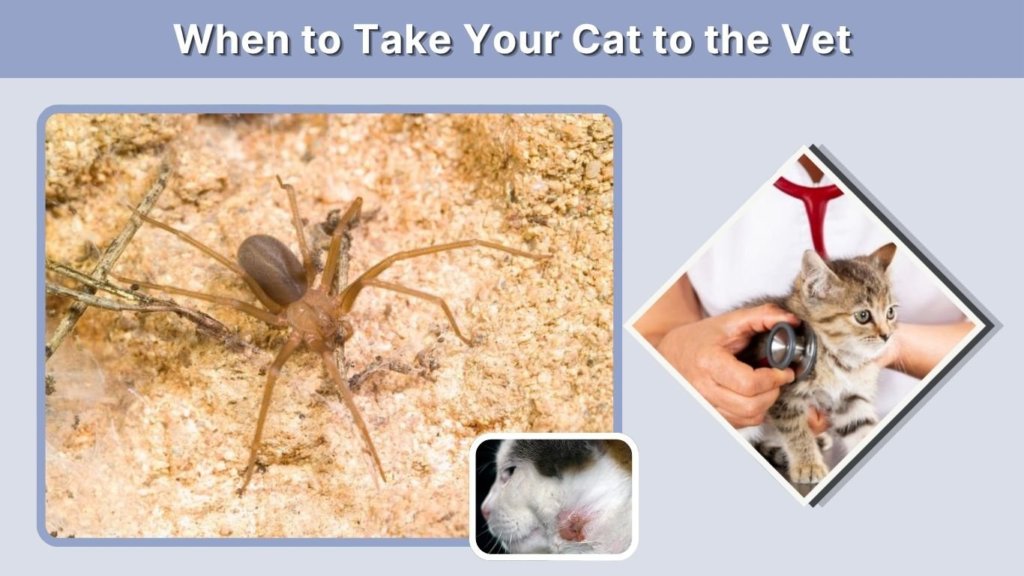
A suspected brown recluse spider bite on a cat is worth a vet call, even if the wound looks small. Go to a veterinarian promptly if the wound grows, turns dark, drains, becomes painful, or your cat seems unwell.
Emergency Signs
Seek urgent veterinary care if your cat has:
- Vomiting
- Lethargy or weakness
- Fever
- Pale, blue, yellow, or muddy gums
- Trouble breathing
- Dark or bloody urine
- Severe swelling
- A wound on the face, near the eye, or near the mouth
- Rapidly spreading redness
- A black, purple, or open wound
- Refusal to eat or drink
Merck notes that severe systemic signs, while rare, can be potentially lethal and may require hospitalization, fluids, pain control, fever control, and treatment for anemia or clotting problems.
How Vets Treat a Brown Recluse Bite on a Cat
Veterinary treatment depends on the wound and your cat’s overall condition. The vet may clean the wound, manage pain, check for infection, prescribe antibiotics if needed, place a bandage, and monitor for systemic illness.
| Treatment | Why It May Be Used |
| Wound cleaning | Helps manage damaged or contaminated tissue |
| Cool compresses | May reduce discomfort and swelling |
| Bandaging | Protects the wound and limits licking |
| Pain control | Keeps the cat comfortable |
| Antibiotics | Used when secondary infection is present or likely |
| Bloodwork/urinalysis | Checks for anemia, organ stress, or blood in urine |
| Hospitalization | Needed for severe systemic signs |
| Surgery | Considered only in select severe cases |
VCA reports that most brown recluse bites in pets heal within one to eight weeks, while systemic complications or death are rare. Merck also notes that complete healing may take weeks to months in some cases.
What Not to Do at Home
Do not treat a suspected brown recluse bite on a cat with random home remedies. Cats are sensitive animals, and many products that seem harmless to people can be dangerous to them.
Avoid these mistakes:
- Do not give acetaminophen, ibuprofen, aspirin, or other human pain relievers unless a vet specifically instructs you.
- Do not apply essential oils.
- Do not use alcohol, bleach, or harsh chemicals.
- Do not cut the wound.
- Do not squeeze the wound.
- Do not use a tourniquet.
- Do not delay care if your cat is lethargic, vomiting, feverish, or the wound is worsening.
The FDA says acetaminophen is fatal to cats and should never be given to them. VCA also warns that ibuprofen and other NSAIDs can be extremely harmful in cats, with small doses causing adverse effects and poisoning.
Brown Recluse Bite on Cat Face
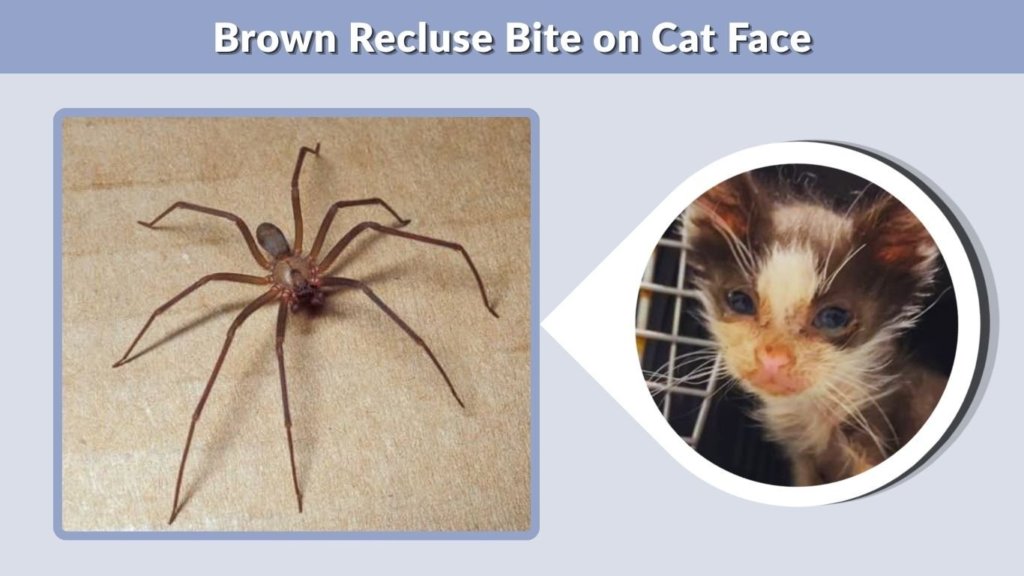
A brown recluse bite on a cat’s face should be treated as higher risk. Swelling near the eye, nose, mouth, or throat can become more concerning because it may affect eating, vision, breathing comfort, or grooming. A facial wound can also be harder to keep clean because cats rub their faces and groom frequently.
Call a vet quickly if the bite is on the face, eyelid, lip, nose, ear, or neck. Do not apply ointments near the eye unless your veterinarian tells you to. A vet can check whether the wound is truly a bite, whether infection is present, and whether medication is needed.
Pictures of Brown Recluse Bites on Cats
Pictures can help you compare general patterns, but they should not be used to diagnose your cat. Brown recluse wounds can look like abscesses, infected scratches, burns, pressure wounds, allergic skin reactions, or other bite wounds.
A useful photo for your vet should show:
- The full body location
- A close-up of the wound
- The size of the lesion next to a coin or ruler
- Any drainage, color change, swelling, or dark center
- A photo of the spider, if safely available
Do not wait for the wound to look like online pictures before calling a vet. Early treatment is usually easier than treating a larger ulcer later.
How to Prevent Brown Recluse Bites on Cats
Brown recluse spiders prefer dark, quiet, undisturbed spaces. Prevention focuses on reducing hiding spots and keeping cats away from spider-prone areas.
Helpful prevention steps include:
- Keep cats out of garages, attics, crawl spaces, and cluttered closets.
- Store blankets, towels, and seasonal clothes in sealed plastic bins.
- Shake out bedding or fabric that has been stored.
- Reduce cardboard boxes and clutter.
- Vacuum corners, baseboards, and under furniture.
- Seal cracks and gaps around doors, windows, pipes, and utility lines.
- Keep outdoor debris, firewood, and leaf piles away from the home.
- Use pet-safe pest control and ask an exterminator about cat-safe options.
PetMD’s veterinary article on brown recluse bites in pets notes that these spiders often hide in warm, dark places such as closets and cardboard boxes, and prevention includes limiting pet access to dark storage areas, keeping pets away from outdoor debris, sealing exterior cracks, and using pet-friendly pest control.
FAQs
How do I know if my cat was bitten by a brown recluse?
You may not know for sure unless the spider was seen and identified. Signs can include redness, swelling, pain, a blister, a target-like wound, a dark center, skin sloughing, fever, weakness, or vomiting. A vet should examine any suspicious wound that worsens or makes your cat act sick.
How do you treat a brown recluse bite on a cat?
Call your veterinarian, gently clean the area, prevent licking, use a cool compress if your cat tolerates it, and monitor the wound closely. Veterinary treatment may include wound care, bandaging, pain control, antibiotics for infection, and blood tests if systemic illness is suspected.
Can a brown recluse bite kill a cat?
Death is rare, but severe systemic illness is possible. Merck Veterinary Manual notes that systemic signs are rare in companion animals, but potentially lethal cases may require hospitalization and supportive care.
Should I give my cat Benadryl or pain medicine for a spider bite?
Do not give any medication unless your veterinarian tells you to. Human pain relievers can be dangerous or fatal to cats. The FDA specifically warns that acetaminophen is fatal to cats.
How long does a brown recluse bite take to heal on a cat?
Healing can take weeks. VCA says most bites heal within one to eight weeks, while Merck notes that complete healing may take weeks to months in some cases.