
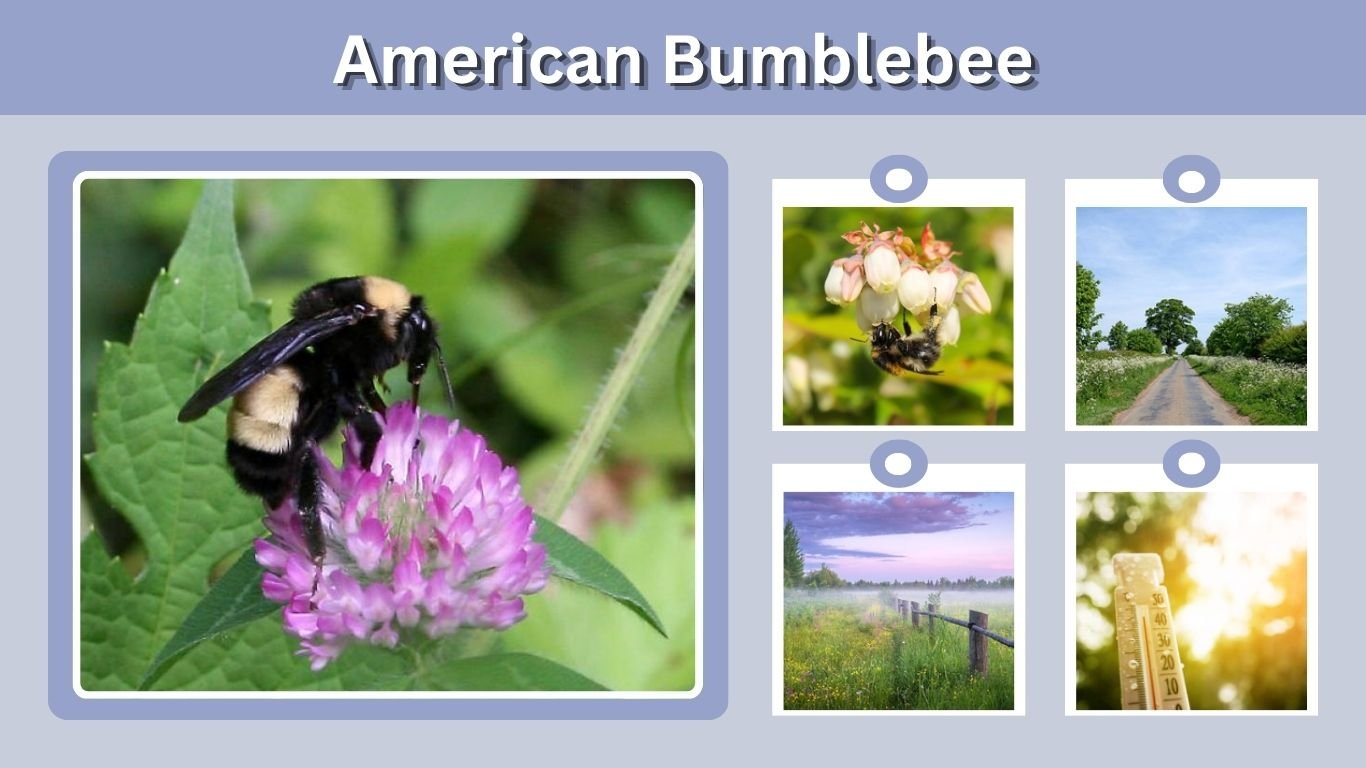
The American bumblebee (Bombus pensylvanicus) is a large native pollinator recognized by its fuzzy black-and-yellow body and powerful flight. Once widespread across much of eastern and central North America, this bee has declined considerably in parts of its historical range. American bumblebees live in annual colonies led by a queen and commonly nest near or below ground in open landscapes. They visit many flowering plants and provide valuable pollination for wildflowers and crops. Here are the key facts about their identification, habitat, diet, nests, sting, life cycle, and conservation.
What Is an American Bumblebee?
The American bumblebee is a social bee belonging to the family Apidae. Its scientific name is Bombus pensylvanicus. Although its name suggests it occurs everywhere in America, its distribution is concentrated mainly across eastern and central North America, with populations extending into parts of the Southwest and Mexico. It prefers open, flower-rich landscapes rather than heavily forested environments.
American Bumblebee Identification
Look for these characteristics:
- Large, robust, hairy body
- Mostly black head
- Yellow and black bands on the body
- Noticeable dark band across the thorax
- Yellow hairs on middle abdominal segments
- Mostly black rear portion of the abdomen
- Dark wings
- Relatively long face and tongue
- Females carry pollen on their hind legs
Color patterns can vary, so identification from photographs alone can occasionally be difficult.
American Bumblebee Size
The American bumblebee is considered a relatively large bumblebee. Queens are the biggest members of the colony, commonly reaching roughly 22–26 mm in body length, while workers may be approximately 13–19 mm.
Males and workers can vary considerably in size depending on nutrition and colony conditions.
American Bumblebee Habitat and Range
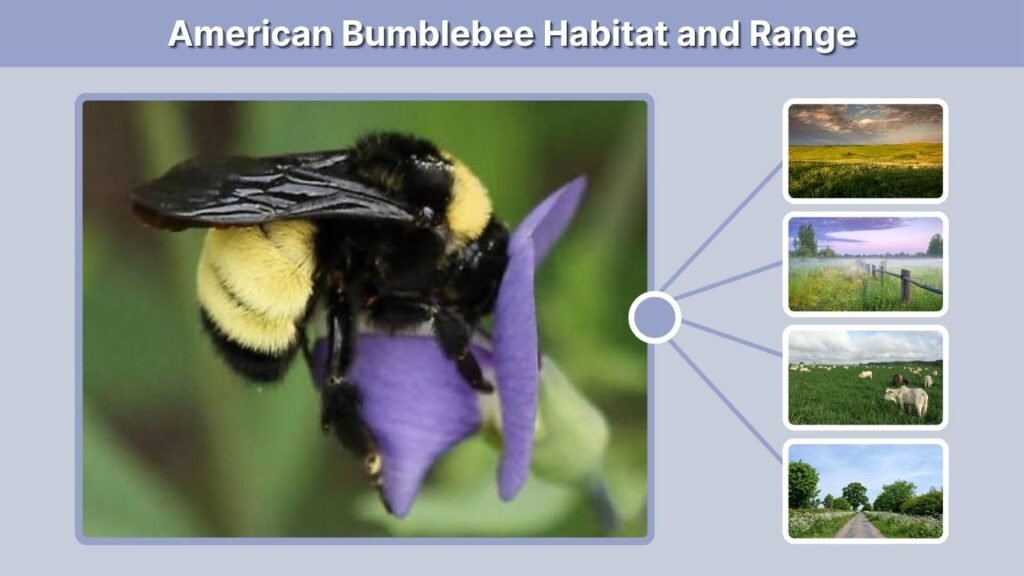
American bumblebees are strongly associated with open habitats that provide flowers from spring through fall. Agricultural landscapes can support them when sufficient nesting areas and diverse flowering plants remain available. They are less dependent on intact forests than some other native bees and can sometimes appear in gardens, roadsides, parks, and other human-modified landscapes.
Common American Bumblebee Habitats
Suitable habitats include:
- Grasslands
- Prairies
- Open farmland
- Meadows
- Pastures
- Gardens
- Roadsides
- Field margins
- Open woodland edges
- Flower-rich urban areas
The U.S. Fish and Wildlife Service describes farmland and open fields as important habitat and notes that nests may occur beneath grass or underground.
American Bumblebee Range
Historically, the species was one of North America’s more broadly distributed bumblebees. Its range included much of the eastern and central United States, the Great Plains, portions of southern Canada, and parts of the southwestern United States and Mexico.
However, populations have become much less common in some northern parts of that historical range.
American Bumblebee in Texas
Texas remains within an important portion of the American bumblebee’s range. Open fields, prairies, roadsides, farms, and gardens with abundant native flowers can provide useful habitat.
Maintaining flowering plants throughout the active season is particularly valuable because colonies require a continuous pollen and nectar supply.
American Bumblebee Nest and Colony
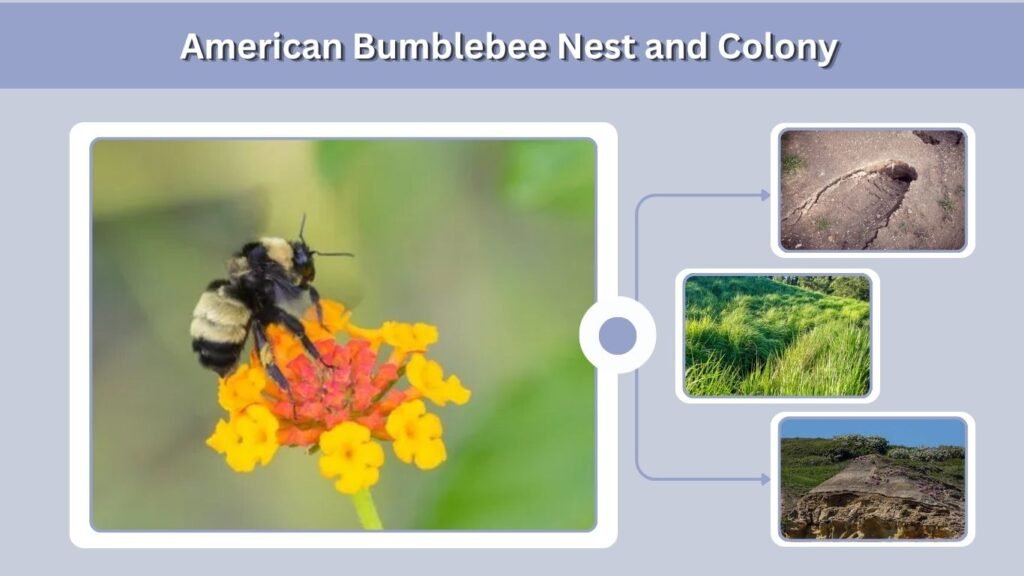
Unlike solitary leafcutter or mason bees, American bumblebees live socially. A colony begins with one queen and gradually expands as workers emerge. However, bumblebee colonies are temporary. Most members die when cold weather arrives, leaving newly produced queens to survive and establish colonies the following year.
Where Do American Bumblebees Nest?
Typical nesting sites can include:
- Underground cavities
- Abandoned rodent burrows
- Spaces beneath thick grass
- Surface-level cavities
- Areas beneath vegetation
- Protected spaces around field edges
Their nests are generally less organized and much smaller than the large perennial colonies built by honey bees.
American Bumblebee Queen
The queen is responsible for founding the entire colony.
After surviving winter in a protected location, she emerges when temperatures become suitable and searches for flowers. She must then locate a nesting site, gather pollen and nectar, and produce her first group of worker bees.
Once workers mature, they take over much of the foraging and nest maintenance.
American Bumblebee Hive
“Hive” is sometimes used when discussing bumblebees, but nest is a more accurate term.
Inside are irregular clusters of wax cells used for developing young and storing small quantities of nectar and pollen. Bumblebees do not produce large honey reserves like honey bees.
What Do American Bumblebees Eat?
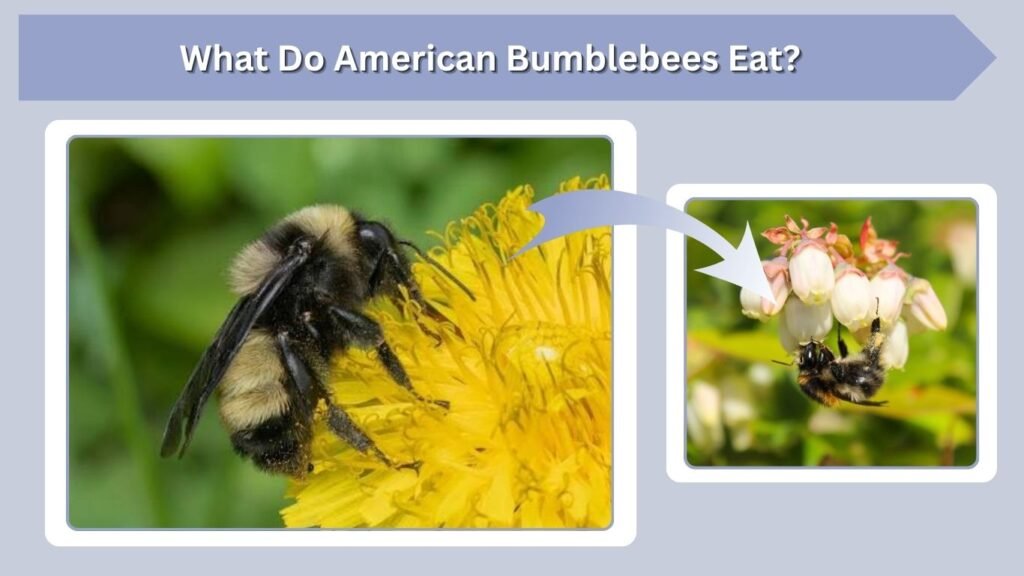
American bumblebees are generalist pollinators, meaning they visit many types of flowering plants instead of depending on a single species. Their relatively long tongues also allow them to access flowers that may be difficult for some shorter-tongued bees to exploit.
American Bumblebee Diet
Their food primarily consists of:
- Flower nectar for carbohydrates and energy
- Pollen for protein and nutrients
- Stored pollen for developing larvae
- Small quantities of stored nectar inside the nest
They may visit flowers such as milkweed, thistles, bee balm, mountain mint, hibiscus, and numerous other native plants.
Why Are They Important Pollinators?
As American bumblebees move between flowers, pollen sticks to their hairy bodies and is transferred to other blossoms.
They can also perform buzz pollination, vibrating their flight muscles to shake pollen from certain flowers. Bumblebees are therefore valuable pollinators of both native plants and agricultural crops.
American Bumblebee Life Cycle
The American bumblebee follows an annual colony cycle. Unlike honey bee colonies that may persist for years, the colony normally lasts only one growing season. Different members are produced at different stages depending on the needs of the colony and environmental conditions.
Stages of the Life Cycle
- Spring: An overwintered queen emerges and begins feeding.
- Nest establishment: She finds a suitable nesting cavity.
- First brood: The queen lays eggs and raises her first workers.
- Colony growth: Workers gather food while the queen produces more offspring.
- Reproductive stage: New queens and males are produced later in the season.
- Mating: Young queens mate with males.
- Winter: Most colony members die while fertilized queens overwinter.
The following spring, the cycle begins again.
American Bumblebee Lifespan
Individual lifespan depends on caste.
Workers normally live for only several weeks, while males generally survive long enough to mate. Queens can live considerably longer because newly mated queens must survive winter before founding colonies the following year.
Does the American Bumblebee Sting?
Female American bumblebees possess stingers and can defend themselves or their nest. However, these bees are generally more interested in collecting pollen and nectar than interacting with humans. Stings are more likely when a bee is trapped, stepped on, handled, or when its nest is disturbed.
American Bumblebee Sting Facts
- Queens and workers can sting.
- Males cannot sting.
- They usually do not attack without reason.
- Bumblebees can potentially sting more than once.
- A sting commonly produces localized pain and swelling.
- Nest disturbance increases defensive behavior.
People with a known severe allergy to bee venom should follow their prescribed emergency plan after a sting.
American Bumblebee vs Carpenter Bee and Honey Bee
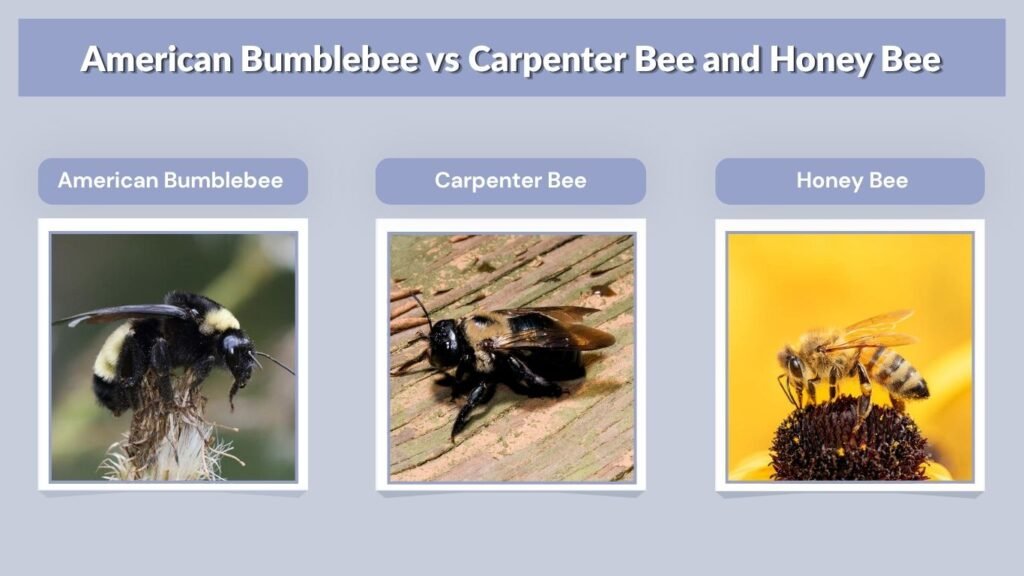
Several large bees can be mistaken for American bumblebees. Body hair, abdomen appearance, nesting behavior, and colony structure provide useful identification clues.
American Bumblebee vs Carpenter Bee
American bumblebees are densely hairy across much of their abdomen, giving them a fuzzy appearance.
Large carpenter bees often have a relatively smooth, shiny abdomen. Carpenter bees typically excavate individual nests in wood, whereas American bumblebees establish social colonies in existing cavities, frequently near ground level.
American Bumblebee vs Honey Bee
Honey bees are generally smaller and more slender than American bumblebees.
Honey bees live in large perennial colonies that can contain thousands of workers and substantial honey stores. American bumblebee colonies are smaller, seasonal, and do not produce harvestable quantities of honey.
Is the American Bumblebee Endangered?
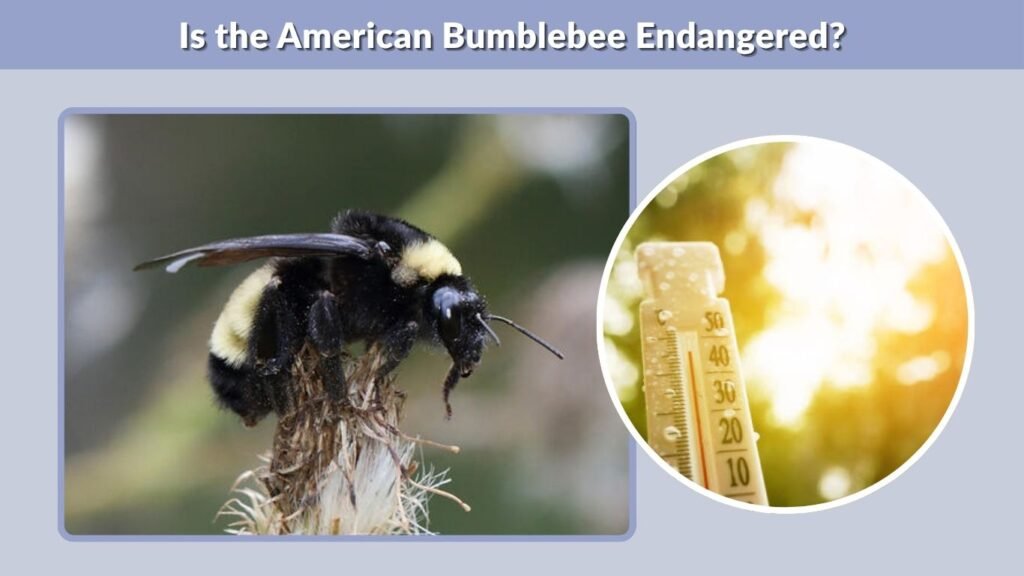
The American bumblebee has experienced substantial population declines, particularly toward the northern part of its range. Habitat degradation, pesticide exposure, disease, climate-related changes, and other interacting pressures are considered important concerns.
Current Conservation Status
As of August 2026, the American bumblebee is not federally listed as endangered or threatened under the U.S. Endangered Species Act. The U.S. Fish and Wildlife Service is still reviewing whether federal listing is warranted, and a species status assessment was undergoing peer review in 2026.
The species is nevertheless considered at risk. The IUCN assessment categorizes Bombus pensylvanicus as Vulnerable, and some individual U.S. states provide additional conservation recognition or protection.
Major Threats
Important pressures include:
- Loss of flower-rich habitat
- Agricultural intensification
- Pesticide exposure
- Diseases and pathogens
- Declining genetic diversity in some populations
- Climate change
- Loss of suitable nesting and overwintering areas
Growing native flowering plants and maintaining pesticide-free habitat can support American bumblebees as well as many other native pollinators.
FAQs
1. What is the scientific name of the American bumblebee?
The scientific name is Bombus pensylvanicus. It belongs to the bee family Apidae and genus Bombus.
2. Is the American bumblebee endangered?
It has suffered significant declines and is considered Vulnerable by the IUCN. As of August 2026, however, it is not federally listed as endangered or threatened in the United States and remains under federal review.
3. Where does the American bumblebee live?
It primarily inhabits open areas such as prairies, grasslands, farms, meadows, gardens, and roadsides across parts of North America.
4. Can an American bumblebee sting?
Yes. Female workers and queens can sting, although they generally do so defensively. Males do not possess functional stingers.
5. What does an American bumblebee eat?
Adults consume nectar for energy and gather pollen as an important protein-rich food source for developing larvae.
