
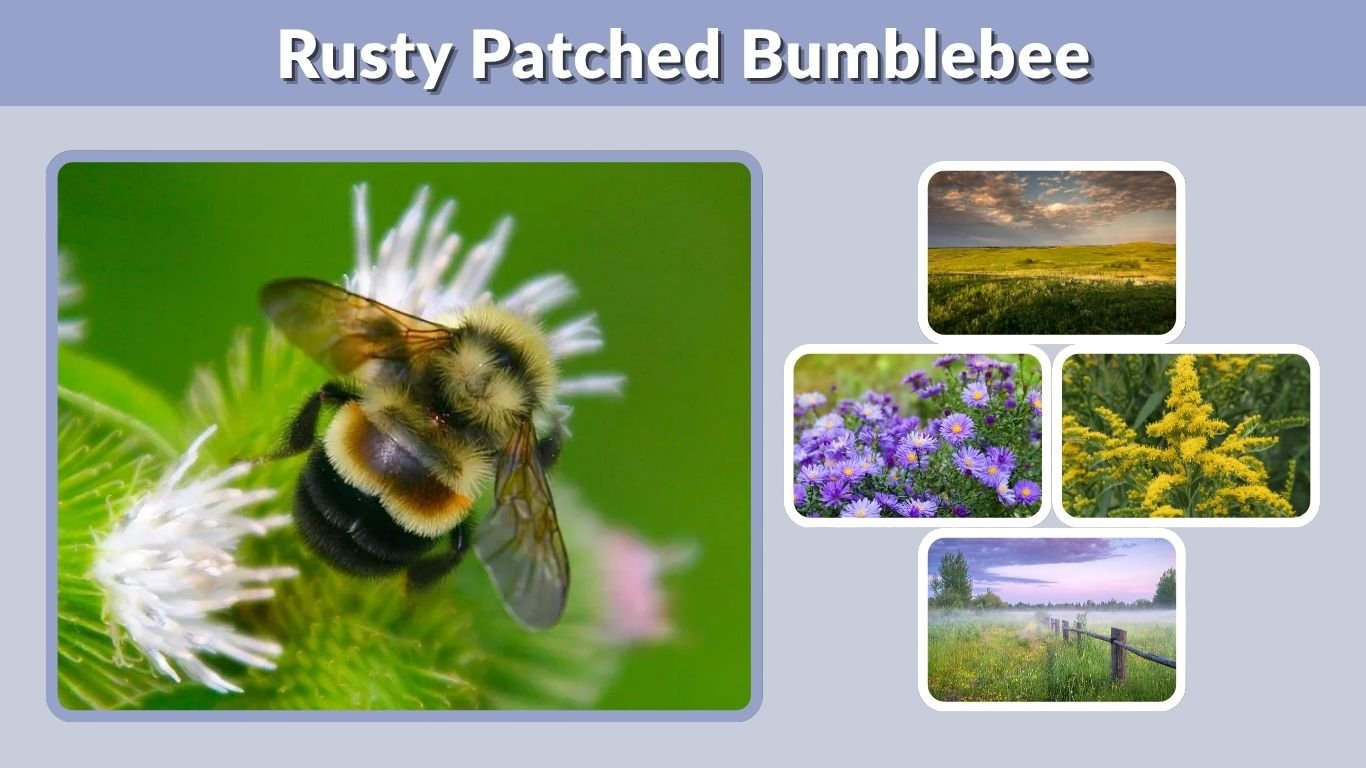
The rusty patched bumblebee (Bombus affinis) is a native North American pollinator recognized by the rusty-colored patch found on the abdomen of workers and males. Once widespread across the eastern United States and parts of Canada, this bumblebee has experienced a dramatic population decline. It is now federally protected as an endangered species in the United States. Despite its rarity, the rusty patched bumblebee remains an important pollinator of wildflowers and crops. Understanding its identification, habitat, life cycle, threats, and conservation needs can help protect remaining populations.
What Is a Rusty Patched Bumblebee?
The rusty patched bumblebee is a social bee belonging to the genus Bombus. Colonies contain a queen, female workers, and males during different parts of the year. The species gets its common name from a distinctive rusty or reddish-brown patch on the second abdominal segment of workers and males.
Rusty Patched Bumblebee Identification
Look for these characteristics:
- Medium to large, fuzzy bumblebee
- Mostly black head
- Yellow hairs on the front portion of the thorax
- Black area between the wings
- Yellow first abdominal segment
- Rusty or reddish-brown patch surrounded by yellow on the second abdominal segment
- Workers and males display the characteristic rusty patch
- Queens generally lack the obvious rusty patch
Because several bumblebee species have similar yellow-and-black patterns, photographs showing the abdomen clearly are useful for identification.
Scientific Name
The scientific name of the rusty patched bumblebee is Bombus affinis.
It belongs to:
- Family: Apidae
- Genus: Bombus
- Species: Bombus affinis
The species is native to North America and historically occupied a much larger geographic area than it does today.
Rusty Patched Bumblebee Habitat and Range
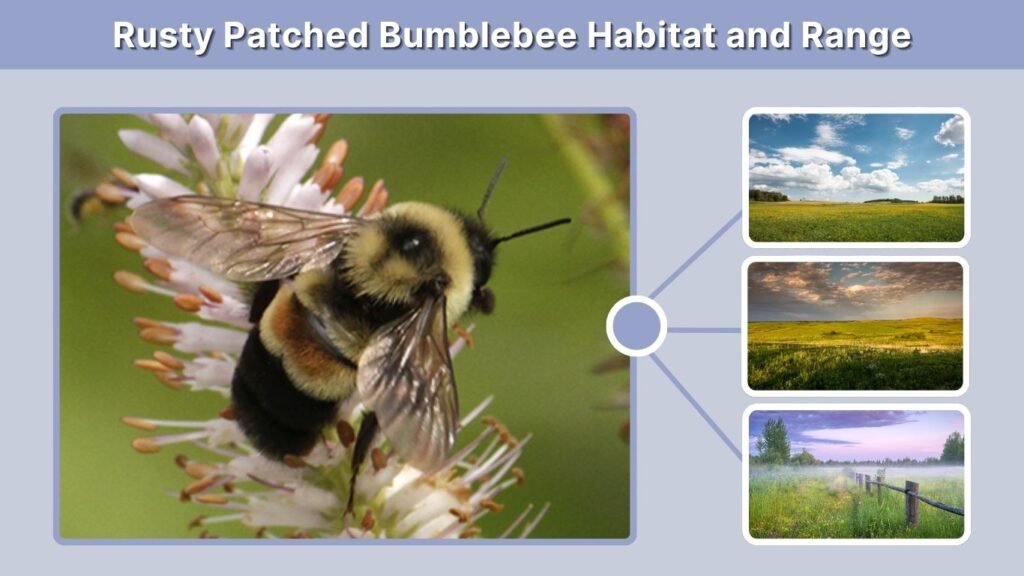
Rusty patched bumblebees need a combination of abundant flowers, suitable nesting locations, and protected overwintering sites. They can use natural and human-modified landscapes, including prairies, woodland edges, parks, gardens, and urban areas. Flowers must be available from early spring through fall because different stages of the colony depend on continuous nectar and pollen resources.
Preferred Habitat
Suitable habitats include:
- Prairies
- Grasslands
- Meadows
- Woodland edges
- Gardens
- Parks
- Agricultural field margins
- Roadsides with native flowers
- Urban and suburban green spaces
Nests are often located underground in abandoned rodent burrows or other existing cavities.
Historical and Current Range
Historically, rusty patched bumblebees occurred throughout much of the eastern United States, Upper Midwest, southern Quebec, and Ontario.
Today, they survive in only a small fraction of their former range. The U.S. Fish and Wildlife Service reports an estimated decline of about 87% since the early 2000s, with known populations occupying less than 1% of the historical range.
Remaining populations are concentrated particularly in portions of the Upper Midwest and a smaller number of locations elsewhere.
Rusty Patched Bumblebee in Minnesota
Minnesota has become especially important for rusty patched bumblebee conservation. Populations remain around parts of the Minneapolis–St. Paul metropolitan region, where gardens, parks, restored prairies, and other flower-rich environments can provide valuable habitat.
Minnesota’s State Bee
The rusty patched bumblebee became the official state bee of Minnesota in 2019. The designation highlights both the importance of native pollinators and the need to conserve their remaining habitat.
Why Minnesota Matters
Parts of Minnesota still contain important populations despite the species’ disappearance from much of its former range.
Conservation efforts in the state focus on maintaining continuous flowers, protecting nesting and overwintering areas, reducing harmful pesticide exposure, and monitoring known populations.
Rusty Patched Bumblebee Life Cycle
Rusty patched bumblebee colonies survive for only one season. The entire colony begins with a single queen that survived winter. She establishes a nest in spring, raises workers, and eventually produces males and new queens. Only newly mated queens normally survive to begin the cycle again the following year.
Life Cycle Stages
- Spring emergence: A fertilized queen leaves her overwintering site.
- Foraging: She feeds on early spring flowers.
- Nest establishment: The queen finds a protected nesting cavity.
- Egg laying: She produces the first generation of workers.
- Colony growth: Workers collect nectar and pollen while the queen continues laying eggs.
- Reproduction: Males and new queens are produced later in the season.
- Mating: New queens mate before winter.
- Overwintering: Fertilized queens shelter underground while the old colony dies.
This annual cycle makes uninterrupted habitat particularly important.
What Do Rusty Patched Bumblebees Eat?
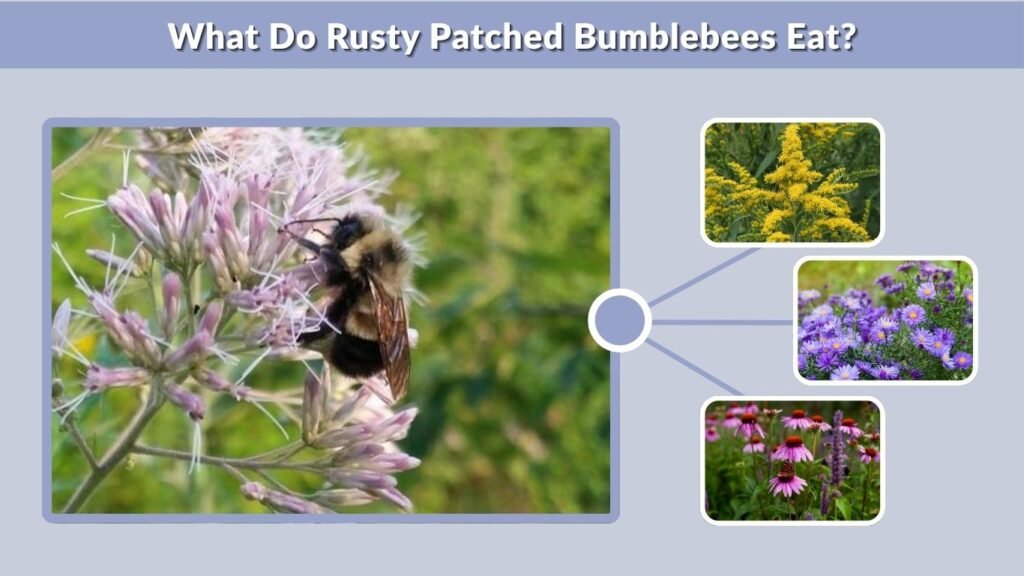
Like other bumblebees, rusty patched bumblebees depend primarily on nectar and pollen from flowers. Nectar provides carbohydrates for flight and daily activity, while pollen supplies proteins, fats, vitamins, and minerals needed especially by growing larvae.
Important Food Sources
They may forage on:
- Goldenrods
- Asters
- Wild bergamot
- Bee balm
- Milkweeds
- Sunflowers
- Coneflowers
- Native clovers
- Wild geranium
- Virginia waterleaf
- Native willows
Providing plants that bloom at different times is more useful than having flowers available for only a short period.
Is the Rusty Patched Bumblebee Endangered?
Yes. The rusty patched bumblebee was federally listed as endangered in 2017, becoming the first bumblebee species protected under the U.S. Endangered Species Act. Its status remains endangered as of August 2026.
Why Did the Population Decline?
Important threats include:
- Disease and introduced pathogens
- Habitat loss
- Pesticide exposure
- Agricultural intensification
- Climate change
- Drought and extreme temperatures
- Small and isolated populations
- Loss of flowering plants
- Loss of nesting and overwintering habitat
Scientists consider the decline likely to involve several interacting factors rather than one single cause.
New Critical Habitat Protection
In May 2026, the U.S. Fish and Wildlife Service finalized approximately 1.5 million acres of critical habitat for the species across 33 counties in Illinois, Iowa, Minnesota, Virginia, West Virginia, and Wisconsin. The designation is intended to support recovery of remaining populations.
How to Help Rusty Patched Bumblebees
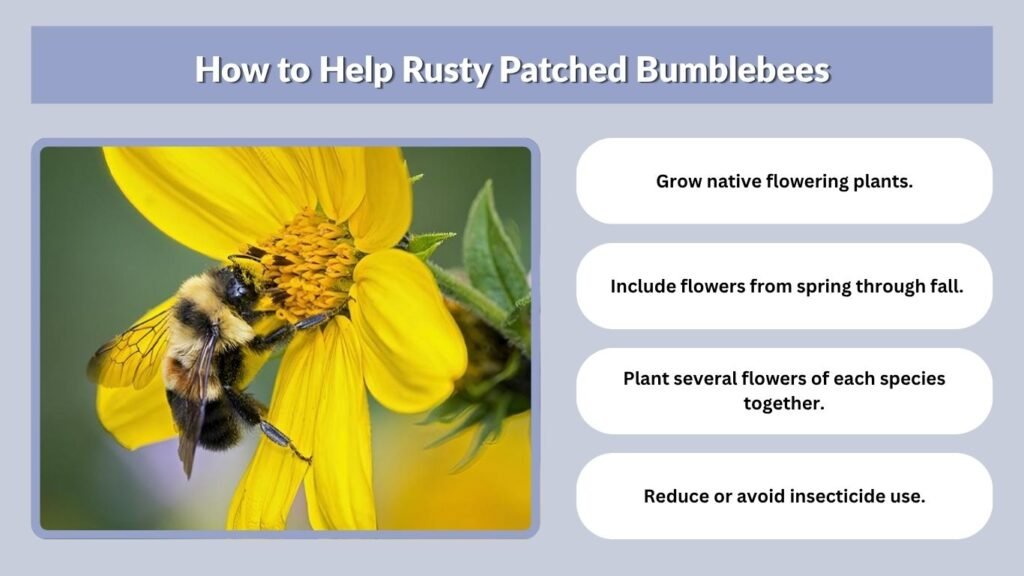
Homeowners, gardeners, farmers, and land managers can all contribute to bumblebee conservation. A relatively small garden can provide valuable food when it contains suitable native plants and is managed without unnecessary pesticide use.
Create a Rusty Patched Bumblebee Garden
Try these approaches:
- Grow native flowering plants.
- Include flowers from spring through fall.
- Plant several flowers of each species together.
- Reduce or avoid insecticide use.
- Leave some undisturbed ground for nests.
- Preserve leaf litter and natural areas for overwintering queens.
- Avoid excessive fall cleanup.
- Replace portions of lawn with native flowers.
- Provide plants of different shapes and flower sizes.
The U.S. Fish and Wildlife Service specifically recommends diverse native plants with overlapping bloom periods from early spring through late fall.
Protect Nesting Areas
Rusty patched bumblebees usually use existing underground cavities rather than constructing elaborate nests themselves.
Avoid disturbing active nests whenever possible. Areas with unmowed grass, natural soil, logs, and other sheltered features can provide nesting or overwintering opportunities.
Rusty Patched Bumblebee Behavior and Pollination
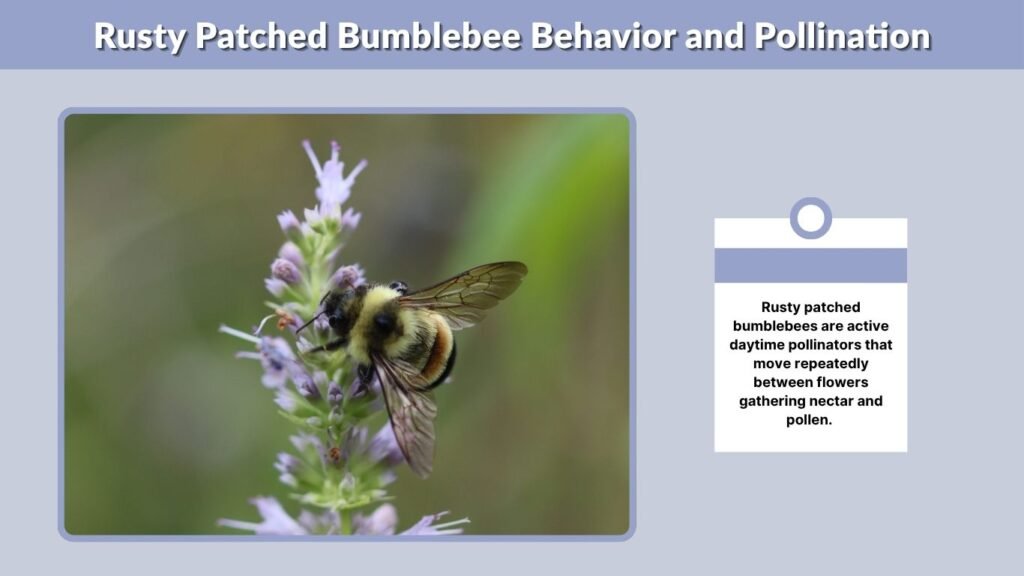
Rusty patched bumblebees are active daytime pollinators that move repeatedly between flowers gathering nectar and pollen. Their hairy bodies collect pollen efficiently, allowing grains to be transferred between flowers.
Why They Are Important Pollinators
They can benefit:
- Wildflowers
- Native plant communities
- Fruit-producing plants
- Vegetable crops
- Seed-producing plants
- Other wildlife that depends on pollinated plants
Bumblebees can also perform buzz pollination, vibrating flowers to release pollen. This ability makes bumblebees particularly effective pollinators of certain plants.
FAQs
1. How do you identify a rusty patched bumblebee?
Workers and males have a rusty reddish patch surrounded by yellow hairs on the second abdominal segment. Their bodies are otherwise mostly black and yellow and densely covered with hair.
2. Is the rusty patched bumblebee endangered?
Yes. It has been federally listed as endangered in the United States since 2017 and remains protected under the Endangered Species Act.
3. Where do rusty patched bumblebees live?
Remaining populations occur mainly in portions of the Upper Midwest and a few other areas within their former eastern North American range. They use prairies, gardens, parks, grasslands, and other flower-rich habitats.
4. Why is the rusty patched bumblebee important?
It pollinates many native plants and contributes to healthy ecosystems. Bumblebees can also pollinate agricultural crops and plants requiring buzz pollination.
5. How can I help save rusty patched bumblebees?
Plant diverse native flowers that bloom from spring through fall, minimize pesticide use, preserve natural nesting areas, and leave some undisturbed vegetation and soil for nesting and overwintering queens.
