
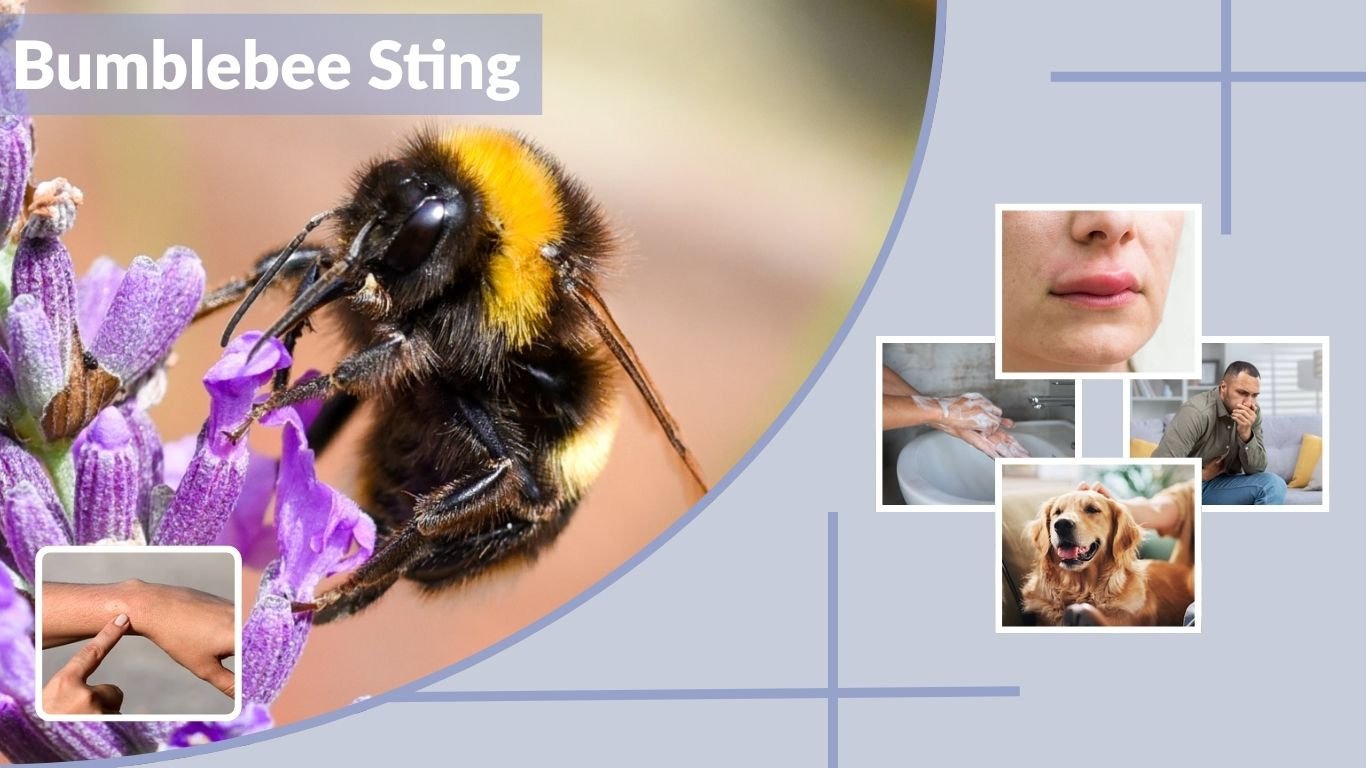
A bumblebee sting usually causes immediate pain, redness, itching, and localized swelling. Only female bumblebees—queens and workers—can sting, and they normally do so when trapped or defending their nest. Unlike honeybees, bumblebees have relatively smooth stingers and can sting repeatedly without dying. Most reactions improve with basic home treatment, but a severe allergy can cause anaphylaxis within minutes. Recognizing dangerous symptoms such as breathing difficulty, throat swelling, dizziness, or widespread hives is essential for obtaining emergency treatment quickly.
Can a Bumblebee Sting or Bite?
Bumblebees have chewing mouthparts, but stinging is their primary defense against humans. They are generally peaceful while visiting flowers and rarely sting unless stepped on, squeezed, handled, or disturbed near their colony. Their ability to sting depends on sex because the stinger developed from an egg-laying structure.
Which Bumblebees Can Sting?
- Queens: Can sting and may defend themselves or their colony.
- Workers: Can sting, particularly when their nest is disturbed.
- Males: Cannot sting because they do not possess a stinger.
- Foraging females: Usually avoid people and sting only when trapped.
- Nest defenders: May react to vibrations or direct interference around the entrance.
Large size does not necessarily make a bumblebee more aggressive. A large queen flying close to the ground is often searching for a nesting site rather than looking for something to attack.
Can a Bumblebee Sting More Than Once?
A bumblebee’s stinger has fewer and smaller barbs than a worker honeybee’s stinger. It can normally withdraw the stinger from human skin and use it again. Therefore, one bumblebee may deliver multiple stings during the same encounter.
The bee usually survives after stinging. This differs from a worker honeybee, whose strongly barbed stinger may become lodged in human skin and tear away as the bee escapes.
Does a Bumblebee Bite?
Bumblebees use their mandibles to manipulate nesting material, collect plant substances, and handle flowers. A threatened bee might grasp skin with its mandibles, but a painful defensive encounter is usually caused by its stinger rather than a bite.
What Does a Bumblebee Sting Look Like?
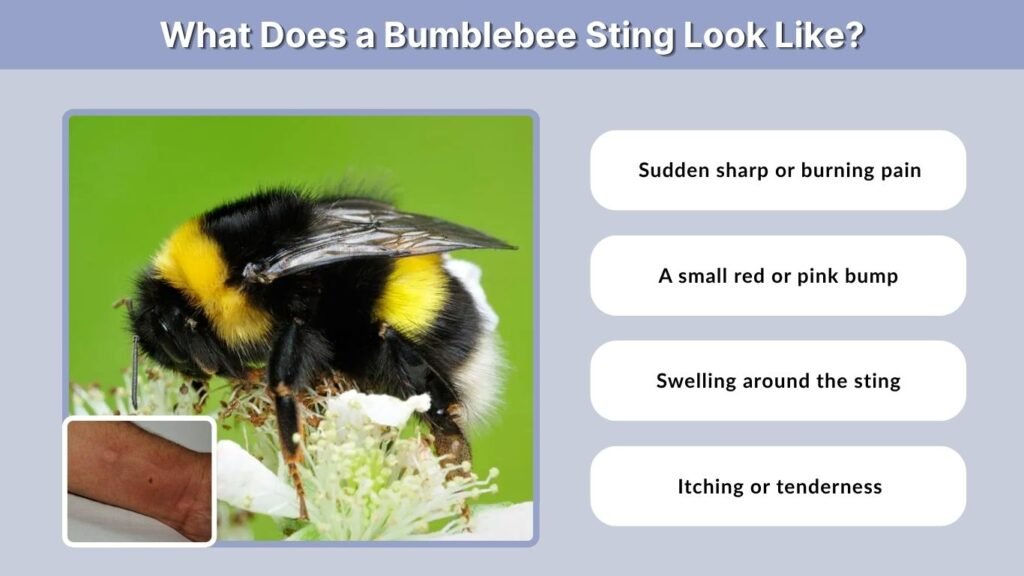
A typical sting creates a small, raised area surrounded by redness. The exact appearance depends on sting location, skin sensitivity, previous exposure, and the amount of venom delivered. Symptoms may begin immediately and change over the following hours.
Common Symptoms
- Sudden sharp or burning pain
- A small red or pink bump
- Swelling around the sting
- Itching or tenderness
- Warmth around the affected skin
- A tiny central puncture mark
- Mild redness spreading around the site
A bumblebee normally does not leave its stinger behind. If a stinger is visible, remove it promptly because the insect may have been a honeybee or another stinging species.
Large Local Reaction
Some people develop swelling that extends well beyond the sting. For example, a sting on one finger might cause much of the hand to swell. The area may become increasingly red, itchy, warm, or uncomfortable over the next day.
A large local reaction can look alarming without being anaphylaxis. However, very painful, extensive, or worsening swelling should be assessed by a healthcare professional, especially when it affects the face, eye, mouth, or throat.
How Long Does a Bumblebee Sting Last?
Initial pain may fade within minutes or hours. Mild redness, itching, and swelling commonly improve within several hours to a few days. A large local reaction may enlarge for 24–48 hours and remain uncomfortable for several days.
Increasing pain, pus, red streaks, fever, or redness that continues spreading after several days may indicate an infection or another medical problem rather than a normal venom reaction.
Bumblebee Sting Treatment
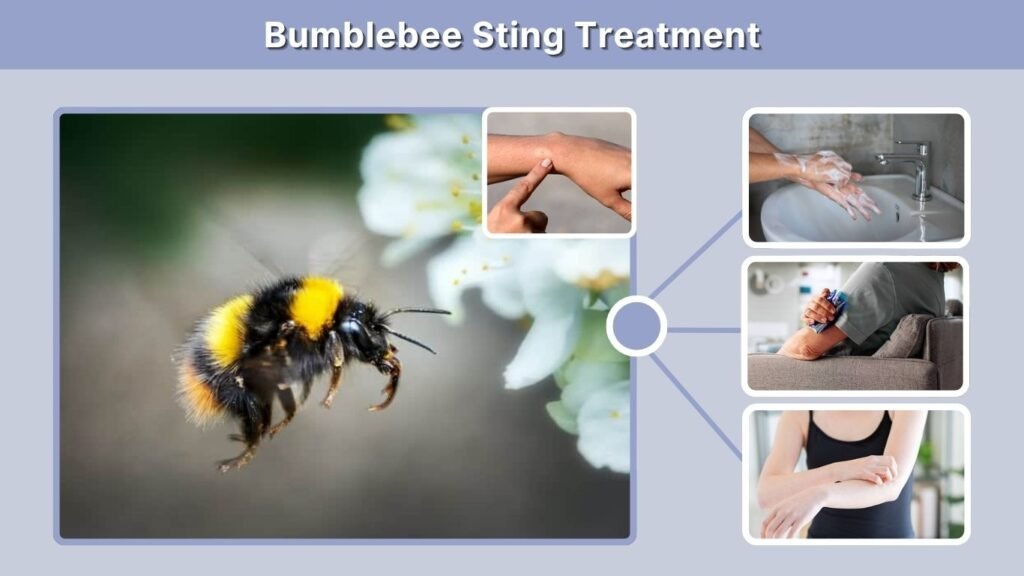
Most mild stings can be treated at home. Begin by moving away from the nest or insect to prevent additional stings. Check the entire body if several bees were present, and remove tight jewelry before swelling develops around a hand or finger.
First-Aid Steps
- Move to safety: Walk calmly away from the nest or active bees.
- Check for a stinger: Bumblebees rarely leave one, but remove any visible stinger promptly.
- Wash the skin: Clean the affected area with soap and water.
- Apply a cold compress: Use an ice pack wrapped in cloth for at least 10 minutes.
- Elevate the area: Raise a stung hand, arm, foot, or leg when possible.
- Avoid scratching: Scratching can damage the skin and introduce bacteria.
- Monitor symptoms: Watch for spreading hives, breathing problems, dizziness, or facial swelling.
What Can You Put on the Sting?
A pharmacist may recommend hydrocortisone cream, calamine lotion, or another treatment for itching and inflammation. An oral antihistamine may help some people with itching or swelling. A suitable over-the-counter pain reliever can reduce discomfort.
Follow product directions and ask a pharmacist or doctor before using medicine for children, during pregnancy, or when you have allergies, medical conditions, or take other medications. Vinegar and baking soda are unlikely to provide meaningful relief.
What Not to Do
- Do not squeeze or cut the sting site.
- Do not apply ice directly to bare skin.
- Do not scratch or break blisters.
- Do not use antibiotics unless medically advised.
- Do not seal an active nest entrance.
- Do not rely on home remedies during a serious reaction.
- Do not delay emergency care while waiting for an antihistamine to work.
Antihistamines may relieve itching, but they cannot replace epinephrine during anaphylaxis.
Allergic Reaction to a Bumblebee Sting
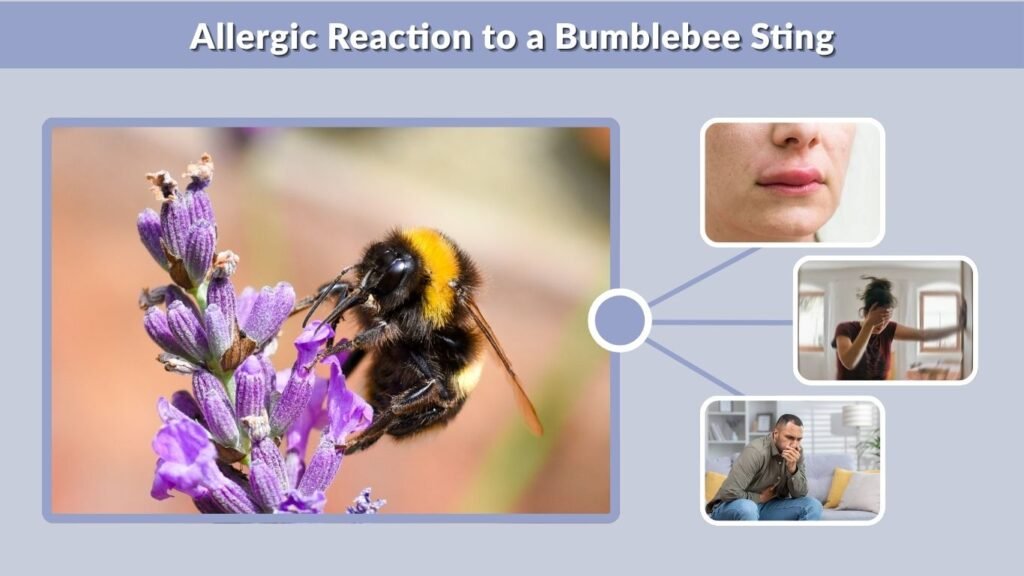
A normal local reaction remains close to the sting. An allergic reaction can cause symptoms elsewhere on the body. Severe systemic reactions are uncommon but can progress rapidly and become fatal without prompt treatment.
Emergency Warning Signs
- Difficulty breathing or wheezing
- Tightness in the throat or chest
- Swelling of the tongue, lips, face, or throat
- Difficulty speaking or swallowing
- Widespread hives or flushing
- Dizziness, confusion, or fainting
- Rapid or weak pulse
- Sudden vomiting, diarrhea, or abdominal cramps
- Pale, cold, or clammy skin
- Collapse or loss of consciousness
These can indicate anaphylaxis. If symptoms appear, use a prescribed epinephrine auto-injector immediately and contact local emergency services. The American College of Allergy, Asthma & Immunology emphasizes that anaphylaxis requires epinephrine and urgent medical attention.
When to Seek Medical Care
Obtain urgent advice after numerous stings, a sting inside the mouth or throat, severe facial swelling, worsening symptoms, or signs of infection. Young children and people with heart or breathing conditions may require closer observation.
Anyone who has experienced a systemic reaction should discuss allergy testing and venom immunotherapy with an allergy specialist. A clinician may prescribe epinephrine and explain how and when to use it.
Bumblebee Sting Pain and Danger
A bumblebee sting can be sharply painful, but pain differs between individuals and sting locations. Fingers, toes, lips, and areas near the eyes may feel especially sensitive. The number of stings and personal response are more medically important than the bee’s size or color.
Is a Bumblebee Sting Dangerous?
For most people, a single sting causes temporary local discomfort. It becomes dangerous when the person develops anaphylaxis, receives many stings, or is stung in a location where swelling could interfere with breathing or vision.
A black, red-tailed, buff-tailed, American, garden, or other bumblebee can cause a similar venom reaction. Color alone does not reliably predict sting pain or allergy risk.
Bumblebee vs. Honeybee and Wasp Stings
| Feature | Bumblebee | Worker Honeybee | Wasp |
| Can sting repeatedly? | Yes | Usually no | Yes |
| Usually leaves stinger? | No | Often | No |
| Dies after stinging? | Usually no | Often | No |
| Typical behavior | Generally defensive | Defends colony | May be more defensive |
| Only females sting? | Yes | Yes | Yes |
The perceived pain from each insect varies, so one type is not universally worse than another.
Bumblebee Stings in Dogs and Cats
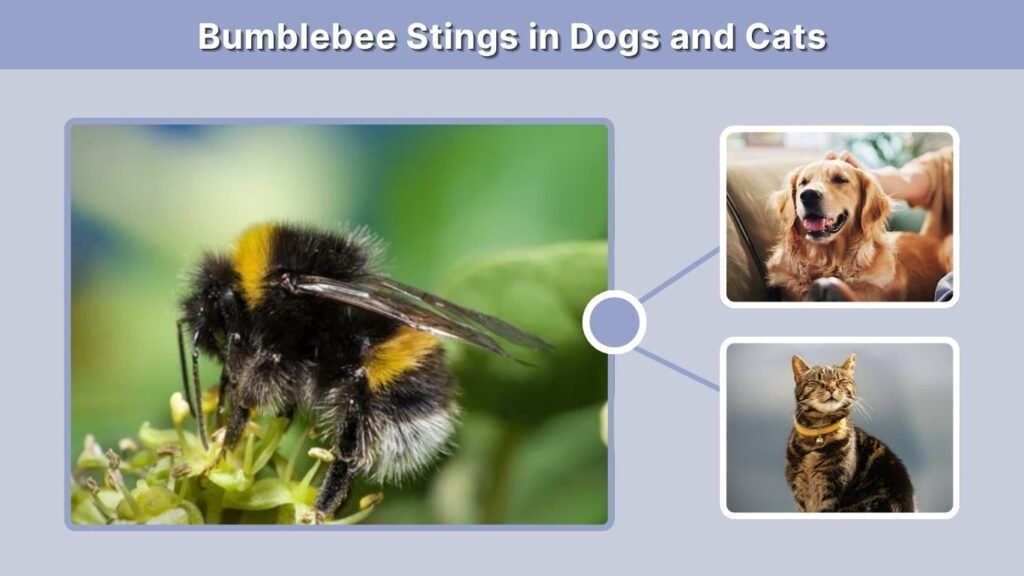
Pets may be stung while chasing or stepping on a bumblebee. A mild sting can cause licking, limping, localized pain, or swelling. A sting inside the mouth or around the face requires particular attention because swelling may affect breathing.
Warning Signs in Pets
Contact a veterinarian urgently if a dog or cat develops breathing difficulty, extensive facial swelling, weakness, collapse, repeated vomiting, pale gums, or multiple stings. Do not give a pet human painkillers or antihistamines unless a veterinarian provides the exact product and dose.
FAQs
1. Will a bumblebee sting you without a reason?
Bumblebees rarely sting without provocation. Most incidents occur when a bee is trapped, stepped on, handled, or defending its nest.
2. How many times can a bumblebee sting?
A female bumblebee can sting repeatedly because its stinger normally does not remain embedded in human skin.
3. Does a bumblebee die after stinging?
Usually not. It can withdraw its relatively smooth stinger and fly away, unlike a worker honeybee that often leaves its barbed stinger behind.
4. What is the best treatment for a bumblebee sting?
Wash the area, apply a wrapped cold pack, elevate it, avoid scratching, and ask a pharmacist about suitable treatments for pain or itching.
5. Can a bumblebee sting kill you?
Rarely, a sting can cause fatal anaphylaxis. Breathing difficulty, throat swelling, widespread hives, dizziness, or collapse requires epinephrine if prescribed and immediate emergency assistance.
