
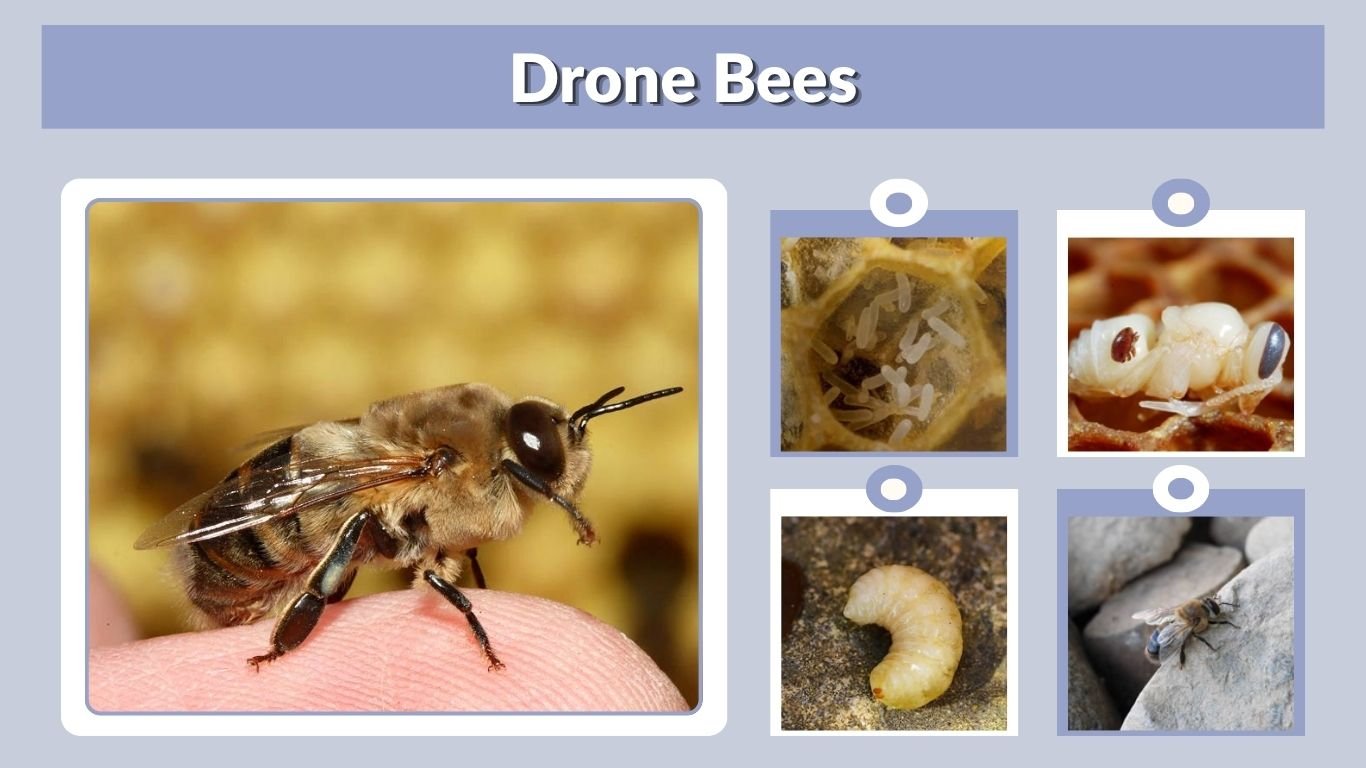
Drone bees are the male members of a honey bee colony. Unlike female workers, drones do not collect pollen, make honey, build comb, or defend the hive. Their main biological role is reproduction: they leave the colony to search for virgin queens and attempt to mate with them in flight. Drones are easy to recognize by their stocky bodies and unusually large eyes. Although their daily duties appear limited, they are essential for transferring genes between colonies and maintaining healthy honey bee populations.
What Are Drone Bees?
Drone honey bees are the males of a honey bee colony. A healthy colony typically produces drones during spring and summer, when new queens are most likely to take mating flights. They are noticeably larger and broader than worker bees, although their abdomens are shorter and less elongated than a queen’s. A colony may contain hundreds of drones during its reproductive season.
Drone Bee Identification
You can recognize a drone by these features:
- Sex: Male
- Body: Large, broad, and stocky
- Eyes: Very large compound eyes
- Abdomen: Rounded rather than pointed
- Stinger: None
- Pollen baskets: None
- Wax glands: Absent
- Main role: Mating with virgin queens
- Brood cells: Larger than worker cells
Their enormous compound eyes nearly meet at the top of the head. This enhanced vision helps drones locate queens during high-speed mating flights.
Are All Drone Bees Male?
Yes. In ordinary honey bee biology, drones are males.
Honey bees use a reproductive system called haplodiploidy. A queen can control whether she releases stored sperm when laying an egg.
Fertilized eggs normally develop into female workers or queens, while unfertilized eggs develop into male drones. As a result, a typical drone has only one set of chromosomes rather than the two sets found in female honey bees.
What Do Drone Bees Do?
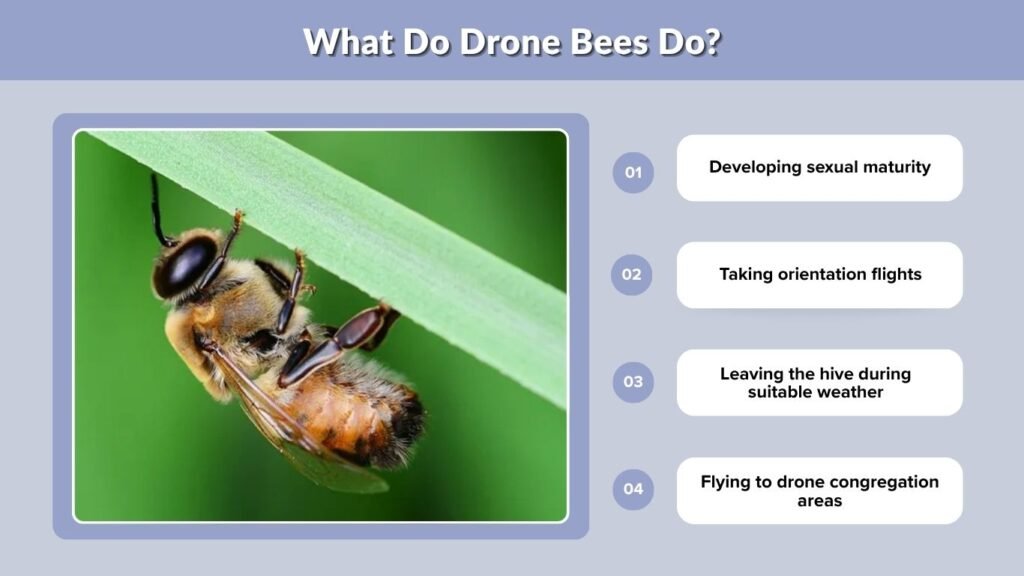
The main purpose of drone bees is to mate with virgin queens from other colonies. They do not perform the familiar hive jobs associated with workers. Although most individual drones never successfully mate, maintaining many males increases the chances that queens in the surrounding population will encounter enough genetically diverse mates.
The Main Job of a Drone Bee
Drone activities primarily involve:
- Developing sexual maturity
- Taking orientation flights
- Leaving the hive during suitable weather
- Flying to drone congregation areas
- Searching for virgin queens
- Competing with other drones
- Mating if successful
Drones commonly begin taking flights after their first week or so as adults. They often leave during the afternoon and gather in particular areas used repeatedly by male bees.
Drone Congregation Areas
A drone congregation area is an aerial location where males from many different colonies gather.
Virgin queens fly into these areas during mating flights. When a queen appears, numerous drones may pursue her.
Because males from different colonies mix together, the queen has an opportunity to mate outside her immediate family group, promoting genetic diversity.
How Do Drone Bees Mate?
Honey bee mating takes place in flight rather than inside the hive. A virgin queen leaves her colony and travels to areas where drones are gathered. Multiple drones may mate with the same queen during one or more mating flights.
Mating With a Queen
During mating, a drone approaches a flying queen and connects his reproductive organs with hers.
The queen collects sperm that she will later store in a specialized organ called the spermatheca. She can use this stored sperm for years when producing fertilized eggs.
Queens typically mate with multiple drones, which increases genetic diversity among the workers they later produce.
Do Drone Bees Die After Mating?
Yes. A drone that successfully mates dies shortly afterward.
During separation from the queen, part of his reproductive apparatus is damaged or torn away, causing fatal injury. Successful mating is therefore the drone’s final activity.
Most drones, however, never get the opportunity to mate and eventually die from other causes.
Do Drone Bees Sting?
Drone bees cannot sting. The bee stinger evolved from the ovipositor, an egg-laying structure found only in females. Because drones are male, they do not possess a functional stinging apparatus.
Do Drone Bees Have Stingers?
No. Drones lack:
- A functional stinger
- Venom-delivery equipment for defense
- An egg-laying structure
- The ability to sting people or animals
You could therefore hold a correctly identified drone without being stung by that individual, although handling bees unnecessarily is still not recommended.
Workers, by comparison, are females and have defensive stingers.
How Do Drones Defend the Hive?
Drones are not responsible for colony defense.
Guard worker bees inspect the entrance and sting threats when necessary. Drones generally depend on the workers and the strength of the colony for protection.
Their anatomy is specialized much more strongly toward reproduction and flight than defense.
Drone Bees vs Worker Bees
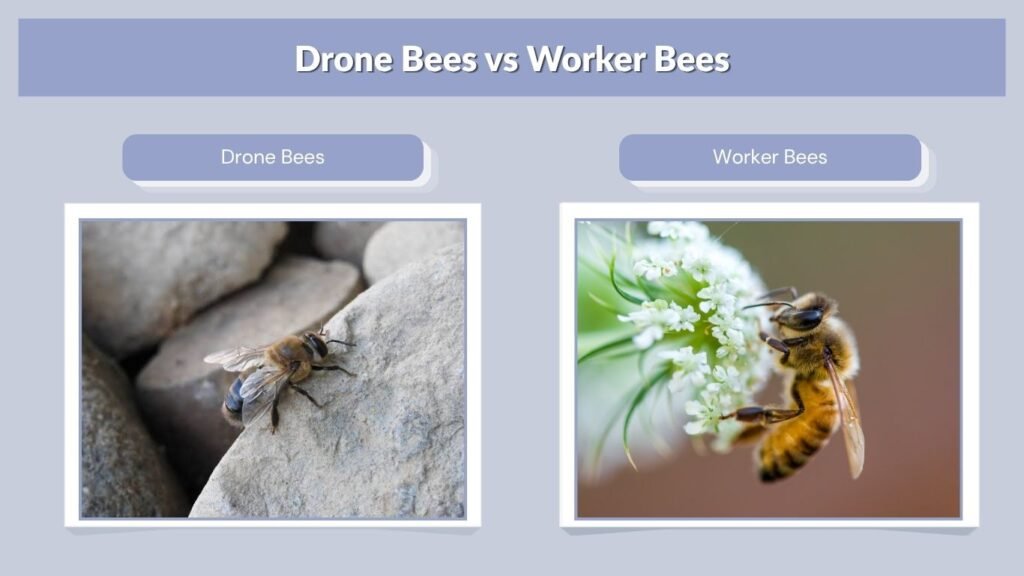
Drone bees and worker bees live together but perform completely different roles. Workers are females responsible for maintaining virtually every aspect of colony life, whereas drones are males specialized primarily for reproduction.
Drone vs Worker Bee Differences
| Feature | Drone Bee | Worker Bee |
| Sex | Male | Female |
| Egg origin | Unfertilized | Fertilized |
| Body | Large and stocky | Smaller and slimmer |
| Eyes | Very large | Smaller |
| Stinger | No | Yes |
| Collects pollen | No | Yes |
| Produces wax | No | Yes |
| Forages | Not normally | Yes |
| Main role | Mating | Colony maintenance |
| Dies after mating | Yes | Not applicable |
Workers also have pollen baskets and wax-producing structures that drones lack.
Do Drone Bees Make Honey?
No. Drones do not collect nectar and convert it into stored honey.
Worker bees gather nectar from flowers, transport it back to the colony, process it, and store it in a comb.
Drones consume colony food rather than collecting significant food resources for the hive.
Do Drone Bees Collect Pollen?
No. Drone bees lack the specialized pollen baskets found on worker honey bees.
They may visit food sources outside the colony, but they are not dedicated pollen foragers and do not provision the hive.
How Long Do Drone Bees Live?
Drone bee lifespan varies considerably. Individuals may survive for several weeks to a few months during the active season if they never mate. University sources give approximate lifespans ranging from about 25–90 days to around three months.
What Determines Drone Lifespan?
Drone longevity is affected by:
- Successful mating
- Season
- Food availability
- Weather
- Colony health
- Disease and parasites
- Predators
- Worker tolerance
A drone that mates dies immediately afterward, potentially giving him a much shorter adult life than one that never encounters a queen.
What Happens to Drone Bees in Winter?
In temperate climates, colonies usually reduce or eliminate their drone population as autumn approaches.
Workers may stop feeding drones and force them from the hive. Maintaining males during winter would consume valuable honey while providing little immediate reproductive benefit because queens generally do not take mating flights during cold weather.
Drone production begins again when conditions improve and the colony has adequate resources.
How Are Drone Bees Born?
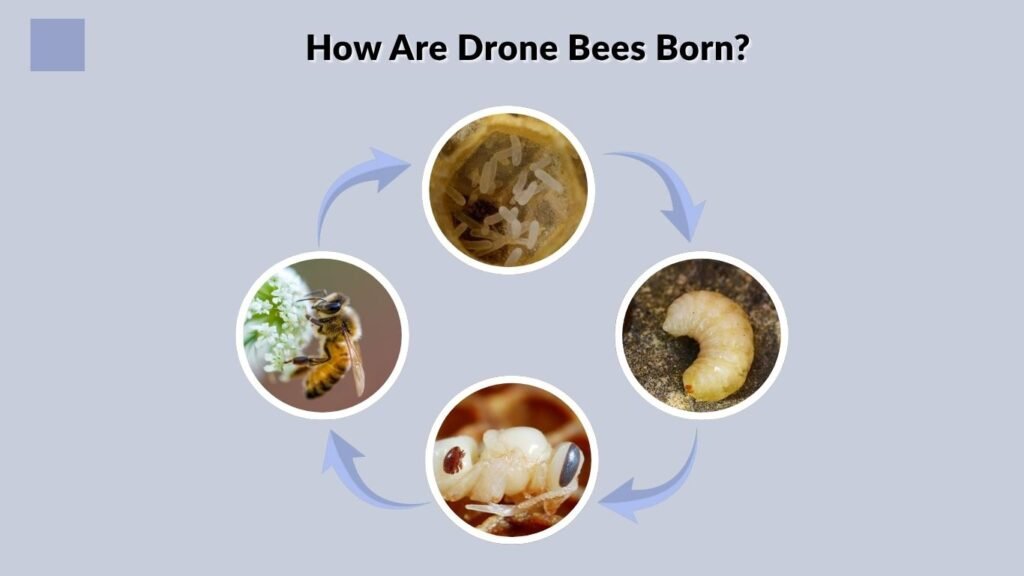
Drone development begins when a queen lays an unfertilized egg into a relatively large drone brood cell. Because the egg receives no sperm, the developing male inherits genetic material only from his mother.
Drone Development
Drone development proceeds through:
- Egg
- Larva
- Capped brood
- Pupa
- Adult drone
Drone cells are larger than ordinary worker cells and produce characteristic raised caps when sealed.
Development takes longer than it does for workers because drones require approximately 24 days from egg laying to adult emergence.
Are Drone Bees Haploid?
Yes, normal drones are haploid.
They have one set of 16 chromosomes inherited from their mother. Female workers and queens normally have two sets, totaling 32 chromosomes.
This unusual genetics means a drone has a mother but genetically has no father.
How Many Drone Bees Are in a Hive?
Drone numbers change throughout the year. A strong colony during the reproductive season may maintain several hundred drones alongside tens of thousands of workers.
Why Colonies Produce So Many Drones
Only a small proportion successfully mate.
Producing many males gives the colony’s genes more opportunities to reach unrelated queens in the surrounding population.
A very large drone population at an unusual time, however, can sometimes indicate a problem. A failing queen that has run out of stored sperm may begin producing excessive unfertilized eggs, resulting in too many drones and too few replacement workers.
Do Drone Bees Mate With Their Own Queen?
Drones normally leave their colony and gather with males from many other colonies.
Likewise, a virgin queen flies away from her own hive to mate. This system reduces the likelihood of close inbreeding.
After completing her mating flights, a successfully mated queen returns home and uses stored sperm to produce female offspring for years.
The drones in her own colony are therefore primarily potential mates for queens originating elsewhere.
Why Are Drone Bees Important?
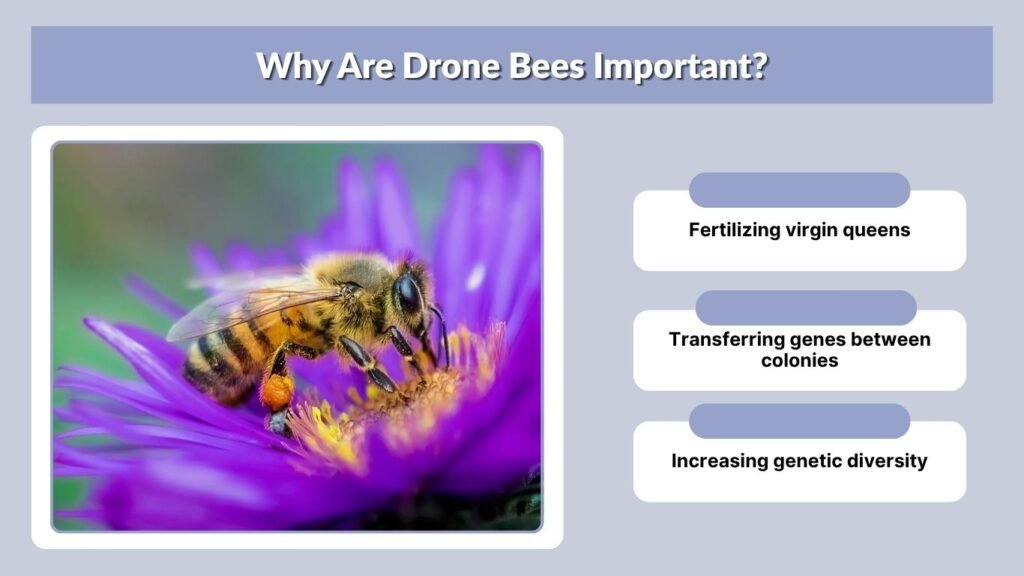
Drones may not gather nectar or build honeycomb, but their reproductive contribution is critical. Without males, virgin queens could not mate normally, colonies could not continuously produce fertilized female offspring, and genes could not move effectively between colonies.
Importance of Drone Bees
Drones contribute to honey bee populations by:
- Fertilizing virgin queens
- Transferring genes between colonies
- Increasing genetic diversity
- Supporting population-level reproduction
- Contributing to future worker genetics
A queen’s workers can have several different fathers because she mates with multiple drones. This genetic diversity can improve the functional diversity of her colony.
FAQs
What are drone bees?
Drone bees are male honey bees produced primarily for reproduction. They develop from unfertilized eggs and are generally present in greater numbers during spring and summer.
Can drone bees sting?
No. Drones have no stinger because the stinging apparatus is derived from female reproductive anatomy.
How long do drone bees live?
Drones that do not mate may survive for several weeks to a few months. A drone that successfully mates dies shortly afterward.
Do drone bees make honey?
No. Drones do not collect nectar, make honey, build comb, or collect pollen for the colony. Worker bees perform these jobs.
Why are drones kicked out of the hive?
Workers often expel drones as winter approaches because food becomes more valuable and drones provide little reproductive benefit during the cold season. New drones are normally produced again when spring conditions support reproduction.
