

A giant katydid is an impressive member of the katydid family, recognized by its large body, exceptionally long antennae, strong hind legs, and often leaf-like wings. Several different species are called giant katydids, including giant Malaysian, giant false-leaf, hooded, and predatory forms. Although their size can make them look intimidating, most are primarily interested in vegetation or small prey rather than humans. Their camouflage, loud calls, unusual diets, and enormous size make giant katydids some of the most fascinating insects to encounter.
What Is a Giant Katydid?
“Giant katydid” is a general name applied to several unusually large members of the family Tettigoniidae rather than one single species. These insects are relatives of crickets and grasshoppers and are particularly common in warm tropical and subtropical habitats. Many giant species possess broad wings resembling leaves, helping them remain almost invisible while resting among vegetation.
Giant Katydid Identification
Common characteristics include:
- Large green or brown body
- Very long, threadlike antennae
- Powerful hind legs
- Strong chewing mouthparts
- Broad wings resembling leaves
- Visible veins across the wings
- Long legs, sometimes covered with spines
- Females may have a prominent ovipositor
Some species have exceptionally convincing leaf camouflage, including markings that resemble veins, spots, or damaged sections of a real leaf.
How Big Is a Giant Katydid?
Size varies dramatically because numerous species receive the “giant” name. Many large katydids grow several inches long, while certain tropical forms become considerably larger when their legs, antennae, or wings are included.
The giant Malaysian katydid is particularly famous for its impressive dimensions and long wings. Its extremely long antennae can make the insect appear much larger than its actual body length.
Giant Malaysian Katydid
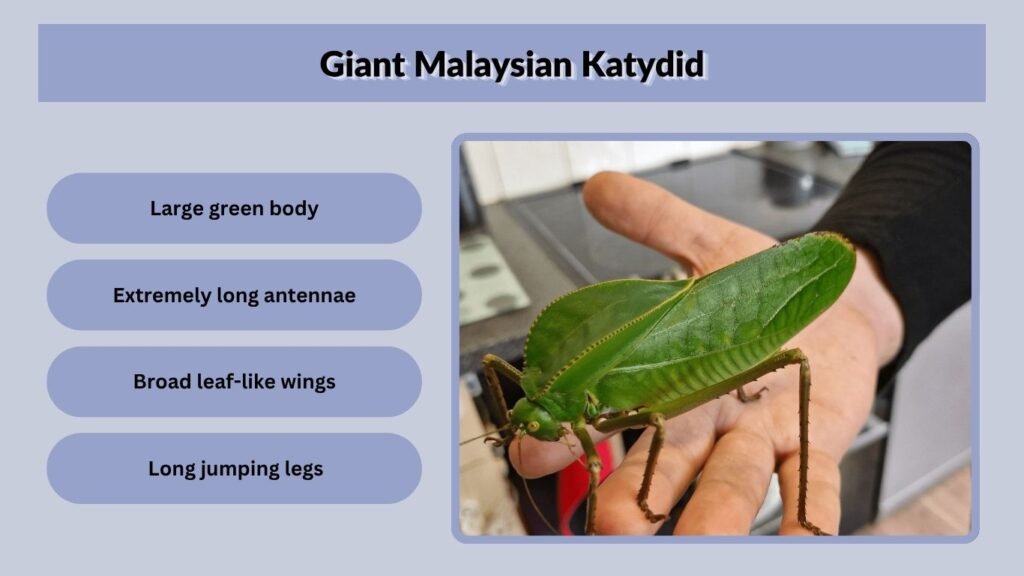
The giant Malaysian katydid is among the most spectacular large katydids associated with Southeast Asian tropical forests. Its combination of long legs, enormous antennae, broad wings, and leaf-like coloration allows it to disappear surprisingly well within dense vegetation despite its considerable size.
Giant Malaysian Katydid Appearance
Typical characteristics include:
- Large green body
- Extremely long antennae
- Broad leaf-like wings
- Long jumping legs
- Strong chewing jaws
- Prominent wing veins
- Excellent plant camouflage
When motionless on a branch or large leaf, its body can closely resemble surrounding vegetation.
Giant Malaysian Katydid Diet
Giant Malaysian katydids are generally associated with vegetation and may consume various plant materials. Depending on the exact species involved, foods can include leaves, flowers, fruits, or softer plant growth.
Katydids as a group have diverse feeding habits, however. Some species are omnivorous and may occasionally consume other insects, while strongly predatory giant katydids rely much more heavily on animal prey.
Giant Malaysian Katydid Sound
Like many katydids, large Malaysian species can communicate through sounds produced by rubbing specialized parts of their wings together.
Calls may include loud clicks, rasps, chirps, or buzzing notes. The exact sound varies by species. Males commonly use these calls to attract females, particularly during evening and nighttime hours when katydids become more active.
Giant Carnivorous Katydid
Not every giant katydid depends mainly on leaves. Some large species are predatory and equipped to capture other insects. Their strong legs, spines, and powerful jaws allow them to restrain struggling prey, giving them a much more formidable appearance than familiar garden katydids.
What Does a Giant Carnivorous Katydid Eat?
Possible prey can include:
- Crickets
- Smaller grasshoppers
- Moths
- Caterpillars
- Beetles
- Other katydids
- Soft-bodied insects
- Various small arthropods
Predatory species typically wait among vegetation before grabbing suitable prey that comes within reach.
Are Giant Predatory Katydids Dangerous?
Their hunting abilities are impressive, but humans are far too large to be considered prey.
A giant predatory katydid may defend itself if grabbed or restrained. Its strong jaws can deliver a painful pinch, so these insects should be observed without unnecessary handling.
Their intimidating jaws evolved primarily for feeding and defense rather than attacking people.
Giant False-Leaf and Hooded Katydids
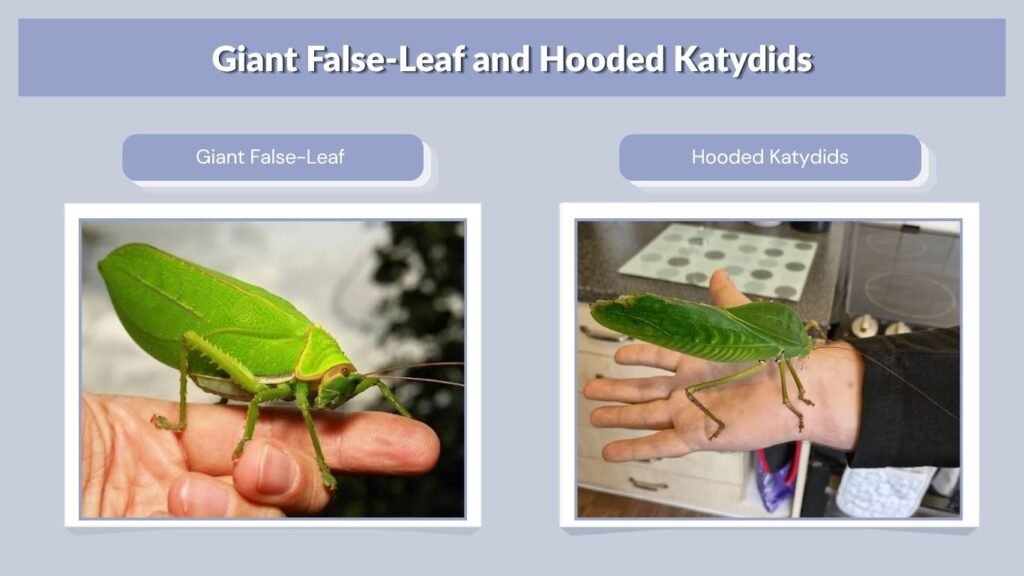
Some giant katydids are notable more for camouflage than predatory behavior. Giant false-leaf katydids and giant hooded katydids demonstrate how dramatically the body and wings of these insects can evolve to resemble vegetation.
Giant False-Leaf Katydid
A giant false-leaf katydid uses its broad wings as camouflage. Wing veins can resemble the veins of a living leaf, while green and brown patterns make the insect difficult for predators to detect.
Some individuals even display markings resembling damaged or aging leaves.
Instead of immediately jumping when threatened, remaining perfectly still can be one of their most effective defenses.
Giant Hooded Katydid
Giant hooded katydids have an unusual body profile, with structures around the head and upper body helping create their distinctive appearance.
Like other large tropical katydids, they typically depend on vegetation for shelter and camouflage. Their dramatic appearance has also made them popular among insect enthusiasts interested in unusual captive species.
Does a Giant Katydid Bite?
Giant katydids can bite because they have strong chewing mouthparts. However, they do not normally approach humans with the intention of biting. Most bites happen when an insect is grabbed, squeezed, or otherwise prevented from escaping.
What Does a Giant Katydid Bite Feel Like?
A large katydid can produce a surprisingly strong pinch. Possible temporary effects include:
- Sharp pain
- Minor redness
- Mild swelling
- Tenderness
- Small superficial skin damage
Giant katydids are not blood-feeding insects, so they have no reason to seek humans as a food source.
Giant Malaysian Katydid Bite
A giant Malaysian katydid is also physically capable of biting if handled roughly. Because large individuals have substantial jaws, the bite may feel stronger than that of a small katydid.
Anyone keeping large katydids should allow the insects to climb voluntarily rather than tightly gripping their bodies.
Wash any broken skin with soap and clean water and monitor it for persistent irritation.
Giant Katydid Habitat and Distribution
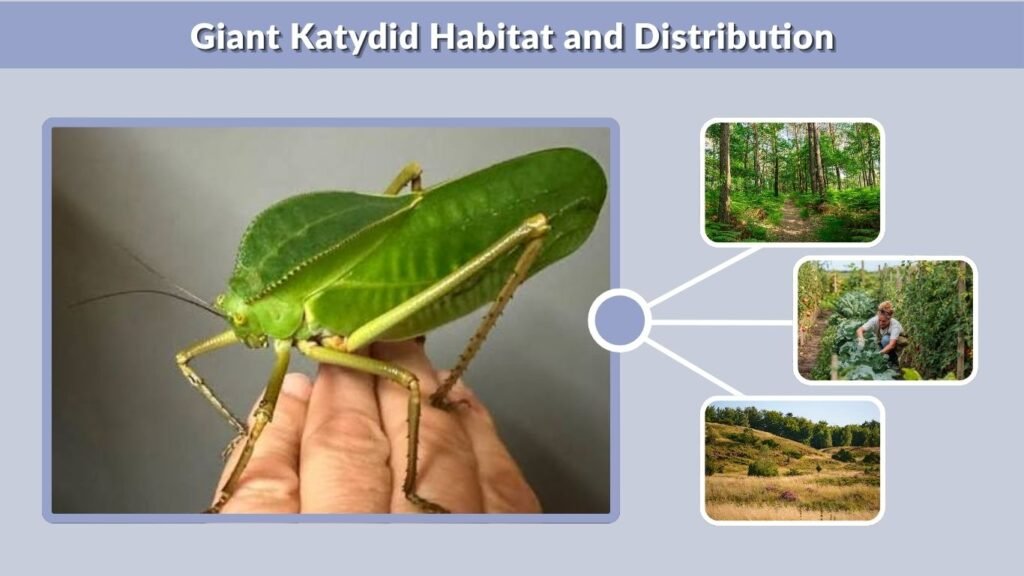
Large katydids are especially diverse in warm environments where thick vegetation provides abundant food and protection. Tropical forests contain some of the world’s most spectacular giant forms, although sizable katydids also occur in the United States and other temperate or subtropical regions.
Where Do Giant Katydids Live?
Typical habitats include:
- Tropical rainforests
- Woodlands
- Gardens
- Shrublands
- Forest edges
- Grasslands
- Agricultural vegetation
- Trees and large bushes
Malaysian species are associated with Southeast Asian environments, while various large katydids occur throughout Central and South America and portions of North America.
Giant Katydids in Florida and Texas
Warm climates in Florida and Texas provide suitable environments for several large katydid species.
A giant Florida katydid may be encountered on trees, shrubs, or garden vegetation, where its green coloration allows it to remain hidden. Texas also supports numerous katydids, including relatively large green species that are sometimes casually described as giant katydids.
Giant Katydid Eggs and Life Cycle
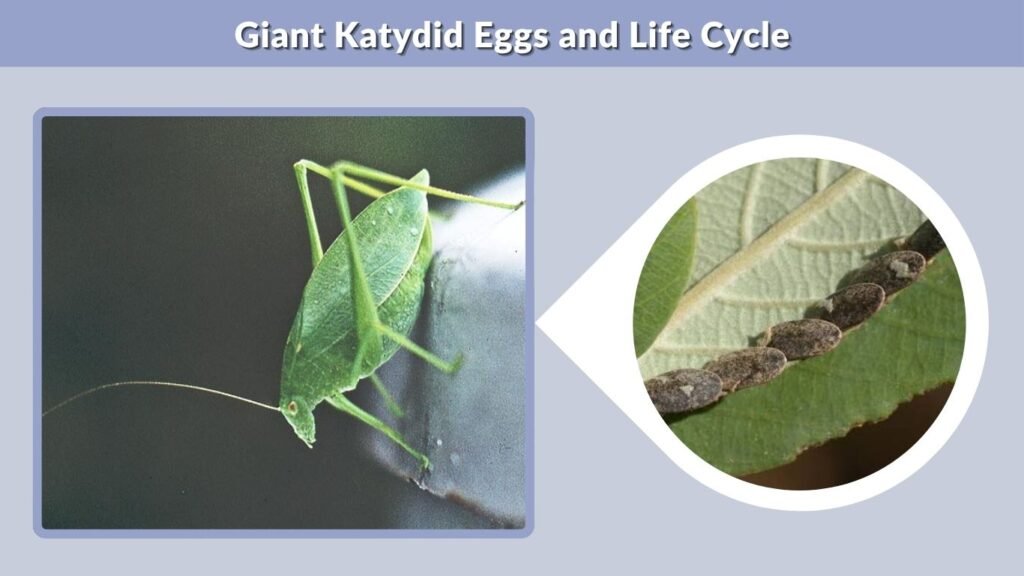
Like other katydids, giant katydids undergo incomplete metamorphosis. They develop from eggs into nymphs before eventually becoming adults. There is no caterpillar or pupal stage.
Do Giant Katydids Lay Eggs?
Yes. Female giant katydids lay eggs using a specialized egg-laying structure called an ovipositor.
Depending on species, eggs may be:
- Attached to plants
- Placed along stems
- Inserted into plant tissue
- Deposited beneath bark
- Hidden within suitable substrate
Egg placement helps protect developing young from predators and unfavorable conditions.
Giant Katydid Nymphs
Nymphs resemble smaller versions of adults but lack fully developed wings.
As they grow, they repeatedly shed their exoskeleton. Wing pads enlarge with successive molts until the katydid reaches adulthood.
The overall lifespan varies among species and climates, with temperature, food availability, humidity, and seasonal conditions affecting development.
Can You Keep a Giant Katydid as a Pet?
Some giant katydids are maintained by experienced insect keepers because of their appearance, behavior, and relatively manageable space requirements. Their care needs, however, vary considerably among species.
A suitable enclosure generally requires enough vertical space for climbing and molting, good ventilation, proper temperature and humidity, and appropriate food.
Never collect or purchase a species without first checking local regulations and determining its exact care requirements. Large predatory species may also need very different diets from primarily plant-eating giant katydids.
FAQs
Are Giant Katydids Dangerous?
Giant katydids generally pose little danger to humans. They can defend themselves with strong jaws and may bite when grabbed, but they do not hunt people or feed on blood. Handling them gently or simply observing them usually prevents problems.
Can a Giant Katydid Fly?
Many adult giant katydids possess functional wings and can fly, although flight ability differs between species. Some rely heavily on climbing and jumping and use flight mainly for escaping danger or moving between plants.
What Do Giant Katydids Eat?
Diet depends on species. Many consume leaves, flowers, fruit, and other vegetation. Others are omnivorous, while giant carnivorous katydids actively capture insects such as crickets, caterpillars, moths, and smaller grasshoppers.
How Long Does a Giant Katydid Live?
Lifespan varies according to species and environmental conditions. Giant katydids pass through egg, nymph, and adult stages, with development affected by temperature, humidity, food availability, and seasonal patterns.
Do Giant Katydids Make Noise?
Yes. Males of many giant katydid species make calls by rubbing specialized parts of their wings together. Depending on the species, the resulting sound may resemble clicking, chirping, buzzing, or rasping and is commonly heard at night.
