
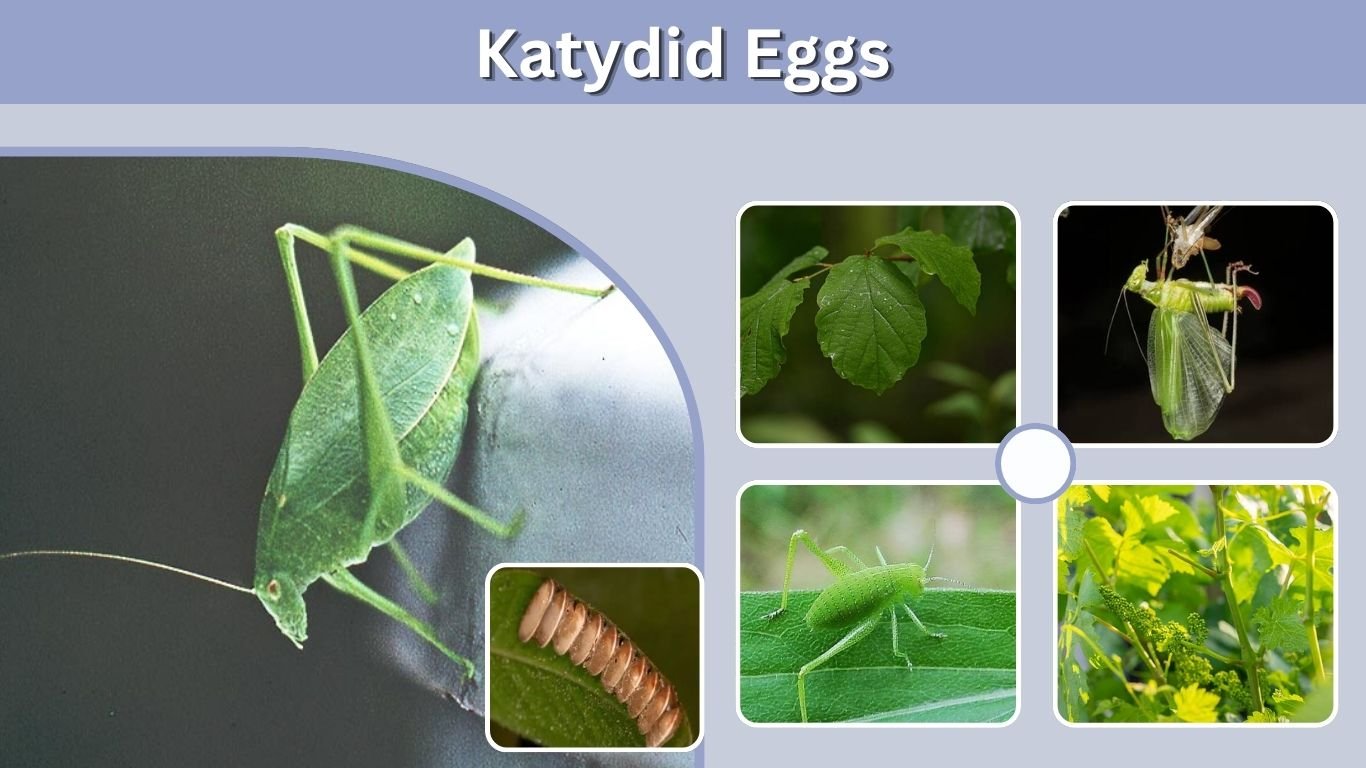
Katydid eggs are small, carefully placed eggs that can appear on leaves, stems, bark, or inside plant tissue. Their appearance and placement vary by species, but many are flat, oval, and arranged in neat rows. Female katydids use a specialized organ called an ovipositor to position their eggs in protected locations. Some eggs hatch within weeks or months, while others remain dormant through winter and hatch in spring. Knowing what katydid eggs look like can help gardeners identify them without confusing them with pests or plant diseases.
What Do Katydid Eggs Look Like?
Katydid eggs are usually small and inconspicuous, making them easy to overlook. Their exact shape, color, and arrangement depend on the species. Many resemble tiny flattened seeds attached to vegetation. Others are inserted directly into leaves, stems, bark, or soil, where they remain protected until environmental conditions are suitable for hatching.
Common Identification Features
Katydid eggs may have these characteristics:
- Flattened, oval, or elongated shape
- Usually only a few millimeters long
- Gray, brown, tan, greenish, or cream coloration
- Smooth or slightly textured surface
- Arranged individually or in organized rows
- Attached to leaves, stems, twigs, or bark
- Sometimes hidden inside plant tissue
Freshly laid eggs may differ slightly in color from older eggs as their outer covering hardens.
Katydid Eggs vs. Scale Insects
Katydid eggs attached to plants are sometimes mistaken for scale insects. Both can appear as small oval structures attached tightly to stems or leaves.
Katydid eggs are often arranged in a relatively orderly pattern, with individual eggs having similar shapes and sizes. Scale insects may appear more irregularly distributed and can occur alongside sticky honeydew, sooty mold, or signs of plant stress.
Observing the arrangement and surrounding plant condition can help distinguish them.
Where Do Katydids Lay Their Eggs?
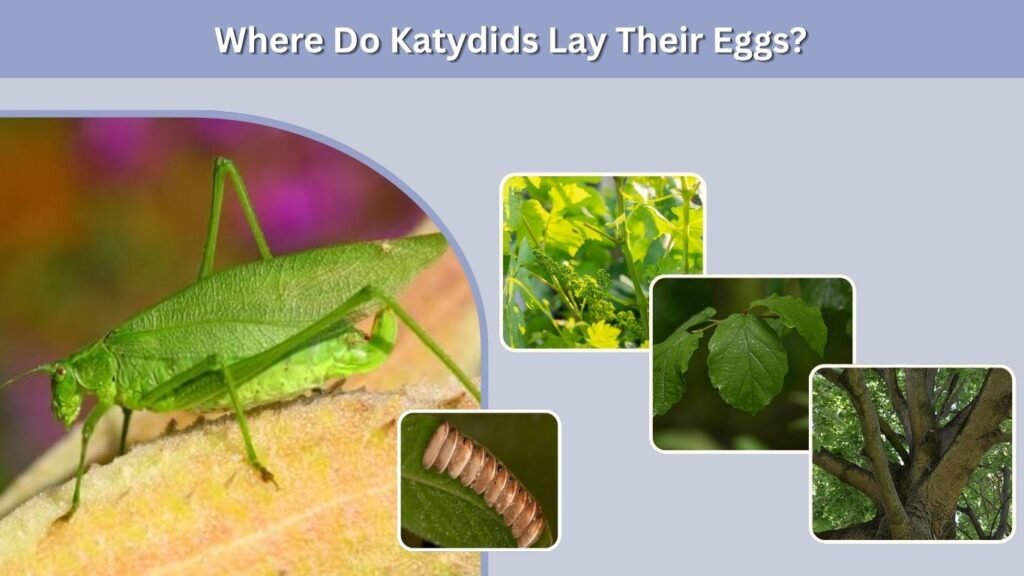
Female katydids select protected locations that give developing eggs a better chance of surviving. Different species use different egg-laying strategies, ranging from attaching eggs to exposed vegetation to inserting them deep inside plant tissue. The location can also help protect eggs from predators, drying conditions, and temperature extremes.
Common Egg-Laying Locations
Katydid eggs may be found:
- Along plant stems
- On the underside of leaves
- Along leaf edges
- Beneath tree bark
- Inside soft plant stems
- On twigs and branches
- In soil or plant debris
- On garden herbs and shrubs
Gardeners may occasionally discover katydid eggs on rosemary, roses, and other woody or leafy plants.
How Does a Female Katydid Lay Eggs?
Female katydids have a specialized egg-laying organ called an ovipositor at the end of the abdomen.
Depending on the species, the ovipositor can resemble a long blade, curved sword, or narrow needle. Despite its intimidating appearance, it is not a stinger.
The female uses the ovipositor to position eggs carefully. Some species push individual eggs into plant tissue, while others attach them directly to exposed surfaces. The entire process may take considerable time when numerous eggs are being deposited.
Do Katydids Make an Egg Sac?
Katydids generally do not produce a silk egg sac like many spiders.
Instead, their eggs are normally laid individually or in groups and attached to vegetation, inserted into plant material, or deposited in another suitable substrate. Rows of closely packed eggs can sometimes look like an egg sac from a distance, but each egg remains a separate structure.
How Long Do Katydid Eggs Take to Hatch?
The time required for katydid eggs to hatch varies greatly according to species, temperature, humidity, season, and geographic location. In many temperate katydids, eggs are laid during late summer or fall and remain dormant throughout winter. They hatch when warmer temperatures return and conditions become favorable for young katydids.
When Do Katydid Eggs Hatch?
Many temperate species hatch during spring or early summer after spending several months as eggs.
Rather than developing continuously through cold weather, the embryos may enter a dormant period known as diapause. This adaptation allows young katydids to emerge when vegetation and food are abundant.
Tropical species living in consistently warm conditions may have different development periods and may not require the same prolonged winter dormancy.
Signs Katydid Eggs Are Hatching
As hatching approaches, you may notice:
- Changes in egg coloration
- Small openings appearing in eggs
- Tiny nymphs emerging nearby
- Empty egg shells remaining attached
- Increased activity around the egg cluster
Katydid nymphs look somewhat like miniature adults but initially lack fully developed wings.
Katydid Egg Hatching and Life Cycle
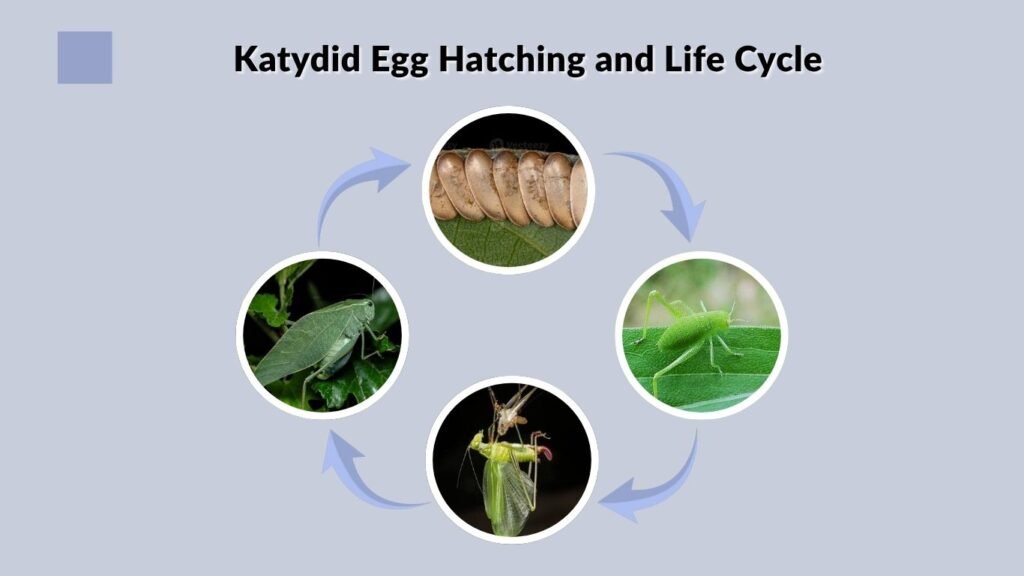
Hatching marks the beginning of the active portion of a katydid’s life cycle. Unlike butterflies, katydids undergo incomplete metamorphosis and therefore do not have caterpillar or pupal stages. The young insects gradually become adults through a series of molts, becoming larger and developing more prominent wings each time.
Katydid Life Cycle Stages
The main stages are:
- Egg: The developing katydid remains protected inside the egg.
- Nymph: A small wingless or partially winged katydid emerges.
- Molting: The nymph repeatedly sheds its exoskeleton as it grows.
- Adult: Fully developed wings and reproductive organs appear.
Adults eventually mate, and females begin laying another generation of eggs.
What Do Baby Katydids Look Like?
Newly hatched katydids are called nymphs.
They typically have long antennae, strong hind legs, and body shapes similar to adults. However, their wings are absent or present only as tiny developing wing pads.
Young katydids may initially be green, brown, or patterned depending on the species. As they molt, they become progressively larger and more closely resemble mature adults.
How to Care for Katydid Eggs
People keeping katydids in captivity sometimes need to maintain eggs until they hatch. Proper care depends heavily on the species because eggs from temperate and tropical katydids can have very different temperature and dormancy requirements. Identifying the parent species is therefore important before attempting to hatch eggs artificially.
Basic Katydid Egg Care
General considerations include:
- Keep eggs in a well-ventilated container.
- Avoid excessive moisture that encourages mold.
- Prevent eggs from becoming extremely dry.
- Keep them away from direct intense sunlight.
- Maintain conditions appropriate for the species.
- Avoid repeatedly touching or moving the eggs.
- Provide climbing vegetation before nymphs emerge.
Temperate eggs that normally overwinter may require a cool dormant period. Keeping them continuously warm can interfere with their normal development.
How to Hatch Katydid Eggs
Do not try to force hatching by dramatically increasing heat or soaking the eggs.
Instead, reproduce natural seasonal conditions as closely as possible. Eggs collected outdoors are often best maintained under conditions similar to those where they were found.
As the expected hatching period approaches, prepare appropriate fresh food and a secure enclosure with very small ventilation openings because newly hatched nymphs can escape through surprisingly tiny gaps.
Giant Katydid Eggs
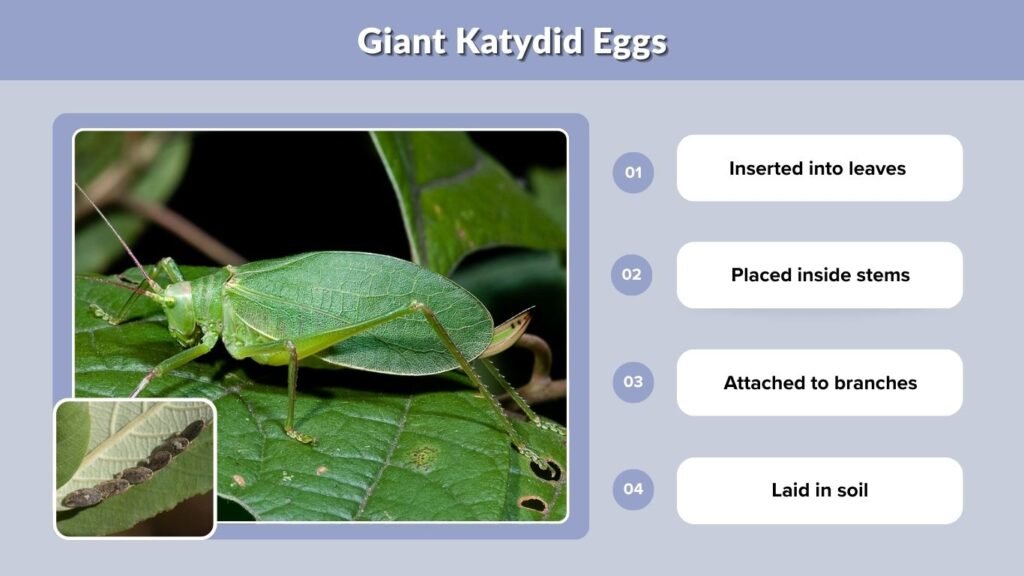
Giant katydids reproduce through eggs just like smaller members of the family. Females may produce relatively large eggs compared with smaller katydid species, although egg appearance and placement vary substantially between different giant katydids.
Do Giant Katydids Lay Eggs?
Yes. Female giant katydids use their ovipositor to deposit eggs in appropriate substrates.
Depending on the species, eggs may be:
- Inserted into leaves
- Placed inside stems
- Attached to branches
- Deposited beneath bark
- Laid in soil
- Positioned in plant material
Giant Malaysian, giant false-leaf, and other tropical katydids can have different reproductive requirements, so captive eggs should be maintained according to the needs of the exact species.
FAQs
Katydid eggs can be difficult to recognize because different species use dramatically different egg-laying strategies. Their small size also makes them easy to confuse with insect pests or unusual plant growths. These common questions explain several important details about katydid reproduction and egg development.
How Many Eggs Does a Katydid Lay?
The number varies according to species, female size, and environmental conditions. A female may lay multiple eggs over time rather than depositing her entire reproductive output in one place. Dividing eggs among different locations can help prevent an entire generation from being lost to predators or unfavorable conditions.
How Long Until Katydid Eggs Hatch?
Hatching time varies greatly. Many temperate katydid eggs overwinter and hatch the following spring, meaning development may take several months. Other species living in warmer climates can hatch sooner. Temperature, moisture, species, and natural dormancy all influence the timing.
Can Katydid Eggs Be Found on Plants?
Yes. Plants are among the most common places to discover katydid eggs. Females may attach eggs to stems, leaves, twigs, or bark or insert them directly into plant tissue. Eggs have occasionally been noticed on garden plants such as roses and rosemary.
Should I Remove Katydid Eggs From My Garden?
Usually, a small number of katydid eggs can be left alone. Katydids are natural components of garden ecosystems, and many species cause little noticeable damage. Removal may be considered when large numbers occur on valuable plants and the species is known to cause significant feeding damage.
What Is the Egg-Laying Part of a Katydid Called?
The structure is called an ovipositor. It extends from the female’s abdomen and is specifically adapted for depositing eggs. Depending on the species, it may look straight, curved, sword-like, or needle-like. Although it can resemble a stinger, its primary function is egg laying.
