
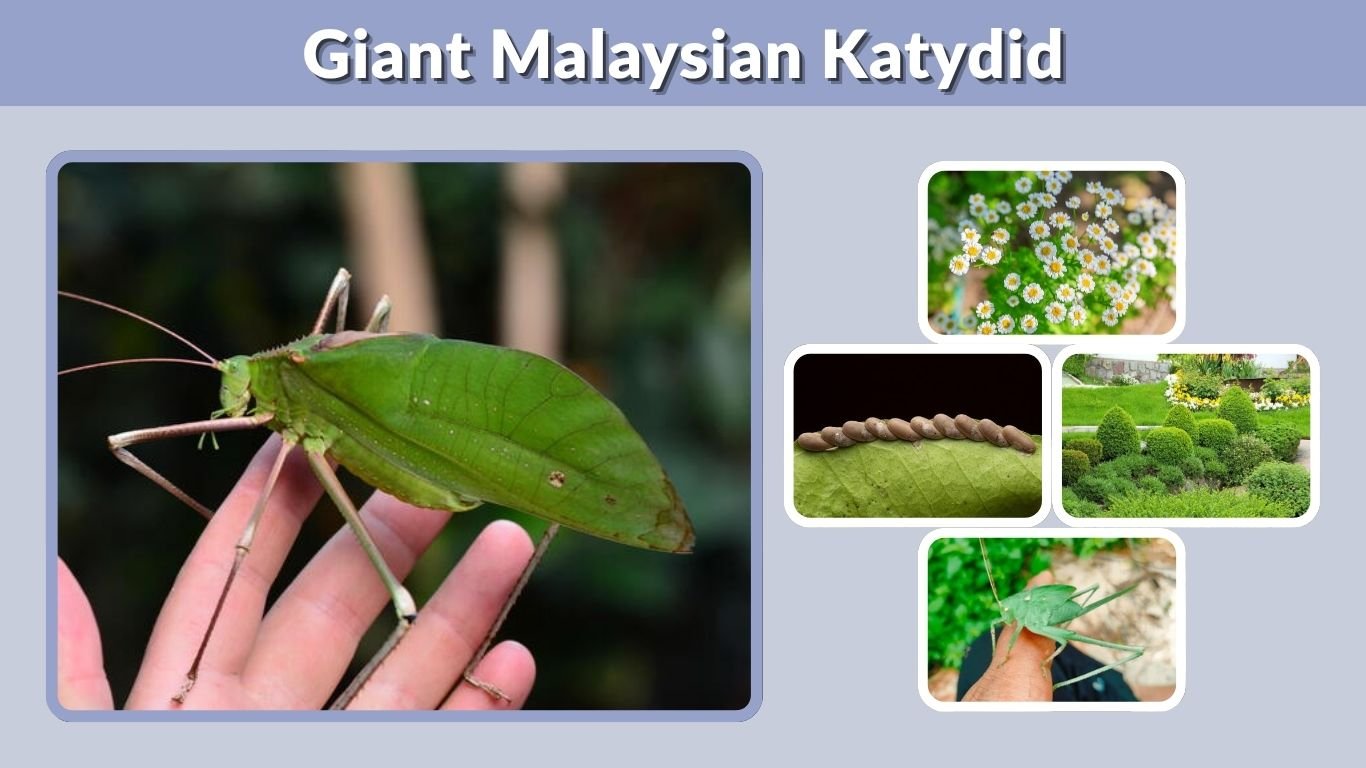
The giant Malaysian katydid is an impressive tropical insect known for its enormous wings, leaf-like appearance, powerful legs, and surprisingly loud calls. Found in the warm forests of Southeast Asia, particularly Malaysia, these katydids spend much of their time hidden among vegetation. Their green coloration provides excellent camouflage, making such a large insect surprisingly difficult to notice. Although their size can appear intimidating, giant Malaysian katydids are not considered dangerous to humans. They are also occasionally kept as unusual exotic pets.
What Is a Giant Malaysian Katydid?
The giant Malaysian katydid belongs to the katydid family Tettigoniidae, a diverse group of insects closely related to crickets and grasshoppers. Large Malaysian species are particularly notable because of their broad wings and exceptional overall size.
Giant Malaysian Katydid Identification
Typical characteristics include:
- Bright green or yellowish-green coloration
- Very long, threadlike antennae
- Broad wings resembling plant leaves
- Large hind legs adapted for jumping
- Strong chewing mouthparts
- Six long legs
- Large compound eyes
- Veins on the wings resembling leaf veins
- A body that blends easily into tropical foliage
Their leaf-like wings are one of their most effective defenses. When resting among vegetation, the katydid can nearly disappear against surrounding leaves.
Giant Malaysian Katydid Size
The giant Malaysian katydid is among the largest katydids in the world. Depending on the exact species and sex, the body can reach several inches in length, while the wings and long legs make the insect appear considerably larger.
Some exceptionally large individuals may have an overall wingspan approaching 20–25 cm when the wings are fully extended.
Females are often heavier-bodied than males because they carry and produce eggs.
Giant Malaysian Katydid Anatomy
Like other insects, the body is divided into three primary sections: the head, thorax, and abdomen.
The head carries the antennae, eyes, and powerful chewing mouthparts. The thorax supports three pairs of legs and two pairs of wings. The abdomen contains much of the digestive and reproductive system.
Females may also have a noticeable ovipositor used for depositing eggs.
Giant Malaysian Katydid Habitat
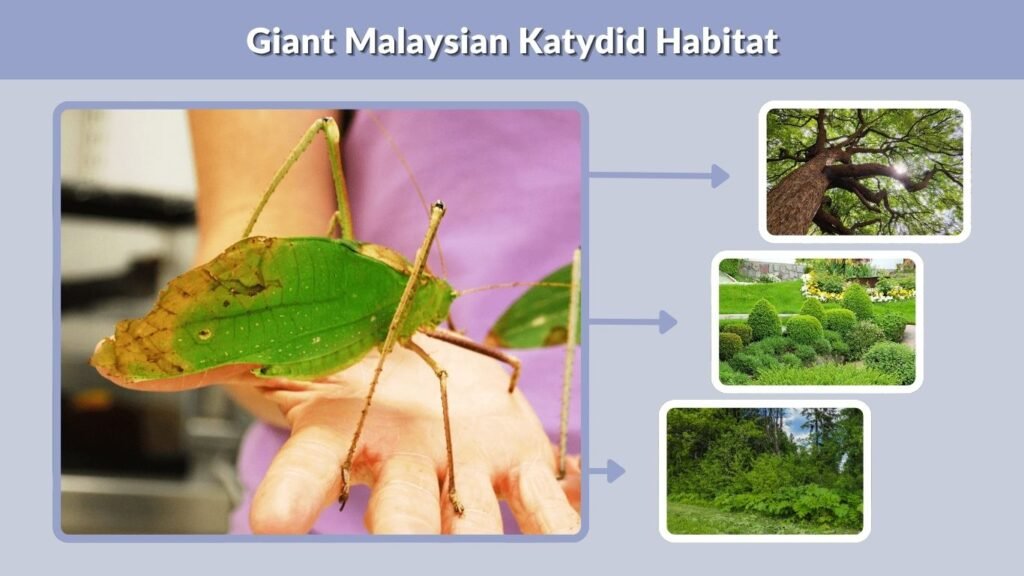
Giant Malaysian katydids are adapted to humid tropical environments where thick vegetation provides food, moisture, and protection from predators.
Where Do Giant Malaysian Katydids Live?
They are associated with tropical forests of Malaysia and surrounding parts of Southeast Asia.
They typically remain:
- In trees
- On shrubs
- Among large leaves
- In forest-edge vegetation
- In humid tropical growth
Their green coloration makes them particularly difficult to detect during daylight hours.
Are Giant Malaysian Katydids Nocturnal?
Like many katydids, they are most active during the evening and nighttime.
During the day, they usually remain motionless among leaves. At night, they become more active, feeding, climbing, searching for mates, and producing calls.
Their nocturnal behavior also reduces exposure to some daytime predators.
What Do Giant Malaysian Katydids Eat?
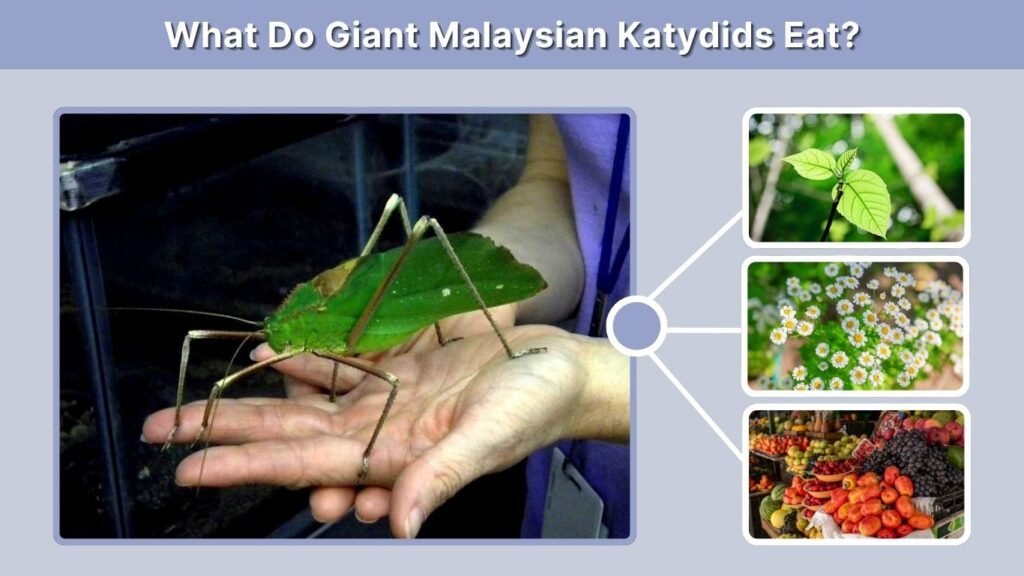
The giant Malaysian katydid diet consists mainly of plant material, although some katydids may opportunistically consume animal protein.
Giant Malaysian Katydid Diet
Common foods may include:
- Fresh leaves
- Young plant shoots
- Flowers
- Soft plant material
- Fruit
- Tender stems
In captivity, safe pesticide-free leaves should form an important part of the diet.
Fruit can sometimes be offered in small quantities, but it should not completely replace fresh foliage.
Are Giant Malaysian Katydids Carnivorous?
They should not generally be described as strictly carnivorous.
Katydids as a group have varied diets. Many species mainly consume vegetation, while others are omnivorous or actively prey on other insects.
A giant katydid may occasionally eat small insects when the opportunity arises. Its strong jaws are capable of processing both tough plant material and relatively soft-bodied prey.
For captive specimens, diet should be based on the requirements of the exact species rather than assuming every large Malaysian katydid eats the same foods.
How Does a Giant Malaysian Katydid Eat?
Katydids have chewing mouthparts called mandibles.
They bite pieces from leaves or other food and gradually chew them. When feeding on foliage, characteristic irregular holes may be left around the leaf edges or surface.
Their jaws are surprisingly powerful for an insect of their size.
Does a Giant Malaysian Katydid Bite?
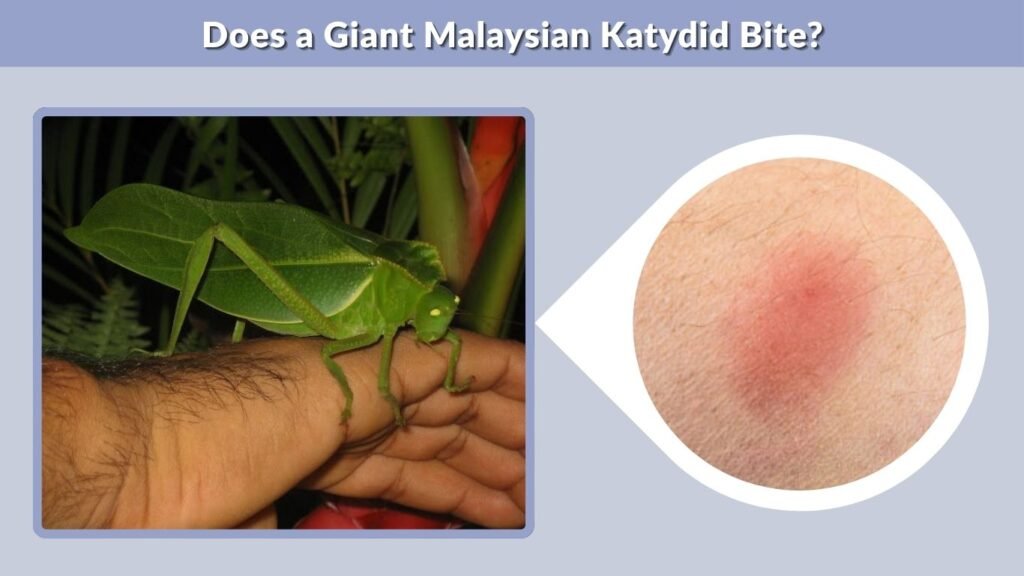
Yes, a giant Malaysian katydid can bite, especially if it is grabbed, restrained, or handled roughly.
However, biting is defensive rather than an attempt to attack people.
Is a Giant Malaysian Katydid Bite Dangerous?
A bite may be painful because the insect has strong chewing jaws, but giant Malaysian katydids are not venomous and do not inject venom through their mouthparts.
A bite may cause:
- Temporary pain
- Mild redness
- Minor swelling
- A small break in the skin
Wash broken skin thoroughly with soap and water and watch for signs of infection.
People should avoid unnecessarily handling these insects because gentle observation is safer for both the katydid and the handler.
Do Giant Malaysian Katydids Attack Humans?
No. Giant katydids do not normally regard humans as prey.
When threatened, they are more likely to remain still, jump away, fly, kick with their legs, or attempt to bite only when physically restrained.
Their impressive size makes them look far more threatening than their normal behavior suggests.
Giant Malaysian Katydid Sound
One of the most noticeable characteristics of adult katydids is their ability to produce loud sounds.
What Does a Giant Malaysian Katydid Sound Like?
Males commonly produce repetitive chirping, buzzing, clicking, or rasping sounds.
The exact call depends on the species.
These calls can be surprisingly loud, particularly at night when many katydids communicate simultaneously in tropical forests.
How Do Giant Katydids Make Sound?
Male katydids normally produce sound through stridulation.
Specialized structures on the forewings are rubbed together. One wing works somewhat like a file while another structure acts like a scraper.
The wings help amplify the resulting vibration into the distinctive calls heard by females and competing males.
The primary purpose of calling is reproduction.
Giant Malaysian Katydid as a Pet
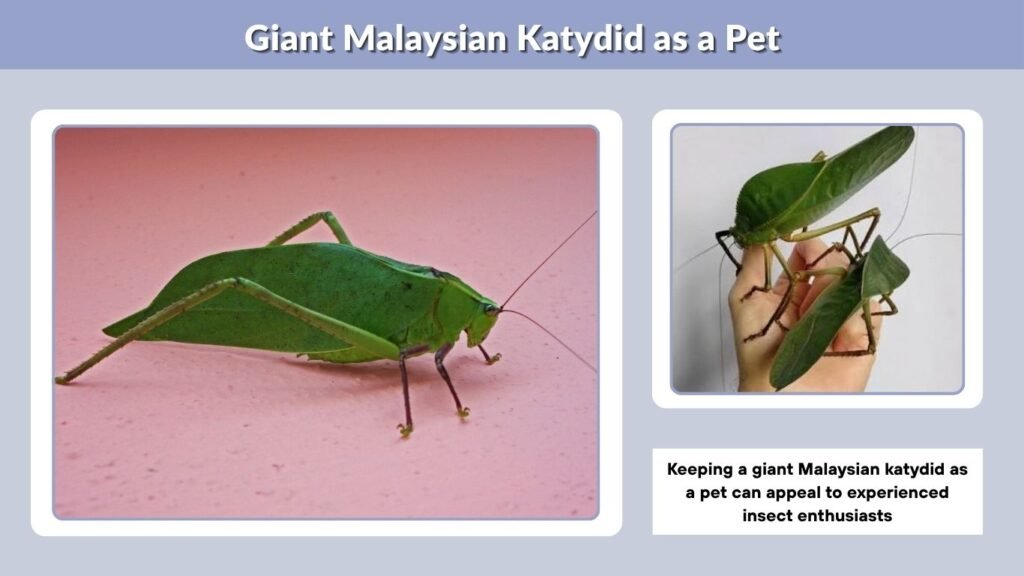
Keeping a giant Malaysian katydid as a pet can appeal to experienced insect enthusiasts because of the species’ extraordinary size and unusual appearance.
However, large tropical katydids require appropriate housing and environmental conditions.
Enclosure Requirements
A tall, well-ventilated enclosure is important because katydids spend much of their time climbing.
The enclosure should contain:
- Vertical branches
- Fresh foliage
- Climbing surfaces
- Good ventilation
- Adequate height for molting
- Appropriate humidity
Young katydids are especially vulnerable during molting. They require enough vertical space to hang freely while shedding their old exoskeleton.
Temperature and Humidity
Because these insects originate from tropical environments, they generally require warm conditions and moderate-to-high humidity.
At the same time, stagnant and constantly wet conditions should be avoided because they can encourage mold and other problems.
Light misting and proper ventilation can help maintain a suitable balance.
Exact temperature and humidity requirements depend on the species being kept.
Handling a Pet Giant Katydid
Handling should be limited.
Allowing the katydid to climb onto a hand is safer than grabbing it around the body. Its legs, antennae, and wings can be damaged relatively easily.
Large adults can also deliver a painful defensive bite if frightened or restrained.
Giant Malaysian Katydid Lifespan
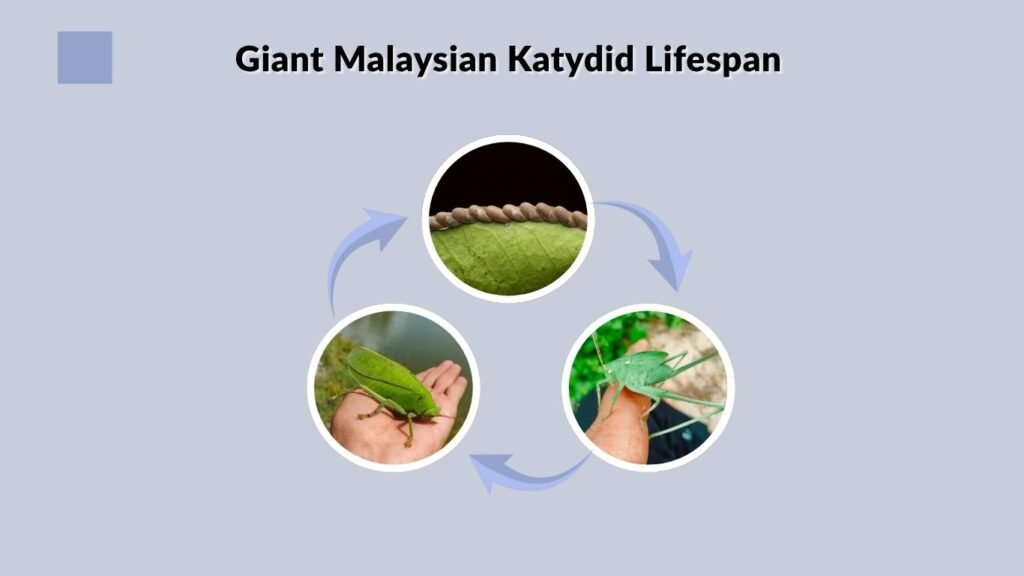
The lifespan varies according to species, temperature, food availability, and environmental conditions.
Katydids develop through incomplete metamorphosis.
Giant Malaysian Katydid Life Cycle
Their life cycle includes three main stages:
- Egg
- Nymph
- Adult
Nymphs resemble smaller, wingless versions of adults.
As they grow, they molt repeatedly. With each molt, their wings gradually develop until the final molt produces a fully winged adult capable of reproduction.
Adults generally represent only part of the insect’s total life cycle.
Giant Malaysian Katydid Defense
Camouflage is the katydid’s primary defense.
Its wings resemble real leaves in both shape and coloration, allowing it to remain hidden even while sitting in exposed vegetation.
When camouflage fails, the insect may jump, fly, kick, or use its jaws defensively.
This combination of camouflage and escape behavior helps protect it from birds, reptiles, mammals, spiders, and other insect predators.
Interesting Giant Malaysian Katydid Facts
The giant Malaysian katydid is remarkable not only because of its size but also because of its specialized adaptations.
Its antennae can be longer than its body and help detect movement, obstacles, potential mates, and environmental cues in darkness.
Its leaf-shaped wings provide both camouflage and flight capability, while males use specialized wing structures to produce mating calls.
Despite being one of the more impressive insects of Southeast Asian forests, it can remain almost invisible when resting among green leaves.
FAQs
How Big Is a Giant Malaysian Katydid?
Giant Malaysian katydids can grow several inches long, with their extended wings and legs making them appear considerably larger. Some exceptionally large individuals may approach 20–25 cm in overall wingspan, although size varies among species and between males and females.
Can a Giant Malaysian Katydid Bite You?
Yes. A giant Malaysian katydid can bite when frightened or physically restrained. Its strong mandibles may cause a painful pinch or minor skin injury. However, the insect is not venomous and normally avoids confrontation with humans.
What Do Giant Malaysian Katydids Eat?
Their diet primarily consists of leaves, flowers, young shoots, and other plant material. Some katydids may also opportunistically consume insects or other sources of animal protein. Captive diets should be matched to the exact species whenever possible.
Can You Keep a Giant Malaysian Katydid as a Pet?
Yes, some giant Malaysian katydids are kept by experienced insect enthusiasts. They require a tall enclosure, climbing branches, fresh food, adequate ventilation, suitable humidity, and enough vertical space to molt safely.
Are Giant Malaysian Katydids Dangerous?
No. They are not considered dangerous to humans and are not venomous. Their main defense is camouflage and escape. A large individual can deliver a painful defensive bite if handled roughly, so observation rather than frequent handling is recommended.
