
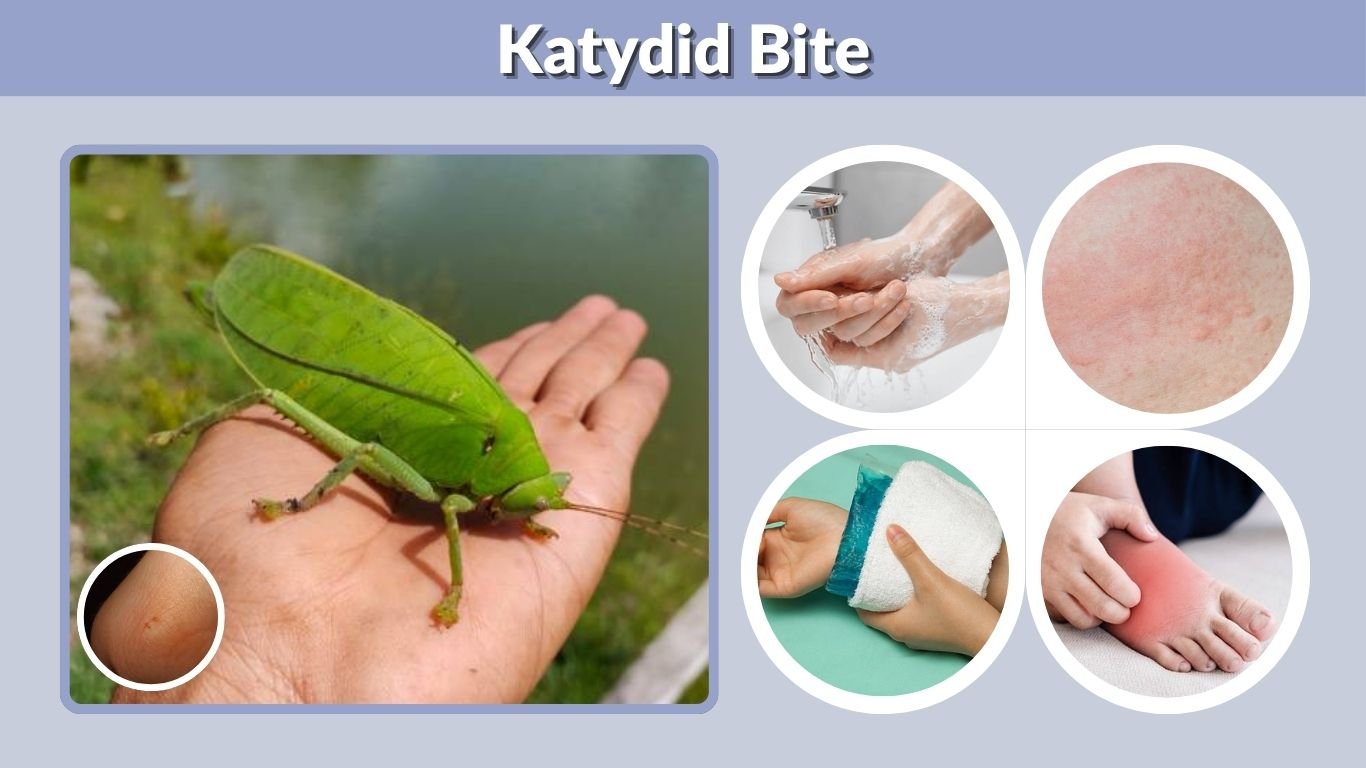
A katydid bite is usually harmless, but these insects can occasionally nip humans when handled, trapped, or threatened. Katydids have strong chewing mouthparts designed mainly for eating leaves, flowers, and sometimes other insects. Larger species can produce a noticeable pinch, while small katydids may barely break the skin. Katydids are not venomous, and their bites are not considered medically dangerous in most situations. Still, knowing what a bite looks like, how much it can hurt, and how to treat minor skin irritation can be helpful.
Do Katydids Bite Humans?
Yes, katydids can bite humans, although biting is uncommon. They do not normally seek people out or feed on blood. Most bites happen because someone picks up or holds a katydid and the insect uses its jaws defensively.
Why Do Katydids Bite?
Katydids may bite when they:
- Are held tightly
- Become trapped against the skin
- Are accidentally squeezed
- Feel threatened
- Are prevented from escaping
- Are handled repeatedly
Their mandibles are designed for chewing plant material and, in some species, small insects. These same mouthparts can pinch human skin.
Do Katydid Bugs Bite Without Being Provoked?
Normally, no. Katydids are not aggressive toward humans.
A katydid resting on your arm or clothing will usually remain still, walk away, jump, or fly rather than bite. Defensive biting becomes more likely if the insect cannot escape.
Can a Katydid Bite Through Skin?
Large katydids may be able to break the surface of the skin.
Smaller species usually cause little more than a pinch. The severity depends on the insect’s size, jaw strength, where it bites, and how long it holds onto the skin.
What Does a Katydid Bite Look Like?
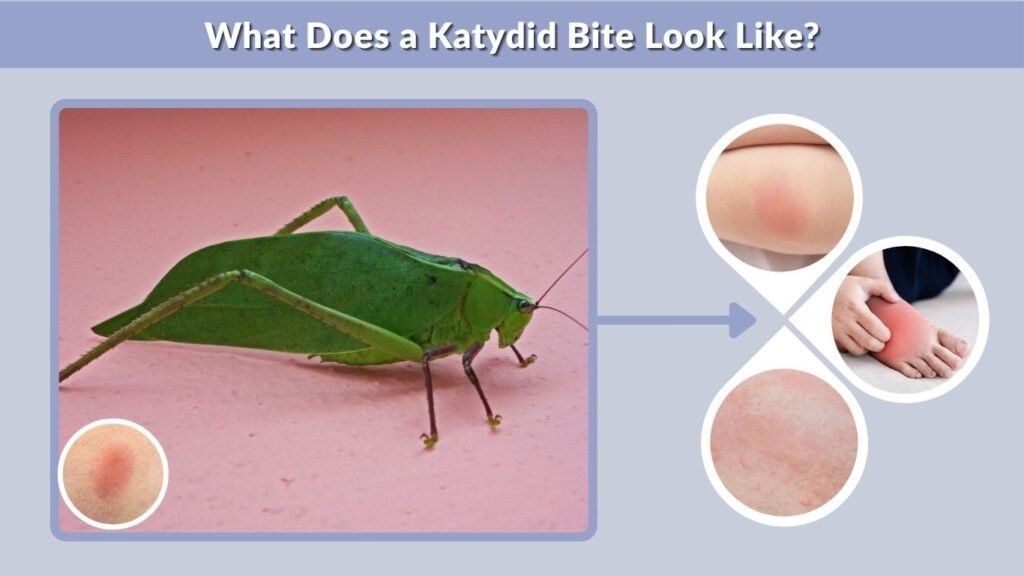
A katydid bite usually produces a very small localized mark rather than the large swollen lesions associated with some stinging or venomous insects.
Katydid Bite Mark
A typical bite may look like:
- A tiny red spot
- Two small marks from the jaws
- Mild localized redness
- A small superficial scratch
- Minor swelling around the contact area
If the jaws do not break the skin, there may be no visible mark at all.
Katydid Bite Symptoms
Most symptoms are mild and temporary.
Possible symptoms include mild pain, tenderness, redness, itching, or slight swelling.
If the skin is broken, the area might remain sensitive for a short period while it heals.
Significant swelling, spreading redness, pus, fever, or worsening pain is not typical of a simple katydid bite and may indicate infection or another cause.
How Long Does a Katydid Bite Last?
Minor discomfort often improves within minutes or hours.
Small skin injuries may take a few days to heal completely, similar to other minor scratches or pinches.
Avoid scratching the area because damaged skin can become irritated or infected.
Does a Katydid Bite Hurt?
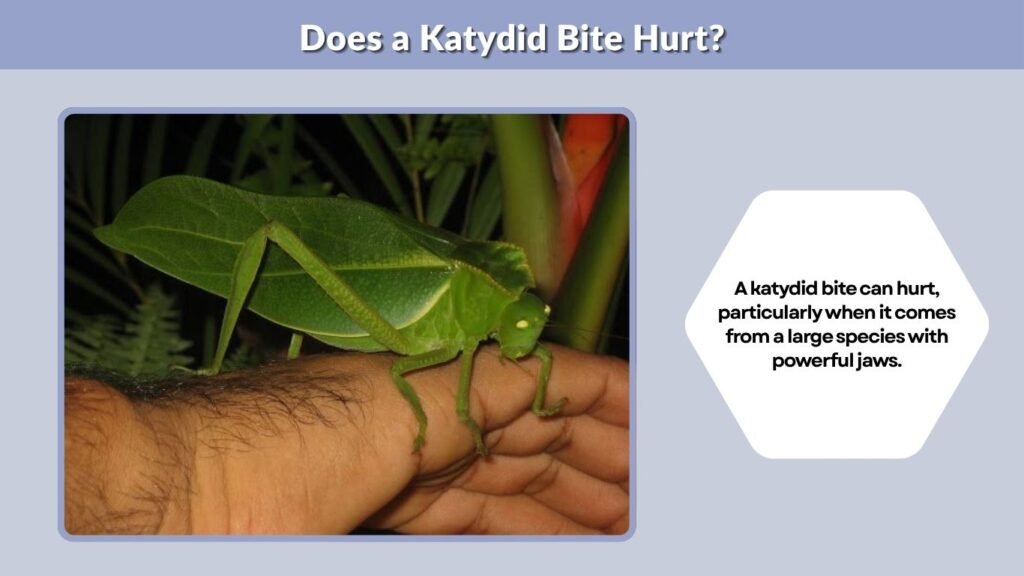
A katydid bite can hurt, particularly when it comes from a large species with powerful jaws.
How Painful Is a Katydid Bite?
Most common katydid bites feel like a sharp pinch.
Pain usually depends on:
- Size of the katydid
- Strength of its mandibles
- Whether it breaks the skin
- Location of the bite
- Duration of the bite
A large katydid biting a finger may feel much stronger than a small meadow katydid biting thicker skin.
Katydid Bite Force
There is no single bite-force measurement that applies to all katydids because thousands of species vary greatly in size and feeding behavior.
Large species have stronger mandibles because they need to cut through tough leaves or capture prey.
Even so, their jaws are not designed for attacking large animals.
Are Katydid Bites Poisonous?
No. Katydid bites are not poisonous or venomous.
Katydids do not inject medically significant venom through their jaws. A bite is mainly a mechanical injury produced by the mandibles.
Can a Katydid Bite Make You Sick?
A normal bite is unlikely to make a healthy person sick.
As with any small break in the skin, bacteria can potentially enter the wound. Cleaning the area reduces this risk.
People with unusual swelling or other unexpected symptoms should seek medical advice, especially if it is unclear what insect caused the injury.
Do Katydids Carry Diseases?
Katydids are not recognized as important disease vectors for humans.
They differ significantly from blood-feeding insects such as mosquitoes, fleas, or ticks, which can transmit pathogens while feeding.
Giant Katydid Bite
Large katydid species attract more concern because their impressive mandibles can produce a stronger defensive bite.
Giant Malaysian Katydid Bite
A giant Malaysian katydid bite may be painful because these insects are much larger than typical garden katydids.
Their jaws are strong enough to chew substantial plant material and potentially pinch or break human skin.
However, they are not considered venomous and usually bite only when handled or restrained.
Giant Texas Katydid Bite
Large katydids encountered in Texas can also deliver a noticeable defensive nip.
Despite their size, they generally pose little danger to humans. Avoid grabbing them around the body, especially near the head.
Allowing an insect to move away on its own greatly reduces the likelihood of being bitten.
Armored Katydid Bite
Armored katydids have a formidable appearance because of their spines and robust bodies.
Some species are also capable of strong defensive behavior. Their bite may hurt, but their intimidating appearance does not mean the bite is venomous.
Conehead Katydid Bite
Conehead katydids are recognizable by their pointed or cone-shaped heads.
Some are relatively large and have powerful chewing mouthparts.
Can a Conehead Katydid Bite?
Yes. A conehead katydid can bite when restrained.
Because some species have particularly strong mandibles, the bite may feel sharper than that of a small leaf-feeding katydid.
Avoid holding large coneheads tightly in your hand.
Red-Eyed Devil Katydid Bite
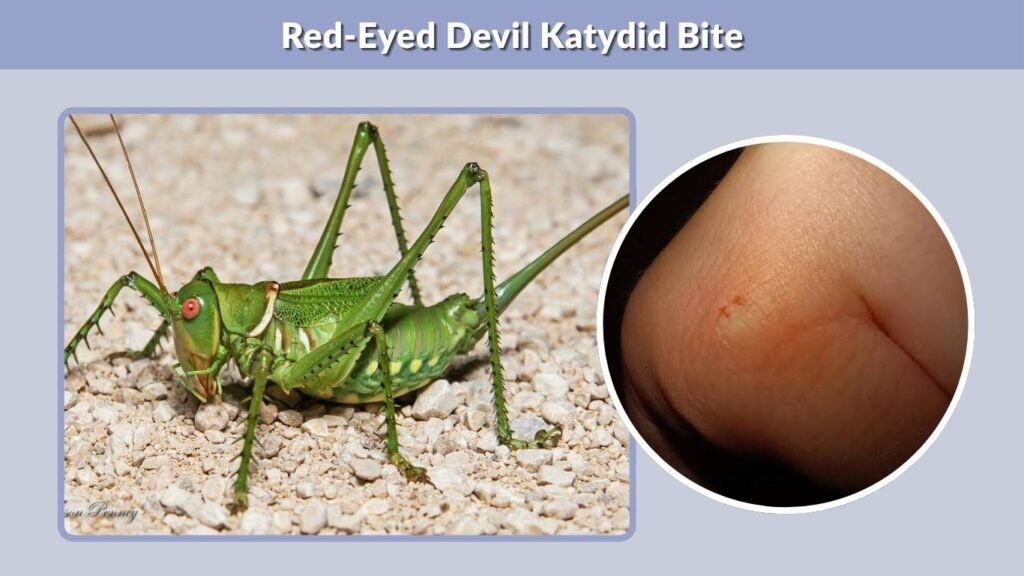
The red-eyed devil katydid is known for its dramatic appearance and defensive behavior.
Does a Red-Eyed Katydid Bite?
It can use its jaws defensively if threatened.
Large predatory or omnivorous katydids may have stronger jaws than small plant-feeding species, so their bites can be more noticeable.
They are still not insects that normally attack humans.
Green Katydid Bite
The familiar green katydids found around gardens, trees, and shrubs generally present very little danger.
Do Green Katydids Bite?
They can, but most would rather escape.
A green katydid may nip your finger when picked up, especially if it feels trapped. The result is usually a brief pinch or small red mark.
Children should be encouraged to observe katydids without squeezing or restraining them.
Katydid vs Grasshopper Bite
Katydids and grasshoppers both have chewing mouthparts, so either can potentially nip when handled.
Which Bite Hurts More?
There is no universal answer because species and sizes vary widely.
Large katydids may have particularly strong jaws, while large grasshoppers can also pinch or scrape skin.
Neither insect normally bites people as part of feeding behavior.
How Can You Tell Them Apart?
Katydids generally have extremely long antennae that can exceed the length of the body.
Grasshoppers typically have much shorter antennae.
Katydids also tend to look more leaf-like and are commonly active at night.
How to Treat a Katydid Bite
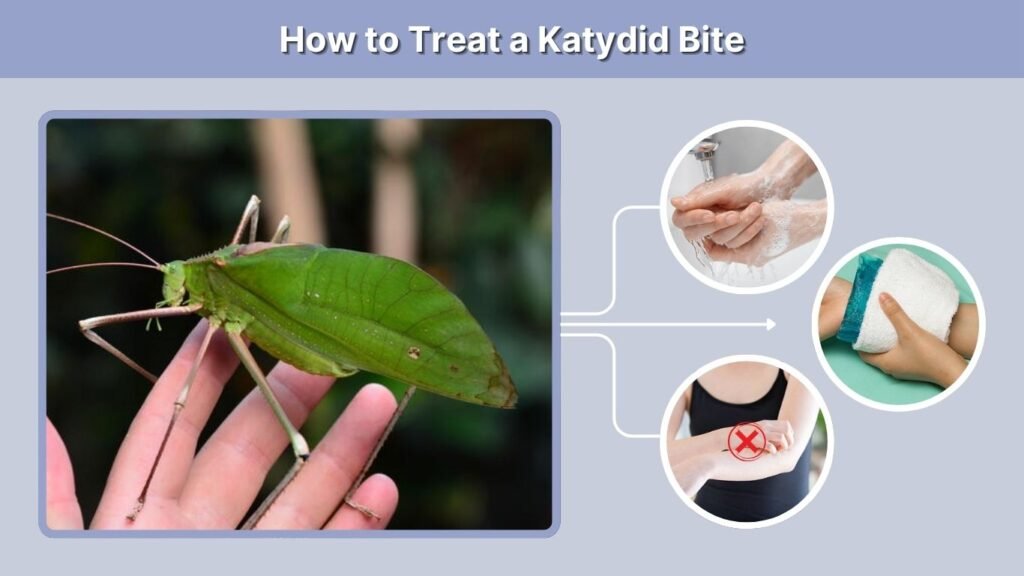
Most katydid bites can be managed with simple first aid.
Katydid Bite Treatment
If the skin is broken:
- Wash the area with soap and clean water.
- Gently dry the skin.
- Apply a cold compress if there is swelling.
- Cover the wound with a clean bandage if needed.
- Avoid scratching or repeatedly touching the area.
Minor discomfort should gradually improve.
When Should You Seek Medical Attention?
Seek medical advice if you experience severe or worsening swelling, increasing pain, spreading redness, drainage from the wound, fever, breathing difficulty, dizziness, or another unusual reaction.
These reactions are not typical of an ordinary katydid bite and may have another cause.
How to Avoid Katydid Bites
Katydid bites are easy to prevent because the insects generally do not want contact with people.
Avoid squeezing or grabbing them.
If you need to move one, encourage it onto a container, leaf, or other object and relocate it gently.
This approach protects both your fingers and the insect’s delicate legs, antennae, and wings.
FAQs
Will a Katydid Bite You?
A katydid may bite if you grab, squeeze, or restrain it. It normally prefers to escape rather than defend itself with its jaws. Most people can be near katydids without any risk of being bitten.
What Does a Katydid Bite Look Like?
A katydid bite may appear as a tiny red spot, mild swelling, small scratch, or pair of shallow marks. Many bites do not break the skin and may leave little or no visible evidence.
Do Katydid Bites Hurt?
They can. Small species generally produce only a mild pinch, while giant katydids and other large species can deliver stronger bites with their powerful mandibles. The discomfort is usually temporary.
Are Katydid Bites Dangerous?
Katydid bites are generally not dangerous. Katydids are not venomous and do not normally transmit diseases to humans. The primary concern is minor pain or possible infection if broken skin is not kept clean.
Can a Giant Katydid Bite Break the Skin?
Yes. Large katydids have powerful chewing mouthparts and may occasionally break human skin when defending themselves. Washing the bite with soap and water and monitoring it for irritation is usually sufficient.
