
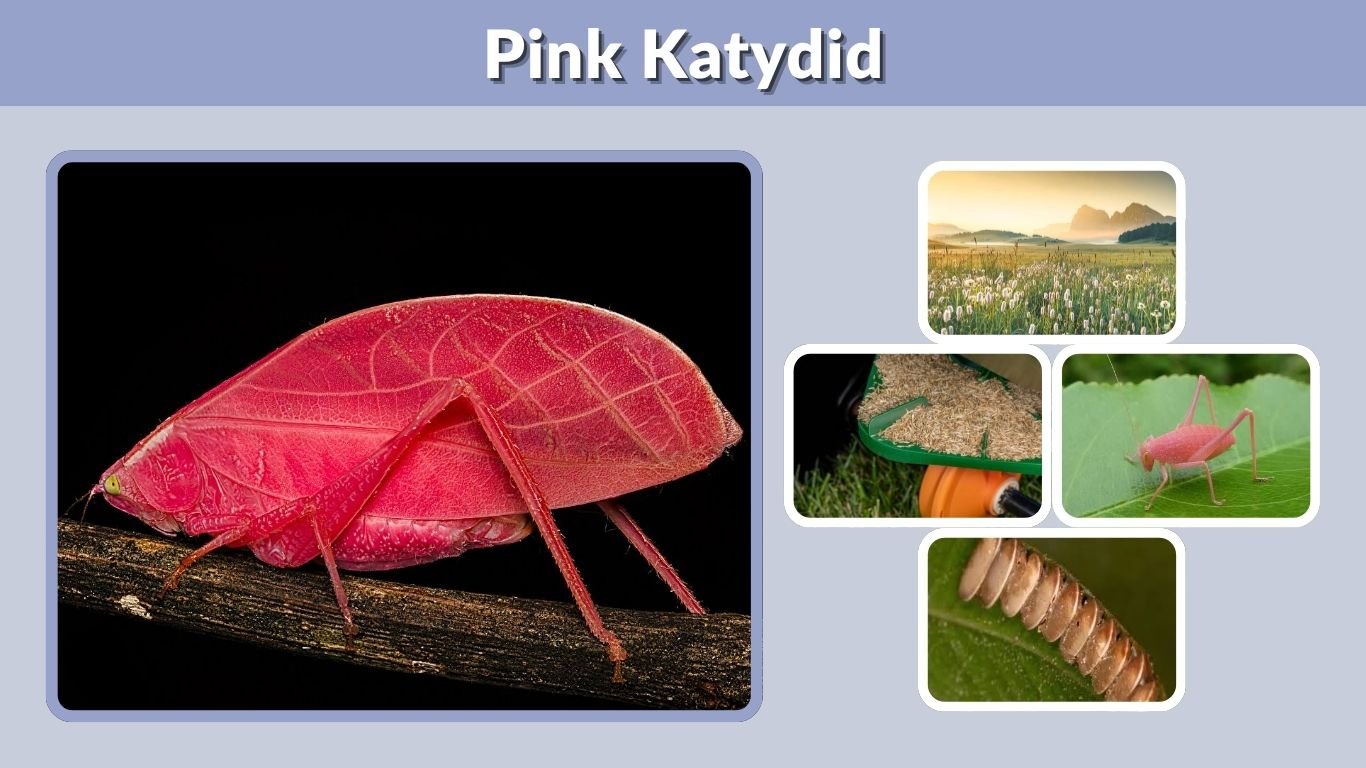
A pink katydid is one of nature’s most unusual-looking insects. While most katydids are green or brown and blend easily into leaves, some individuals develop striking pink, rose, or reddish coloration. This unusual appearance is often associated with erythrism, a pigmentation variation that changes the insect’s normal coloring. Pink katydids are not a single separate species; instead, pink individuals can occur as color forms in certain katydid species. Their rarity, leaf-like wings, long antennae, and brilliant color make them especially fascinating to insect enthusiasts.
What Is a Pink Katydid?
A pink katydid is essentially a katydid displaying an unusual pink color rather than the familiar green camouflage. Katydids belong to the family Tettigoniidae, a large group commonly called bush crickets in many parts of the world. More than 8,000 katydid species are recognized, although only some have been documented producing unusually pink individuals.
Pink Katydid Identification
You can recognize a pink katydid by looking for several typical katydid characteristics combined with its distinctive coloration:
- Color: Pale rose, salmon, bright pink, or occasionally vivid magenta
- Antennae: Extremely long and thread-like, often longer than the body
- Wings: Broad or narrow wings that commonly resemble leaves
- Legs: Long hind legs adapted for jumping
- Body: Usually slender or leaf-shaped
- Eyes: Prominent compound eyes on the sides of the head
- Size: Varies considerably depending on the katydid species
- Female: Often has a noticeable blade-like or curved ovipositor
The combination of long antennae and leaf-like wings is particularly useful for distinguishing a katydid from many grasshoppers.
Is a Pink Katydid a Grasshopper?
Katydids and grasshoppers are related, but they are not the same insects. Both belong to the order Orthoptera. Katydids generally have exceptionally long antennae, while most grasshoppers have much shorter antennae.
This distinction can help when someone finds what appears to be a “pink grasshopper.” Some pink insects are grasshoppers, while others are katydids, so color alone cannot identify them.
Why Are Some Katydids Pink?
The best-known explanation for bright pink coloration is erythrism. Erythrism involves unusually strong reddish pigmentation or reduced amounts of other normal pigments. In katydids that would normally appear green or brown, the result can be a striking rose or pink insect.
The intensity is variable. Some individuals look only slightly reddish, whereas a bright pink katydid may have pink wings, legs, thorax, and abdomen.
How Rare Is a Pink Katydid?
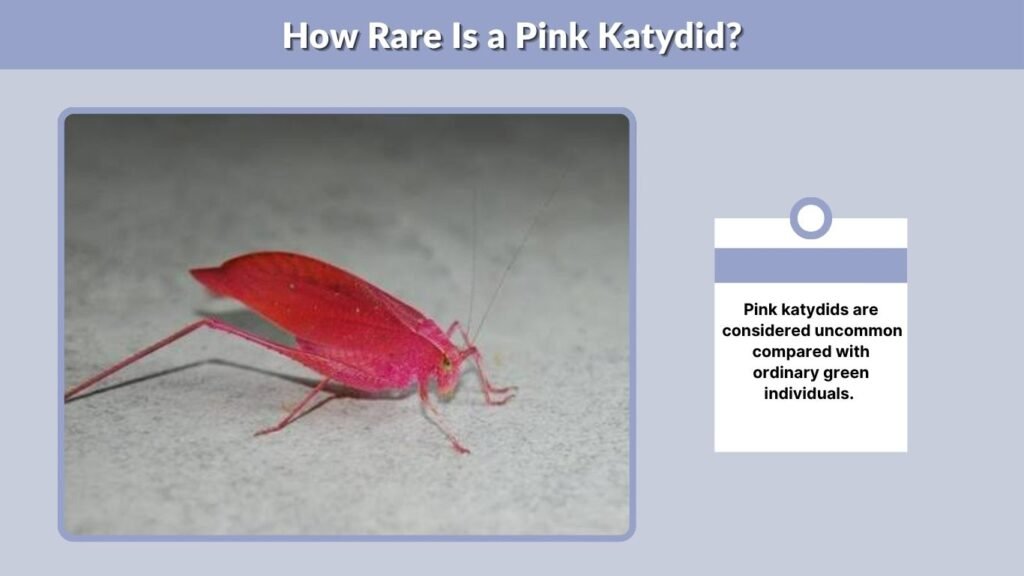
Pink katydids are considered uncommon compared with ordinary green individuals. Some published accounts have suggested rarity estimates such as roughly one pink individual among several hundred normal katydids, but there is no reliable universal “one in X” figure that applies to every species or population.
Their apparent rarity may also be affected by their surroundings and survival.
Pink Katydid Erythrism
Erythrism is not limited to katydids. The term refers generally to unusually red or reddish coloration in an animal.
For katydids, the condition can produce colors ranging from reddish brown to extremely bright pink. Because green coloration normally provides excellent camouflage among leaves, an intensely pink individual can look startling when sitting on green vegetation.
Is Pink Coloration Dominant?
This question is more complicated than simply saying yes or no. Research and breeding observations involving particular katydids, including North American oblong-winged katydids, have indicated that pink coloration can behave as a dominant inherited characteristic.
However, this should not be applied automatically to every species called a pink katydid. Katydids are a very diverse family, and color mechanisms can differ between species.
Does Pink Color Make Them Easier to See?
Against a bright green leaf, a hot pink katydid can be much easier for a human—and potentially a predator—to notice. That could help explain why conspicuous color morphs remain uncommon.
However, pink is not necessarily poor camouflage everywhere. Reddish leaves, flowers, dried vegetation, and changing foliage can provide surprisingly effective backgrounds for pink or reddish insects.
Pink Katydid Habitat and Distribution
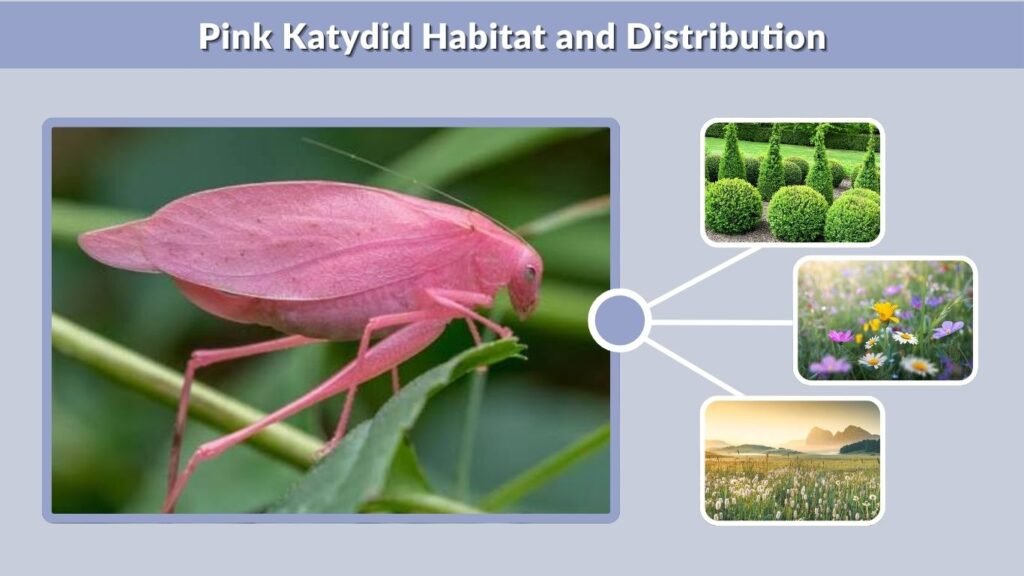
Because “pink katydid” describes a color form rather than one species, there is no single geographic range that covers every pink individual. Katydids occur across many temperate and tropical environments, including forests, grasslands, gardens, shrublands, and other places rich in vegetation.
Where Do Pink Katydids Live?
Like normally colored katydids, pink individuals are usually associated with vegetation. They may be encountered on:
- Trees and shrubs
- Tall grasses
- Garden plants
- Wildflowers
- Forest vegetation
- Woodland edges
- Meadows
- Dense leafy plants
They often remain among foliage, where they can feed, hide, and avoid predators.
Are There Pink Katydids in North America?
Yes. Pink katydids have been documented in North America, including unusually colored forms of species that normally appear green. Their occurrence is sporadic, however, so finding one in a yard or garden is an unusual event.
A person who sees one should not assume there is an entire population of pink insects nearby. A single unusual color morph may simply occur among many normally colored individuals.
Are Pink Katydids Found in Australia and New Zealand?
Katydids and closely related bush-cricket groups occur in many parts of the world, including Australia and New Zealand. However, photographs labeled “pink katydid Australia” or “pink katydid NZ” should be identified carefully because several unrelated insects can develop pink or reddish coloration.
Location, wing shape, antenna length, body structure, and clear photographs are more reliable for identification than color alone.
What Do Pink Katydids Eat?
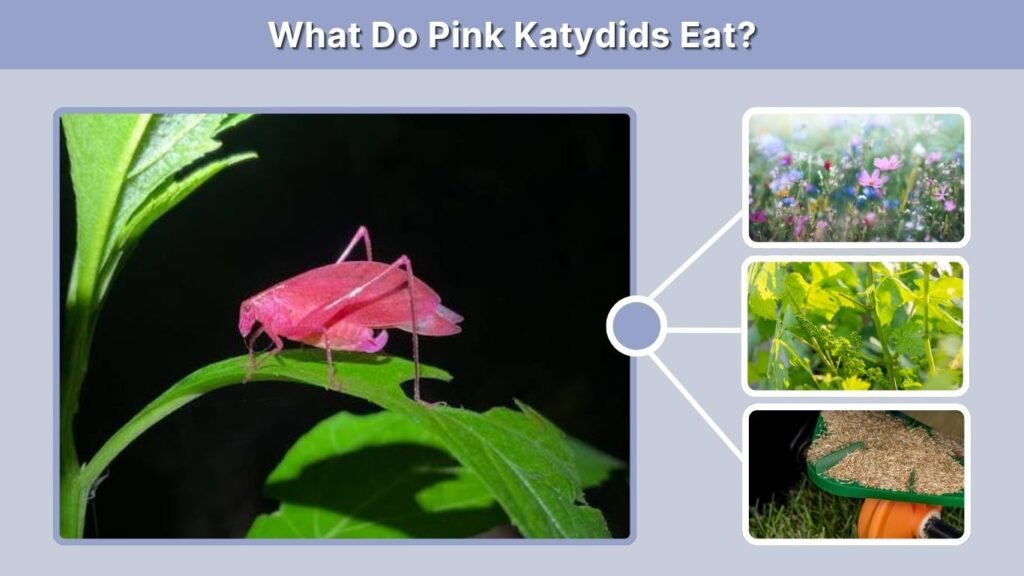
A pink katydid does not require a special diet simply because of its color. Its food depends primarily on the species. Many katydids consume plant material, while some are omnivorous and supplement vegetation with other small insects.
Typical Pink Katydid Diet
Depending on the species, foods can include:
- Leaves
- Flowers
- Pollen
- Seeds
- Fruit or soft plant material
- Plant stems
- Small insects or insect eggs
Some katydids can cause minor feeding damage to plants, although they generally are not among the most serious garden pests.
When Do Katydids Feed?
Many katydids become especially active from evening through nighttime. Darkness helps them move through vegetation while reducing exposure to some daytime predators.
Their famous calls are also commonly heard at night. Male katydids typically produce sounds by rubbing specialized portions of their wings together, primarily to communicate with potential mates.
Can You Keep a Pink Katydid as a Pet?
It is possible to temporarily observe some katydids in captivity, but their requirements vary by species. Proper ventilation, suitable plants, appropriate humidity, climbing surfaces, and species-specific food are important.
Wild specimens are generally best observed where they are found. An unusual pink individual can also be scientifically interesting, so taking photographs rather than collecting it is often the better option.
Pink Katydid Life Cycle
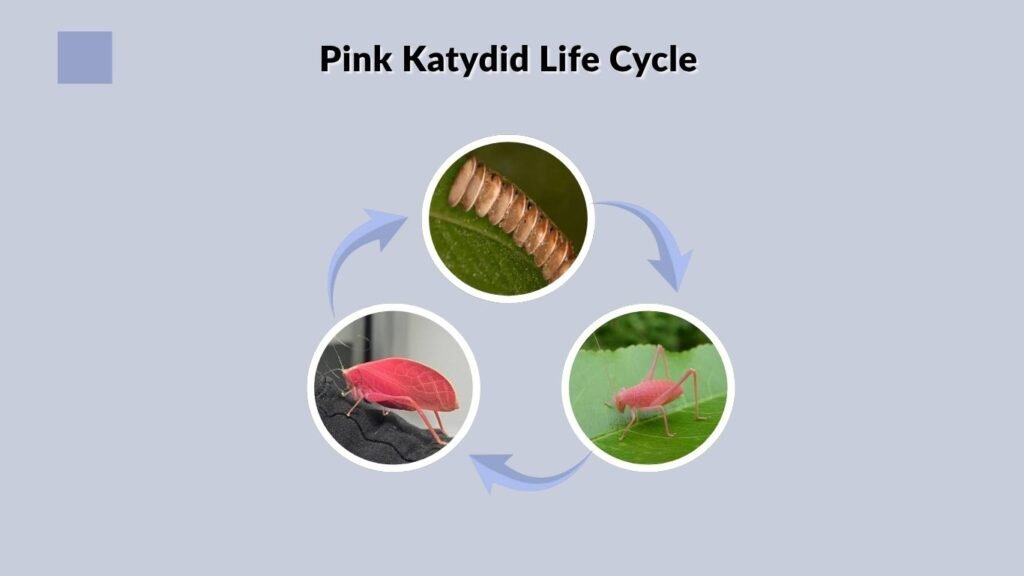
Pink katydids follow the same basic developmental process as other katydids. They undergo incomplete metamorphosis, meaning there is no caterpillar-like larval or pupal stage. Development proceeds from egg to nymph and finally to adult.
Egg Stage
Female katydids lay eggs in locations that vary between species. Eggs may be placed in soil, inserted into plant material, or attached to stems or bark.
In temperate species, eggs may survive the winter and hatch when conditions become favorable during spring.
Pink Katydid Nymph
A katydid nymph resembles a small, wingless version of the adult. As it feeds and grows, it repeatedly molts its outer exoskeleton.
The developing wings become increasingly noticeable with later molts. A nymph showing the unusual pigmentation may already appear pink or reddish rather than the conventional green.
Adult Pink Katydid
After its final molt, the katydid becomes an adult with fully developed reproductive structures and, in winged species, mature wings.
Adults mate and females eventually produce eggs, continuing the cycle. In many temperate katydids, the entire lifespan is less than a year, although timing varies substantially among species and climates.
Interesting Pink Katydid Facts
The extraordinary color is only one reason these insects attract attention. Their camouflage, hearing, jumping ability, and nighttime communication make katydids remarkable insects even without the pink mutation.
Quick Facts About Pink Katydids
- A pink katydid is usually a color morph, not a separate species.
- Pink coloration is commonly associated with erythrism.
- Shades can range from pale pink to vivid magenta.
- Katydids have exceptionally long antennae.
- Their wings often resemble plant leaves.
- Pink coloration may be inherited in some species.
- Both pink nymphs and adults can potentially be encountered.
- Katydids undergo egg, nymph, and adult stages.
- Many katydids are most active after dark.
- Finding a naturally bright pink individual is unusual.
Their combination of brilliant coloration and classic leaf-shaped anatomy makes them one of the most memorable variations found among katydids.
FAQs
Are pink katydids real?
Yes. Naturally occurring pink katydids are real. They are usually unusually colored individuals of species that are normally green or brown. Their pink appearance is often associated with erythrism, which alters normal pigmentation.
How rare is a pink katydid?
Pink katydids are uncommon, but there is no single scientifically established rarity percentage that applies to every katydid species. Some populations appear to produce pink individuals more often than others.
Are pink katydids dangerous?
Katydids generally pose little threat to people. They are not venomous insects. Larger individuals may defend themselves if roughly handled, so observing rather than grabbing a wild katydid is preferable.
What does a pink katydid eat?
Its diet depends on the species rather than its color. Many katydids eat leaves, flowers, seeds, and other plant material, while some species also consume small insects or insect eggs.
Why is my katydid pink instead of green?
An unusually pink katydid may have a pigmentation variation such as erythrism. This can cause increased reddish pigmentation or reduce the pigments responsible for typical green or brown coloration, creating pink, rose, or reddish individuals.
