
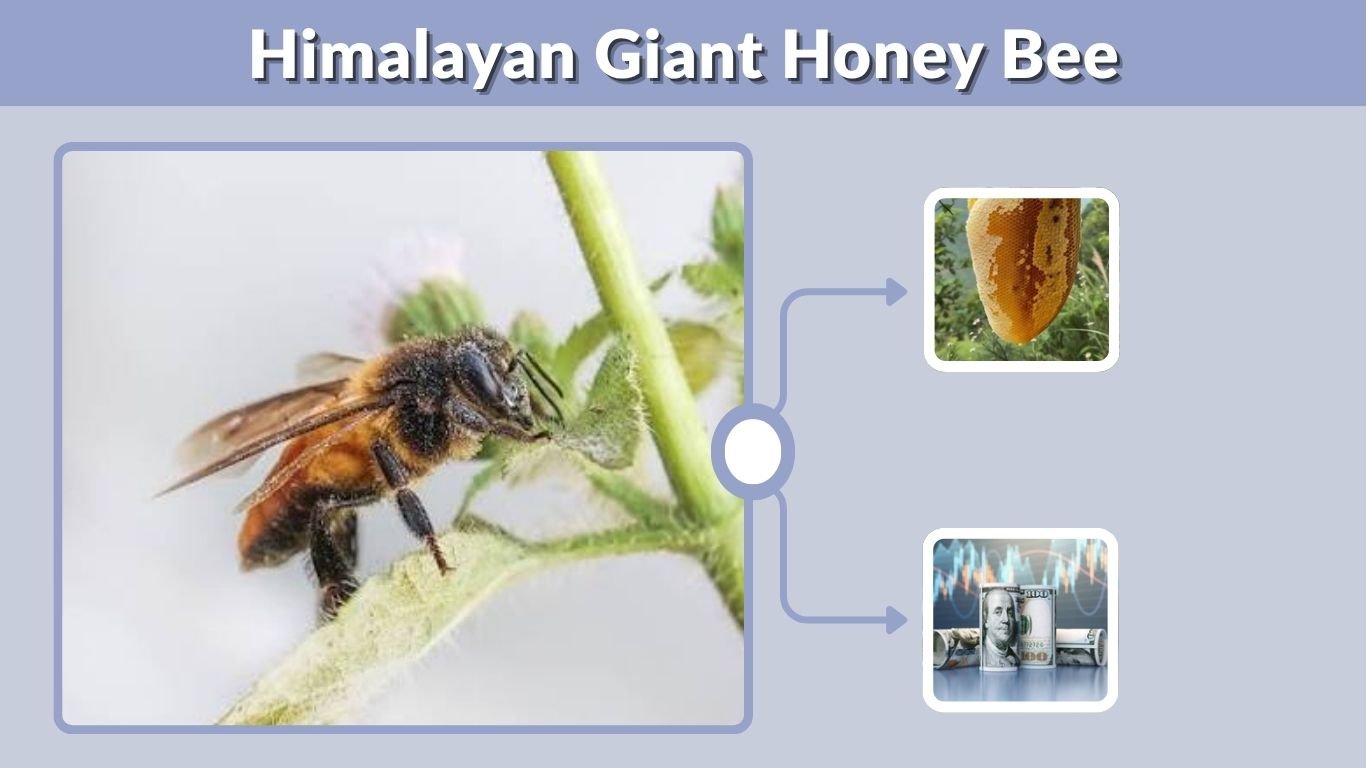
The Himalayan giant honey bee (Apis laboriosa) is the world’s largest living honey bee. This remarkable wild species survives on steep mountain cliffs throughout the Himalayan region, where colonies construct enormous exposed combs beneath rocky overhangs. Workers are known for their impressive size, seasonal mountain migrations, defensive behavior, and ability to forage at high elevations. The species also produces the famous Himalayan “mad honey.” However, this honey may contain unpredictable concentrations of grayanotoxins capable of causing dangerous poisoning rather than a safe or reliable psychedelic experience.
What Is the Himalayan Giant Honey Bee?
Apis laboriosa is a high-elevation honey bee belonging to the family Apidae and the giant honey bee subgenus Megapis. It was previously treated as a subspecies of Apis dorsata, but modern evidence supports recognizing it as a separate species.
Scientific Classification
- Common name: Himalayan giant honey bee
- Scientific name: Apis laboriosa
- Family: Apidae
- Genus: Apis
- Subgenus: Megapis
- Nest type: Large, exposed single comb
- Lifestyle: Social, wild, and seasonally migratory
The species occurs across the Himalayas and neighboring mountain systems. Its confirmed range includes Nepal, Bhutan, northern India, southern China, Myanmar, Laos, Vietnam, and northern Thailand.
Research published in 2024 confirmed Apis laboriosa in northern Thailand, extending its documented range farther south than previously recognized. Most colonies are found between approximately 1,000 and 3,000 meters, although nests have been recorded at higher and lower elevations. ZooKeys provides a detailed study of its geographical distribution.
Himalayan Giant Honey Bee Size and Identification
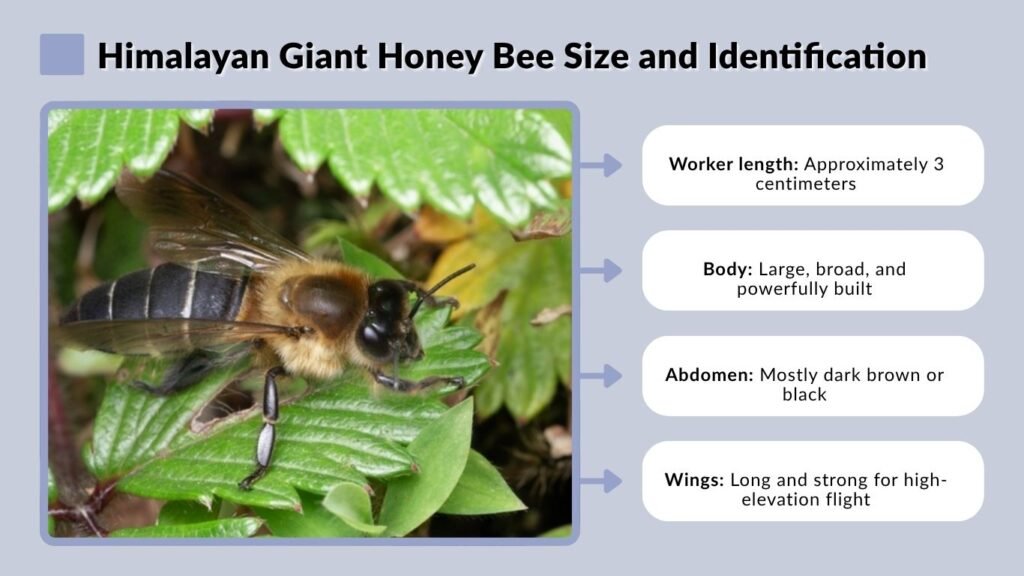
Workers are significantly larger than European, Asian, and ordinary giant honey bees. Their dark coloration and long hairs may help people distinguish them from the closely related Apis dorsata. Nevertheless, confirming the species can require expert examination because their ranges overlap in some locations.
Identification Features
- Worker length: Approximately 3 centimeters
- Body: Large, broad, and powerfully built
- Thorax: Dark with relatively long yellowish-brown hairs
- Abdomen: Mostly dark brown or black
- Wings: Long and strong for high-elevation flight
- Legs: Equipped with pollen baskets
- Colony covering: Several overlapping layers of workers
- Nest: One enormous comb attached beneath a cliff overhang
Apis laboriosa workers average slightly more than 3 centimeters in length, making this the largest living honey bee species. Individual queens have longer abdomens than workers, while male drones have larger eyes and heavier bodies.
What Makes the Himalayan Honey Bee So Giant?
Scientists have not identified one single cause for its exceptional size. The species belongs to the naturally large-bodied giant honey bee lineage, so body size is primarily an inherited evolutionary characteristic.
A larger body may offer several advantages in its mountain environment. It can support powerful flight muscles, improve heat retention, help workers travel long distances, and make individual bees more difficult for some predators to capture. However, these advantages should not be interpreted as proof that cold mountain temperatures alone caused the species to become large.
Himalayan Giant Honey Bee Nests
Unlike European honey bees, Himalayan giant honey bees do not live inside hollow trees or enclosed hive boxes. Their entire colony occupies a single exposed comb. Thousands of workers cover its surface, forming a living curtain that protects the honey, pollen, queen, and developing brood.
Where Do They Build Their Nests?
Colonies usually attach their comb beneath an overhanging section of a steep rock face. Common nesting characteristics include:
- Vertical or nearly vertical cliffs
- Deep rocky overhangs
- Sheltered southeast- or southwest-facing surfaces
- Locations approximately 1,200–4,000 meters above sea level
- Several independent colonies grouped on the same cliff
A large comb may reach around 1.5 meters long and 1 meter wide. The protected overhang reduces exposure to snow, rain, falling rocks, and aerial predators. The inaccessible location also makes it difficult for bears, humans, and other mammals to reach the nest.
Inside the Single-Comb Nest
Honey is normally stored in the upper section of the comb. Pollen and brood occupy areas below it, while workers cluster across the exposed surfaces.
The colony generally includes:
- One reproductive queen
- Thousands of female workers
- Seasonal male drones
- Eggs, larvae, and pupae in brood cells
The queen remains behind the protective worker curtain and spends much of her time laying eggs. Workers feed her, maintain the comb, regulate its temperature, defend the colony, and collect nectar, pollen, water, and plant resins.
Seasonal Mountain Migration
Himalayan giant honey bees move between elevations as temperatures and flowering conditions change. During warmer months, colonies may occupy high mountain cliffs. As winter approaches, they descend to lower and warmer areas.
Workers can forage several kilometers from their nest and visit mountain shrubs, trees, herbs, and agricultural plants. Migration allows the colony to follow seasonal flower blooms while avoiding the harshest winter conditions.
Himalayan Giant Honey Bee Honey
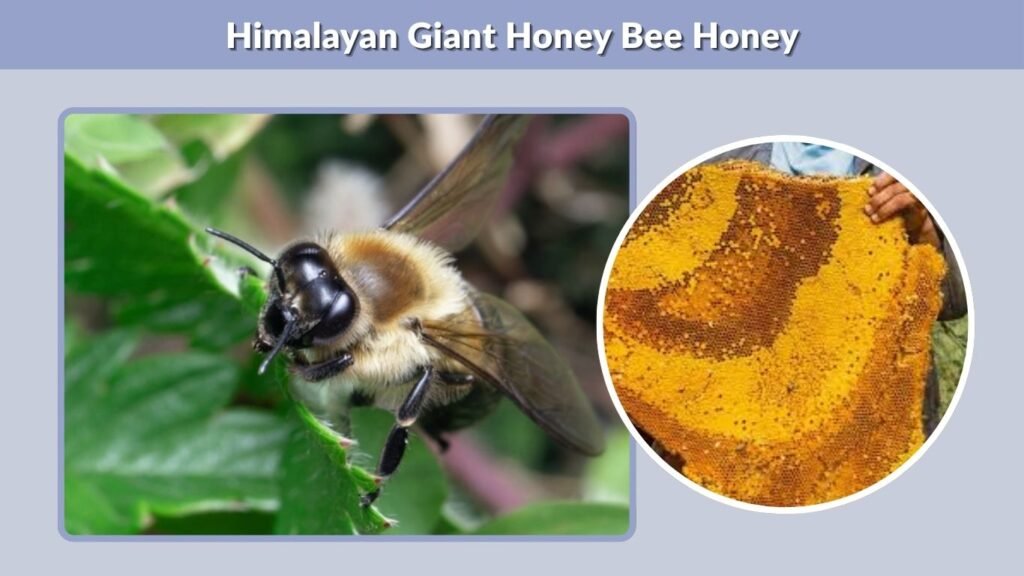
Apis laboriosa produces edible honey from many different mountain flowers. Its color, flavor, chemical composition, and toxicity depend on the season, elevation, and plants visited by workers. Ordinary Himalayan honey should not automatically be confused with intoxicating “mad honey.”
What Is Himalayan Mad Honey?
Some colonies gather nectar from rhododendron species containing grayanotoxins. These natural plant toxins remain in the finished honey and can disturb electrical signaling in the human nervous system, heart, and muscles.
Honey with a high grayanotoxin concentration is sometimes described as:
- Red honey
- Mad honey
- Psychedelic honey
- Hallucinogenic honey
- Intoxicating Himalayan honey
The terms “psychedelic” and “hallucinogenic” can be misleading. Grayanotoxin does not produce a predictable classic psychedelic experience. Altered awareness or hallucinations may occur, but they are symptoms of intoxication accompanied by potentially dangerous cardiovascular effects.
Does Every Colony Produce Toxic Honey?
No. Toxicity depends on which flowers workers visit. Honey produced when toxin-containing rhododendrons dominate the available flowers is more likely to contain grayanotoxins.
Concentration can vary between:
- Different cliffs
- Separate colonies at the same location
- Harvesting seasons
- Sections of one comb
- Individual containers sold from one harvest
Color, taste, smell, or price cannot reliably reveal how much grayanotoxin a product contains. A small quantity from one container might produce no obvious effects, while a similar amount from another could cause severe illness.
Symptoms of Mad Honey Poisoning
Grayanotoxin-containing honey may cause:
- Nausea and vomiting
- Dizziness and weakness
- Blurred vision
- Excessive sweating
- Tingling sensations
- Confusion or altered consciousness
- Low blood pressure
- A dangerously slow heartbeat
- Fainting or collapse
Severe intoxication can cause abnormal heart rhythms and require hospital treatment. Medical literature describes dizziness, low blood pressure, and slow heart rate as characteristic signs of grayanotoxin poisoning.
Anyone developing symptoms after consuming unknown Himalayan honey should seek urgent medical advice. Difficulty breathing, collapse, chest pain, extreme weakness, or loss of consciousness requires emergency assistance.
Can You Buy Himalayan Giant Bee Honey?

Himalayan cliff honey and products marketed as mad honey are available through some local sellers and online retailers. However, a sales listing does not confirm the bee species, geographic origin, purity, or grayanotoxin concentration.
Before purchasing, consider whether the seller provides:
- An identifiable harvesting region
- Independent laboratory testing
- Batch-specific toxin results
- Traceable packaging
- Storage and expiration information
- Clear safety warnings
- Legal import documentation
Marketing claims that the honey improves sexual performance, treats disease, or provides a safe natural high are not reliable evidence. Because toxin concentration is unpredictable, untested mad honey should not be consumed recreationally or used as a substitute for medical treatment.
Honey Hunting and Conservation
Traditional communities in Nepal and other Himalayan regions harvest cliff honey using ropes, bamboo ladders, smoke, and long cutting poles. Harvesters may descend hundreds of feet while other team members manage ropes from above.
This practice has cultural and economic importance, but excessive harvesting can remove broods, destroy combs, and prevent colonies from recovering. Other possible threats include:
- Climate-driven changes in flowering seasons
- Deforestation
- Pesticide exposure
- Loss of traditional nesting cliffs
- Repeated disturbance
- Unsustainable commercial honey collection
Sustainable harvesting leaves the brood section intact, limits disturbance, and allows enough honey to remain for colony survival.
FAQs
How large is a Himalayan giant honey bee?
Workers average approximately 3 centimeters long. This makes Apis laboriosa the largest known living honey bee species.
Are Himalayan giant honey bees dangerous?
Foraging bees generally avoid people, but a disturbed cliff colony can release thousands of defensive workers. Multiple stings can be life-threatening.
How large is their nest?
A large single comb may measure around 1.5 meters long and 1 meter wide, although nest dimensions vary among colonies.
Does Himalayan giant bee honey cause hallucinations?
Grayanotoxin-contaminated honey may cause altered consciousness or hallucinations. However, these are unpredictable poisoning effects that may occur alongside low blood pressure and dangerous heart problems.
Can Himalayan giant honey bees live in regular hives?
They are wild, migratory, open-nesting bees and generally do not accept conventional enclosed hive boxes. Unlike domesticated honey bee species, they build exposed combs on mountain cliffs.
