
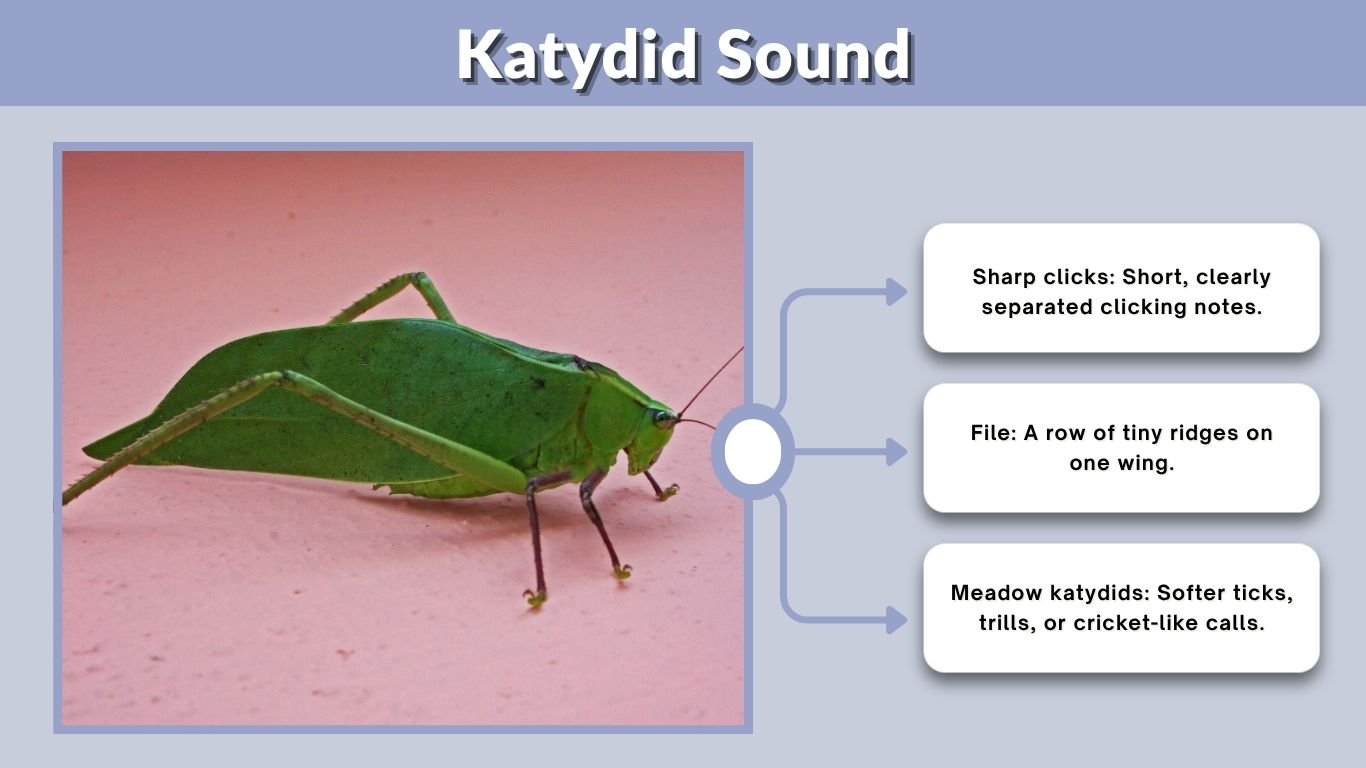
Katydid sounds are among the most recognizable noises of warm summer evenings. Depending on the species, a katydid may produce sharp clicks, rhythmic chirps, buzzing trills, or repeated phrases that seem to say “katy-did.” Most of these sounds are made by males trying to attract females, although some females also answer with quieter calls. Katydids create their songs by rubbing specialized parts of their wings together. Learning their sounds can also help you distinguish katydids from crickets, cicadas, and other noisy nighttime insects.
What Does a Katydid Sound Like?
The exact sound of a katydid varies considerably between species. Some produce slow, distinct notes, while others create rapid clicking or nearly continuous buzzing. Their calls are particularly noticeable after sunset, when several individuals may call simultaneously. Because hundreds of katydid species exist, there is no single sound that represents every katydid.
Common Katydid Sounds
Katydid calls may include:
- Sharp clicks: Short, clearly separated clicking notes.
- Chirps: Repeated notes similar to those of crickets.
- Buzzing sounds: Fast vibrations that blend into a steady buzz.
- Rattling sounds: Rapid pulses resembling a small mechanical rattle.
- Trills: Long sequences of closely spaced notes.
- “Katy-did” calls: Repeated two- or three-part phrases associated especially with true katydids.
The familiar “katy-did, katy-didn’t” description comes from the rhythm humans hear in certain species rather than actual words being produced.
Why Different Katydids Sound Different
Each species has its own characteristic calling pattern. The timing between notes, number of pulses, pitch, and length of a call can help katydids recognize members of their own species.
This distinction is important because several species may live in the same field, forest, or garden. Their different songs allow males and females to find suitable mates without relying entirely on sight in dense nighttime vegetation.
How Does a Katydid Make Its Sound?
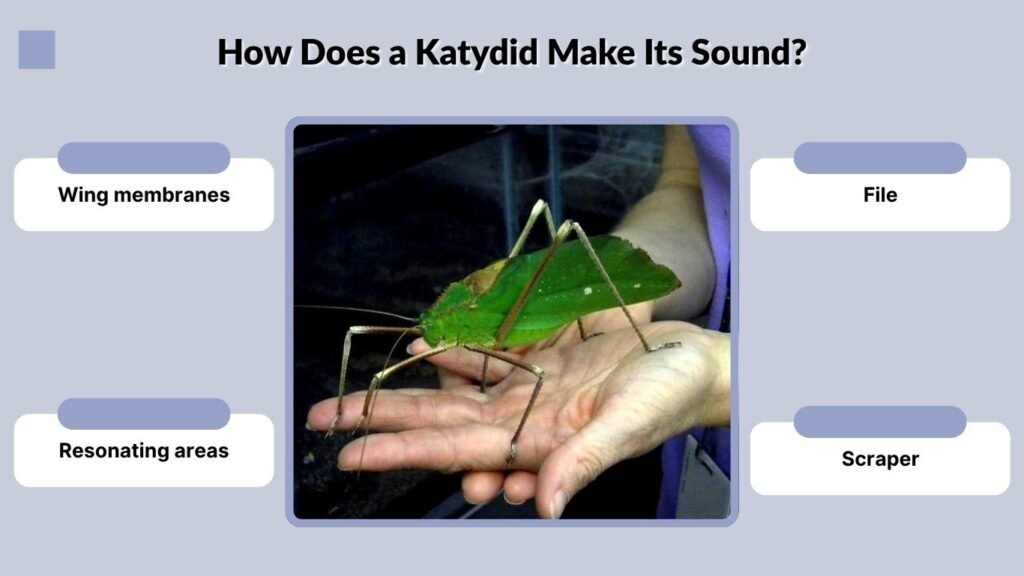
Katydids do not produce sounds with their mouths. Instead, most singing species use specialized structures on their front wings. The process is known as stridulation and is also found in crickets. Their wings essentially function as a tiny natural musical instrument capable of producing surprisingly loud calls for such a small insect.
Wing Structures Used for Sound
Important structures involved in katydid sound production include:
- File: A row of tiny ridges on one wing.
- Scraper: A hardened edge on the opposite wing.
- Wing membranes: Areas that help amplify vibrations.
- Resonating areas: Specialized sections that increase the volume and quality of the call.
When the katydid moves its wings, the scraper passes across the file. Each contact creates vibrations that become the clicking, chirping, or buzzing sound we hear.
Why Katydids Make Sounds
The primary purpose of katydid calling is reproduction. Males generally sing to advertise their presence and attract females. A female can recognize important information from the rhythm and frequency of a male’s call.
Sound can also help katydids communicate at night when visual signals are less useful. Some calls may function in territorial encounters or interactions between nearby males. In a few species, females produce answering signals that help males locate them more accurately.
Katydid Sounds at Night
Katydids are strongly associated with nighttime insect choruses because many species become most vocal from evening through the night. Their calls can fill trees, bushes, fields, and woodland edges during warm weather. A single insect may sound fairly simple, but dozens calling together can create a surprisingly complex background of clicks, buzzes, and rhythmic phrases.
Why Katydids Are Loud at Night
Several factors make nighttime ideal for katydid calling:
- Many katydid species are naturally nocturnal.
- Darkness provides some protection from visual predators.
- Potential mates are active during the same period.
- Warm temperatures allow their muscles to work efficiently.
- Dense vegetation provides elevated calling locations.
Males often perch on leaves or branches while singing. Calling from vegetation helps spread their signals through the surrounding habitat.
Temperature and Katydid Sound
Katydids are ectothermic animals, meaning their activity is strongly influenced by environmental temperature. On warmer nights, their wing movements generally become faster, which may increase the speed of their calls.
During cooler conditions, calling often becomes slower or less frequent. This is one reason summer insect choruses can seem exceptionally intense on warm, humid evenings but become quieter as temperatures fall later in the season.
Katydid vs Cicada Sound
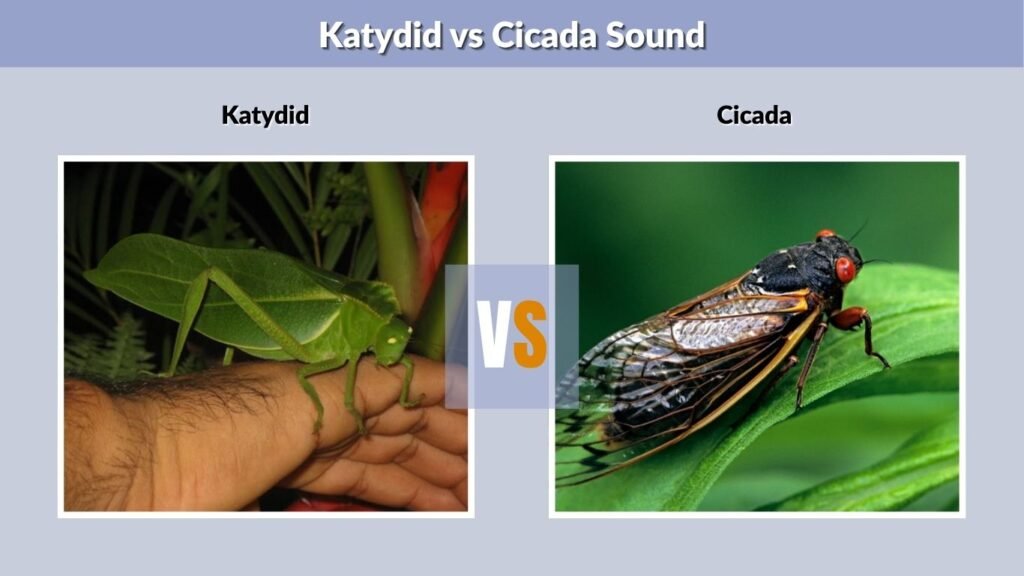
Katydids and cicadas are frequently confused because both can be extremely loud during summer. However, their calls differ in timing, rhythm, and sound-producing mechanism. Listening carefully to whether you hear individual clicks and chirps or a powerful continuous drone can often provide a useful clue about which insect is responsible.
Katydid Sound vs Cicada Sound
Common differences include:
- Katydids: Often make clicks, chirps, rattles, or repeated rhythmic phrases.
- Cicadas: Frequently produce long, intense buzzing, whining, or droning sounds.
- Katydids: Many species are most noticeable at night.
- Cicadas: Many familiar species call primarily during daylight or around dusk.
- Katydids: Produce sound mainly by rubbing their wings.
- Cicadas: Use specialized vibrating structures called tymbals.
There are exceptions because both groups contain many species. Time of day and call pattern should therefore be considered together rather than used individually.
Can Katydids and Cicadas Be Heard Together?
Yes. During summer, cicadas may dominate during the warmer daytime hours before katydids and crickets become increasingly noticeable toward evening. Their calling periods can overlap around dusk.
When several species are calling simultaneously, the combined chorus can sound like one continuous wall of insect noise. Listening for separate rhythms often makes individual species easier to recognize.
Katydid Sound vs Cricket Sound
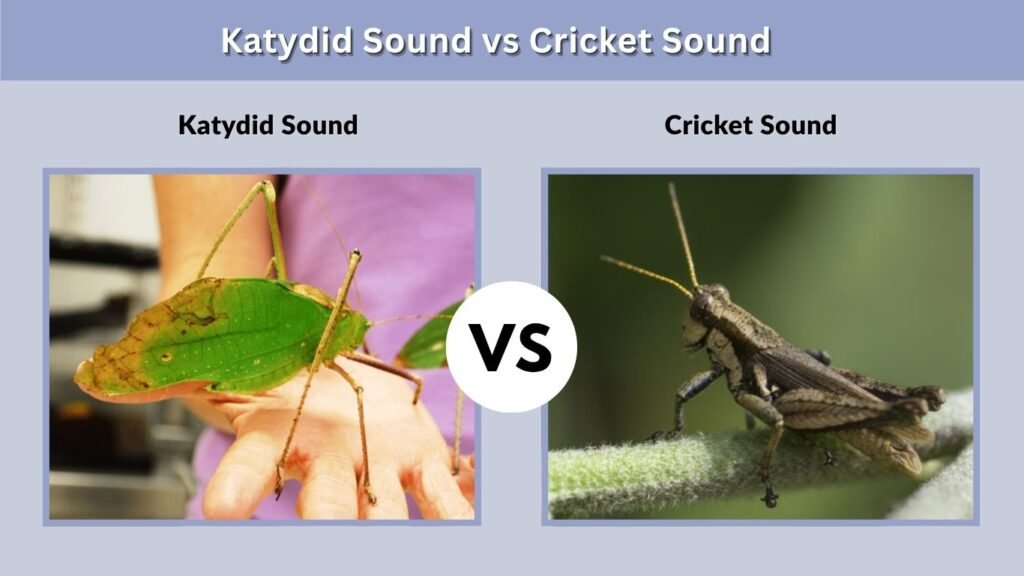
Katydids and crickets are close relatives, so distinguishing their calls can be harder than separating katydids from cicadas. Both create sounds through stridulation and are frequently heard after dark. However, cricket songs are often more regularly musical, while katydid calls can include harsher clicks, rattles, buzzes, and irregular phrases.
Key Sound Differences
Listen for these general characteristics:
- Crickets: Usually produce clear, repetitive chirping.
- Katydids: Often make harsher clicking, buzzing, or rattling calls.
- Crickets: Commonly call near the ground or from lower vegetation.
- Katydids: Frequently call from bushes, shrubs, and trees.
- Katydids: Some species produce distinctive two- or three-note phrases.
- Crickets: Their chirps often maintain a more regular rhythm.
These are useful guidelines rather than absolute rules because some meadow katydids can sound remarkably cricket-like.
Why They Are Easy to Confuse
Both insects belong to the order Orthoptera and rely heavily on acoustic communication. They may also inhabit the same gardens, meadows, and woodland edges.
At night, listeners may hear several crickets and katydids simultaneously. Locating the source of a call can be difficult because vegetation reflects the sound. Recording individual calls or moving closer to the source usually makes differences in rhythm easier to detect.
Male and Female Katydid Sounds
Sound production differs between males and females depending on the species. Male katydids are responsible for most of the loud songs heard outdoors because their calls function primarily as mating advertisements. Females are frequently quieter, although certain species participate in acoustic exchanges and respond directly to calling males.
Male Katydid Sound
Male katydids usually produce the loudest and most frequent calls. Their songs communicate their location and species identity to potential mates.
A male may repeat his call for hours when conditions are suitable. Nearby males sometimes alternate their calls or compete acoustically, which contributes to the intense nighttime chorus heard in areas with large katydid populations.
Female Katydid Sound
Female behavior varies greatly among species. In many katydids, females mainly listen and move toward attractive males. In others, females answer with short clicks or other brief signals.
These responses may be much quieter than male songs and therefore difficult for people to notice. Communication becomes a kind of acoustic duet, allowing the male to determine where the responding female is located.
Different Types of Katydid Sounds
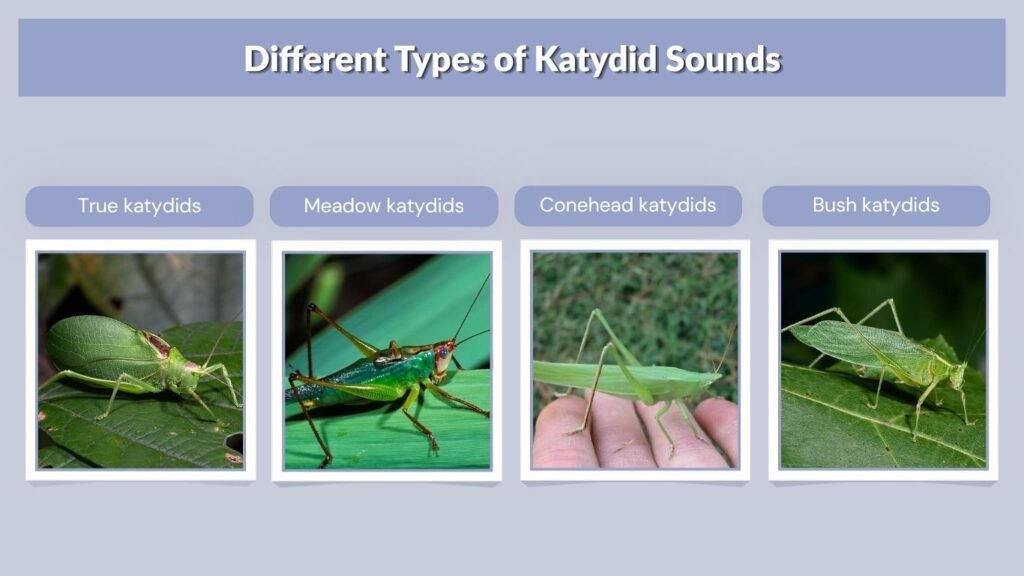
The katydid family contains thousands of species worldwide, and their calls are equally diverse. Even katydids living in similar habitats may sound completely different. Learning a few common call styles can make nighttime insect identification easier, especially when the insect itself is hidden among leaves.
Sounds You May Hear
Different katydids may produce:
- True katydids: Loud, repetitive, broken phrases often interpreted as “katy-did.”
- Meadow katydids: Softer ticks, trills, or cricket-like calls.
- Conehead katydids: Continuous buzzing, raspy notes, or fast rhythmic pulses.
- Angle-wing katydids: Short ticking or clicking sequences.
- Bush katydids: Repetitive chirps, buzzes, or raspy calls depending on species.
- Giant katydids: Often deeper or more forceful clicks and calls due to their larger bodies.
Accurate species identification normally requires combining the sound with location, habitat, season, and physical appearance.
Does a Katydid Sound Mean Anything Dangerous?
Hearing katydids around your home generally does not indicate danger. Their songs are normal communication signals rather than warning calls directed at people.
Katydids are primarily plant-feeding insects, although some species eat other small insects. They do not seek humans out. A particularly loud katydid near a bedroom window can be annoying, but its persistent nighttime calling usually means a male is attempting to attract a mate.
FAQs
What Sound Does a Katydid Make?
Katydids make a variety of sounds, including clicks, chirps, rattles, buzzes, and trills. Certain true katydids produce rhythmic calls that people interpret as “katy-did” or “katy-didn’t.” The exact sound depends heavily on the species.
Why Do Katydids Make Sounds at Night?
Most nighttime katydid calls are produced by males attempting to attract females. Many katydids are nocturnal, so evening and nighttime provide their main period for feeding, movement, and communication. Warm summer nights usually produce the most noticeable activity.
How Do Katydids Make Their Chirping Sound?
Katydids generally produce sound through stridulation. They rub a scraper-like structure on one front wing across a row of ridges on the other. The resulting vibrations are amplified by parts of the wings, creating clicks, chirps, buzzes, or other species-specific calls.
How Can You Tell a Katydid Sound From a Cicada?
Katydids frequently produce individual clicks, chirps, rattles, or rhythmic phrases and are commonly heard at night. Cicadas often create much louder continuous buzzing or droning sounds and many species call during daylight. However, exact patterns vary among species.
Do Female Katydids Make Sounds?
Females of some katydid species can make sounds, although males generally produce the loud, repetitive songs people notice most often. Certain females answer male calls with short clicks or other signals, helping the two insects locate each other during courtship.
