
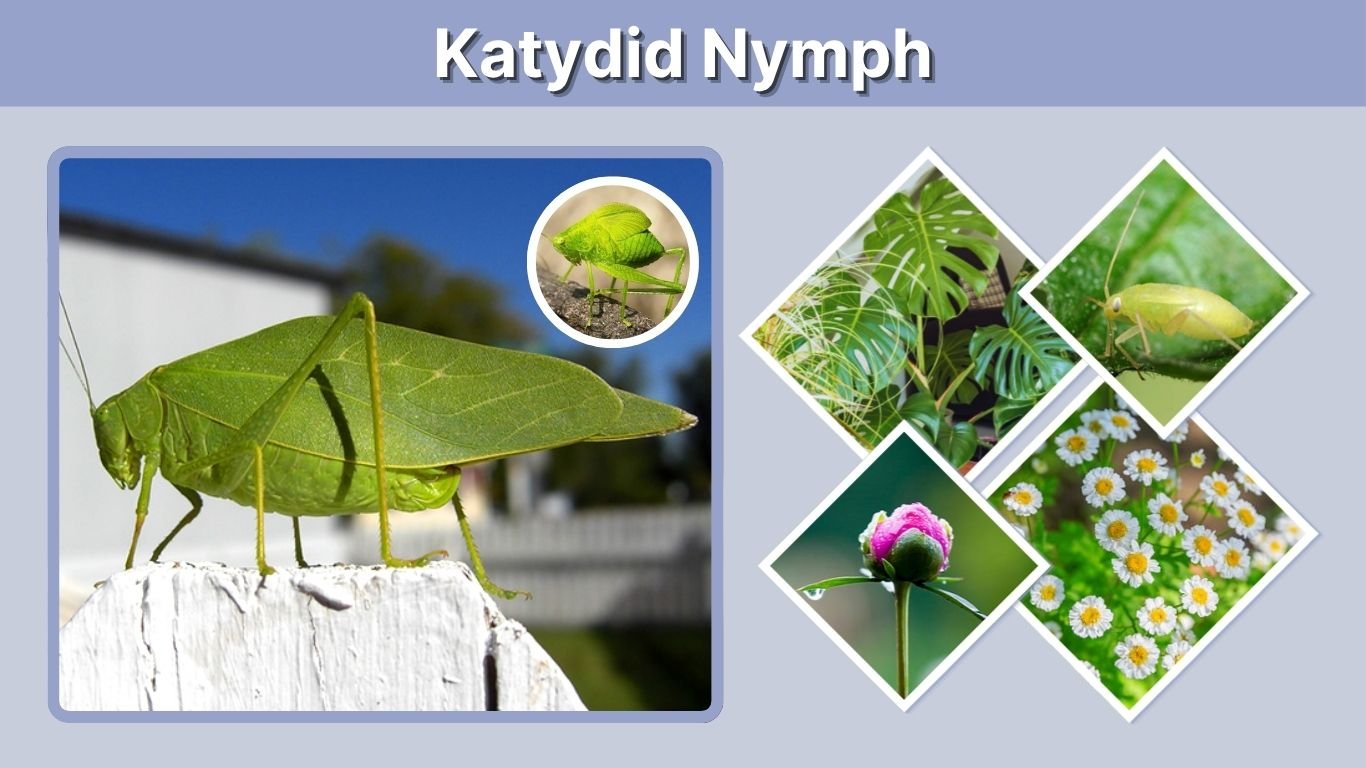
A katydid nymph is the immature stage of a katydid before it develops into a fully winged adult. Nymphs often resemble miniature adults but have shorter bodies, undeveloped wings, and sometimes surprisingly bright colors or markings. They are commonly found on leaves, shrubs, flowers, and garden plants where they feed and hide from predators. As they grow, katydid nymphs molt several times, gradually developing wing pads and adult features. Understanding their appearance, diet, and life cycle makes these unusual insects much easier to identify.
What Is a Katydid Nymph?
Katydids undergo incomplete metamorphosis, meaning they do not have a caterpillar-like larval or pupal stage. Instead, a young katydid emerges from an egg as a nymph. It already resembles the adult form but is much smaller. During development, the nymph passes through several growth stages before becoming a mature katydid capable of reproduction and, in many species, flight.
Katydid Nymph Characteristics
Common features of a katydid nymph include:
- Very long, threadlike antennae
- Six relatively long legs
- Powerful hind legs for jumping
- Small or undeveloped wing pads
- A body shaped similarly to an adult katydid
- Green, brown, pink, red, or patterned coloration
- Leaf-like or plant-like camouflage
- Increasing body size after each molt
Young nymphs may appear more delicate than adults and can have markings that disappear or change as they mature.
How Big Is a Katydid Nymph?
Size depends on species and developmental stage. Newly hatched individuals may measure only a few millimeters long, while older nymphs can approach adult size.
Early-stage nymphs usually lack obvious wings. Later, small wing pads become visible along the back. The abdomen and legs also become larger with each molt. Because of this gradual development, an older katydid nymph can sometimes be mistaken for a small adult.
Katydid Nymph Identification
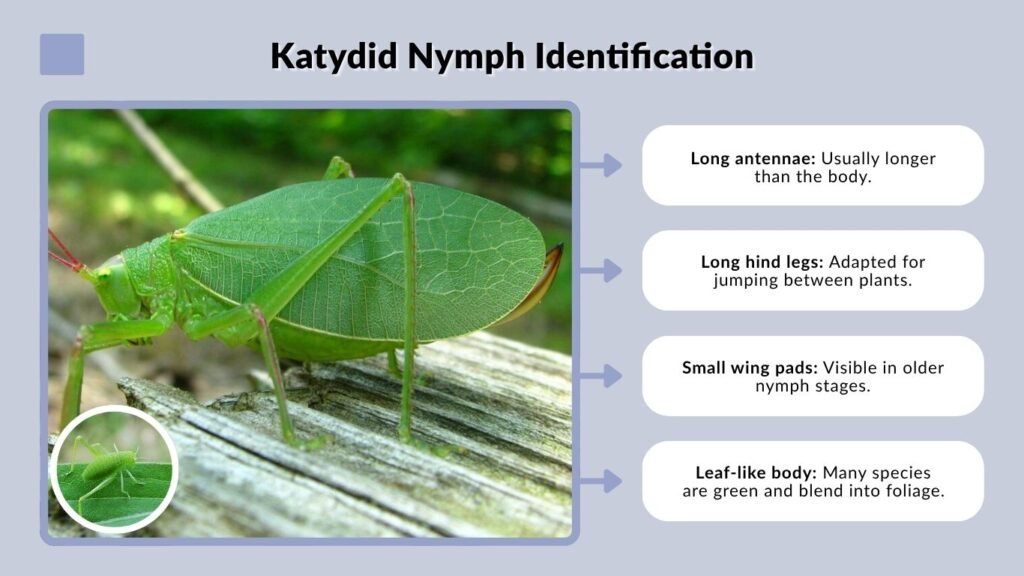
Identifying a katydid nymph can be challenging because young katydids may look somewhat different from their adult forms. They can also resemble grasshopper or cricket nymphs. The extremely long antennae are one of the most useful identification clues. Their body shape, long jumping legs, wing development, coloration, and plant habitat can provide additional clues.
How to Identify a Katydid Nymph
Look for these characteristics:
- Long antennae: Usually longer than the body.
- Long hind legs: Adapted for jumping between plants.
- Small wing pads: Visible in older nymph stages.
- Leaf-like body: Many species are green and blend into foliage.
- Slender shape: Most are relatively narrow compared with many grasshoppers.
- Plant habitat: Commonly found resting or feeding on leaves.
- Large hind femurs: These provide power for jumping.
Grasshoppers generally have much shorter antennae, making antenna length one of the quickest ways to separate the two groups.
Green Katydid Nymph
Green is probably the coloration most people associate with katydids. A green katydid nymph may closely resemble a fresh leaf or stem, helping it remain hidden from birds and other predators.
Some have completely green bodies, while others display pale stripes, white markings, brown patches, or yellowish areas. Their legs and antennae may also be slightly different shades from the rest of the body.
Color alone is rarely enough to identify an exact species because many unrelated katydids share similar green coloration.
What Do Katydid Nymphs Eat?
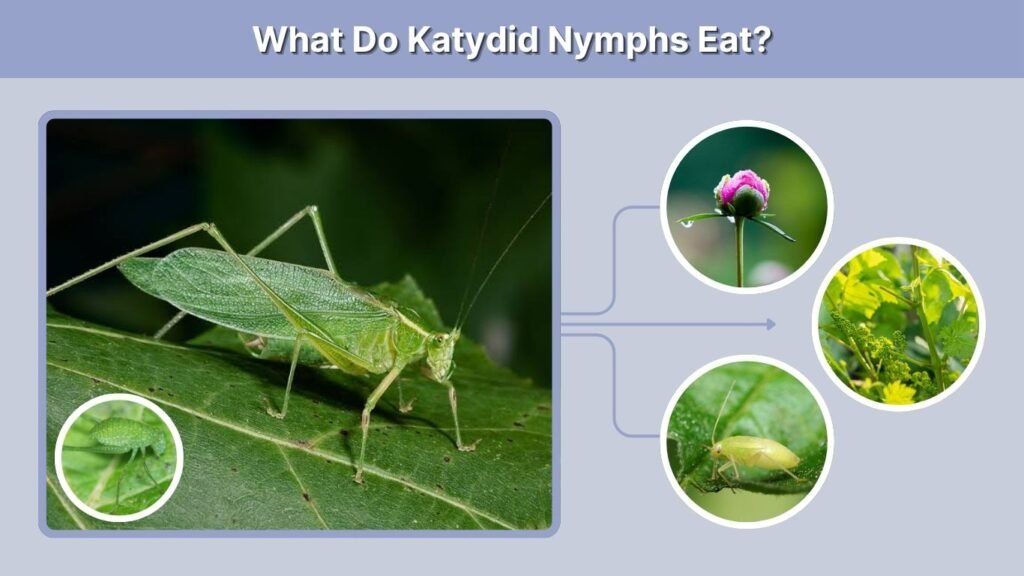
Most katydid nymphs spend much of their early lives among vegetation where food is readily available. Their exact diet varies by species. Many are primarily herbivorous and consume plant material, while some are omnivorous and may feed on small insects when the opportunity arises. Their feeding habits generally become similar to those of adults as they mature.
Common Katydid Nymph Foods
Katydid nymphs may eat:
- Tender leaves
- Young plant shoots
- Flower petals
- Flower buds
- Fruits
- Seeds
- Pollen
- Plant stems
- Aphids
- Small insect eggs
- Other tiny soft-bodied insects
Young nymphs often prefer softer vegetation because it is easier for their developing mouthparts to chew.
Do Katydid Nymphs Damage Plants?
Small numbers of katydid nymphs usually cause little noticeable damage in a garden. They may chew irregular holes along leaf surfaces or edges, but established plants can generally tolerate limited feeding.
Larger populations can occasionally damage ornamental plants, vegetables, or tender new growth. However, katydids are not usually considered among the most destructive garden pests. Some species may even consume other insects in addition to vegetation.
Katydid Nymph Life Cycle
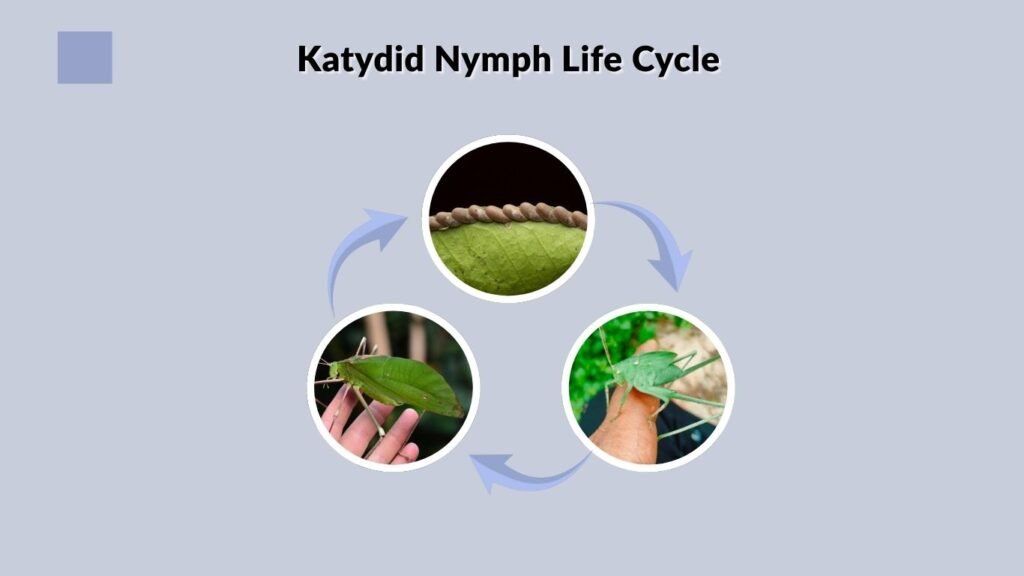
The katydid life cycle consists of egg, nymph, and adult stages. Unlike butterflies and beetles, katydids never enter a pupal stage. Development occurs gradually as the growing insect repeatedly sheds its old exoskeleton. Each stage between molts is known as an instar, and the katydid increasingly resembles its adult form as development progresses.
Katydid Nymph Growth Stages
The basic development process includes:
- Egg: The female deposits eggs in soil or plant material.
- Hatching: A tiny wingless nymph emerges.
- Early instars: The young insect feeds and grows rapidly.
- Middle instars: Body size increases and adult features become clearer.
- Late instars: Wing pads become increasingly noticeable.
- Final molt: The nymph sheds its exoskeleton and becomes an adult.
The number of molts can vary depending on species and environmental conditions.
Katydid Nymph Molting
A katydid cannot expand its hard outer exoskeleton continuously. As its body becomes larger, it must shed the old covering and replace it with a larger one.
Before molting, the nymph may become less active. The old exoskeleton eventually splits, allowing the insect to slowly pull itself free. Immediately afterward, the new exoskeleton is soft and flexible.
During this period, the katydid is particularly vulnerable to predators and physical damage. Its new outer covering gradually hardens.
Katydid Nymph Wings and Development
One of the easiest ways to distinguish a nymph from an adult is by examining the wings. Young katydid nymphs are wingless, while older individuals develop small wing pads. These structures increase in size with successive molts but do not become functional adult wings until the final molt.
Does a Katydid Nymph Have Wings?
Very young katydid nymphs do not have functional wings. Older nymphs may show noticeable wing pads on the upper portion of their body.
These pads sometimes look like short, incomplete wings, leading people to believe they have found an unusual short-winged katydid. If the insect still has developing wing pads rather than fully formed adult wings, it is probably a late-stage nymph.
Not every adult katydid has extremely long wings, however, so additional physical characteristics may be needed for accurate identification.
Katydid Nymphs in the Garden
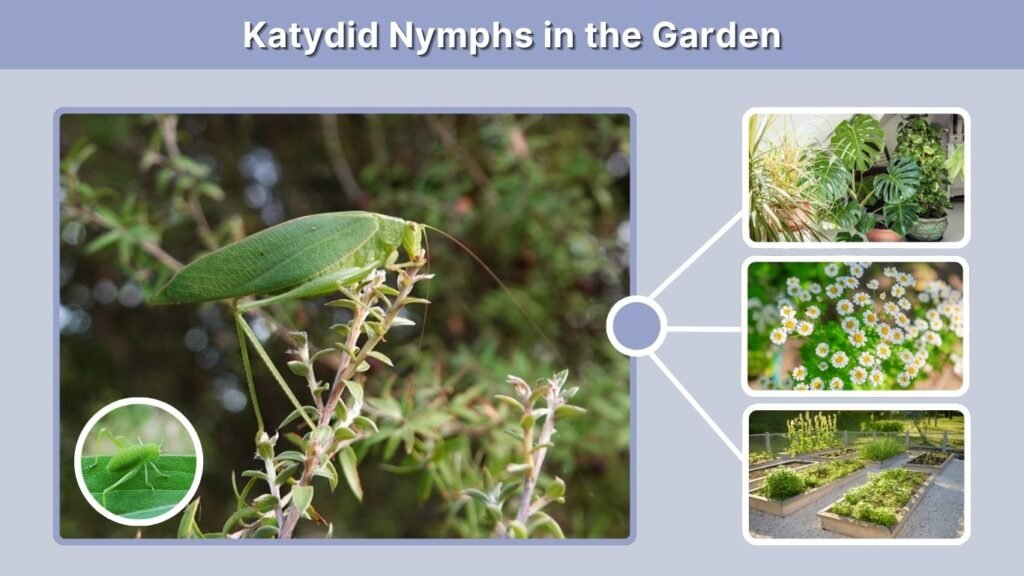
Finding a katydid nymph in the garden is usually nothing to worry about. Gardens provide ideal conditions because they contain shelter, vegetation, and numerous food sources. Nymphs frequently remain motionless on leaves to avoid detection, making their camouflage remarkably effective. Their presence can also indicate that the garden supports a diverse population of insects and other small wildlife.
Where Katydid Nymphs Hide
Common hiding locations include:
- Beneath broad leaves
- Inside shrubs
- Among tall grasses
- On flowers
- Along stems and branches
- In vegetable gardens
- Around vines
- Within dense ground vegetation
Their colors and body shapes often make them difficult to notice until they move.
Should You Remove Katydid Nymphs?
In most situations, removing a single katydid nymph is unnecessary. Limited feeding rarely causes serious harm to healthy plants.
If numerous katydids are chewing valuable vegetables or ornamental plants, physical removal is often enough for small gardens. Protective netting can also reduce access to vulnerable plants.
Avoid treating every katydid as a major pest. Their ecological role varies between species, and some consume insects as well as vegetation.
Different Types of Katydid Nymphs
Young katydids vary significantly in appearance because the family contains thousands of species. Some resemble green leaves, while others mimic dried vegetation, bark, flowers, or lichens. Colorful nymphs may even look dramatically different from their adult stage, making identification by photographs alone difficult.
Common Katydid Nymph Types
Examples include:
- Bush katydid nymphs: Often green and found among shrubs.
- Meadow katydid nymphs: Usually slender and common in grassy vegetation.
- Conehead katydid nymphs: Characterized by an elongated or pointed head.
- Greater angle-wing nymphs: Commonly green with leaf-like bodies.
- Fork-tailed bush katydid nymphs: Often found on shrubs and low vegetation.
- Drumming katydid nymphs: Small species that mature into distinctive adults.
- True katydid nymphs: Usually green and highly camouflaged among foliage.
Geographic location, markings, and body structure are often necessary to determine an exact species.
FAQs
What Is a Katydid Nymph?
A katydid nymph is an immature katydid that has hatched from an egg but has not yet reached adulthood. It resembles a small adult but lacks fully developed wings and reproductive maturity. Nymphs grow through repeated molts before completing their development.
What Do Katydid Nymphs Eat?
Katydid nymphs commonly eat leaves, flowers, young shoots, fruits, seeds, and other plant material. Some species are omnivorous and may also consume aphids, insect eggs, and other small insects. Their exact diet depends largely on the katydid species.
How Can You Identify a Katydid Nymph?
Look for extremely long antennae, long jumping legs, a relatively slender body, and incomplete or absent wings. Many nymphs are green and resemble leaves. Older individuals commonly develop small wing pads that become larger with each successive molt.
How Long Does a Katydid Stay a Nymph?
The length of the nymph stage varies among species and depends on temperature, food availability, and environmental conditions. During this period, the young katydid passes through several instars and molts repeatedly until its final molt produces the mature adult form.
Are Katydid Nymphs Harmful to Gardens?
Katydid nymphs can chew leaves and other plant parts, but small numbers generally do not cause serious garden damage. Large populations may occasionally harm tender plants. Many gardens can tolerate their presence without requiring any special control measures.
