
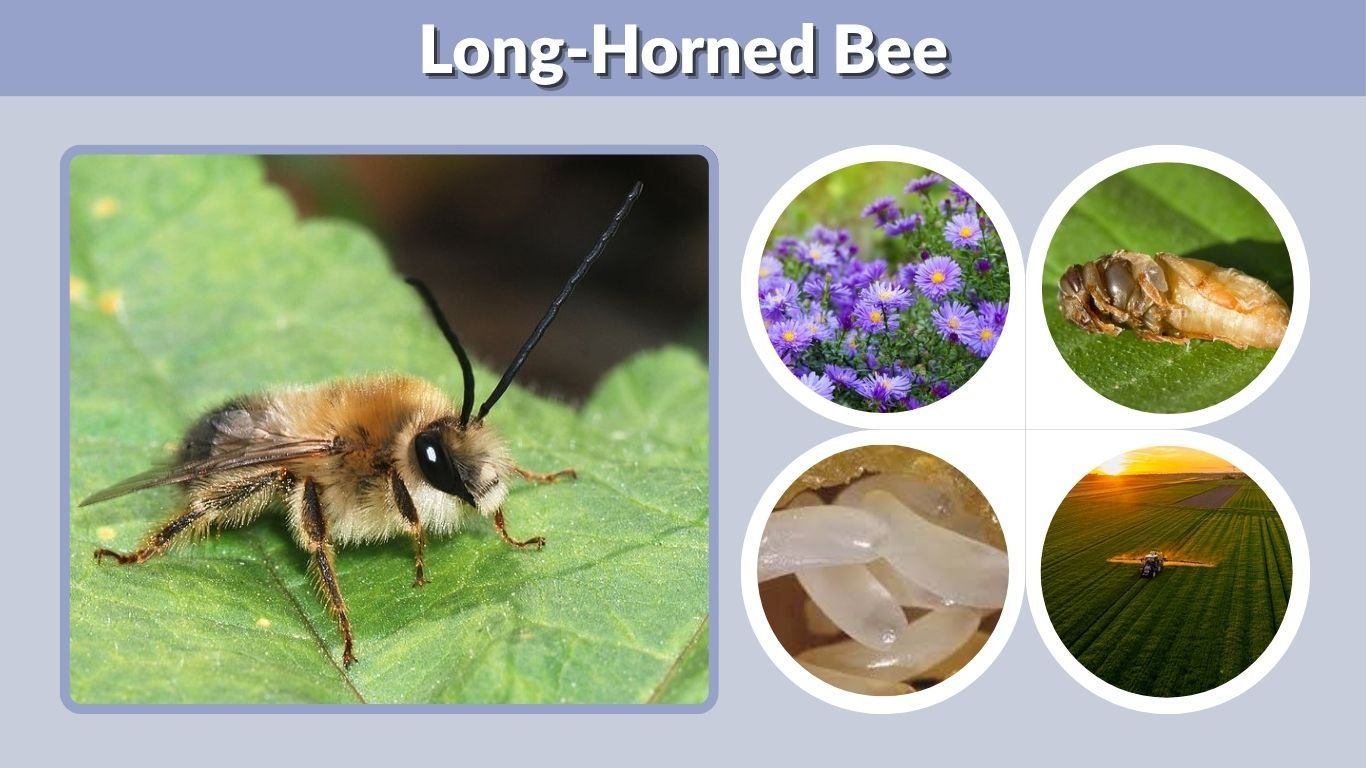
The long-horned bee is a distinctive solitary bee best known for the remarkably long antennae of the males. These bees belong mainly to the tribe Eucerini and occur across many parts of the world, with numerous species living in North America and Europe. Long-horned bees are important pollinators of sunflowers, legumes, wildflowers, and many garden plants. Most females build nests underground, while males are often seen resting on flowers. Despite their noticeable size and fast flight, long-horned bees are generally gentle around people.
What Is a Long-Horned Bee?
Long-horned bees are a diverse group of solitary bees rather than a single species. Many North American species belong to genera such as Melissodes, while Eucera includes well-known species elsewhere. Their common name comes from male antennae, which can be extraordinarily long compared with the antennae of female bees.
Long-Horned Bee Classification
Long-horned bees generally have the following classification:
- Order: Hymenoptera
- Family: Apidae
- Tribe: Eucerini
- Common genera: Melissodes, Eucera and relatives
- Lifestyle: Mostly solitary
- Nest type: Usually underground
- Primary food: Nectar and pollen
Because many species are called long-horned bees, there is no single scientific name that applies to every one.
Why Are They Called Long-Horned Bees?
The “horns” are actually antennae.
Male long-horned bees possess exceptionally elongated antennae that may extend well beyond the head and thorax. These structures are associated with sensing the environment and locating potential mates.
Females have much shorter antennae and can therefore look considerably different from males of the same species.
How to Identify a Long-Horned Bee
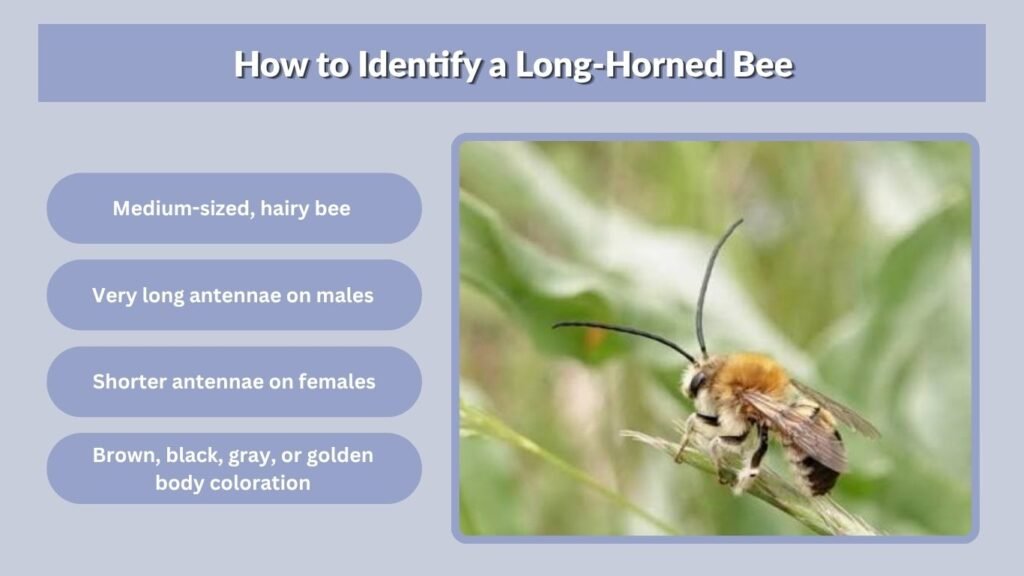
Long-horned bees can resemble small bumble bees, mining bees, or even honey bees from a distance. The long antennae of males provide the easiest clue. Females can be harder to recognize because their antennae are shorter, so body hair, pollen-carrying structures, behavior, and flower preference become more useful.
Long-Horned Bee Identification
Look for these characteristics:
- Medium-sized, hairy bee
- Very long antennae on males
- Shorter antennae on females
- Brown, black, gray, or golden body coloration
- Pale bands or hairs across the abdomen in many species
- Dense pollen-carrying hairs on female hind legs
- Rapid flight around flowers
- Frequent visits to sunflowers and other composites
Individual species vary greatly, so coloration alone is not enough for reliable identification.
Male vs Female Long-Horned Bee
Male and female long-horned bees can look surprisingly different.
Males have dramatically longer antennae and often spend much of their time flying around flowers looking for females. They do not collect pollen for nests.
Females have shorter antennae and dense hairs called scopae on their hind legs. These hairs allow them to carry large quantities of pollen back to underground nests for their larvae.
Black Long-Horned Bees
Some species appear predominantly black or very dark brown. For example, the two-spotted long-horned bee can appear dark-bodied with contrasting pale markings.
Dark coloration alone does not identify a species because many unrelated bees share similar colors.
The length of the male’s antennae and the female’s pollen-carrying hairs provide more useful clues.
Where Do Long-Horned Bees Live?
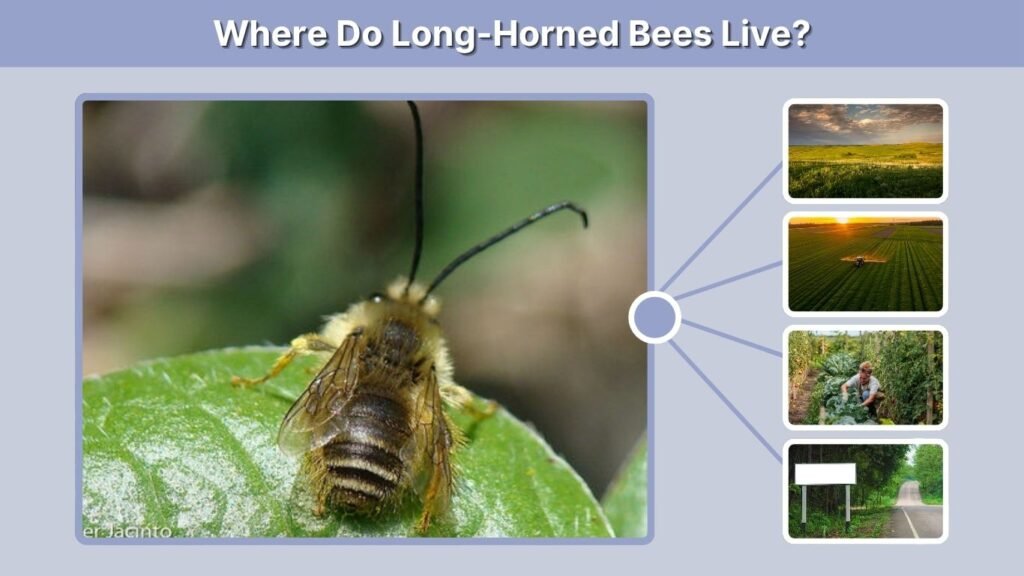
Long-horned bees occupy an enormous variety of habitats. Their distribution includes North America, Europe, Asia, and other regions where suitable flowering plants and nesting soil occur. Because most species nest underground, they are especially common in sunny areas containing relatively exposed, well-drained soil.
Long-Horned Bee Habitat
Common habitats include:
- Wildflower meadows
- Prairies
- Grasslands
- Farms
- Gardens
- Roadsides
- Woodland edges
- Coastal habitats
- Open sandy areas
- Sunny patches of bare soil
A good habitat must provide both flowers for food and suitable ground for nesting.
Long-Horned Bees in California
California supports numerous species of long-horned bees because of its diverse native flora and variety of open habitats.
They may be seen visiting sunflowers, asters, legumes, and other flowering plants from spring through summer.
Some species are closely synchronized with particular flowering periods, meaning adults may be abundant for only a relatively short portion of the year.
Long-Horned Bees in the UK
One notable British species is the long-horned bee Eucera longicornis.
It is strongly associated with flower-rich habitats containing legumes such as vetches and related plants. The spectacular antennae of males make them especially recognizable.
Protecting diverse grasslands and abundant flowering plants can help provide both feeding and nesting habitat.
Long-Horned Bee Nesting Behavior
Most long-horned bees are solitary ground nesters. A female typically constructs her own nest rather than living in a colony with a queen and workers. However, many females may choose the same favorable patch of ground, producing a loose nesting aggregation.
What Does a Long-Horned Bee Nest Look Like?
A nesting area may show:
- Small round holes in soil
- Loose soil around entrances
- Bees flying close to the ground
- Females repeatedly entering individual holes
- Several nests clustered together
- Nesting sites in sunny, relatively bare soil
Seeing many bees together does not necessarily mean they share one communal nest.
How Does a Female Build Her Nest?
The female excavates a tunnel underground and creates separate brood cells.
She collects pollen and nectar from flowers and carries these resources back to the nest. A food provision is placed inside each cell, followed by an egg.
After the cell is sealed, the developing larva consumes the stored pollen and nectar without needing further care from its mother.
What Do Long-Horned Bees Eat?
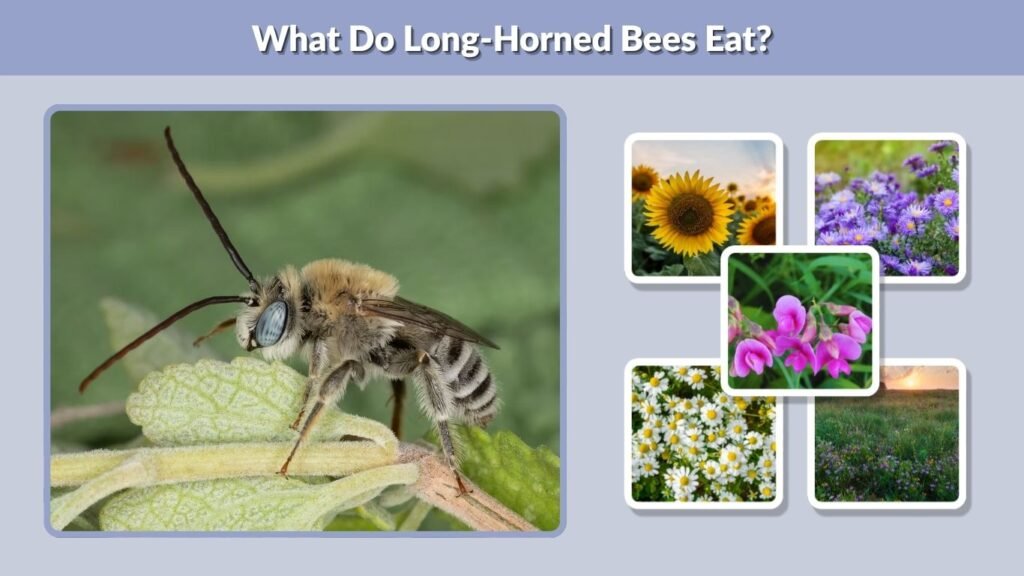
Adult long-horned bees depend on flowers. Nectar provides energy for flight, while females collect pollen as food for their offspring. Some species visit many different flowers, while others show strong preferences for particular plant families.
Flowers They Commonly Visit
Long-horned bees may visit:
- Sunflowers
- Asters
- Daisies
- Thistles
- Vetches
- Clover
- Peas and other legumes
- Prairie wildflowers
- Garden flowers
- Native flowering plants
Planting groups of native flowers can make gardens much more useful to these bees.
Long-Horned Sunflower Bees
Some North American long-horned bees are particularly associated with sunflowers and other plants in the daisy family.
Females may become covered in bright yellow pollen while moving among sunflower heads.
Their active flower visitation makes them valuable pollinators in natural ecosystems as well as gardens and agricultural landscapes.
Do Long-Horned Bees Sting?
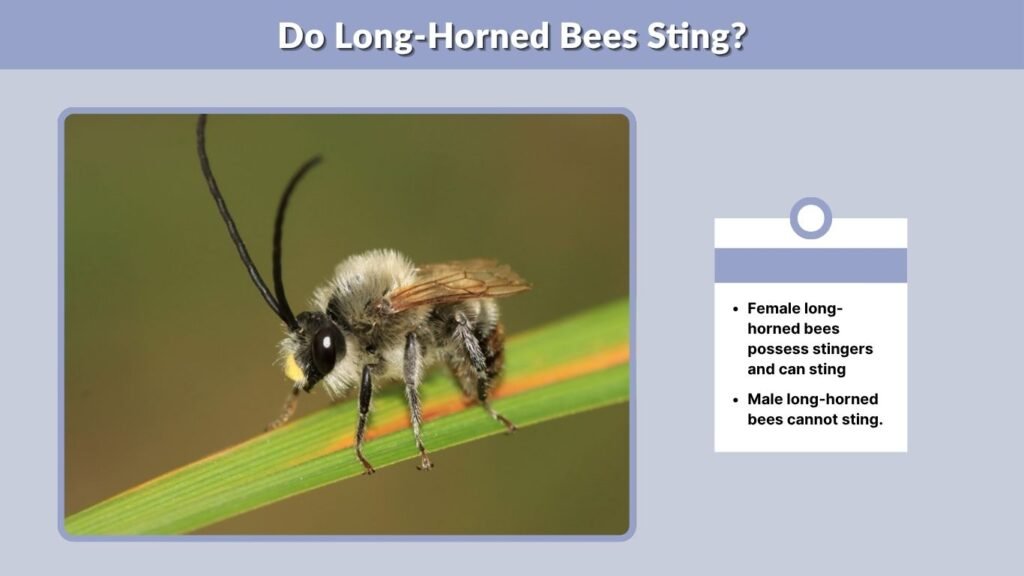
Long-horned bees may look intimidating because of their size, rapid flight, and long antennae, but they are generally peaceful insects. They have no large communal hive to defend, so they usually show little interest in humans.
Can Female Long-Horned Bees Sting?
Female long-horned bees possess stingers and can sting if they are trapped, squeezed, or deliberately handled.
Under ordinary circumstances, however, they are unlikely to sting.
A female collecting pollen usually concentrates on visiting flowers and returning to her nest rather than defending territory against people.
Can Male Long-Horned Bees Sting?
Male long-horned bees cannot sting.
They may fly rapidly around flowers, sometimes approaching people standing near flowering plants, but this behavior generally relates to searching for females or defending a small mating area.
Their long antennae can make males appear unusual, but they pose little physical threat.
Long-Horned Bee Mating and Sleeping Behavior
Male long-horned bees become particularly noticeable during the breeding season. They often patrol flower patches where females are feeding and may investigate other insects that enter the area.
Males of some species also gather together to rest overnight.
How Long-Horned Bees Mate
Males search actively for newly emerged or foraging females.
Their exceptionally long antennae contain sensory structures that help them detect environmental and chemical cues. Competition between males can be intense when several individuals pursue the same female.
After mating, females focus heavily on constructing nests and collecting food for their offspring.
Do Long-Horned Bees Sleep on Flowers?
Yes, males of some long-horned bee species may spend the night gripping flowers, stems, or vegetation with their jaws and legs.
Several males may sometimes rest together in the same area.
They become inactive as temperatures fall and begin flying again after sunlight and warmer conditions return the following morning.
Two-Spotted Long-Horned Bee
The two-spotted long-horned bee is one of the better-known North American species. Its scientific name is Melissodes bimaculatus.
It can be found visiting many summer flowers and is often noticed because of its dark coloration and energetic behavior.
Two-Spotted Long-Horned Bee Identification
Typical characteristics include:
- Mostly dark or black body
- Long antennae in males
- Pale or yellowish facial markings in males
- Dense pollen hairs on female hind legs
- Medium-sized body
- Strong attraction to flowering plants
Like other long-horned bees, it is an important native pollinator and is normally nonaggressive.
Long-Horned Bee Life Cycle
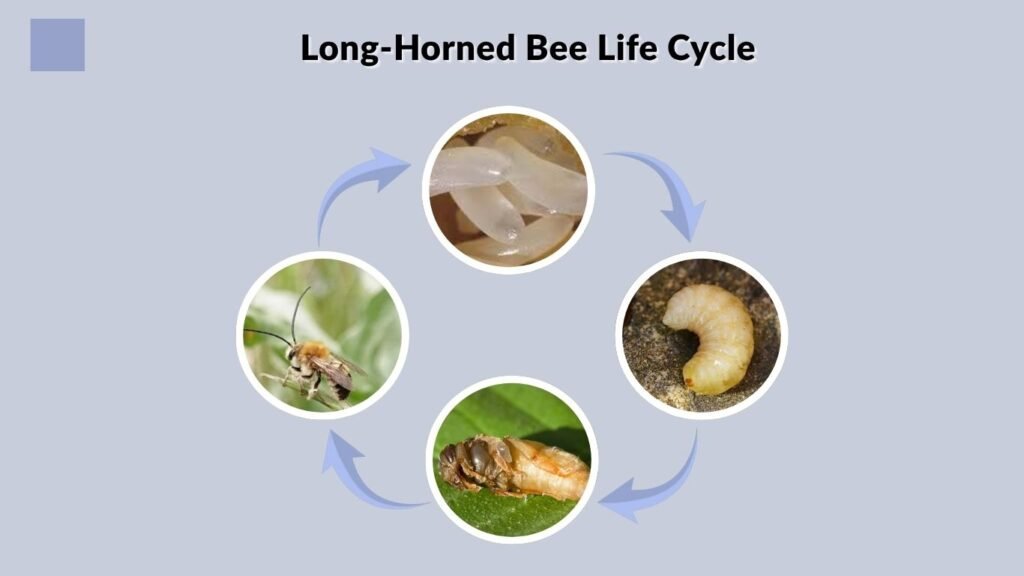
Long-horned bees undergo complete metamorphosis through egg, larva, pupa, and adult stages. Much of their life is spent underground inside the brood cell rather than flying among flowers.
Adult activity is often closely synchronized with flowering seasons.
Four Life Cycle Stages
- Egg: A female places an egg in a provisioned nest cell.
- Larva: The larva eats the stored pollen and nectar.
- Pupa: Transformation into the adult body occurs underground.
- Adult: The mature bee emerges and begins feeding and reproducing.
Depending on the species and climate, the immature bee may remain underground for many months before emerging.
Interesting Long-Horned Bee Facts
Long-horned bees combine unusual appearance with considerable ecological importance. Their close relationships with flowering plants make them valuable components of native pollinator communities.
Quick Facts
- Males have much longer antennae than females.
- Most species are solitary.
- Females usually nest underground.
- Males cannot sting.
- Females can sting but rarely do.
- Many species are excellent pollinators.
- Females carry pollen on dense hind-leg hairs.
- Some males sleep on flowers or stems.
- Numerous species belong to the tribe Eucerini.
- Sunflowers are important food plants for several species.
FAQs
What is the scientific name of a long-horned bee?
Long-horned bees include many species rather than one species. Many belong to the tribe Eucerini, including species in Melissodes and Eucera.
Do long-horned bees sting?
Females can sting when handled or trapped but are generally nonaggressive. Male long-horned bees cannot sting.
Where do long-horned bees live?
They inhabit meadows, grasslands, gardens, farms, coastal habitats, roadsides, and other flower-rich areas with suitable soil for nesting.
What do long-horned bees eat?
Adults drink nectar, while females also collect pollen to provision their offspring. Many species commonly visit sunflowers, asters, legumes, and native wildflowers.
Why do male long-horned bees have long antennae?
Their enlarged antennae contain important sensory structures that help males detect environmental cues and locate potential mates.
